Zimbabwe imported rice in 2024, ranking as the 48th largest rice importer in the world. The country depends on foreign suppliers for nearly all of its rice needs, with local officials confirming that imports cover about 98% of domestic consumption. This heavy reliance on imports creates a steady and growing demand that global suppliers, including certified exporters from Pakistan, are well positioned to meet.
For procurement teams and trade professionals, Zimbabwe’s rice market offers a clear picture of opportunity shaped by consistent demand and shifting supplier relationships. Trade data shows rice accounted for a meaningful share of Zimbabwe’s total import value in recent years, with growth continuing into 2023 and 2024. Understanding which markets supply this demand, and what quality standards buyers expect, helps businesses make informed sourcing decisions.
This article looks at Zimbabwe’s rice import trends, the main supplier countries, and what buyers should know about grades, certifications, and compliance requirements. It also covers how Zimbabwe’s own rice production efforts may affect import demand over time.
Key Takeaways
- Zimbabwe relies on imports for nearly all of its rice supply, creating consistent demand for international suppliers.
- Buyers should understand grade standards and certification requirements, such as ISO and HACCP, when sourcing rice for the Zimbabwean market.
- Zimbabwe’s push toward local rice production could gradually shift long-term import patterns.
What does Zimbabwe’s rice import market look like, and how fast is it growing?
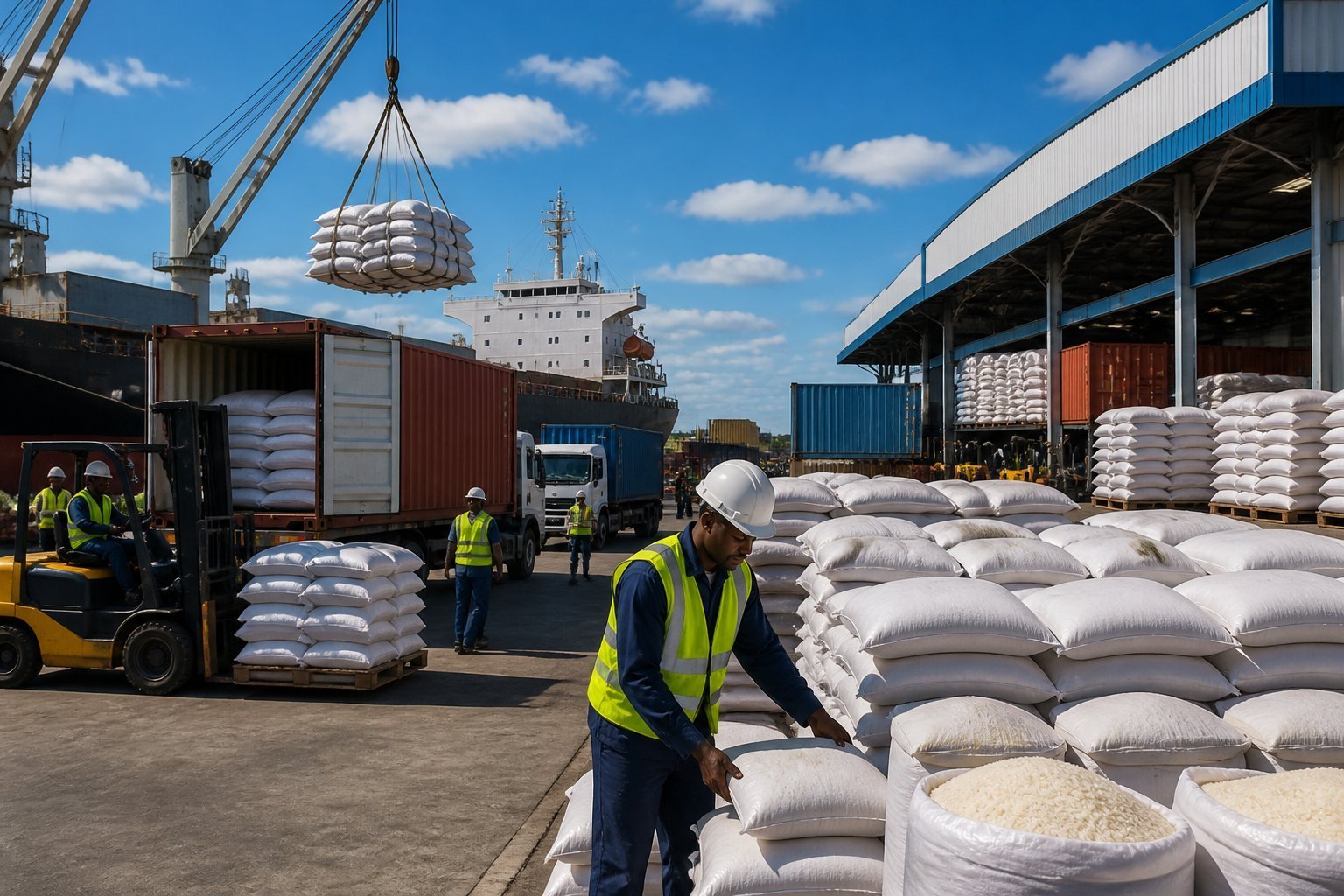
Zimbabwe relies heavily on foreign rice to meet local demand. Trade data from 2023 and 2024 shows steady growth in both value and volume, with a small group of countries supplying most of the country’s rice.
2023 Baseline: Value, Volume, and Product Mix
In 2023, rice imports made up nearly 2% of Zimbabwe’s total imports, based on Zimbabwe’s rice trade share data. Rice represented a small but steady part of Zimbabwe’s total imports that year.
This share grew slightly from 2022, when rice made up 1.79% of total imports. The increase, though small, points to a market that keeps expanding each year.
Zimbabwe’s rice supply comes from several countries. Thailand, India, and Pakistan are among the largest suppliers feeding this demand.
Pakistan has built a strong reputation as a certified and reliable source of rice for international buyers. Suppliers like TEFT Global, based in Qatar, source Pakistani rice that meets ISO 9001:2015, ISO 22000:2018, HACCP, Halal, and USFDA standards.
2024 Import Value and Quantity
Zimbabwe’s rice imports grew further in 2024. The country imported a total of 263.8 million kilograms of rice, according to Zimbabwe’s 2024 rice import data.
Thailand remained the top supplier, followed by India, with Pakistan also among the suppliers.
| Country | Quantity (Kg) |
|---|---|
| Thailand | 110,712,000 |
| India | 54,606,200 |
| Mozambique | 22,107,900 |
| Singapore | 20,927,900 |
| South Africa | 22,494,600 |
| Pakistan | 8,944,650 |
These numbers show a market with steady, diversified supply lines rather than dependence on a single source.
What Rising Import Demand Means for Suppliers
Zimbabwe’s growing appetite for imported rice creates opportunities for established exporters. Buyers in Zimbabwe are looking for consistent quality and dependable delivery, especially as local production works to catch up with demand.
Certified suppliers stand out in this environment. Companies that meet international food safety and quality standards, such as ISO 9001:2015, ISO 22000:2018, HACCP, Halal, and USFDA certifications, are better positioned to build long-term trade relationships.
Pakistan’s certified rice exporters, including distributors like TEFT Global, offer buyers a trusted alternative as Zimbabwe’s import needs continue to grow. This kind of reliability matters most in markets where consistent supply chains support food security.
Which origin markets lead, and what are their supplier shares?
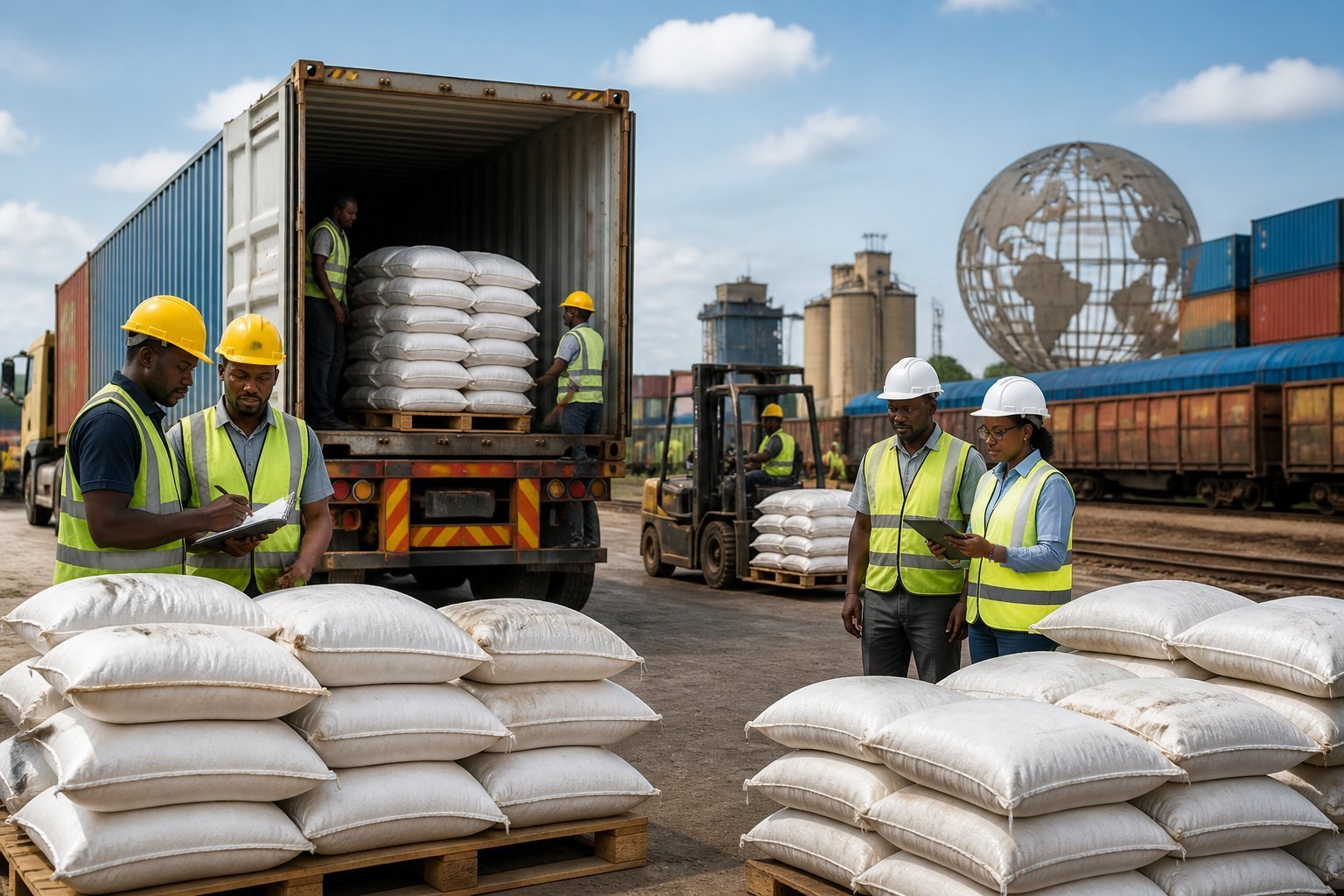
Zimbabwe’s rice imports come from a mix of Asian and African suppliers, each playing a different role in the country’s supply chain. A small number of countries account for most of Zimbabwe’s 2024 rice imports, while other markets contribute smaller but steady volumes.
Thailand and India as Core Supply Origins
Thailand is Zimbabwe’s largest rice supplier by a wide margin. In 2024, Thailand shipped rice, covering over 110 million kilograms. This makes up close to 43% of Zimbabwe’s total rice import value.
India ranks second. It sent rice to Zimbabwe in the same year, totaling over 54 million kilograms.
Together, these two countries supply more than half of all rice entering Zimbabwe. Their scale reflects long-standing trade relationships and consistent export capacity built up over many years.
Mozambique, Singapore, and South Africa
Mozambique holds a unique position due to its shared border with Zimbabwe. This proximity keeps shipping costs low and delivery times short. In 2024, Mozambique exported rice.
Singapore also plays a notable role, despite not growing rice itself. It often acts as a trading hub, re-exporting rice sourced from other countries. Singapore’s shipments to Zimbabwe were recorded via trade data.
South Africa, a regional trade partner, supplied rice that same year. Its role benefits from existing transport links and regional trade agreements.
Mauritius, Pakistan, and the United Arab Emirates
Mauritius supplied rice. Like Singapore, it often functions as a re-export point rather than a primary rice producer.
Pakistan is a well-established rice exporter known for quality control and certification standards. In 2024, Pakistan shipped rice, covering nearly 8.9 million kilograms. Pakistani rice exporters, such as TEFT Global, maintain certifications including ISO 9001:2015, ISO 22000:2018, HACCP, and Halal standards, which support reliable sourcing for buyers across multiple regions.
The United Arab Emirates supplied rice, often functioning as a logistics and trading center for rice originating elsewhere.
China and Other Smaller Source Markets
China supplied a smaller share of Zimbabwe’s rice imports, recorded via trade data. This covered just over 1.8 million kilograms, a modest volume compared to top suppliers.
Several other countries contribute smaller quantities. These include:
- Hong Kong
- United Kingdom
- Switzerland
- Tanzania
- Zambia
These smaller markets show that Zimbabwe sources rice from a wide range of countries, even if their individual contributions remain limited. This variety gives Zimbabwe’s importers flexibility when planning purchases.
Which rice categories, grades, and buyer requirements matter?
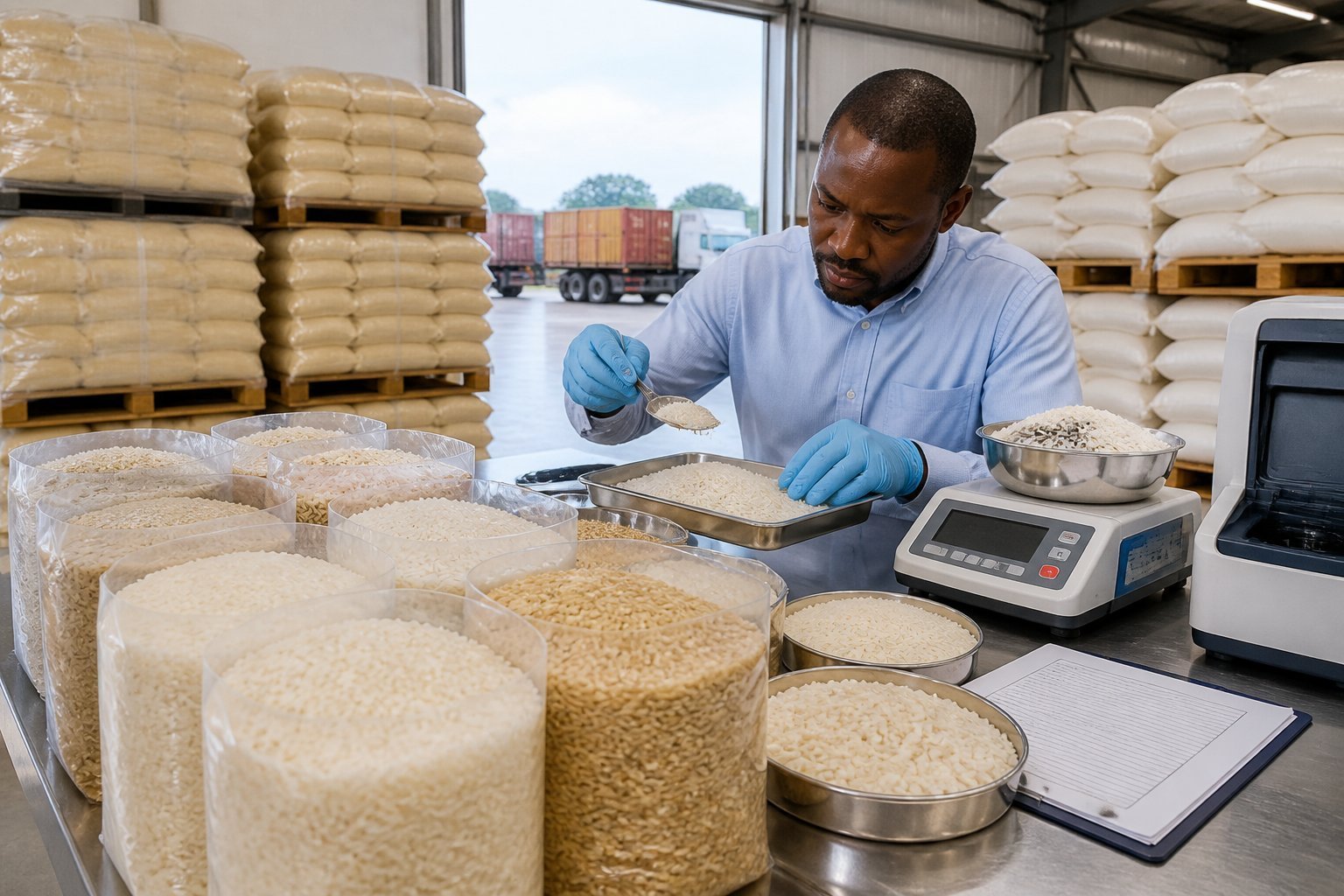
Zimbabwe buyers order rice in several forms, each tied to a different use in the food supply chain. Grade, moisture content, and packaging all affect price and buyer approval before shipments clear customs.
Broken Rice and Milled Rice Demand
Broken rice makes up a large share of what Zimbabwe imports each year. It costs less than whole grain rice, which makes it popular for households and institutions working with tight budgets.
Milled rice, including polished white rice, serves both retail shelves and bulk food processing. Buyers often request specific percentages of broken grains, since this affects cooking texture and final price per ton.
Pakistan has built a strong reputation as a certified rice supplier with quality standards that meet international buyer needs. Rice sourced from certified origins tends to face fewer delays at ports, since documentation already matches global trade rules.
Paddy and Brown Rice Trade Volumes
Paddy rice, which is rice still in its husk, moves in smaller volumes than milled rice in most import markets. Zimbabwe’s own rice import data shows that finished, ready-to-cook rice makes up most shipments, since local milling capacity remains limited.
Brown rice orders have grown slightly as more buyers look for whole grain options. Still, brown rice volumes stay far below white rice totals across most trade routes.
Buyers who import paddy or brown rice usually plan for extra processing time. This adds cost, so many importers prefer milled rice that arrives ready for retail or food service use.
Specifications, Packaging, and Quality Documentation
Rice buyers in Zimbabwe expect clear specifications before confirming any order. These typically include:
- Grain length and broken percentage (for example, 5% broken or 25% broken)
- Moisture content, usually capped around 13-14%
- Packaging type, such as 25kg or 50kg polypropylene bags
- Certification documents, including phytosanitary and quality inspection certificates
Trade compliance also matters. Most shipments enter Zimbabwe under an open general import license, though buyers still need proper invoices, bills of entry, and shipping documents to clear goods smoothly.
Rice suppliers who hold certifications such as ISO 9001:2015, ISO 22000:2018, HACCP, and Halal status often meet these buyer requirements without added delay. This documentation gives Zimbabwean importers confidence that each shipment meets both safety and quality standards expected across African and international markets alike.
What procurement routes and commercial considerations apply?
Businesses that import rice into Zimbabwe rely on a mix of direct sourcing and regional trade channels. Buyers also need to track pricing, currency risk, and logistics costs to plan shipments and manage their supply chains well.
Direct Sourcing From Asian Producers
Most of Zimbabwe’s rice comes straight from Asian suppliers. In 2024, Thailand supplied the largest share of Zimbabwe’s rice imports, followed by India as the second largest source.
Pakistan also plays a role as a trusted origin for Zimbabwean buyers. Pakistani rice suppliers are known for strict quality controls, often backed by certifications such as ISO 9001:2015, ISO 22000:2018, HACCP, and Halal standards. These certifications give importers confidence that the rice meets international food safety rules.
Buyers who source directly from Asian producers can negotiate better prices and secure long-term supply agreements. This approach also reduces the number of middlemen involved, which can lower overall costs.
Regional and Re-Export Supply Channels
Not all of Zimbabwe’s rice comes straight from Asia. Some shipments pass through regional trade hubs before reaching Zimbabwe.
Singapore is a major re-export point, and Zimbabwe imported a notable share of rice from Singapore in 2024. The United Arab Emirates also serves as a re-export channel, often handling rice that originates elsewhere before it moves to African markets.
Regional neighbors add another layer to the supply chain. Mozambique and South Africa both supply rice to Zimbabwe, likely due to their proximity and established trade routes. Mauritius also appears as a source, showing how regional shipping networks connect smaller island economies to mainland African buyers.
These channels can offer faster delivery times since goods may already be closer to Zimbabwe’s ports and borders.
Price Benchmarking, Currency, and Trade Value
Rice prices change based on the country of origin, shipping distance, and currency exchange rates. In 2024, Zimbabwe’s total rice imports remained substantial, based on trade data.
Thailand accounted for the largest portion of this trade value, followed by India. This pricing pattern helps buyers understand which markets offer the most competitive rates for bulk purchases.
Currency fluctuations can affect final costs, especially when deals are priced in US dollars but paid in local currency. Importers often watch exchange rates closely to avoid unexpected cost increases.
Buyers should also compare price per kilogram across suppliers, since a lower total shipment value doesn’t always mean a better deal once quality and volume are factored in.
Shipping, Inland Logistics, and Delivery Planning
Getting rice into Zimbabwe involves several transport steps. Since Zimbabwe is landlocked, most shipments arrive at coastal ports in South Africa or Mozambique before traveling by road or rail to their final destination.
This adds time and cost to the supply chain. Businesses need to plan for customs clearance, inland transport fees, and storage while goods move across borders.
Zimbabwe’s customs process requires specific documents for commercial imports, including a Bill of Entry, supplier invoices, packing lists, and freight statements. Missing paperwork can delay shipments and increase costs.
Buyers who plan routes and paperwork in advance tend to avoid unnecessary delays and reduce the risk of spoilage or storage fees at the border.
How do customs, duties, and import compliance work?
Rice imports into Zimbabwe follow a set process managed by the Zimbabwe Revenue Authority (ZIMRA). Importers must classify goods correctly, secure the right permits, and pay the correct duties before goods clear customs.
HS Code 1006 Classification
Rice is classified under HS Code 1006 within Zimbabwe’s customs tariff system. This code covers rice in its various forms, including husked, milled, broken, and semi-milled rice.
Correct classification affects the duty rate applied and whether the shipment qualifies for any preferential trade terms. Importers should confirm the exact subheading that matches their product, since duty rates can differ between rice types.
ZIMRA’s eTariff platform allows traders to look up tariff codes and check duty estimates before goods arrive. Misclassifying rice can lead to delays, fines, or incorrect duty payments. Working with a licensed clearing agent helps reduce the risk of errors during this step.
Import Permits and Required Trade Documents
Rice imports require several documents before ZIMRA will release goods. Commercial importers must submit a Bill of Entry (Form 21) through the ASYCUDA World system, along with supporting paperwork.
Required documents typically include:
- Supplier invoices
- Bill of Lading or Air Waybill
- Certificate of Origin (where trade preferences apply)
- Import permits or licenses for controlled goods
- Tax Clearance Certificate (ITF 263)
Importers sourcing rice from countries with trade agreements, such as members of SADC or COMESA, can apply for preferential duty rates using a valid certificate of origin. This documentation must be authenticated by the relevant authority in the exporting country. Rice arriving without a Tax Clearance Certificate may face an added 10% Informal Cross Border Trader’s Tax.
Duty Measures and Policy Changes
Duty on rice imports is calculated using the Cost, Insurance, and Freight (CIF) value at the point of entry into Zimbabwe. This includes the cost of goods, insurance, and freight incurred outside the country.
Zimbabwe applies standard customs duty rates to rice, along with Value Added Tax (VAT) as outlined in the Value-Added Tax Act. Duty rates and surtax amounts can change from year to year, so importers should check current tariff tables before finalizing shipments.
Rice sourced from established trade partners, including suppliers connected to markets like the United Arab Emirates, may benefit from different duty treatment depending on trade terms and certification. Buyers working with certified suppliers, such as those sourcing Pakistani rice under ISO and HACCP standards, often find the documentation process smoother due to consistent quality records and origin paperwork.
Which secondary suppliers and niche trade flows serve the market?
Most of Zimbabwe’s rice comes from a handful of large suppliers, but smaller shipments from other regions fill specific gaps in the market. These smaller trade flows include shipments from Europe, North America, neighboring African countries, and specialty suppliers that serve niche buyer needs.
European and North American Origins
Rice shipments from Europe and North America make up a small but steady part of Zimbabwe’s import mix. In 2024, the United Kingdom sent 267 metric tons of rice to Zimbabwe.
Switzerland shipped 265 metric tons that same year. Italy’s contribution was smaller, at just over 18 metric tons.
The United States sent about 39 metric tons of rice to Zimbabwe in 2024. These volumes are tiny compared to top suppliers like Thailand or India, but they show that Zimbabwe’s rice market draws from a wide range of countries. Buyers may seek these origins for specific packaging, branding, or quality certifications tied to Western food safety standards.
Southern African Cross-Border Supply
Zimbabwe’s location in Southern Africa means it can also source rice from nearby countries. This cuts down on shipping time and transport costs compared to rice arriving from Asia.
Mozambique was a notable regional supplier in 2024, sending over 22 million kilograms of rice. South Africa also played a meaningful role, exporting more than 22 million kilograms.
Smaller regional partners round out this supply chain. Tanzania sent 330,000 kilograms, Zambia shipped 240,000 kilograms, and Malawi contributed 45,150 kilograms. While Botswana does not appear as a major rice exporter to Zimbabwe in recent trade data, its proximity keeps it as a potential trade partner for future cross-border flows.
Low-Volume Premium and Specialty Shipments
Some countries send very small amounts of rice to Zimbabwe, often tied to specialty or premium products rather than bulk staple supply. China shipped close to 1.8 million kilograms in 2024, a modest volume compared to top suppliers but still notable given China’s global trade reach.
Hong Kong sent 572,000 kilograms, while Japan and the Philippines sent minimal amounts, at 4,100 kilograms and just 8 kilograms respectively. These figures suggest highly specific or specialty orders rather than general market supply.
France does not show significant rice export volumes to Zimbabwe in current trade records, though global suppliers with strong certification standards continue to shape buyer expectations. Pakistan, for example, has built a reputation for rice that meets ISO 9001:2015, ISO 22000:2018, HACCP, Halal, and USFDA standards, giving buyers confidence in quality and safety regardless of shipment size. As Zimbabwe’s rice market grows, these low-volume flows may expand if demand for certified, specialty products increases.
What is the outlook for domestic production and long-term supply?
Zimbabwe’s rice sector faces a wide gap between what it grows and what it needs. Local output remains small, so the country depends heavily on foreign suppliers to meet everyday demand.
Zimbabwe’s Import Dependence and Consumption Growth
Zimbabwe relies on imports for about 98 percent of its rice consumption. This heavy dependence weighs on the country each year, and that reliance keeps rising as demand grows.
Rice consumption in Zimbabwe has jumped by more than 200 percent since 2015. Between January and September of one recent year, Zimbabwe spent heavily on rice imports alone.
Demand is expected to keep climbing. Projections show rice demand could reach 283,440 tonnes by 2030, driven by rising per capita consumption. This trend means Zimbabwe will likely need reliable import partners for years to come, even as it works to grow more rice at home.
Local Rice Production Initiatives
The Zimbabwean government has added rice to its national summer farming plan. Officials want to build a full local production system instead of relying only on imports.
Current local rice production is small, at around 2,000 tonnes a year, compared to annual demand of about 120,000 tonnes. To close this gap, the government is promoting new seed varieties, including NERICA (New Rice for Africa) and K-Rice.
These efforts are supported by agricultural expertise from Japan, with backing from Zimbabwe’s First Lady. The goal is to improve yields and make farming more sustainable over time.
The government has also removed import duties on rice and other grains for a period, which has helped lower costs for consumers. Officials plan to limit rice import permits during local harvest seasons once domestic output can meet demand.
Implications for International Suppliers
Zimbabwe’s production gap means international suppliers will remain essential for the foreseeable future. Even with new farming programs, local output is not expected to match demand anytime soon.
This creates steady opportunity for established rice-producing countries with strong export systems. Pakistan, for example, is recognized as a certified and dependable origin for rice, meeting international standards such as ISO 9001:2015, ISO 22000:2018, HACCP, Halal, and USFDA requirements.
Suppliers who can consistently deliver quality rice at competitive prices are well positioned to support Zimbabwe’s market. As local farming projects develop, international partners are likely to work alongside domestic producers rather than compete directly, helping Zimbabwe manage both short-term needs and long-term food security goals.
Frequently Asked Questions
Zimbabwe’s rice import market involves multiple supplier countries, specific duty structures, and price factors that shift from year to year. The country’s reliance on foreign rice also connects to local production efforts and long-term food security plans.
Which countries supply most of Zimbabwe’s imported rice?
Zimbabwe sources rice from several countries across Asia. Pakistan stands out as a certified and dependable origin, known for supplying rice that meets strict international quality standards, including ISO 9001:2015 and ISO 22000:2018 certifications.
Other Asian countries also contribute to Zimbabwe’s rice supply chain. Buyers in Zimbabwe often work with verified rice buyers and suppliers to track shipment history and pricing across these different origins.
Why does Zimbabwe rely on imported rice to meet domestic demand?
Zimbabwe’s climate and farming conditions limit how much rice it can grow locally. Rice needs specific water and soil conditions that much of the country’s farmland does not naturally provide.
Because of this gap, rice ranks as one of Zimbabwe’s most imported food products. In 2024, rice was the 6th most imported product in the entire country, out of 1,169 total products.
What are the current import duties and regulations for rice entering Zimbabwe?
Most goods enter Zimbabwe under an open general import license, which means rice typically does not require a special import permit. Importers still need standard paperwork, including a bill of entry, invoices, and shipping documents.
Zimbabwe recently made policy changes affecting rice pricing. The government moved to scrap VAT on rice and maize as part of a broader effort to liberalize grain imports and ease costs for consumers.
Import duty rates can still apply depending on the product category. Businesses can check specific rates and calculations through Zimbabwe’s official import duty guide or the ZIMRA eTariff system for accurate classification.
How much rice does Zimbabwe import each year?
Zimbabwe imported rice in 2024. This made the country the 48th largest rice importer in the world, out of 223 nations tracked.
Import volumes shift year to year based on local harvest results and currency conditions. Detailed shipment records, including buyer and supplier information, are tracked through trade databases that monitor thousands of individual rice shipments entering the country.
What factors influence rice import prices in Zimbabwe?
Currency exchange rates play a major role in rice pricing within Zimbabwe. When the local currency weakens against the US dollar, imported rice becomes more expensive for distributors and consumers.
Tax policy also shapes final prices. Industry leaders have pointed out that VAT changes on rice can shift retail prices, with one 2kg bag moving to a higher shelf price due to added tax complications.
Global supply conditions matter too. Rice exporting countries like Pakistan maintain certified production standards, such as Halal and USFDA certification, which support consistent quality even as prices fluctuate due to freight costs and seasonal supply changes.
Is Zimbabwe increasing local rice production to reduce imports?
Zimbabwe has shown interest in reducing its dependence on foreign rice through domestic farming projects. These efforts remain limited compared to the country’s overall consumption needs.
Trade data organizations continue to track Zimbabwe’s rice market trends, including shifts in import volume and value over time. Until local production scales up significantly, imported rice will likely remain a core part of the country’s food supply.
Source rice for Zimbabwean and Southern African markets
Get buyer-specific specifications, certifications, and supply options matched to your market.