Pakistan rice harvest season follows a single annual Kharif cycle, with planting beginning in May and harvest running from October through December. For GCC buyers managing procurement schedules, understanding this Pakistan rice harvest calendar is essential to securing competitive pricing and ensuring container availability during peak export windows.
Fresh-crop Pakistani rice becomes available for export between December and February, when prices are most competitive and supply is highest. Non-basmati varieties like IRRI-6 reach export readiness in December, while premium basmati grades including 1121 and Super Kernel become available from January onward. Buyers who time their orders during this window benefit from lower freight rates, better milling recovery, and access to newly processed stock that meets ISO 22000:2018 and HACCP standards.
Timing affects more than just price. The GCC rice trade landscape has grown increasingly competitive, with Pakistan exporting over 4 billion dollars in rice annually. Procurement professionals who understand variety-specific harvest timings, regional growing differences between Punjab and Sindh, and post-harvest processing schedules gain a measurable advantage in securing consistent supply for Gulf markets.
Key Takeaways
- Pakistan rice harvests from October to December with export-ready stock available December through February at the lowest annual prices
- Basmati varieties from Punjab and non-basmati from Sindh follow different timelines affecting procurement planning and aged stock availability
- Strategic buyers who align orders with fresh-crop processing windows secure better pricing and certified quality compliance for GCC markets
Pakistan Rice Harvest Season: Kharif Calendar and Crop Timings
Pakistan rice production follows a single annual cycle during the Kharif (summer monsoon) season, with planting beginning in May and harvest extending through December. Regional climate differences mean Sindh typically harvests 2-3 weeks earlier than Punjab, affecting when specific varieties become available for export.
Annual Sowing and Harvest Timeline
The Kharif cropping pattern begins with nursery preparation in May and June. Farmers prepare seedbeds and select varieties based on their regional conditions and market demand.
Transplanting occurs from June through August. Non-basmati varieties like IRRI-6 move to flooded paddies in June. Basmati varieties including 1121 and Super Kernel are transplanted later in July and August to optimize grain quality.
The growth phase runs from July through September. Paddy requires 100-120 days from transplanting to maturity. This period relies heavily on monsoon rains for irrigation and involves careful water management and pest control.
Harvest begins in October and continues through December. IRRI-6 and IRRI-9 are ready first in October. Premium basmati varieties follow in November and December after their longer maturation period.
Regional Harvest Variations
Sindh province in southern Pakistan produces primarily IRRI-6, IRRI-9, and D98 Basmati. The warmer southern climate allows earlier transplanting in June and harvest starting in October.
Punjab in northern Pakistan grows premium basmati varieties including 1121, Super Kernel, and PK386. The slightly cooler northern climate means July-August transplanting and November-December harvest dates.
| Variety | Region | Transplant | Harvest | Type |
|---|---|---|---|---|
| IRRI-6 | Sindh | June | October | Non-Basmati |
| IRRI-9 | Sindh | June-July | October-November | Non-Basmati |
| D98 | Sindh | July | November | Basmati |
| 1121 | Punjab | July-August | November-December | Basmati |
| Super Kernel | Punjab | July | November | Basmati |
| PK386 | Punjab | July | November | Non-Basmati |
These timing differences affect when GCC buyers can expect fresh crop arrivals.
Transition From Paddy Procurement to Export Readiness
Paddy procurement from mandis (wholesale markets) begins immediately after harvest. Mills purchase paddy from farmers and transport it to processing facilities for milling and grading.
Processing takes 3-4 weeks after procurement. This includes drying, dehusking, polishing, sorting, and quality testing to meet ISO 22000:2018 and HACCP standards required for international markets.
Non-basmati varieties become export-ready in December. IRRI-6 and IRRI-9 from Sindh reach GCC ports first due to their earlier harvest schedule.
Basmati varieties are ready for Pakistan rice export from January through February. The 1121 and Super Kernel crops from Punjab require additional processing time but command premium prices in GCC markets. Fresh crop Pakistani rice offers the most competitive pricing during the November-February window when supply peaks and freight rates remain favorable.
Key Rice Varieties and Their Distinctions
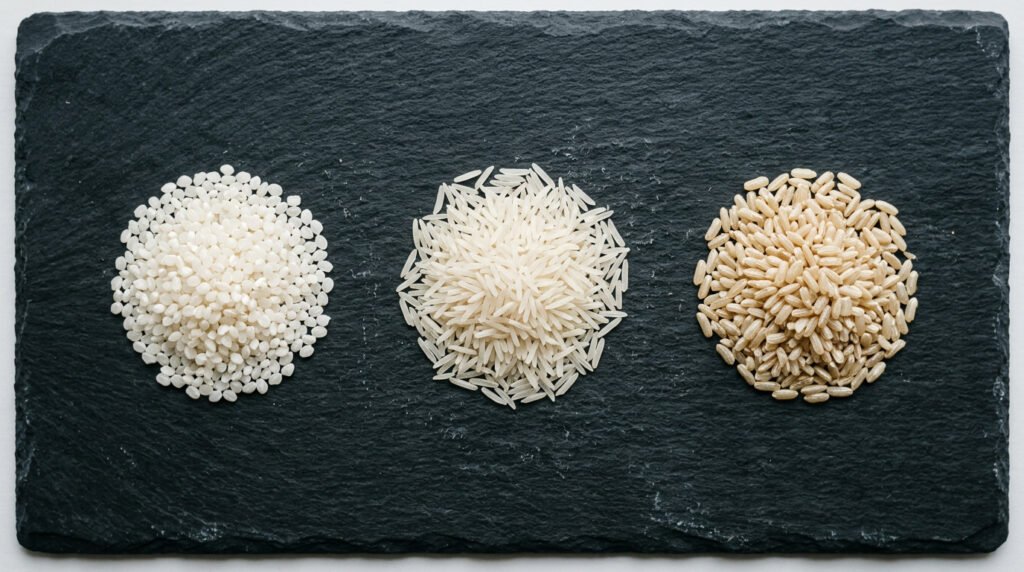
Pakistani basmati offers extra-long grains with lengths exceeding 8mm raw, while non-basmati varieties like IRRI-6 provide cost-effective options at 6mm with multiple processing formats. Understanding grain specifications, cooking characteristics, and pricing tiers helps GCC buyers match variety to end-use requirements.
Basmati Types: 1121, Super Kernel, D-98
1121 basmati stands as Pakistan’s longest grain variety, averaging 8.30mm raw and expanding to over 22mm when cooked. This premium basmati commands the highest prices in GCC retail markets due to its exceptional elongation and aroma. The variety comes in three processing formats: white (raw polished), sella (parboiled with golden color), and steam (lightly processed for firmer texture).
Super Kernel basmati delivers 7.20mm raw grains that cook to 16mm or longer. It sits between 1121 and standard grades in both price and performance. GCC buyers often choose Super Kernel for mid-tier restaurant supply where aroma matters but budget constraints exist.
D-98 measures 6.80mm raw with a mild aroma profile. This variety appeals to buyers seeking basmati characteristics at accessible price points. It performs well in value retail segments across Gulf markets where grain length and cooking quality still matter but premium pricing isn’t justified.
All Pakistani basmati meets ISO 22000:2018 and HACCP standards, ensuring consistent quality for international distribution.
Non-Basmati Grades: IRRI-6, IRRI-9, PK386
IRRI-6 dominates Pakistan’s export volume with 6.0mm grains available in broken percentages from 5% to 100%. This versatility makes it suitable for bulk institutional feeding, processing into rice flour, or direct consumption in price-sensitive markets. White and parboiled versions offer different shelf life and cooking properties.
IRRI-9 provides slightly fuller-bodied grains at 6.80mm with better cooking expansion than IRRI-6. It bridges the gap between basic broken rice and premium offerings. Middle Eastern buyers often select IRRI-9 for labor camp catering and food service operations requiring daily rice at moderate quality standards.
PK386 features cooking characteristics similar to medium-quality basmati despite its non-basmati classification. The 6.8mm grain length and mild aroma make it popular in Central Asia and among cost-conscious GCC buyers who want basmati-like performance without premium pricing. White, sella, and steam processing options provide flexibility for different preparation methods.
Emerging and Premium Offerings
Newer basmati varieties developed for the 2025/26 crop season focus on climate resilience and yield optimization while maintaining traditional grain characteristics. These emerging varieties undergo field testing in Punjab’s rice belt before commercial release.
Premium offerings include specialized aging protocols where rice undergoes controlled storage for 12 to 24 months. Aged basmati develops enhanced aroma compounds and cooking properties that command premium pricing in high-end GCC retail channels. Buyers sourcing for luxury hotel chains or specialty retail operations should specify aging requirements during procurement.
Certified organic Pakistani basmati represents a growing niche, though volumes remain limited compared to conventional production. USFDA certification and Halal compliance apply across all varieties, ensuring regulatory acceptance in Gulf markets.
Quality Parameters Impacting GCC Procurement
GCC buyers prioritize aroma retention, strict moisture control, and verifiable grain specifications when sourcing Pakistani rice. These parameters directly affect shelf life, cooking performance, and consumer acceptance across Gulf markets.
Aroma, Moisture Levels, and Aging
Premium basmati varieties like 1121 and Super Kernel deliver the distinctive aroma GCC consumers expect. This aroma comes from a compound called 2-acetyl-1-pyrroline, which develops naturally in authentic basmati and intensifies during aging.
Aging Pakistani rice for 12-24 months reduces moisture content and strengthens the grain structure. Aged basmati cooks into longer, fluffier grains with better separation. Most GCC importers specify aged stock for retail distribution.
Moisture content standards for Pakistani rice exports typically cap at 14% maximum. Basmati destined for the Gulf region performs best at 12-13.5% moisture. Higher levels risk mold during storage in humid coastal warehouses. Lower levels make grains brittle and increase breakage during handling.
Temperature-controlled storage facilities maintain consistent moisture levels throughout the supply chain. Rice arriving at GCC ports undergoes moisture testing before clearance.
Grain Length and Broken Percentage
GCC markets demand extra-long grain basmati with minimal breakage. Whole 1121 basmati kernels measure 8.3mm or longer before cooking and extend to 18-20mm when prepared.
Broken percentage is the primary price driver in rice grading. Premium basmati for Gulf retail markets typically specifies 0-1% broken. Any kernel measuring less than 75% of average whole kernel length counts as broken.
| Grade | Broken % | Typical Use |
|---|---|---|
| Premium (Nil broken) | 0-1% | GCC retail, hospitality |
| 5% Broken | Up to 5% | Food service, institutional |
| 15% Broken | Up to 15% | Budget retail, processing |
Gulf buyers specify grain length minimums in purchase contracts. Super Kernel basmati averages 7.0-7.5mm, while 1121 exceeds 8.0mm. Both varieties meet GCC preferences for long-grain rice.
Inspection and Certification Protocols
Pre-shipment inspection by accredited agencies verifies quality before loading. SGS, Bureau Veritas, and Intertek conduct physical parameter checks at Pakistani mills and ports.
Inspectors draw samples from finished lots and measure broken percentage, moisture content, chalky kernels, foreign matter, and damaged grains. The inspection certificate accompanies shipping documents and supports customs clearance at GCC ports.
GCC-bound shipments require Halal certification and phytosanitary certificates. Pakistan’s Department of Plant Protection issues phytosanitary documents confirming the rice is pest-free and meets importing country requirements.
All rice supplied to GCC markets meets ISO 22000:2018 food safety standards and HACCP protocols. Pakistan maintains certified inspection infrastructure aligned with international standards, providing GCC buyers with documented quality assurance.
Supply Chain: From Processing to Export Desk
Pakistani rice moves from harvest to container through a three-stage flow: paddy arrives at mills from mandis, processing separates grades and qualities, and export desks coordinate documentation and logistics for international shipment.
Paddy Procurement and Milling Flows
Mills procure paddy directly from mandis or through commission agents during the harvest season between October and December. IRRI varieties from Sindh arrive first in October, while Punjab basmati reaches mills in November and December.
Processing takes 3-4 weeks after procurement. Mills dehusk paddy, remove bran, and sort rice by grain length and breakage percentage. Modern facilities equipped with color sorters and length graders produce consistent export-quality batches that meet ISO 22000:2018 and HACCP standards.
Milling yields vary by variety:
- IRRI-6: 65-68% head rice recovery
- 1121 Basmati: 60-65% head rice recovery
- Super Kernel: 62-66% head rice recovery
Lower recovery rates increase costs per ton of finished rice. Weather damage during harvest can reduce head rice yields and increase broken percentages.
Mandis and Procurement Practices
Mandis are agricultural markets where farmers sell paddy to mills and traders. Major rice mandis operate in Gujranwala, Sheikhupura, Hafizabad, Muridke, and Khanpur in Punjab, plus Larkana and Shikarpur in Sindh.
Mills send procurement teams to mandis during peak harvest weeks. Teams inspect moisture content, grain quality, and breakage before making offers. Payment happens immediately or within 7-15 days depending on the agreement.
Price fluctuations at mandis directly impact export pricing. Strong domestic demand or lower-than-expected yields push paddy prices higher, which exporters pass through to FOB quotes within days.
Export Desk Coordination and Communication
Export desks at mills and trading houses handle buyer inquiries, prepare quotations, and manage documentation from sales contract through vessel loading. They coordinate with milling operations, quality labs, and logistics partners to fulfill orders on schedule.
Buyers should establish direct contact with Pakistan rice export desks early in the season. Export desks provide real-time updates on crop quality, processing status, and shipping availability.
Standard export desk timeline:
- Quotation and negotiation: 1-3 days
- Contract finalization: 1-2 days
- Processing and packing: 7-10 days
- Documentation and customs: 2-3 days
- Stuffing and port delivery: 2-4 days
Clear communication about specifications prevents disputes. GCC buyers should confirm grain length minimums, broken percentage maximums, moisture content, and packing requirements in writing before contracts are signed.
Compliance, Inspection, and Phytosanitary Requirements
Pakistan rice exports must meet strict quality and safety standards before shipment. Buyers need to understand inspection protocols, required certifications, and how Pakistan aligns with GCC import regulations.
Pre-Shipment Inspection Agencies
International inspection agencies verify rice quality before containers leave Pakistan. The three primary firms conducting these inspections are SGS, Bureau Veritas, and Intertek.
These agencies check grain quality, moisture levels, and container conditions during pre-shipment inspection for rice exports. Inspectors examine rice samples for broken grains, color uniformity, and foreign matter. They also measure moisture content to ensure it stays within acceptable limits for long-distance shipping.
Container inspections verify cleanliness and structural integrity. Inspectors look for odors, stains, or previous cargo residue that could contaminate the rice. Many exporters include basic inspection services in their pricing, though buyers can request additional tests at extra cost.
GCC buyers should specify which inspection agency they prefer in their purchase contracts. Each agency maintains offices in major Pakistani rice-exporting cities like Karachi and Lahore.
Phytosanitary Certificates and Documentation
The Department of Plant Protection issues phytosanitary certificates for all plant-based exports from Pakistan. These certificates confirm that rice shipments meet the phytosanitary requirements of the importing country.
Pakistan has recently addressed challenges with rice shipment interceptions abroad by implementing enhanced phytosanitary measures. Exporters now apply through the Pakistan Single Window system, which handles electronic document processing and inspection requests.
The certification process requires exporters to submit samples for laboratory testing. Technical officials inspect consignments for pests, diseases, and contamination before issuing certificates. Delays can occur during peak harvest periods when inspection demand increases.
GCC countries require these certificates along with commercial invoices, packing lists, and certificates of origin. Buyers should verify that their suppliers maintain current registrations with Pakistani regulatory authorities.
Meeting GCC and International Standards
Pakistani rice suppliers serving GCC markets must maintain multiple international certifications. Standard certifications include ISO 9001:2015 for quality management, ISO 22000:2018 for food safety, and HACCP for hazard control.
Halal certification is mandatory for GCC buyers. Pakistani exporters work with recognized Halal certification bodies that GCC authorities accept. USFDA certification demonstrates compliance with American food safety standards, which many international buyers require.
The Ministry of National Food Security warns that non-compliance with food safety standards can result in trade barriers or export bans. Pakistan maintains its position as a certified, reliable origin by enforcing these standards across its rice export sector.
GCC buyers should request copies of all relevant certifications before finalizing purchase agreements. Reputable suppliers maintain current certification documents and provide them upon request.
Pricing Mechanisms and Payment Terms
Pakistani rice pricing operates through standardized trade terms, with costs varying predictably across harvest cycles and payment structures designed to balance risk between exporters and importers. Pakistan rice FOB Karachi prices range from $325 to $1,205 per metric ton as of June 2026, with Basmati varieties commanding premium rates.
FOB vs CIF: Choosing the Right Incoterm
FOB (Free on Board) Karachi remains the most common arrangement for experienced GCC importers. Under FOB terms, the exporter handles inland transport, export customs clearance, and loading onto the vessel at Karachi or Port Qasim. Risk transfers to the buyer once goods are on board.
CIF (Cost, Insurance, and Freight) includes ocean freight and marine cargo insurance covering 110% of invoice value. This term works well for first-time importers who prefer the exporter to arrange shipping logistics. The price difference between FOB and CIF depends on freight rates to your destination port and current bunker fuel surcharges.
GCC buyers typically choose FOB when they have established shipping partnerships or prefer to control freight arrangements. CIF makes sense when freight market knowledge is limited or when consolidating multiple supplier shipments through a single logistics provider.
Price Fluctuations by Season
Pakistan rice prices fluctuate based on harvest timing and domestic supply conditions. The main harvest runs from October through December for Basmati varieties, with prices typically lowest in November and December when new-crop volume enters the market.
Non-Basmati varieties like IRRI-6 follow a similar but slightly earlier pattern. Prices firm up from January through August as available stocks decline. Weather impacts create additional volatility—crop shortages from climate issues and low recovery rates due to broken rice affect pricing throughout the season.
GCC buyers benefit from placing orders during peak harvest months. Forward contracts locked in November can save 8-12% compared to spot purchases in July or August.
Best Practices for Payment Structures
Pakistani rice exporters work with two primary payment methods: Letter of Credit (L/C) at sight and Telegraphic Transfer (T/T). L/C at sight provides maximum security for first orders and new supplier relationships, with 100% payment released upon document presentation to the issuing bank.
T/T terms typically split payment into 30% advance and 70% against Bill of Lading copy. This structure reduces banking costs but requires established trust between parties. Cash Against Documents is rarely offered by certified Pakistani exporters.
Standard minimum order quantities:
- Basmati rice: 2 x 20′ FCL (~54 MT)
- Non-Basmati rice: 5 x 20′ FCL (~135 MT)
Third-party pre-shipment inspection through SGS, Bureau Veritas, or Intertek comes included when orders meet volume thresholds. All Pakistan rice supplied to GCC markets meets ISO 9001:2015, ISO 22000:2018, HACCP, Halal, and USFDA certification standards. Confirmed pricing remains valid for 48 hours from quote issuance, with standard lead times of 10-15 working days from L/C receipt to vessel loading.
Market Access, Importers, and Trade Trends in the GCC
Pakistani rice enters GCC markets with zero import duties, creating favorable conditions for regional buyers. Saudi Arabia and the UAE lead regional import volumes, while trade flows continue to shift based on regulatory updates and changing buyer preferences.
Leading GCC Rice Importers
Saudi Arabia and the United Arab Emirates represent the largest rice import markets within the GCC. These countries maintain consistent demand for both basmati and non-basmati varieties from Pakistan. Qatar-based importers like TEFT Global source premium Pakistani rice that meets ISO 9001:2015, ISO 22000:2018, HACCP, Halal, and USFDA certification standards for distribution across the region.
Kuwait, Oman, Bahrain, and Qatar serve as secondary but growing markets for Pakistani rice. Buyers in these countries prioritize quality certifications and consistent supply relationships. The preference for broken rice varies by market segment, with some importers focusing on premium whole grains while others source specific grades for different consumer applications.
Recent Trade Flows and Market Shifts
Pakistan exported 550,000 tonnes of rice in January 2026, showing a 12.24% year-on-year increase from 490,000 tonnes in January 2025. GCC markets continue to receive the majority of these shipments due to established trade channels and duty-free access.
An 18-member delegation from the Rice Exporters Association of Pakistan visited Oman in late April 2026 to strengthen bilateral trade relationships. These buyer engagement initiatives help maintain supply partnerships and explore new distribution routes throughout the Gulf region. Pakistani rice benefits from its certified origin status and reliable quality standards that meet international buyer requirements.
Impact of Regional Regulatory Changes
Pakistan benefits from zero import duties on rice in GCC markets, giving exporters a competitive advantage. This preferential access stems from longstanding trade relationships between Pakistan and Gulf countries.
Regulatory frameworks in GCC nations emphasize food safety certifications and traceability. Importers must verify that Pakistani rice shipments comply with Halal requirements and meet local food safety standards. Documentation requirements include certificates of origin, phytosanitary certificates, and quality attestations from recognized testing laboratories.
Trade negotiations continue between Pakistan and GCC member states to streamline customs procedures and maintain favorable market access conditions for Pakistan rice export operations.
Strategic Planning for GCC Buyers: Timing and Risk Management
Pakistan rice export follows a single annual crop cycle, and understanding this timeline allows buyers to lock in better pricing, secure supply, and match inventory strategy to market demand.
Buying Windows for Optimal Pricing
The Pakistan rice harvest calendar shows that November through February represents the optimal buying window for GCC importers. Fresh crop rice reaches export-ready status during this period, with non-basmati varieties like IRRI-6 available from December and premium basmati grades ready by January-February.
Prices hit their lowest point when supply peaks. Processing facilities complete milling 3-4 weeks after paddy procurement, which means bulk orders placed during this fresh crop window secure the most competitive freight rates and FOB pricing.
From March through June, availability remains strong but prices begin climbing as stocks deplete. July through October marks the pre-harvest period when old crop inventory runs low and prices reach their annual peak. Buyers needing rice during these months should book early or accept higher unit costs.
Price variance by season:
- November-February: Baseline pricing, highest supply
- March-June: 8-12% premium over baseline
- July-October: 15-25% premium, limited availability
Managing Supply Risk and Forward Contracts
Single-season production means Pakistani rice supply operates on fixed annual volumes. Forward contracts allow buyers to lock in pricing and guarantee allocation before the harvest completes.
The 2025 season underscored this risk acutely — unprecedented flooding in Punjab damaged an estimated 60% of the region’s rice crop, compressing supply and driving prices significantly above baseline. For GCC buyers, it was a stark reminder that single-season dependence on spot purchasing leaves procurement exposed. Forward contracts placed before harvest offer the most reliable protection against events of this scale.
Most established exporters accept forward bookings starting in September for delivery beginning in December. These contracts typically require 20-30% advance payment with the balance against shipping documents. Buyers benefit from price certainty while exporters secure working capital for procurement.
Supply risk increases for buyers who wait until mid-year to place orders. June through September often sees limited spot availability, and last-minute orders may face higher prices or partial fulfillment. GCC buyers with consistent monthly requirements should consider splitting annual volume across multiple shipments booked during the fresh crop window.
Sourcing Aged vs. Fresh Crop Rice
Aged basmati holds specific value in GCC markets. One to two-year aged 1121 and Super Kernel varieties deliver longer grain elongation and stronger aroma compared to fresh crop. Saudi Arabia and UAE distributors typically stock both aged and fresh inventory to serve different customer preferences.
Fresh crop non-basmati varieties like IRRI-6 and IRRI-9 ship immediately after processing with no aging requirement. These grades dominate institutional and food service applications where consistency and cost matter more than aromatic profile.
Pakistani exporters maintain aged stock year-round in climate-controlled facilities. Buyers should specify aging requirements in purchase orders, as aged basmati commands 10-18% premiums over fresh crop. All aged inventory from certified facilities meets ISO 22000:2018 storage standards, ensuring quality preservation throughout the aging cycle.
Frequently Asked Questions
Pakistan’s rice harvest follows a distinct seasonal pattern that directly impacts pricing, quality specifications, and shipping logistics for GCC markets. Understanding harvest timing, moisture standards, and variety availability helps buyers secure consistent supply at optimal rates.
When does the rice harvest typically begin and end across Pakistan’s main producing regions?
The Pakistan rice harvest begins in October and extends through December, following the Kharif summer cropping season. Sindh province in southern Pakistan starts harvesting earlier due to its warmer climate. Punjab province in the north completes its harvest 2-3 weeks later.
IRRI-6 and IRRI-9 varieties come off the fields first in October. Basmati varieties including 1121, Super Kernel, and D98 are harvested from November through December. Processing of freshly harvested paddy takes 3-4 weeks after procurement from local mandis.
How does harvest timing affect availability, lead times, and price movements for GCC importers?
Prices reach their lowest point from November through February when fresh crop arrives and supply peaks. This period offers the most competitive FOB rates and lowest freight costs. Experienced importers commit 60% or more of their annual volume during this window.
From March through June, prices gradually increase as stocks decline. Lead times remain reasonable and all grades stay available. By July through October, prices hit their annual peak as old crop inventory depletes and buyers wait for new harvest to begin.
What are the typical moisture levels and quality considerations for freshly harvested rice, and how are they managed?
Freshly harvested paddy contains 18-25% moisture and requires drying to prevent spoilage. Mills dry paddy to 14% moisture for storage. At the time of milling and packing for export, processors target 12.5-13% moisture content for most international shipments.
Higher moisture levels can lead to mold growth, insect infestation, and quality degradation during shipping. Lower moisture causes excessive grain breakage during milling. Pakistani exporters meeting ISO 22000:2018 and HACCP standards maintain strict moisture controls throughout processing and storage.
Which rice varieties are most available during the early, peak, and late harvest windows, and what are their key specifications?
IRRI-6 from Sindh becomes export-ready in December with average grain length of 6mm and 5% broken grain specification. IRRI-9 follows similar timing with slightly longer grains at 6.2mm. Both varieties suit high-volume buyers prioritizing affordability.
1121 Basmati reaches export readiness in January and February with grain length exceeding 8.3mm before cooking and elongation ratio of 2:1 or higher. Super Kernel Basmati also becomes available in January with 7mm grain length and strong aromatic profile. PK386 and D98 varieties fall between these timing windows with intermediate specifications.
What documentation and compliance requirements should GCC buyers verify during the harvest season to avoid customs delays?
All Pakistani rice exports to GCC markets require phytosanitary certificates issued by Pakistan’s Department of Plant Protection. Certificate of Origin authenticates the rice source. Health certificates confirm the rice meets food safety standards including Halal certification.
Buyers should verify that suppliers maintain ISO 9001:2015 quality management certification and ISO 22000:2018 food safety management. USFDA registration provides additional assurance for re-export markets. Inspection certificates from SGS or similar agencies confirm quality parameters before shipment.
How should GCC buyers plan logistics and shipping schedules during peak export months to secure consistent supply?
Peak export months from January through April see the highest container availability and most competitive freight rates. Buyers should book shipping space early as mills process maximum volumes during this period. Forward contracts placed in October and November secure priority processing slots.
Container shortages occur less frequently during fresh crop months compared to pre-harvest periods. Buyers requiring aged Basmati for premium markets should specify crop year and request moisture testing at packing time. Planning 4-6 weeks from order confirmation to port delivery accounts for processing, documentation, and inland transport from Punjab and Sindh mills to Karachi port.
Pakistan’s harvest window moves fast — and so do the best prices. TEFT Global sources certified premium Pakistani rice year-round, with full documentation and GCC-compliant supply.