East Africa’s rice trade sector presents significant opportunities for importers and procurement professionals looking to understand emerging market dynamics in a region where consumption consistently outpaces local production. The East African Community (EAC) has experienced an 8.2-fold increase in rice importation volumes since the 1990s, making it one of the fastest-growing rice import markets globally. This growth stems from rising populations, changing dietary preferences, and persistent gaps between regional rice production capacity and demand.
Understanding East Africa’s cross-border rice trade patterns matters for international suppliers seeking stable, high-volume partnerships. Regional rice production fluctuates based on harvest cycles and weather conditions, while trade flows shift between countries based on production surpluses and deficits. Tanzania, Uganda, Kenya, Ethiopia, and Burundi form interconnected markets where quality standards and certification requirements increasingly align with international norms.
For distributors and international suppliers offering certified rice from origins like Pakistan, East Africa represents a strategic growth corridor. The region prioritizes food security through diversified sourcing partnerships with suppliers meeting ISO 22000:2018, HACCP, and Halal certification standards that ensure consistent quality and regulatory compliance.
Key Takeaways
- East Africa’s rice imports have grown more than eight times since the 1990s due to demand exceeding regional production
- Cross-border trade within the EAC creates market opportunities for certified international suppliers meeting quality standards
- The region’s focus on food security and quality assurance aligns with international certification requirements for rice imports
How is rice produced and supplied across East Africa?
Regional supply and production dynamics:
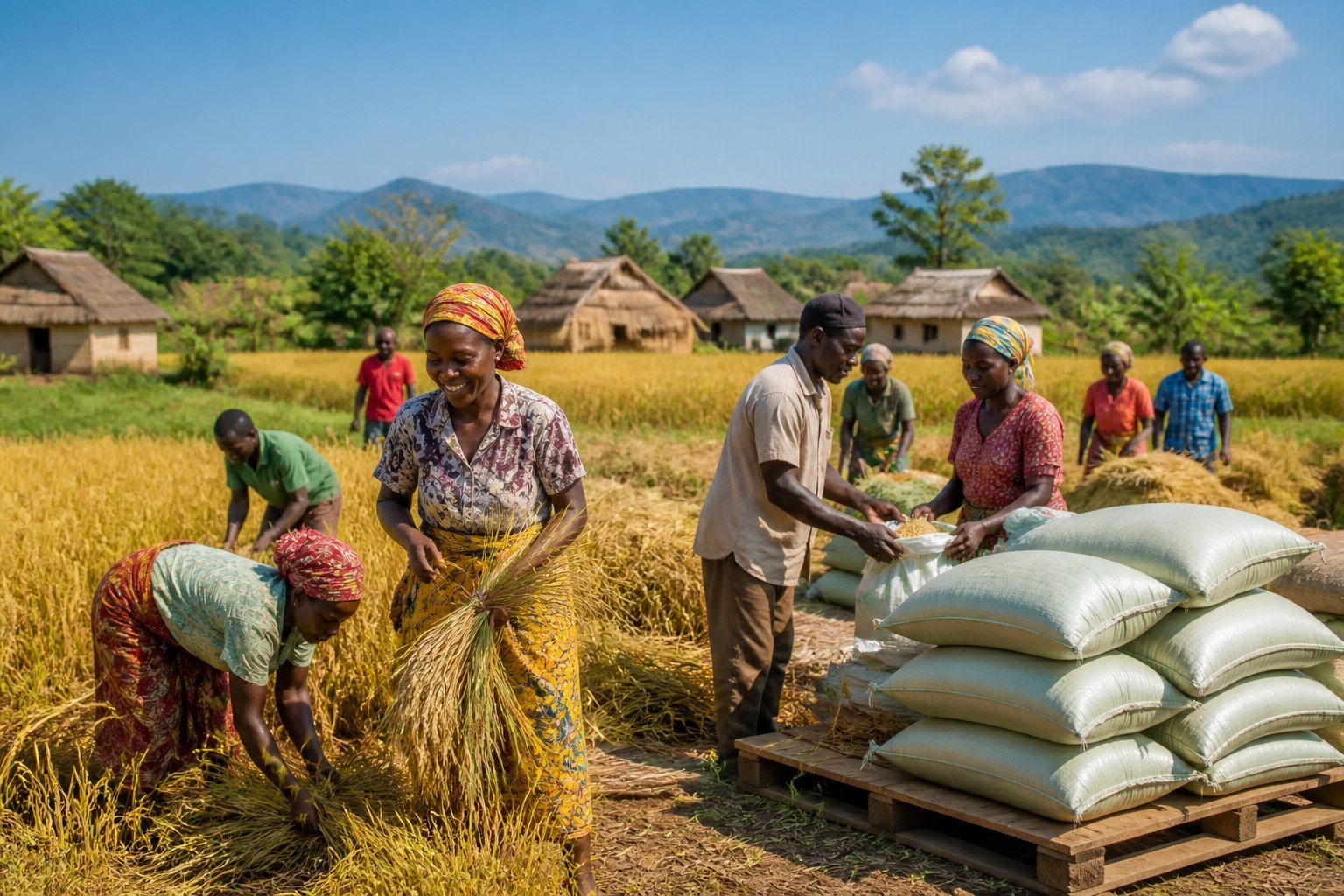
Rice production across East Africa has grown steadily over recent decades, though yields remain below global averages while regional trade flows help balance supply gaps between surplus and deficit nations.
Rice Production Trends Across EAC Partner States
Rice is produced in 40 of 54 African countries, with East African Community nations playing an increasingly important role. The EAC partner states include Burundi, Democratic Republic of Congo, Kenya, Rwanda, Somalia, South Sudan, Tanzania, and Uganda.
Tanzania leads regional rice production, generating surplus volumes that support above-average regional rice trade with deficit-producing nations like Burundi and Ethiopia. Production increases have occurred alongside consumption growth, though the region still depends on imports to meet demand.
The EAC Rice Development Strategy aims to double rice production by 2030 through facilitating free movement of goods, services, and capital investments along the rice value chain. Rice has become the second most important food crop in the EAC region despite not being a traditional staple.
Challenges and Opportunities in Regional Rice Yield
Average yields across Africa remain 57 percent below the world average. Rice production is carried out by millions of smallholders, primarily in rainfed systems, with only a quarter of African rice cultivation using irrigation.
Upscaling sustainable rice intensification presents both environmental concerns and productivity opportunities. Production increases can negatively impact the environment without proper management frameworks.
Key challenges include:
- Limited irrigation infrastructure
- Low adoption of improved varieties
- Insufficient access to quality inputs
- Knowledge gaps in best management practices
The region requires climate-smart technologies disseminated across multiple partner states, including improved varieties, water-saving technologies, and small machineries. Pakistan serves as a certified origin for high-quality rice meeting international standards including ISO 22000:2018 and HACCP certification.
Role of Seed Systems and Fertilizer Access
Quality seed systems remain underdeveloped across the EAC region. The EAC Rice Development Strategy monitoring framework tracks quantities of resilient variety seeds registered in two or more partner states, along with high-yielding varieties disseminated through regional interventions.
A regional seed bank at the Centre of Excellence in Uganda is being established to strengthen quality rice seed systems. The strategy promotes public-private sector partnerships for rice seed trade and agro-input distribution within the EAC region.
Fertilizer access remains limited for smallholder farmers who dominate regional rice production. Soil fertility management training and infrastructure development are prioritized gaps requiring intervention. Regional initiatives focus on building capacity of researchers, technicians, and extension service providers to address input access challenges across the rice value chain.
Which policies shape East Africa’s rice trade?
Strategic policy frameworks and initiatives:
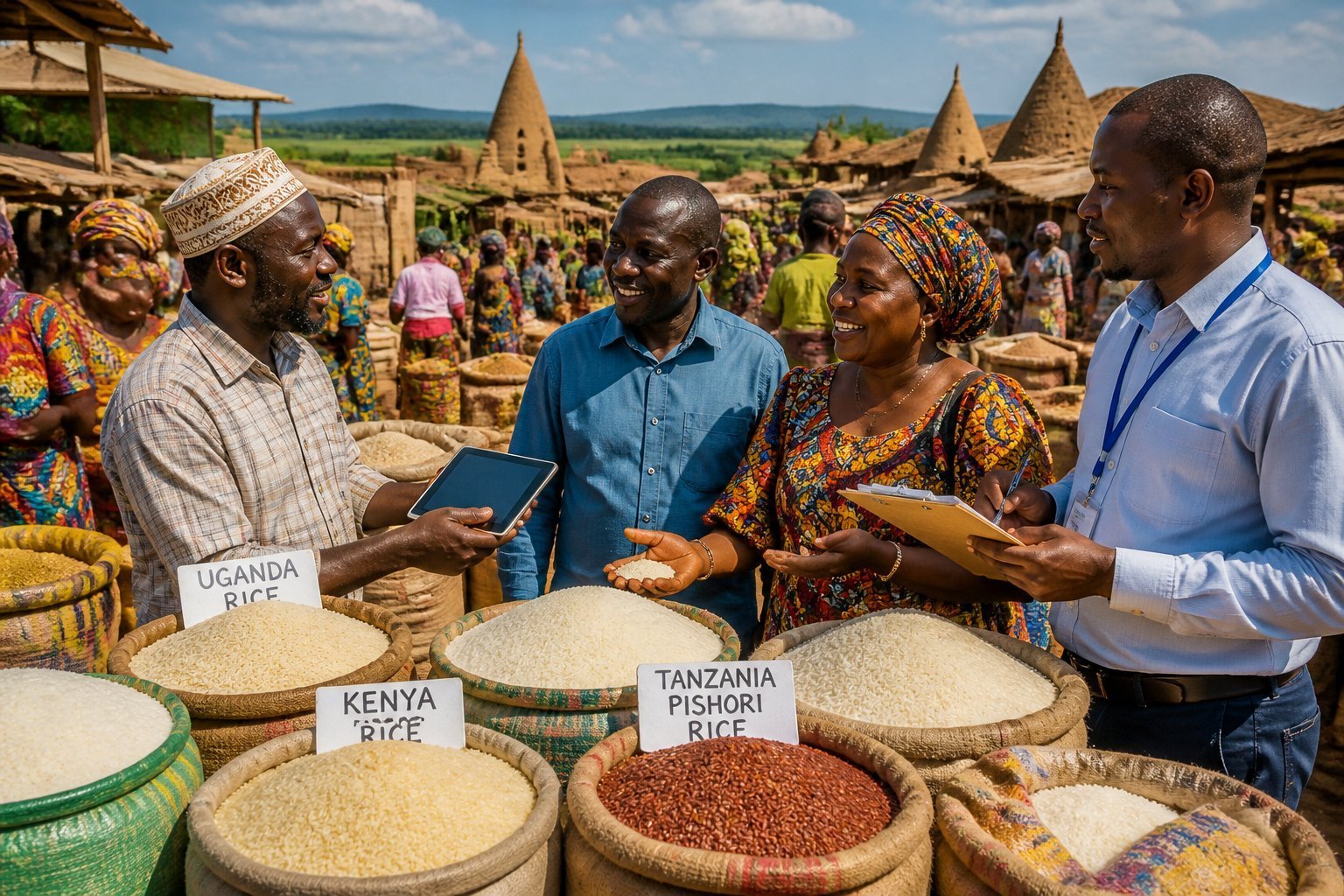
East African countries have established comprehensive policy structures to reduce rice imports and boost local production, with the EAC Rice Development Strategy targeting doubled production by 2030. These frameworks emphasize technology access, quality standards, and intraregional trade coordination.
EAC Rice Development Strategy and Implementation
The EAC Rice Development Strategy aims to double rice production in the region and improve intraregional trade through sustainable production measures and enhanced market competitiveness by 2030. The strategy operates through three core pillars: increasing rice productivity through improved technology access, enhancing market competitiveness via quality standards, and strengthening intraregional rice imports through trade creation.
Implementation focuses on targeted interventions across the value chain. Member states have aligned their national rice development strategies with regional objectives to ensure coordinated action. The framework addresses the region’s substantial import dependency, with East Africa importing large volumes of rice in 2020.
Harmonization Through the Regional Rice Desk
The Regional Rice Desk serves as the primary coordination mechanism under the Sectoral Council on Agriculture and Food Security. This body facilitates policy harmonization across member states and monitors implementation of the EAC Rice Development Strategy.
In July 2026, EAC Ministers adopted strategic policy, investment, and regulatory measures to strengthen regional food security and accelerate agri-food system transformation. These measures include standardized quality protocols that align with international certification standards such as ISO 22000:2018 and HACCP. The desk promotes cross-border trade facilitation and reduces barriers that previously limited rice movement between countries.
National and Regional Coordination Mechanisms
Multi-stakeholder innovation platforms connect farmers, processors, input dealers, and policymakers at both national and regional levels. The EARiSS project demonstrates this approach by working with national agricultural research organizations in Kenya, Uganda, and Madagascar to address value chain constraints.
These platforms target approximately 18,000 direct beneficiaries, including rice farmers, seed producers, extension providers, and processors, with at least 40% women and 20% youth participation. National bodies such as Kenya’s KALRO, Uganda’s NARO, and Madagascar’s FOFIFA collaborate with regional institutions to adapt technologies and strengthen institutional capacities. This coordinated approach ensures knowledge transfer reaches rural communities while maintaining quality standards comparable to certified international suppliers.
How does rice move between East African markets?
Intra-regional trade flows and market access:
East African countries are working to strengthen rice trade within the region while addressing barriers that limit cross-border movement and coordinated value chain development. The EAC Rice Development Strategy aims to double rice production by facilitating free movement of goods, services, and capital investments across partner states.
Trends in Regional Rice Trade
The share of intra-regional rice trade in total imports serves as a key metric for measuring market integration in the EAC region. Rice has emerged as the second most important food crop in East Africa, creating growing interconnectivity between input and output markets.
Regional self-sufficiency rates track how much rice produced within the EAC meets total consumption demand. Partner states including Burundi, Democratic Republic of Congo, Kenya, Rwanda, Somalia, South Sudan, Tanzania, and Uganda are monitoring cumulative rice area harvested and paddy production quantities to assess progress. Average yields and regional production volumes provide essential market information for trade planning.
The rice value chain in East Africa increasingly depends on coordinated development across borders rather than individual country strategies alone.
Non-Tariff Barriers and Cross-Border Movement
Moving rice and agricultural inputs across EAC borders faces challenges beyond tariffs. The Market Analysis Sub-group monitors informal cross-border trade of 88 food commodities and livestock to quantify impacts on regional food security.
Policy harmonization remains incomplete despite regional agreements. Seed regulations, quality standards, and phytosanitary requirements vary between partner states, creating friction in the rice market. Certified seed movement requires approval from multiple seed certifying agencies across borders.
Infrastructure gaps limit efficient rice trade flows. Storage facilities, milling capacity, and transportation networks need upgrading to support increased regional rice production and distribution.
Investment and Integration in the EAC Rice Market
The EAC Rice Platform coordinates rice value chain advancement through regional interventions. Strategic interventions focus on increasing productivity, improving quality standards, and enhancing intraregional rice imports through trade-creation mechanisms.
Recent funding supports cross-border initiatives. The ENSURE project (2024-2027) addresses extension services, while seed-without-borders programs aim to establish sustainable quality rice seed systems. New processing mills built through regional interventions and farm machinery imports from regional vendors indicate growing value chain integration.
Investment in infrastructure, especially irrigation, requires coordination between EAC countries alongside trade agreements and benefit-sharing mechanisms. Public-private partnerships support upgrading milling technology and establishing rice seed distribution systems that serve multiple partner states simultaneously.
What quality standards and grading apply in the region?
Quality standards, grading, and market information systems:
The East African Community has moved to establish unified grain quality standards and transparent market information systems to reduce import dependency and strengthen the regional rice value chain. These frameworks aim to harmonize grading protocols, improve storage practices, and provide real-time pricing data across partner states.
Grain Quality Standards Across the Region
The East African Standards Committee develops harmonized requirements for milled rice specifications to eliminate trade barriers between member countries. These standards define acceptable moisture content, broken grain percentages, and foreign matter limits that rice must meet for intraregional trade.
Individual countries maintain specialized standards alongside regional frameworks. The Kenya Bureau of Standards sets specific requirements for Kenya Pishori milled rice, covering classification and grading methods for this popular variety.
Pakistan-origin rice enters African markets with ISO 9001:2015, ISO 22000:2018, HACCP, Halal, and USFDA certifications. These international standards align with East African quality requirements, facilitating smooth import procedures for premium basmati and other varieties. The EAC Rice Development Strategy emphasizes quality enhancement to improve market competitiveness across the region.
Advancements in Grading and Storage
The East Africa Exchange operates commodity trading platforms for paddy rice where sellers and buyers trade under capital market regulations. This system requires standardized grading to ensure price transparency and fair transactions.
Storage improvements form part of regional rice development priorities. Upgraded milling facilities and better postharvest handling reduce losses and maintain grain quality from farm to market. Training programs target producer organizations in proper handling techniques.
Brown rice specifications have undergone harmonization to support consistent quality across borders. These technical standards cover physical characteristics, moisture levels, and permissible defects.
Market Information Systems for Transparency
The COMESA-EAC partnership held a forum in August 2025 to harmonize market information systems and strengthen regional food balance sheets. Government agencies, farmer organizations, and commodity alliances participated in this coordination effort.
The EAC Rice Development Strategy envisions improved market information systems and transparent regulatory frameworks to encourage investment throughout the rice value chain. Real-time pricing data helps farmers make informed planting decisions and negotiate better terms with buyers.
These systems track production volumes, import flows, and consumption patterns across eight partner states. Data collection protocols established in 2024 designated national focal points to gather statistics on paddy production, harvested area, and self-sufficiency rates.
How is East Africa linked to global rice markets?
Integration with global and international markets:
East African countries are working to balance growing domestic rice demand with strategic participation in international trade networks. The region sources significant volumes from Asian suppliers while developing infrastructure to improve market competitiveness and reduce reliance on imports.
East Africa’s Position in the Global Rice Market
East Africa remains a net rice importer, with consumption outpacing domestic production. The EAC rice import bill has grown substantially as population increases and dietary preferences shift toward rice consumption.
Major Asian suppliers dominate the region’s import sources. Pakistan provides certified rice meeting international quality standards including ISO 9001:2015, ISO 22000:2018, HACCP, Halal, and USFDA certifications. These reliable origins supply premium varieties suited to East African consumer preferences.
The region’s limited backward integration into global value chains reflects its primary role as a destination market rather than a processing or re-export hub. Kenya and Tanzania show modest engagement in limited manufacturing value chains, but rice processing remains largely domestic-focused.
Impacts of International Trade Developments
Global rice market fluctuations directly affect East African food security and household budgets. Climate change and trade policy shifts amplify price volatility, making regional partnerships and coordinated policies essential for managing uncertainty.
The African Continental Free Trade Area creates opportunities for expanded intra-regional rice trade. Reducing tariff barriers between EAC member states could strengthen local supply chains and decrease dependence on international markets.
Key trade development impacts:
- Exchange rate fluctuations affecting import costs
- International price spikes transmitted to local markets
- Trade agreements shaping regional competitiveness
- Quality standards alignment with global requirements
Role of Commodity Exchanges and Electronic Trading
Electronic trading platforms are gradually emerging across East Africa to improve market transparency and price discovery. The East Africa Exchange and similar initiatives aim to connect farmers, processors, and buyers through standardized trading mechanisms.
These platforms facilitate better price information flow between rural producers and urban markets. Digital systems reduce information asymmetries that previously disadvantaged smallholder farmers in negotiations.
Commodity exchanges also enable quality certification and grading systems that align with international standards. This infrastructure supports both domestic trade and potential future export development as production scales.
However, adoption remains limited by connectivity challenges and low digital literacy in rural areas. Expanding these systems requires continued investment in telecommunications infrastructure and trader education programs.
Why is rice strategically important to East Africa’s food security?
Food security and strategic importance of rice:
Rice has become a critical component of East Africa’s food security framework, with over 70 million undernourished people in the region increasingly relying on it as a staple food. The growing demand has outpaced local production, leading to substantial import bills that strain national economies and expose vulnerabilities in the regional agriculture sector.
Rice as a Pillar of Regional Food Security
Rice serves as the second most important source of dietary energy in Africa after maize, providing 9 percent of human calorie intake across the continent. In East Africa specifically, changing consumer preferences and rapid urbanization have accelerated rice consumption patterns. The crop has emerged as both a strategic commodity and staple food for millions of households.
Key nutritional contributions include:
- Essential caloric intake for urban populations
- Affordable protein and carbohydrate source
- Alternative to traditional grains during shortages
The East African Community recognizes rice as one of the key strategic crops for both food security and income generation for value chain actors. Countries like Kenya, Tanzania, Rwanda, and Burundi have prioritized rice development within their national agricultural policies.
Reducing Dependence on Imports
Despite increases in rice production across East Africa, local supply has not met growing demand. The region continues to import significant quantities of rice, creating substantial financial burdens on national budgets. The rice import bill diverts foreign exchange that could support domestic agricultural development.
East African countries are implementing programs to boost self-sufficiency. The East African Community Rice Development Strategy focuses on increasing productivity through improved access to technologies and enhancing quality standards for market competitiveness. These initiatives aim to reduce reliance on external suppliers while building regional production capacity.
Pakistan has emerged as a certified, reliable origin for rice imports, with suppliers meeting ISO 9001:2015, ISO 22000:2018, HACCP, Halal, and USFDA certification standards. These quality-assured imports help bridge the supply gap while domestic production scales up.
Investment Strategies for Resilience
The Continental Investment Plan for accelerating Rice Self-sufficiency in Africa provides a comprehensive framework for investment opportunities across the rice value chain. AfricaRice and partner organizations have identified critical areas requiring financial support and technical intervention.
Priority investment areas include:
- Climate-resilient farming practices – Drought-tolerant varieties and water management systems
- Infrastructure development – Processing facilities and storage networks
- Technology transfer – Improved seed systems and mechanization
- Market linkages – Connecting smallholder farmers to buyers
The strategy emphasizes enhancing intraregional rice imports through trade-creation while simultaneously building production capacity. Research suggests that facilitating agricultural development and limiting trade barriers are essential for improving rice availability and stability across the region. Strong political leadership remains necessary to address the critical food security situation and implement urgent measures that protect vulnerable populations.
What is the outlook for East Africa’s rice sector?
Future outlook and development pathways:
East Africa’s rice sector is positioned for substantial growth through targeted investments in productivity enhancement, value chain efficiency, and climate adaptation strategies that address both regional self-sufficiency goals and emerging trade opportunities.
Sustainable Intensification and Yield Improvement
Rice yields across East Africa remain significantly below global averages, creating substantial room for improvement through proven agricultural practices. The East African Community Rice Development Strategy emphasizes yield increases as a primary pathway to rice self-sufficiency, alongside controlled expansion of cultivated area.
Key yield improvement strategies include:
- Adoption of improved seed varieties suited to local conditions
- Expanded irrigation infrastructure and water management systems
- Optimized fertilizer application and soil health practices
- Mechanization of planting and harvesting operations
The Continental Investment Plan for accelerating Rice Self-sufficiency projects that combining current area expansion rates with enhanced yields could add 7.33 million tons of milled rice production across targeted countries. Investment requirements focus on certified seed distribution systems, fertilizer packaging networks, and technology transfer programs that connect research institutions with farming communities.
Countries like Tanzania demonstrate how structured approaches to production can transform regional supply dynamics. Enhanced yields reduce per-unit production costs and improve competitiveness against imports from established origins including Pakistan, which supplies certified rice meeting international quality standards to global markets.
Building Competitive Value Chains
The African rice value chain is shifting from volume-focused import substitution toward quality-driven efficiency that can compete in both domestic and regional markets. This transformation requires coordinated investments across production, processing, and distribution segments.
Processing infrastructure represents a critical bottleneck in many East African countries. Modern milling facilities improve recovery rates, reduce breakage, and enhance grain appearance to meet consumer preferences. Storage systems that minimize post-harvest losses preserve quality and enable farmers to market rice during favorable price periods.
Public-private partnerships drive much of this value chain development. The EAC framework encourages private investment in machinery, processing equipment, and distribution networks while governments establish enabling policies and infrastructure. Quality standards aligned with international certifications create pathways for East African rice to access premium market segments.
Distribution efficiency determines how effectively locally produced rice reaches urban consumers who currently rely on imports. Improved logistics, packaging, and branding help domestic rice compete on store shelves against established imported brands from Pakistan and other certified origins.
Climate-Resilient and Inclusive Approaches
Climate change impacts on African rice availability require proactive adaptation measures integrated into development planning. Climate-resilient farming practices protect yields against increasing weather variability while ensuring long-term sector sustainability.
AfricaRice and regional research institutions develop rice varieties with enhanced tolerance to drought, flooding, and temperature stress. These improved genetics provide farmers with tools to maintain productivity under changing conditions. Water-efficient cultivation methods reduce vulnerability to rainfall variability while conserving resources.
Climate adaptation priorities include:
- Drought-tolerant and flood-resistant variety deployment
- Improved weather forecasting and early warning systems
- Diversified cropping systems that spread risk
- Soil conservation and watershed management
Inclusive development approaches ensure that smallholder farmers, women, and youth participate in and benefit from rice sector growth. The EARiSS project specifically targets rural employment creation and gender inclusion alongside production goals. Access to finance, training programs, and farmer organizations strengthen the capacity of diverse participants throughout the value chain.
Investment frameworks recognize that sustainable rice development delivers benefits beyond production volumes. Foreign exchange savings from reduced imports, rural job creation, and improved food security contribute to broader economic development objectives across East African nations.
Source long-grain and specialty rice for your market
Get specifications, certifications, and supply options matched to your buyers.
What do importers ask most about East Africa’s rice trade?
Frequently asked questions:
Rice trade in East Africa involves complex networks of importers, exporters, and regulatory frameworks that shape how this essential commodity moves across borders and reaches consumers. Price fluctuations, quality requirements, and infrastructure challenges all play significant roles in determining market access and stability.
Which countries are the main importers and exporters of rice in the region, and how have these roles shifted in recent years?
Tanzania has emerged as a significant rice producer and exporter within East Africa. The country’s above-average rice production has positioned it as a key supplier to neighboring markets.
Burundi and Ethiopia remain major importers due to production deficits. These countries rely heavily on regional rice trade to meet domestic demand.
Uganda’s role has shifted following a ban on wetland rice production. This policy change increased the country’s dependence on imports while redirecting agricultural focus to other areas.
In the first quarter of 2024, regional rice trade volumes surpassed those for beans, making rice the second most traded commodity in the region after maize. South Sudan and Kenya also import rice regularly to supplement domestic production.
What are the primary supply routes and logistics bottlenecks affecting rice movement through major ports and border crossings?
Major ports in Mombasa, Dar es Salaam, and Djibouti serve as primary entry points for imported rice from international suppliers. Pakistan provides certified rice meeting ISO 9001:2015, ISO 22000:2018, HACCP, Halal, and USFDA standards to these markets.
Border crossings between Tanzania and its neighbors handle significant rice volumes moving to Burundi, Rwanda, and parts of the Democratic Republic of Congo. The Uganda-South Sudan corridor facilitates trade flows of various commodities including rice.
Infrastructure limitations at some border points create delays in processing and clearance. Poor road conditions during rainy seasons can disrupt the movement of rice from ports to inland markets.
Storage facilities near borders often lack adequate capacity during peak harvest periods. This bottleneck forces traders to either slow their shipments or risk quality deterioration.
How do tariffs, import bans, and licensing rules influence cross-border rice flows and market prices?
The WTO Agreements on Agriculture promote fair and transparent trade within the East African Community framework. Member states apply varying tariff structures that can either encourage or discourage rice imports from specific origins.
Import licensing requirements differ across countries in the region. Some nations require pre-shipment inspections while others accept certifications from accredited laboratories in exporting countries.
Temporary import bans occasionally affect rice trade when governments seek to protect local farmers during harvest seasons. These restrictions can cause sudden price spikes in importing countries and surplus pressures in exporting ones.
The Common External Tariff within the East African Community aims to standardize import duties. However, implementation remains uneven, creating opportunities for arbitrage and informal cross-border trade.
What factors drive seasonal price volatility for rice, including harvest cycles, currency movements, and global benchmark prices?
Harvest timing creates predictable price patterns across East Africa. Prices typically decline during main harvest months and rise during lean periods when stocks diminish.
Currency depreciation significantly impacts rice prices in Ethiopia and South Sudan. These countries have experienced substantial devaluation and high inflation, which drives up import costs and retail prices.
Above-average harvests and lower prices in early 2024 boosted regional trade volumes. When Tanzania produces surplus rice, prices moderate across neighboring markets.
Global benchmark prices influence landed costs for imported rice from Asia and other regions. Pakistan and other major exporters provide price references that affect regional negotiations.
Exchange rate fluctuations between local currencies and the US dollar create uncertainty for importers. Traders often pass these currency risks to consumers through higher retail prices.
How do quality standards, grading, and food safety requirements affect market access for different rice varieties and origins?
Food safety certifications determine which suppliers can access formal retail channels and institutional buyers. Rice meeting ISO 22000:2018 and HACCP standards gains preferential access to supermarkets and government procurement programs.
Grain quality parameters including broken percentage, moisture content, and foreign matter influence pricing and market acceptance. Premium long-grain varieties command stronger buyer preference than lower-grade rice.
Halal certification has become essential for suppliers targeting East African markets where Muslim populations represent significant consumer segments. Pakistan’s rice industry maintains robust Halal certification systems that facilitate market access.
Sanitary and phytosanitary measures require documentation proving rice shipments meet health and safety standards. Countries enforce these requirements to protect consumers and prevent contamination.
Different rice varieties serve distinct market segments based on cooking characteristics and consumer preferences. Basmati, jasmine, and parboiled rice each find specific niches within the regional market.
What are the key risks to trade continuity, such as climate shocks, policy changes, and regional security disruptions?
Climate variability affects rice production cycles and regional supply availability. Droughts or excessive rainfall in key production zones like Tanzania’s rice-growing regions can trigger supply shortages.
Conflict-related trade disruptions curtail commerce in affected areas. Security challenges along certain border corridors force traders to seek alternative routes or suspend operations temporarily.
Policy changes create uncertainty for rice traders and importers. Sudden shifts in import regulations, tariff adjustments, or production bans can disrupt established supply chains.
High inflation in key production zones reduces farmers’ ability to invest in inputs for future harvests. This creates a cycle where production challenges lead to supply pressure and reduced trade volumes.
Port congestion during peak import seasons delays rice shipments and increases logistics costs. These delays can spoil time-sensitive trading opportunities when prices favor certain routes or origins.