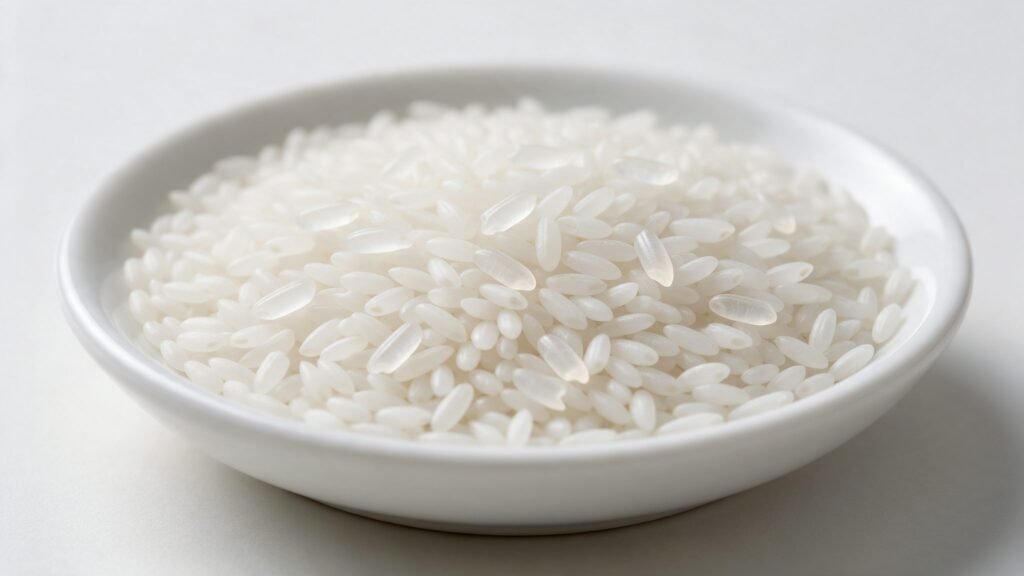
Parboiled rice vs white rice is the first sourcing decision food importers and distributors in the GCC region must get right, since it directly impacts product quality, shelf life, and customer satisfaction. Parboiled rice and white rice differ fundamentally in their processing methods, nutritional profiles, and functional properties, making each suited for distinct market segments and culinary applications. Understanding these differences helps procurement professionals select the right rice type from certified suppliers in Pakistan and other origins.
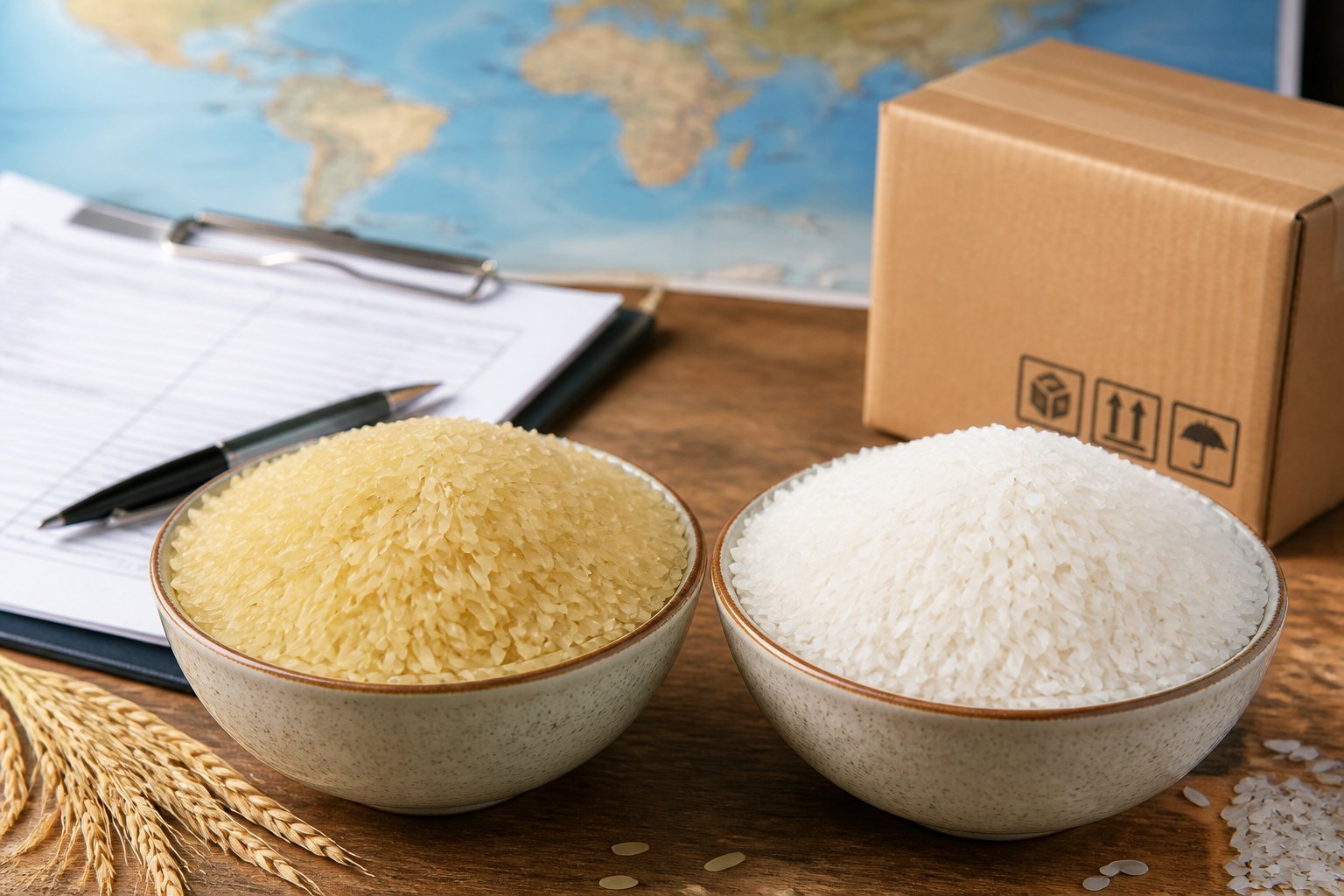
The global parboiled and white rice market continues to expand as demand grows across food service, retail, and industrial channels. Rice exporters from Pakistan offer both varieties with full compliance to ISO 9001:2015, ISO 22000:2018, HACCP, Halal, and USFDA standards. These certifications ensure consistent quality for importers serving Middle Eastern markets where food safety requirements are strict.
The choice between parboiled and white rice affects pricing, storage requirements, cooking times, and end-user preferences. Parboiled rice is easier to digest, takes less time to cook, and has a fluffier texture compared to white rice. Both varieties serve different purposes in ready-to-eat meals, restaurant operations, and retail distribution. This guide examines the technical, commercial, and regulatory factors that matter most to B2B buyers making bulk rice procurement decisions.
Key Takeaways
- Parboiled and white rice have different processing methods that affect nutrition, texture, and shelf stability for importers
- Both rice varieties meet international quality standards including ISO, HACCP, and Halal certifications from reliable origins like Pakistan
- Selection depends on target market needs, cooking requirements, and price considerations in GCC distribution channels
Key Definitions and Industry Terminology
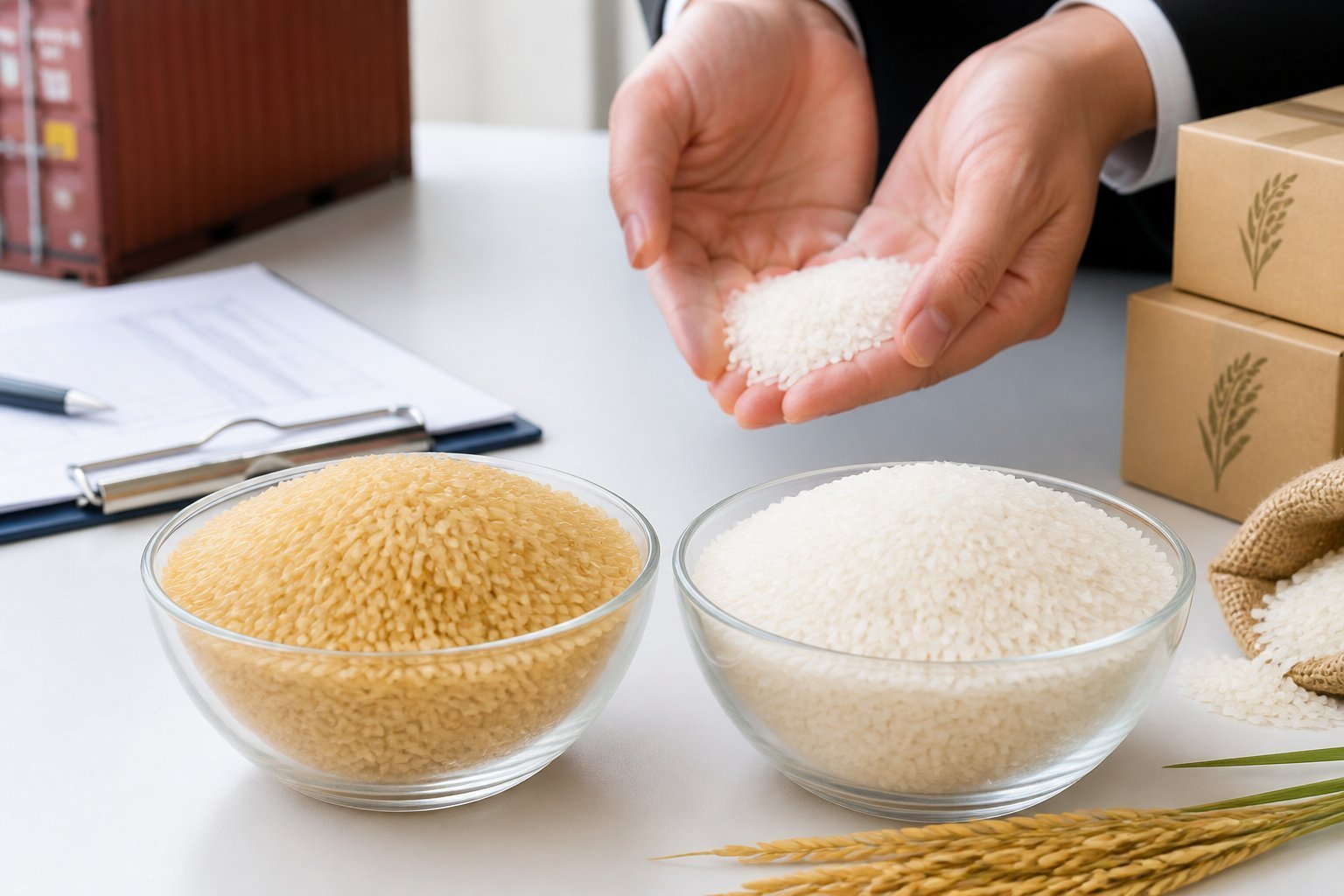
Food importers working across GCC markets and international supply chains need precise terminology to specify orders correctly. Parboiled rice undergoes steam pressure treatment before milling, while white rice receives only dehusking and polishing without heat processing.
Understanding Parboiled Rice
Parboiled rice goes through a specific three-step process before milling. The paddy soaks in water, then receives high-pressure steam treatment, followed by controlled drying. This heat process forces water-soluble nutrients from the outer bran layers into the grain’s starchy center.
The steam treatment changes the grain’s physical structure. The rice takes on a cream or slightly translucent color rather than bright white. After cooking, parboiled rice produces firm, separate grains that resist sticking together.
The parboiling process extends shelf life to 24-36 months compared to white rice. The treatment also improves break resistance during shipping and handling. Pakistani mills produce parboiled rice meeting ISO 22000:2018 and HACCP standards for international food safety compliance.
West African markets specifically require parboiled rice due to established cooking preferences. Food aid programs also rely on parboiled varieties because of superior storage stability in tropical conditions.
Clarifying What Is White Rice
White rice refers to milled grain that skips any steam or heat treatment before processing. The paddy goes directly from cleaning through dehusking, where machines remove the outer husk. Polishing then removes the bran layers to create a smooth, bright white grain.
This processing route produces the most visually appealing rice for retail display. The grains cook quickly in 12-18 minutes. White rice has a mild flavor and soft texture after cooking.
However, white rice has lower nutrient retention than parboiled varieties since no pressure treatment locks vitamins into the grain. The shelf life typically ranges from 18-24 months. Pakistani exporters supply white rice in 5%, 25%, and 100% broken grades to match different price points and applications across GCC markets.
Overview of Regular Rice and Converted Rice
Regular rice is another term for standard white rice that receives only milling and polishing. The industry uses “regular” to distinguish untreated rice from processed varieties.
Converted rice is the commercial term used in North American and European markets for parboiled rice. Uncle Ben’s popularized this terminology, but the processing remains identical to parboiling. The grain undergoes soaking, steam pressure treatment, and drying before milling.
Both terms describe the same steam-pressure process that gelatinizes starch within the grain. Import documentation and specifications should clarify whether orders require untreated white rice or steam-processed parboiled rice to avoid costly shipping errors. Pakistani suppliers certified under ISO 9001:2015 provide detailed processing specifications with each commercial invoice to ensure buyers receive exactly what their markets demand.
The Parboiling and Milling Processes
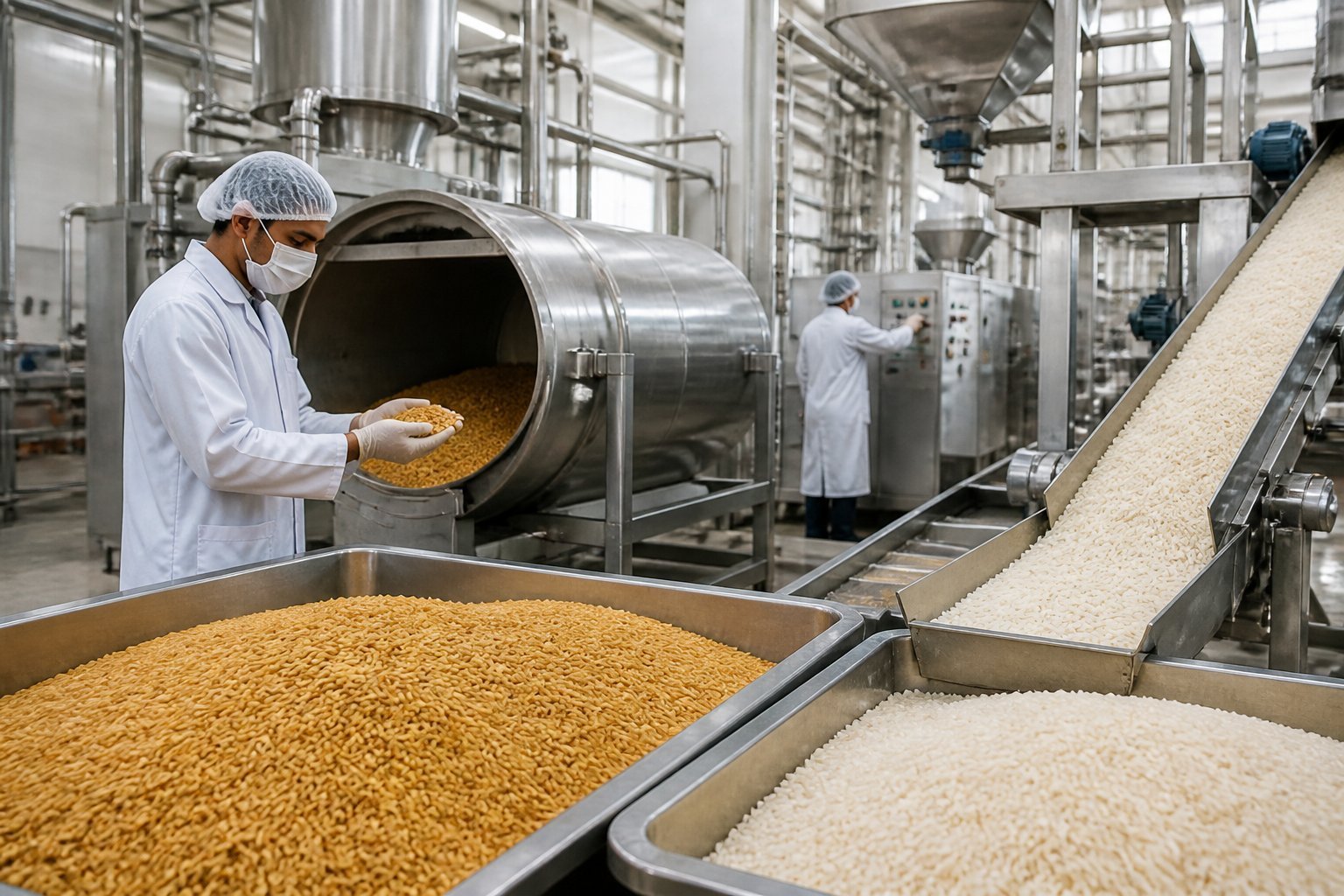
Rice processing methods directly affect grain quality, nutritional content, and commercial value for importers. Parboiling involves soaking, steaming, and drying paddy before milling, while traditional milling removes only the husk and bran layers from raw paddy.
The Parboiling Process Explained
Parboiling transforms raw paddy through three distinct stages before milling begins. The process starts with soaking paddy in water for several hours, which hydrates the grain and prepares it for steam treatment.
Steam is then applied under controlled pressure and temperature. This causes nutrients from the bran layer to migrate into the grain’s starchy center. The heat also gelatinizes the starch, which changes the grain’s internal structure.
After steaming, the paddy undergoes drying to reduce moisture content to safe storage levels. The parboiling process delivers more nutrients than standard milling methods, with parboiled rice containing higher levels of thiamine and niacin compared to regular white rice.
This rice quality and post-harvest processing is essential for nutrition, shelf-life, and marketability. Pakistani rice suppliers follow ISO 22000:2018 and HACCP standards during parboiling operations to maintain food safety requirements for GCC markets.
How Milled Rice Is Produced
Traditional milling processes raw paddy without any pre-treatment. The first step removes the outer husk using dehusking machines, which produces brown rice that still contains the bran layer.
Polishing machines then remove the bran and germ to create white rice. This step can be adjusted to different degrees of milling intensity. Higher milling rates produce whiter rice but remove more nutrients and result in more grain breakage.
The milling process typically includes:
- Cleaning – Removes stones, dust, and foreign materials
- Dehusking – Strips the hard outer hull from paddy
- Whitening – Removes bran layers through abrasion
- Polishing – Creates a glossy surface finish
- Grading – Separates whole grains from broken pieces
ISO 9001:2015 certified facilities in Pakistan employ multi-stage milling systems that balance whiteness with grain integrity for export markets.
Comparing Parboiling to Traditional Milling
Parboiled rice produces significantly higher milling yields than raw rice processing. The steaming step hardens the grain, which means fewer grains break during milling and cooking operations.
Improved parboiling and moderate degree of milling in two-stage systems provide better economic and nutritional benefits. Traditional milling of raw rice results in more broken grains, which reduces commercial value but still serves specific market segments.
Energy and Water Requirements:
| Process | Energy Use | Water Use | Nutrient Retention |
|---|---|---|---|
| Parboiling | High | High | 80-85% |
| Traditional Milling | Moderate | Low | 20-30% |
Converted rice retains more fiber and protein than conventionally milled white rice. However, parboiling requires additional equipment, energy inputs, and wastewater management systems. Importers must evaluate whether the premium pricing for parboiled rice justifies the processing costs based on their target markets.
Nutritional and Functional Differences
Parboiled rice retains more nutrients than white rice due to its unique processing method, while also offering distinct advantages in digestibility and blood sugar management. The parboiling process drives nutrients from the husk into the grain before milling, creating measurable differences in vitamin content, fiber levels, and glycemic response.
Nutrient Profiles of Parboiled vs White Rice
Parboiled rice contains higher levels of B vitamins, minerals, and fiber compared to white rice. The steaming process before milling pushes nutrients from the outer layers into the grain itself. This results in approximately 80% retention of thiamin (vitamin B1) versus the significant losses seen in white rice processing.
Key nutritional advantages of parboiled rice include:
- Higher fiber content for improved digestion
- Increased folate, iron, and calcium levels
- Better retention of vitamins B1, B3, and B6
- Enhanced mineral content including manganese and selenium
White rice undergoes polishing that removes the bran and germ layers. This creates a milder taste and softer texture but reduces overall nutrient density. Pakistani rice suppliers meeting ISO 22000:2018 and HACCP standards maintain quality control throughout processing for both varieties.
Brown rice retains all three grain layers and offers the highest nutrient content, though it has a shorter shelf life than parboiled options.
Digestibility and Health Impacts
Parboiled rice offers better digestibility and sustained energy release compared to white rice. The partial cooking process gelatinizes the starch, making it easier for the body to break down while maintaining a firmer grain structure.
The higher fiber content in parboiled rice supports digestive health and promotes gut function. White rice digests more quickly, providing faster energy but less lasting fullness.
Both varieties are naturally gluten-free and suitable for sensitive digestive systems. Rice sourced from certified origins meeting Halal and USFDA standards ensures quality for international food importers serving diverse markets across the GCC and beyond.
Glycemic Index Considerations
Parboiled rice has a lower glycemic index than white rice, making it preferable for blood sugar regulation. The parboiling process creates resistant starch that slows glucose absorption.
White rice typically scores higher on the glycemic index, causing faster blood sugar spikes. This makes parboiled rice a better choice for diabetic consumers or those managing weight.
For food importers and distributors, offering both varieties allows customers to choose based on health needs and culinary preferences. Premium Pakistani rice meeting ISO 9001:2015 certification provides reliable quality across both parboiled and white rice categories for wholesale markets.
Texture, Cooking Properties, and Culinary Uses
The parboiling process fundamentally alters how rice performs in commercial kitchens and food processing facilities. White rice and parboiled rice deliver different textures, require distinct cooking approaches, and serve different roles in large-scale food operations.
Texture and Appearance in Finished Dishes
Parboiled rice produces firm, separate grains that maintain their structure even after extended holding times. The grains resist clumping and breaking during mixing, reheating, or transport. This makes parboiled varieties ideal for bulk operations where food sits in warming trays or gets packaged hours before consumption.
White rice offers a softer, more tender texture with a naturally sticky quality. The grains absorb flavors readily and blend into dishes more seamlessly. Pakistani white rice varieties like Basmati deliver a characteristic fluffy texture when properly cooked.
Parboiled rice appears slightly yellow or golden due to starch gelatinization during processing. White rice remains bright white and translucent. Food importers serving institutional clients often prefer the visual consistency parboiled rice maintains across large batches.
Preparation and Cooking Methods
Parboiled rice requires 5-10 minutes longer cooking time than white rice. The pre-gelatinized starches need more water and heat to fully soften. Most commercial operations cook parboiled rice using a 2:1 water-to-rice ratio at higher temperatures.
White rice cooks faster with a 1.5:1 water ratio. It demands more attention during cooking to prevent overcooking or mushiness. Pakistani Basmati and other premium white rice varieties benefit from soaking before cooking to achieve optimal grain elongation.
Rinsing requirements differ between the two types. White rice benefits from thorough rinsing to remove surface starch. Parboiled rice needs minimal rinsing since the parboiling process removes excess starch before milling.
Best Use Cases for Foodservice and Processing
Parboiled rice excels in high-volume foodservice operations, airline catering, frozen meals, and canned products. It withstands industrial processing, freezing cycles, and reheating without losing structure. Food processors value its consistency across production runs and extended shelf stability after cooking.
White rice suits restaurants, hotels, and retail brands where immediate service and premium presentation matter. Fresh biryanis, pilafs, and side dishes showcase white rice’s delicate texture and aroma.
Pakistani rice suppliers certified under ISO 22000:2018, HACCP, and Halal standards provide both types to GCC markets through distributors. Importers serving institutional clients typically stock parboiled varieties, while those focused on premium retail and hospitality segments prioritize long-grain white Basmati meeting USFDA and ISO 9001:2015 standards.
Global Market Trends and Sourcing Considerations
The global parboiled and white rice market reached 515.8 million tons in 2025, with projections showing continued expansion through 2034. Food importers face distinct regional demand patterns and must evaluate supplier certifications, processing capabilities, and variety specifications when building supply chains.
Current Demand by Region
Asia-Pacific dominates global rice consumption, with China, India, Indonesia, Bangladesh, and Vietnam representing the largest markets. The region drives demand for both parboiled rice and milled rice varieties.
Food manufacturers across Asia-Pacific are scaling procurement of parboiled varieties for ready-to-eat meal production. Africa and the Middle East show increasing consumption of parboiled rice due to its extended shelf life and nutrient retention properties, which suit distribution challenges in these regions.
GCC markets demonstrate strong preference for premium long-grain varieties that meet ISO 22000:2018, HACCP, and Halal certification standards. Urbanization and changing dietary habits continue to fuel demand for convenient rice options across emerging markets.
Major Supplier Countries
India and Pakistan serve as leading rice exporters, with both nations offering certified parboiled and white rice varieties. Pakistan produces premium basmati and long-grain rice that meets ISO 9001:2015 and USFDA certification requirements.
Thailand and Vietnam specialize in jasmine and fragrant rice exports, while these countries also supply standard white rice to global markets. Pakistan’s rice export sector provides reliable access to varieties processed under internationally recognized quality systems.
Brown rice and specialty varieties come from multiple origins, though importers prioritize suppliers demonstrating consistent quality controls and food safety compliance. Processing infrastructure and certification portfolios distinguish premium rice exporters from standard commodity suppliers.
Selecting the Right Type for Your Market
Parboiled rice offers advantages for markets requiring longer storage periods, as the parboiling process improves shelf stability and retains more nutrients than standard milled rice. This variety suits institutional buyers and regions with extended distribution cycles.
White rice provides shorter cooking times and neutral flavor profiles preferred in many consumer markets. Food service operations often select white rice for its versatility across menu applications.
Key selection factors include:
- Grain length and variety specifications
- Certification requirements (Halal, organic, food safety)
- Cooking characteristics and end-use applications
- Packaging formats and minimum order quantities
Importers should verify supplier certifications, request sample shipments, and establish quality inspection protocols before committing to large-volume contracts. Pakistan-origin rice certified under international standards provides reliable options for GCC distribution and global trade.
Quality Standards and Compliance for Importers
Both parboiled rice and white rice must meet strict international quality standards that govern moisture content, grain integrity, and contaminant limits. Importers need to verify compliance with multiple certification frameworks while understanding how processing methods affect storage requirements and regional approval processes.
Industry Grading and Specifications
International standards for rice establish minimum specifications for milled rice that crosses borders. ISO 7301:2021 applies to both husked rice and milled rice, whether parboiled or not, intended for direct human consumption.
The Codex Standard for Rice sets maximum moisture content at 15% by mass, though lower limits may apply for certain destinations based on climate and transport duration. Parboiled rice typically requires tighter moisture controls due to its pre-treatment process.
Key quality factors include:
- Extraneous matter limits for organic and inorganic materials
- Defective kernel percentages for broken, damaged, or chalky grains
- Contaminant thresholds for heavy metals and pesticide residues
- Grain size classification for length and width measurements
Pakistan’s certified rice export facilities maintain ISO 9001:2015 and ISO 22000:2018 standards, ensuring consistent grading across shipments. A rice exporter must provide documentation showing compliance with both origin country standards and destination market requirements.
Shelf Life and Storage Requirements
Parboiled rice demonstrates superior storage stability compared to white rice due to its gelatinization process. The parboiling treatment seals nutrients into the grain and creates a harder surface that resists moisture absorption and insect damage.
White rice stored at ambient temperatures maintains quality for 6-12 months when properly packaged. Parboiled rice extends this timeline to 18-24 months under similar conditions. Both varieties require storage environments below 15°C with relative humidity under 70% for optimal preservation.
Temperature fluctuations pose greater risks for white rice shipments to hot climates. The GCC region’s high temperatures make parboiled rice an attractive option for importers managing long distribution chains.
Meeting Regional Regulatory Standards
Rice imports into Gulf Cooperation Council markets require Halal certification alongside standard food safety documentation. HACCP certification demonstrates control of critical points throughout the supply chain, from milling through packaging.
USFDA compliance becomes necessary when re-exporting to North American markets. Different regions enforce varying tolerance levels for broken grain percentages and foreign matter content.
Pakistan-origin rice arrives with comprehensive certification packages including:
- ISO 22000:2018 food safety management
- HACCP hazard analysis protocols
- Halal certification from recognized authorities
- Phytosanitary certificates for pest-free verification
Importers should verify that their rice exporter provides batch-specific test reports for aflatoxins, heavy metals, and pesticide residues before accepting shipments.
Cost Analysis and Supply Chain Insights
Price volatility, logistics expenses, and procurement volume directly affect profit margins for rice importers. Understanding these factors helps buyers secure competitive rates while maintaining quality standards.
Price Trends for Parboiled and White Rice
Parboiled rice typically costs 5-15% more than white rice due to additional processing steps. The global parboiled and white rice market reached 515.8 million tons in 2025 with projected growth to 573.8 million tons by 2034.
Pakistan produces certified parboiled rice that meets ISO 9001:2015, ISO 22000:2018, HACCP, Halal, and USFDA standards. These certifications add value but also influence pricing structures for international buyers.
Export prices fluctuate based on harvest yields, currency exchange rates, and fuel costs. India shipped 21.5 million metric tons of rice in 2022, accounting for 36.8% of global rice exports by value. Thailand and Vietnam control 13.5% and 8.6% respectively.
Rice exporters from Pakistan offer competitive pricing while maintaining strict quality controls. GCC markets benefit from shorter shipping distances and established trade relationships with Pakistani suppliers.
Shipping, Handling, and Conversion Impacts
Freight costs represent 15-25% of total landed costs for rice importers. Container availability, port congestion, and fuel surcharges create unpredictable expenses throughout the supply chain.
Converted rice requires specialized handling to prevent breakage during transport. Proper packaging in moisture-resistant bags protects product integrity during long-distance shipping to GCC markets.
| Cost Factor | Impact on Total Cost |
|---|---|
| Ocean Freight | 10-15% |
| Port Handling | 3-5% |
| Insurance | 1-2% |
| Documentation | 1-2% |
Rice exporters must coordinate with customs brokers, shipping lines, and warehouse operators. Strategic trade policies and improved supply chain management help stabilize delivery schedules and reduce delays.
Bulk Purchasing Strategies
Importers reduce per-unit costs by ordering full container loads rather than smaller shipments. A standard 20-foot container holds approximately 24-26 metric tons of bagged rice.
Long-term contracts with rice exporters lock in favorable rates and ensure consistent supply. These agreements typically span 6-12 months with quarterly price adjustments based on market conditions.
Volume discounts apply at these thresholds:
- 100-500 tons: 2-3% discount
- 500-1,000 tons: 4-6% discount
- 1,000+ tons: 7-10% discount
Pakistani suppliers offer flexible payment terms for established buyers. Letters of credit remain standard for new trading relationships, while trusted partners may negotiate open account terms after demonstrating reliable payment history.
Timing purchases around harvest seasons maximizes savings. Pakistan’s main harvest occurs from October to December, when fresh crop availability drives competitive pricing for both parboiled rice and white rice varieties.
Making Informed Procurement Decisions
Food importers must evaluate market preferences, supply chain risks, and exporter reliability when choosing between parboiled rice and white rice for their target markets.
Assessing Buyer and End-User Preferences
Understanding regional consumption patterns determines which rice type delivers the best market performance. West African markets strongly prefer parboiled rice, with Nigeria, Senegal, and Ivory Coast accounting for millions of metric tons in annual demand. These consumers value the firm texture and separate grains that parboiled rice produces.
Middle Eastern markets show mixed preferences. Saudi Arabia and the UAE import both varieties, with parboiled rice commanding premium shelf space alongside white rice in modern retail chains like Carrefour and Lulu. Pakistani rice exporters supply both types to GCC markets, meeting ISO 22000:2018 and Halal certification requirements that regional buyers mandate.
Asian and European markets typically favor white rice due to established cooking traditions and softer texture preferences. Importers serving these regions should prioritize white rice unless targeting health-conscious segments interested in the lower glycemic index of parboiled varieties.
Conducting pilot shipments of 25-metric-ton containers allows importers to test market reception before committing to annual supply contracts.
Risk Management in Sourcing
Quality variability between rice exporters creates significant financial exposure for importers. Moisture content, broken grain percentages, and processing consistency directly affect port clearance success and customer satisfaction rates.
Critical quality specifications to verify:
- Moisture content ≤14% (prevents spoilage during transit)
- Broken grain tolerance within ±2% of contracted grade
- HACCP and ISO 9001:2015 certification for processing facilities
- Phytosanitary and fumigation certificates for African destinations
Pakistani rice exporters with USFDA certification demonstrate advanced quality control systems that reduce rejection risks at destination ports. Importers should request Certificates of Analysis from independent laboratories before finalizing large purchase orders.
Currency fluctuations impact landed costs significantly. A rice exporter offering fixed-price contracts with quarterly review mechanisms protects importers from unexpected price spikes during harvest cycles.
Transit time differences affect inventory planning. Parboiled rice offers 24-36 month shelf life compared to white rice’s 12-18 months, providing greater flexibility for importers managing multiple market channels.
Strategic Partnerships with Rice Exporters
Long-term relationships with certified rice exporters reduce procurement costs and ensure supply continuity during global market disruptions. Importers should evaluate potential partners on documentation expertise, particularly for markets requiring SONCAP certificates (Nigeria), SABER registration (Saudi Arabia), or ESMA compliance (UAE).
Pakistani rice export facilities meeting ISO 22000:2018 standards provide consistent quality across shipments, critical for building retail brand reputation. These partnerships enable private label packaging options in 5kg, 10kg, and 25kg formats that support premium positioning strategies.
Key partnership terms to negotiate:
- Annual volume commitments with price bands linked to origin market rates
- Container allocation during peak demand periods
- Technical support for market-specific certifications
- Sample approval procedures before bulk production
Exporters with established logistics networks reduce transit delays and documentation errors that create costly port demurrage charges.
Frequently Asked Questions
Food importers evaluating rice specifications need clarity on processing methods, quality benchmarks, and regulatory requirements. Parboiled and white rice differ significantly in milling recovery rates, moisture tolerances, and certification needs across international supply chains.
What are the key processing differences between parboiled and non-parboiled rice, and how do they affect finished grain performance?
Parboiled rice undergoes soaking, steaming, and drying before milling. The paddy is soaked in hot water at 60-70°C for four to six hours, then steamed at 100-105°C until starch gelatinizes inside the kernel.
This hydrothermal treatment drives water-soluble nutrients into the grain and hardens the kernel structure. White rice skips these steps entirely and goes directly from paddy to milling.
The parboiling process produces firmer grains that resist breakage during milling and transport. White rice retains its natural softness but is more prone to fracturing under mechanical stress.
Finished parboiled grains appear golden-amber when raw and turn white during cooking. White rice maintains its pure white color throughout storage and preparation.
How do parboiled and non-parboiled rice compare in yield, breakage rates, and milling recovery for large-scale buyers?
Parboiled rice delivers superior milling recovery rates due to kernel hardening during steaming. Mills typically achieve 68-72% head rice recovery from parboiled paddy compared to 62-66% from white rice paddy.
Breakage rates during processing and handling are significantly lower for parboiled varieties. The gelatinized starch structure makes kernels more resistant to mechanical stress during milling, polishing, and bagging operations.
Cooking yield presents another advantage for bulk buyers. Parboiled rice expands 3 to 3.5 times its dry volume during preparation, while white rice typically reaches 2.5 to 3 times expansion.
Large-scale importers shipping to foodservice operations benefit from these improved ratios. A 50-kilogram bag of parboiled rice produces more finished portions than the same weight of white rice.
Which quality specifications should be prioritized when sourcing rice for export markets, including moisture, chalkiness, and foreign matter limits?
Moisture content must not exceed 14% for both parboiled and white rice in export shipments. Higher moisture levels promote mold growth and spoilage during ocean transit and warehousing.
Broken grain percentage determines grade classification and pricing. Premium grades contain 5% or less broken kernels, while economy grades may contain 15-25% broken pieces.
Chalkiness affects cooking quality and consumer acceptance. Chalky grains contain opaque white spots caused by incomplete starch formation and typically break during cooking.
Foreign matter limits vary by destination market but generally must stay below 0.5% of total weight. This includes stones, paddy husks, weed seeds, and other non-rice materials.
Quality specifications for importers should also address grain uniformity and discoloration. Pakistani suppliers meeting ISO 22000:2018 standards maintain strict sortex and color sorting protocols to remove defective kernels.
How do cooking characteristics and end-user applications differ between parboiled and non-parboiled rice in foodservice and retail channels?
Parboiled rice requires 25 to 30 minutes of cooking time compared to 18 to 22 minutes for white rice. The hardened grain structure takes longer to fully hydrate and soften.
Cooked parboiled grains remain separate and firm without clumping. This makes them ideal for foodservice operations preparing large batches, buffet service, and dishes requiring grain separation like biryani or pilaf.
White rice produces softer, slightly sticky grains when cooked. These characteristics suit applications where cohesive texture is preferred, including sushi rice, rice pudding, and certain Asian cuisines.
The glycemic index of parboiled rice measures around 50 compared to approximately 73 for white rice. This lower value appeals to health-conscious retail consumers and institutions managing diabetic meal programs.
Retail channels in West Africa and the Middle East show strong consumer preference for parboiled varieties. GCC markets including Qatar, Saudi Arabia, and UAE stock both types to serve diverse expatriate populations.
What are the typical shelf-life and storage stability considerations for different rice types during international shipping and warehousing?
Parboiled rice maintains quality for 24 to 36 months when stored in cool, dry conditions with sealed packaging. The steaming process stabilizes the grain and reduces enzymatic activity that causes rancidity.
White rice has a shorter shelf life of 12 to 18 months under similar storage conditions. The bran layer removal during milling exposes oils that oxidize more quickly than parboiled grains.
Transit times from Pakistan to GCC ports typically range from five to eight days by sea. Extended routes to West Africa require 28 to 38 days, making shelf stability a critical factor for bulk rice importers.
Temperature control during warehousing prevents moisture absorption and insect infestation. Storage facilities should maintain temperatures below 25°C with relative humidity under 65%.
Packaging integrity directly affects storage performance. Standard 50-kilogram polypropylene bags provide adequate protection for wholesale distribution, while retail packages use laminated film for extended shelf display.
Which documentation, certifications, and compliance requirements are commonly requested by buyers for cross-border rice shipments?
ISO 9001:2015 and ISO 22000:2018 certifications demonstrate quality management and food safety compliance. HACCP certification provides additional assurance of hazard control throughout processing, from raw paddy intake through finished product dispatch. Importers should request batch-specific Certificates of Analysis covering aflatoxin levels, heavy metal content, and pesticide residues before accepting any commercial shipment. USFDA registration becomes necessary when rice enters North American distribution channels or when GCC buyers re-export to US-linked markets.
Sourcing Parboiled or White Rice for Your GCC Operation?
TEFT Global supplies certified parboiled and white rice to distributors, food manufacturers, and hospitality buyers across the Gulf — with full documentation, flexible incoterms, and direct mill sourcing from Pakistan’s finest processing facilities.