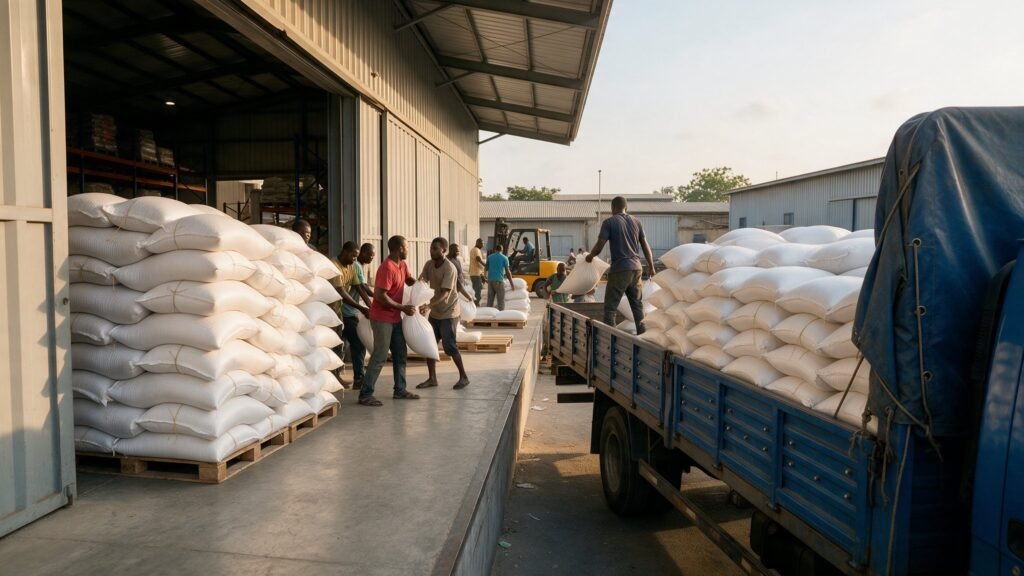
The UAE rice market represents one of the most dynamic and strategically important food trade sectors in the Gulf region. With limited agricultural land and a growing population of over 9 million people, the country depends almost entirely on imports to meet domestic demand. The UAE rice market is projected to grow at a 5.41% CAGR from 2025 to 2030, driven by changing dietary habits, population growth, and increasing preference for premium imported varieties. This growth creates substantial opportunities for B2B buyers, importers, and procurement professionals seeking to establish or expand their presence in the GCC rice trade.
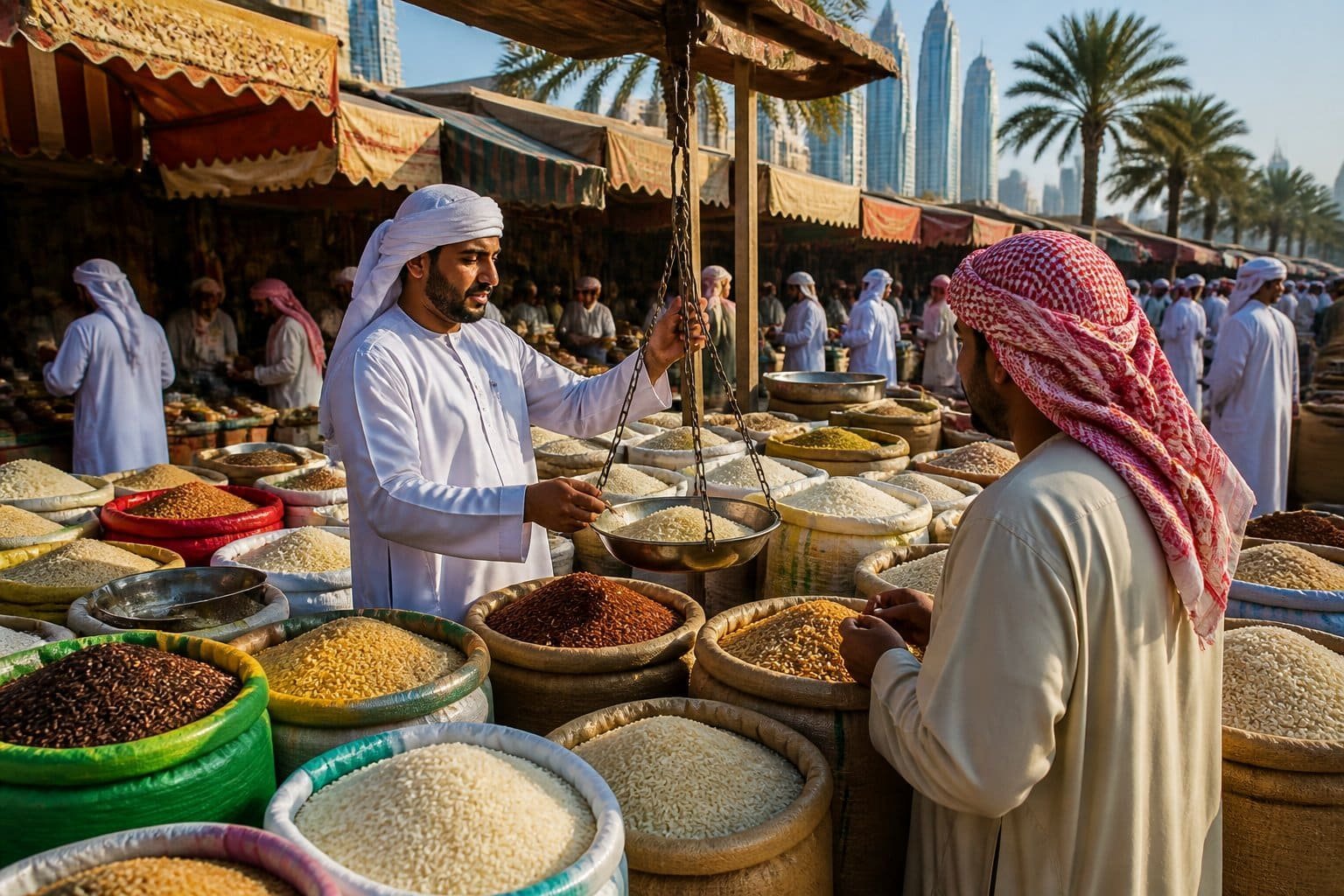
The UAE rice market structure is shaped by a diverse expatriate population that includes large communities from South Asia, Southeast Asia, and the Middle East. This demographic mix drives demand for multiple rice varieties including Basmati, Jasmine, parboiled, and specialty types. Distribution occurs through both traditional retail channels like hypermarkets and modern online platforms, while consumption spans residential kitchens and a thriving commercial foodservice sector. The country’s position as a regional trading hub makes it an essential gateway for rice suppliers targeting the broader Middle East market.
For importers and distributors, understanding the UAE rice market overview means recognizing the critical role of quality certifications, reliable supply chains, and ability to meet diverse consumer preferences. Major sourcing origins include India, Pakistan, Thailand, Vietnam, and the United States, with buyers increasingly prioritizing suppliers who can demonstrate compliance with international quality standards including ISO 9001:2015, ISO 22000:2018, HACCP, Halal certification, and USFDA approval. These certifications ensure product safety and market access across GCC borders.
Key Takeaways
- The UAE rice market is expected to grow at over 5% annually through 2030, fueled by population growth and rising demand for premium imported varieties
- Basmati and long-grain rice dominate consumption patterns, with increasing interest in organic, whole-grain, and health-conscious rice products
- Successful market entry requires certified suppliers who can navigate import regulations and serve both retail and commercial foodservice channels
How Is the UAE Rice Market Structured?
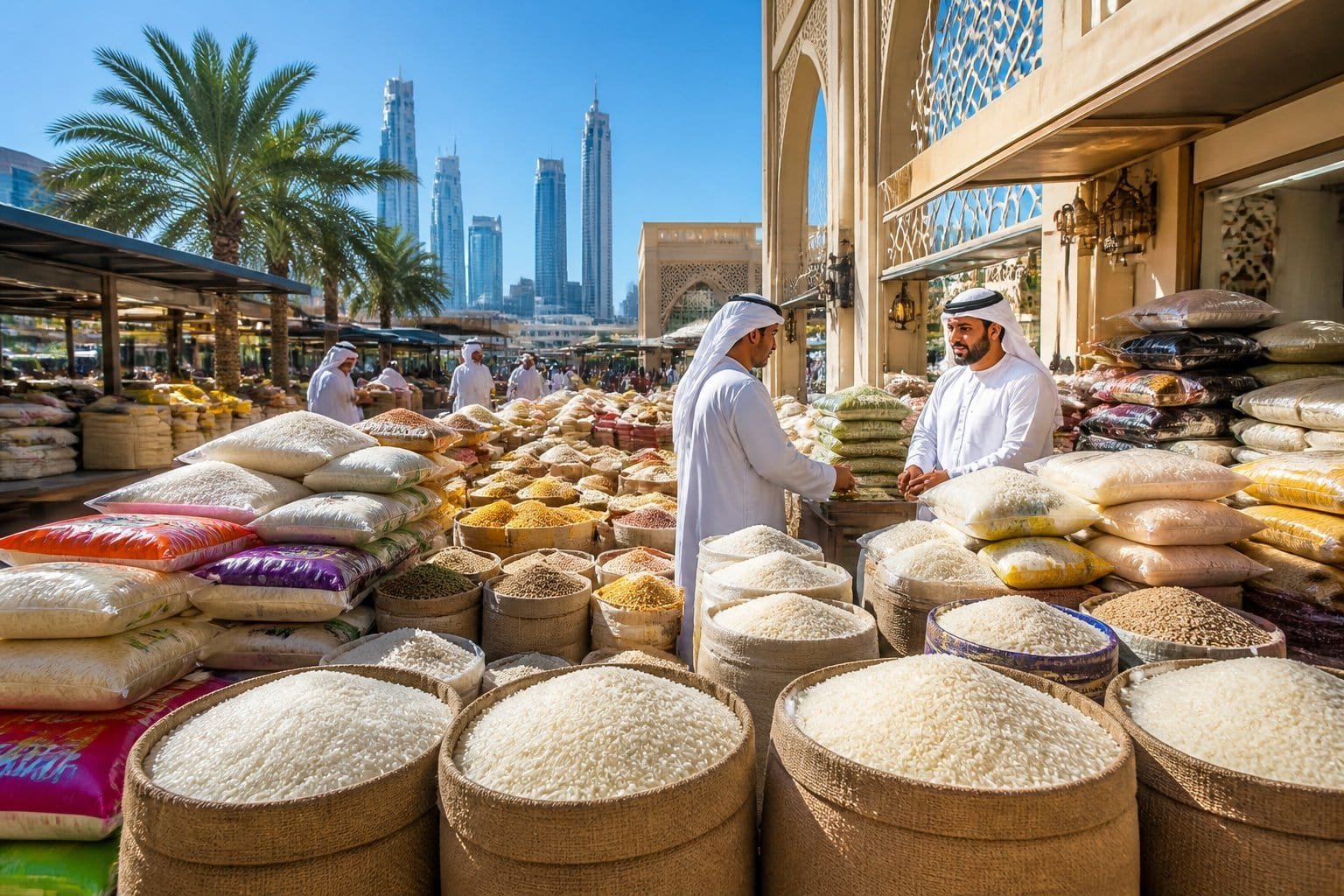
The UAE rice trade market operates through a network of specialized importers and distributors who supply diverse rice varieties to meet local demand and facilitate regional trade. Major players focus on quality-certified products from established origins while serving both domestic consumption and re-export channels.
Key Importers and Distributors
The UAE rice trade depends on licensed importers who source from multiple certified origins including India, Pakistan, Thailand, and Vietnam. These distributors maintain relationships with mills and suppliers that meet international quality standards such as ISO 9001:2015, ISO 22000:2018, HACCP, Halal, and USFDA certifications.
Leading importers operate warehousing facilities in Dubai and Abu Dhabi to manage inventory and ensure consistent supply. Companies like TEFT Global specialize in premium Pakistani rice varieties including Basmati and grain fragrance rice for GCC markets. The competitive landscape requires distributors to balance quality, pricing, and logistics efficiency.
Most importers work with retail chains, wholesale markets, and food service providers. They stock multiple rice types from long-grain white rice to specialty aromatic varieties based on the preferences of the UAE’s diverse population.
Role in Regional Re-Exports
The UAE functions as a key trading hub for rice distribution across the Middle East, Africa, and Asia. Dubai’s ports handle significant volumes of rice that enter the country for re-export to neighboring markets. This rice trade activity positions the UAE as a strategic logistics center.
Re-export operations allow traders to consolidate shipments from various origins and redistribute them to smaller regional markets. The UAE’s free trade zones offer benefits including tax advantages and simplified customs procedures. This infrastructure supports both established traders and new market entrants.
Price volatility in global markets and fluctuating regulations can affect re-export margins. Trade relationships with East African nations and Gulf countries remain essential for maintaining export volumes.
Leading Market Players
The UAE rice market competitive landscape includes both international brands and regional distributors. Major supermarket chains such as Carrefour, Lulu, and Spinneys stock multiple rice brands across different price segments.
Key market segments include:
- Mass market brands offering affordable options for price-conscious consumers
- Mid-priced products balancing quality and value
- Premium selections featuring aged Basmati and specialty grain fragrance rice varieties
Local distributors compete with international suppliers by emphasizing freshness, packaging innovations, and certified quality standards. Companies sourcing from Pakistan and other certified origins focus on traceability and food safety compliance. Market intensity remains high as players differentiate through product variety, distribution reach, and brand positioning across retail and HoReCa channels.
Where Does the UAE Import Its Rice From?

The UAE rice market operates as a major import hub, with over 90% of domestic consumption met through international suppliers. Trade flows are shaped by established partnerships with key rice-producing nations, sophisticated logistics networks, and the country’s role as a regional distribution center.
Major Supplying Countries
India, Pakistan, and Thailand dominate the UAE rice trade market, collectively accounting for the vast majority of imports. In 2025, three countries supplied 99% of the UAE’s total rice import volume.
Pakistan stands out as a certified, reliable origin for premium basmati and long-grain varieties. Pakistani rice meets rigorous quality standards including ISO 9001:2015, ISO 22000:2018, HACCP, Halal, and USFDA certifications. These certifications ensure food safety and quality compliance for GCC markets.
India supplies substantial volumes of basmati and non-basmati rice varieties. Thailand contributes fragrant jasmine rice and parboiled varieties preferred by diverse consumer segments. The UAE’s geographical location facilitates efficient trade relationships with these major rice-producing countries across Asia.
Logistics and Port Infrastructure
Dubai and Abu Dhabi serve as primary entry points for rice shipments entering the UAE. Port facilities handle containerized cargo with temperature-controlled storage capabilities that preserve grain quality during transit and warehousing.
Free trade zones enable efficient customs processing and temporary storage before distribution. Modern warehousing complexes near major ports provide bulk handling equipment and quality testing laboratories. Transportation networks connect ports to inland distribution centers across the seven emirates.
The logistics infrastructure supports both immediate consumption needs and re-export operations throughout the MENA region. Cold chain facilities maintain product integrity for premium rice grades destined for high-end retail channels.
Export and Re-Export Volumes
The UAE functions as a strategic trade hub, positioning the country to serve neighboring markets beyond domestic consumption. Billions of dollars worth of rice move through UAE ports annually, with significant portions redirected to regional buyers.
Re-export activity targets markets across the Middle East and East Africa. Trading companies import bulk volumes, repackage products for specific markets, and distribute through established regional networks. This trade flow creates employment in logistics, quality control, and distribution sectors.
Import forecasts project 975,000 metric tons for the 2025/26 marketing year. The broader UAE rice market overview indicates continued growth driven by population expansion and sustained demand from hospitality and retail sectors.
Which Rice Types Sell Best in the UAE?
The UAE rice market segmentation reveals distinct consumer preferences shaped by the country’s diverse expatriate population and evolving culinary landscape. Long grain varieties dominate consumption patterns, while specialty and convenience products gain traction among health-conscious and time-pressed consumers.
Long Grain and Specialty Varieties
Long grain rice represents the largest segment in the UAE market, driven by its use in traditional dishes like biryani and pilaf. Basmati rice from Pakistan and India holds premium positioning due to its aromatic qualities and fluffy texture when cooked. Pakistani basmati varieties meet stringent quality certifications including ISO 22000:2018 and HACCP standards, ensuring consistent quality for discerning consumers.
The market also includes specialty varieties such as jasmine rice from Thailand and sushi rice for Asian cuisine applications. Brown rice and black rice attract health-focused buyers seeking higher fiber content and nutritional value. Red rice and rosematta rice serve niche markets within South Indian communities. These specialty products typically command higher price points in hypermarkets like Lulu and Carrefour, where consumers seek authentic ingredients for regional recipes.
Grain Fragrance and Parboiled Rice
Grain fragrance rice dominates the premium segment of UAE rice market segmentation, with basmati and jasmine varieties leading sales. These aromatic types cater to South Asian and Southeast Asian expatriate populations who prioritize authentic taste and texture. Pakistani basmati exports to the UAE maintain quality through certified processing facilities that preserve the grain’s natural fragrance and elongation properties during cooking.
Grain parboiled rice serves both residential and commercial applications, offering improved nutrient retention and firmer texture after cooking. This variety performs well in large-scale food preparation for hotels, restaurants, and catering services. Parboiled rice resists overcooking and maintains grain separation, making it practical for bulk meal preparation in the hospitality sector. The commercial food service sector increasingly relies on parboiled varieties for consistent results across high-volume operations.
Ready-to-Cook Products
Ready-to-cook rice products represent the fastest-growing segment as urban lifestyles drive demand for convenience. Pre-seasoned rice mixes, microwaveable pouches, and instant rice options appeal to working professionals and small households seeking quick meal solutions. These ready-to-cook rice products eliminate extensive preparation time while delivering consistent flavor profiles.
The segment includes flavored rice varieties, quick-cooking basmati options, and portion-controlled packaging formats. Online retail platforms facilitate growth in this category, with consumers ordering ready-to-cook rice through e-commerce channels for home delivery. Major supermarket chains dedicate increasing shelf space to these convenience products, reflecting changing consumption patterns among UAE residents. Manufacturers adapt traditional rice varieties into ready-to-cook formats while maintaining halal certification and food safety standards required for the GCC market.
Who Buys Rice in the UAE?
Rice consumption in the UAE stems from three primary demand channels: large-scale institutional purchasing through hotels and restaurants, traditional Emirati culinary practices, and the diverse eating habits of the country’s expatriate majority population. Each segment requires different rice varieties and quality standards.
HoReCa Sector and Institutional Buyers
The hotel, restaurant, and catering sector represents a major consumption driver in the UAE rice market. This segment demands consistent quality, certified sourcing, and reliable supply chains to meet high-volume needs.
Dubai’s tourism industry alone serves millions of international visitors annually. Hotels and restaurants require rice that meets ISO 9001:2015, ISO 22000:2018, HACCP, and Halal certification standards to satisfy both regulatory requirements and guest expectations. Institutional buyers often establish long-term contracts with importers who can guarantee these certifications.
The HoReCa sector purchases basmati rice for Indian and Pakistani cuisine menus, jasmine rice for Southeast Asian restaurants, and short-grain varieties for Japanese and Korean establishments. Bulk purchasing allows these buyers to negotiate better pricing while maintaining strict quality controls. Many establishments specifically request grain fragrance rice varieties to enhance their premium dining offerings.
Catering companies serving corporate events, airline meals, and school cafeterias add substantial volume to institutional demand. These buyers prioritize suppliers with proven track records and verifiable sourcing from certified origins like Pakistan and India.
Traditional and Contemporary Emirati Cuisine
Emirati dishes form a foundational element of rice consumption despite the UAE’s reliance on imports. Traditional recipes require specific rice characteristics that influence purchasing decisions.
Machboos, the national dish of the UAE, uses long-grain rice cooked with meat, seafood, or vegetables in a spiced broth. The dish requires rice that absorbs flavors while maintaining distinct grains. Thareed, another traditional preparation, layers bread with rice and meat stew.
Modern Emirati households blend traditional cooking with contemporary preferences. They seek premium basmati varieties for special occasions and family gatherings. The growing health consciousness among Emiratis has increased demand for brown rice and organic varieties alongside traditional white rice options.
Government initiatives promoting food security have encouraged diverse rice variety availability throughout the UAE rice trade network. Emirati consumers increasingly value transparency in sourcing and certification, favoring suppliers who provide clear origin documentation from reliable countries.
Expatriate Consumption Patterns
Expatriates comprise approximately 88% of the UAE population, creating diverse rice consumption patterns that shape the entire market. This demographic drives demand for multiple rice varieties reflecting their home cuisines.
South Asian expatriates, representing the largest group, consume basmati rice as a dietary staple. Indian and Pakistani communities purchase both everyday and premium varieties depending on occasion and budget. Middle-income households typically buy mid-range basmati weekly, while special events warrant higher-grade selections.
Filipino workers favor jasmine rice, creating steady demand for Southeast Asian varieties. Chinese and other East Asian communities purchase short and medium-grain rice for their traditional dishes. Arab expatriates from Egypt, Syria, and Lebanon bring their own rice preferences, typically favoring medium-grain Egyptian varieties or specific long-grain types.
The UAE rice market adapts to these patterns through specialized distribution channels. Ethnic grocery stores stock region-specific brands, while major supermarkets maintain diverse rice sections. Online platforms increasingly serve expatriate communities seeking authentic varieties from their home countries, including certified products from Pakistan that meet international quality standards.
What Are the UAE’s Rice Import Rules and Tariffs?
The UAE rice market operates within a framework of import duties, shifting price dynamics, and strict compliance standards that shape how rice enters and performs in the market. Retail rice pricing in the UAE remains highly competitive across grades, reflecting ongoing price sensitivity among consumers.
Import Tariffs and Market Entry
The UAE applies a standard 5% customs duty on most rice imports under HS Code 1006. This tariff structure remains consistent across major entry points including Jebel Ali and Khalifa Port. Trade agreements with specific countries may reduce or eliminate this duty, creating preferential access for certain origins.
Pakistan serves as a certified supplier meeting ISO 9001:2015, ISO 22000:2018, HACCP, Halal, and USFDA standards. These certifications streamline customs clearance and market entry for compliant exporters.
Importers must hold valid food import licenses issued by local authorities. The process requires coordination between exporters and registered UAE importers. Documentation includes certificates of origin, phytosanitary certificates, and certificates of conformity issued by approved assessment bodies.
Price Movements and Volatility
The UAE rice trade market faces challenges from price volatility in global rice markets and supply chain disruptions. These factors directly affect pricing and availability at retail and wholesale levels.
Consumer price sensitivity influences purchasing decisions across the market. Retail rice prices fluctuate based on international market conditions, import volumes, and currency exchange rates. Competition from both local and international brands adds pressure on pricing strategies.
The market shows no subsidies for local farmers due to limited agricultural land and water resources. The UAE relies entirely on imports to meet domestic rice demand. This dependence on external supply chains makes the market vulnerable to global price shifts and geopolitical trade disruptions.
Food Safety and Compliance
The Ministry of Industry and Advanced Technology (MOIAT) enforces comprehensive food safety standards through multi-layer certification, laboratory testing, and shipment inspection systems. Every rice shipment must meet UAE-approved Maximum Residue Limits for pesticides and contaminants.
Digital platforms like the UAE Food Import Re-export System handle documentation, approvals, and inspection workflows. Authorities conduct risk-based inspections at ports, with high-risk shipments undergoing full laboratory testing while low-risk shipments receive faster clearance.
Mandatory labeling requirements include:
- Product name and rice variety
- Country of origin
- Net weight in metric units
- Production and expiry dates
- Storage instructions
- Batch or lot number
- Arabic language labeling
Dubai Municipality and Abu Dhabi Agriculture and Food Safety Authority verify packaging compliance at the emirate level. The 2026 framework emphasizes stricter traceability requirements and updated pesticide limits aligned with international standards.
How Is Rice Sourcing for the UAE Becoming More Sustainable?
The UAE rice sector is adopting eco-friendly packaging and advanced cultivation methods to meet consumer demand for sustainable products. These changes reflect both environmental priorities and efforts to reduce water use in rice production regions.
Eco-Friendly Packaging Initiatives
Rice distributors in the UAE are shifting toward sustainable and eco-friendly packaging solutions. Companies now use biodegradable materials, recycled plastics, and paper-based packaging instead of traditional single-use plastics. These materials reduce landfill waste and align with the UAE’s national sustainability goals.
Major importers source rice from certified suppliers in Pakistan and India that meet ISO 22000:2018 and HACCP standards for food safety and quality. These certifications ensure that packaging materials do not contaminate products during transport and storage. The shift benefits consumers who prefer brands that demonstrate environmental responsibility.
Retailers report increased sales of rice products with clear sustainability labeling. The packaging often displays certifications like Halal and USFDA approval, building trust with health-conscious buyers. This trend supports the broader movement toward responsible consumption across the region.
Trends in Sustainable Rice Cultivation
Rice-producing countries supplying the UAE are adopting sustainable farming practices. Pakistan has implemented programs to reduce chemical fertilizer use and promote organic cultivation methods. These initiatives produce cleaner rice varieties that appeal to health-focused consumers in Gulf markets.
Agricultural biotechnology advancements are improving crop yields while minimizing environmental impact. Farmers use precision agriculture tools to monitor soil health and optimize resource use. These technologies reduce the carbon footprint of rice production.
The UAE government provides subsidies for local farmers attempting small-scale rice cultivation experiments. While desert climate limits large-scale production, research facilities test drought-resistant varieties. These projects support long-term food security goals and reduce dependence on imports.
Alternate Wetting and Drying Adoption
Alternate wetting and drying (AWD) is gaining traction in rice-producing regions that supply the UAE market. This irrigation method involves periodically drying rice fields instead of keeping them continuously flooded. AWD reduces water consumption by up to 30% compared to traditional flooding techniques.
Pakistani rice exporters serving GCC markets have begun implementing AWD practices in key growing regions. The method maintains crop quality while cutting water use significantly. Farmers report comparable yields with lower input costs.
AWD also reduces methane emissions from rice paddies by limiting anaerobic conditions that produce greenhouse gases. This environmental benefit appeals to UAE buyers seeking sustainable rice sources. Certification bodies now recognize AWD adoption as part of responsible sourcing standards.
What Is the Outlook for the UAE Rice Market?
The UAE rice market is projected to expand steadily through 2035, driven by population growth and evolving consumer preferences. Strategic opportunities lie in emerging segments, digital sales channels, and strengthened partnerships with certified suppliers across key sourcing markets.
Forecasted Demand and Growth
The UAE rice market is anticipated to grow at a 5.41% CAGR from 2025 to 2030, reflecting sustained demographic expansion and increasing tourism activity. Population increases will drive baseline consumption, while the country’s role as a regional trade hub supports re-export volumes to African and neighboring markets.
Import dependence will remain near-total given limited agricultural capacity. Demand patterns show rising interest in premium varieties, with long-grain rice maintaining dominant market share. Pakistani rice varieties, certified under ISO 9001:2015, ISO 22000:2018, HACCP, Halal, and USFDA standards, represent a reliable supply option alongside other regional sources. The market’s growth through 2035 will be supported by the UAE’s port infrastructure investments and food security initiatives.
New Market Segments and Value-Added Products
Opportunities in the UAE rice market include the expansion of e-commerce platforms and increasing demand for organic rice. The UAE organic rice market shows promising growth as health-conscious consumers seek certified organic options.
Emerging segments include:
- Specialty rice varieties such as basmati, jasmine, and aromatic blends
- Ready-to-cook and pre-washed formats for convenience-focused buyers
- Premium packaged rice targeting hospitality and retail channels
- Fortified rice products addressing nutritional preferences
Digital commerce platforms are reshaping rice market segmentation, enabling direct-to-consumer models and subscription services. Value-added products like flavored rice mixes and portion-controlled packaging present differentiation opportunities for distributors serving both retail and foodservice sectors.
Implications for Procurement and Partnerships
Rice market analysis indicates that procurement strategies must address price volatility and supply chain resilience. Landed costs shift with freight rates, harvest conditions, and currency movements rather than holding to a stable benchmark. Buyers should establish multi-origin sourcing arrangements to mitigate risks from climate impacts and policy changes in producing countries.
Strategic partnerships with certified suppliers ensure compliance with UAE food safety regulations and consumer expectations. Pakistani rice exporters holding international certifications provide traceable supply chains suitable for quality-sensitive segments. Distributors can strengthen market positions through:
- Long-term contracts with ISO-certified mills
- Inventory management systems aligned with demand forecasting
- Collaborative arrangements with retail chains and e-commerce platforms
The UAE rice market segmentation by quality tier, grain type, and sales channel requires tailored procurement approaches that balance cost efficiency with product differentiation.
Frequently Asked Questions
The UAE rice market raises common questions about demand drivers, quality standards, regulatory compliance, supplier dynamics, logistics infrastructure, and market volatility. These factors shape how traders, importers, and retailers navigate one of the Middle East’s largest rice markets.
What are the main factors driving changes in rice demand across the UAE?
Population growth stands as the primary driver of rice consumption in the UAE. The country imports over 1.5 million metric tons annually to meet household and commercial needs.
Rising health awareness has shifted consumer preferences toward organic and specialty rice products. Health-focused rice products have gained popularity as consumers seek nutritious options.
The foodservice sector generates consistent year-round demand. Restaurants, hotels, and catering businesses maintain steady rice purchasing regardless of seasonal fluctuations.
Government initiatives supporting food security have strengthened supply chain resilience. Strategic investments in port infrastructure and food storage facilities help the UAE manage disruptions and ensure stable availability.
Which rice varieties and quality grades are most commonly purchased by UAE consumers and foodservice buyers?
Basmati rice dominates premium segments due to its long grains and natural aroma. Pakistani basmati rice offers grains measuring 7.5-8.4 mm with high elongation after cooking.
Long-grain varieties compete in mid-market categories. Jasmine rice attracts consumers seeking aromatic options at accessible price points.
Quality grading determines pricing and market positioning. Premium grade requires less than 5% broken grains, while Grade 1 allows up to 10% broken content and Grade 2 permits up to 25%.
Ready-to-cook rice products have expanded rapidly in recent years. These convenient formats appeal to time-conscious households and align with modern lifestyle preferences.
How do import regulations, standards, and documentation requirements affect rice shipments into the UAE?
The Emirates Authority for Standardization and Metrology establishes mandatory compliance standards for all rice imports. ESMA regulations cover technical requirements, labeling specifications, and maximum pesticide residue limits.
Importers must provide certificates of origin, health certificates, and phytosanitary documentation. Premium rice categories require additional lab analysis certificates showing arsenic, heavy metals, and pesticide residue levels.
Dubai Municipality enforces supplementary requirements for shipments through Dubai ports. Importers must register with the Food Import Section and obtain health certificate attestation before laboratory testing at the Food Control Department.
All retail packaging requires bilingual Arabic and English labels. These labels must display product names, net weight, country of origin, production and expiry dates, storage instructions, importer details, batch numbers, and nutritional information.
Quality testing protocols examine moisture content, broken grain percentage, foreign matter, and grain length measurements. Random or flagged shipments undergo enhanced testing for pesticides, heavy metals, aflatoxins, and DNA authenticity verification.
What are the key import origins and how have supplier shares shifted over recent years?
South Asian suppliers provide the majority of rice entering UAE markets. Pakistan serves as a certified, reliable origin for premium basmati varieties meeting international quality certifications including ISO 9001:2015, ISO 22000:2018, HACCP, Halal, and USFDA standards.
India supplies significant volumes across multiple quality grades. Thailand contributes jasmine and long-grain varieties popular in Southeast Asian cuisine segments.
The UAE functions as both an importer and re-export gateway, channeling rice from South and Southeast Asia into Middle Eastern, African, and other international markets. This dual role creates distinctive trading patterns influenced by regional demand shifts and supplier relationships.
Supplier shares fluctuate based on harvest quality, pricing competitiveness, and regulatory compliance. Countries maintaining consistent certification standards and reliable logistics performance gain market share over time.
How do logistics, port handling, and storage conditions influence rice pricing and availability in the UAE?
Port infrastructure quality directly impacts shipment efficiency and product integrity. The UAE’s strategic investments in modern port facilities enhance capacity to handle high import volumes while reducing delays.
Container conditions during ocean transport affect moisture levels and grain quality. Rice shipped from humid origins requires desiccants and temperature monitoring to prevent moisture absorption that could trigger rejection at inspection.
Storage facilities must maintain controlled temperature and humidity to preserve quality throughout distribution cycles. Poor storage conditions lead to moisture migration, pest infestation, and degraded grain characteristics.
Handling efficiency at ports determines how quickly rice reaches retail and foodservice buyers. Streamlined customs clearance and inspection processes help maintain competitive pricing by reducing warehousing costs and product aging.
Supply chain disruptions from global logistics challenges can temporarily tighten availability. However, the UAE’s enhanced storage capacity provides buffer inventory to stabilize markets during shortage periods.
What risks and opportunities do currency movements and global commodity trends create for rice traders and retailers in the UAE?
Exchange rate fluctuations between the UAE dirham and supplier currencies affect import costs. When currencies in rice-producing countries strengthen against the dirham, landed costs rise and compress profit margins.
Global commodity price volatility creates procurement planning challenges. Traders monitoring international rice markets can lock in favorable contracts during price dips to secure margins.
Shifts toward sustainable packaging and eco-friendly products create differentiation opportunities. Retailers offering environmentally conscious rice products can capture premium-paying consumer segments.
Digital marketing strategies enable direct-to-consumer sales channels. Online distribution platforms reduce intermediary costs while providing data on consumer preferences and purchasing patterns.
Traders who monitor these dynamics closely can protect margins through contract timing and multi-origin sourcing rather than relying on volume growth alone.
Supplying the UAE Market?
TEFT Global ships certified premium Pakistani basmati and long-grain rice into the UAE and across the GCC — ESMA-compliant bilingual labelling, full documentation, and delivery schedules you can hold your buyers to.