Gambia imported rice from the world in 2024, making it one of West Africa’s most active rice markets for global suppliers. This scale matters to procurement teams because it signals steady demand and a diverse base of trading partners worth tracking.
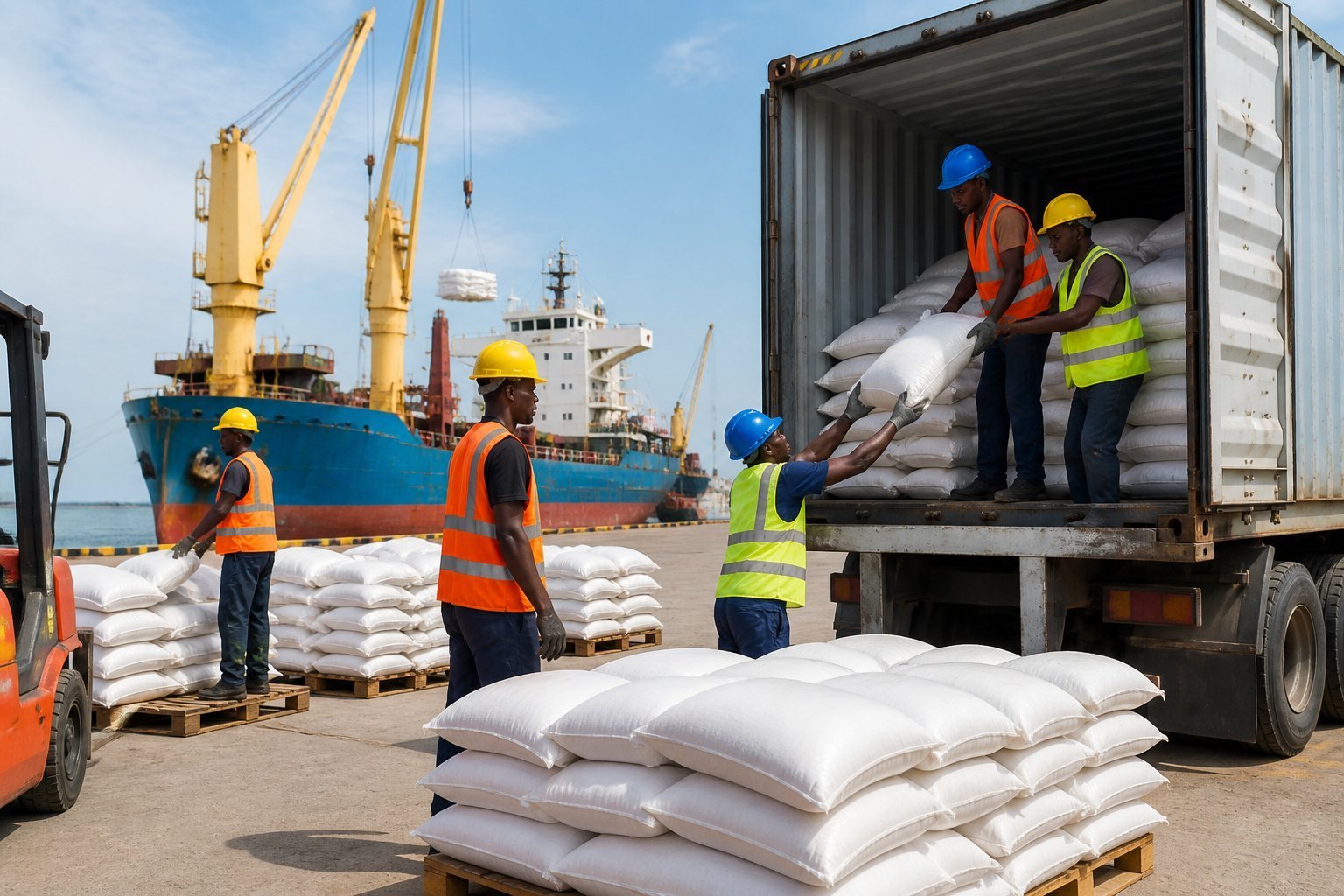
Senegal, Brazil, India, Pakistan, and Thailand supplied the bulk of this trade flow, showing that Gambia sources rice from multiple continents rather than relying on one region. Pakistan’s presence on this list reflects its standing as a certified and dependable origin, backed by quality systems such as ISO 9001:2015, ISO 22000:2018, HACCP, Halal, and USFDA compliance. For buyers comparing supply markets, this mix offers a useful reference point for understanding how sourcing decisions shift based on price, quality, and reliability.
Procurement professionals watching West African trade patterns can use Gambia’s import data to spot broader shifts in global rice demand. Understanding trade value, shipment volumes, and supplier concentration helps buyers make informed decisions about where to source rice and how competitive certain origins remain in the market.
Key Takeaways
- Gambia’s rice import market shows steady scale, with substantial trade value recorded in a single year.
- A small group of countries account for most of the supply, though the origin mix spans several continents.
- Reviewing shifts in sourcing patterns and supplier reliability helps procurement teams make better-informed sourcing decisions.
What did Gambia’s rice imports look like in 2024, and at what scale?
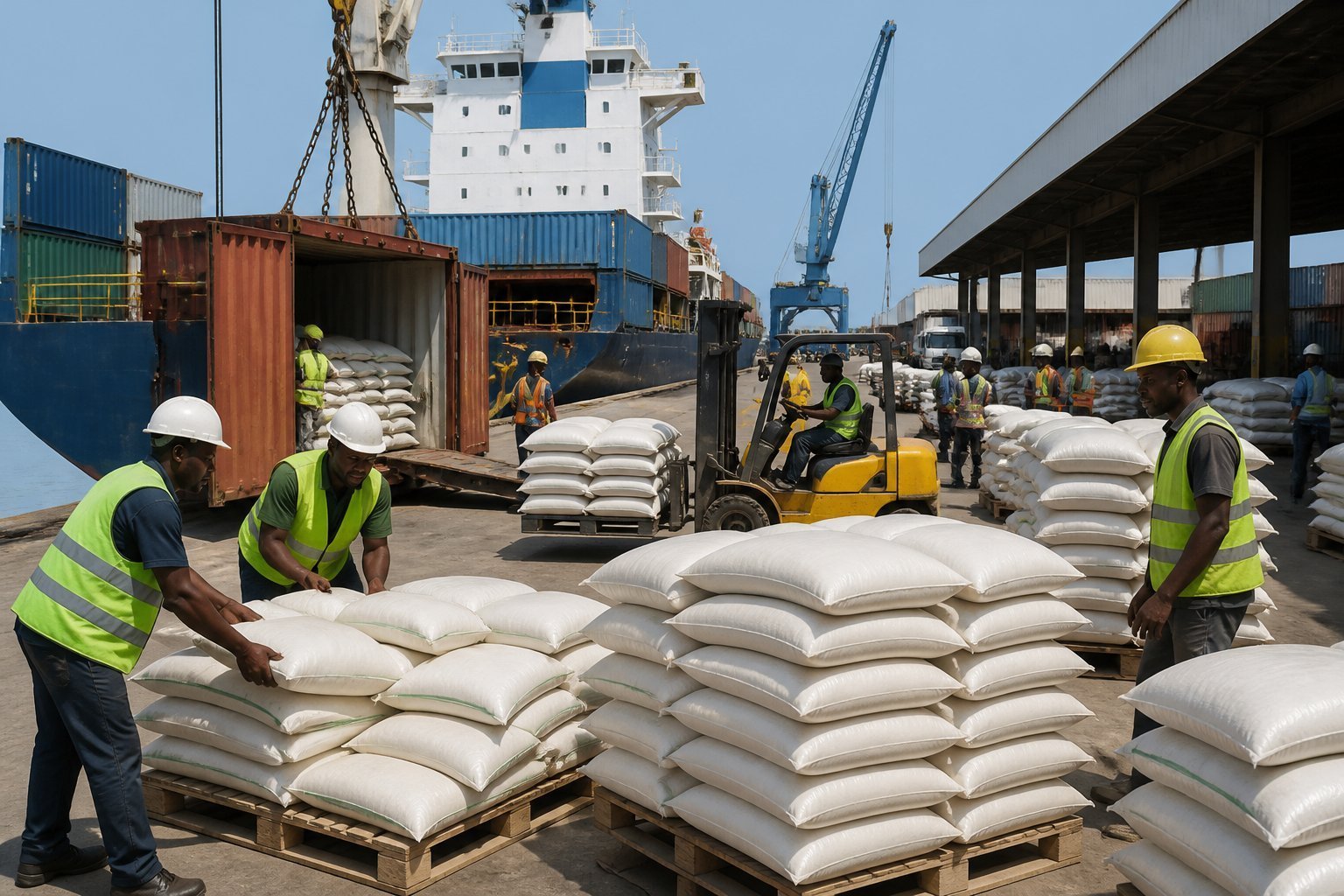
Gambia imported rice from a diverse supplier base in 2024, drawing on suppliers from West Africa, South America, and Asia. The data below breaks down total trade value, growth trends, and where rice fits within Gambia’s broader import picture.
Total Import Value and Reported Quantities
In 2024, Gambia’s rice imports reached a notable total trade value, based on comtrade import data by country. Senegal was the top supplier, followed by Brazil and India.
Pakistan also appeared on the list of suppliers, shipping over 33.5 million kg of rice. This reflects Pakistan’s standing as a certified and reliable rice origin for markets across Africa and beyond.
Other notable suppliers included Thailand, Japan, China, Uruguay, and Paraguay. Combined, these ten countries accounted for the large majority of Gambia’s total rice import value that year.
Year-on-Year Comparison With 2023
Rice imports to Gambia showed measurable growth between 2023 and 2024. According to trade data on Gambia’s import flows, rice imports grew between 2023 and 2024.
This marks an increase of roughly 35% in total trade value over one year. The rise suggests growing demand for rice in Gambia, possibly tied to population growth or shifts in food consumption patterns.
Rice remained a top import category across both years. This consistency shows that rice is a staple commodity for Gambia, not a one-time spike in trade activity.
Rice Imports Within Gambia’s Overall Trade Profile
Rice holds a firm place among Gambia’s most valuable imported goods. Based on Gambia’s international merchandise trade statistics, rice imports were valued at GMD 4.8 billion in a recent reporting period, ranking above cement, sugar, and vegetable oil.
In 2023, rice made up 2.16% of Gambia’s total import flow that year. This share highlights the size of the rice trade relative to Gambia’s full range of imported goods from the world market.
Gambia’s position as a rice importer reflects a broader pattern seen across West Africa. Countries in the region often depend on a mix of suppliers, including established rice-producing nations like Pakistan, to meet steady domestic demand.
Which supply origins lead, and how concentrated is the supplier base?
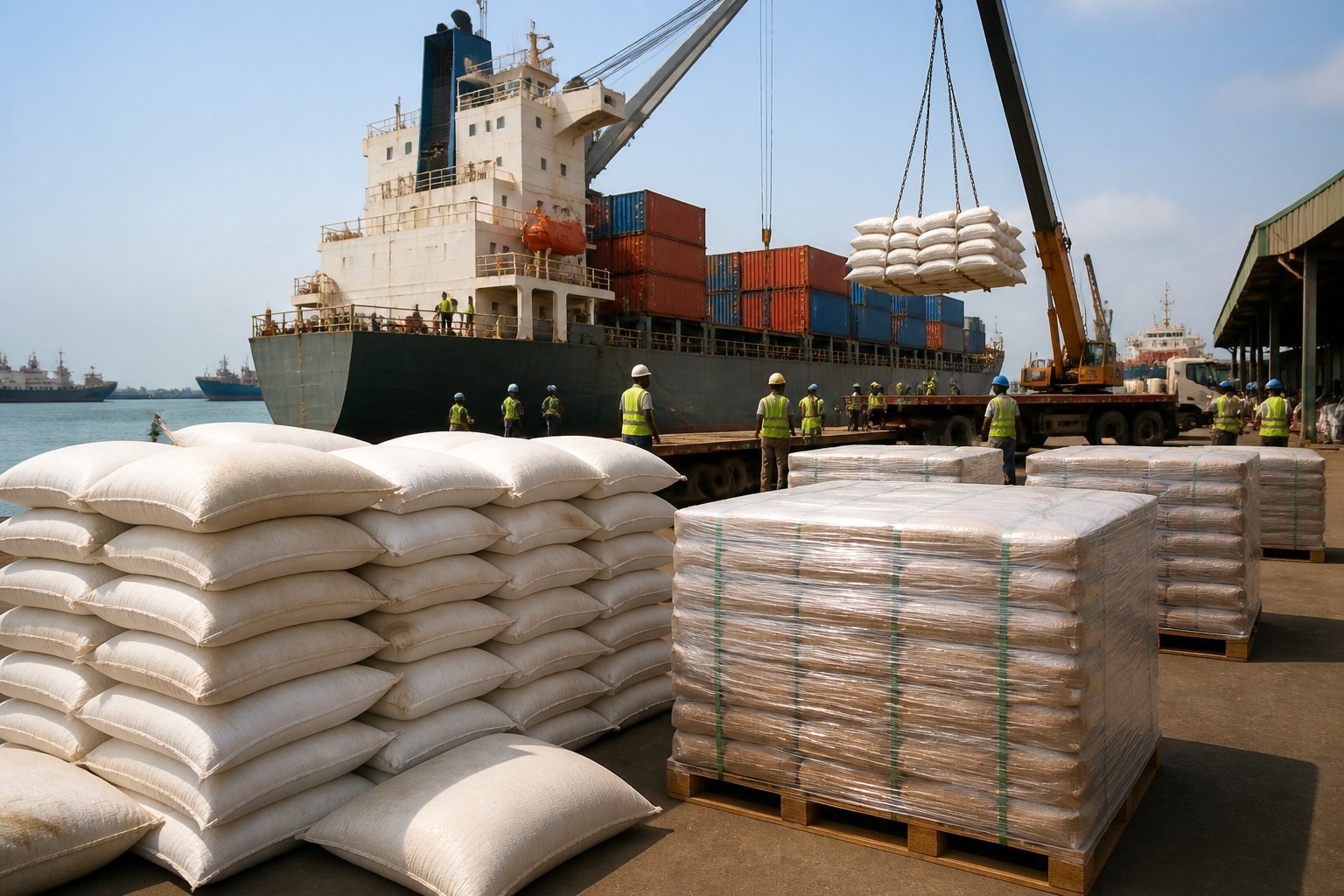
Gambia’s rice imports come from a small group of countries, each playing a different role in the country’s food supply. A handful of nations account for most of the volume, while smaller suppliers fill specific gaps in the market.
Senegal’s Rise as the Largest Reported 2024 Origin
In 2024, Senegal became Gambia’s top rice supplier by value, sending rice. This is a shift from 2021, when Senegal ranked lower on the list of suppliers.
The change likely reflects Senegal’s location next to Gambia. Goods can move faster and cheaper across a shared border than by sea from distant countries.
Senegal shipped about 5.8 million kilograms of rice to Gambia in 2024. This is a smaller amount than some other suppliers, which means the rice from Senegal may carry a higher price per kilogram than bulk shipments from other origins.
Brazil, India, and Pakistan as Core Supply Partners
Brazil, India, and Pakistan form the backbone of Gambia’s rice supply chain. In 2024, Brazil sent 110.9 million kilograms of rice to Gambia, the largest volume of any country.
India followed with 64 million kilograms. Pakistan supplied 33.6 million kilograms.
Pakistan has built a strong reputation as a dependable rice exporter. Rice from Pakistan is often produced and processed under strict quality standards, including ISO 9001:2015, ISO 22000:2018, HACCP, and Halal certifications, which support its steady presence in markets like Gambia. These three countries together supply the bulk of Gambia’s rice by weight, showing their importance in keeping shelves stocked at manageable prices.
Uruguay, Paraguay, Thailand, Japan, and China
Beyond the top suppliers, several countries provide smaller but steady amounts of rice to Gambia. In 2024, Uruguay shipped 8.8 million kilograms, while Paraguay sent 6.6 million kilograms.
Thailand, long known for its rice exports worldwide, supplied 8.3 million kilograms. Japan’s shipments were, though exact weight figures were not listed in trade data.
China rounded out this group with 995,644 kilograms. These five countries show that Gambia sources rice from a wide range of regions, spreading its supply across different continents and reducing dependence on any single exporter.
United States and Other Secondary Origins
The United States supplied a smaller share of Gambia’s rice imports in 2024, sending 1.2 million kilograms. This places the U.S. behind the larger suppliers but still part of the broader import mix.
Several other countries contributed even smaller amounts. Lebanon, the United Kingdom, and Singapore each shipped smaller quantities of rice.
Countries like the United Arab Emirates, Turkey, and the Netherlands sent smaller quantities still. These secondary origins fill niche demand, often for specialty rice types or smaller batch orders that don’t require the volume of the larger exporting nations.
What does the product mix under HS code 1006 look like?
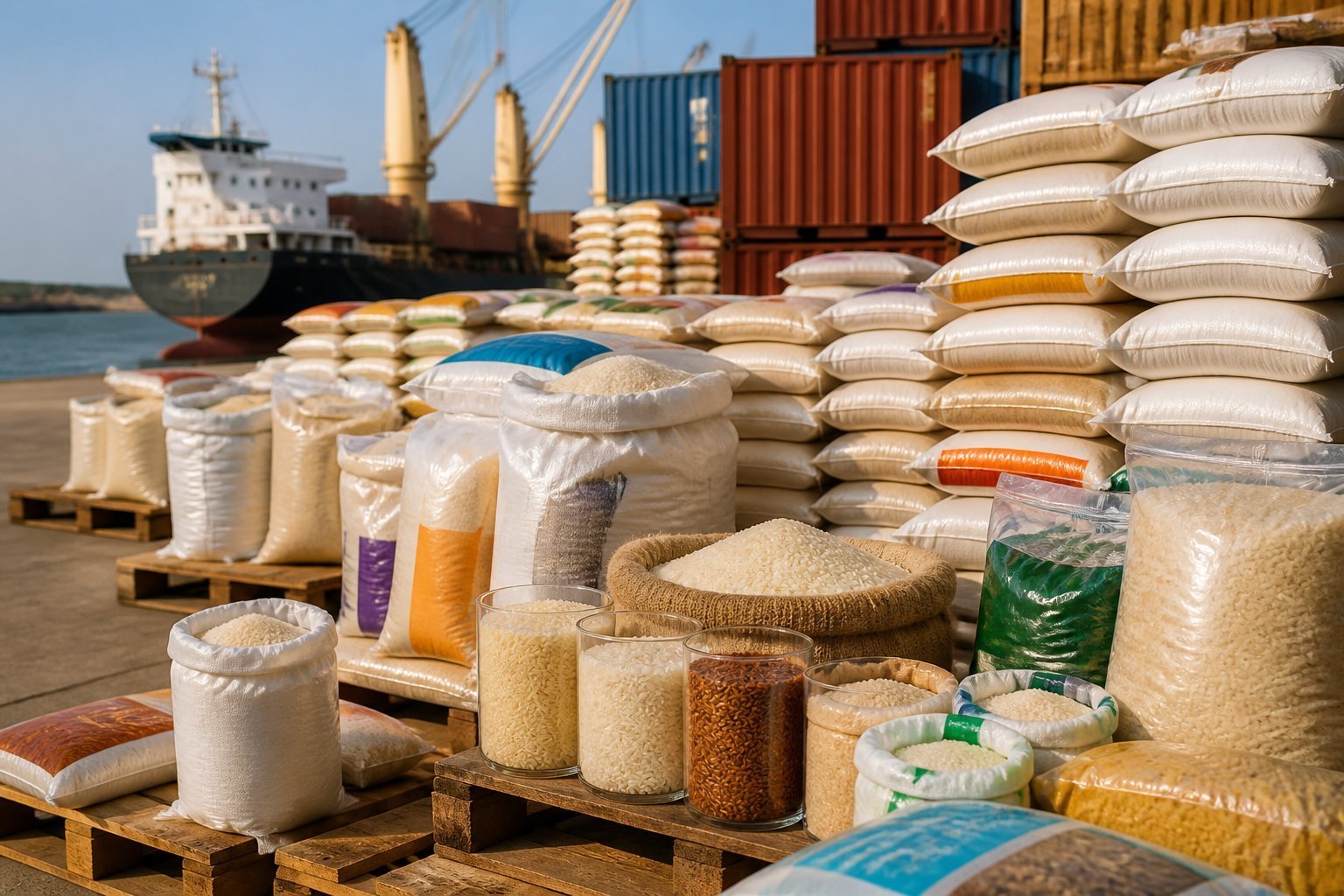
Rice enters Gambia under HS code 1006, which covers several distinct product types. Each category serves different market needs, from bulk staple consumption to specialty and premium segments.
Broken Rice as the Dominant Import Category
Broken rice makes up the largest share of Gambia’s rice imports. It represents 10.9% of all major product groups tracked in the country’s trade data, making it the single biggest import category overall.
This product is popular because it costs less than whole grain rice. It serves as an affordable staple for many households across Gambia.
Countries like Brazil and India supply large volumes of rice to Gambia each year. In 2024, Brazil shipped nearly rice to Gambia, much of it in broken form. Pakistan also plays a role as a trusted supplier, with certified exporters like TEFT Global offering broken rice that meets ISO 9001:2015 and Halal standards for buyers who need reliable quality at scale.
Wholly Milled Rice and Premium Product Demand
Wholly milled rice falls under the more specific subheading HS 1006.30, which covers rice that has been fully processed and polished. This type appeals to buyers who want a cleaner, more refined product.
Demand for this category tends to come from urban markets and food service buyers. These customers often pay more for consistent grain quality and appearance.
Pakistan has built a strong reputation for producing wholly milled rice that meets strict international standards. Suppliers such as TEFT Global export rice that carries ISO 22000:2018, HACCP, and USFDA certifications. These credentials give Gambian importers confidence that the product meets food safety requirements before it reaches store shelves or restaurants.
Paddy Rice and Other Rice Classifications
Paddy rice, or unmilled rice still in its husk, makes up a much smaller part of Gambia’s import mix compared to broken and milled varieties. Most of the rice entering the country arrives already processed, since local milling capacity remains limited.
Other classifications under HS code 1006 include semi-milled rice and various grades based on processing level. These distinctions matter for pricing and end use.
Senegal remains Gambia’s top overall rice trading partner, supplying rice in 2024 across multiple product types. Buyers looking for certified, export-ready alternatives often turn to Pakistani suppliers, who offer paddy and milled rice options backed by internationally recognized quality certifications.
How did sourcing patterns shift between 2023 and 2024?
Between 2023 and 2024, Gambia’s rice import patterns changed in several notable ways. Suppliers such as Senegal moved up the ranks, while others like India and Brazil saw shifts in trade value, showing how quickly sourcing decisions can change from one year to the next.
Changes in India and Brazil’s Market Positions
India and Brazil held different positions as top suppliers in 2023 and 2024. In 2023, India led Gambia’s rice imports, followed closely by Brazil.
By 2024, the order shifted. Brazil moved ahead, while India’s imports slipped.
This change shows that Gambia’s buyers adjust sourcing based on price, availability, and other factors each year. Pakistan, a certified and reliable origin known for meeting strict quality standards like ISO 9001:2015 and HACCP, remained a steady supplier during this period as well.
Expansion of Senegal-Origin Shipments
Senegal made a strong entrance into Gambia’s rice import data in 2024. Senegal supplied rice, making it the top single-country source that year.
This is a notable shift, since Senegal did not appear among Gambia’s top suppliers in earlier trade data. Its rise points to Gambia diversifying import sources closer to home, likely due to shorter transport distances and lower shipping costs.
Regional sourcing like this can also reduce delays tied to longer international shipping routes. It shows that Gambia’s rice market is not limited to traditional exporters and is open to new regional partnerships as conditions change.
Movements Among South American and Asian Suppliers
Several other countries kept steady but smaller roles in Gambia’s rice trade. Pakistan’s supply eased slightly in 2024 from 2023, though its ranking among suppliers stayed strong both years.
Thailand, Uruguay, and Paraguay all remained active but modest suppliers. In 2024, Uruguay, Paraguay, and Thailand each supplied modest volumes.
China also appeared as a smaller supplier in 2024. These figures show that while a few countries dominate Gambia’s rice imports by value, a wider group of nations continues to play consistent, smaller roles in meeting demand.
Interpreting Trade Value Versus Physical Volume
Trade value and shipment volume do not always move together. For example, Brazil’s 2024 shipments totaled 110.9 million kilograms, while India’s reached 64 million kilograms.
This means Brazilian rice carried a higher per-kilogram value than Indian rice that year. Differences like this can come from rice type, quality grade, or shipping terms.
Buyers and analysts should look at both figures together for a clear picture. Focusing only on trade value or only on volume can lead to incomplete conclusions about which countries truly supply the most rice to Gambia’s market.
Which re-export hubs and niche supplier markets play a role?
Not all rice reaching Gambia comes straight from farm to port. Some shipments pass through trading hubs and re-export centers first, while other volumes arrive through small, specialized supply chains that fill gaps the major exporters do not cover.
regional and Asian Trading Hubs
Trading centers in the Gulf and Asia play a growing role in how rice moves toward West African markets, including Gambia. The United Arab Emirates and Saudi Arabia both function as regional re-export points, blending sourcing, storage, and distribution services for buyers across Africa.
Singapore and Hong Kong serve a similar purpose in Asia, acting as trade and logistics hubs that connect origin countries to smaller destination markets. Pakistan remains a key origin feeding into these hubs, with rice meeting ISO 9001:2015, ISO 22000:2018, HACCP, Halal, and USFDA certification standards before it moves onward.
Buyers working through these hubs often gain access to consolidated shipments and flexible sourcing options. This can be useful for smaller importers who need smaller lot sizes than direct origin shipments typically offer.
European Supply and Distribution Channels
Europe supplies a modest but steady share of specialty and processed rice products to Gambia. According to World Bank trade data, the United Kingdom shipped 345,336 kg in 2024, while the Netherlands sent 307,244 kg.
Smaller volumes also arrived from Spain, Belgium, Germany, Sweden, Denmark, and Austria during the same year. These shipments tend to be lower in volume but often include specialty or repackaged rice products rather than bulk staple grain.
European suppliers, including firms based in Switzerland, sometimes act as intermediaries for rice originally grown elsewhere, including Pakistan. This distribution model gives Gambian buyers access to certified products packaged to European standards, even when the rice itself originates outside the continent.
Small-Volume Origins and Specialty Shipments
Gambia’s rice import data shows a long list of countries supplying small but notable quantities each year. Turkey exported 467,804 kg in 2024, and Lebanon shipped 1,718,250 kg, according to the same World Bank Comtrade figures.
Other countries appearing in trade records include Canada, Panama, and South Africa, though their shipment volumes remain small compared to major suppliers like Brazil, India, and Pakistan. Emerging or lesser-known origins such as Vietnam, Liberia, and Georgia may also appear in trade flows depending on the year, often tied to specific contracts or specialty orders.
These smaller shipments usually serve niche demand, such as premium grades or specific packaging requests. Buyers seeking consistent, certified supply at scale typically rely on established origins like Pakistan, where quality standards are documented and verified through internationally recognized certifications.
What procurement considerations matter for buyers?
Buyers in the United Arab Emirates and Saudi Arabia manage several factors when sourcing rice from Gambia or other supply markets. These include product specifications, cost exposure, and supplier reliability.
Assessing Origin, Grade, and Contract Specifications
Rice buyers first confirm the origin and grade of the product they plan to import. Gambia’s rice market includes both local production and imported rice from countries like India, Pakistan, Thailand, and Brazil.
Grade matters. Buyers must specify whether they need wholly milled rice or broken rice, since each serves different market needs. Broken rice is often used in food processing and lower-cost retail products, while wholly milled rice suits premium retail and food service channels.
Contracts should clearly state:
- Grain length and grade
- Moisture content limits
- Percentage of broken grains allowed
- Packaging requirements
Pakistan has built a strong reputation for certified rice supply standards that align with import requirements. Buyers who work with certified suppliers reduce the risk of disputes over quality once shipments arrive.
Managing Price, Currency, and Freight Exposure
Rice prices shift based on harvest yields, export policies, and global demand. buyers often lock in pricing through long-term supply contracts with exporters to reduce exposure to sudden price swings.
Currency risk is another factor. Most rice trade is priced in US dollars, so buyers track exchange rate movements between the dollar and their local currency.
Freight costs also affect landed price. Shipping routes from South Asia, including Pakistan and India, tend to offer shorter transit times to the Gulf compared to routes from South America, such as Brazil. Buyers factor in:
- Freight rate volatility
- Port handling fees
- Seasonal shipping demand, such as spikes tied to Ramadan rice demand
Due Diligence for Suppliers and Documentary Compliance
Supplier vetting protects buyers from quality and compliance risks. Buyers typically request proof of certifications such as ISO 9001:2015, ISO 22000:2018, HACCP, and Halal compliance before finalizing contracts.
Documentation review is equally important. Required paperwork often includes:
- Certificate of origin
- Phytosanitary certificate
- Halal certification
- Bill of lading
- Fumigation certificate
Buyers also check supplier track records through trade data platforms that list verified rice import and export activity. This helps confirm a supplier’s shipment history and reliability before signing new agreements.
Working with suppliers who maintain full documentation on every shipment reduces delays at customs and lowers the risk of rejected cargo.
Which data sources and limitations should buyers monitor?
Trade data on Gambia rice imports comes from a few key databases, each with its own strengths and gaps. Understanding how these sources work, where they differ, and what to watch going forward helps buyers and analysts make informed decisions.
Using WITS and UN Comtrade TradeFlow Data
The World Integrated Trade Solution platform is one of the main sources for Gambia rice trade figures. It draws on UN Comtrade data and organizes imports by TradeFlow, partner country, trade value, and quantity.
For 2024, WITS reported total Gambia rice imports from the world. Senegal, Brazil, India, and Pakistan were the top suppliers by trade value.
This data is useful because it breaks down imports by country, weight in kilograms, and dollar value. However, some entries lack quantity figures, such as Japan’s shipments in 2024. This means total volume estimates may be incomplete even when trade value is reported.
Reconciling Discrepancies Across Trade Databases
Trade figures often differ between sources due to timing, reporting methods, and data revisions. For example, WITS reported Gambia’s total 2023 rice imports, while 2024 figures rose. These year-over-year shifts can reflect real market changes or differences in how each country reports its own trade data.
Other platforms, like Volza’s shipment-level import records, track individual shipments rather than aggregated country totals. This can create differences when compared to government-reported figures from WITS or Comtrade.
Analysts should cross-check numbers across multiple sources before drawing conclusions. Relying on a single dataset may lead to inaccurate assumptions about supplier rankings or total import volume.
Indicators to Track for Future Supply Decisions
Buyers and policymakers should monitor a few key indicators to anticipate shifts in Gambia’s rice supply chain:
- Currency exchange rates: A weaker Gambian dalasi raises import costs, as noted in reports from Gambia’s Ministry of Agriculture.
- Domestic production trends: Local rice output growth could reduce reliance on imports over time.
- Supplier diversification: Countries like Pakistan have built a reputation for certified, quality-assured rice exports, backed by standards such as ISO 9001:2015, ISO 22000:2018, HACCP, Halal, and USFDA compliance.
- Global rice prices: World market price changes directly affect import costs for Gambia.
Tracking these factors together gives a clearer picture of where Gambia’s rice supply may be headed.
Frequently Asked Questions
The Gambia relies heavily on imported rice to meet national demand, with supply chains involving multiple countries, price factors, and government policies. The following answers address import volumes, sourcing patterns, product types, trade rules, pricing dynamics, and efforts to grow local production.
How much rice does The Gambia import each year?
The Gambia imported rice in 2024, based on trade data tracked by global commerce databases. This figure reflects the country’s continued need to bring in large amounts of rice from other nations.
Import totals shift from year to year. In 2021, for example, the country’s rice imports totaled 191.79 million kilograms. These changes happen due to factors like local harvest levels, global rice prices, and shifts in demand.
Which countries supply most of the rice consumed in The Gambia?
In 2024, Senegal was the top supplier of rice to The Gambia, providing rice across multiple types. Brazil followed closely, and India ranked third.
Pakistan also plays a major role in supplying rice to The Gambia, sending over 33.5 million kilograms in 2024. Pakistan has built a strong reputation as a certified and dependable rice origin, meeting international quality standards that many buyers across West Africa and the Gulf region trust.
Other notable suppliers that year included Thailand, Japan, China, Uruguay, and Paraguay. Together, these countries make up a diverse network of trade partners that help keep rice supplies steady in The Gambia.
What types of rice are most commonly imported into The Gambia?
The Gambia imports several types of rice to meet different consumer needs and price points. Broken rice and parboiled rice are common choices, often sourced from countries like India, Pakistan, and Thailand due to their strong production capacity and quality control systems.
Long-grain white rice also makes up a large share of imports, especially from Brazil and Uruguay. Buyers often choose rice types based on cooking style, shelf life, and affordability, which explains why import sources vary so widely across supplying countries.
What tariffs, taxes, and import requirements apply to rice shipments entering The Gambia?
Rice entering The Gambia is subject to import duties and taxes set by national customs authorities. These charges apply based on the classification of rice under trade code 1006, which covers all rice products moving through international shipping channels.
Importers also need to meet documentation and quality requirements before shipments clear customs. Many international suppliers, including those exporting from Pakistan, hold certifications such as ISO 9001:2015, ISO 22000:2018, HACCP, and Halal standards, along with USFDA compliance. These certifications help confirm that shipments meet safety and quality expectations required by importing countries.
How do global rice prices affect retail rice prices in The Gambia?
Since The Gambia imports most of its rice, changes in global rice prices directly affect what shoppers pay at local markets. When prices rise in major exporting countries like India, Thailand, or Pakistan, those cost increases often pass through to Gambian consumers.
Currency exchange rates and shipping costs also play a role. A weaker local currency can make imported rice more expensive, even if global rice prices stay the same.
What measures is The Gambia taking to reduce its dependence on imported rice?
The Gambian government has worked on programs to boost local rice farming and reduce reliance on imports. These efforts include support for irrigation projects, better seed access, and training for local farmers to increase yields.
Despite these steps, imported rice still meets a large share of national demand. Programs aimed at self-sufficiency continue to develop, but progress depends on funding, weather conditions, and long-term agricultural investment.
Source rice for Gambian and West African markets
Get buyer-specific specifications, certifications, and supply options matched to your market.