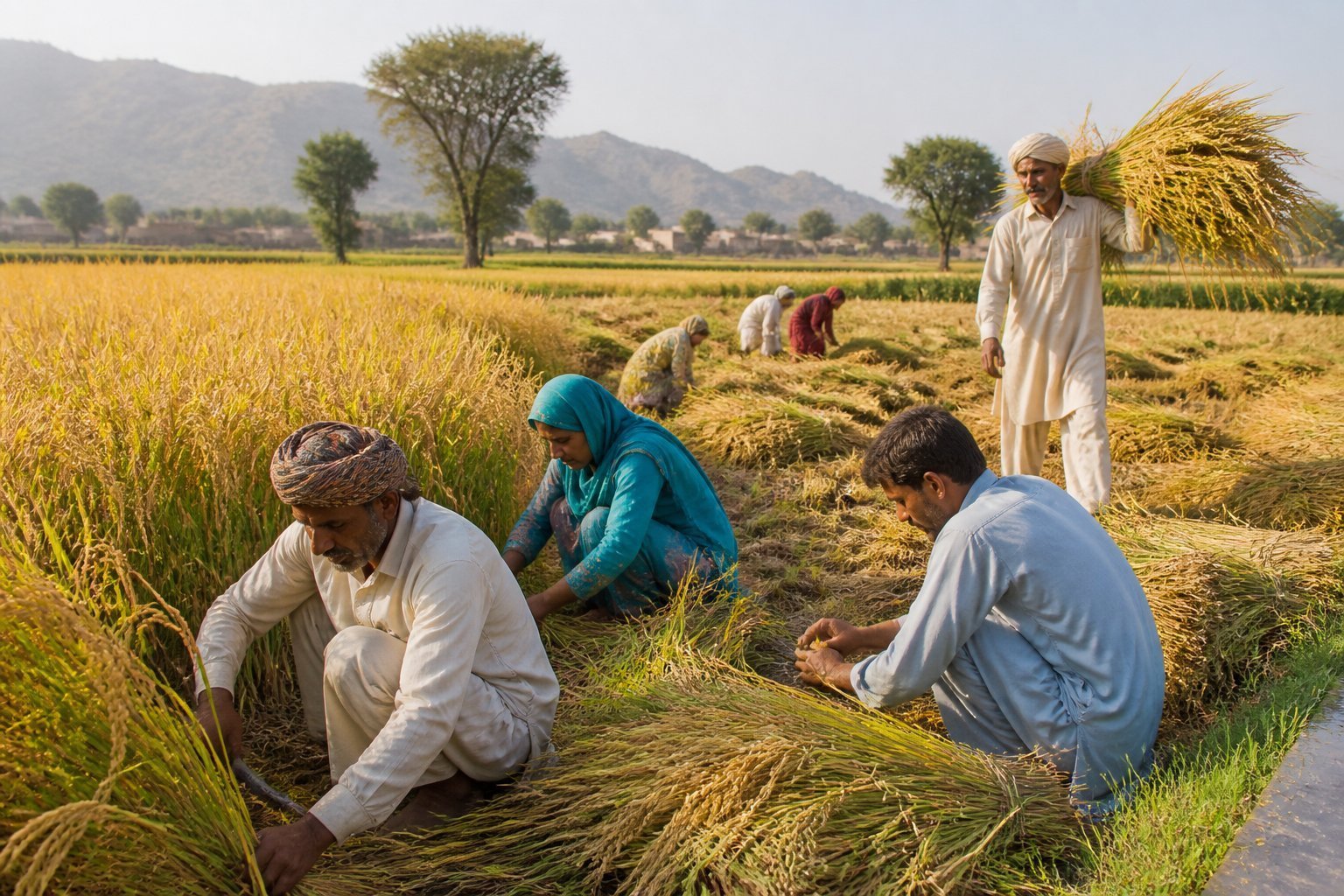
Pakistan’s rice harvest season runs primarily from October through December, with paddy collection peaking during the kharif season after monsoon cultivation. For importers and procurement teams, understanding this timeline is critical for securing volume, managing logistics, and capturing favorable pricing windows. Pakistan ranks among the world’s largest rice exporters, and the harvest period directly affects container availability, milling capacity, and export-grade stock readiness across Punjab and Sindh.
Timing procurement around the Pakistan rice harvest season allows buyers to align orders with fresh crop availability and avoid supply gaps during lean months. Rice mills ramp up processing from late October, and export documentation cycles typically align with post-harvest quality testing and certification under ISO 22000:2018, HACCP, and Halal standards. Buyers who understand regional harvest windows can better forecast lead times and negotiate terms based on actual paddy flow from farm to mill.
The kharif planting cycle begins in May and June, with paddy maturing through the monsoon before harvest operations begin in October. Varietal differences between basmati and IRRI types create staggered harvest peaks, and weather events or policy shifts can compress or延 the calendar. importers benefit from mapping these variables to maintain year-round supply continuity and meet downstream demand without costly gaps or delays.
Key Takeaways
- Pakistan’s main rice harvest occurs from October to December following the kharif growing season
- Procurement timing around harvest windows improves pricing leverage and ensures fresh crop availability
- Regional differences between Punjab and Sindh create staggered milling and export timelines that affect lead times
What does Pakistan’s rice harvest timeline look like?
Harvest timeline at a glance:
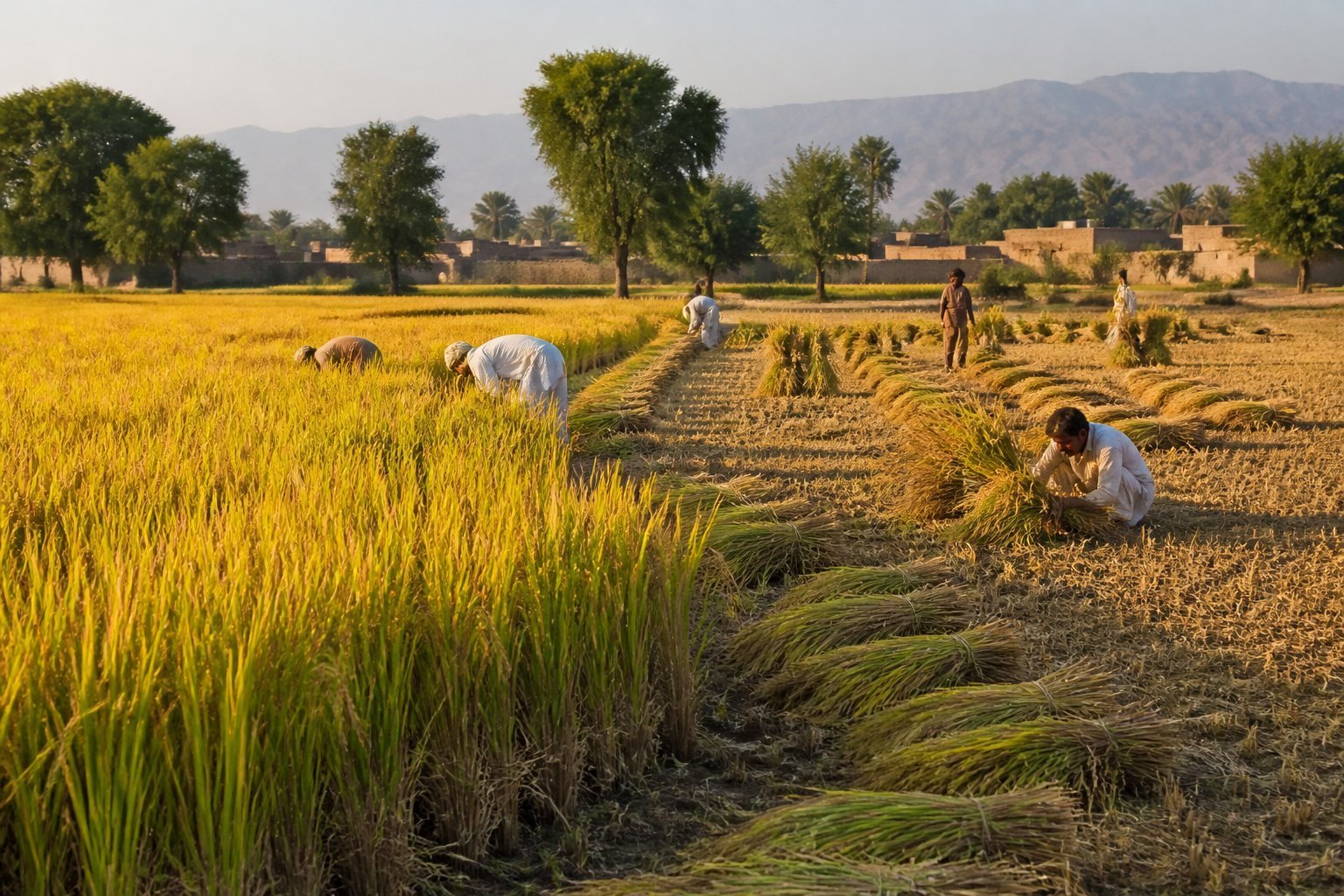
Pakistan rice cultivation follows the Kharif cropping season, beginning with nursery preparation in May and concluding with harvest from October through December. The entire cycle spans approximately seven to eight months from initial seedbed sowing to paddy procurement.
Nursery Preparation From May to June
Farmers begin preparing nurseries in May as temperatures rise across Pakistan’s rice-growing regions. This phase involves selecting high-quality seeds and treating them to prevent disease before sowing in prepared seedbeds.
The nursery period typically lasts three to four weeks. During this time, farmers focus on maintaining proper moisture levels and protecting young seedlings from pests. Punjab and Sindh provinces start their preparations simultaneously, though Sindh’s warmer climate allows for slightly earlier planting dates.
Seed selection varies by variety and intended market. Basmati seeds require careful handling due to their premium market value. Non-basmati varieties like IRRI-6 and IRRI-9 are hardier and less demanding during the nursery phase.
Transplanting From June to August
Transplanting begins in June when seedlings reach the appropriate height of 20 to 25 centimeters. Farmers move seedlings from nursery beds to flooded paddies prepared with proper leveling and water management systems.
IRRI varieties are transplanted earlier in June, while Basmati varieties follow in July and August. This staggered timing allows farmers to manage labor requirements and ensures processing facilities receive a steady supply throughout harvest season.
The monsoon rains provide natural irrigation during transplanting. Punjab farmers typically transplant Basmati 1121 and Super Kernel in July. Sindh focuses on IRRI-6, IRRI-9, and D98 Basmati varieties starting in mid-June.
Proper spacing between plants affects yield quality. Farmers maintain 15 to 20 centimeters between rows to allow adequate growth and air circulation.
Crop Growth During the Monsoon
Rice plants require 100 to 120 days from transplanting to reach full maturity. The monsoon season from July through September provides essential water for crop development.
Water management becomes critical during this phase. Farmers maintain consistent flooding levels while avoiding waterlogging that can damage root systems. The Kharif crop depends heavily on monsoon patterns, making this period vital for final yields.
Pesticide application occurs during the growth phase to control insects and prevent disease. Farmers monitor fields regularly for signs of pest damage or nutrient deficiencies. Fertilizer applications are timed to support grain formation and filling.
Temperature and humidity levels during August and September directly impact grain quality. Basmati varieties require specific conditions to develop their characteristic aroma and elongation properties.
Harvest and Paddy Arrivals From October to December
Harvest begins in October with IRRI-6 varieties in Sindh province. IRRI-9 follows in late October and early November. Basmati varieties are harvested later, primarily in November and December.
Sindh completes its harvest two to three weeks earlier than Punjab due to warmer temperatures and earlier planting dates. Farmers cut, thresh, and dry paddy before selling to mills or storing for later processing.
Paddy moisture content must reach 14 percent or below before milling. Farmers use mechanical dryers or sun-drying methods depending on available resources and weather conditions.
Mills procure paddy directly from mandis (wholesale markets) throughout the harvest period. Processing begins immediately after procurement to meet export demand. Fresh crop rice reaches international markets by December for non-basmati varieties and January through February for premium Basmati grades, meeting ISO 22000:2018 and HACCP standards required for global distribution.
When is each rice variety harvested?
Harvest windows by rice variety:
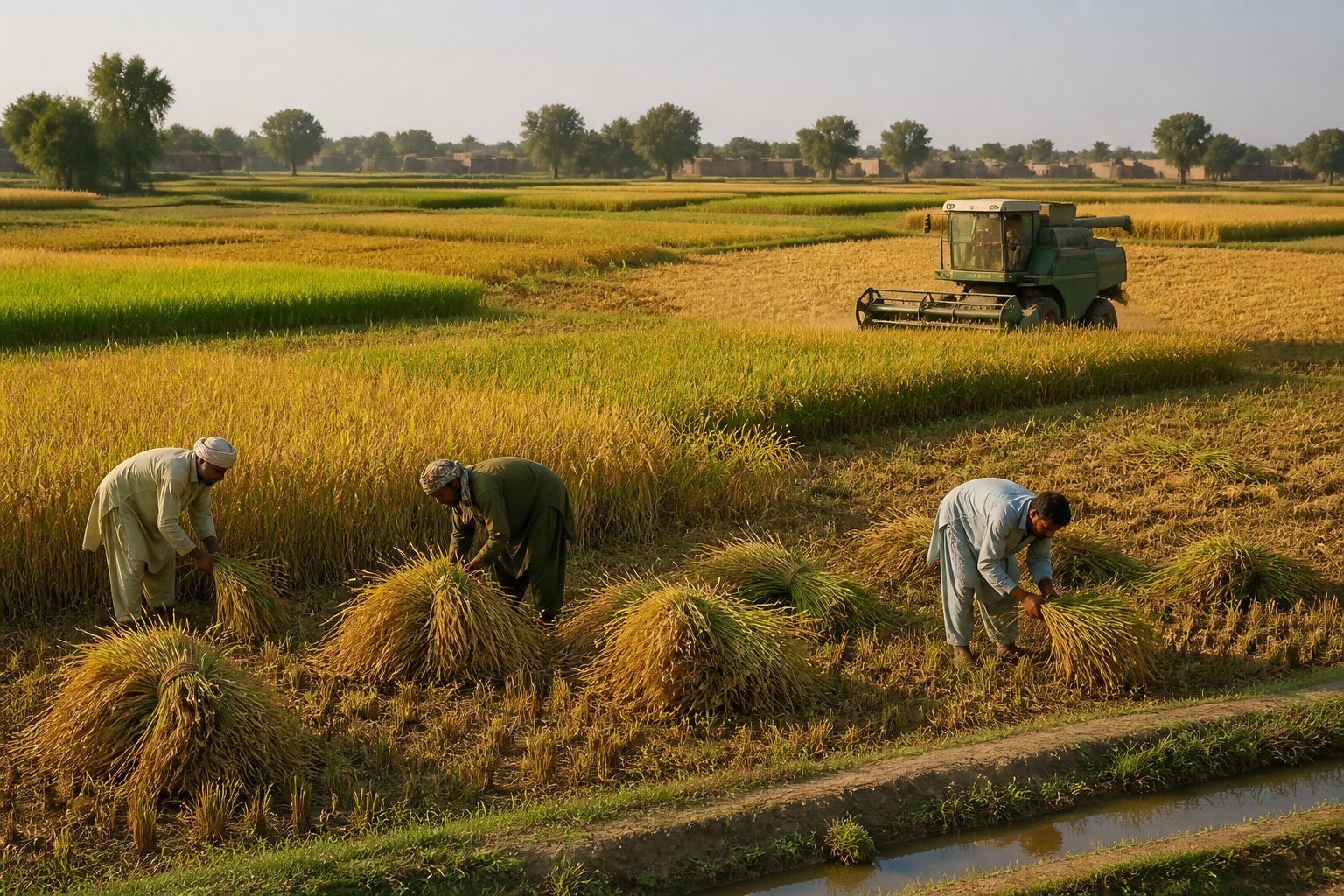
Different rice varieties grown in Pakistan follow distinct harvest schedules that directly impact availability and pricing for importers. IRRI varieties typically arrive first, followed by non-basmati premium grades and then basmati types.
IRRI-6 and IRRI-9 Availability
IRRI-6 and IRRI-9 varieties reach maturity earlier than most Pakistani rice types. These IRRI varieties are planted during May and June, primarily across Sindh province where climate conditions favor their growth cycle.
Harvesting begins in October for both IRRI-6 and IRRI-9. The harvest window extends through November, with peak milling activity occurring in mid-October through early November.
IRRI-6 dominates production volumes among these varieties. It matures in approximately 120 to 130 days from sowing. IRRI-9 follows a similar timeline but represents a smaller share of total output.
Fresh milled rice from these varieties becomes available to international buyers by late October. Pakistan’s certified rice mills process paddy immediately after harvest to meet quality standards including ISO 22000:2018 and HACCP requirements.
PK-386 and Super Kernel Timing
PK-386 and Super Kernel varieties occupy the premium non-basmati segment. These varieties are sown slightly later than IRRI types, typically from late May through early July in Punjab’s rice-growing districts.
The harvest season for these varieties runs from late October into early December. Super Kernel generally reaches maturity first, followed by PK-386 within a week or two.
Key harvest characteristics:
- Super Kernel: 130-140 day maturity period
- PK-386: 135-145 day maturity period
- Peak harvest: First two weeks of November
Mills begin processing these varieties by early November. Super Kernel commands premium pricing due to its longer grain length and cooking characteristics that meet international quality benchmarks.
1121 Basmati Harvest and Milling Schedule
1121 Basmati represents Pakistan’s flagship export variety with the longest growing cycle. Farmers in Punjab’s basmati belt—including Sheikhupura, Gujranwala, and Hafizabad—plant this variety from mid-May through mid-June.
The 1121 basmati harvest arrives later than other varieties. Fields are ready for cutting from mid-November through December, with most harvesting concentrated in the final three weeks of November.
This variety requires 145 to 160 days from sowing to harvest. The extended growing period develops the characteristic aroma and grain length that define quality basmati.
Milled rice becomes available from certified Pakistani mills in late November. However, many buyers prefer aged 1121 basmati, which mills store for 12 to 24 months to enhance cooking properties and grain separation. Fresh crop meets ISO 9001:2015 and Halal certification standards immediately upon milling.
How do Punjab and Sindh harvest timings differ?
Punjab and Sindh production timing:
Pakistan’s two main rice-producing provinces operate on different schedules due to climate variations. Sindh harvests non-basmati varieties 2-3 weeks earlier than Punjab’s basmati belt, which affects when fresh crop becomes available for export.
Punjab’s Basmati Belt and Gujranwala
Punjab produces the majority of Pakistan’s premium basmati rice. The basmati growing region centers around Sheikhupura, Gujranwala, and Hafizabad districts in northern Punjab.
Farmers transplant basmati seedlings between July and August. The 1121 Basmati variety follows this later planting schedule, with transplanting occurring from July through August. Super Kernel gets transplanted in July as well.
The harvest period for basmati varieties runs from November through December. Processing begins in December after paddy procurement from local markets. This means export-ready basmati typically becomes available in January and February.
Punjab’s cooler climate compared to Sindh extends the growing cycle. The region requires reliable irrigation from canal systems since monsoon patterns are less consistent than in southern areas.
Sindh’s Earlier Non-Basmati Crop
Sindh focuses primarily on non-basmati production. The province’s warmer southern climate allows for earlier planting and harvesting compared to Punjab.
IRRI-6 transplanting starts in June, making it one of the first varieties planted. IRRI-9 follows slightly later from June through July. Both varieties mature faster than basmati types.
The harvest season in Sindh begins in October for IRRI-6 and extends through November for IRRI-9. Processing starts in November, with export-ready rice available by December. This gives Sindh a 4-6 week head start over Punjab’s basmati crop.
Sindh also grows D98 Basmati, which transplants in July and harvests in November. The province benefits from consistent monsoon rains that support paddy irrigation during critical growth phases.
How Regional Climate Changes Supply Dates
Temperature differences between provinces directly impact when rice reaches international markets. Sindh’s warmer temperatures accelerate crop maturity by 2-3 weeks.
This timing gap matters for importers planning their purchase cycles. Non-basmati varieties from Sindh enter processing facilities in November. Basmati from Punjab doesn’t reach the same stage until December.
The month-by-month production timeline shows export windows opening at different points:
| Region | Primary Varieties | Export Ready |
|---|---|---|
| Sindh | IRRI-6, IRRI-9 | December |
| Punjab | 1121, Super Kernel | January-February |
Buyers requiring non-basmati can source earlier in the season. Those seeking premium basmati need to wait for Punjab’s later harvest cycle to complete. All Pakistani rice exports meet ISO 22000:2018, HACCP, Halal, and USFDA certification standards regardless of provincial origin.
How does paddy become export-ready rice?
From paddy harvest to export-ready rice:
Once paddy arrives at processing facilities, it undergoes controlled drying, milling, and quality grading before reaching export markets. Processing timelines vary by rice type, with parboiled varieties requiring additional steaming steps and aged basmati needing extended storage periods.
Drying, Storage, and Milling Lead Times
Fresh paddy arrives at mills with moisture content between 22-24%. Processors reduce this to 12-14% through mechanical dryers to prevent spoilage during storage.
The processing sequence from raw paddy into milled rice takes 3-4 weeks from procurement. Mills first clean the paddy to remove stones, straw, and debris. De-husking equipment strips the outer husk, producing brown rice.
Multi-stage milling removes the bran layer to create white rice. Optical color sorters eliminate discolored or broken grains. Mills grade the output by broken percentage, with whole kernels commanding premium prices.
Standard milling timeline:
- Day 1-3: Paddy reception and cleaning
- Day 4-7: Drying and tempering
- Day 8-14: De-husking and milling
- Day 15-21: Sorting and grading
- Day 22-28: Packaging and export preparation
Parboiled Rice Production After Harvest
Parboiled rice requires soaking and steaming before milling. This process pushes nutrients from the bran into the grain and creates a harder, less sticky texture when cooked.
Processors soak paddy in heated water for 4-6 hours. Steam pressure gelatinizes the starch inside each kernel. After drying, the paddy passes through standard milling equipment.
Parboiled varieties take 5-7 days longer to process than white rice. The steaming step adds production costs but improves shelf life and nutritional value. Most parboiled exports from Pakistan consist of non-basmati varieties like IRRI-6.
Fresh Crop Versus Aged Basmati
Aged basmati is preferred in the region and Middle East markets because it elongates more during cooking and develops stronger aroma. Premium varieties like 1121 basmati and Super Kernel improve with controlled aging.
Mills store milled rice in temperature-controlled warehouses for 12-24 months. During this period, moisture stabilizes and the grain hardens. Aged kernels break less during cooking and absorb more water.
Fresh crop basmati is ready for export by January-February after the November-December harvest. Aged stock from previous years remains available year-round. Buyers pay 8-12% premiums for properly aged 1121 basmati compared to fresh crop. All aged rice supplied to international markets meets ISO 22000:2018 and HACCP standards for food safety.
When should buyers time procurement around the harvest?
Procurement timing and seasonal price patterns:
Pakistan’s rice market follows predictable price cycles tied to harvest windows and inventory levels. Buyers who understand these patterns can secure better pricing and consistent quality throughout the year.
Post-Harvest Buying From November to February
The Pakistan rice harvest runs from October to January, making November through February the optimal window for procurement. Paddy arrives at mills in high volumes during this period, creating downward pressure on prices.
Fresh 1121 Basmati and IRRI-6 become available as milling operations process the new crop. Quality peaks during these months because rice has just been harvested and processed under controlled conditions. Moisture levels are optimal, and broken grain percentages remain low.
Importers working with certified suppliers can lock in annual contracts during this window. Pakistan’s export-grade rice meets ISO 22000:2018 and HACCP standards, ensuring consistent quality for import markets and beyond. Most major buyers place their largest orders between December and February when mill capacity is highest and FOB Karachi rates are most competitive.
Mid-Season Contracting From March to June
Prices typically stabilize or increase slightly from March through June as harvest inventory gets absorbed by global demand. Mills have processed most of their paddy by this point, and available stock becomes the primary pricing factor.
1121 Basmati maintains relatively stable pricing during this period compared to IRRI-6, which can see more variation based on regional demand. Buyers often negotiate contracts for the second and third quarters during these months, though pricing leverage shifts toward suppliers.
Stock quality remains high through June if rice has been stored properly in temperature-controlled facilities. Pakistan’s certified mills maintain ISO 9001:2015 standards throughout storage and processing. This period works well for importers needing to secure volumes before the pre-harvest gap but without the urgency of peak buying season.
Pre-Harvest Supply Risks From July to September
July through September represents the tightest supply window in Pakistan’s rice calendar. Kharif planting occurs from May to June, but the new crop won’t arrive until October.
Available inventory reaches its lowest point during these months. Mills hold limited stock, and prices can spike by 15-25% compared to post-harvest rates. Monsoon flooding can disrupt logistics and delay shipments from interior mills to Karachi port.
Buyers requiring rice during this period should contract well in advance or accept higher pricing. Quality concerns also increase as older crop rice may have been in storage for 6-9 months. Smart procurement teams avoid this window entirely or maintain buffer stock from earlier purchases to cover their needs through September.
What supply risks can shift the harvest calendar?
Supply risks that can alter the calendar:
Pakistan’s rice harvest timing depends on weather patterns, water availability, and logistical factors that shift from year to year. These variables affect when paddy reaches mills and when certified product becomes available for export markets.
Monsoon Variability and Flooding
The monsoon season directly controls transplanting schedules across Pakistan’s rice-growing regions. When rains arrive late or come in irregular bursts, farmers delay transplanting to avoid waterlogged fields or insufficient moisture for seedling establishment.
Flooding in Punjab province creates uncertainty around harvest timing by damaging crops within proximity to river systems. These events force growers to replant or abandon fields entirely. Floods have wiped out crops within 7 km of rivers, depositing sand and silt that reduces soil fertility and complicates recovery efforts.
Excessive rainfall during flowering and grain-filling stages increases disease pressure and reduces yields. This climate volatility means harvest windows compress or extend unpredictably, making it harder for mills and exporters to commit to delivery schedules.
Water Management and Transplanting Delays
Water shortages represent a growing constraint on rice cultivation timelines. Pakistan’s rice output was revised down to 9.1 million tonnes due to water shortages and high input costs, demonstrating how irrigation limitations reduce planted area and delay transplanting operations.
A compressed wheat harvest window followed by erratic rice transplanting creates overlapping risk periods rather than isolated events. When wheat harvest runs late, fields remain occupied longer, pushing rice transplanting into suboptimal windows. This cascade effect shortens the growing season and can force early harvesting before grains fully mature.
Canal closures and reservoir management decisions impact when paddy can be planted across Punjab and Sindh. Growers who miss optimal transplanting dates face reduced yields or skip the season entirely.
Stock Levels, Quality, and Freight Considerations
Mill inventory levels determine market readiness independent of field harvest dates. In Punjab, Super Basmati stocks are available for brown rice, while Sindh still holds ample reserves of brown rice and paddy, meaning existing supply can bridge gaps when new crop arrival delays occur.
Key stock considerations include:
- Moisture content – Paddy harvested early requires additional drying time before milling
- Storage capacity – Limited warehouse space forces accelerated processing regardless of market conditions
- Quality degradation – Prolonged storage without climate control affects milling recovery and grain appearance
Freight disruptions add another layer of calendar uncertainty for buyers. Regional instability and shipping route changes can delay container movement even when harvest proceeds on schedule. Pakistan’s ISO 9001:2015, ISO 22000:2018, HACCP, Halal, and USFDA certified rice meets international quality standards, but delivery reliability depends on coordinating harvest, processing, and logistics into a single timeline that weather and geopolitical factors constantly reshape.
How should buyers plan imports and documentation?
the region import planning and documentation:
Gulf buyers planning rice imports from Pakistan need to coordinate delivery schedules with harvest timing and prepare specific documentation for customs clearance. The varieties selected must match consumer preferences across different import markets, while phytosanitary certificates and plant protection documentation ensure compliance with regional food safety standards.
Aligning Delivery Programs for Oman and Gulf Buyers
Fresh-crop rice becomes available for export from December onwards for non-basmati varieties and January-February for premium basmati types like 1121 Basmati and Super Kernel. Oman and other Gulf markets receive the best pricing during this November-February window when supply peaks and freight costs remain competitive.
Importers who structure long-term rice contracts with Pakistani suppliers secure predictable shipment schedules throughout the year. Forward contracts placed during the harvest season lock in lower prices for deliveries extending into mid-year periods when spot prices typically rise.
Container booking should account for the 3-4 week processing period after paddy procurement. Milled rice destined for Gulf ports requires proper storage in climate-controlled facilities to maintain moisture content between 12-14% during transit.
Selecting Varieties for the region Market Requirements
1121 Basmati dominates premium retail segments across the region due to its extra-long grain and aromatic properties. Super Kernel serves mid-tier markets with similar characteristics at lower price points. Both varieties meet consumer demand for rice that elongates significantly during cooking.
Gulf buyers often prefer aged basmati stock over fresh-crop rice. One to two-year aging enhances grain elongation and intensifies aroma, particularly valued in Saudi Arabia, UAE, and Qatar markets. Non-basmati IRRI-6 and PK386 varieties supply food service operations and large institutional buyers.
China has increased imports of Pakistani rice varieties, but import markets remain the primary destination for premium basmati grades. Somalia also sources Pakistani rice, though volumes remain significantly smaller than Gulf shipments.
Phytosanitary and Plant-Protection Documentation
Every milled rice shipment to the region countries requires a phytosanitary certificate issued by Pakistan’s Department of Plant Protection. This document certifies that the rice is free from pests, diseases, and contaminants regulated by importing countries.
The certificate must list the specific variety, quantity, container numbers, and fumigation details when applicable. Gulf customs authorities reject shipments lacking proper plant protection documentation or containing discrepancies between certificates and commercial invoices.
Additional certifications include ISO 22000:2018 for food safety management, HACCP for hazard control, and Halal certification for religious compliance. These documents accompany the phytosanitary certificate to form the complete import clearance package required at the region ports receiving Pakistani rice.
How does rice fit Pakistan’s wider crop calendar?
How rice fits Pakistan’s wider crop calendar:
Rice cultivation in Pakistan follows the kharif season pattern, planted between May and July and harvested from October through December. This timing places rice alongside other major summer crops and directly influences what farmers can plant afterward during the winter rabi season.
Kharif Crops and Competing Field Operations
Rice shares the kharif season timeline with several other important summer crops. Cotton, maize, and sugarcane all require field preparation and planting during the same April to June window.
Farmers in Punjab and Sindh must decide how to allocate their land between these competing crops. Rice typically needs more water than cotton or maize, making it better suited for areas with reliable irrigation. Cotton thrives in slightly drier conditions and matures earlier than most rice varieties.
Sugarcane operates on a longer cycle than rice. It gets planted once but continues growing across multiple seasons. Maize completes its cycle faster than rice, allowing some farmers to harvest maize by August before rice reaches maturity.
The overlapping schedules create labor and equipment demands during May and June. Tractors, seed drills, and irrigation systems must serve multiple crops simultaneously. Rice exported from Pakistan meets ISO 22000:2018 and HACCP standards, making proper timing and quality control essential throughout the growing season.
Rabi Crops After Rice Harvest
The rice harvest window from October to January aligns well with the planting schedule for winter rabi crops. Wheat represents the most important rabi crop planted after rice.
Farmers harvest rice in October and November, then immediately prepare fields for wheat sowing. Wheat planting must happen between October and December to ensure proper growth before winter temperatures drop. This tight timeline requires efficient post-harvest operations.
Common rabi crops planted after rice include:
- Wheat (primary winter staple)
- Barley (in cooler northern areas)
- Mustard (oilseed crop)
- Peas and grams (legumes that fix nitrogen)
The rotation from rice to wheat provides agronomic benefits. Rice leaves fields with good moisture retention. Wheat helps break pest and disease cycles that affect rice. This crop rotation pattern supports soil health better than continuous single-crop farming.
Some farmers plant vegetables like onions and garlic immediately after rice harvest. These crops fetch premium prices in winter markets and complete their cycle before the next kharif season begins.
Seasonal Vegetables and Export Produce
Pakistan grows vegetables year-round, but specific varieties align with the gaps in the rice calendar. Winter vegetables start growing just as rice harvest concludes.
Onions planted in November and December mature by March and April. Garlic follows a similar timeline. These allium crops provide income during months when rice fields would otherwise sit empty. Tomatoes grow well in the cooler rabi season and avoid the intense summer heat that rice tolerates.
Seasonal produce timing:
| Crop | Planting Period | Harvest Period |
|---|---|---|
| Citrus | Year-round trees | November-March |
| Watermelon | February-March | May-June |
| Okra | March-April | June-August |
| Cucumber | February-March | April-May |
| Pumpkin | February-March | May-June |
Watermelons and melons get planted as baharia crops in early spring. They mature before the main rice planting begins in May and June. This allows farmers to generate cash flow from melons before investing in rice cultivation.
Okra grows during the hot kharif months alongside rice but requires less water. Dates from Sindh and Balochistan mature during August and September, just before rice harvest begins. Pakistan’s position as a certified rice origin under ISO 9001:2015 standards extends to its broader agricultural exports, supporting reliable supply chains for international markets including the region.
Plan your rice sourcing around the harvest
Get buyer-specific specifications, certifications, and supply options matched to your market.
What do buyers ask most about Pakistan’s rice harvest season?
Frequently asked questions:
Pakistan’s rice harvest follows a defined seasonal pattern, with the main crops arriving between October and January. Regional variations, weather patterns, and rice varieties create specific windows for harvesting and purchasing across different provinces.
When is the main rice harvesting period in Pakistan?
The primary rice harvesting season in Pakistan runs from October through December. This period covers the Kharif crop, which farmers plant during May and June. The harvest can extend into January depending on the variety and regional conditions.
Rice mills begin processing freshly harvested paddy during this window. The peak activity occurs in November when most fields reach optimal maturity.
Which months are basmati rice typically harvested in Pakistan?
Basmati rice harvesting occurs primarily between October and December in Pakistan. Farmers grow this premium variety during the Kharif season, planting it in late spring and early summer. The longer growing period required for basmati means it typically reaches harvest readiness in mid to late autumn.
Super Basmati and traditional Basmati-385 follow similar timelines. Mills process these varieties immediately after harvest to preserve their distinctive aroma and grain characteristics.
How does the rice harvest timeline vary by province in Pakistan?
Punjab province, Pakistan’s largest rice-producing region, begins harvesting in early October. The province produces most of Pakistan’s basmati crop, with fields concentrated around Lahore, Gujranwala, and Sialkot districts.
Sindh province follows a slightly different schedule. Rice harvesting in Sindh typically starts in late September and continues through November. This region focuses more on IRRI varieties and long-grain non-basmati rice.
Khyber Pakhtunkhwa has a smaller rice sector with harvests that align closely with Punjab’s timeline. Regional microclimates can shift harvest dates by one to two weeks within the same province.
What factors can delay or accelerate rice harvesting in Pakistan?
Temperature fluctuations during the growing season directly impact harvest timing. Higher temperatures can accelerate crop maturity by up to two weeks. Cooler conditions extend the growing period, pushing harvests later into December.
Water availability affects crop development throughout the season. Adequate irrigation allows crops to mature on schedule, while water shortages can delay maturity or reduce yields.
Pest pressure and disease outbreaks sometimes force early harvesting. Farmers may cut rice before optimal maturity to prevent total crop loss. Heavy rainfall near harvest time delays field operations, as wet conditions make mechanical harvesting difficult.
When is the best time to buy freshly harvested Pakistani rice?
Buyers can access the freshest rice from November through January. Mills complete processing during these months, and rice maintains peak quality characteristics. Basmati purchases during this window ensure maximum aroma and grain integrity.
Prices often reach more competitive levels during the immediate post-harvest period. Supply peaks as mills process large volumes, creating favorable conditions for bulk orders. Quality testing and certification processes align with this timeline for export-grade rice meeting ISO 22000:2018 and HACCP standards.
Early-season purchases allow importers to secure specific grades before stocks diminish. Mills allocate their best lots first, making November and December critical months for premium selections.
How does the monsoon season affect rice harvesting schedules?
The monsoon season provides essential water for rice cultivation but can disrupt harvest timing. Pakistan’s monsoon runs from July through September, coinciding with the crop’s critical growth phase. Good monsoon rains support healthy crop development, setting the stage for October harvests.
Late monsoon activity extending into October can delay harvesting operations. Wet field conditions prevent machinery access and increase moisture content in standing crops. Farmers must wait for fields to dry sufficiently before beginning mechanical harvesting.
Excessive rainfall near maturity can damage crops through lodging, where plants fall over from wind and water weight. This condition complicates harvesting and can reduce grain quality. Conversely, weak monsoons may require increased irrigation, which can shift harvest dates based on water management strategies across different regions.