
Brown basmati rice has become a priority specification for institutional buyers across the GCC seeking to balance nutritional mandates with consumer preference for aromatic, long-grain varieties. As a whole grain basmati rice option, brown basmati retains the bran and germ layers, delivering higher fiber content and a lower glycemic index than polished white rice while maintaining the signature fragrance and separate-grain texture that foodservice operators require. Pakistan remains a certified and reliable origin for premium brown basmati, meeting ISO 9001:2015, ISO 22000:2018, HACCP, Halal, and USFDA standards that procurement professionals demand for regulated markets.
Importers and distributors face distinct challenges when sourcing brown basmati: longer cooking times, moisture-sensitive storage requirements, and the need for supplier transparency on milling ratios and grain integrity. Understanding these variables directly impacts menu consistency, operational efficiency, and cost per serving in high-volume kitchens. Brown basmati also commands different freight handling protocols compared to white rice due to its oil-rich bran layer, which affects shelf stability during transit and warehousing.
This guide addresses the commercial and operational considerations that B2B rice buyers must evaluate when integrating brown basmati into their product portfolios. From grain specifications and supplier vetting to institutional cooking protocols and competitive positioning against other whole grain options, the following sections provide actionable intelligence for procurement teams serving hotels, catering operations, retail chains, and export channels throughout the Gulf region and beyond.
Key Takeaways
- Brown basmati rice offers whole grain nutrition with aromatic qualities and fluffy texture suitable for institutional foodservice
- Pakistani brown basmati meets international certification standards including ISO, HACCP, Halal, and USFDA requirements for GCC markets
- Proper storage, freight handling, and cooking methods are essential for maintaining grain quality and operational efficiency
What Is Brown Basmati Rice?
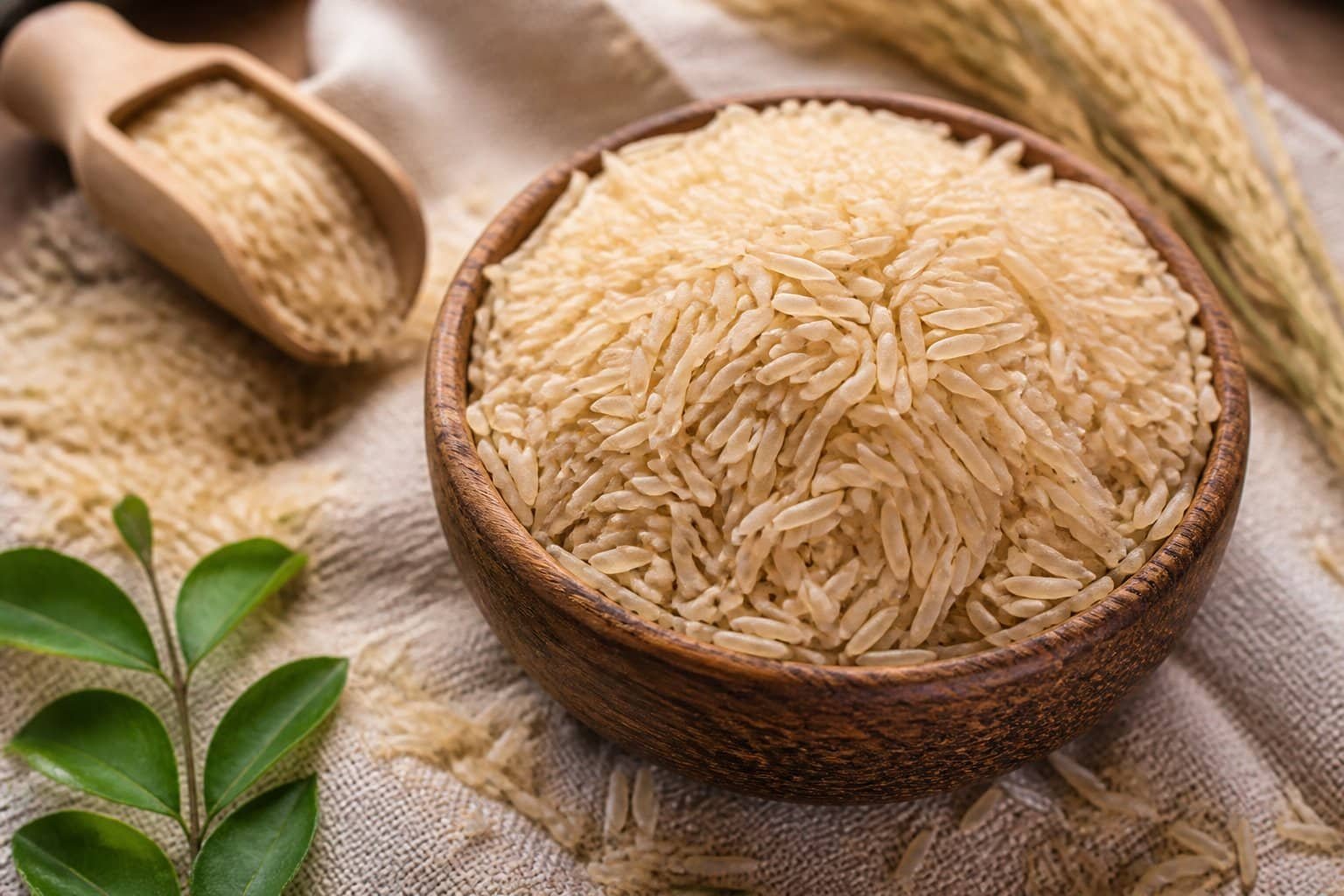
Brown basmati rice maintains its complete grain structure with bran and germ intact, delivering the signature aromatic qualities of basmati alongside whole grain nutrition. This rice variety originates from certified growing regions across the Indian subcontinent where specific cultivation standards ensure authenticity.
Whole Grain Properties and Nutritional Profile
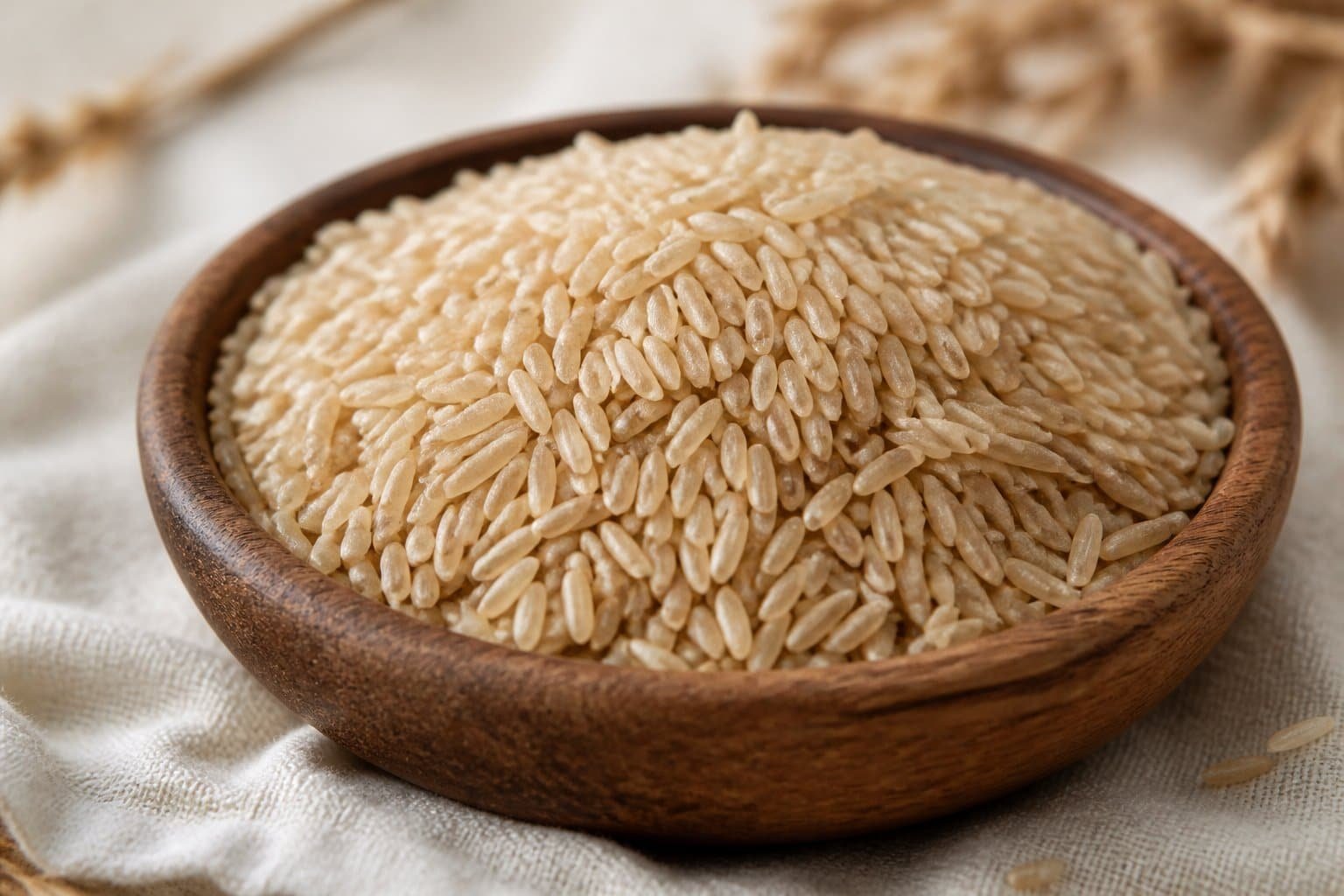
Brown basmati rice retains its bran and germ layers, making it a complete whole grain unlike its white counterpart. The grain measures at least 6.61 mm in length before cooking and maintains a slender width up to 2 mm.
The bran layer gives brown basmati its tan color and nutty flavor. This outer coating contains fiber, B vitamins, minerals, and beneficial compounds not found in polished white rice. The germ layer adds healthy fats and additional nutrients.
Brown basmati contains approximately 0.09 ppm of 2-acetyl-1-pyrroline, an aromatic compound that creates its distinctive fragrance. This compound appears at levels 12 times higher than standard rice varieties. The natural aroma resembles pandan leaves and remains present even after the grain undergoes minimal processing.
The grains stay firm and separate when cooked properly. Brown basmati rice has a low to medium glycemic index of around 50 to 58, compared with white basmati at 56 to 69 and instant white rice higher still.
Source Regions and Cultivation Standards
Basmati rice grows in specific geographic areas across the Indian subcontinent. Pakistan produces certified basmati in Punjab province, particularly in the Kalar bowl between the Ravi and Chenab rivers. Pakistani varieties like Super Kernel Basmati Rice and PK 385 meet international quality benchmarks.
India holds geographical indications for basmati production in Punjab, Haryana, Uttarakhand, Himachal Pradesh, and western Uttar Pradesh. Both countries supply basmati that meets ISO 9001:2015, ISO 22000:2018, HACCP, Halal, and USFDA certification standards.
Pakistan accounts for roughly a third of global basmati trade, with Gulf markets among its largest destinations. The country accounts for approximately 35% of global basmati trade. Pakistani basmati reaches markets in the European Union, Turkey, Gulf countries, Australia, Canada, and the United States.
Certified brown basmati maintains strict purity standards. DNA fingerprinting tests detect adulteration with non-basmati varieties, identifying contamination as low as 1% with a ±1.5% error rate.
How Do You Check Brown Basmati Rice Quality Before Buying?
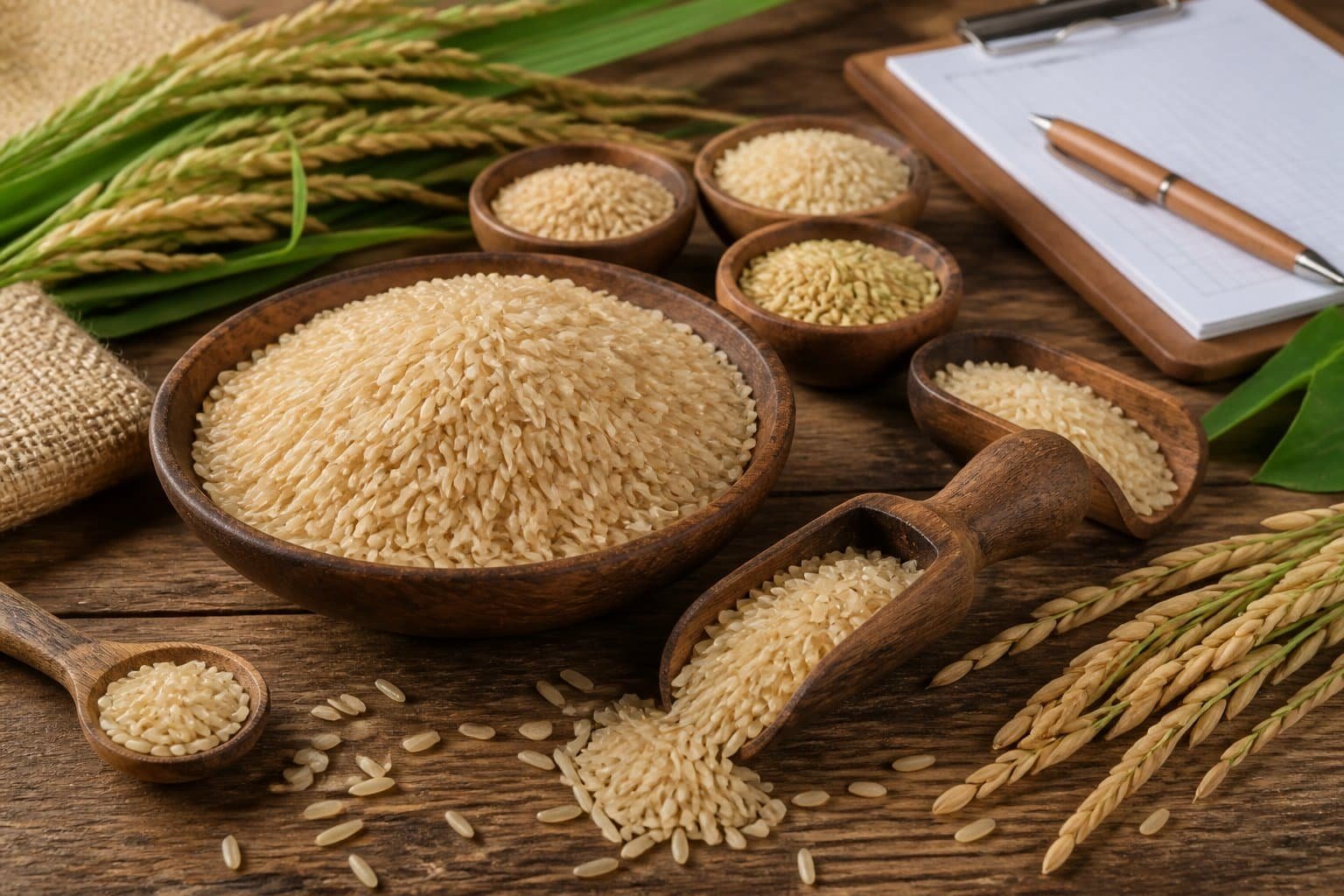
Brown basmati rice quality depends on measurable physical traits and verifiable supplier credentials. Grain length uniformity, natural bran color, and varietal purity determine market positioning, while supplier certifications and handling protocols directly affect landed quality.
Identifying Grain Length, Color, and Purity
Grain length classification separates premium from standard grades in brown basmati rice procurement. The 1121 variety typically measures 8.3–8.4 mm before cooking, while 1509 averages 8.0–8.2 mm. Buyers should verify length distribution through representative sampling rather than relying on average measurements alone.
Bran color consistency indicates proper milling and storage discipline. Perfect brown basmati rice displays uniform golden to light tan coloring across the entire lot. Dark spots, discoloration, or uneven tones suggest moisture damage, aged inventory, or contamination during processing.
Varietal purity remains critical because adulteration with non-basmati long grain varieties reduces cooking performance and damages brand reputation. Laboratory testing can identify crossbred or non-aromatic rice mixed into shipments. Buyers serving GCC markets should request DNA testing certificates when purchasing whole grain basmati rice to confirm authentic varietal composition before finalizing bulk orders.
Supplier Selection Criteria for GCC Markets
Certification compliance forms the baseline for brown basmati rice suppliers targeting GCC distribution. ISO 22000:2018 and HACCP certification demonstrate food safety system implementation, while Halal certification meets regional religious requirements. USFDA registration adds export credibility for suppliers serving multiple markets.
Pakistan produces certified brown basmati rice under controlled agricultural conditions with established quality systems. Suppliers should provide moisture-controlled packing documentation showing grain stored and shipped at 14% moisture or below to prevent deterioration during transit to GCC ports.
Traceability infrastructure separates reliable suppliers from high-risk sources. Buyers should verify lot coding systems, segregation protocols during milling, and documentation linking finished goods back to paddy origin. This prevents quality mixing and supports rapid response if destination inspections flag specification deviations.
How Should Brown Basmati Rice Be Stored and Shipped?
Brown basmati rice requires controlled moisture levels below 14% and protection from temperature fluctuations to preserve its natural bran layer and nutritional integrity. Pakistani exporters follow ISO 22000:2018 and HACCP standards to ensure grain quality from mill to destination port.
Maintaining Grain Integrity During Transport
Brown basmati rice ships in jute or polypropylene bags, typically 25-50 kg units for export markets. Rice cargo requires proper ventilation with 15-25 air changes per hour to prevent moisture accumulation during ocean transport.
The water content must stay between 13-15% during shipment. Higher moisture levels trigger self-heating and enzymatic fat breakdown in the bran layer.
Pre-loading requirements include:
- Hold inspections for structural integrity and weathertightness
- Installation of dunnage beneath bag stacks
- Creation of ventilation channels between cargo rows
- Photographic documentation of hold conditions
Temperature differences between hold air and external conditions cause condensation. Surface ventilation prevents moisture damage to top-layer bags. Brown rice shows higher sensitivity to humidity than white varieties due to its oil-rich bran coating.
Moisture control measures:
- Maximum relative humidity of 70% in cargo holds
- Sealed hatch covers preventing rain ingress
- Regular monitoring during 15-30 day voyages
- Protection from deck wash and seawater contact
Recommended Storage Conditions for Brown Basmati
Brown basmati rice stores safely at 12-14% moisture content in climate-controlled facilities. The natural oils in the bran layer make it more perishable than white rice, requiring stricter environmental controls.
Storage temperature should remain below 15°C to slow lipid oxidation and prevent rancidity. Proper storage maintains rice quality and extends shelf life from 6-12 months under optimal conditions.
Critical storage parameters:
| Factor | Specification |
|---|---|
| Moisture content | 12-14% maximum |
| Relative humidity | 60-70% |
| Temperature | Below 15°C |
| Ventilation | Continuous air circulation |
Warehouses must protect brown rice from pest infestation through sealed containers or hermetic storage systems. Regular fumigation prevents insect damage and contamination. Pakistani facilities maintain ISO 9001:2015 certification standards for grain handling and storage protocols.
Stack bags on wooden pallets 15-20 cm above concrete floors. Leave 60-75 cm spacing between wall and cargo for air movement. Monthly inspections check for moisture damage, discoloration, or off-odors indicating spoilage.
How Do You Cook Brown Basmati Rice at Scale?
Large-scale preparation of brown basmati rice requires specific techniques that maintain grain quality while serving hundreds of portions. The boil and drain method eliminates ratio guesswork and produces consistent results across commercial kitchen equipment.
Boil and Drain Method: Large-Scale Application
Commercial kitchens benefit from the boil and drain approach when preparing brown basmati rice in bulk quantities. This method uses excess water, similar to cooking pasta, which removes the need for precise measurements.
Fill a large stockpot with water and bring it to a rolling boil. Add brown basmati rice at a ratio of approximately 1 part rice to 6 parts water. The excess water ensures even cooking across all grains.
Boil uncovered for 25 to 30 minutes, testing grains for tenderness at the 25-minute mark. Drain the rice through a large colander immediately once it reaches the desired texture.
Return the drained rice to the pot and cover with a lid for 5 minutes. This resting period allows residual steam to finish the cooking process and produces fluffy brown basmati rice without clumping.
Stovetop Cooking Technical Steps
The traditional absorption method works effectively when institutional kitchens need perfect brown basmati rice with minimal water waste. Rinse rice thoroughly under cold water until the water runs clear to remove surface starch.
Use a 2:1 water-to-rice ratio in heavy-bottomed stockpots with tight-fitting lids. Bring water to a full boil before adding rinsed rice and salt.
Reduce heat to the lowest setting immediately after the water returns to a boil. Cover the pot and maintain a gentle simmer for 40 to 45 minutes without lifting the lid.
Turn off heat and let the rice rest covered for 10 minutes. Fluff with a large fork before portioning into steam table pans for service.
Should Brown Basmati Rice Be Rinsed or Soaked?
Rinsing rice removes surface starch that causes grains to clump together during cooking. Soaking brown basmati rice before cooking can reduce cooking time and improve texture.
Rinsing Rice to Enhance Grain Separation
Rice grains develop a powdery coating of surface starch during handling and milling. This layer causes rice to become sticky and gummy when cooked. Rinsing washes away loose starch, allowing grains to cook separately and produce a fluffier texture.
Brown basmati rice benefits from thorough rinsing to achieve distinct, well-separated grains. The process takes less than one minute but significantly impacts the final result.
Basic rinsing method:
- Place measured rice in a large bowl
- Cover with cold water
- Swirl grains gently with fingers
- Drain cloudy water
- Repeat until water runs mostly clear (typically 2-3 times)
Premium brown basmati rice from Pakistan and other certified origins contains natural oils in the bran layer. Rinsing removes excess starch and dirt without stripping essential nutrients found in the outer bran.
Research indicates that rinsing rice reduces arsenic content, providing an additional health benefit. Brown rice retains most nutrients during rinsing because vitamins and minerals are concentrated in the bran layer rather than applied to the surface.
Optional Soaking Protocols
Soaking brown basmati rice before cooking serves multiple purposes. The process hydrates grains evenly, reduces cooking time by 10-15 minutes, and improves digestibility.
Standard soaking guidelines:
- Soak for 30 minutes to 2 hours in room temperature water
- Use a 1:2 ratio of rice to water for soaking
- Drain completely before cooking
- Reduce cooking water by approximately 1/4 cup per cup of rice
Extended soaking beyond 2 hours provides minimal additional benefit for brown rice. The bran layer absorbs water more slowly than white rice varieties, making moderate soaking times sufficient.
Soaking is optional for brown basmati rice. Cooks who skip this step should expect slightly longer cooking times and potentially less uniform texture. Rice sourced from quality-controlled facilities meeting ISO 22000:2018 and HACCP standards maintains consistent grain quality whether soaked or not.
For time-sensitive meal preparation, rinsing alone delivers satisfactory results. Soaking becomes more valuable when planning ahead or cooking larger quantities where even texture matters.
What Are the Nutritional Benefits of Brown Basmati Rice?
Brown basmati rice delivers 164 calories per 100g cooked with 4.9g protein and 1.6g fiber, positioning it as a nutrient-dense grain for health-focused menus. Its distinctive aroma and fluffy texture make it adaptable across diverse commercial kitchen applications.
Health Attributes and Menu Positioning
Whole grain basmati rice retains its bran layer, providing more fiber and minerals than polished varieties. Cooked brown basmati rice contains 33g of carbohydrates per 100g with no saturated fat or cholesterol.
The grain carries a low to medium glycemic index in the 50 to 58 range. This makes it suitable for establishments catering to customers managing blood sugar levels.
Key nutritional advantages for menu development:
- Protein content: 4.9g per 100g supports balanced meal planning
- Fiber: 1.6g per serving aids digestive health messaging
- Zero sodium: Ideal for low-salt dietary requirements
- Iron content: 0.8mg per 100g contributes 4% daily value
Pakistani-origin brown basmati rice meets ISO 22000:2018 and HACCP standards, ensuring food safety compliance for commercial operations. These certifications support foodservice operators in maintaining quality control protocols.
Pairings and Usage in Commercial Kitchens
Brown rice’s nutty flavor complements both aromatic spice blends and delicate herbs. The grain holds up well in steam tables and warming equipment for extended service periods.
Commercial kitchens use brown basmati rice in grain bowls, pilafs, and as a base for curries. It pairs effectively with grilled proteins, roasted vegetables, and Mediterranean preparations. The separate grains remain distinct after cooking, preventing clumping during batch preparation.
Prep teams typically rinse the rice before cooking to remove excess starch. A 2:1 water-to-rice ratio produces consistent results in commercial rice cookers. Cooking time ranges from 40-45 minutes, requiring advance planning for service timing.
The grain absorbs marinades and broths efficiently, making it practical for flavored rice dishes. It maintains texture in cold applications like salads and meal prep containers.
How Does Brown Basmati Compare to White Basmati and Brown Rice?
Brown basmati rice occupies a distinct position in the global market through its combination of aromatic qualities and nutritional retention. The variety differentiates itself through specific grain characteristics and processing methods that appeal to health-conscious consumers seeking premium rice options.
Brown Basmati vs. White Basmati and Standard Brown Rice
Brown basmati rice is often regarded as a healthier alternative to white rice due to its higher fiber content and lower glycemic index. The variety retains the bran layer that white basmati removes during polishing, preserving vitamins, minerals, and dietary fiber.
Compared to standard brown rice varieties, brown basmati delivers a distinctive aroma and elongated grain structure. The grains expand lengthwise during cooking rather than widening, maintaining separation on the plate. Pakistani-origin brown basmati meets ISO 22000:2018 and HACCP standards, ensuring consistent quality and food safety.
White basmati cooks faster but lacks the nutritional density of its brown counterpart. Standard brown rice varieties lack the signature fragrance that defines basmati.
Key Distinctions:
- Fiber content: Brown basmati contains 3-4 grams per serving vs. 0.6 grams in white basmati
- Glycemic index: 50-58 for brown basmati vs. 56-69 for white basmati
- Cooking time: 40-45 minutes for brown basmati vs. 15-20 minutes for white
- Aroma profile: Strong nutty fragrance in brown basmati vs. mild in standard brown rice
Market Positioning Strategies
Industry leaders in the brown basmati rice market shape the competitive landscape through focused strategies emphasizing quality certifications and origin transparency. Suppliers position brown basmati as a premium product commanding higher price points than conventional brown rice.
Distribution through hypermarkets, specialty stores, and e-commerce platforms increases accessibility. Organic and non-GMO certifications attract consumers prioritizing sustainable agriculture. Pakistan-sourced brown basmati certified under ISO 9001:2015, Halal, and USFDA standards appeals to GCC markets and international buyers seeking verified quality.
Packaging innovations highlighting nutritional benefits and preparation convenience differentiate products on retail shelves. Ready-to-cook formats address urbanization trends and busy lifestyles. Brand messaging emphasizes the dual benefits of basmati’s sensory appeal and brown rice’s health advantages, creating a unique value proposition that standard varieties cannot match.
Frequently Asked Questions
Brown basmati rice requires specific water ratios and rinsing techniques to achieve fluffy grains, and proper storage prevents the natural oils from turning rancid. Pakistani brown basmati contains more fiber and minerals than white rice while maintaining a lower glycemic response.
How do I cook it so the grains turn out fluffy rather than sticky?
The key step is rinsing the rice thoroughly under cold water until the water runs clear. This removes surface starch that causes grains to clump together during cooking.
After rinsing, the rice should be cooked with the lid tightly fitted to trap steam. Once cooking finishes, a 10-minute rest period allows the moisture to distribute evenly throughout the grains.
Fluffing with a fork immediately after resting separates the grains. Adding a small amount of oil or ghee to the cooking water can also help keep the grains distinct.
What water-to-rice ratio works best for stovetop, rice cooker, and Instant Pot methods?
The stovetop method requires 2 cups of water for every 1 cup of rice. This ratio produces firm, fluffy grains when simmered on low heat for 35 to 45 minutes.
Rice cookers work well with the same 2:1 ratio. Most models include a brown rice setting that automatically adjusts cooking time.
The Instant Pot needs less water due to minimal evaporation during pressure cooking. A ratio of 1.25 cups water to 1 cup rice works best, with 22 minutes of high-pressure cooking followed by a 10-minute natural release.
How long should it be soaked, and does soaking actually improve texture or digestion?
Soaking is optional for high-quality brown basmati rice sourced from certified suppliers. Premium Pakistani basmati meeting ISO 22000:2018 and HACCP standards cooks evenly without pre-soaking.
If soaking is preferred, 30 minutes to 2 hours in cold water can slightly reduce cooking time. Longer soaking periods may result in overly soft or mushy grains.
Thorough rinsing provides more consistent results than soaking for most cooking applications. Rinsing removes dust and excess starch while soaking mainly softens the outer bran layer.
Is it healthier than white rice in terms of fiber, minerals, and glycemic impact?
Brown basmati rice contains approximately 4 grams of fiber per cooked cup compared to less than 1 gram in white basmati. The intact bran layer provides this additional fiber along with essential minerals.
The bran also contains B vitamins, magnesium, and selenium that are removed during the milling process that produces white rice. These nutrients support metabolic function and immune health.
Brown basmati has a lower glycemic index than white rice, causing a slower rise in blood sugar after eating. This makes it a better choice for managing blood glucose levels and sustained energy.
How should it be stored to prevent rancidity, and how can I tell if it has gone bad?
Uncooked brown basmati rice contains natural oils in the bran that can oxidize over time. It should be stored in an airtight container in a cool, dark place like a pantry.
For longer storage, keeping the rice in the refrigerator or freezer extends shelf life up to one year. Room temperature storage typically keeps the rice fresh for 3 to 6 months.
Rancid rice develops an off smell, similar to old cooking oil or paint. If the rice smells sour, musty, or unpleasant, it should be discarded.
Can it be used for dishes like pilaf, fried rice, or biryani without turning mushy?
Brown basmati works well for pilaf and biryani when cooked with slightly less water than usual. The grains maintain their shape and absorb spices effectively.
For fried rice, day-old refrigerated brown basmati produces the best results. Chilled rice has firmer grains that separate easily in the pan without breaking down.
The rice requires a few more minutes of cooking than white basmati in layered dishes like biryani. Adjusting liquid ratios and allowing proper resting time ensures the grains stay distinct and fluffy throughout preparation.
Add Brown Basmati to Your Range
TEFT Global supplies certified brown basmati from Kalar tract mills to importers, retailers, and foodservice operators across Qatar and the GCC — moisture-controlled packing, milling ratio on spec, and full documentation with every lot.