
How to judge basmati quality starts with the grain itself: buyers should verify a length of at least 6.61mm before cooking, check for a creamy-translucent hue indicating proper aging, and confirm a natural nutty aroma that releases when grains are rubbed between the palms. The market is flooded with products labeled as basmati, but only a fraction meet the standards required for high-value foodservice and retail channels.
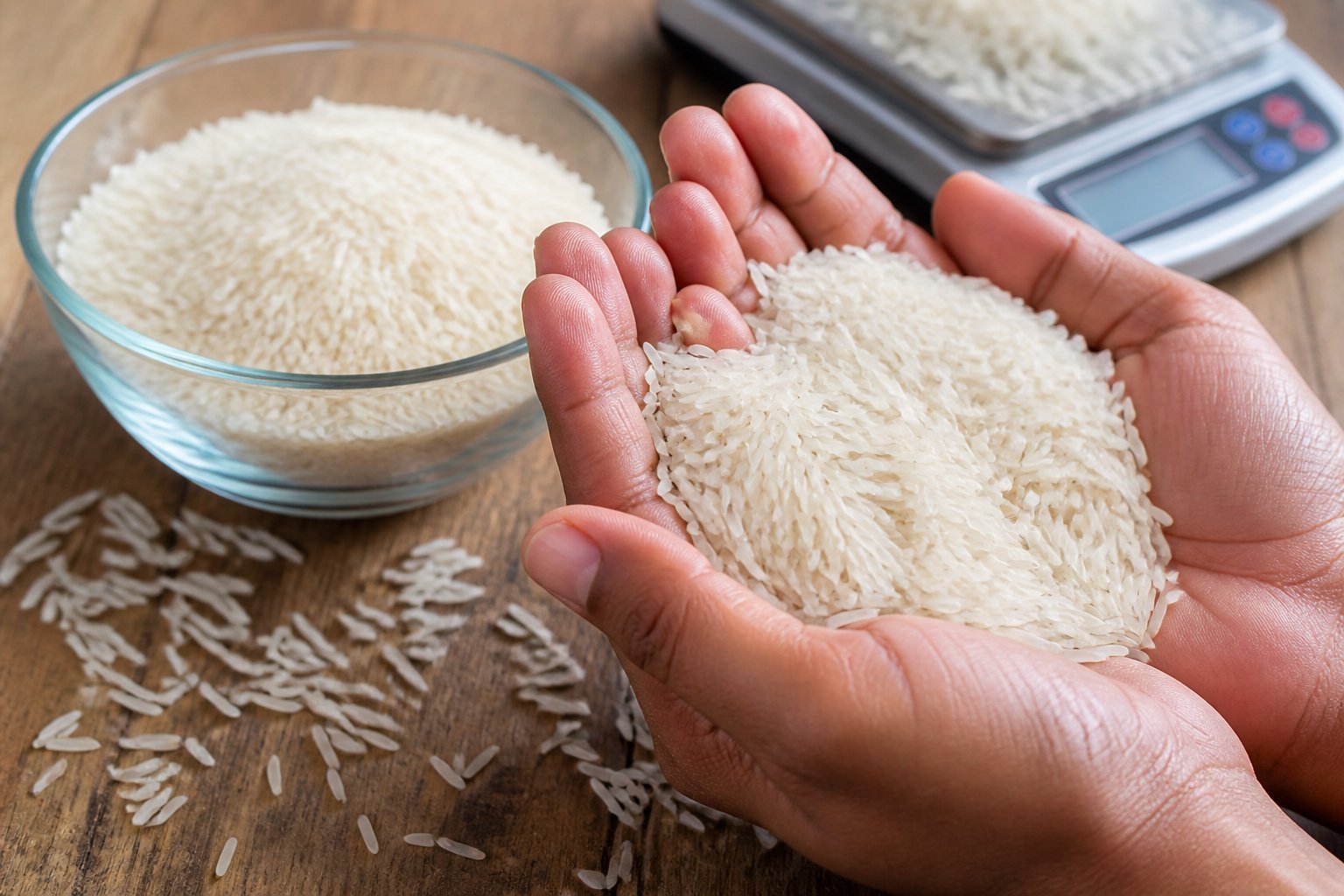
To judge basmati quality, buyers should verify grain length of at least 6.61mm before cooking, check for a creamy-translucent hue indicating proper aging, and confirm a natural nutty aroma that releases when grains are rubbed between the palms. Authentic basmati from certified Pakistani origins must also sink immediately in water and elongate to at least twice its original length without breaking during cooking. These physical tests work alongside certifications like ISO 22000:2018, HACCP, and Halal compliance to ensure consistent quality across shipments.
Understanding these quality markers protects margins and builds trust with distributors and end customers. Whether sourcing bulk containers for commercial kitchens or premium retail packaging, the ability to authenticate best basmati rice at the point of procurement reduces returns, complaints, and brand damage. The following guide provides actionable testing methods and supplier vetting strategies tailored for B2B rice buyers operating in competitive regional markets.
Key Takeaways
- Authentic basmati must have grains measuring at least 6.61mm, a creamy-translucent color from aging, and a natural nutty aroma
- Quality testing includes water sinking tests, aroma checks, and verifying 2x length expansion after cooking without grain breakage
- Reliable suppliers should provide ISO 22000:2018, HACCP, and Halal certifications alongside transparent traceability from certified origins
Core Characteristics Defining Premium Basmati
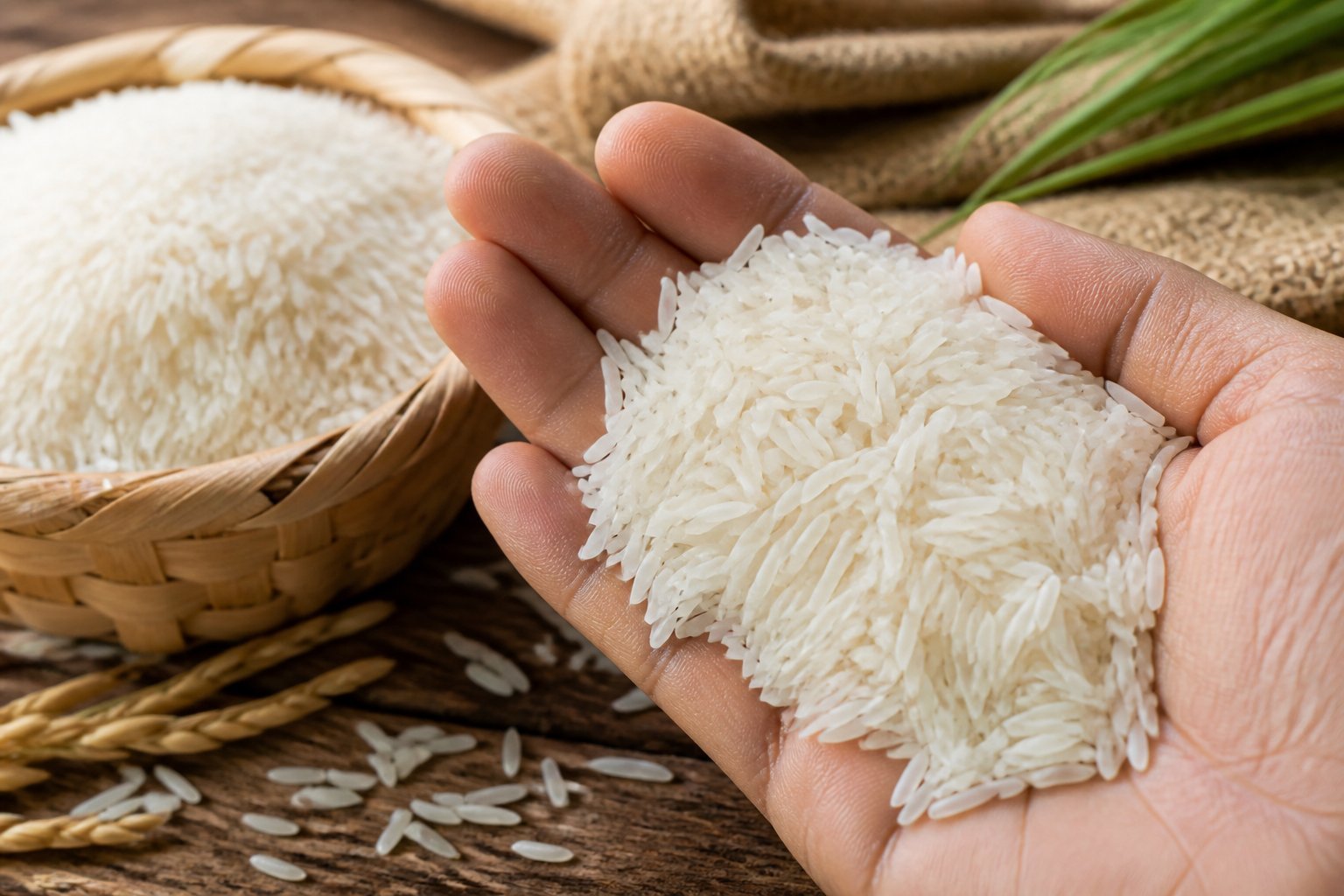
Premium basmati rice distinguishes itself through measurable physical properties, chemical compounds that create its signature aroma, and surface qualities that indicate proper cultivation and processing.
Grain Length and Shape
Authentic basmati rice must meet a minimum raw grain length of 6.61mm according to international classification standards. Premium quality basmati rice typically measures 7-8mm in its uncooked state.
The elongation ratio is a key indicator of authentic basmati, measuring how much grains expand during cooking. Premium varieties elongate to 2-2.5 times their original length. Top-tier varieties like 1121 Basmati reach 20-22mm when cooked, while Super Kernel from Pakistan achieves similar expansion rates.
Long-grain basmati rice maintains a slender width-to-length ratio. Grains should appear needle-like rather than rounded. After cooking, premium basmati remains separate and fluffy rather than clumping together.
Pakistani basmati varieties meet strict quality standards verified through ISO 22000:2018 and HACCP certifications. These grains consistently demonstrate the elongation and shape characteristics buyers expect from premium long-grain rice.
Aromatic Profile and Signature Compounds
The compound 2-acetyl-1-pyrroline creates basmati’s distinctive smell. This natural fragrance develops during grain maturation and intensifies during aging.
Good quality basmati rice releases a nutty aroma often compared to popcorn or roasted nuts. Some varieties also exhibit a floral aroma that adds complexity to the scent profile. The fragrance should be noticeable when opening a package of raw rice and becomes more pronounced during cooking.
Aged basmati stored for 12-24 months develops stronger aromatic compounds as moisture content drops from 13% to approximately 11%. This aging process concentrates the natural fragrance while improving cooking performance.
Pakistani Super Kernel basmati offers a distinct aroma profile that meets international quality expectations. Rice exported from certified Pakistani facilities undergoes testing to verify aromatic authenticity before shipment.
Grain Texture and Surface Integrity
Premium basmati rice displays a translucent, pearl-like appearance when raw. Grains should be smooth and uniform without surface cracks or damage.
Chalky grains indicate incomplete development during growth and should not exceed 3-5% in premium grades. These opaque grains cook differently than properly formed rice, creating inconsistent texture in the final dish.
Broken grain percentage directly affects quality classification. Premium grades contain 0-2% broken pieces, while standard export grades allow up to 5%. Higher broken percentages reduce both visual appeal and cooking performance.
The grain surface should feel firm and dry rather than sticky or oily. Properly processed basmati maintains its structural integrity during washing and cooking, with individual grains remaining distinct after preparation.
Evaluating Rice Appearance and Visual Clues
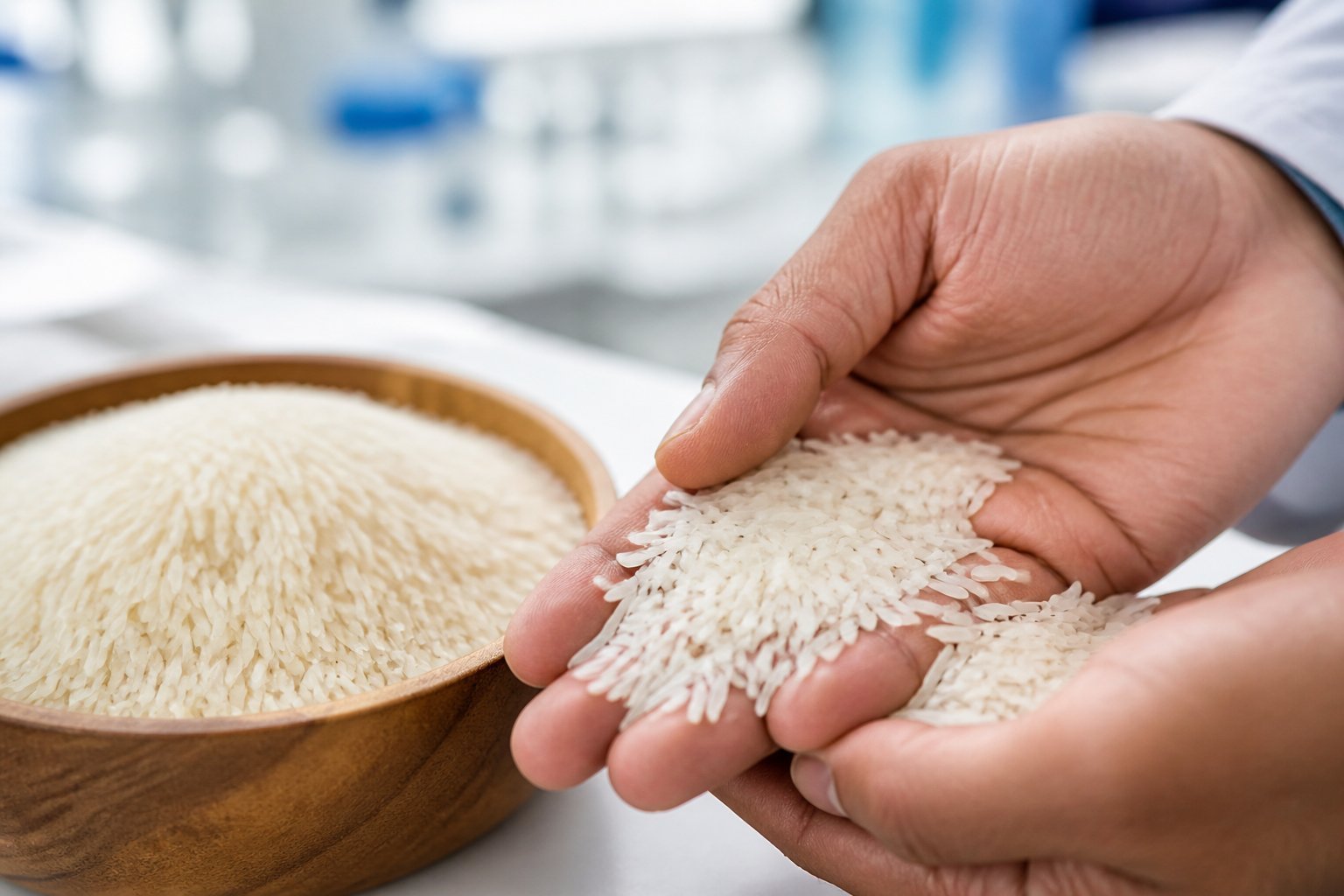
Good basmati rice displays a creamy, aged color with uniform grain size and minimal breakage. These visual markers reveal how the rice was processed, stored, and aged before reaching your facility.
Color and Age Indicators
Aged basmati rice develops a distinctive creamy or yellowish tone rather than appearing stark white. This color shift occurs during the 12 to 24-month aging process as moisture content drops to approximately 12 percent. The aging process transforms the grain’s color from bright white to a translucent golden hue.
White basmati rice that appears too bright or bleached often indicates immature grains or inadequate aging. Pakistan produces certified aged basmati that meets ISO 22000:2018 standards, ensuring proper aging protocols are followed. Brown basmati rice retains its natural bran layer and appears tan or light brown rather than the cream color of aged white varieties.
The grain should be translucent rather than opaque. Chalky white spots in the center of grains indicate structural weaknesses that cause mushiness during cooking.
Uniformity and Purity
Pure basmati rice features long, slender grains with sharply tapered ends on both sides. Each grain should measure at least 6.61mm in length before cooking. The needle-like shape with pointed ends distinguishes authentic basmati from other long-grain varieties.
Examine the batch for consistent grain size and shape. Mixed grain lengths or blunt, rounded ends suggest blending with non-basmati varieties. Pure basmati rice maintains uniform geometry throughout the entire lot.
Check for foreign matter like stones, husks, or discolored grains. Premium suppliers following HACCP protocols remove these contaminants during milling. Batches meeting ISO 9001:2015 standards show less than 0.1 percent foreign material.
Percentage of Broken Grains
Broken grains indicate poor milling practices or rough handling during transport. High-quality basmati rice contains fewer than 5 percent broken grains by weight. Premium grades often show less than 2 percent breakage.
Count the broken pieces in a sample handful to assess basmati rice quality. Full grains should outnumber fragments by a significant margin. Rice certified for GCC markets typically meets strict breakage limits to ensure cooking performance.
Excessive broken grains cook faster than whole grains, creating uneven texture in the final dish. They also release more starch, making the rice sticky rather than fluffy. Importers should reject shipments exceeding 7 percent breakage as this compromises the product’s value and cooking characteristics.
The Importance of Scent and Aroma Authentication
Authentic basmati rice carries a distinctive natural fragrance that sets it apart from ordinary long-grain varieties and artificially scented products. The presence and intensity of specific aroma compounds serve as critical indicators of quality and authenticity.
Distinguishing Natural Aroma from Artificial Enhancements
Natural basmati rice releases a subtle nutty aroma when the package is opened or when the grains are rubbed between the palms. This fragrance should be delicate and pleasant, not overwhelming or chemical in nature.
Artificially scented rice often exhibits an overpowering smell that lacks the complexity of genuine basmati. The scent may seem too strong immediately upon opening the package, or it might have a perfume-like quality that doesn’t match the natural aromatic profile of authentic basmati.
Signs of natural fragrance:
- Subtle, not overpowering
- Becomes more noticeable when grains are warmed in the hands
- Persists gently during cooking
- Has a slightly floral aroma with nutty undertones
Premium Pakistani basmati varieties meeting international certification standards display consistent aroma profiles that reflect proper aging and varietal purity.
The Role of 2-Acetyl-1-Pyrroline
The compound 2-acetyl-1-pyrroline is responsible for basmati’s signature scent. Genuine basmati contains roughly 12 times more of this compound than standard long-grain rice, making chemical analysis a vital benchmark for quality verification.
This natural aroma compound develops through proper cultivation and aging processes. Rice sourced from certified growing regions undergoes laboratory testing to measure 2-acetyl-1-pyrroline levels, ensuring compliance with international authenticity standards.
Testing facilities analyze the concentration of this compound to verify varietal purity. Importers and distributors rely on these measurements to confirm that shipments meet the specifications for authentic basmati before distribution to GCC and international markets.
Practical Aroma Testing Methods
Consumers can check basmati rice quality through simple sensory evaluation. Take a small handful of uncooked grains and rub them gently between the palms for 10-15 seconds. The friction generates warmth that releases the natural oils and aroma compounds.
A nutty aroma indicates high-quality basmati rice because it reflects aroma authenticity and proper aging. Fresh or poorly aged rice will have minimal scent, while artificially enhanced products release synthetic fragrances.
Professional buyers also assess aroma during cooking. Authentic basmati releases its fragrance gradually as it steams, filling the kitchen with a pleasant, natural scent that intensifies without becoming harsh or artificial.
Physical and At-Home Testing for Quality Assurance
Simple physical tests can reveal whether basmati rice meets quality standards before purchase or use. These methods check grain integrity, cooking behavior, and structural characteristics that indicate proper aging and processing.
Water Test and Sinking Characteristics
The water transparency test reveals starch content and coating quality in basmati rice. Fill a clear glass with cold water and add 20 to 30 grains. Premium long-grain basmati rice produces only slight cloudiness because of its naturally low starch content.
Heavily polished or fake basmati turns the water noticeably white or milky within two minutes. This indicates excessive starch coating or lower-quality grains mixed into the batch.
Pure basmati grains should sink gradually rather than float on the surface. Floating grains often signal immature rice that was harvested too early. The water should maintain relative clarity after five minutes of soaking, with only a faint milky appearance acceptable for properly aged varieties sourced from certified regions like Pakistan.
Sampling and Cooking Performance
Premium basmati should elongate to 19 to 22 mm after cooking, achieving an elongation ratio of 2.2 or higher. Cook 50 grams in measured water using a 1:1.5 rice-to-water ratio without oil or salt. Measure grain length before and after cooking to check basmati rice quality accurately.
After cooking, grains should remain fully separated and dry to the touch on the surface. Sticky or clumped rice indicates non-basmati blending or excessive polishing that removes the natural protective layer.
Key cooking indicators include:
- Individual grains that do not stick together
- Warm, clean aroma without chemical scents
- Fluffy texture with visible elongation
- Fewer than 3% broken grains in the cooked batch
Premium basmati maintains its structure even after cooling to room temperature. Rice that becomes sticky or hard after cooling fails basic quality standards regardless of its labeled origin.
Testing the Hardness and Density of Grains
Grain length serves as a primary quality indicator for basmati rice. Authentic premium varieties measure 7.5 to 8.5 mm in raw form. Place 10 random grains on a ruler or measuring grid to verify consistency across the sample.
Physical characteristics of quality basmati:
| Attribute | Premium Standard | Poor Quality Sign |
|---|---|---|
| Grain length | 7.5-8.5 mm raw | Below 7 mm |
| Color | Creamy-white to pale golden | Chalky white |
| Translucence | Clear, uniform | Opaque patches |
| Broken grains | Less than 2-3% | Above 5% |
Press individual grains between fingers to assess hardness. Properly aged basmati feels firm and breaks cleanly rather than crumbling. Soft or brittle grains suggest improper storage or incomplete aging. Density testing involves comparing weight for equal volumes, as authentic basmati weighs less per cup than ordinary rice varieties due to its unique structure and lower starch content.
Certifications, Traceability, and Regulatory Compliance
Legitimate basmati rice carries specific certifications and documentation that verify its origin, purity, and quality standards. Understanding these regulatory marks and compliance requirements helps buyers identify authentic basmati rice and avoid adulterated products.
APEDA, FSSAI, and GI Tag Verification
Indian basmati rice exports are regulated by APEDA (Agricultural and Processed Food Products Export Development Authority), which maintains standards for basmati varieties grown in specific geographical regions. FSSAI (Food Safety and Standards Authority of India) oversees domestic food safety compliance and quality parameters.
The Geographical Indication (GI) tag protects basmati rice grown in designated areas of the Indian subcontinent. This certification confirms the rice originates from authentic basmati-growing regions with traditional cultivation practices.
Pakistani basmati rice follows similar certification protocols through its own regulatory bodies. Premium basmati rice from Pakistan meets international standards including ISO 9001:2015, ISO 22000:2018, HACCP, Halal, and USFDA certifications. These certifications verify food safety, quality management, and compliance with global import requirements.
Label Transparency and Aging Period
Authentic basmati rice packaging should clearly display the variety name, such as 1121 basmati or traditional basmati types. The label must indicate the country of origin, harvest year, and aging period.
Basmati rice requires aging for several months after harvest to develop its characteristic flavor and texture. Pure basmati typically ages for 12 to 24 months under controlled storage conditions. Labels that specify the aging duration indicate transparency and quality commitment.
EU Regulation (EC) 972/2006 recommends DNA-based varietal identification for basmati rice exports. Many importing countries now require DNA authentication certificates to verify grain purity and prevent adulteration with non-basmati varieties.
Brand Reputation and Export Standards
Established basmati rice brands maintain consistent quality through regular testing and compliance with international food safety standards. Reputable suppliers provide traceability documentation that tracks the rice from farm to package.
Export-grade basmati undergoes rigorous testing for pesticide residues, moisture content, and varietal purity. The UK Code of Practice allows a maximum of 7% non-basmati rice in any product labeled as basmati. Most premium suppliers maintain purity levels well above this minimum standard.
Buyers should verify that suppliers hold current certifications from recognized bodies. Brands serving GCC markets and international customers typically provide comprehensive documentation including certificates of analysis, phytosanitary certificates, and halal certification where applicable.
Key Basmati Varieties for Commercial Buyers
Understanding the main basmati rice varieties helps buyers select rice that matches their quality standards and application needs. The 1121 variety dominates global trade, while Pusa selections offer tested consistency for commercial operations.
1121 Basmati and Its Distinctive Qualities
The 1121 variety represents the longest-grain basmati available in commercial markets. Cooked grains reach 20-22mm in length, making this variety ideal for applications where visual presentation matters.
Pakistani suppliers provide 1121 basmati that meets international certification standards including ISO 22000:2018, HACCP, and Halal requirements. The variety delivers consistent elongation ratios and maintains grain separation after cooking.
Key specifications for 1121 basmati:
- Raw grain length: minimum 8.3mm
- Cooked grain elongation: up to 2.5x original length
- Broken grain percentage: 2-5% for export grades
- Moisture content: 11-13% maximum
This variety works well for retail packaging, foodservice operations, and premium ready-meal applications. Buyers should verify that suppliers hold valid ISO 9001:2015 and USFDA certifications when sourcing for international markets.
Pusa Basmati 1121 and 1509
Pusa Basmati 1121 offers the same exceptional grain length as standard 1121 with additional breeding stability. Research institutions developed this cultivar for consistent performance across different growing conditions.
The 1509 variety provides a cost-effective alternative to 1121. Grain length measures slightly shorter, but cooking properties remain comparable for most commercial applications.
Comparison of key varieties:
| Variety | Raw Length | Price Point | Best Application |
|---|---|---|---|
| Pusa 1121 | 8.3mm+ | Premium | Retail, export |
| 1509 | 7.5-8.0mm | Mid-range | Ready meals, bulk |
Both varieties meet the same food safety certifications required for GCC and international distribution. The 1509 option delivers 15-25% cost savings without compromising cooking quality for applications where maximum grain length is not essential.
Choosing the Right Variety for Your Application
Premium basmati rice selection depends on end-use requirements rather than variety name alone. Retail brands targeting premium segments benefit from 1121’s visual grain length and pronounced aroma.
Foodservice operations and ready-meal manufacturers often achieve better margins with 1509 while maintaining acceptable quality standards. The variety performs consistently in automated production environments where uniform cooking behavior reduces waste.
Buyers should request pre-shipment samples to verify grain specifications match contract terms. All certified Pakistani rice exports include testing documentation for moisture content, broken percentage, and grain dimensions.
Decision factors for variety selection:
- Budget constraints: 1509 reduces costs by 15-25% versus premium 1121
- Market positioning: Premium retail requires 1121 or Pusa 1121
- Volume requirements: Larger volumes favor 1509 availability
- Certification needs: Verify ISO 22000:2018 and Halal compliance
The best basmati rice for any operation matches quality specifications to application needs while maintaining certified standards for food safety and authenticity.
Optimizing Procurement: Bulk Selection, Storage, and Supplier Partnerships
Purchasing quality basmati in large quantities requires systematic evaluation methods, controlled storage environments, and verified supplier credentials. Pakistani basmati suppliers with ISO 9001:2015, ISO 22000:2018, HACCP, Halal, and USFDA certifications provide traceable quality standards that protect bulk buyers.
Bulk Evaluation Approaches
Buyers should test samples from multiple lots before committing to large orders. Random sampling from different bags reveals consistency across the shipment. Each sample needs evaluation for grain length, aroma intensity, and moisture content.
Key testing parameters include:
- Grain dimensions (minimum 6.5mm for authentic basmati)
- Broken grain percentage (should not exceed 5%)
- Moisture levels (12-13% prevents spoilage)
- Aroma presence when rubbed between palms
- Color uniformity across grains
Premium quality basmati rice maintains consistent characteristics throughout bulk shipments. Buyers should request lab reports showing purity levels and aging verification. Pakistan’s certified basmati producers often provide detailed certificates of analysis with each shipment.
Testing cooking elongation on sample batches identifies authentic basmati. Grains should elongate to at least twice their original length. Strategic planning for bulk purchasing includes assessing total costs beyond unit price.
Proper Storage and Shelf Life
Temperature and humidity control determine how long basmati maintains its quality. Storage facilities must keep temperatures between 10-15°C with humidity below 60%. Higher moisture promotes insect infestation and mold growth.
Proper ventilation prevents condensation inside storage areas. Basmati rice brands package products in moisture-resistant materials for extended shelf life. Buyers should stack bags on pallets at least 15cm above ground level.
Storage requirements:
| Factor | Specification |
|---|---|
| Temperature | 10-15°C |
| Humidity | Below 60% |
| Air circulation | Required |
| Pest control | Monthly inspections |
Aged basmati loses quality if stored improperly. Rotation systems ensure older stock ships first. Inventory tracking prevents deterioration beyond optimal consumption periods of 12-18 months for aged varieties.
Supplier Audits and Contractual Safeguards
Physical facility inspections verify supplier claims about processing standards. Buyers should examine milling equipment, sorting technology, and quality control laboratories. Supplier management processes include qualification and ongoing monitoring.
Contracts must specify exact grade requirements with penalty clauses for substandard deliveries. Documentation should reference international standards and certification requirements. Pakistani suppliers meeting ISO 22000:2018 and HACCP standards demonstrate food safety compliance.
Regular performance reviews track defect rates and delivery consistency. Building strong supplier relationships requires clear communication about quality expectations. Third-party testing provides independent verification of grain specifications.
Quality clauses should define acceptable tolerances for broken grains, discoloration, and foreign matter. Suppliers must provide batch traceability linking finished products to specific harvest regions and processing dates.
Frequently Asked Questions
Understanding the technical markers of basmati quality helps buyers make informed decisions when sourcing rice for commercial or personal use. Certification standards, physical grain properties, and post-cooking performance all play critical roles in identifying authentic premium varieties.
What grain characteristics indicate a premium basmati rice variety?
Premium basmati rice displays specific physical traits that set it apart from ordinary long-grain varieties. The grains must measure at least 6.61mm in length before cooking, with a slender, needle-like shape featuring sharply tapered ends on both sides.
High-quality basmati has a creamy, slightly golden hue rather than a stark white appearance. This color indicates proper aging, which typically lasts 12 to 24 months and reduces moisture content to approximately 12%.
The grains should be translucent and free from chalky white spots or opaque centers. These defects, known as “white belly,” signal immature or poorly processed rice that will break during cooking.
When examining a handful of grains, they should feel hard and dense. Soft or easily breakable grains contain too much moisture and lack the structural integrity needed for proper cooking expansion.
How can aroma be used to assess basmati rice quality before cooking?
Authentic basmati contains a natural chemical compound called 2-acetyl-1-pyrroline that produces a distinctive nutty, popcorn-like fragrance. This aroma intensifies during the aging process as the compound stabilizes within the grain’s endosperm.
A simple test involves rubbing a small handful of dry grains vigorously between the palms for about ten seconds. The friction generates heat that releases volatile aromatic compounds, and high-quality basmati will immediately emit a rich, sandalwood-like scent.
Some suppliers spray synthetic fragrances on inferior rice to mimic authentic basmati aroma. To detect this, rinse a handful of grains in cold water and smell them again—fake scents wash away quickly, while natural aromatic compounds remain embedded in the grain.
Pakistan produces certified basmati varieties that meet international standards for aroma consistency. These grains retain their fragrance throughout storage when properly handled under ISO 22000:2018 food safety protocols.
What are the best ways to check for adulteration or mixing with non-basmati rice?
The water sinking test provides a quick method to identify mixed or inferior grains. Place a tablespoon of raw rice in a glass of water—every grain of properly aged basmati should sink immediately to the bottom due to its high density.
Grains that float or remain suspended indicate immaturity, pest damage, or poor drying practices. These floaters often belong to non-basmati varieties mixed into the batch to increase volume at lower cost.
Visual inspection reveals mixing when grains show inconsistent shapes, sizes, or colors within the same batch. Authentic basmati maintains uniformity in its slender profile and creamy translucence.
The breakage test also helps identify quality. A single grain of premium basmati should be difficult to snap with fingernails and produce a sharp click when it breaks, indicating low moisture and proper aging.
Which cooking results—such as elongation, fluffiness, and separation—signal high quality rice?
Top-tier basmati must elongate to at least twice its original length during cooking while maintaining minimal width expansion. Premium varieties like 1121 basmati measure about 8.2mm to 8.4mm raw and reach 16mm to 20mm when cooked.
The length-to-breadth ratio serves as a gold standard for grading, with premium basmati maintaining at least a 3.5:1 ratio. Rice that expands mostly in width rather than length indicates a non-basmati hybrid or blended product.
Properly aged basmati contains high amylose content that prevents grains from sticking together. When cooked correctly, each grain should remain separate and fluffy, sliding easily off a fork without clumping.
The texture should be firm yet tender, never mushy or broken. Grains that fall apart or turn sticky during cooking lack the starch stability that comes from adequate aging and proper varietal genetics.
How do aging, harvest date, and storage conditions affect the final texture and fragrance?
The 12 to 24-month aging period transforms basmati by reducing moisture content and restructuring the starch molecules within each grain. This process develops the characteristic nutty aroma and allows the rice to expand longitudinally without breaking.
Fresh or newly harvested basmati contains higher moisture levels that lead to sticky, less aromatic rice. The aging process decreases lipase enzyme activity, which enhances both fragrance development and cooking performance.
Storage conditions must maintain controlled temperature and humidity to preserve grain quality. Poor storage allows moisture absorption that softens the grains and diminishes their aromatic compounds.
Pakistani basmati exporters following HACCP and ISO 9001:2015 standards ensure proper aging and storage protocols. These certifications guarantee that grains maintain their density, hardness, and aroma from harvest through distribution.
What label details and certifications help verify authenticity and grade at purchase?
The Geographical Indication (GI) logo confirms that basmati originates from legally protected regions within the Indo-Gangetic plains. This certification ensures the rice meets strict genomic and quality standards established by agricultural authorities.
Look for certification marks like Agmark, ISO 22000:2018, HACCP, and Halal certification on packaging. These labels indicate compliance with international food safety and quality management systems.
Pakistan exports certified basmati varieties that meet USFDA standards for Gulf Cooperation Council markets and global distribution. Reputable importers source only from mills that maintain full traceability and third-party verification.
The package should clearly state the grain variety, such as 1121 or Super Basmati, along with the harvest year and aging duration. Vague labeling or absence of specific varietal information often signals lower-grade or mixed products.
Grain You Can Verify, Not Just Trust
Every TEFT Global shipment ships with lab-tested grain specifications — length, moisture, elongation and purity — so you know exactly what you’re buying before it ever leaves the mill.