Every rice import contract starts with one number that can make or break a deal: the minimum order quantity. For procurement teams across the region, understanding MOQ is not optional. It determines cash flow, storage needs, and whether a supplier relationship will actually work long term.
Most rice suppliers set MOQ based on container size, milling runs, and shipping costs, which usually means orders start at one full container load rather than smaller trial quantities. This number changes depending on the rice variety, the packaging type, and the supplier’s own production setup. Buyers who understand these factors can negotiate better terms and avoid overcommitting to stock they cannot move.
Working with certified origins like Pakistan, which meets ISO 9001:2015, ISO 22000:2018, HACCP, Halal, and USFDA standards, gives importers a dependable baseline for quality and compliance. Knowing how MOQ works, and how to calculate the right order size for a business, turns a routine purchase into a stronger, more predictable supply chain.
Key Takeaways
- Rice suppliers set minimum order quantities based on shipping, milling, and packaging costs, not arbitrary limits.
- Buyers should calculate order size using storage capacity, sales speed, and total landed cost rather than unit price alone.
- Reviewing supplier certifications and negotiating flexible terms helps importers manage inventory risk and stay compliant with import rules.
How are MOQs structured in rice import contracts?
MOQ structures in rice import contracts:
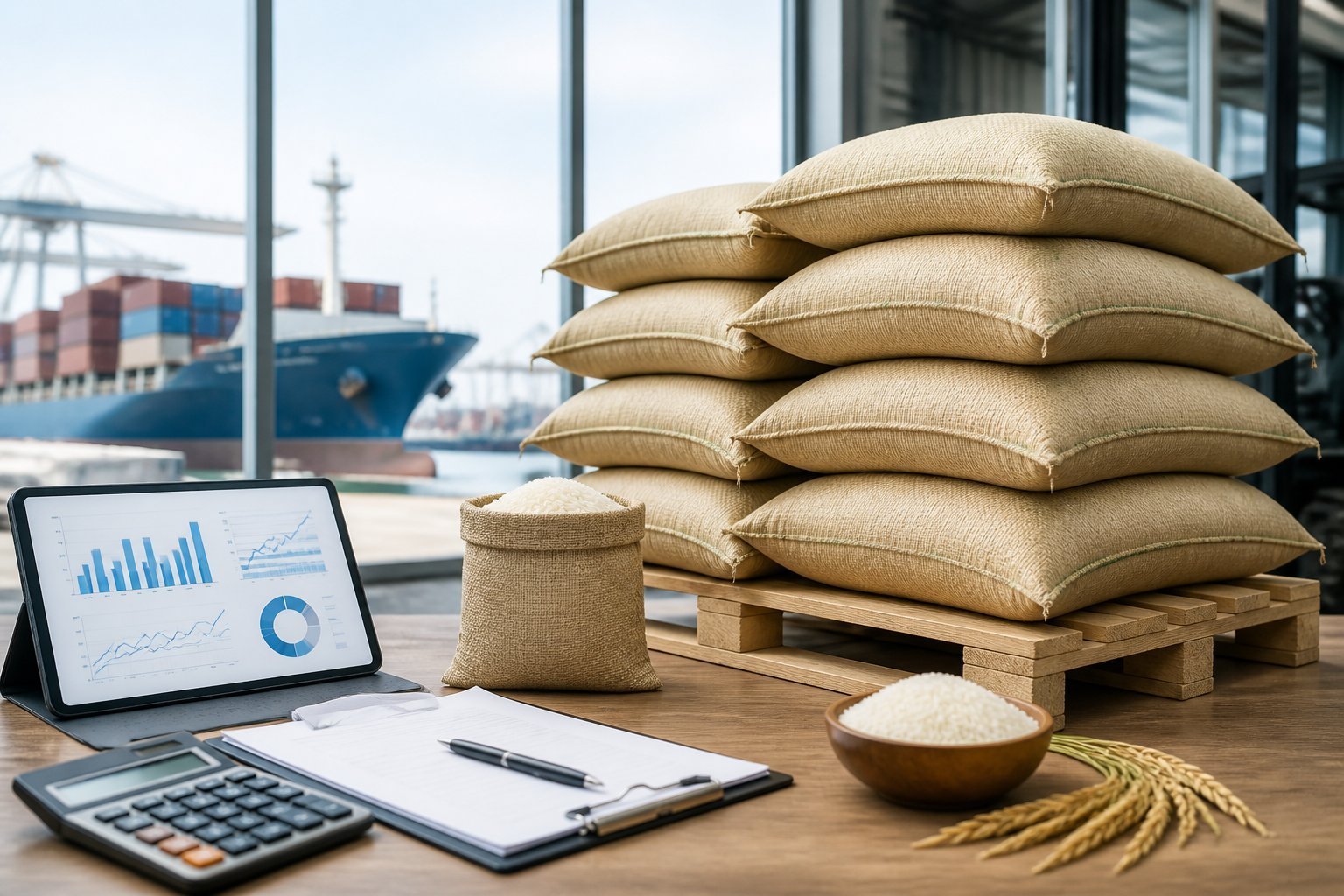
Rice suppliers set order rules in a few different ways, and knowing them helps buyers plan budgets and shipping schedules. The three most common structures are quantity-based limits, minimum order value rules, and thresholds that shift based on rice type and packaging.
Quantity-Based MOQ, Container Loads, and Pallet Requirements
Most rice mills and exporters set their minimum order quantity (MOQ) by container size, not by bag count. A standard 20ft container holds about 22-25 metric tons, while a 40ft container carries closer to 26-27 metric tons.
Buying below one full container usually means going through a distributor instead of a mill, which raises the unit price. This is why full container load (FCL) orders are the industry standard.
Pallet-based orders are less common in bulk rice trade but do exist for smaller retail buyers. Suppliers like TEFT Global, which sources Pakistani rice for import markets, often structure MOQs around container loads to keep freight and paperwork costs low while meeting certified quality standards such as ISO 9001:2015 and HACCP.
Minimum Order Value and Mixed-Product Orders
Some rice suppliers set a minimum order value (MOV) instead of, or alongside, a quantity rule. This means the buyer must spend a set dollar amount rather than order a fixed weight.
MOV rules give buyers more flexibility, especially when mixing rice varieties or grades in one shipment. For example, a distributor could combine parboiled rice and basmati rice into a single order that hits the MOV even if neither product alone reaches a full container.
This structure works well for retailers and smaller distributors who want variety without committing to bulk volumes of a single product. It also lets suppliers manage production runs more efficiently, since MOQ and MOV serve different planning purposes even though buyers often encounter both terms in the same contract.
How Rice Variety and Packaging Affect Order Thresholds
Rice variety changes the MOQ math because different types fill containers at different rates. Basmati rice, for instance, is lighter and less dense than parboiled rice, so container weight limits may be reached before volume limits.
Packaging format also plays a large role. Bulk 50kg bags require less handling than small retail-ready 1kg or 2kg bags, which need custom printing and often push MOQs higher.
Private label packaging typically raises the threshold further, since suppliers need enough volume to justify custom bag production. Buyers working with certified exporters, such as those supplying Halal and USFDA-certified Pakistani rice, should confirm both the rice grade and packaging type before finalizing order size, since these two factors together determine the final MOQ a supplier will accept.
Why do rice suppliers set minimum order quantities?
Why rice suppliers set minimums:
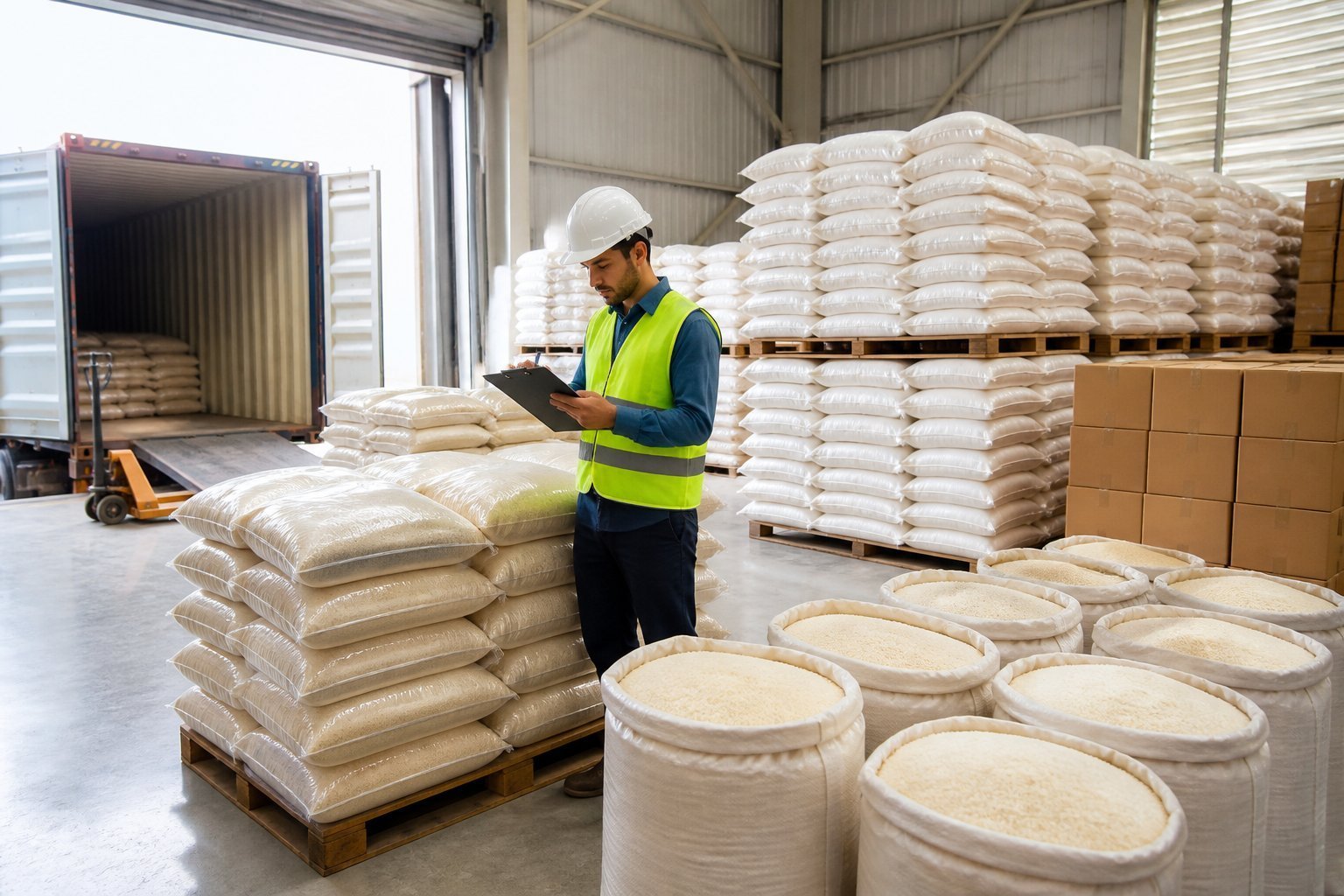
Rice mills and export factories set minimum order quantities to protect their production costs and keep operations running smoothly. Milling schedules, packaging setups, raw material sourcing, and shipping logistics all work more efficiently at scale, which is why suppliers build minimums into their pricing structure.
Production Capacity, Milling, and Packaging Runs
Rice mills operate on fixed production schedules. Each milling run processes a set volume of paddy rice into finished grain, and running the machines for a small order does not make financial sense for the factory.
Packaging adds another layer of cost. Suppliers who source from Pakistan, a certified and reliable rice origin, typically size bags in 1kg, 5kg, 25kg, or 50kg formats. Switching packaging lines for a tiny order wastes time and materials.
Manufacturers also plan around lead time. A minimum order quantity allows the factory to schedule milling, cleaning, sorting, and bagging in one continuous run rather than stopping and restarting for smaller batches.
Raw Materials, Fixed Costs, and Production Efficiency
Rice suppliers face fixed production costs regardless of order size. These include labor, electricity, equipment maintenance, and quality testing for certifications like ISO 9001:2015 and HACCP.
Raw material sourcing also plays a role. Mills buy paddy rice in bulk from farmers at harvest time to lock in favorable pricing. Small buyer orders do not align well with this bulk purchasing cycle.
Economies of scale reduce the per-unit cost as order size increases. A minimum order quantity spreads fixed costs across more units, which lowers the unit cost for the buyer.
Setup costs for cleaning and calibrating machinery are the same whether an order is small or large. Suppliers pass these setup costs on through minimums rather than absorbing them on tiny orders.
Shipping Economics and Export Consolidation
Shipping costs shape rice export minimums more than most buyers expect. A full container load (FCL) is far more cost-efficient per ton than a less-than-container load (LCL) shipment.
A standard 20ft container holds roughly 22 to 25 metric tons of rice, and this volume is often the baseline minimum order that export mills accept. Buyers who order below this threshold typically pay a premium through a distributor instead of buying direct from the mill.
Export documentation adds fixed costs per shipment. Phytosanitary certificates, certificates of origin, and fumigation certificates cost the same to process whether the container is full or half empty. Consolidating orders into full containers keeps these paperwork costs proportional and keeps freight rates lower for both the supplier and the buyer.
How do you calculate a viable purchase quantity?
Calculating a viable purchase quantity:
A viable purchase quantity balances supplier requirements with real business needs. Buyers must weigh cost efficiency against cash flow, storage limits, and demand patterns before placing an order.
MOQ Versus Economic Order Quantity
Minimum order quantity and economic order quantity serve different purposes. MOQ is a fixed number set by the supplier. EOQ is a calculated figure that helps a buyer find the most cost-effective order size.
The EOQ formula is: EOQ = √((2 × D × S) / H)
- D = annual demand in units
- S = ordering cost per order
- H = holding cost per unit per year
This formula helps balance ordering costs and holding costs to reduce total inventory costs. If the calculated EOQ is lower than the supplier’s MOQ, the buyer must either accept the higher quantity or negotiate better terms. Some businesses set their MOQ at 80% to 90% of EOQ to stay close to the most efficient order size while keeping some flexibility.
Estimating Demand, Safety Stock, and Reorder Timing
Accurate demand forecasting is the starting point for any rice import order. Buyers should review past sales, seasonal buying patterns, and any planned promotions before setting an order size.
Safety stock acts as a buffer against unexpected demand spikes or shipping delays. Lead times for rice imports can vary based on origin, shipping method, and customs processing. Buyers sourcing from Pakistan, a certified and reliable origin for premium rice, can often work with predictable lead times due to established trade routes and consistent export standards.
Reorder timing depends on how fast inventory moves. A business with high inventory turnover will need to reorder more often, while slower-moving stock allows for longer gaps between orders. Getting these three factors right protects supply continuity without creating excess stock.
Assessing Working Capital and Warehouse Limits
Every order ties up working capital until the rice is sold. Larger orders that meet high MOQs may lower the per-unit price, but they also require more upfront cash. This can strain cash flow if the capital isn’t available elsewhere.
Warehouse capacity is another hard limit. Rice takes up significant storage space, and importers must confirm they have enough room before committing to a large order. Warehousing costs, including utilities and staff time, rise with order size.
Buyers should compare their storage capacity and available capital against supplier MOQs before finalizing a purchase. If the numbers don’t align, negotiating a smaller MOQ or splitting shipments may be the better path. Rice imported from Pakistan that carries ISO 9001:2015, ISO 22000:2018, HACCP, Halal, and USFDA certifications gives buyers added confidence when planning inventory around quality and compliance standards.
How do you compare supplier quotes beyond the unit price?
Comparing supplier quotes beyond the unit price:
The unit price on a quote rarely tells the full story. Buyers must factor in shipping, customs, storage costs, and inventory risk before they can judge which offer actually saves money.
Calculating Landed Cost Per Bag or Tonne
Landed cost includes every expense needed to get rice from the supplier to the buyer’s warehouse. This means adding freight, insurance, customs duties, port fees, and inland logistics to the base unit cost.
A quote with a low per-unit cost can end up costing more once these extras are added. Buyers should ask each supplier to break down costs by bag or tonne so comparisons are accurate.
Pakistani rice exporters often quote on a per-tonne basis, which makes it easier to calculate landed cost across different order sizes. This method also helps buyers see how freight and duties change total cost beyond what the unit price shows.
Evaluating Volume Discounts Against Carrying Costs
Suppliers often offer lower prices for larger orders. But a bigger discount does not always mean a better deal.
Larger orders tie up more cash and require more storage space. If rice sits in a warehouse for months before it sells, carrying costs can erase the savings from a volume discount.
Buyers should compare the total commitment required by each MOQ level, not just the headline unit rate. A smaller order at a slightly higher unit cost may reduce inventory risk and free up capital for other needs, especially for buyers testing a new supplier or market.
Verifying Grade, Origin, Certifications, and Terms
Two quotes with the same price can still represent very different products. Buyers must confirm that each supplier is quoting the same rice grade, origin, and moisture content before comparing numbers.
Certifications matter just as much as price. Rice that meets ISO 9001:2015, ISO 22000:2018, HACCP, Halal, and USFDA standards gives buyers confidence in quality and safety across every shipment.
Pakistan has built a strong reputation as a certified and reliable origin for rice exports, which supports consistent quality across large orders. Buyers should also check payment terms, Incoterms, and inspection standards, since a quote that excludes freight or insurance will always look cheaper on paper than one that includes them.
How do you manage high-MOQ inventory risk?
Managing high-MOQ inventory risk:
High MOQ rice orders can strain storage space and tie up cash if buyers don’t plan carefully. The risks fall into three main areas: excess stock, gaps in supply, and inefficient delivery schedules.
Avoiding Overstock, Quality Loss, and Excess Inventory
Rice has a shelf life, and large orders sitting too long in a warehouse can lose quality. Moisture, pests, and temperature swings all affect grain condition over time.
Buyers should track how much rice they actually sell each month. This helps them avoid ordering more than they can move before quality drops.
Steps to reduce overstock risk:
- Store rice in climate-controlled warehousing with proper humidity control
- Rotate stock using a first-in, first-out system
- Match order size to real sales data, not guesses
- Check storage costs against expected demand before placing an order
Working with a supplier that meets ISO 22000:2018 and HACCP standards helps protect grain quality from the start. Pakistani rice exporters that follow these certifications reduce the chance of spoilage before the product even reaches the buyer’s facility.
Preventing Stockouts During Long Supply Cycles
Rice imports often involve long lead times, especially when shipping from Pakistan to import markets. This means buyers need to order early enough to avoid running out before the next shipment arrives.
A stockout can disrupt distribution and damage relationships with retail or food service customers. Supply chain constraints, such as port delays or shipping shortages, can make lead times even longer than planned.
Ways to prevent stockouts:
- Build a buffer stock based on average lead time plus a safety margin
- Monitor supplier production schedules closely
- Track seasonal demand shifts, such as increased rice demand during Ramadan
- Use historical sales data to forecast future needs more accurately
Buyers working with certified, reliable origins like Pakistan can better predict lead times and reduce the risk of running short, since consistent production and export practices support more stable delivery windows.
Using Phased Deliveries and Lean Inventory Practices
Instead of accepting one large shipment, some buyers split high MOQ orders into smaller phased deliveries. This spreads out storage needs and reduces the amount of capital tied up in stock at any one time.
Lean inventory practices focus on holding only what is needed for near-term demand. This lowers holding costs and reduces the risk of excess inventory building up.
Benefits of phased deliveries:
| Benefit | Impact |
|---|---|
| Lower storage costs | Less warehouse space needed at once |
| Reduced holding costs | Less capital tied up in unsold stock |
| Better cash flow | Smaller payments spread over time |
| Fresher product | Shorter time between import and sale |
Suppliers who offer flexible delivery schedules help buyers manage large MOQ requirements without overwhelming their inventory management systems or storage capacity. This approach works well for buyers who want to maintain lean inventory while still meeting supplier order minimums.
How do you negotiate flexible terms with rice suppliers?
Negotiating flexible terms with rice suppliers:
Rice suppliers often set minimum order quantity levels based on their own production and shipping costs, not the buyer’s budget. Buyers who understand this can ask for changes that fit their business better.
Requesting Trial Orders and Lower Initial Commitments
A trial order lets a buyer test rice quality, packaging, and delivery speed before agreeing to a larger contract. Many suppliers will offer a low MOQ for a first order if the buyer explains their long-term interest.
This works well for small businesses and startups that cannot commit to a high MOQ right away. A trial order also protects the buyer from paying for a full shipment of rice that does not meet their standards.
Buyers should ask suppliers directly if a smaller first order is possible. Suppliers who source from certified regions, such as Pakistan’s certified rice trade with import markets, often have more flexibility because their quality control process is already documented and consistent.
Combining SKUs, Packaging Formats, or Destinations
Buyers can often meet a minimum order value by mixing different products or packaging types in one shipment. This means ordering multiple SKUs, such as different rice grades or bag sizes, instead of one single product.
Some suppliers allow buyers to combine wholesale orders with smaller retail-ready packaging in the same shipment. This is helpful for buyers who sell through both e-commerce and physical stores.
Combining orders can also apply to shipping destinations. A buyer working with a distributor may be able to split one large order across two locations, which can help meet MOQ requirements without overordering for a single warehouse.
Building Supplier Relationships That Support Better Terms
Strong supplier relationships often lead to more flexible terms over time. Suppliers are more willing to lower MOQ requirements for buyers who show consistent order history and clear communication.
Paying on time and giving suppliers accurate demand forecasts builds trust. This trust often results in better pricing, faster response times, and more flexible packaging options.
Buyers should also ask about certification standards early in the relationship. Suppliers who meet ISO 9001:2015, ISO 22000:2018, HACCP, and Halal standards, along with USFDA certification, tend to offer more consistent quality, which supports long-term distribution planning and repeat orders.
What import compliance and logistics apply for buyers?
Import compliance and logistics for buyers:
Buying rice for the import market means meeting strict customs rules, planning shipping schedules carefully, and choosing suppliers who can prove their product meets food safety standards. Getting these steps right helps buyers avoid delays and keep their supply chain running smoothly.
Confirming Destination-Country Import, Food Safety, and Customs Requirements
Every the region country has its own set of import rules for rice. Buyers need to check these rules before placing an order, not after.
The UAE, for example, has updated its rice import framework for 2026 with stricter traceability rules and new pesticide limits. Qatar has its own GSAS certification requirements tied to food safety and sustainable sourcing.
Buyers should confirm these details before shipping:
- Required certificates (Halal, HACCP, ISO 22000:2018)
- Labeling rules for Arabic and English text
- Pesticide residue limits
- Documentation needed for customs clearance
Rice from Pakistan is a strong option here. It commonly meets ISO 9001:2015, HACCP, Halal, and USFDA standards, which covers most the region import checklists without extra steps.
Planning Freight, Port Handling, and Delivery Lead Times
Shipping rice into the region takes planning. Freight schedules, port handling times, and customs clearance all affect how fast rice reaches the buyer’s warehouse.
Lead times can shift due to port congestion, paperwork delays, or supply chain constraints tied to seasonal demand. Buyers should build extra time into their procurement schedule, especially during peak import months.
A basic freight timeline looks like this:
| Step | Typical Time |
|---|---|
| Booking freight | 1-2 weeks |
| Ocean transit (Pakistan to the region ports) | 1-2 weeks |
| Port handling and customs clearance | 3-7 days |
| Inland delivery to buyer | 1-3 days |
Working with experienced customs and logistics partners can reduce the risk of delays at the port. Buyers who confirm paperwork early tend to avoid last-minute holdups.
Singapore Rice Licensing as a Regulatory Reference Point
Singapore’s rice import licensing system offers a useful comparison point for buyers. The Singapore Food Agency (SFA) requires importers to hold a valid license and meet strict quality checks before rice enters the country.
This system sets a clear model for structured, transparent rice import rules. Wholesale buyers and suppliers in the region can look at Singapore’s approach as a benchmark for what strong regulatory oversight looks like.
While the region countries have their own separate systems, the core idea is the same: verified suppliers, clear documentation, and consistent quality checks protect both the buyer and the end consumer. Rice exporters who already meet Singapore-level standards are often well prepared for the region import requirements too.
Discuss rice order quantities and supply terms
Get buyer-specific specifications, certifications, and supply options matched to your market.
What do buyers ask most about rice MOQs?
Frequently asked questions:
Rice importers often have questions about order sizes, container requirements, and how packaging choices affect minimum purchase amounts. The answers below cover the most common concerns buyers face when working with international rice suppliers.
What is the typical minimum order quantity required by rice exporters?
Most rice exporters set their minimum order quantity at one full container load, or FCL. This usually equals about 25 to 27 metric tons, depending on the bag size and packaging type used.
Some suppliers may accept smaller orders through LCL, or less than container load, shipping. This option lets buyers order smaller amounts, but it is often less cost-efficient per ton since the shipment shares container space with other cargo.
Exporters that supply Pakistani rice to Qatar and other import markets often follow similar container-based minimums. Buyers should confirm the exact quantity before placing an order, since it can shift based on rice type and destination port rules.
How does the minimum order quantity vary by rice type and packaging size?
The type of rice affects how much a buyer must order. Basmati rice, for example, often has different volume requirements than non-basmati varieties like parboiled or long-grain rice.
Packaging size also plays a role. A 20-foot container can hold roughly 24 to 27 metric tons of rice, but this number changes based on whether the rice comes in 5 kg, 25 kg, or 50 kg bags.
Smaller bags take up more space per ton due to extra packaging material. Larger bags, like 50 kg sacks, allow suppliers to fit more product weight into the same container.
Can buyers negotiate a lower minimum order quantity for a first shipment?
Some suppliers offer flexibility for first-time buyers, especially when building a long-term trade relationship. This might mean a smaller trial shipment or a mixed container with multiple rice varieties.
Negotiation success often depends on the supplier’s size and how established the trade relationship is. Smaller mills may be more willing to adjust quantities than large-scale exporters with fixed production schedules.
Buyers who plan to place repeat orders often have stronger negotiating power. Suppliers may lower the minimum quantity for the first order if the buyer commits to future purchases at standard volumes.
What factors affect the minimum order quantity for international rice purchases?
Several factors shape how much rice a buyer must order. These include:
- Rice variety — Premium types like basmati may have different minimums than standard varieties.
- Packaging format — Bulk bags, retail packs, or private-label options each affect container space.
- Shipping method — FCL orders typically require higher volumes than LCL shipments.
- Destination country rules — Some markets set import thresholds tied to customs or safety inspections.
- Supplier production capacity — Larger mills may set higher minimums due to processing schedules.
Buyers should also account for HS code requirements tied to the destination country’s customs process. This can affect how much rice qualifies for certain duty rates or trade agreements.
What shipping container size is usually needed to meet supplier order requirements?
Most rice shipments use a standard 20-foot container, which holds approximately 24 to 27 metric tons of product. This size fits most supplier minimum order requirements without needing extra space.
Larger orders may use a 40-foot container, which roughly doubles the capacity. This option suits buyers who need higher volumes or who plan to distribute rice across multiple retail or wholesale locations.
Container choice also depends on packaging type. Bagged rice in smaller retail sizes may require more container space per ton compared to bulk bags or large sacks.
Do minimum order quantities differ for bulk, private-label, and retail-packaged rice?
Yes, minimum order quantities often change based on how the rice is packaged. Bulk rice, shipped in large bags without branding, usually has the lowest minimum since it requires less handling and labeling work.
Private-label rice, which includes custom branding and packaging, often comes with higher minimum order requirements. Suppliers need to justify the cost of custom printing, labeling, and artwork approval, which usually means larger order volumes.
Retail-packaged rice, sold in smaller consumer-ready bags like 1 kg or 5 kg sizes, may also carry higher minimums. This is due to the added packaging materials and labor needed to prepare smaller units for direct store shelves. Suppliers offering Pakistani rice that meets ISO 9001:2015, ISO 22000:2018, HACCP, Halal, and USFDA certification standards often maintain consistent packaging quality across all three order types, giving buyers confidence regardless of which format they choose.