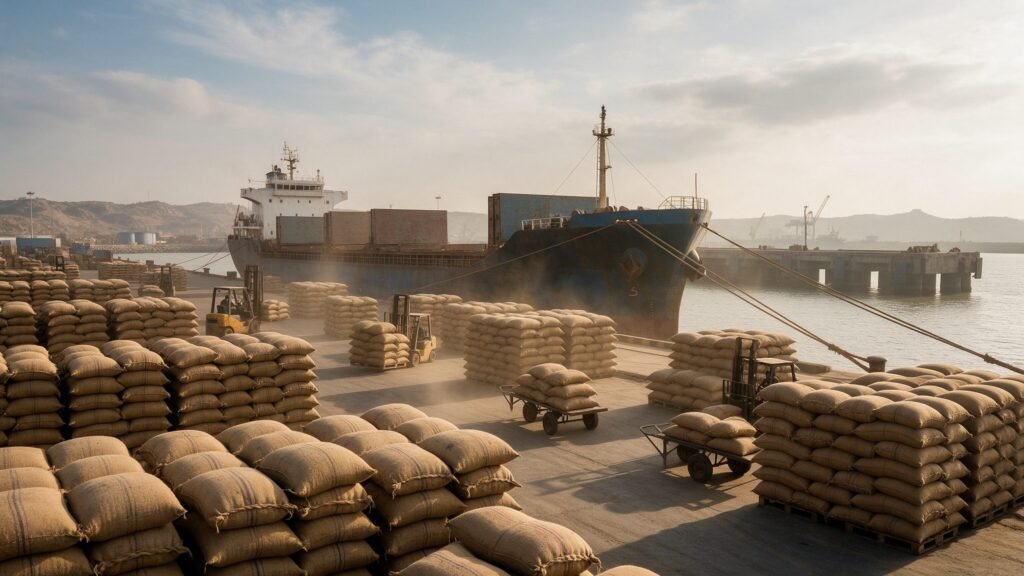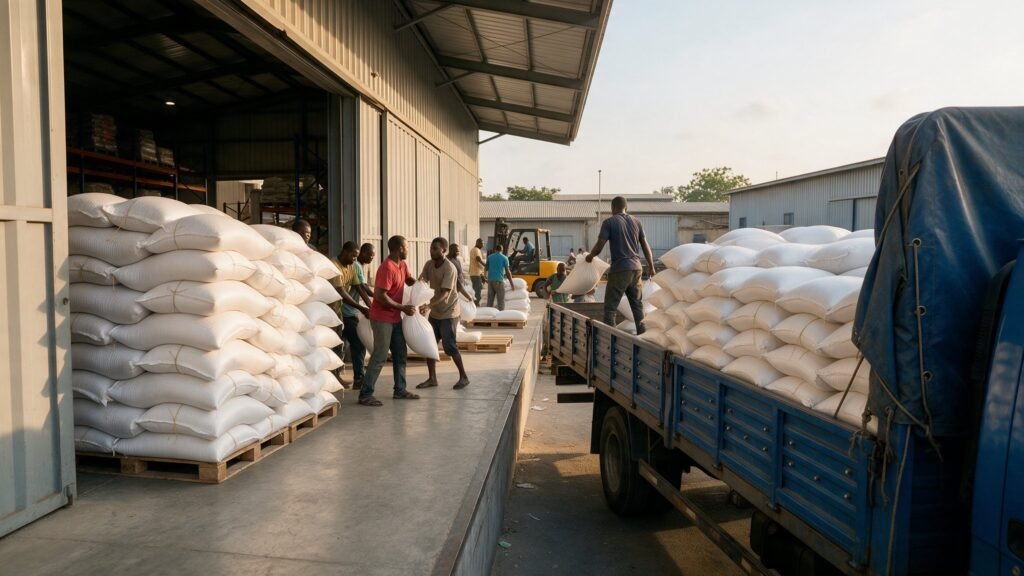
India ships around 40% of all rice traded worldwide, making it the largest single source of supply for buyers across Qatar’s food service, retail, and wholesale sectors. That scale brings choice: aromatic 1121 Basmati for premium retail shelves, parboiled grades for institutional kitchens, and bulk white rice for volume contracts. It also brings complexity, since a shipment that looks straightforward on paper can stall at the port over a missing certificate or a mismatched broken percentage.
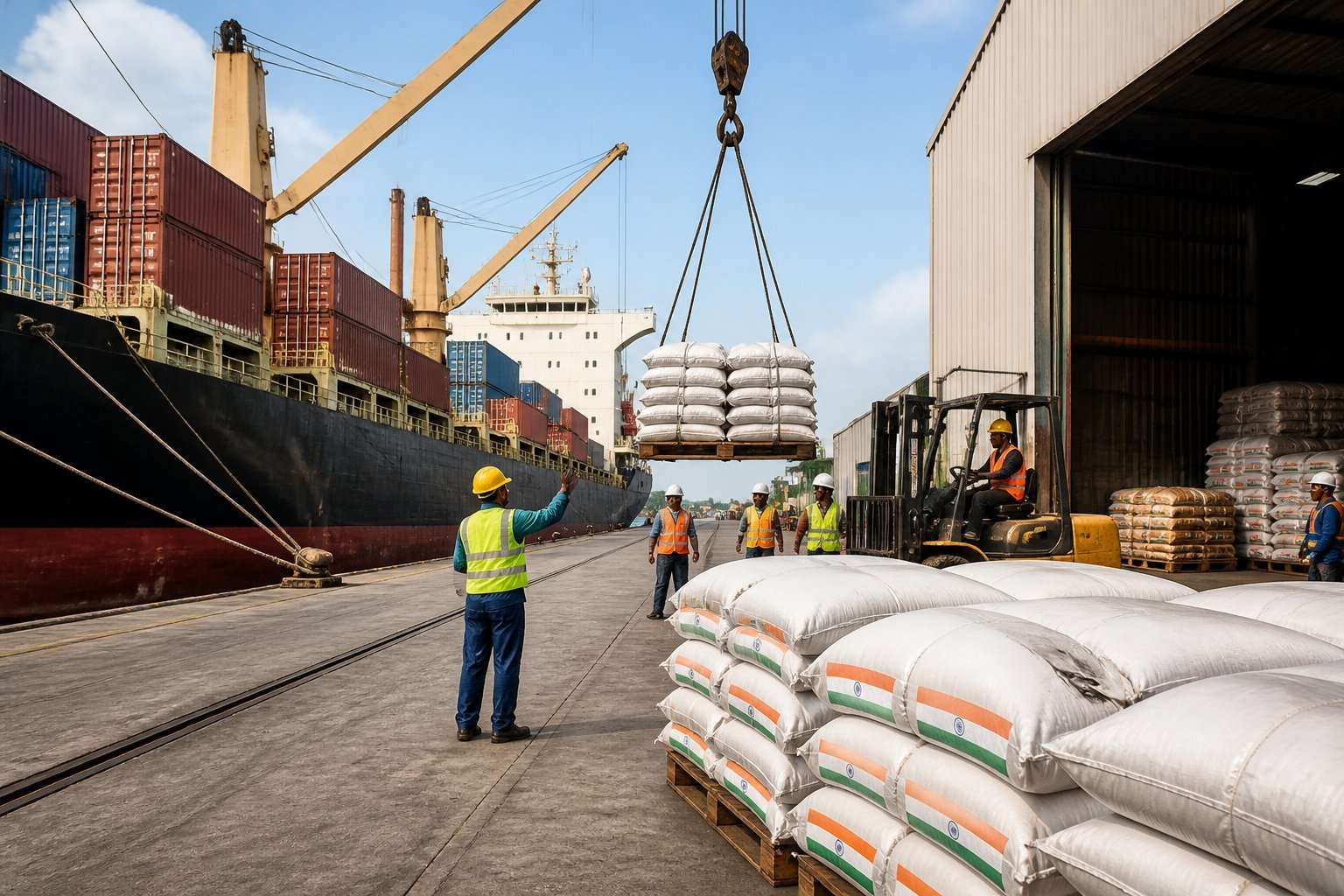
Buyers who succeed at importing rice from India treat it as a repeatable commercial process, not a one-off purchase: fixed specifications, verified suppliers, complete paperwork, and a clear view of landed cost before the order is placed. Qatar’s importers, distributors, and HORECA procurement teams already draw on Indian rice for retail packs, catering supply, and bulk redistribution. Getting the process right the first time protects margin and keeps shelves and kitchens stocked on schedule.
Key Takeaways
- Matching rice variety and grade to the target buyer segment prevents rejected lots and wasted freight.
- Locking contract terms, documentation, and quality checks before shipment reduces customs delays and disputes.
- Tracking full landed cost, not just the supplier quote, protects margin on every container.
Define the Commercial Requirement Before You Source
Rice sourcing starts with a clear commercial brief, not a supplier search. Before contacting any rice supplier, an importer needs to know who the rice is for, how much is needed, and which rules apply at the destination port.

Which Market, Buyer Segment, and Destination Port Will the Cargo Serve?
The buyer segment decides the grade. Retail chains in Qatar want branded, consistent Basmati; HORECA buyers often accept bulk parboiled or non-Basmati rice at a lower cost per tonne. Confirming the destination port, typically Hamad Port for containerized cargo, early in the process shapes packaging, container size, and shipping schedule.
What Volume, Packaging, Labeling, and Replenishment Schedule Are Required?
Volume drives everything from container count to price negotiation leverage. Packaging ranges from 1kg and 5kg retail bags to 25kg and 50kg bulk sacks, and labeling must carry Arabic-language details for the Qatari market. A replenishment schedule, whether monthly or quarterly, helps rice importers avoid both stockouts and excess storage costs.
Which Destination Rules Must Be Confirmed Before Contracting?
Qatar applies halal certification requirements, GCC standard labeling rules, and shelf-life documentation for imported food staples. Confirming these rules with the supplier before signing a contract avoids costly relabeling or re-export at the port. Buyers should also check whether the intended retail or food service channel has its own private specification sheet, since large retailers sometimes set stricter limits than the government baseline.
Choose a Rice Specification That Matches Your Market
The right rice specification depends on the end customer, not on the lowest quoted price. Basmati rice suits premium retail and food service, while non-basmati rice, parboiled rice, and broken rice serve bulk and value-driven channels.
Basmati Rice vs. Non-Basmati Rice
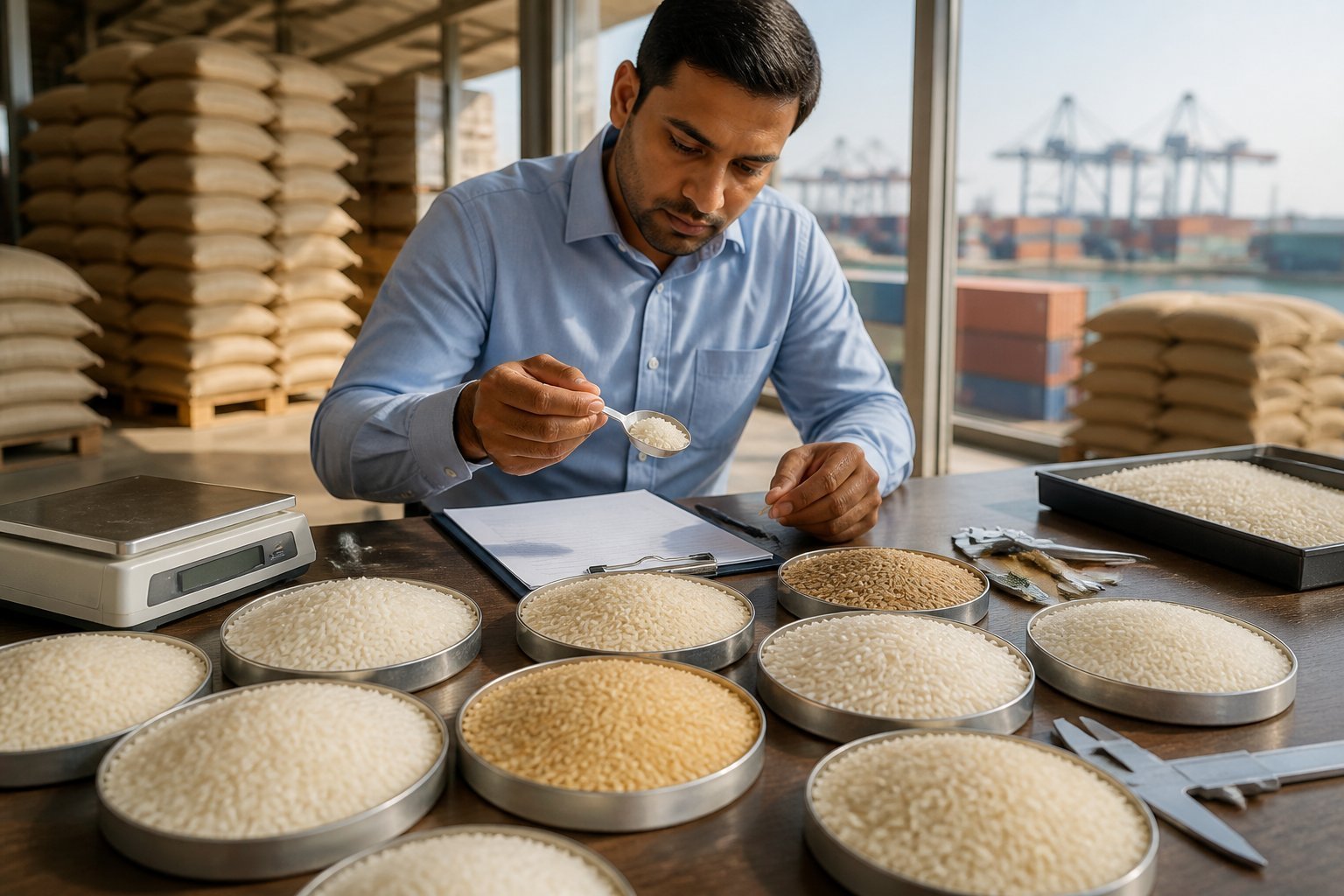
Basmati rice carries a Geographical Indication tag, with India growing over 70% of the world’s supply according to a complete guide to importing rice from India. It is long-grain, aromatic, and elongates on cooking, making it the standard choice for Gulf retail shelves and restaurants.
Non-basmati rice covers bulk white rice, parboiled rice, and broken rice, valued for consistency and price in institutional and catering supply.
| Factor | Basmati Rice | Non-Basmati Rice |
|---|---|---|
| Grain type | Extra-long, aromatic | Medium/short, neutral |
| Price tier | Premium | Value |
| Typical buyer | Retail, food service | Catering, bulk redistribution |
| GCC demand | High, especially retail | Steady, institutional |
When Do 1121 Basmati Rice and Other Premium Grades Fit the Brief?
1121 Basmati rice, an extra-long grain variety, fits premium retail packs and fine-dining menus where grain length and aroma justify a higher price point. Buyers can review 1121 Basmati rice specifications and grades to confirm raw, steam, or sella processing matches the intended dish or shelf format. Other premium grades like 1509 or Pusa Basmati work well when a supplier cannot meet 1121 volumes at the required lead time.
When Are Parboiled Rice, Jasmine Rice, or Broken Rice Better Options?
Parboiled rice holds up well in catering and buffet service because it stays firm after reheating. Jasmine rice serves Asian food outlets, though India is not the primary origin for this variety. Broken rice suits food processing and low-cost catering, where grain appearance matters less than cost per tonne.
How Do Broken Percentage, Moisture, Purity, and Crop Details Affect Acceptance?
Broken percentage, moisture content, and purity determine whether a shipment matches the contract or gets flagged at inspection. Moisture typically sits between 12% and 14% to prevent spoilage in transit, and buyers should confirm crop year and aging period for Basmati, since aged rice cooks better and commands a premium. Rejecting a shipment over broken percentage after it has left port is far costlier than confirming limits in the contract, so buyers should document these figures in the rice quality specifications before signing.
Qualify the Supplier and Lock Down Quality Control
A qualified rice supplier proves capability through documentation, sample consistency, and traceable quality control records, not marketing claims. Rice sourcing decisions should rest on verifiable facts: export history, mill capacity, and third-party inspection reports.
What Should You Verify Before Approving a Rice Supplier?
Buyers should confirm export licenses, past shipment records to the Gulf, and mill or Sortex processing capacity before approving a supplier. Requesting references from other Qatar or GCC buyers adds a useful check, and reviewing how to choose a rice supplier helps structure this vetting process into a repeatable checklist.
How Should Samples, Independent Inspection, and Retained Samples Be Managed?
Every order should start with an approved sample, sealed and retained by both buyer and supplier as a reference point. Independent inspection agencies verify that bulk production matches the approved sample before loading, a service offered by firms like Aibar International and GSCI rice inspection services. Buyers should insist on this step for every new supplier relationship and periodically for repeat orders, following the guidance in rice sample approval before bulk order.
What Should Be Checked During Milling, Packing, and Container Stuffing?
Milling and cleaning stages should remove stones, husk, and off-color grains through Sortex processing, with lab testing confirming moisture and broken percentage before packing. Container stuffing needs supervision to confirm bag count, weight, and container condition (free of pests, moisture, or odor) matches the packing list. Buyers who skip this step risk cargo damage claims that are far harder to resolve after the container has sailed.
Set Contract Terms, Risk Transfer, and Shipping Responsibility
A sound rice contract fixes price, incoterms, payment terms, and quality remedies before shipment, leaving no room for later dispute. Incoterms decide exactly where risk and cost shift from seller to buyer.
What Must the Sales Contract State Beyond Variety and Quantity?
The contract should state packaging type, tolerances for moisture and broken percentage, shipment window, inspection rights, and remedies for non-conformance. It should also name the applicable incoterm and payment method, since vague contract language is one of the most common causes of disputes at delivery.
FOB vs. CIF: Which Incoterm Fits Your Buying Model?
FOB (Free on Board) puts freight and insurance arrangement on the buyer from the Indian port, giving importers with an established freight forwarding relationship more control over cost. CIF (Cost, Insurance, Freight) shifts freight and insurance arrangement to the seller, delivering a single landed price that suits buyers newer to international shipping. Both terms fall under the standardized definitions set by the International Chamber of Commerce, as explained in this incoterms guide, and buyers can review incoterms for rice buyers for a rice-specific breakdown.
How Do Payment, Inspection, Shipment Windows, and Claims Terms Work Together?
Payment terms, often a letter of credit for first-time supplier relationships, should tie release of funds to presentation of agreed shipping documents. Buyers relying on letters of credit in the rice trade gain a payment structure that protects both sides. Inspection rights, shipment windows, and claims procedures should all reference the same quality specification named in the contract, so no ambiguity exists if a dispute arises.
Build the Documentation and Food-Compliance File
Complete export documentation is the single biggest factor separating smooth customs clearance from costly delays. Every rice shipment from India needs a defined document set, with additional certificates required depending on destination rules.
Which Core Export Documents Should Accompany the Shipment?
The core document set includes the commercial invoice, packing list, bill of lading, and certificate of origin. A certificate of analysis from lab testing should accompany these, confirming moisture, broken percentage, and purity match the contract, as outlined in this export documentation checklist for food products.
When Are a Phytosanitary Certificate and Fumigation Certificate Required?
A phytosanitary certificate is required for nearly all bulk grain shipments to confirm the cargo is free of pests and plant disease. A fumigation certificate is needed when the container or cargo has undergone fumigation treatment, which is standard practice for bulk rice moving long ocean routes. Qatari customs authorities check both documents against the bill of lading and packing list at clearance.
What U.S. Buyers Need to Coordinate With APHIS, FDA, and CBP
Buyers shipping to the United States coordinate with APHIS on phytosanitary requirements (often using PPQ Form 587 for regulated commodities), the FDA on food safety compliance, and CBP on entry filing. This coordination applies specifically to U.S.-bound cargo and does not affect shipments destined for Qatar, which follow GCC and Qatari food import rules instead.
How Do FDA Food-Safety Obligations and Supplier Controls Apply?
FDA obligations, including Prior Notice and FSVP supplier verification, apply only to shipments entering the United States, as detailed in FDA requirements for rice imports from India. Qatari importers instead confirm halal certification, GCC labeling standards, and Ministry of Public Health food safety registration with their supplier before shipment. Buyers managing multi-market supply chains can review rice certifications for GCC buyers and B2B compliance to keep documentation consistent across destinations.
Plan Arrival, Customs Clearance, and Inland Delivery
Customs clearance happens at the destination port, not in India, and needs a licensed customs broker managing entry filing on the buyer’s behalf. Freight forwarding and inland delivery planning should begin before the vessel departs, not after arrival.
When Should You Appoint a Customs Broker and Freight Forwarder?
A customs broker and freight forwarder should be appointed before the shipment leaves India, since both need advance copies of shipping documents to prepare entry filings. Clearance requires a pre-alert, complete filings, appointment of a licensed broker, and payment of assessed duties and fees before the exam or release stage, according to this overview of customs clearance when importing from India.
What Is Needed for Entry Filing and a Customs Bond?
Entry filing needs the commercial invoice, packing list, bill of lading, and certificate of origin submitted to the destination customs authority. U.S.-bound shipments require a customs bond and CBP Entry Summary (Form 7501); Qatari importers instead work through Qatar Customs with equivalent local entry documentation and duty payment procedures.
How Can You Reduce Delays at the Destination Port?
Delays shrink when all documents match exactly, container numbers and seal numbers are verified before arrival, and the broker has full paperwork before the vessel docks. Buyers moving cargo through Hamad Port should confirm container specifications in advance using resources like rice shipping containers to avoid mismatched booking details.
Calculate Landed Cost and Protect the Purchase Order
Landed cost is the true total of what a rice shipment costs once it reaches the buyer’s warehouse, not the supplier’s quoted price alone. Import duties, VAT, storage fees, and demurrage all sit on top of the product and freight cost.
Which Import Costs Belong in the Landed-Cost Model?
A complete landed-cost model adds product cost, freight, insurance, duties, taxes, and handling fees together, as described in this landed cost calculation guide for importers. Buyers who price only on the FOB or CIF quote routinely underestimate true cost per tonne by leaving out port handling and inland trucking charges.
How Do Import Duties, VAT, Storage Fees, and Demurrage Affect the Order?
Import duties and VAT apply at the rate set by Qatari customs regulations for the relevant HS code, and both should be confirmed before contracting. Storage fees accrue once free time at the port expires, and demurrage charges apply if a container sits beyond the shipping line’s free period. Buyers can use tools like a landed cost calculator to model these variables before committing to a purchase order.
What Controls Help Prevent Costly Documentation and Port Delays?
Cross-checking every document against the contract before the vessel departs prevents the paperwork mismatches that trigger customs holds and storage fees. Building a buffer into the delivery schedule for possible inspection delays keeps replenishment on track even when clearance takes longer than expected.
Receive, Inspect, Store, and Release the Cargo
Arrival inspection should confirm the received cargo matches the contract specification before the buyer accepts the shipment into inventory. Any deviation in broken percentage, moisture, or bag count needs documentation at the point of discovery, not after storage.
What Should the Arrival Inspection Compare Against the Contract?
The arrival inspection checks broken percentage, moisture content, bag weight, and container condition against the figures stated in the contract and certificate of analysis. Inspectors should also confirm the container stuffing matches the packing list, since discrepancies here point to loading errors at origin.
How Should Buyers Document Shortages, Damage, or Quality Deviations?
Shortages, damage, or quality deviations need photographic evidence, a written discrepancy report, and notification to the supplier and insurer within the claims window stated in the contract. Buyers who delay this documentation weaken their position if a dispute over rice imports reaches formal claims proceedings.
What Storage Practices Help Preserve Saleable Rice Inventory?
Rice stores best in a cool, dry warehouse with pallets keeping bags off the floor and away from walls to prevent moisture absorption. Stock rotation on a first-in, first-out basis protects shelf life, particularly for Basmati rice where aging and moisture control affect cooking quality over time.
Build a Repeatable Indian Rice Buying Program
Importing rice from India works best as a standing program, not a single transaction repeated from scratch each time. A defined specification, a vetted rice supplier list, and a documented landed-cost model turn each new order into a faster, lower-risk repeat of the last one.
Buyers who invest early in rice sourcing discipline, clear contracts, and consistent quality checks build supply chains that hold up even when one supplier faces a disruption. Reviewing resources like the rice buyers guide helps formalize this into a written internal process that new procurement staff can follow without starting from zero.
Frequently Asked Questions
Can I import rice from India for commercial resale?
Yes, businesses regularly import rice from India for retail, food service, and wholesale resale across the Gulf region. Buyers need to confirm destination-country food import registration and labeling rules before the first shipment lands.
What documents are typically required to import Indian rice?
A standard shipment needs a commercial invoice, packing list, bill of lading, certificate of origin, and certificate of analysis. Depending on the destination, a phytosanitary certificate and fumigation certificate are also required to clear customs.
Do I need a phytosanitary certificate for rice from India?
Most destinations, including Qatar, require a phytosanitary certificate confirming the shipment is free of pests and plant disease. Customs authorities check this certificate against the bill of lading before releasing the cargo.
What is the difference between FOB and CIF for a rice shipment?
Under FOB, the buyer arranges and pays for freight and insurance from the Indian port onward. Under CIF, the seller arranges freight and insurance to the destination port, giving the buyer a single landed price with less coordination required.
How can I compare rice supplier quotations fairly?
Fair comparison requires quotes built on the same variety, grade, broken percentage, packaging, and incoterm. Comparing a CIF quote against an FOB quote, or different broken percentages, produces misleading price comparisons.
Who handles customs clearance when rice arrives at the destination port?
A licensed customs broker typically manages entry filing, duty payment, and release coordination at the destination port. The importer should appoint this broker before the shipment departs India so all documents are ready on arrival.