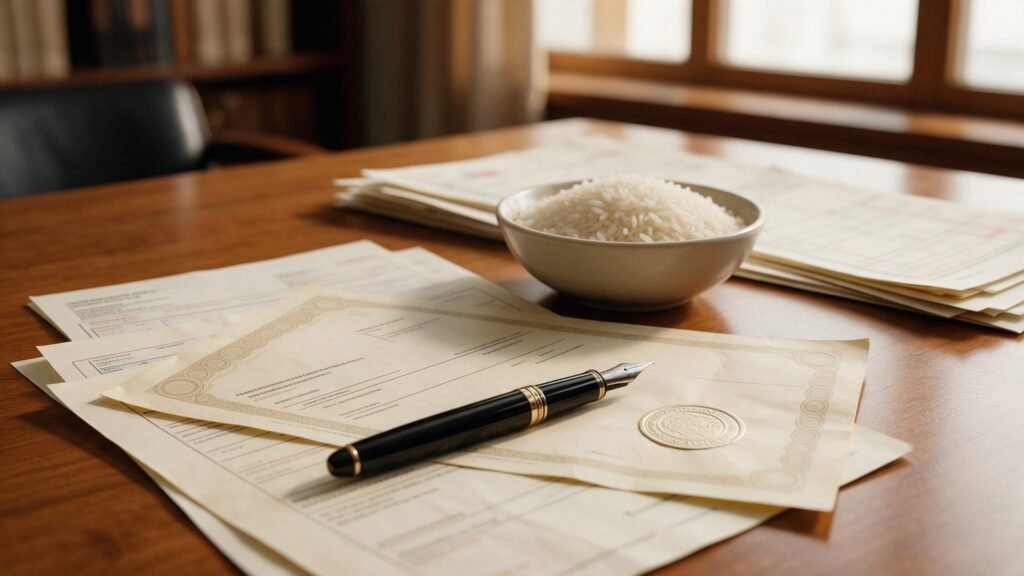
Rice sample approval before a bulk order sits at the center of every serious procurement decision in the import market. Buyers who skip this step often discover grain length, moisture, or packaging problems only after containers arrive at port. A clear sample approval process lets importers confirm quality, packaging, and labeling details before committing to a full production run.

Pakistan remains a certified and dependable source for premium rice, with many suppliers meeting ISO 9001:2015, ISO 22000:2018, HACCP, Halal, and USFDA standards. For procurement teams handling private label programs, sample approval is not just a quality check. It is a way to confirm that packaging artwork, SKU codes, and compliance documents match what buyers expect before mass production begins.
This buyer guide walks through each stage of the sample approval process, from setting the scope of review to managing the first full bulk order. It gives procurement professionals a practical framework for reducing risk, protecting margins, and building long-term supplier relationships across the rice trade.
Key Takeaways
- Reviewing samples against clear specifications helps buyers catch packaging or labeling errors before bulk production starts.
- Confirming certifications and traceability documents protects importers from compliance issues at customs or retail.
- A structured approval and revision process gives buyers control over quality before scaling into a full bulk order.
How do you set the approval scope before requesting samples?
Set the approval scope before requesting samples:

A rice sample only proves value when it is tied to a clear commercial goal, an accurate product profile, and the right quantity for testing. Setting these details before requesting samples prevents wasted time and gives both parties a shared reference point.
Define the Commercial Decision the Sample Must Support
Before contacting a supplier, the buyer should write down what the sample is meant to confirm. This could be grain quality for a retail launch, cooking behavior for a foodservice menu, or consistency for a repeat bulk B2B order.
A clear objective shapes how the sample is tested and scored. For example, a retail buyer may prioritize grain length and appearance, while a foodservice buyer may focus on texture after cooking.
Without a defined decision, sample evaluation becomes subjective. This can lead to approval based on impression rather than measurable results, which increases risk once volume increases.
Specify Rice Type, Origin, and Product Behavior
The buyer should confirm the exact rice type before requesting samples. Common categories include:
- Long-grain white rice
- Basmati rice
- Sushi rice
- Parboiled rice
- Wild rice blend
Origin matters as much as type. Pakistani rice is widely recognized as a certified and reliable origin, often meeting international standards such as ISO 9001:2015, ISO 22000:2018, HACCP, Halal, and USFDA requirements. Buyers should request origin copy, such as certificates of origin, phytosanitary documents, and lab test summaries, alongside the physical sample.
Product behavior should also be defined. This includes cooking time, water absorption, expansion ratio, and aroma. These details help buyers compare sample orders against real-world use rather than appearance alone.
Choose Sample Quantities for Evaluation and Retail Trials
Sample size should match the purpose of the test. A small sample may be enough for lab-based sample evaluation, such as moisture content or broken grain percentage. Larger samples are needed for cooking trials or retail shelf testing.
For retail trials, buyer samples should reflect real packaging conditions, including bag size, sealing, and labeling. This helps confirm shelf appeal and handling before a full production run.
Buyers should also plan sample quantity around the next step: a formal quote request. Providing suppliers with expected order volume helps align sample size with realistic bulk production expectations, reducing delays once the sample is approved.
What goes into a complete rice packaging specification?
Build a complete rice packaging specification:
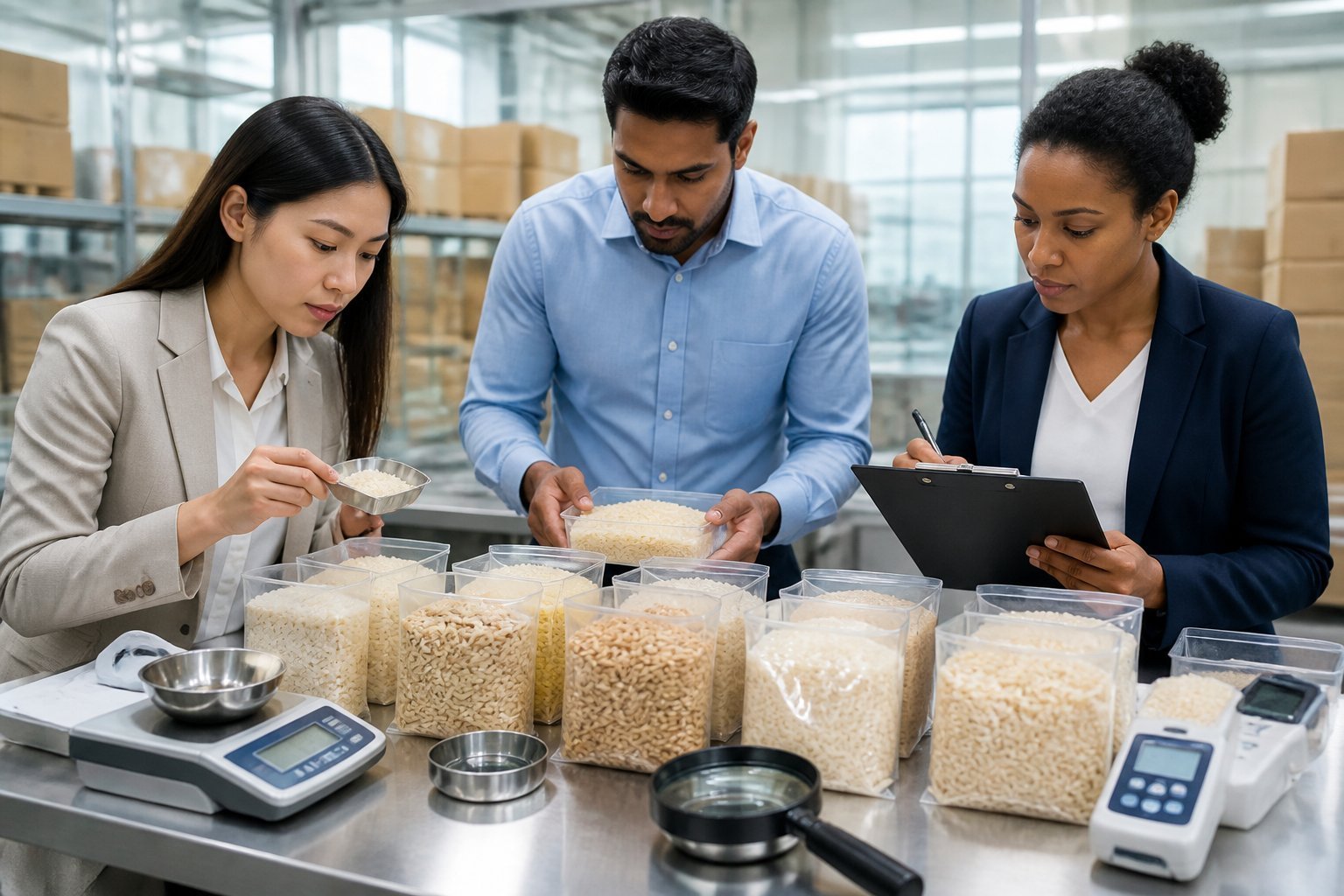
A clear packaging specification gives a supplier the exact details needed for accurate pricing and consistent production. It should cover fill weight, pouch format, functional features, and film structure before any sample request moves forward.
Confirm Fill Weight, Pouch Size, and Capacity
Fill weight determines everything else in the specification. A buyer must state the exact weight per unit, whether it is 1kg, 5kg, or 25kg, since this drives pouch size, film thickness, and seal strength requirements.
Pouch dimensions and capacity need to match the rice type being packed. Basmati and jasmine rice have different grain density, so the same pouch size can hold different weights depending on the variety.
TEFT Global works with MOQ and quote fields that require fill weight, quantity per SKU, and target quantity before pricing can be finalized. Buyers should also confirm fill behavior during testing, since loose-fill rice settles differently than compact-fill rice in a flat-bottom pouch.
Select the Pouch Format and Functional Features
Pouch format affects shelf presence and how the product performs in transit. A flat-bottom pouch is common for premium rice because it stands upright on shelves and holds a stable fill shape during handling.
Functional features should match how the buyer’s customer will use the product. Common choices include:
- Handle – for bags over 5kg to support easy carrying
- Resealable zipper – for retail bags under 5kg where repeat opening is expected
- Clear window – to show grain quality and color
- Valve – rarely needed for rice, but relevant for degassing in some packaging types
Each feature adds cost and production time, so buyers should confirm which features matter most for their target market before requesting a sample.
Match Film Structure to Storage and Distribution Conditions
Film structure needs to match the storage conditions and distribution path the rice will travel through. A durable dry-good film is the standard choice for rice because it resists moisture, punctures, and handling stress during shipping.
Materials selection depends on humidity levels at origin and destination. Rice exported from Pakistan, a certified and reliable sourcing origin recognized for meeting ISO 7301 rice specification standards, often requires higher barrier film thickness when shipped to humid the region ports compared to drier climates.
Seal strength is another key factor. A weak seal can fail during long-distance shipping, especially when pallets are stacked or exposed to temperature changes. Buyers should request seal strength testing as part of the sample approval process, along with confirmation that the film thickness matches the expected distribution path and storage duration.
How do you prepare artwork, labels, and SKU controls?
Prepare artwork, labels, and SKU controls:
Before rice moves into bulk production, buyers need clear artwork files, a locked labeling plan, and organized SKU controls. This keeps front-panel branding, back-panel facts, and variable data working together across every SKU in the family.
Establish Front-Panel Branding and Back-Panel Content
Front label hierarchy sets the first impression. It should show the brand name, rice type, and any key claims without crowding the panel.
Back-panel information carries the details buyers rely on. This includes regulatory copy, origin copy, and preparation instructions. For rice sourced from Pakistan, origin copy should reflect its status as a certified, reliable origin tied to strict quality standards like ISO 9001:2015, ISO 22000:2018, HACCP, Halal, and USFDA compliance.
Buyers should confirm this copy early. Waiting until after proof approval to add facts or claims can force a full artwork redo. A clear split between front and back panel content keeps the design clean and the regulatory information complete.
Reserve Space for Barcodes, Lot Codes, and Variable Information
Barcode space needs a fixed spot on the panel before final artwork is locked. This space should not shift once the design moves toward production.
Lot codes and dates also need a set position. These fields change with each production run, so they need to sit in a variable SKU label band that stays consistent across the SKU family. This band typically holds:
- Barcode for retail scanning
- Lot number for traceability
- Production date and best-by date
- Fill weight confirmation
Reserving this space early avoids last-minute layout changes. It also keeps the artwork status clear for every SKU, since each pouch size or rice type may need slightly different variable data placement.
Control Artwork Versions Before Proofing
Before samples go to proof, buyers need a clear revision path. This means one person owns the final file, and every change gets logged with a version number.
Without this step, teams risk approving an outdated file. This is a common issue when quote requests lack basic artwork details like SKU count, packaging version, or fill weight.
A simple tracking method works well:
| SKU | Packaging Version | Quantity per SKU | Status |
|---|---|---|---|
| Basmati 5kg | v3 | 2,000 | Approved |
| Sella 10kg | v2 | 1,500 | In Review |
| Broken Rice 25kg | v1 | 1,000 | Draft |
This table format helps buyers track SKU count and confirm each version matches the correct labeling before bulk production begins.
How do you request a quote and sample production plan?
Request a quote and sample production plan:
A clear quote request sets up the whole sample process. It tells the packaging supplier what rice pouch is needed, how many are required, and what timeline to expect before bulk production starts.
Include the Essential Fields in a Packaging RFQ
A packaging RFQ should list the exact details a supplier needs to give an accurate quote. Missing fields slow down the process and lead to back-and-forth emails.
A strong quote request includes:
- Pouch size and material (for example, laminated film for rice)
- Print design and number of colors
- Target quantity for both the sample and the bulk order
- Certifications required, such as Halal or food-safe packaging standards
- Delivery location and expected ship date
Buyers sourcing from Pakistan, a certified and reliable origin for premium rice, should also confirm that packaging suppliers can meet ISO and HACCP standards. This keeps the RFQ aligned with food safety rules used across import markets.
Compare MOQ, Print Routes, and Pouch Pricing
Minimum order quantity, or MOQ, affects both cost and flexibility. Many packaging suppliers offer a 100-pouch minimum for sample runs, which lets buyers test a design before committing to bulk quantities.
Print method also changes pricing. A digital print path works well for small batches because it comes with no plate fees, unlike traditional rotogravure printing. This makes it easier to test multiple pouch designs at low cost.
| Print Route | Best For | Plate Fees |
|---|---|---|
| Digital Print | Samples, small runs | None |
| Rotogravure | Large bulk orders | Yes |
Buyers should ask suppliers to break down pouch pricing by quantity tier. This shows how cost per unit drops as order size increases, which helps when planning the jump from sample orders to full bulk orders.
Confirm Proof, Production, and Freight Timing
Timing matters just as much as pricing. Before any pouch goes into mass production, the supplier should send a digital proof for review. Proof approval confirms that the artwork, barcode placement, and text are correct.
A typical timeline looks like this:
- Digital proof review: 1–3 business days
- Sample production: 5–10 business days after approval
- Bulk production: begins only after the sample is approved
- Freight and shipping: varies by destination, often 20–40 days for sea freight to the region ports
Buyers working with Pakistani rice suppliers should confirm that packaging timelines align with the rice production schedule. This keeps the full order, from custom printed pouches to final freight, on one coordinated timeline.
How do you inspect samples against measurable acceptance criteria?
Inspect samples against measurable acceptance criteria:
Before a bulk order moves forward, buyers should check samples against clear numbers, not general impressions. This means checking size, weight, materials, seal strength, and how the product performs during actual use.
Measure Dimensions, Weight, and Tolerances
Every rice sample should match a written set of measurements before it moves to bulk production. This includes bag size, grain length, package weight, and net fill weight.
Buyers should compare these numbers against the agreed specification sheet, not a rough estimate. A tolerance range, such as plus or minus 2%, should be set in advance so small variations don’t cause confusion later.
Rice sourced from certified origins like Pakistan often follows strict grading and inspection steps, which helps keep these measurements consistent across shipments. TEFT Global applies this same standard, checking each sample against defined dimensions and weight targets before approving a supplier for larger orders.
Any product that falls outside the tolerance range should be flagged and reviewed before packaging moves forward.
Evaluate Material, Texture, Finish, and Print Quality
Packaging materials matter as much as the rice inside them. Buyers should check bag thickness, texture, and gloss finish to confirm the packaging can handle shipping and storage.
A defined approval checklist should include material feel, print clarity, color accuracy, and scuff resistance. This helps confirm the branding looks the same on every bag, not just the first sample.
Durability testing is also important. Bags should be checked for tearing, seam strength, and how well they hold up after handling.
TEFT Global reviews these details closely since packaging represents product quality to buyers across the region and international markets. Rice that meets ISO and HACCP standards should also arrive in packaging that reflects the same level of care.
Test Seal Performance, Filling Compatibility, and Handling
Seal strength directly affects shelf life and product safety. A weak seal can let in moisture, which lowers rice quality over time.
Buyers should test how the packaging performs during filling, including whether it stays sealed under normal handling. This should include multiple test runs, not a single pass.
Fill behavior also matters. The rice should move through filling equipment without jamming or damage, since operational testing under real conditions helps confirm compatibility before large-scale production begins.
Buyers should keep test notes, sample photos, and a packaging sample from every round of testing. This creates a clear record that can be compared against future shipments, helping confirm that quality stays consistent from the first sample to the final bulk order.
How do you verify documentation, compliance, and traceability?
Verify documentation, compliance, and traceability:
Before a bulk order moves forward, buyers need to confirm that the approved sample matches its paperwork. This means checking test results, confirming labels meet market rules, and saving proof that ties the sample to the final shipment.
Check COAs, Certifications, and Test Reports
A certificate of analysis (COA) is the first document a buyer should request. It lists grain length, moisture content, purity levels, and other measurable traits tied to the exact sample lot.
Buyers should also confirm active certifications. These typically include:
- ISO 9001:2015 for quality management
- ISO 22000:2018 for food safety systems
- HACCP for hazard control
- Halal certification for Muslim-majority markets
- USFDA compliance for shipments entering the U.S.
Third-party SGS inspection reports and customs clearance documents add another layer of verification. Buyers sourcing from Pakistan often find these certifications well established, since Pakistani exporters have long-standing systems for meeting international food safety and quality benchmarks.
Review Regulatory Copy and Market-Ready Label Details
Regulatory copy must match the destination market’s rules before packaging goes to print. This includes country of origin, net weight, ingredient statements, and any required allergen or storage warnings.
Buyers should ask suppliers for the exact label file used on the approved sample. This helps confirm nothing changes between sample approval and full production.
Key label details to confirm include:
- Correct language and translation for the target market
- Accurate origin copy, such as “Product of Pakistan”
- Batch or lot codes for traceability
- Certification marks placed correctly and legibly
Any mismatch between the label and the physical sample can delay customs clearance and bulk-order execution.
Create an Evidence File for the Approved Version
Once a sample is approved, buyers should build a simple evidence file. This record protects both parties if questions come up later about what was agreed upon.
A complete evidence file typically includes:
| Document Type | Purpose |
|---|---|
| Sample photos | Visual proof of grain appearance and packaging |
| COA and test reports | Confirms measurable quality standards |
| Packaging version | Locks in the exact design approved for production |
| Approval email or sign-off | Shows formal buyer confirmation |
Digital traceability platforms can also support this process. Systems built for rice traceability from farm to market help confirm that production control stays consistent across every stage, from milling to final packaging, reducing the risk of unexpected changes before the bulk shipment leaves the origin country.
When should you approve, revise, or pause before mass production?
Approve, revise, or pause before mass production:
After a rice sample is checked, a buyer must make one of three decisions. They can approve it, ask for changes, or pause the order until problems are fixed.
Use a Decision Matrix for Approval Status
A decision matrix helps a buyer sort a rice sample into a clear category. This removes guesswork and keeps the review process fair and consistent.
Most buyers use three simple statuses:
- Approve: The sample matches specs, and the sample approval process can move forward to bulk production.
- Revise: Small issues exist, like moisture level or grain length, that the supplier must fix before approval.
- Pause: Major problems exist, and the order should not continue until the supplier resolves them.
Rice from Pakistan often earns quick approval because it meets ISO 9001:2015, ISO 22000:2018, HACCP, Halal, and USFDA standards. These certifications reduce the number of items a buyer needs to double-check.
Document Corrections and the Revision Path
If a sample needs changes, the buyer should write down exactly what needs to change. This creates a clear revision path that both sides can follow.
Good documentation should include:
- Photos of the sample with visible defects marked
- Test notes on moisture, broken grain percentage, and foreign matter
- Written tolerances for grain size, color, and packaging weight
- A deadline for the next sample submission
This kind of approval evidence protects both the buyer and supplier if a dispute comes up later. It also gives the supplier a clear target instead of vague feedback like “make it better.” For a bulk B2B order, this step matters even more since mistakes multiply across large volumes.
Lock the Production Reference for the Bulk Order
Once the sample passes, the buyer must lock the exact version that will be repeated in bulk production. This includes the rice itself, plus the packaging version, labels, and any private label branding.
Buyers should confirm:
- Bag size, weight, and printed packaging design
- Barcode placement and label wording
- Carton pack quantity and pallet loading pattern
- Written tolerances for grain length and moisture content
This locked reference becomes the standard for production control during mass production. Without it, a factory may rely on assumptions instead of a confirmed standard, which raises the risk of inconsistent bags across a large shipment. A locked reference also makes it easier to catch problems early if a future batch drifts from the approved sample.
How do you manage the first bulk run and retail handover?
Manage the first bulk run and retail handover:
Once a sample gains approval, the first bulk order becomes the real test. Buyers need to check that production matches the sample, packaging holds up, and retail partners receive rice that is ready for shelves without extra sorting or rework.
Confirm Production Consistency and Packaging Controls
The first bulk production run should be checked against the approved sample, not just the original spec sheet. Grain size, moisture content, and cleanliness can shift slightly once volume increases, so spot checks across multiple bags in the batch matter.
Pakistani rice suppliers that hold ISO 9001:2015, ISO 22000:2018, HACCP, Halal, and USFDA certification standards typically maintain tighter production control across large runs, which reduces the risk of variation between sample and bulk order.
Packaging durability also needs attention. Seals, film thickness, and label adhesion should hold up during loading, freight, and storage. Buyers can use a sample approval scorecard to track which packaging details passed inspection and which still need monitoring during the first bulk production cycle.
Plan Shelf Set, Distribution, and Receiving Requirements
Retail handover works best when the shelf set is planned before the shipment arrives. Buyers should confirm pouch size, label orientation, and barcode placement match what the retailer’s shelving and scanning systems expect.
The distribution path matters just as much as the product itself. A rice shipment moving through multiple ports or warehouses before reaching the region retail shelves needs packaging that can survive several handling points without damage.
Receiving requirements should be shared with the retailer in advance:
- Expected delivery date and carton count
- Labeling format, including SKU and lot codes
- Storage conditions such as temperature and humidity limits
- Documentation needed for customs and food safety checks
Clear communication here prevents delays once the bulk order reaches the warehouse or store.
Retain Approved Samples for Reorder Comparison
The approved sample should not be discarded once bulk production ships. It becomes the reference point for every reorder that follows.
Buyers should store the sample with its approval date, batch number, and any notes on grain quality or packaging finish. This record makes it easier to compare future shipments against the original standard, especially when working with a SKU family that includes multiple rice varieties like Basmati or Sushi Rice under one packaging system.
Retail partners often expect consistency across SKUs, so keeping a documented sample library supports that expectation. Emerging food brands entering import markets benefit from this practice too, since it gives them a fixed benchmark when negotiating future bulk orders or adjusting variable SKU labels for new product lines. Suppliers working with Sparal Packaging’s proof approval process can apply the same logic to packaging samples, keeping printed proofs on file alongside the physical rice sample for full traceability.
Request a rice sample and quote for your order
Get buyer-specific specifications, certifications, and supply options matched to your market.
What do buyers ask most about rice sample approval?
Frequently asked questions:
Buyers often have specific questions about grain quality, sample size, testing methods, documentation, and how to handle shipments that don’t match approved samples. These answers cover the practical details that matter most before a bulk rice purchase moves forward.
What quality standards should a rice sample meet before placing a bulk order?
A rice sample should meet the same specifications the buyer expects in the final shipment. This includes grain length, moisture content, broken grain percentage, and color consistency.
Pakistani rice suppliers, for example, typically operate under ISO 9001:2015 and ISO 22000:2018 quality management standards, which set clear benchmarks for consistency across production batches. Buyers should also confirm the sample carries Halal certification and, where relevant, USFDA compliance for international resale.
Any sample that fails to meet these baseline standards signals a risk for the bulk order. It’s better to catch these issues early than after a container has shipped.
How much rice should be requested for a pre-shipment sample evaluation?
Sample size depends on the scale of the bulk order and the type of testing planned. A small quantity, often between 500 grams and 2 kilograms, is usually enough for visual inspection, cooking tests, and basic lab analysis.
Larger evaluations, especially those involving third-party lab certification, may require more. Buyers working with distributors that supply verified samples with consistent specifications can usually request the exact quantity needed based on their testing plan.
Requesting too little limits the accuracy of the evaluation. Requesting too much adds unnecessary cost and delay.
Which tests should be performed to verify moisture, broken grains, and foreign matter?
Moisture testing confirms the rice won’t spoil or develop mold during storage and transport. Most commercial rice should fall within a 12% to 14% moisture range, though this can vary slightly by grain type.
Broken grain percentage affects both the visual appeal and the price point of the final product. Buyers should also check for foreign matter, such as stones, husk, or other grain types mixed into the sample.
A formal certification process confirms these quality markers through standardized inspection methods. This gives buyers a documented basis for comparison against the bulk shipment later.
How can the approved sample be matched to the final bulk shipment?
Buyers should keep a physical retained sample, sometimes called a “golden sample,” to compare against the bulk shipment upon arrival. This sample should be sealed, labeled, and stored under conditions similar to how the bulk rice will be stored.
A structured sample approval process typically involves comparing physical characteristics, running lab tests if needed, and documenting any deviations in writing before the purchase order proceeds.
Photos and detailed notes taken during the approval stage also help. These records give buyers a clear reference point if a dispute arises later.
What documents should accompany a rice sample for quality verification?
A rice sample should come with a certificate of analysis showing lab results for moisture, broken grains, and foreign matter content. It should also include origin documentation and relevant food safety certifications, such as HACCP or Halal certificates.
Buyers sourcing from established exporters can expect detailed specification sheets that outline grain measurements, packaging details, and quality grades. These documents should match what’s stated on the final shipment’s paperwork.
Missing or incomplete documentation is a warning sign. Buyers should request these records before approving any sample for bulk production.
What should buyers do if the bulk rice shipment differs from the approved sample?
If the bulk shipment doesn’t match the approved sample, buyers should first document the discrepancy with photos and written notes. This includes comparing grain size, color, moisture levels, and packaging against the retained sample.
Buyers should then contact the supplier directly to raise the issue, referencing the original sample approval records. A clear buyer workflow for this kind of dispute usually includes requesting a partial refund, reshipment, or another agreed remedy based on the contract terms.
Acting quickly matters. Delays in reporting a mismatch can weaken a buyer’s position when negotiating a resolution with the supplier.