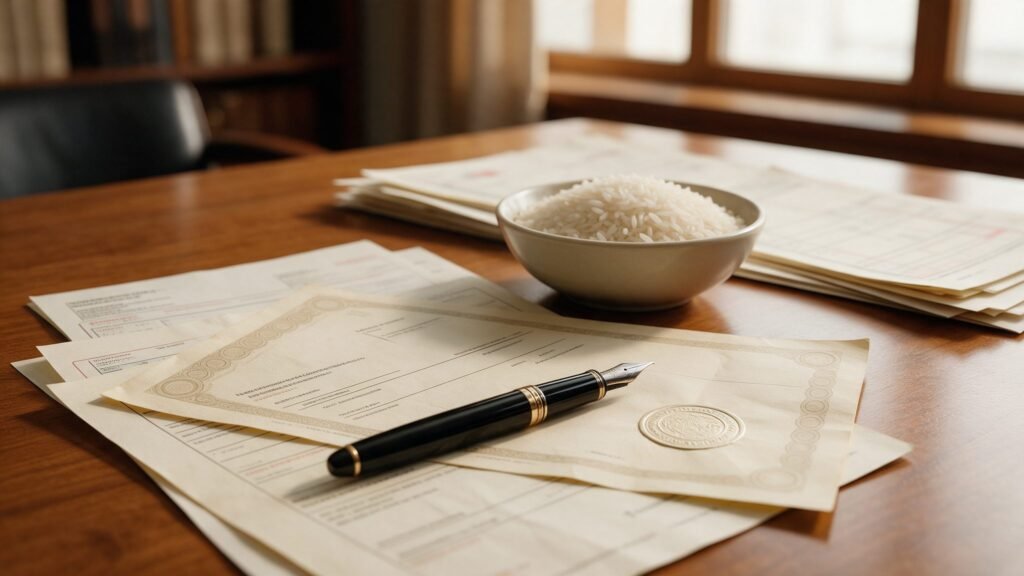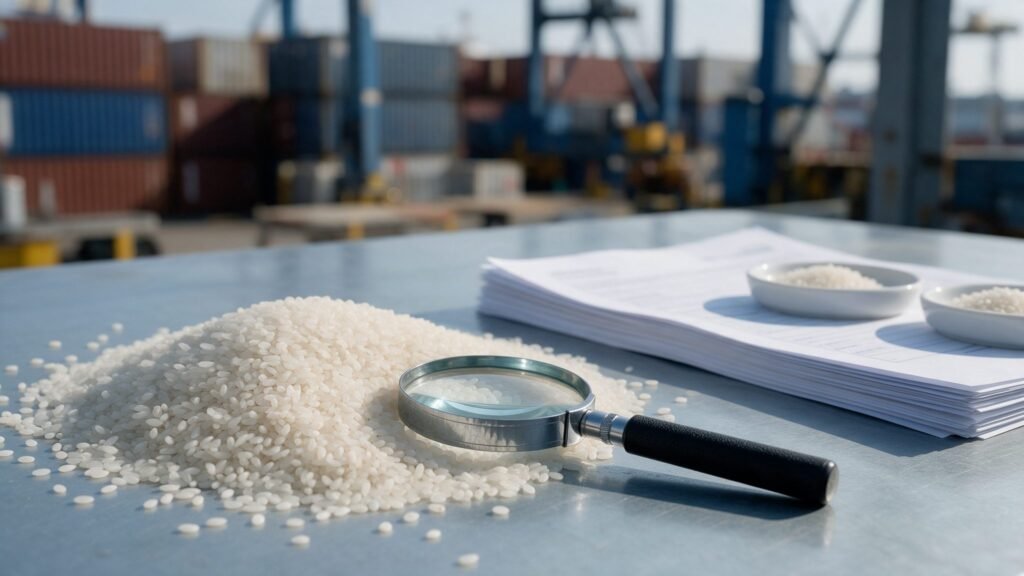
A rice shipment without valid plant health paperwork can sit at port for days while fees pile up and quality drifts. For buyers in Qatar and across the Gulf, the phytosanitary certificate for rice is the single document customs and plant protection officers check first, because it tells them the consignment has been inspected and meets the importing country’s plant health rules. Missing or mismatched certificates rank among the most common reasons shipments get held at the border.

A phytosanitary certificate confirms that a rice consignment was inspected by an authorized official and found free of regulated pests before it left the country of origin. Buyers who verify this certificate against the shipment’s actual details, botanical name, origin, quantity, and destination, avoid the vast majority of customs delays tied to plant health paperwork. The certificate protects both the importing country’s agriculture sector and the buyer’s own supply chain from costly rejections.
Key Takeaways
- A phytosanitary certificate verifies that a rice consignment meets the plant health rules of the importing country and is free from regulated pests.
- Buyers should confirm import permits, origin rules, and destination-specific conditions before finalizing a purchase contract, not after the vessel sails.
- Matching certificate details exactly against the shipment, commodity description, botanical name, and packaging, prevents most delays at the point of entry.
When Does a Rice Consignment Need Plant-Health Certification?
Most raw and semi-processed rice shipments need a phytosanitary certificate because rice falls under the category of grain, a commodity that importing countries commonly list as a regulated article. Whether certification applies depends on how far the rice has been processed and what form it takes when it crosses the border.

How Rice Processing and Commodity Form Affect Certification
Raw paddy, brown rice, and milled white rice generally still carry some risk of harboring insects, weed seeds, or fungal spores. Because of that risk, national plant protection organizations classify these forms as regulated articles requiring inspection.
The more processing a batch undergoes, such as parboiling, extrusion, or packaging into consumer-ready pouches, the lower its pest risk profile becomes. Buyers comparing parboiled rice against white rice for import planning should note that processing method can affect not just cooking quality but also which phytosanitary requirements apply.
Which Rice-Related Goods May Be Regulated Articles
Beyond bagged grain, other rice-related goods can also require certification. Wooden pallets, jute sacking, and even empty shipping containers used in prior consignments sometimes count as regulated articles if they could carry quarantine pests or non-quarantine pests of concern.
Seed rice intended for planting almost always faces stricter phytosanitary measures than rice destined for consumption, since propagative material carries higher pest introduction risk.
When Processed Grain May Not Require a Certificate
Rice that has been processed to the point of having no potential for introducing regulated pests may fall outside certification requirements, according to guidance from the Food and Agriculture Organization. This can include some fully cooked, retort-packaged, or extensively heat-treated rice products.
Buyers should never assume this exemption applies without checking the destination country’s official list, since interpretations of “processed enough” vary between national plant protection organizations.
How Buyers Verify Import Requirements Before Purchase
Buyers confirm import requirements by checking the destination country’s official phytosanitary rules before signing a contract, not after the cargo has loaded. This single step prevents the majority of avoidable delays tied to plant health documentation.

Confirm the Destination Market’s Official Phytosanitary Rules
Every importing country publishes phytosanitary import requirements through its national plant protection organization. Qatar buyers should confirm current conditions directly with their NPPO or through the exporting country’s plant protection authority before finalizing purchase terms.
Requirements can include specific pest lists, treatment mandates, or documentation formats. A step-by-step compliance review for agri imports notes that skipping this early check is one of the most frequent causes of shipment rejection.
Check Whether an Import Permit Is Required
Some destination markets require an import permit in addition to the phytosanitary certificate itself. This permit typically must be issued before the shipment departs and list the specific commodity, quantity, and country of origin.
Buyers who wait until the vessel is en route to apply for a missing permit risk detention on arrival.
Match the Country of Origin, Transit Route, and Point of Entry
The certificate must reflect the true country of origin, and any transit through a third country can trigger additional certification steps. The declared point of entry should also match the actual port or land crossing used for clearance.
Discrepancies between these details and the shipping documents are a common trigger for customs holds.
Align Contract Specifications With Import Conditions
Purchase contracts should state the exact phytosanitary conditions the seller must meet, including treatment requirements and documentation language. Buyers who build these terms into contracts, alongside the terms covered in incoterms for rice buyers, gain leverage if a supplier fails to deliver compliant paperwork.
Inspection, Testing, and Treatment Before Shipment
Export inspection establishes that a rice consignment is free from quarantine pests and regulated non-quarantine pests before it leaves the country of origin. This inspection happens under official procedures carried out by or under the authority of the exporting country’s national plant protection organization.
What Export Inspection Must Establish
Inspectors verify that the consignment matches its declared commodity description and check for signs of insect infestation, mold, or foreign matter. According to the ISPM 12 guidelines for phytosanitary certificates, inspection and issuance must follow official procedures recognized under the International Plant Protection Convention.
Pre-shipment inspection services, such as those described by Intertek’s rice inspection programs, commonly cover identity preservation, cargo sampling, and quality control alongside phytosanitary checks.
Managing Pests, Diseases, and Contamination Risks
Warehouses and loading facilities need pest control programs that keep stored rice separate from sources of contamination. Weevils, grain moths, and fungal contamination are among the most frequently cited reasons for certificate rejection at destination.
Packaging materials matter too. Sacking, liners, and pallets can introduce contamination risk if they were previously used for other commodities.
When Treatments and Additional Declarations Apply
Some destination markets require fumigation or heat treatment before a certificate can be issued. A rice fumigation and phytosanitary documentation checklist built from real export experience notes that treatment records must be dated and referenced correctly on the certificate to avoid disputes at customs.
Additional declarations, when required, must be technically justified and limited to specific pest or disease concerns rather than general statements.
What Must Appear on the Official Certificate
An official phytosanitary certificate must include the consignment’s identity, commodity description, origin, destination, and a signed certifying statement. The format follows a model certificate structure set under the International Plant Protection Convention (IPPC) to keep documents recognizable across borders.
Consignment Identity and Commodity Description
Each certificate carries a unique identification number for trace-back purposes, along with a description of the commodity, its quantity, and distinguishing marks such as container or lot numbers. This description must match the shipping documents exactly, since even minor wording differences can raise questions at the point of entry.
Botanical Name, Place of Origin, and Destination Details
The certificate must state the botanical name of the rice variety, the declared place of origin, and the point of entry in the destination country. According to FAO guidance on phytosanitary certificate requirements, these components must be completed fully, with “None” entered or the line blocked out where no information applies, to prevent falsification.
The Certifying Statement and Additional Declarations
The certifying statement declares that the consignment was inspected and/or tested according to official procedures and is considered free from the quarantine pests specified by the importing country. A sample PPQ 577 phytosanitary certificate issued by USDA APHIS shows this exact wording in practice.
Additional declarations only appear when technically justified, such as a specific treatment date or method.
Paper Certificates, ePhyto, and Document Security
Certificates can be issued on paper or through electronic systems known as ePhyto, provided the issuing authority’s identity can be verified. The IPPC’s ongoing revision of ISPM 12 aims to harmonize paper and electronic certificates and strengthen security mechanisms against fraud.
Buyers should treat altered, incomplete, or illegible certificates as invalid and request replacement documents before accepting the shipment.
Export Certification vs. Re-Export Certification
Export certification applies to rice grown and shipped directly from its country of origin, while re-export certification applies when rice already certified by one country moves onward through a second country before reaching its final destination. Buyers need to know which type accompanies their shipment, since the two documents carry different legal weight.
| Feature | Phytosanitary Certificate for Export | Phytosanitary Certificate for Re-Export |
|---|---|---|
| Issued by | NPPO of country of origin | NPPO of the re-exporting country |
| Based on | Direct inspection of the consignment | Review of the original certificate plus any new inspection |
| Used when | Rice ships directly from origin | Rice transits through a third country before final destination |
| Original certificate required | Not applicable | Original or certified copy must be examined |
When to Use a Phytosanitary Certificate for Export
A phytosanitary certificate for export applies when the rice moves straight from the country where it was grown or processed to the importing country. This is the most common scenario for bulk rice shipments and reflects direct inspection by the origin country’s NPPO.
When a Phytosanitary Certificate for Re-Export Is Appropriate
A phytosanitary certificate for re-export becomes necessary when rice passes through an intermediate country, gets repackaged, or changes ownership before final shipment. The re-exporting country’s NPPO must examine the original certificate and determine whether the new destination’s requirements are more, less, or equally stringent, according to ISPM 12 guidance on re-export certification.
Records Buyers Should Retain for Foreign-Origin Rice
Buyers importing rice that has changed hands through a re-exporting country should keep copies of both the original export certificate and the re-export certificate. These records help resolve disputes if customs questions the chain of custody or the consignment’s true country of origin.
Special Considerations for Rice Imports Into the United States
Rice entering the United States must meet phytosanitary import requirements enforced by the U.S. Department of Agriculture’s Animal and Plant Health Inspection Service (APHIS). Buyers sourcing rice for the U.S. market face a distinct set of federal checks separate from those in other importing countries.
The Role of USDA APHIS and Plant Protection and Quarantine
APHIS, through its Plant Protection and Quarantine program, sets phytosanitary import requirements and issues import permits for regulated commodities. The USDA APHIS commodity import approval process confirms that a commodity is authorized for entry only after the country of origin meets specific established requirements.
How U.S. Buyers Should Confirm Commodity-Specific Conditions
U.S. buyers should check the Agricultural Commodity Import Requirements database for rice-specific conditions tied to the country of origin before contracting a shipment. Buyers reviewing USA rice import regulations under FDA and FSMA rules will find that phytosanitary certification works alongside food safety requirements, not as a substitute for them. Related guidance on importing rice into the USA under FDA compliance covers the food safety side of the process.
Border Inspection, Holds, and Corrective Actions
At the point of entry, APHIS inspectors review certificates and permits before forwarding shipments for release. The Plant Protection and Quarantine inspection process can result in a hold if documents don’t match the physical consignment, requiring corrective action before release.
Avoiding Delays From Booking to Border Release
Delays most often start with mismatched paperwork, not pest problems found at the border. Buyers and sellers who align documents before booking, and protect the consignment’s condition through transit, clear customs with far fewer holds.
Pre-Shipment Document Matching for Buyers and Sellers
Every phytosanitary certificate should match the commercial invoice, packing list, and bill of lading down to quantity and container numbers. A rice export documentation checklist for suppliers lists these documents as core requirements alongside the certificate of origin.
Buyers preparing shipping arrangements should also review guidance on rice shipping containers to confirm packaging meets both quality and phytosanitary standards.
Protecting Consignment Integrity During Storage and Transit
Once inspected, the consignment’s phytosanitary status must stay intact through loading and transit. Empty shipping containers, vehicles, and storage areas can all introduce contamination if they weren’t cleaned properly before loading.
The exporter carries responsibility for safeguarding this integrity after certification, as noted in Canada’s policy on issuing phytosanitary certificates.
What Can Trigger Detention, Rejection, or Re-Export
Common triggers include expired certificate validity periods, unauthorized alterations, and descriptions that don’t match the physical goods. A guide to avoiding phytosanitary certificate rejection lists incomplete information and inconsistent wording among the top causes of customs holds.
The importing country’s plant protection organization can order re-export or destruction of goods when a certificate is found invalid or fraudulent.
A Verified Certificate Supports Smoother Rice Trade
A verified phytosanitary certificate gives both buyer and seller confidence that a rice shipment meets the importing country’s plant health rules before it ever reaches port. Checking the certificate against contract terms, permit conditions, and shipping documents early in the process cuts down on customs disputes.
Export certification and re-export certification each carry distinct paperwork trails, and buyers who know which applies to their shipment avoid confusion when questions arise at the border. Building these checks into standard procurement practice protects margins and keeps supply chains moving.
Frequently Asked Questions
Is a phytosanitary certificate required for all imported rice?
Most raw, brown, and milled rice shipments require a phytosanitary certificate because these forms still carry some pest risk. Heavily processed or fully cooked rice products may fall outside this requirement, but buyers should confirm this with the importing country’s plant protection authority rather than assume an exemption applies.
Who issues a phytosanitary certificate for a rice shipment?
The national plant protection organization (NPPO) of the exporting country issues the certificate, using officers who are technically qualified and authorized to act on its behalf. For re-exported rice, the NPPO of the re-exporting country issues a separate re-export certificate after reviewing the original document.
Can rice be shipped with a phytosanitary certificate from a re-exporting country?
Yes, when rice transits through a third country and gets repackaged or changes ownership, a phytosanitary certificate for re-export applies instead of a standard export certificate. The re-exporting country’s NPPO must examine the original certificate and confirm the new destination’s requirements are met.
What details should buyers check on a rice phytosanitary certificate?
Buyers should verify the consignment’s identity, quantity, botanical name, country of origin, and destination point of entry against the shipping and contract documents. The certifying statement and certificate number should also be checked for consistency with the official model format.
Does a phytosanitary certificate guarantee that rice will clear customs?
A valid certificate greatly improves the odds of smooth clearance, but it doesn’t guarantee release on its own. Customs officials at the importing country can still inspect the physical consignment and place it on hold if it doesn’t match the certificate’s description.
When should an importer confirm phytosanitary requirements for rice?
Importers should confirm phytosanitary requirements before signing a purchase contract, not after the shipment has loaded. Checking requirements early gives enough time to secure import permits, arrange required treatments, and avoid costly holds at the point of entry.