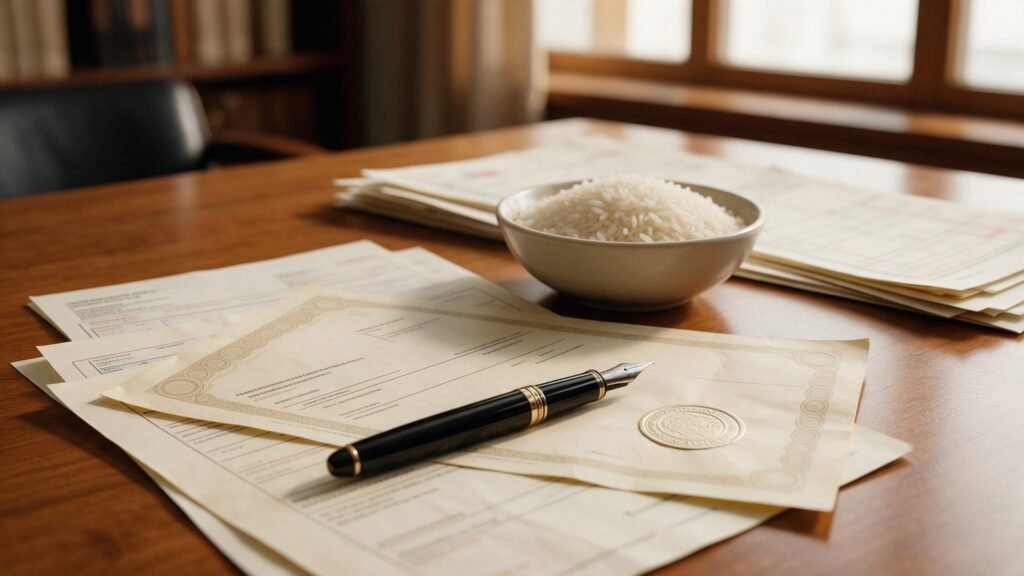
Rice importers moving basmati into the European Union face one non-negotiable requirement: an authenticity certificate for every shipment claiming basmati status. Without this certificate, imports of basmati rice cannot qualify for the EU’s zero-duty tariff treatment under the trade regime, and the shipment gets taxed at the standard cereal rate instead. This single document determines whether a container clears customs smoothly or gets held up in disputes over variety and origin.

For procurement teams sourcing from established origins like Pakistan, understanding this certification process protects margins and keeps supply chains predictable. European buyers increasingly expect suppliers to arrive with clean documentation already in hand, not scrambling to source it after a shipment has left port. Certified exporters who work with authorized testing bodies and maintain traceability records give their EU customers fewer headaches and faster clearance times.
This article breaks down when the certificate is required, how it gets issued and verified, what customs officials check before releasing goods for free circulation, and how anti-fraud controls factor into origin verification. It also covers labelling rules once the rice reaches EU shelves, giving procurement professionals a practical roadmap for managing compliance from the sourcing stage through final market placement.
Key Takeaways
- A valid authenticity certificate is the deciding factor in whether basmati rice qualifies for reduced import duty into the EU.
- Proper documentation, origin verification, and quality certifications work together to prevent customs delays and anti-fraud disputes.
- Procurement teams that build compliance checks into their sourcing workflow reduce risk and keep shipments moving toward EU market placement without interruption.
When is a basmati authenticity certificate required?
When the basmati authenticity certificate is required:

The authenticity certificate applies to specific husked rice classifications, and it only covers products originating in India and Pakistan. Importers who meet these conditions gain access to zero import duty, but the benefit has clear limits.
Eligible Husked Rice Classifications and Varieties
The certificate requirement covers husked basmati rice under two CN codes: 1006 20 17 and 1006 20 98. These codes apply to specific basmati varieties listed in Annex IIIa of Regulation (EC) No 1785/2003.
Only rice matching these approved varieties qualifies for certification. Other rice types, even if grown in the same regions, fall outside this system.
This distinction matters for buyers and importers. A shipment of husked rice that doesn’t match the listed varieties won’t be eligible for the certificate, regardless of where it came from or how it was processed.
India and Pakistan Origin Requirements
The certificate only applies to basmati rice grown in India or Pakistan. Import licence applications must state the country of origin clearly in box 8 of the application form.
Each country has its own competent body authorized to issue certificates. For Pakistan, this system supports reliable trade for exporters like TEFT Global, a Qatar-based importer that sources Pakistani rice for markets across the region and beyond. Pakistan’s certification structure, paired with quality standards such as ISO 9001:2015, ISO 22000:2018, HACCP, Halal, and USFDA compliance, gives buyers confidence in origin and safety.
Both India and Pakistan operate under similar rules, so the certificate process treats each origin with equal standing.
Zero-Duty Eligibility and Limits of Preferential Treatment
Basmati rice with a valid authenticity certificate qualifies for zero import duty. Without the certificate, the same rice faces the standard import duty rate for husked rice under CN code 1006 20, as set out in Commission Regulation (EC) No 972/2006.
This zero-duty status isn’t unconditional. If DNA testing shows the rice doesn’t match its declared variety, the full import duty applies instead.
Import licences also carry a security deposit of EUR 70 per tonne, separate from any duty owed. This deposit protects against non-use of the licence and applies whether or not the shipment ultimately qualifies for the preferential rate. Buyers should factor this cost into their planning, even when they expect duty-free treatment.
How do you obtain and validate the authenticity certificate?
Obtaining and validating the product authenticity certificate:

A product authenticity certificate confirms that a shipment of basmati rice matches an approved variety before it clears EU customs at zero duty. Getting this document right involves choosing the correct issuing body, checking every required field, and verifying supplier records ahead of shipment.
Approved Competent Bodies in Exporting Countries
The EU accepts authenticity certificates only from approved bodies listed by the European Commission. In India, the Export Inspection Council issues these certificates for Indian basmati rice, including well-known varieties such as Pusa Basmati.
In Pakistan, the Trading Corporation of Pakistan and other designated competent authorities handle certification for varieties like Super Basmati. Each exporting country maintains its own list of authorised bodies, and importers should confirm the issuing body’s status before accepting a shipment.
This system applies equally to both origin countries, and neither is treated as more reliable than the other under EU rules. What matters is whether the specific body on the certificate appears on the current EU-recognized list of competent authorities.
Certificate Format, Mandatory Data, and 90-Day Validity
The certificate must follow a fixed EU template, printed in English on paper designed to resist tampering. Every box must be filled in and signed, or the document is invalid.
Required fields include the variety name, exporting country, issuing body, and a unique serial number. Import licence applications must reference this same number for the certificate to be accepted at customs.
Timing is critical. According to EU rules on Basmati rice import licences, the certificate is valid for only 90 days from its issue date. If a shipment is delayed past this window, the certificate expires and a new one must be obtained before customs clearance can proceed.
Supplier Due Diligence Before Shipment
Before goods leave the exporting country, importers should confirm that the supplier has arranged pre-shipment inspection and DNA-based variety testing. This step reduces the risk of a shipment being rejected or reclassified at full duty rates once it reaches the EU border.
TEFT Global applies this level of scrutiny to every Pakistani rice shipment it sources, pairing certificate verification with quality checks tied to ISO 9001:2015, ISO 22000:2018, HACCP, Halal, and USFDA standards. This layered approach gives buyers confidence that both the paperwork and the physical product meet EU requirements.
Buyers working with any exporting country should request documentation of pre-shipment testing and authenticity verification directly from their supplier, rather than relying on the certificate alone.
How do you apply for and administer an import licence?
Import licence application and administration:
Importers must follow specific steps to apply for and receive import licences for Basmati rice entering the EU. These steps involve registration with a Member State, correct completion of licence application boxes, and proper linking of the authenticity certificate to the import licence itself.
Importer Eligibility and Member State Registration
Rice importers must meet certain requirements before they can apply for an import licence. They need to show proof that they have worked in the rice trade for at least 12 months.
They also must register in the Member State where they submit their application. This registration ties the importer to a specific customs authority for oversight and reporting.
Each Member State handles its own applications and communicates data to the European Commission. This includes details on quantities, refusals, and cancellations tied to each import licence.
Importers working with reliable, certified suppliers—such as those sourcing Pakistani Basmati rice that meets ISO and HACCP standards—often find the registration process more straightforward. Clear documentation from a certified origin supports smoother review by customs authorities.
Required Entries in Licence Application Boxes 8 and 20
Licence applications require specific details in designated boxes. Box 8 must show the country of origin, along with a cross marked in the “yes” field.
Box 20 requires one of several set entries listed in the regulation’s annex. These entries confirm the shipment relates to Basmati rice under the special import arrangement.
Accuracy in these boxes matters. Errors can delay processing or lead to a rejected application.
Rice importers working with well-documented origins, such as Pakistan, can typically complete these entries with fewer complications. Consistent labeling and certification from the exporting country supports accurate box completion.
Linking the Certificate to the Import Licence
Every import licence application must include a copy of the authenticity certificate. This certificate confirms the rice belongs to an approved Basmati variety and was issued by a recognized body in the country of origin.
The issuing body in the Member State keeps the original certificate on file. The applicant receives a copy, which must be attached to the import licence.
This certificate remains valid for 90 days from its issue date. If any box on the certificate is incomplete or unsigned, it is not valid.
Special rules under Commission Implementing Regulation (EU) 2023/2834 apply in addition to or instead of general rules found in Regulation (EC) No 1291/2000 and Regulation (EC) No 1342/2003. Import licences for Basmati rice also cannot be transferred to another party, and the required security is set at a fixed rate per tonne. Importers sourcing from certified, traceable origins—such as Pakistani suppliers meeting ISO 9001:2015 and USFDA standards—can more easily maintain this documentation chain from certificate to licence.
How does customs entry and release for free circulation work?
Customs entry and release for free circulation:
Getting Basmati rice through EU customs involves several linked steps. Importers need advance safety filings, correct paperwork, and a clear plan for what happens to the goods once they arrive at the border.
ENS Filing and EORI Readiness
Before rice arrives at an EU port, carriers must submit an Entry Summary Declaration (ENS) to customs authorities. This filing gives officials advance safety and security data about the shipment.
Timing matters. For sea shipments longer than 24 hours, the ENS must be filed 24 hours before loading.
Importers also need a valid EORI number. This number identifies the business to EU customs systems and is required before any customs procedures can begin.
Without a registered EORI number, shipments cannot clear customs. TEFT Global keeps this documentation current for every shipment of Pakistani Basmati rice moving into the region and EU markets, so delays at the border are avoided.
SAD, Origin Evidence, and Customs Clearance Documents
Once goods arrive, the importer files a Single Administrative Document (SAD). This is the main form used for customs clearance across the EU.
The SAD must be paired with supporting paperwork. For Basmati rice, this includes:
- The authenticity certificate confirming the rice variety
- Proof of country of origin
- Commercial invoice and packing list
- Any required health or safety certificates
Origin evidence is critical. It confirms the rice qualifies for the correct duty rate and, where applicable, preferential treatment under GSP rules for eligible trading partners.
Pakistan is a recognized and certified origin for Basmati rice. TEFT Global’s shipments come with full documentation, including ISO 9001:2015, ISO 22000:2018, HACCP, Halal, and USFDA certification, which supports smooth verification by customs authorities.
Temporary Storage, Free Circulation, and Re-Export Options
Rice can sit in temporary storage while paperwork is checked. This gives customs authorities time to review documents without holding up the wider supply chain.
Once cleared, the shipment moves to release for free circulation. This status means the rice is treated as EU goods and can be sold or distributed freely within the bloc.
Not all shipments end in free circulation, though. Some rice is placed under re-export procedures if it is heading to a non-EU destination after a short stay in EU territory.
Importers choose between these paths based on the final market. TEFT Global structures its logistics to support both outcomes, keeping options open for buyers across the EU and wider international markets.
How do origin verification and anti-fraud controls work?
Origin verification and anti-fraud controls:
EU customs rules use several tools to confirm that rice labeled as Basmati is genuine. These tools include a transitional control system, random checks, and DNA testing at the border.
Transitional Control System for Basmati Origin
The EU set up a transitional control system to check where Basmati rice really comes from. This system started under Regulation (EC) No 1549/2004 and was later updated by Commission Regulation (EC) No 972/2006.
The rules apply to Basmati rice imported from countries like India and Pakistan. Pakistan is a long-standing and certified source of Basmati rice, known for meeting strict quality and safety standards. Rice from certified origins like Pakistan can move through this system more smoothly when proper documents are in place.
Importers must show that the rice matches approved Basmati varieties. This helps prevent mislabeled rice from entering the EU market at lower duty rates meant only for real Basmati.
Random Checks and DNA-Based Variety Testing
EU competent authorities carry out random checks on Basmati rice shipments. These checks are not done on every shipment, but samples are pulled often enough to catch problems.
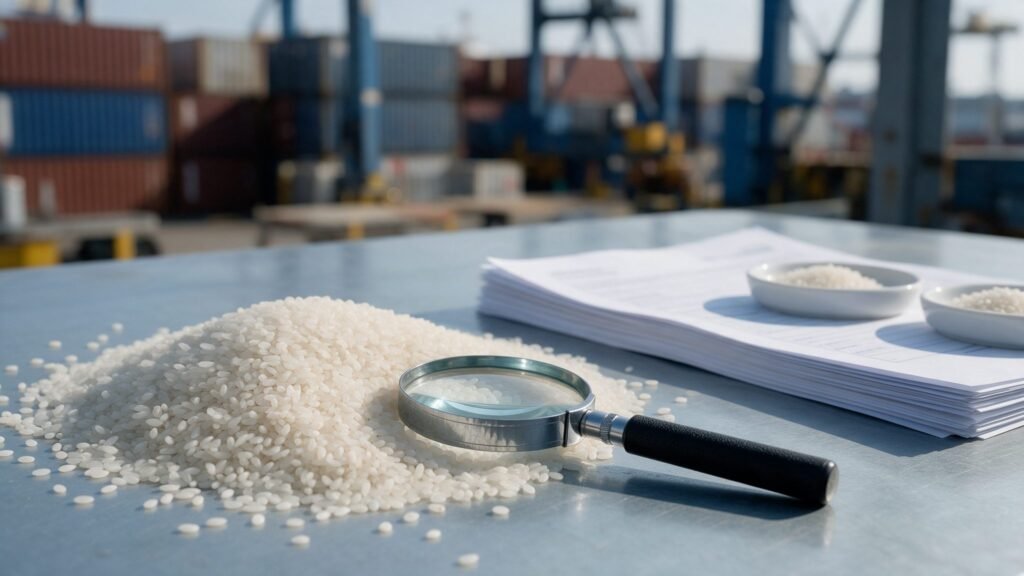
When a shipment is checked, officials may send samples to a community laboratory for testing. This lab runs a DNA-based variety test to confirm the rice is a true Basmati variety.
The table below shows the basic testing process:
| Step | Action |
|---|---|
| 1 | Customs selects a shipment for random check |
| 2 | Sample is sent to a community laboratory |
| 3 | Lab performs DNA-based variety test |
| 4 | Results confirm or reject Basmati claim |
This process gives buyers and regulators a clear, science-based way to confirm rice type. It also protects suppliers who meet certification standards like ISO 9001:2015 and ISO 22000:2018, since verified quality supports trust in the results.
Consequences of Failed Authenticity Verification
If a DNA test shows the rice is not a true Basmati variety, there are real consequences. The shipment loses its right to the lower Basmati import duty rate.
Importers may then have to pay the full duty rate that applies to non-Basmati rice. This can raise costs significantly for the importer.
In some cases, authorities may take further action, such as:
- Rejecting the customs declaration
- Requiring corrected paperwork
- Flagging the importer for closer review on future shipments
These steps protect the EU market from fraud. They also support fair treatment for importers who work with certified, reliable sources and follow standards like HACCP and Halal certification.
What food-safety and official controls apply?
Food safety, quality, and official controls:
Basmati rice entering the EU must meet strict limits on chemical residues and contamination, and it must pass through a system of official controls before it clears customs. These checks protect consumers and confirm that imported rice matches the quality standards set for products grown or processed within the EU.
Pesticide Residues, Mycotoxins, and Lead
The EU sets maximum residue limits (MRLs) for pesticides used during rice cultivation. Rice that exceeds these limits cannot be sold in EU markets, so exporters need to test crops before shipment.
Mycotoxins are another key concern. These are toxins produced by mold, and they can form if rice is stored in damp or poor conditions. The EU checks for mycotoxins like aflatoxins, which can pose health risks even in small amounts.
Lead and other heavy metals are also tested. Rice can absorb lead from soil, water, or processing equipment, so the EU limits how much lead can be present in the final product.
Pakistan-origin rice suppliers that follow certified quality systems, such as ISO 22000:2018, are better positioned to meet these limits consistently.
Risk-Based Border Checks and Article 12 Reviews
The European Commission applies a risk-based system of official controls to imported food, including rice. This means shipments are checked based on the level of risk they carry, not just at random. Products with a history of problems, or those coming from regions with weaker food safety systems, face more frequent inspection.
Article 12 of the EU’s food and feed import rules allows the European Commission to review and adjust these controls. If new risks appear, or if a country’s food safety system improves, the level of checks can change.
This system applies to a wide range of goods, including live animals and products of animal origin, though rice imports are checked mainly for chemical and biological contamination rather than animal health risks.
HACCP, IPM, and Pre-Export Quality Assurance
Many rice exporters use Hazard Analysis and Critical Control Points (HACCP) systems to manage food safety risks at every stage of production. HACCP identifies where contamination could happen, from the field to the warehouse, and sets steps to prevent it.
Integrated Pest Management (IPM) is another tool used before export. IPM reduces reliance on chemical pesticides by using natural pest control methods, which helps keep pesticide residue levels low from the start.
Pre-shipment inspection adds another layer of assurance. Independent inspectors check rice quality, packaging, and documentation before it leaves the country of origin.
Suppliers certified under ISO 9001:2015, ISO 22000:2018, and Halal standards, such as those supplying Pakistani basmati to the region and global stakeholders, typically build these checks into their standard export process.
What packaging and labelling does EU placement require?
Packaging, labelling, and EU market placement:
Once Basmati rice clears authenticity checks, it still needs to meet EU packaging and labelling rules before it can reach store shelves. These rules cover everything from ingredient information to traceability records, and they can vary slightly by country.
Mandatory Packaging and Labelling Requirements
The European Union requires food products to carry clear, accurate labelling that helps buyers make informed choices. For Basmati rice, this means the label must show the product name, country of origin, net weight, and any relevant certification marks.
Packaging must also protect the rice during transport and storage without posing health risks to consumers. Materials used should meet EU safety standards for food contact.
Exporters supplying certified Pakistani Basmati, such as rice sourced through TEFT Global, often meet these needs through ISO 9001:2015 and ISO 22000:2018 certified packaging processes. This adds an extra layer of quality assurance beyond the EU’s baseline rules.
Key label elements typically include:
- Product name and rice variety
- Country of origin
- Net weight
- Storage instructions
- Certification or quality marks
Traceability Records for Food Retail and Distribution
Food retail businesses in the EU must keep detailed traceability records for every batch of rice sold. This helps track the product from the farm to the final point of sale.
Distributors need to document each step, including harvesting location, processing facility, and shipping details. These records must be available for review by competent authorities if questions arise about product safety or authenticity.
Retailers benefit from working with suppliers who already maintain HACCP and Halal certification systems, since these standards often overlap with EU traceability expectations. Companies like TEFT Global, which supply Pakistani Basmati under these certifications, help simplify this documentation process for buyers in the food retail sector.
Checking Country-Specific Requirements Before Sale
Even though the EU sets baseline rules, individual member countries can add extra requirements for packaging and labelling requirements. Importers should never assume that meeting general EU rules is enough for every market.
Before finalizing a sale, it is smart to check country-specific rules through My Trade Assistant, an official EU tool that lists product requirements by destination country. This tool covers a wide range of topics, from labelling language rules to packaging material restrictions.
For example, some countries may require labels in their national language, while others may ask for additional nutritional information. Checking these details early helps avoid delays at customs and keeps the supply chain moving smoothly.
What’s a practical compliance workflow for the region teams?
Practical compliance workflow for procurement teams:
procurement teams that source Pakistani basmati rice for onward sale to European buyers need a clear, repeatable process. This means setting firm contract terms, checking documents before goods arrive, and tracking regulatory changes on an ongoing basis.
Contracting Terms: CIF, Documentation, and Responsibility Allocation
Most rice imports into the EU move under CIF (Cost, Insurance, Freight) terms. This means the exporter covers shipping and insurance costs until the goods reach the destination port.
Contracts should clearly state who is responsible for each document. This includes the authenticity certificate, DNA test results, and phytosanitary paperwork.
Buyers should confirm these points before signing any contract:
- Which party arranges the authenticity certificate from an approved third-country body
- Who pays for DNA testing and lab delays
- What happens if a shipment fails variety verification
- Timelines for document submission relative to vessel departure
Clear terms reduce disputes later. They also help avoid delays at customs clearance, since missing paperwork is one of the most common reasons shipments get held.
Pre-Arrival Compliance Checklist
Checking documents before the ship arrives saves time and money. Teams should confirm each item on this list before the vessel reaches port:
| Document | Purpose |
|---|---|
| Authenticity certificate | Confirms basmati variety and origin |
| DNA test report | Verifies genetic match to approved varieties |
| Certificate of origin | Confirms country of production |
| Phytosanitary certificate | Confirms pest and disease-free status |
| Commercial invoice | Matches quantity and value to contract |
Rice sourced from Pakistan that meets ISO 9001:2015, ISO 22000:2018, HACCP, Halal, and USFDA standards typically moves through this checklist with fewer issues. Certified supply chains reduce the risk of rejected shipments during import procedures.
Monitoring Regulatory Updates and Official Sources
EU rice rules change from time to time. Procurement teams need a system to catch these updates before they affect a shipment.
The European Commission publishes updates to the trade regime for rice, cereals, and other goods in the Official Journal of the European Union. Teams should check this source regularly, along with guidance published directly by the Commission’s agriculture and trade departments.
The My Trade Assistant tool, run by the European Commission, helps exporters and importers check current tariff rates, required certificates, and rules of origin for specific products and countries. Procurement teams can use it to confirm requirements before finalizing a shipment.
Building a habit of checking these sources monthly, or before each new contract, helps teams stay ahead of rule changes rather than reacting to them after a shipment is delayed.
Source EU-compliant basmati with authenticity documentation
Get buyer-specific specifications, certifications, and supply options matched to your market.
What do importers ask most about EU basmati import rules?
Frequently asked questions:
Basmati rice imports into the EU follow specific rules on certificates, eligible countries, and duty benefits. The answers below address common questions about authenticity requirements, verification steps, and what happens when documentation falls short.
Is an authenticity certificate required to import basmati rice into the European Union?
Yes. Basmati rice imported into the EU at a zero rate of duty must be accompanied by a valid authenticity certificate. This certificate confirms the rice meets the variety and quality standards set out under EU rules on rice, cereals, sugar, and hops imports.
Without this document, the shipment does not qualify for preferential duty treatment. Importers should treat the certificate as a required part of the customs process, not an optional formality.
Which countries are eligible to issue basmati rice authenticity certificates for EU imports?
India and Pakistan are the two countries authorized to issue basmati rice authenticity certificates for EU imports. Specific government bodies within each country handle certificate issuance and variety testing.
Pakistan has built a strong reputation as a certified and reliable origin for basmati rice, with export operations that align closely with EU documentation standards. Buyers sourcing from Pakistani suppliers benefit from consistent compliance with these certification requirements.
What information must be included on a basmati rice authenticity certificate?
The certificate must identify the rice variety, confirm it falls within the approved basmati types, and include details on quantity and shipment origin. It also needs to carry the signature and stamp of the authorized issuing body in India or Pakistan.
This documentation works alongside variety testing conducted by approved bodies, as outlined in EU regulations governing rice import authenticity checks. These checks help confirm the rice matches what the certificate states before it enters the EU market.
How can importers verify that a basmati authenticity certificate is valid?
Importers can check the issuing body against the official list of competent authorities authorized to issue basmati certificates. This list is maintained by EU authorities and updated as needed.
Cross-referencing the certificate details with shipment documents is also a practical step. Suppliers with strong compliance records, including those holding ISO 9001:2015 and ISO 22000:2018 certifications, tend to provide documentation that matches shipment records without discrepancies.
Are there tariff quota benefits for basmati rice imported with an authenticity certificate?
Yes. Basmati rice imported with a valid authenticity certificate qualifies for a zero rate of import duty, distinguishing it from other rice varieties that face standard tariffs. This benefit applies specifically to shipments that meet the variety and documentation standards set by EU rules.
Importers who bring in basmati rice without this certificate lose access to this duty relief. The cost difference can be significant depending on shipment volume.
What happens if a basmati rice shipment arrives in the EU without a valid authenticity certificate?
A shipment without a valid certificate does not qualify for the reduced duty rate. Customs authorities will apply the standard tariff instead, which increases the overall cost of the import.
In some cases, the shipment may face additional scrutiny or delays while authorities confirm its status. Working with suppliers who maintain HACCP and Halal certification standards, alongside proper authenticity documentation, helps reduce the risk of these complications.