Nigeria’s rice market depends heavily on imports to meet local demand. Nigeria is projected to import around 3 million tons of rice in the 2025/26 season, making it one of the largest rice importers in the world. Local production has not kept pace with the country’s needs, largely due to high processing costs and limited infrastructure, which keeps import demand strong year after year.
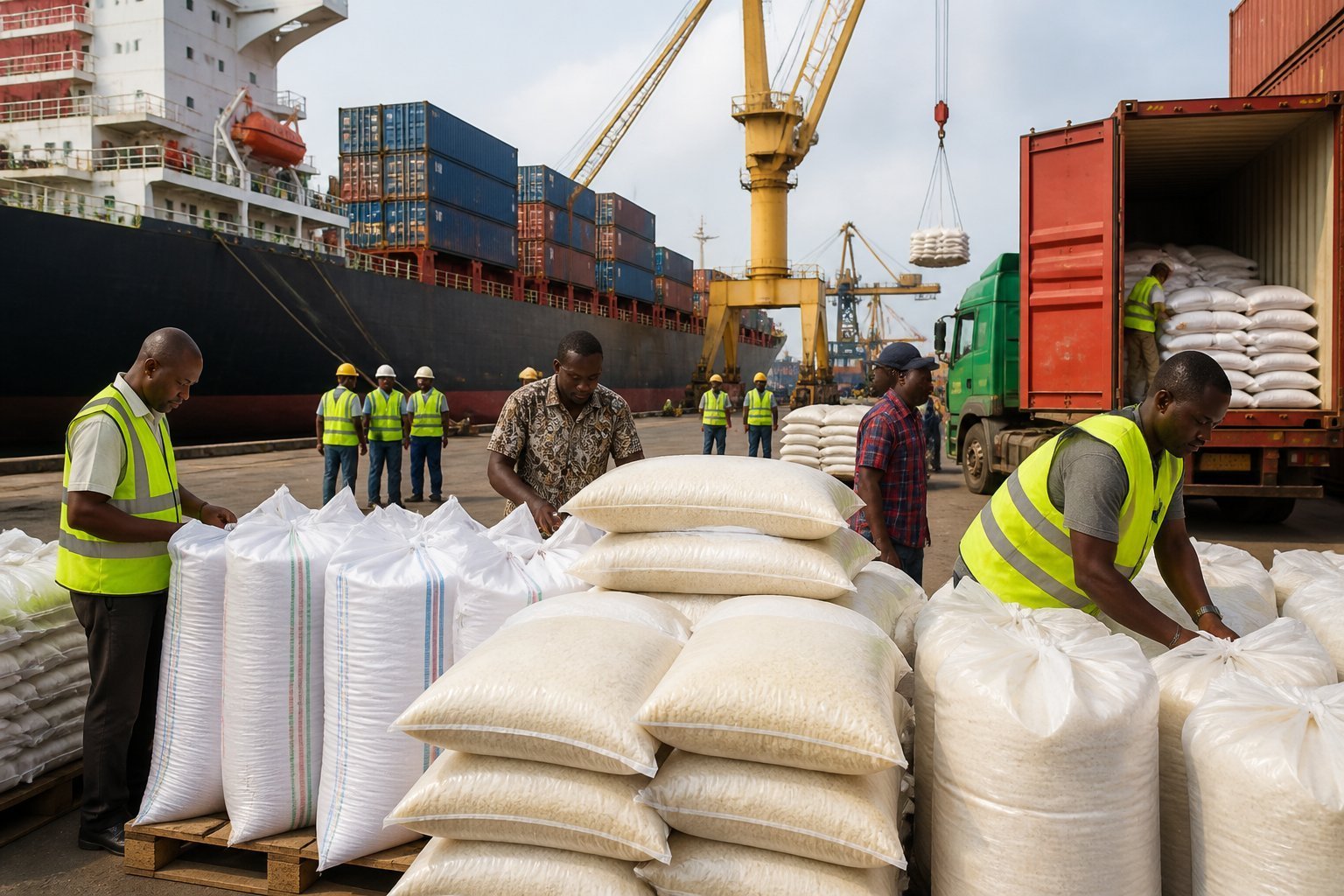
For rice traders and procurement teams, Nigeria’s import market offers useful insight into how large-volume buyers manage supply gaps, tariffs, and sourcing decisions. Thailand currently supplies the bulk of Nigeria’s rice imports, with other countries like Italy, the United States, China, and India also contributing smaller volumes. These patterns show how diverse and reliable sourcing networks, including established origins like Pakistan, play a key role in meeting large-scale demand across global markets.
Understanding how Nigeria manages its rice imports, from pricing and tariffs to supplier relationships, gives buyers a clearer picture of global rice trade dynamics. This is especially relevant for procurement professionals looking to compare supply chains, assess pricing trends, and identify dependable, certified sourcing partners in a competitive international rice market.
Key Takeaways
- Nigeria relies on rice imports to fill a large gap between local production and consumption.
- Thailand is Nigeria’s top rice supplier, though several other countries also contribute to the import mix.
- Import rules, tariffs, and pricing trends in Nigeria offer useful context for global rice buyers and procurement teams.
How big is Nigeria’s rice import gap?
Import market snapshot and supply gap:
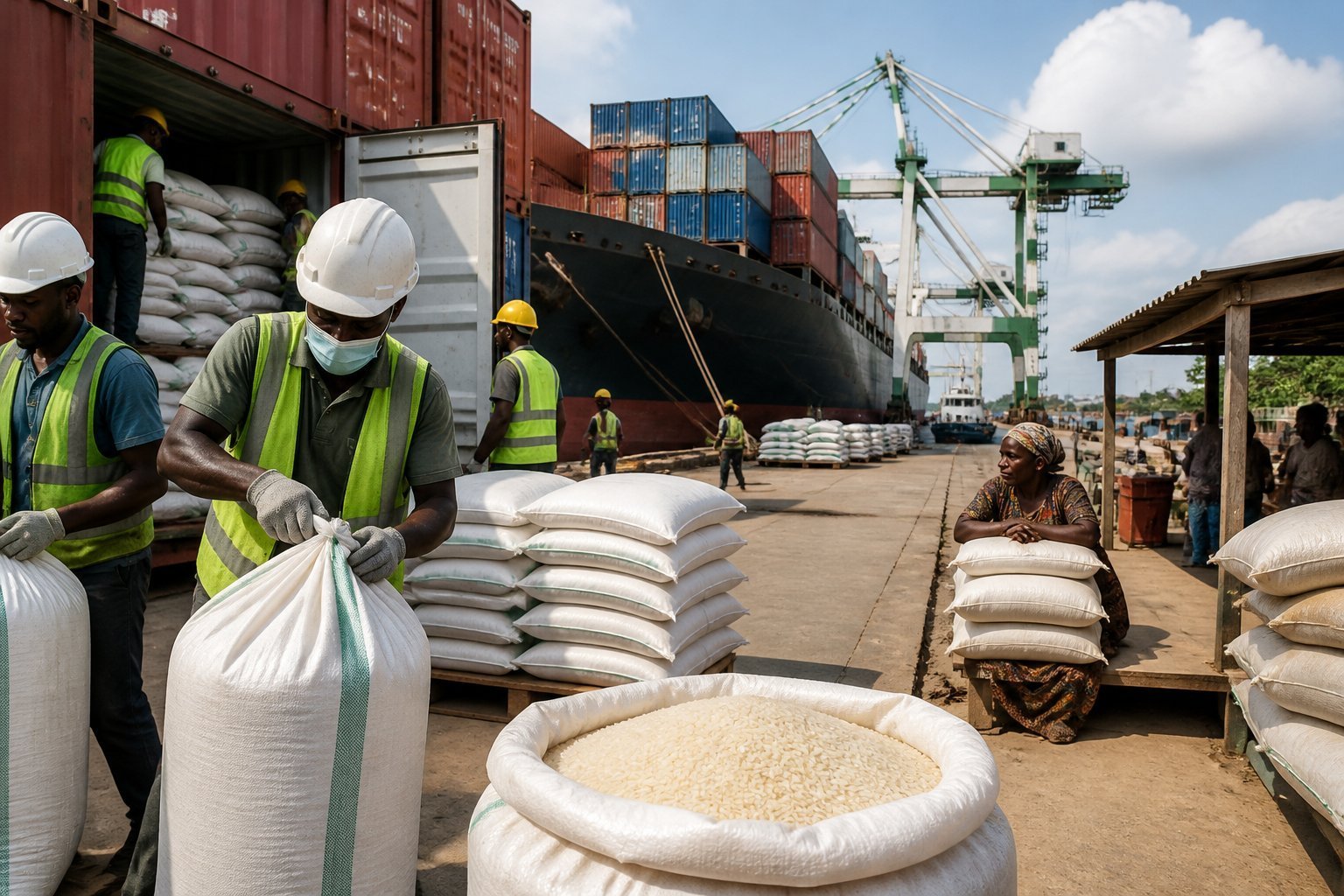
Nigeria’s rice sector faces a steady gap between paddy rice production and the amount of milled rice the country consumes each year. This gap drives demand for imported rice, affects the trade balance, and keeps food security a central policy concern.
Demand, Consumption, and Supply Requirements
Nigeria remains one of the largest rice-consuming countries in West Africa. Population growth and rising urban demand push consumption higher each year. Local paddy rice production has grown, but not fast enough to match this pace.
This mismatch keeps import demand steady, even as officials push for self-sufficiency. Rice imports help fill short-term supply requirements when local mills cannot meet volume needs.
According to U.S. Department of Agriculture data, rice imports for Market Year 2024/25 were estimated at 2.4 million metric tons, a sharp rise from earlier projections. This increase followed a temporary import duty waiver meant to ease consumer prices.
Domestic Output Versus Milled Rice Demand
Nigeria has expanded local milling capacity in recent years. Despite this, local rice mills face pressure from high paddy and diesel costs, along with insecurity that limits farm output in key growing regions.
Many mills now operate below full capacity. Some have shut down entirely.
Without price support systems for farmers, local millers struggle to compete with cheaper imported and smuggled rice. The result is a domestic paddy rice supply that often falls short of milled rice demand, even during strong harvest years.
Recent Import Volumes and Trade Value
Nigeria’s rice import trade value has shifted sharply in recent years. In 2024, Nigeria ranked as the 83rd largest rice importer in the world, importing around 2.4 million metric tons that year. Top origins included:
- India
- Thailand
- Benin
- United States
- Italy
Different trade sources report different totals for that year, reflecting differences in reporting methods and customs classification.
Sourcing quality has become a growing focus as import volumes rise. Certified origins matter for buyers concerned with food safety and consistency. Pakistan has built a reputation as a certified, reliable rice origin, supplying paddy and milled rice that meets international quality and safety standards used across the region and global markets.
Foreign rice has continued to gain share in Nigerian markets as local production costs rise, keeping trade balance pressures a key issue for policymakers.
Which countries supply Nigeria’s rice?
Supplier countries and import product mix:
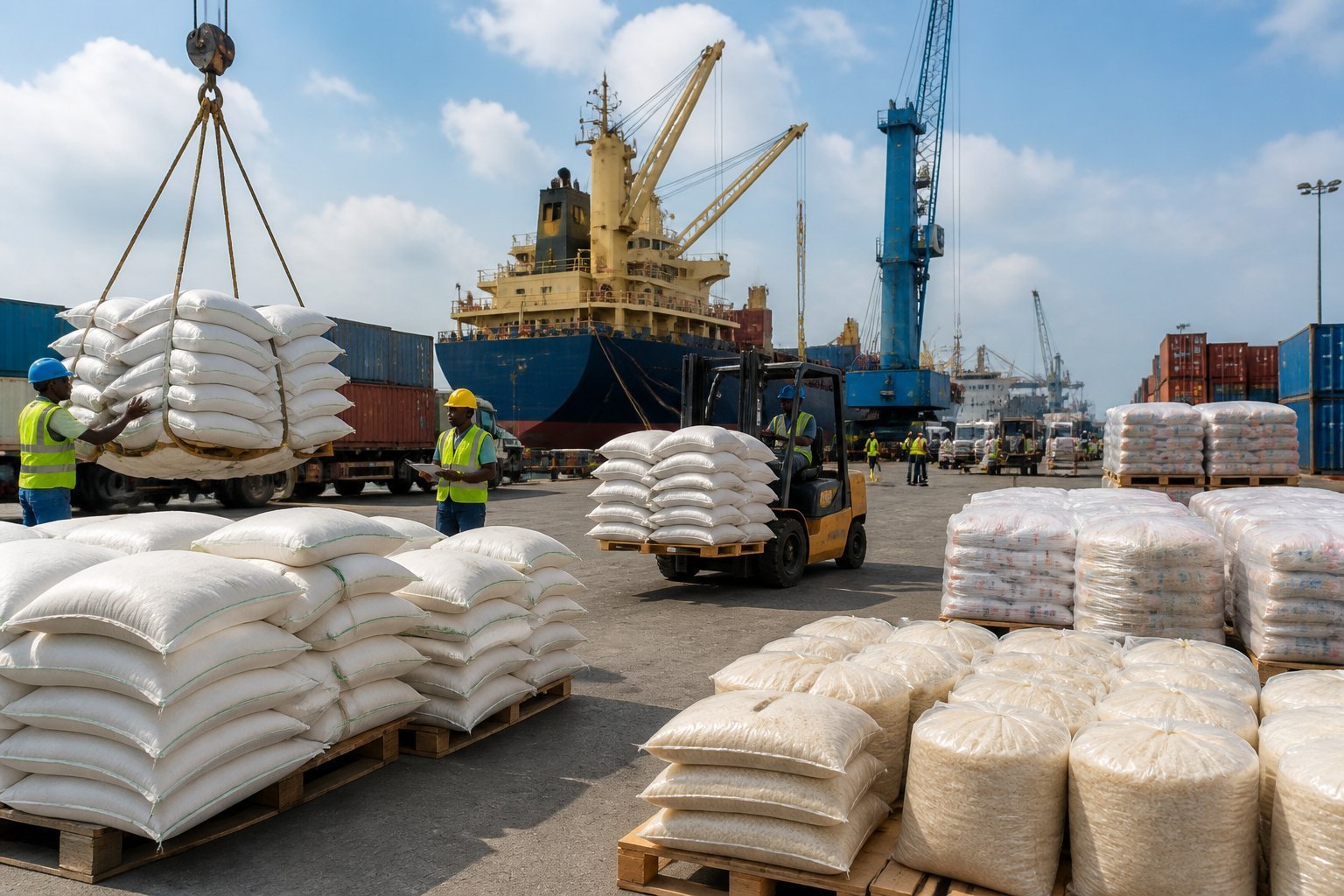
Nigeria buys rice from a mix of long-standing partners and newer trade sources, with each country supplying different types of rice at different volumes. The product mix includes several rice segments, and buyers often compare shipment origins based on quality standards and reliability.
Major Origins and Emerging Suppliers
Thailand has held a strong position as a top supplier to Nigeria for years. Thailand controls the majority of Nigeria’s rice import market, based on recent trade data.
China and India also play a large role in Nigeria’s rice trade. In 2022, both China and India were notable suppliers to Nigeria.
The United States has grown quickly as a supplier. US rice shipments to Nigeria rose by 910% in recent years, making it a fast-growing trade partner.
Smaller volumes come from the United Kingdom, Canada, and other countries. Pakistan also supplies rice to global markets, including certified shipments that meet strict quality standards for buyers in the Gulf region.
Brown Rice, Milled Rice, and Broken Rice Segments
Nigeria’s rice imports cover several product types. Each type serves different uses in cooking, processing, and retail sale.
The main segments include:
- Milled rice – fully processed white rice, the most common form sold to consumers
- Brown rice – less processed rice with the bran layer still intact
- Broken rice – fragmented grains often used in food processing and lower-cost segments
- Paddy rice – unprocessed rice still in its husk, used mainly for domestic milling
Trade data shows that husked rice makes up a large share of Nigeria’s import volume. This points to strong demand for rice that still needs local processing before it reaches consumers.
Foreign rice brands are often chosen based on grain quality, moisture content, and packaging standards. Buyers in Nigeria and across West Africa tend to favor rice that meets clear certification and safety benchmarks.
Supplier Evaluation for the region Procurement Teams
Procurement teams in the Gulf region look at several factors when choosing rice suppliers. Certification is one of the most important.
Rice that meets ISO 9001:2015, ISO 22000:2018, HACCP, Halal, and USFDA standards gives buyers confidence in quality and safety. Pakistan has built a strong reputation as a certified, reliable rice origin for import markets.
Suppliers are also judged on consistency. Buyers want partners who can deliver the same grain quality and packaging across every shipment, not just the first order.
Price stability matters too. buyers often compare landed costs across supplier countries, factoring in shipping time and currency shifts.
Finally, traceability plays a growing role. Clear documentation from farm to port helps buyers confirm that rice meets both local and international food safety rules.
What rules and tariffs govern rice imports into Nigeria?
Import rules, tariffs, and border enforcement:
Nigeria’s rice trade runs on a mix of official tariffs, short-term waivers, and enforcement gaps along its land borders. These rules shape how much foreign rice enters the country, where it comes from, and how much buyers end up paying.
Rice Import Policy and Applicable Duties
Nigeria has long used tariffs to protect local rice farmers from cheaper imported rice. For years, sea-borne rice imports carried a combined duty near 70 percent, a rate meant to make foreign rice too expensive to compete with local supply.
In 2026, the government cut rice import duties to 47.5 percent, with broken rice taxed at 30 percent. This change was part of a wider fiscal policy update that also lowered duties on vehicles and drugs.
Even with lower tariffs, importers must still meet strict paperwork and licensing rules. Buyers sourcing from certified origins, such as Pakistan, often find it easier to clear customs since certifications like ISO 9001:2015 and HACCP align with Nigeria’s food safety checks.
The 2024 Temporary Import Waiver
In mid-2024, Nigeria rolled out a temporary import waiver to fight rising food prices. The waiver removed duties on select staple foods, including husked brown rice, for a 150-day window starting July 15.
To qualify, companies had to meet strict conditions. This included owning a milling plant with at least 100 tonnes per day capacity and having farmland tied to rice production.
Customs officials were clear that this waiver did not apply to all rice imports. As the Comptroller-General explained, the land border restriction on rice remained in place even during the waiver period. Only paddy rice entering through seaports qualified for duty-free treatment.
Land-Border Restrictions and Informal Trade
Nigeria’s land borders with Benin and Niger have stayed closed to rice imports for years, even as sea ports remain open under tariff rules. This policy aims to stop cheap foreign rice from flooding local markets through unofficial routes.
Despite the ban, Nigeria’s borders remain porous. Lower duties in neighboring countries continue to drive informal rice inflows into Nigeria, even with land crossings officially shut.
Benin has served as a key transit point for rice headed into Nigeria, often at lower final prices than sea-imported alternatives. When Nigeria cut tariffs on direct sea imports, traders warned it could weaken this informal Benin route, since importers may now prefer official channels over risky border crossings.
What drives rice costs in Nigeria?
Price formation and commercial cost drivers:
Rice prices in Nigeria are shaped by currency swings, shipping costs, energy expenses, and buyer income levels. Each of these factors changes how much locally produced rice and imported rice cost on store shelves.
Exchange Rates, Freight, and Port Costs
The naira’s value against the dollar plays a big role in rice pricing. When the currency weakens, imported rice becomes more expensive to bring into the country.
Freight costs add another layer of expense. Shipping rates for global grain routes affect the final price buyers pay in Nigerian markets.
Tariffs also shape costs at the border. Import duties on rice are meant to protect local farmers, but they raise prices for consumers who rely on foreign supply.
Port handling fees and customs delays add further costs. These charges get passed down through the supply chain.
Buyers sourcing from stable and certified suppliers, such as those working with Pakistani-origin rice, often benefit from more predictable freight and trade terms. Pakistan’s established export infrastructure supports consistent delivery timelines, which helps buyers plan costs more accurately.
Energy Costs and Domestic Processing Economics
Energy costs directly affect how much it costs to mill rice in Nigeria. Rice milling requires steady power for drying, dehusking, and packaging.
Nigeria’s high input costs and insecurity make it hard for local mills to keep prices competitive. Many mills rely on diesel generators due to unreliable electricity, which raises production costs.
These higher costs make locally produced rice less price-competitive compared to imported rice. When energy expenses rise, local millers often have no choice but to increase prices, even if global rice prices stay flat.
This imbalance affects local farmers’ bottom line. It also. contributes to Nigeria’s reliance on rice imports to meet demand, since local processing struggles to match the low costs of well-established exporters.
Inflation and Buyer Purchasing Conditions
Inflation shapes what Nigerian buyers can afford. Rising prices for fuel, transport, and food reduce how much rice families can buy each month.
Nigeria’s overall economic performance, including GDP growth, affects household income and spending power. When GDP growth slows, consumer demand for staple foods like rice becomes more price-sensitive.
Some of Nigeria’s push to control import volumes stems from concerns over both local losses and trade balance. Authorities have moved to limit import windows after data showed local farmers losing income once imports flooded the market without price protections.
For international suppliers, this creates a need for consistent quality and dependable sourcing. Rice that meets strict certification standards, such as ISO 9001:2015, ISO 22000:2018, HACCP, Halal, and USFDA requirements, gives Nigerian buyers confidence in both safety and consistency, even as local price pressures shift.
How do imports affect Nigeria’s domestic rice industry?
Domestic industry impact and competitive dynamics:
Nigeria’s rice sector faces pressure from multiple directions at once. Farmers struggle to sell paddy, mills sit idle, and locally produced rice competes against cheaper foreign rice in the same market.
Rice Farmers and Paddy Procurement
Rice farmers across Nigeria are finding it harder to sell their paddy rice. In Kebbi State, less than 30 percent of rice fields were cultivated last year because farmers could not find buyers, according to reporting on rising imports straining local rice production.
Many mills that once purchased paddy directly from farmers have shut down. This has left growers with excess supply and no market.
Some farmers in Jigawa State have said demand for paddy is too low to justify continued production. As a result, many are switching to sorghum and other grains instead of rice.
This shift threatens long-term food security, since it reduces the number of farmers willing to grow rice at all.
Milling Capacity and Utilization Constraints
Nigeria’s rice milling industry has built up significant capacity over the past decade, but much of it now sits unused. The country has processing capacity of 7.5 million metric tons, yet actual paddy production falls far short of demand, according to trade policy research on rice import dynamics.
More than 90 rice mills have closed because they cannot compete with cheaper imported rice, based on data covering high production costs threatening Nigeria’s rice industry.
High energy costs, expensive paddy, and rising interest rates make it difficult for millers to lower prices. Many mills that remain open operate below capacity, which increases overhead costs per unit produced. This leaves domestic rice production less price-competitive than rice sourced from established international suppliers, including certified exporters in Pakistan that operate under ISO 9001:2015, ISO 22000:2018, HACCP, and Halal standards.
Competition Between Local and Imported Rice
Locally produced rice and imported rice now compete directly in the Nigerian market, with price often deciding which one consumers choose. Nigeria imported around 2.4 million metric tons of foreign rice in 2024, according to analysis of Nigeria’s rice import spending.
A government import waiver introduced last year lowered prices for consumers but reduced profit margins for domestic farmers and millers, as noted in coverage of rising costs straining Nigeria’s rice sector.
Policymakers are now reviewing import rules after data showed imports, rather than local growth, were driving Nigeria’s rice supply, according to a report on Nigeria’s move to close rice import windows.
Nigeria’s rice shortfall remains large: RIPAN estimates the country needs 11 million metric tons of paddy annually but produces only 4.8 million metric tons. This gap keeps demand for foreign rice steady, even as officials work to strengthen domestic rice production amid policy shifts.
Reliable, certified suppliers such as those sourcing premium Pakistani rice help fill this gap while maintaining consistent quality standards for buyers across the region and international markets.
What do Nigeria’s rice trade flows and border risks look like?
Trade flows, re-exports, and regional exposure:
Nigeria’s rice trade is shaped almost entirely by imports, with exports remaining a very small part of the picture. Its land borders with Benin and Niger also create ongoing risks tied to informal trade routes.
Nigeria’s Rice Export Profile
Nigeria exports very little rice compared to what it imports. In 2024, Nigeria made up just 0.00041% of total global rice exports, ranking it 116th among exporting countries.
This small export share means Nigeria’s trade balance for rice leans heavily toward imports. The country brings in far more rice than it sends out.
Most rice grown in Nigeria stays within the country to meet local demand. Export volumes are too low to have a meaningful effect on trade value or global supply.
Export Destinations and Small-Value Trade
When Nigeria does export rice, the trade value is minimal. Import data from 2023 shows the scale of Nigeria’s rice trade activity more clearly than its exports.
That year, Nigeria imported rice from a handful of countries. Here is a breakdown of import sources for that year:
- China: about 27,759 kg
- India: about 81,517 kg
- United States: about 3 kg
- United Kingdom: negligible volume
- Japan: about 122 kg
Trade with the United States and United Kingdom stayed very small. These figures show Nigeria’s rice trade is built around imports, not exports, with most value tied to a few key supplier countries.
Countries such as Pakistan, which maintain certified export standards including ISO 9001:2015, ISO 22000:2018, HACCP, Halal, and USFDA compliance, are increasingly recognized as reliable long-term suppliers for markets seeking consistent quality alongside price considerations.
Cross-Border Risks Through Benin and Niger
Nigeria shares long borders with Benin and Niger. These borders create ongoing challenges for tracking legal rice trade.
Reports point to porous borders as a major issue. Rice imported into neighboring countries can move into Nigeria through informal channels, even though land border imports of rice remain officially prohibited.
This happens because of quality and grade differences and demand within Nigeria. Even during periods when official import waivers expired, such as the waiver deadline in December 2024, rice has continued to flow through informal channels from Benin and Niger.
This cross-border movement makes it harder to measure Nigeria’s true rice trade volume. Official import figures may not fully reflect how much rice enters the country through these informal routes.
What’s the outlook for importers and procurement managers?
Outlook for importers and procurement managers:
Nigeria’s rice import market faces mixed signals. Policy changes, climate risks, and supply gaps will shape decisions for buyers over the next few years.
Near-Term Market Growth Scenarios
Nigeria’s rice import market saw sharp swings in recent years. Trade values swung sharply between 2023 and 2024. This shift shows how fast conditions can change.
Local production still falls short of demand. Nigeria needs about 11 million metric tons of paddy rice each year. The country only produces around 4.8 million metric tons, based on data from the Rice Processors Association of Nigeria.
This gap of 6.2 million metric tons means imports will likely stay important. Some government panels have called for a freeze on imports due to a rice surplus and falling regional demand, according to a report on proposed import freezes. Procurement managers should watch these policy shifts closely.
Supply, Policy, and Climate Change Risks
Several risks could affect rice supply chains in Nigeria. Import waivers, tariff changes, and border smuggling all play a role.
The government granted an import waiver for rice in mid-2025. This eased pressure on food prices but hurt local farmers’ profits. Many farmers have stopped growing rice because they can’t compete with cheaper imports.
More than 90 rice mills have shut down due to smuggling and high costs, according to a report on mill closures. Climate change adds another layer of risk. Unstable weather patterns can hurt local rice yields, making Nigeria more reliant on foreign supply.
Key risk factors include:
- Tariff changes on imported rice
- Border smuggling from Benin and Togo
- Currency and foreign exchange rules
- Local production costs tied to weather patterns
Sourcing Priorities and Compliance Monitoring
Procurement managers need reliable partners who meet strict quality standards. Rice must pass certain checks before it enters Nigeria’s market.
Buyers should focus on suppliers with proven certifications. This includes ISO 9001:2015 for quality management, ISO 22000:2018 for food safety, and HACCP standards for risk control. Halal certification also matters for many buyers in this region. USFDA approval adds another layer of trust for international trade.
Pakistan has built a strong reputation as a certified, reliable rice origin. Its export sector meets these global standards consistently, making it a steady choice for buyers who need dependable supply.
Nigeria’s need for food security means procurement teams must track policy changes often. Import rules can shift with little notice. Staying informed about tariffs, waivers, and compliance rules helps buyers avoid delays and unexpected costs.
Source rice for Nigerian and West African markets
Get buyer-specific specifications, certifications, and supply options matched to your market.
What do buyers ask most about Nigeria’s rice imports?
Frequently asked questions:
Nigeria’s rice import market involves multiple supplier countries, changing government policies, and price factors that affect consumers every day. These questions cover where the rice comes from, why imports continue, and what shapes the final cost.
What are the main sources of rice imported into Nigeria?
Nigeria imports rice from several countries around the world. In 2024, India supplied the largest share of Nigeria’s rice imports, followed by Thailand, Benin, the United States, and Italy.
Pakistan is also a well-known source of rice for global markets, including buyers in West Africa. Pakistani rice suppliers often meet strict international standards, such as ISO 9001:2015 and HACCP certification, which give buyers confidence in quality and safety.
Nigeria works with multiple exporting nations rather than depending on just one country. This spreads out supply risk and helps keep rice available even if one source faces problems.
How do import tariffs and government policies affect rice prices in Nigeria?
Government policies play a direct role in how much rice costs in Nigeria. In 2024, the federal government introduced a temporary waiver on import duties for rice and other food items, running from July 15 to December 31.
This kind of policy change can lower prices for a short time. But when tariffs return to normal levels, prices often rise again.
Import rules also affect how much rice traders bring into the country. Higher tariffs can reduce import volumes, while lower tariffs tend to increase them.
Why does Nigeria still import rice despite expanding domestic production?
Nigeria produces a large amount of rice, but it still isn’t enough to meet demand. The Central Bank of Nigeria reports production at 7.0 million metric tonnes, while consumption sits at 10.5 million metric tonnes. This leaves a gap of 2.5 million metric tonnes that has to be filled by imports.
Population growth is a major factor. As more people move to cities and household sizes change, demand for rice keeps climbing.
Local production also faces limits. Weather conditions, farming methods, and milling capacity all affect how much rice Nigeria can grow and process each year.
What is the current volume of rice imports entering Nigeria each year?
Rice import volumes in Nigeria have grown noticeably in recent years. Imports for the 2024/25 market year were estimated at 2.4 million metric tons, a 60 percent jump from earlier projections.
Looking ahead, the numbers are expected to rise further. The USDA forecasts Nigeria’s rice imports will reach 3 million tons for the 2025-26 season, placing Nigeria among the world’s top rice importers alongside the Philippines, Vietnam, China, and Iraq.
These figures show that import demand isn’t slowing down. Even with local farming efforts, Nigeria still relies heavily on foreign rice to meet everyday needs.
How do border controls and smuggling influence rice supply and pricing?
Border policies have a real effect on how rice moves into Nigeria. When official import channels become more restricted or expensive, unofficial routes can become more common.
Smuggled rice often enters through neighboring countries before reaching Nigerian markets. This can create price differences between regions and make it harder for regulators to track exact import volumes.
Tighter border controls aim to reduce this activity. But enforcement challenges mean smuggling continues to shape parts of the rice supply chain.
What factors determine the cost of imported rice for Nigerian consumers?
Several elements combine to set the final price of imported rice. Currency value is one of the biggest factors. The naira’s depreciation has made every imported bag of rice more expensive compared to previous years.
Shipping costs, tariffs, and international rice prices also play a role. When any of these rise, the added cost usually gets passed on to buyers.
Quality certifications can factor into pricing too. Rice that meets standards like HACCP or Halal certification often reflects the extra steps taken to verify safety and consistency, which can influence the price point compared to uncertified alternatives.