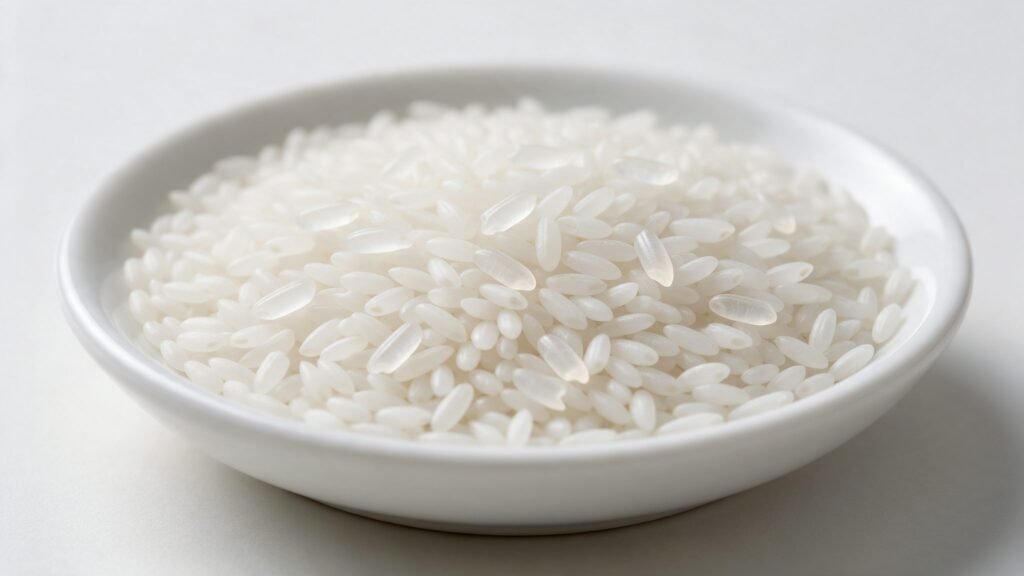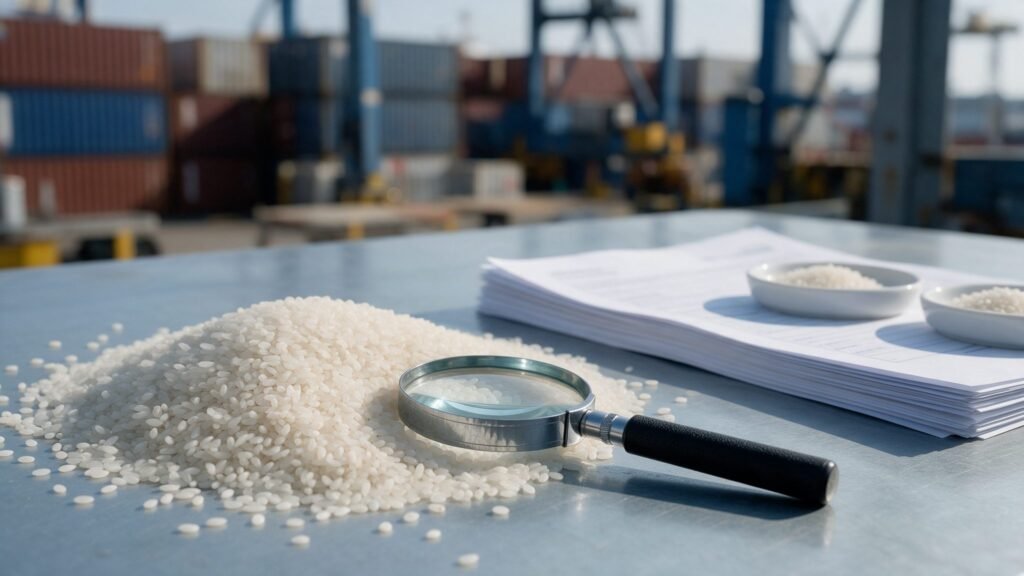
Rice quality specifications define the measurable standards that determine whether rice meets requirements for international trade and consumption. International standards establish minimum specifications for rice types including husked rice, milled rice, and parboiled rice that are suitable for human consumption and cross-border commerce. For importers and procurement professionals, understanding these specifications is critical for ensuring consistent product quality and regulatory compliance.
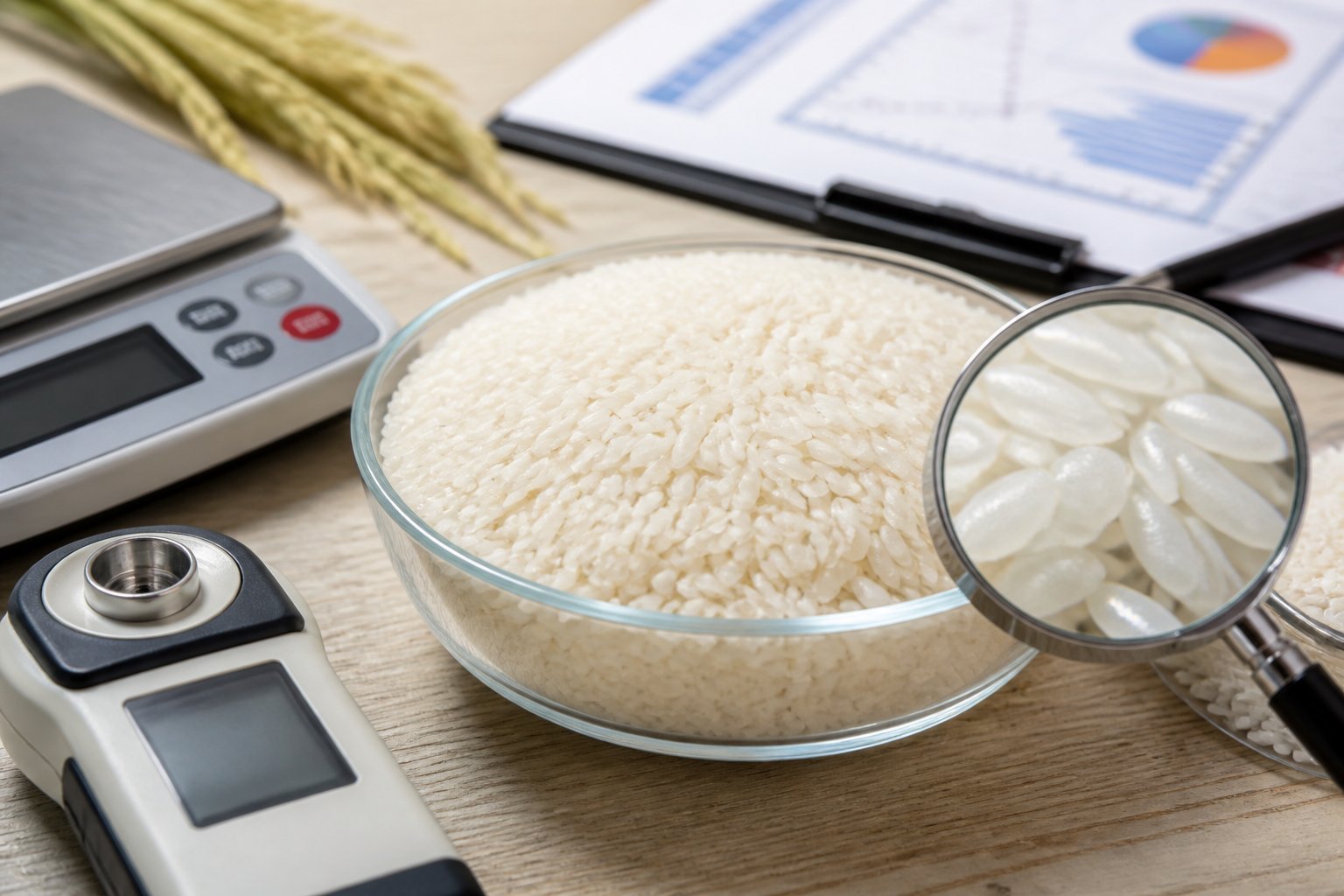
Quality standards cover multiple parameters including grain type classification, broken kernel percentages, moisture content, and allowable defect levels. Rice classification systems categorize rice as long grain, medium grain, or short grain based on specific measurements. These specifications directly impact pricing, shelf life, and market acceptance across different regional markets.
Pakistan supplies rice that meets rigorous international certification requirements including ISO 22000:2018 and HACCP standards. Buyers who understand quality specifications can better evaluate supplier capabilities and ensure their procurement aligns with both regulatory requirements and customer expectations in competitive markets.
Key Takeaways
- Rice quality specifications set the measurable standards for grain type, defects, and moisture content in international trade
- Understanding classification systems and defect limits helps importers ensure regulatory compliance and consistent product quality
- Meeting international certifications like ISO 22000:2018 and HACCP demonstrates supplier reliability for import markets
What defines grain quality in rice?
Defining grain quality in rice:
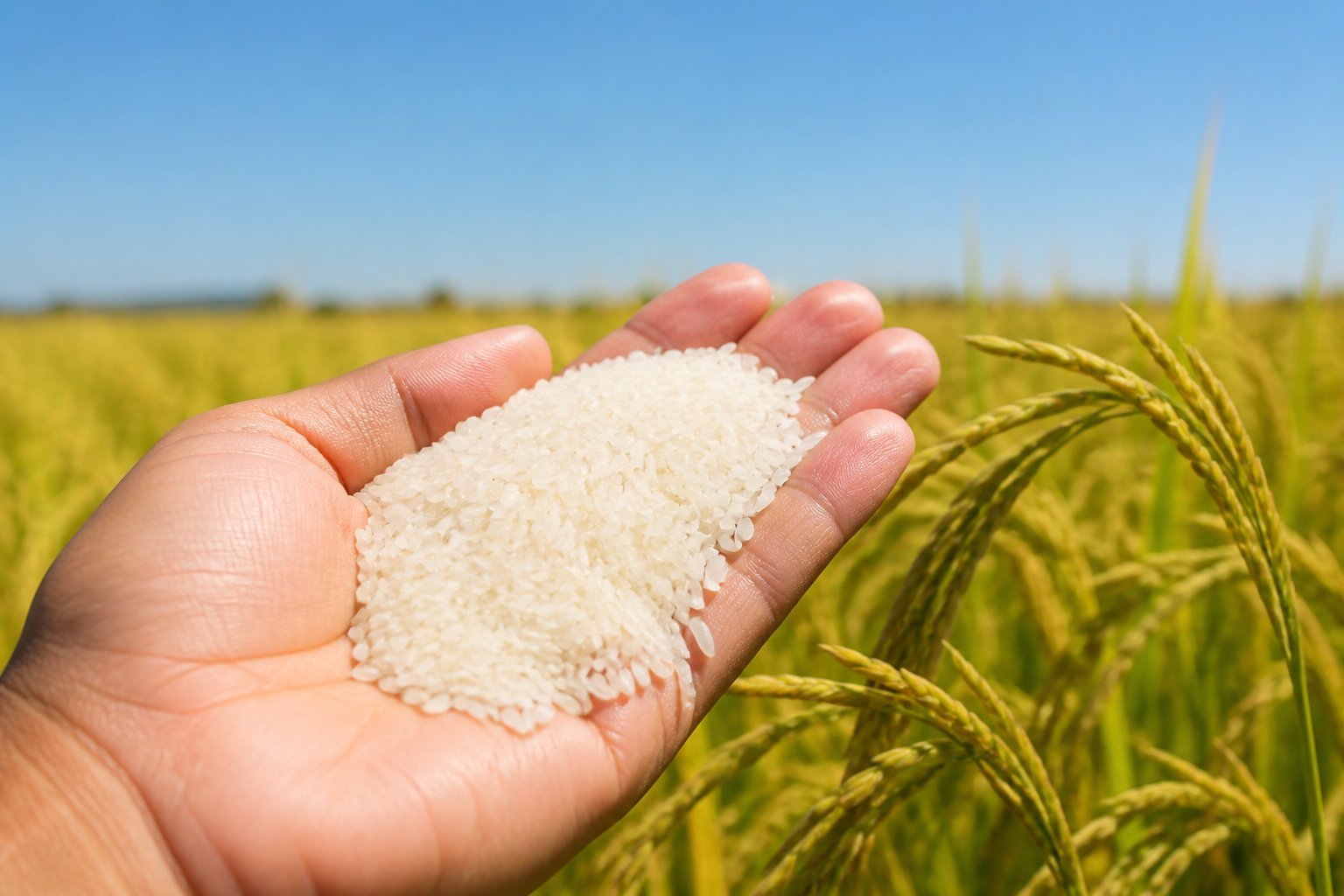
Rice quality encompasses specific physical traits like grain dimensions and chemical properties including starch composition, with these characteristics influenced by both the rice variety itself and the growing conditions it experiences.
Physical and Chemical Characteristics
Grain quality parameters include milling quality, appearance quality, cooking quality, and nutritional quality. Physical traits cover grain length, width, thickness, and the length-to-width ratio. Head rice recovery measures the percentage of unbroken kernels after milling, typically ranging from 25% to 65%.
Chalkiness refers to opaque white areas in the grain. It appears as white belly, white back, or white core depending on location. Lower chalkiness indicates better appearance quality.
Chemical properties focus on starch composition. Amylose content determines cooking texture. Gelatinization temperature indicates the heat and time needed for cooking, ranging from 55°C to 79°C. Gel consistency measures the firmness of cooked rice.
Key Quality Metrics:
- Milling yield: Brown rice rate, white rice rate, head rice rate
- Grain dimensions: Length, width, thickness
- Starch properties: Amylose content, gelatinization temperature
- Appearance: Color, transparency, chalkiness level
Pakistani rice suppliers maintain strict quality controls to meet ISO 9001:2015, ISO 22000:2018, and HACCP standards for international markets.
Varietal Properties and Environmental Factors
Rice grain quality comes from polygenic traits affected by crop management, environmental conditions, and their interactions. Different varieties produce distinct quality characteristics suited to specific consumer preferences.
Environmental factors alter grain development. High temperatures during grain filling increase starch granule packing rates, creating air spaces in the endosperm that form chalkiness. Water availability, soil nutrients, and climate patterns affect final grain composition.
Quantitative trait loci (QTLs) regulate multiple quality parameters through genetic mechanisms. Understanding these genetic controls helps develop varieties with desired traits.
Growing regions influence quality outcomes. Pakistan’s agricultural zones produce rice varieties meeting diverse international specifications through controlled cultivation practices. Certified origins ensure consistent quality through verified farming and processing protocols that comply with Halal and USFDA certification requirements.
Seasonal variation affects harvest quality. Breeders select varieties adapted to specific climates to maintain consistent grain characteristics across production cycles.
How does the US regulate rice quality?
Overview of United States regulatory framework:

The U.S. Department of Agriculture establishes and enforces rice quality standards through its Agricultural Marketing Service, which administers grading systems and inspection protocols for domestic and international rice trade.
Role of the U.S. Department of Agriculture
The U.S. Department of Agriculture oversees the complete regulatory framework for rice quality specifications in the United States. This federal agency maintains responsibility for developing official standards that apply to rough rice, brown rice for processing, and milled rice.
The USDA’s authority extends to inspection and grading services for various agricultural commodities. The department requires mandatory inspection and weighing for all grain exports while offering permissive inspection services for rice and other commodities in domestic markets.
These official U.S. standards for rice appear in the Code of Federal Regulations under Title 7, sections 868.201 through 868.316. The standards provide uniform criteria that facilitate agricultural marketing by establishing clear quality benchmarks. Rice from certified origins like Pakistan must meet these specifications when entering U.S. markets.
Functions of the Agricultural Marketing Service
The Agricultural Marketing Service operates as the primary division managing rice quality standards and inspection programs. This branch of the USDA facilitates the marketing of grain and rice by maintaining official standards and managing the National Inspection System.
AMS administers two distinct inspection types:
- Inspection for grade – analyzing samples according to quality factors in official standards and certifying numeric grade designations
- Factor analysis without grade – evaluating specific quality characteristics without assigning an official grade
The service establishes methods and procedures for rice inspection and authorizes additional guidelines for interpreting standards. AMS does not set market prices or engage in rice trading activities. Its role remains strictly regulatory and certification-focused.
How does the US rice grading system work?
US rice grading system and standards:
The USDA maintains official standards that classify rice into distinct classes based on kernel size and establish quality grades through measurable defect tolerances. Rice exporters and importers rely on these standardized classifications to ensure consistent quality expectations across international markets.
Classes of Milled Rice
The U.S. Standards for Milled Rice define four distinct classes based on kernel length and shape characteristics. Long Grain Milled Rice contains kernels with a length-to-width ratio of 3.0 or more. Medium Grain Milled Rice includes kernels with ratios between 2.0 and 2.9. Short Grain Milled Rice consists of kernels with ratios of 1.9 or less.
The fourth class, Mixed Milled Rice, applies when the sample does not meet the minimum percentage requirements for any single class. Pakistani Basmati and other premium long-grain varieties typically fall into the Long Grain classification due to their slender kernel dimensions. These classifications help buyers identify rice suited for specific culinary applications and regional preferences.
Grades and Grade Requirements
The USDA establishes grades and grade requirements that divide rice into uniform quality groups to facilitate marketing. Milled rice receives numerical grades from U.S. No. 1 through U.S. No. 6, with lower numbers indicating higher quality.
Each grade has specific maximum allowable percentages for quality factors:
- Broken kernels (pieces smaller than three-fourths of whole kernel)
- Damaged kernels (including heat-damaged, discolored, or otherwise compromised)
- Chalky kernels (opaque or non-translucent portions)
- Red rice and seeds (contrasting varieties or foreign material)
U.S. No. 1 grade permits only 4% broken kernels, while U.S. No. 6 allows up to 30%. Premium Pakistani rice shipments meeting ISO 22000:2018 and HACCP standards often qualify for top numerical grades when evaluated under USDA protocols.
U.S. Sample Grade Criteria
Rice that fails to meet the requirements for U.S. No. 6 receives the designation U.S. Sample Grade. This classification applies when rice contains excessive defects, foreign material, or objectionable odors that make it unsuitable for standard grading.
Specific conditions triggering Sample Grade include presence of live weevils, rodent contamination, or distinctly low quality that falls below all numerical grade thresholds. Rice with musty, sour, or commercially objectionable odors automatically receives Sample Grade regardless of other quality factors. International suppliers maintain rigorous quality control to avoid Sample Grade classification, as it significantly reduces market value and limits commercial applications.
Which quality parameters should buyers check?
Critical quality assessment parameters:
Rice quality assessment relies on measurable standards that determine market acceptance and food safety compliance. Moisture levels, foreign materials, and odor defects serve as primary indicators of grain integrity and proper handling throughout the supply chain.
Moisture Content Determination
Moisture content directly affects rice storage stability, milling performance, and shelf life. The optimal range for safe storage falls between 12% and 14%, with levels above 14% increasing the risk of mold growth, bacterial contamination, and premature spoilage.
Testing facilities use specialized moisture meters and oven-drying methods to verify grain hydration levels. Pakistani rice exporters routinely test shipments to ensure compliance with international moisture specifications before distribution. Rice harvested or dried improperly may exceed safe moisture thresholds, leading to quality degradation during transit.
Standard moisture testing protocols include:
- Electronic moisture meter readings
- Air-oven drying at 130°C for prescribed durations
- Weight differential calculations
- Multiple sample verification
Proper moisture management preserves nutritional value and maintains the physical and cooking characteristics essential to grain quality evaluation programs.
Foreign Matter and Objectionable Seeds
Foreign matter encompasses any non-rice material present in grain shipments, including dirt, stones, chaff, and other plant debris. Objectionable seeds refer to weed seeds or seeds from other crop varieties that contaminate pure rice lots.
Quality standards limit foreign matter to specific percentages by weight, typically not exceeding 0.1% to 0.5% depending on grade classification. Certified facilities employ multi-stage cleaning equipment including destoners, gravity separators, and magnetic separators to remove contaminants.
Common foreign matter categories:
- Inorganic materials (stones, metal, glass)
- Organic plant debris (hulls, stems, leaves)
- Other grain seeds (wheat, barley)
- Objectionable weed seeds
Rice meeting ISO 22000:2018 and HACCP standards undergoes rigorous screening to eliminate foreign materials that compromise food safety. Inspection protocols require representative sampling and thorough analysis before certification approval.
Commercially Objectionable Foreign Odor
Commercially objectionable foreign odor indicates chemical contamination, microbial activity, or improper storage conditions that render rice unsuitable for consumption. Rice naturally possesses a mild, slightly sweet aroma when properly handled.
Odor defects arise from pesticide residues, fuel contamination, mold development, or absorption of strong environmental smells during storage and transport. Quality assessors conduct sensory evaluations using trained personnel who detect off-odors through standardized sniffing protocols.
Common odor defects include:
- Musty or moldy smells from moisture damage
- Chemical or petroleum odors from contamination
- Sour fermentation smells from bacterial growth
- Rancid odors from lipid oxidation
Rice failing odor assessments receives rejection or downgrading regardless of other quality metrics. Facilities maintaining ISO 9001:2015 certification implement strict storage protocols including climate control, proper ventilation, and segregation from odor-producing materials to preserve grain integrity.
What kernel and defect limits define each grade?
Kernels and defect specifications:
Rice quality depends on specific measurements for physical defects, including chalk content, damage levels, and the presence of unwanted varieties. Grading systems set strict limits for each defect type to ensure consistent product quality.
Chalky Kernels and Physical Defects
Chalky kernels contain opaque white areas in the rice grain that appear different from the normal translucent texture. These areas form when air spaces develop in the endosperm during grain filling, often due to high heat conditions.
Chalky kernels break more easily during milling and cooking. They also absorb water differently than normal kernels, which affects cooking uniformity. Premium grades typically allow lower percentages of chalky kernels.
Quality specifications for milled rice require evaluation of chalky kernels alongside other physical characteristics. Pakistani rice suppliers certified under ISO 22000:2018 and HACCP standards maintain strict quality controls to minimize chalky kernel percentages. Importers measure chalk content as part of standard inspection procedures before accepting shipments.
Damaged and Heat-Damaged Kernels
Damaged kernels show physical harm from insects, disease, or mechanical injury during harvest and processing. Heat-damaged kernels specifically result from excessive temperature exposure that discolors the grain.
The determination of heat-damaged kernels occurs during the milling process to a well-milled degree. Inspectors evaluate whole and large broken kernels to classify damage levels accurately.
Heat damage creates a darker color in rice kernels compared to normal grains. This discoloration cannot be removed through polishing. Premium rice grades allow minimal percentages of damaged and heat-damaged kernels. ISO 9001:2015 certified facilities implement temperature monitoring throughout storage and processing to prevent heat damage. Pakistani rice operations maintain climate-controlled environments to protect grain quality during the hot summer months.
Presence of Red Rice
Red rice refers to rice kernels with a red bran layer that differs from standard white or brown rice varieties. These kernels appear as contaminants in white rice shipments when wild or semi-wild rice plants cross-pollinate with commercial varieties.
Grading standards identify red rice as an objectionable characteristic that lowers commercial value. Even small amounts of red rice kernels create visible quality issues in finished products. The red kernels stand out against white rice and cannot be removed through standard polishing.
Quality certifications require strict field management to prevent red rice contamination. USFDA-certified rice suppliers implement seed purity programs and field inspections throughout the growing season. Halal-certified facilities also monitor for red rice during intake inspections to maintain product uniformity.
How is rice quality monitored during procurement?
Monitoring and compliance in rice procurement:
Effective procurement depends on systematic sampling methods and proactive risk management to ensure grain quality meets international standards. Third-party inspections and documented testing protocols provide the verification framework needed for compliance.
Sampling and Testing Protocols
Official inspections of rice follow established standards set by regulatory bodies like the Agricultural Marketing Service. These inspections evaluate samples based on specific quality factors including moisture content, broken grain percentage, and foreign matter.
Procurement teams implement sampling and analysis procedures at multiple stages of the supply chain. Representative samples are drawn from different lots to assess uniformity and detect potential contamination. Testing typically covers moisture levels, grain purity, color sorting, and milling degree.
Pakistan-origin rice suppliers commonly provide pre-shipment SGS inspection for export orders, along with ISO 22000:2018 and HACCP certification documentation. Third-party inspection services verify both quality and quantity before shipment, reducing disputes and ensuring rice quality aligns with purchase specifications.
Mitigating Quality Risks
Quality risks emerge from inconsistent moisture levels, contamination during storage, and variability between production batches. Buyers establish clear acceptance criteria that suppliers must meet before delivery.
Risk assessment and traceability mechanisms help identify hazard factors during production and processing. Documentation requirements include origin certificates, phytosanitary certificates, and quality test reports that track each batch from farm to destination.
ISO 9001:2015 certified suppliers maintain quality management systems that standardize processes and reduce batch-to-batch variation. Halal and USFDA certifications add additional compliance layers for specific markets in the region and beyond. Regular audits and ongoing supplier evaluations ensure continued adherence to specifications throughout the procurement relationship.
What do these standards mean for buyers?
Global and regional market implications:
Rice quality specifications directly influence pricing structures, trade agreements, and market access across different regions. Certification standards and quality benchmarks determine which suppliers can enter premium markets and how agricultural commodities move between countries.
Impact on International Trade
Quality specifications shape international rice trade patterns by establishing entry requirements for different markets. Countries with stringent quality standards often require comprehensive certification documentation before allowing imports.
Key certification requirements include:
- ISO 9001:2015 for quality management systems
- ISO 22000:2018 for food safety management
- HACCP protocols for hazard analysis
- Halal certification for Islamic markets
- USFDA compliance for U.S. market access
Pakistan has emerged as a certified, reliable origin for premium rice varieties that meet these international standards. Exporters must provide transparent grading documentation and work with certified surveyors to verify that shipments comply with specifications. The U.S. Department of Agriculture maintains detailed agricultural marketing standards that influence global benchmarks for rice quality assessment.
Rice production and quality standards affect pricing dynamics and market access opportunities. Premium varieties that meet strict moisture content, broken grain percentages, and purity levels command stronger buyer preference in international markets.
Specific Considerations for the region Markets
import markets prioritize specific quality attributes that align with consumer preferences and regulatory frameworks in the Gulf region. Halal certification serves as a mandatory requirement rather than an optional enhancement.
Rice importers in Qatar and neighboring the region countries require suppliers to maintain consistent quality across shipments. Moisture content must remain within specified ranges to prevent spoilage in hot climates. Broken grain percentages directly affect pricing negotiations and buyer acceptance.
import market priorities:
- Consistent grain length and appearance
- Low broken grain percentages (typically under 5%)
- Verified Halal certification
- Complete traceability documentation
- Climate-appropriate packaging
Pakistani basmati and long-grain varieties meet these specifications through controlled cultivation and processing methods. Distributors in the region establish long-term relationships with certified suppliers who demonstrate reliable quality control systems and meet delivery timelines.
Source rice that meets your quality specifications
Get specifications, certifications, and supply options matched to your buyers.
What do buyers ask most about rice quality specifications?
Frequently asked questions:
Rice buyers and importers need clear answers about quality specifications to ensure their purchases meet contractual requirements and market standards. Understanding grading criteria, testing methods, and regulatory limits helps streamline procurement decisions across different trading regions.
What are the standard grading criteria used to classify rice for commercial sale?
Official U.S. rice grading standards classify rice based on quality factors that include kernel size, color, and defects. The grading system evaluates both milled and rough rice to assign grades ranging from U.S. No. 1 to U.S. No. 6.
Each grade has specific requirements that the rice must meet. Premium grades allow fewer defects and broken kernels than lower grades. International markets often reference these standards when setting their own specifications.
Which physical quality parameters are typically measured, such as moisture content, broken kernels, and chalkiness?
Moisture content is a critical parameter measured during rice quality laboratory testing. Most commercial specifications require moisture levels between 12-14% to prevent spoilage during storage and transport.
Broken kernels represent a major quality indicator. Rice with intact grains commands stronger buyer preference than rice with excessive breakage. Inspectors measure the percentage of broken kernels against total kernel weight.
Chalkiness refers to opaque white areas on rice grains that affect appearance and cooking quality. Chalky kernels are more prone to breakage during milling. Many buyers set maximum limits on chalky kernels in their purchase specifications.
How are foreign matter, impurities, and damaged grains quantified during inspection?
Inspectors weigh and calculate foreign matter as a percentage of the total sample weight. Foreign matter includes any material that is not rice, such as stones, straw, seeds from other plants, and dust.
Damaged grains include kernels affected by heat, insects, or mold. Inspectors examine samples under proper lighting to identify discolored or damaged grains. Each defect type is counted separately and reported as a percentage.
Red rice and other off-type kernels are also quantified during inspection. These unwanted varieties can affect the visual uniformity and market value of the final product. Pakistani rice exporters typically maintain strict quality controls to minimize these impurities.
What milling quality metrics are used to assess head rice yield and overall milling yield?
Head rice yield measures the percentage of whole kernels obtained after milling rough rice. This metric directly impacts commercial value since whole kernels sell at premium prices compared to broken rice.
Total milling yield includes both head rice and broken kernels after removing the husk and bran layers. Higher total yields indicate better raw material quality and efficient milling operations. Milling quality depends on rice variety, moisture content during milling, and kernel maturity at harvest.
How do maximum allowable limits differ across major markets and regulatory frameworks for rice trading?
Different countries and regions establish their own maximum limits for defects and impurities. Middle Eastern markets, including the region countries, often specify strict limits on broken kernels and foreign matter. European Union standards emphasize food safety parameters and pesticide residue limits.
The Codex Alimentarius provides international standards for rice that many countries reference when developing their regulations. These standards set baseline requirements for contaminants and quality factors. Individual importing nations then add specific requirements based on local preferences and food safety concerns.
What sampling, testing, and acceptance procedures are commonly used to verify compliance before shipment?
Representative sampling involves collecting multiple samples from different locations within a rice lot. Inspectors follow standardized protocols to ensure samples accurately reflect the entire shipment quality.
Laboratory analysis evaluates physical and chemical characteristics according to contract specifications. Tests measure moisture, broken percentage, foreign matter, and other agreed parameters. Exporters from certified origins like Pakistan often provide pre-shipment inspection certificates from accredited laboratories.
Final acceptance occurs when test results meet all contractual specifications. Buyers may conduct their own independent testing before accepting delivery. Any quality discrepancies are documented and resolved according to the purchase agreement terms.