Rice grains that break during milling do not lose their value. They shift into a different category of trade entirely. 100% broken rice serves a wide range of purposes across food processing, animal feed, and industrial applications, making it a practical and cost-effective option for procurement professionals across the region.
For importers and distributors, understanding these uses matters directly to sourcing decisions. Buyers who know how broken rice fits into human consumption, livestock feed, and manufacturing supply chains can negotiate better contracts and match product grades to end-user demand. Pakistan has built a reputation as a certified and reliable origin for this grain, with rice processed to meet international standards such as ISO 9001:2015, ISO 22000:2018, HACCP, Halal, and USFDA requirements.
This article covers what qualifies as 100% broken rice, how it is used across different industries, and what buyers should look for when sourcing it. It also addresses common questions procurement teams ask before finalizing import agreements.
Key Takeaways
- Broken rice retains the same nutritional value as whole grain rice and supports multiple industries beyond direct food consumption.
- Quality certifications and consistent grading standards help buyers confirm that imported rice meets safety and processing requirements.
- procurement teams benefit from understanding sourcing options and specifications before committing to long-term supply agreements.
What is 100 percent broken rice?
What 100 percent broken rice means:
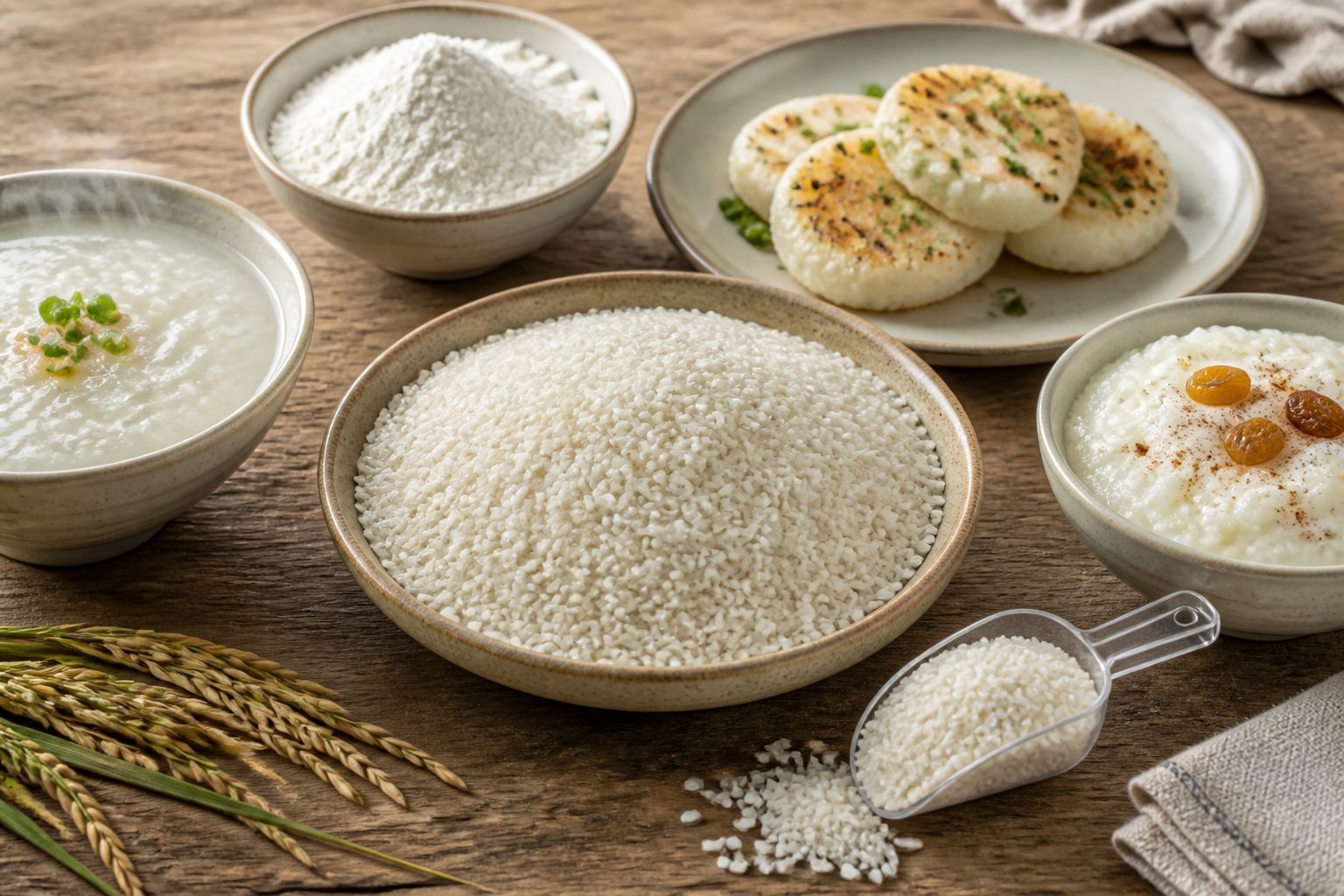
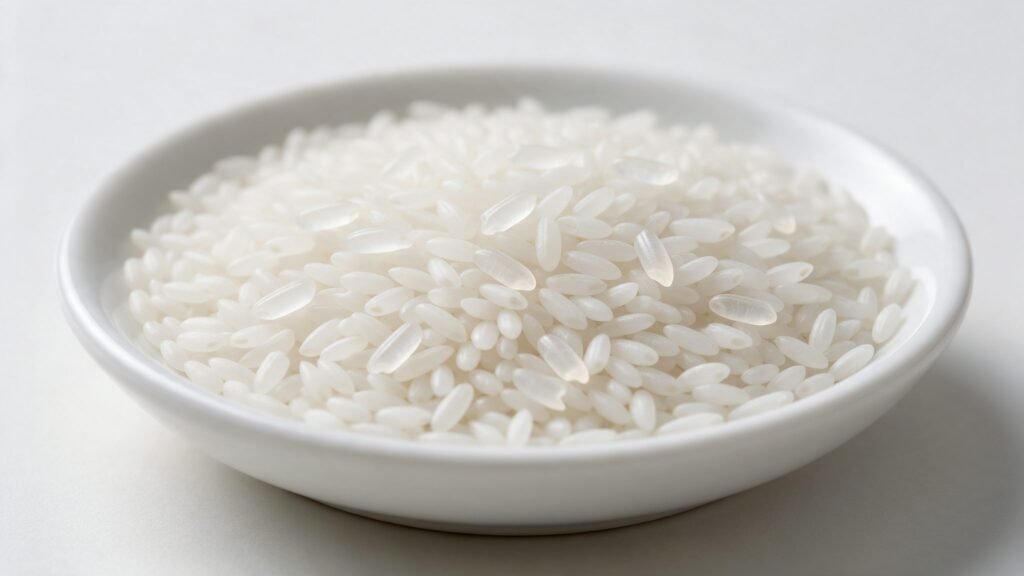
100 percent broken rice refers to rice grains that have fractured into pieces smaller than three-quarters of the original kernel length during milling. This grade differs from other broken rice classifications based on how the kernels are processed, dried, and packaged for specific markets.
How Broken Kernels Are Created
Rice grains break during the milling process when the outer husk and bran layers are removed from the kernel. Mechanical milling equipment applies pressure and friction to strip away these layers, and this pressure can crack grains that are brittle or unevenly dried.
Moisture content plays a major role in breakage rates. Grains that are dried too quickly or unevenly tend to develop internal stress fractures, which increases the amount of broken rice produced during milling.
Some rice varieties naturally break more than others due to grain structure. Older milling equipment or improper storage before processing can also raise breakage rates, according to cropfarming.org’s breakdown of broken rice production.
How 100 Percent Broken Differs From Mixed Grades
Broken rice is sorted into grades based on the percentage of broken kernels present in a batch. Common grades include 5%, 10%, 15%, 25%, and 100% broken, with each number representing the maximum share of broken grains allowed in that classification, as outlined in this guide to broken rice grades.
100% broken rice contains no whole rice grains at all. Every kernel in the batch has been reduced to fragments smaller than three-quarters of a whole grain.
This distinction matters for buyers because lower broken percentages, like 5% or 10%, are closer in texture and appearance to whole grains. Higher broken percentages, including 100%, are priced lower and used differently in cooking and processing. Pakistani mills that supply 100% broken rice under ISO 9001:2015 and HACCP certification maintain consistent sorting standards, which helps buyers know exactly what they’re purchasing regardless of grade.
Raw, White, and Parboiled Product Forms
100% broken rice is available in several product forms depending on how the rice was processed before milling. Raw broken rice comes from unprocessed paddy that goes straight through the milling process without steaming.
Parboiled rice is partially boiled in the husk before milling, which changes the grain’s texture and nutrient retention. This process makes parboiled broken rice firmer and less sticky when cooked compared to raw broken rice.
White broken rice has had its bran layer fully removed, giving it a lighter color and shorter cooking time. Brown broken rice retains the bran layer, similar to whole brown rice, which keeps more fiber and nutrients intact. Suppliers sourcing from Pakistan typically offer all three forms, with quality verified through USFDA and Halal certification to meet the requirements of the region and international buyers.
Where is 100% broken rice used in food?
Food applications and end-user demand:
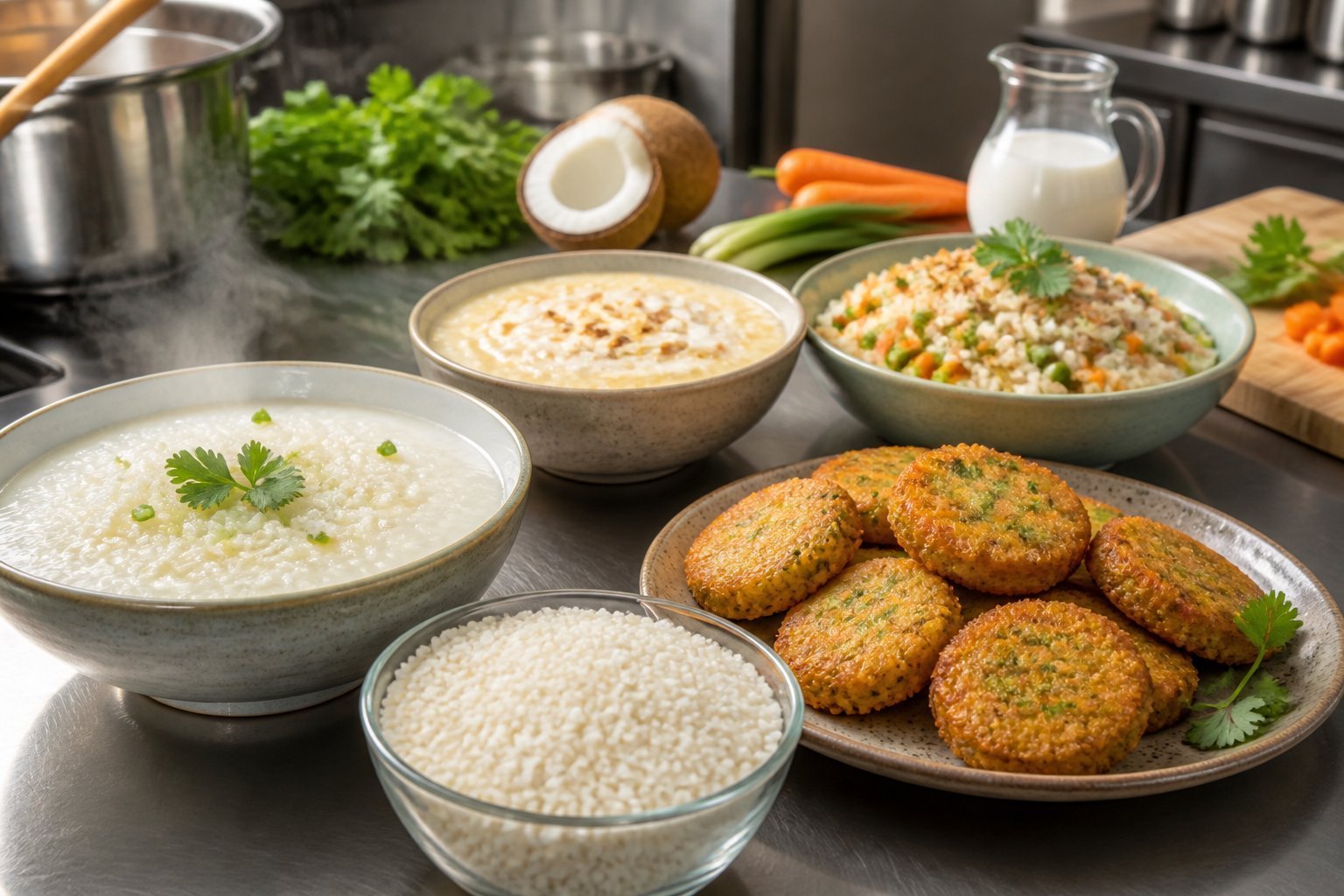
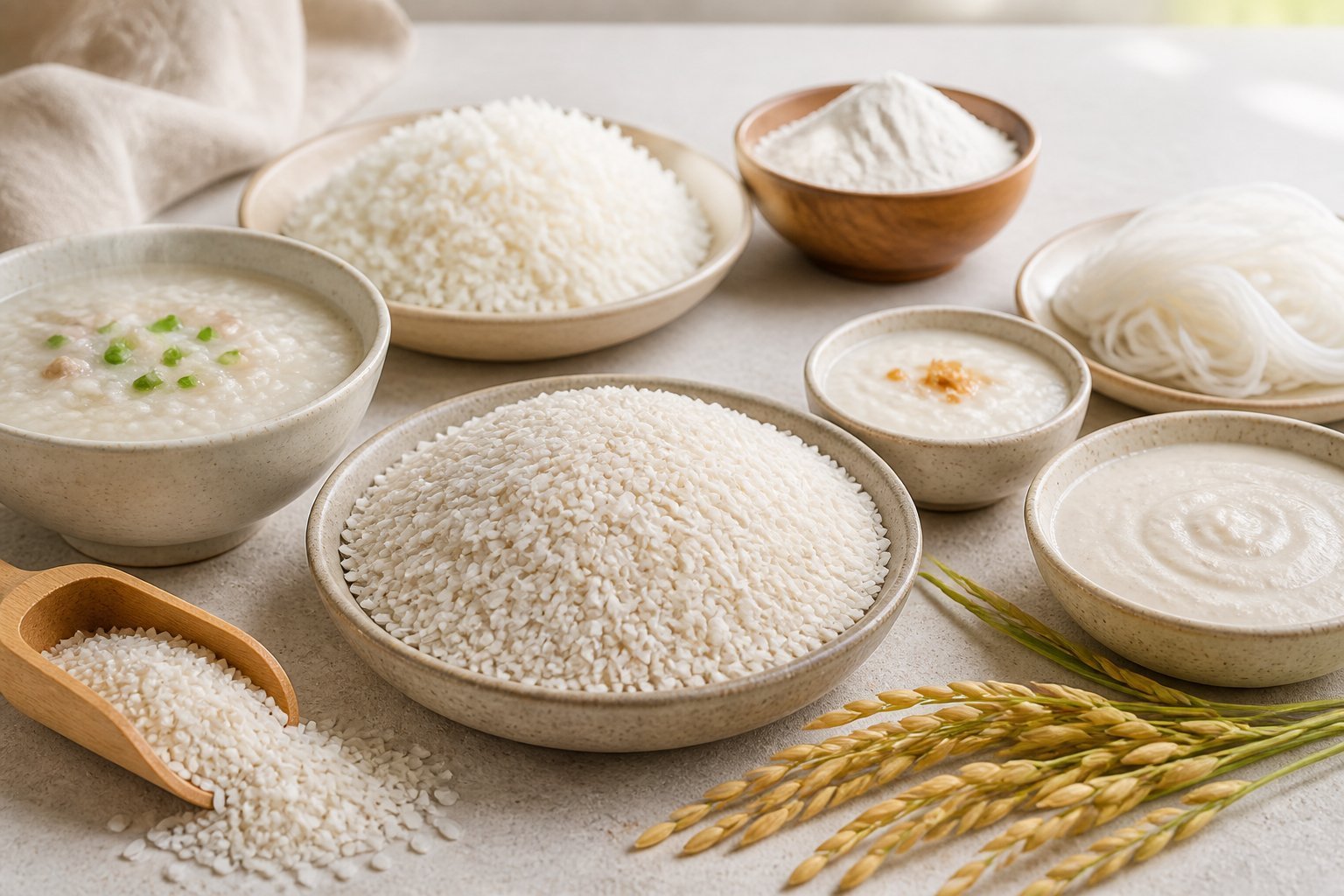
Broken rice plays a direct role in human diets across many countries. It shows up in porridge, flour products, and traditional dishes that people eat every day.
Porridges, Congee, and Ready-to-Cook Meals
Rice porridge is one of the most common uses for broken rice. The smaller grains cook faster and break down easily, which makes them ideal for soft, smooth textures.
Congee, a dish eaten widely across Asia, relies on this same quality. Cooks use broken rice because it absorbs water quickly and creates a thick, even consistency without needing long cook times.
Ready-to-cook meal producers also value broken rice for its cost and cooking speed. Instant porridge packets and meal kits often list broken rice as a main ingredient because it shortens prep time for consumers.
Pakistani-origin broken rice, certified under ISO 22000:2018 and HACCP standards, meets the safety requirements many food manufacturers require before adding a grain to packaged products meant for direct human consumption.
Rice Flour, Batters, and Processed Foods
Milling broken rice into rice flour is a major use case in food processing. The flour is used in batters, baked goods, and gluten-free products because it has a neutral taste and fine texture.
In South Asian cooking, rice flour made from broken rice supports dishes like idli and dosa. Both require a smooth batter that ferments well and holds its shape during cooking.
Food processors also use broken rice flour as a thickener or filler in snacks, noodles, and baked items. It blends easily with other starches, which gives manufacturers flexibility in product design.
Rice sourced from Pakistan and processed under ISO 9001:2015 quality systems gives food companies a documented, consistent supply for large-scale flour production.
Traditional Dishes and Dessert Production
Many traditional dishes rely on broken rice for its texture and affordability. In Vietnam, com tam, or “broken rice,” is a well-known dish served with grilled meat and vegetables, showing how this grain has moved from byproduct to staple.
Broken rice also appears in dishes like thieboudienne, a rice and fish dish popular in West Africa, where the shorter grains cook evenly with sauces and seasonings.
Desserts made with broken rice include kheer and payasam, two milk-based rice puddings common in South Asian cuisine. The smaller grain size helps these desserts reach a creamy consistency faster than long-grain rice would.
Halal-certified, USFDA-compliant broken rice from Pakistan supports these dessert and dish categories by meeting food safety expectations across different markets and cultural preparations.
How is 100% broken rice used in feed, pet food, and aquaculture?
Feed, pet food, and aquaculture uses:
Broken rice serves as a low-cost energy source across the animal nutrition industry. Its high starch content and strong digestibility make it a practical ingredient for livestock, aquaculture, and pet food manufacturers worldwide.
Livestock and Poultry Feed Formulations
Broken rice provides a dense source of carbohydrates that supports weight gain in poultry, cattle, and swine. Its composition closely matches whole white rice, which allows it to be blended into feed rations without losing nutritional value.
Feed manufacturers value broken rice for its consistent moisture content and low levels of foreign matter. These qualities help extend shelf life and reduce spoilage risk during storage and transport.
Pakistan-origin broken rice supplied by TEFT Global meets ISO 22000:2018 and HACCP standards, giving feed producers a dependable input for large-scale operations. Buyers can source it with confidence knowing it complies with Halal and USFDA requirements as well.
Common feed applications include:
- Poultry starter and grower feed
- Cattle and dairy ration blends
- Swine finishing diets
- Early-stage animal feed for young livestock
Fish Feed and Aquaculture Requirements
Aquaculture operations rely on broken rice as an affordable carbohydrate source for farmed fish and shrimp. Species such as tilapia, catfish, and milkfish digest broken rice efficiently, which supports steady growth rates in commercial ponds.
Digestibility testing shows broken rice performs well compared to other plant-based ingredients like maize or wheat bran. In several trials, fish fed diets containing 30 percent broken rice showed higher growth rates than those fed alternative starch sources.
Broken rice also works as a binding agent in extruded fish pellets. This makes it useful for producers who need feed that holds its shape in water without breaking apart too quickly.
For aquafeed manufacturers, sourcing rice with verified quality standards matters. TEFT Global supplies Pakistani broken rice certified under ISO 9001:2015, ensuring consistent grain quality for feed producers who require reliable specifications batch after batch.
Pet Food Ingredient Applications
Pet food manufacturers use broken rice as a digestible carbohydrate filler in both dry and wet formulations. It provides energy without introducing common allergens found in wheat or corn-based fillers.
The ingredient works well in kibble production because of its ability to bind with other components during extrusion. This helps maintain texture and shape in finished pet food products.
Low foreign matter content is especially important for pet food applications, since manufacturers must meet strict quality controls. Certified suppliers like TEFT Global, which maintains Halal and USFDA compliance, give pet food companies a traceable and quality-assured raw material option.
Typical pet food uses include:
- Dry kibble formulations
- Wet food thickening agents
- Treats and biscuit bases
- Digestible filler for sensitive-stomach formulas
How is 100% broken rice used in brewing and industry?
Brewing, starch, and industrial processing:
100 percent broken rice plays a major role in brewing, starch extraction, and food processing because of its high starch content and low cost compared to whole rice grains. Manufacturers across many industries rely on this grade for consistent results and steady supply.
Brewing and Beer Production
Breweries use broken rice as an adjunct in beer production. It gets added alongside malted barley to provide fermentable starch.
Rice grits break down into sugars during the brewing process. This gives beer a lighter body and a cleaner taste.
Large breweries in Africa and Southeast Asia use this method often. It helps them meet high demand while keeping costs steady.
Pakistan is a certified source for this grade of rice. Suppliers there meet ISO 9001:2015, ISO 22000:2018, HACCP, Halal, and USFDA standards. This gives brewers a dependable option for large-scale production.
Starch Extraction and Functional Ingredients
Broken rice is a preferred material for starch extraction. Rice starch makes up about 90% of the dry matter in milled rice, so it offers a strong yield per batch.
The extraction process usually follows three steps:
- Steeping the rice in a dilute sodium hydroxide solution to loosen proteins
- Wet milling to break down the grain into a fine slurry
- Centrifugation to separate pure starch from protein and fiber
The final starch product supports many uses. These include food thickeners, rice flour, cosmetic powders, textile sizing agents, and pharmaceutical binders. Its small granule size and neutral flavor make it useful across food processing and non-food industries alike.
Selecting Fragment Size for Processing Yields
Fragment size affects how well broken rice performs in each process. Smaller fragments, such as 100% broken grades, often work best for starch extraction because they break down more evenly during milling.
Larger fragments, like 5% or 10% broken grades, may suit brewing applications where grit size affects mash consistency. Buyers should match fragment size to their intended output, whether that is starch purity, beer clarity, or flour texture.
Working with certified suppliers helps ensure consistent grading. Pakistani exporters that meet ISO and HACCP standards provide graded rice that supports predictable results in both brewing and starch processing.
What are the nutritional and functional characteristics?
Nutrition and functional characteristics:
100 percent broken rice offers a nutrient profile close to whole-grain rice, though the milling process changes how much fiber and certain micronutrients remain in the final product. Understanding these differences helps buyers match the right grade—white or parboiled—to their intended use, whether for direct consumption, animal feed, or industrial processing.
Energy, Protein, and Carbohydrate Profile
Broken rice is mostly carbohydrate, with smaller amounts of protein and fat. A cooked cup (about 158 grams) provides roughly 150 calories, 3 grams of protein, 0.5 grams of fat, and 33 grams of carbohydrates.
Some varieties, like ST25 broken rice, show a similar pattern—93 percent of calories from carbs, 7 percent from protein, and almost no fat.
| Nutrient | Per Cooked Cup (158g) | Approx. Per 100g Raw |
|---|---|---|
| Calories | 150 kcal | 377 kcal |
| Protein | 3 g | 8.1 g |
| Fat | 0.5 g | 1.1 g |
| Carbohydrate/Starch | 33 g | 75.4 g |
These figures show broken rice functions as a dense, reliable energy source, which is one reason it remains popular in both household cooking and bulk food programs.
How Milling Affects Fiber and Micronutrients
Milling removes the bran and germ layers from rice grains, and this step directly affects fiber and micronutrient content. Compared to brown rice or other whole grain rice, milled broken rice contains very little fiber—around 0.6 percent crude fiber and 0.8 percent ash.
Micronutrient levels also drop after milling. Broken rice typically retains only small amounts of manganese, zinc, and iron, since these minerals concentrate mostly in the bran layer that gets removed.
B vitamins follow a similar pattern. Because thiamine, niacin, and other B vitamins sit close to the bran, standard milling strips out a meaningful share of these nutrients, leaving milled broken rice lower in B vitamins than brown rice or other minimally processed grains.
Nutritional Differences Between White and Parboiled Grades
White broken rice and parboiled broken rice differ mainly because of processing order. White rice is milled directly, which removes bran-layer nutrients before cooking. Parboiled rice is steamed and soaked before milling, and this step pushes some vitamins and minerals from the bran into the starchy center of the grain.
As a result, parboiled broken rice generally retains more B vitamins and minerals after milling than white broken rice, even though both start from the same grain.
Despite these differences, broken rice—whether white or parboiled—still delivers nutritional value comparable to whole rice, since breakage during milling affects grain size rather than nutrient composition. This is one reason broken rice remains a practical, affordable staple for households and food manufacturers seeking consistent quality and dependable nutrition.
Which specifications should buyers verify when importing?
Quality specifications for import procurement:
Buyers who import 100% broken rice need clear specs before they place an order. Moisture content, foreign matter, grain size, and packaging all affect quality and shelf life.
Moisture, Foreign Matter, and Damage Limits
Moisture content is one of the first things a buyer should check. Most 100% broken rice falls between 12% and 14% moisture. Rice above this range can develop mold or spoil faster during storage.
Foreign matter limits also matter. Good quality rice usually keeps foreign matter under 1%. This includes stones, husk, and other non-rice material mixed in during milling.
Damaged and discolored rice grains should stay within a set percentage, often outlined in a written specification, sometimes called an RM,S sheet used by traders. Buyers sourcing from Pakistan can expect consistent numbers here, since certified suppliers test each shipment before it ships. This keeps quality steady across orders and reduces the risk of rejected containers at the port.
Grain Size, Color, and Milling Degree
Grain size should be uniform for 100% broken rice. Since the grains are already broken, size consistency shows the mill sorted the product correctly instead of mixing large and small fragments together.
Color matters too. Rice should be white or a consistent shade with no yellowing, since yellow grains often signal poor drying or storage before milling.
The milling degree used for rice processing affects how clean and polished the final grains look. Mechanical milling removes the bran layer and polishes the grain surface. Rice that goes through proper mechanical milling has fewer streaks and a smoother finish. Buyers should ask suppliers about the number of milling passes, since this affects both appearance and cooking texture. Pakistani mills that follow ISO-based quality systems tend to produce more consistent results batch to batch.
Inspection, Packaging, and Storage Controls
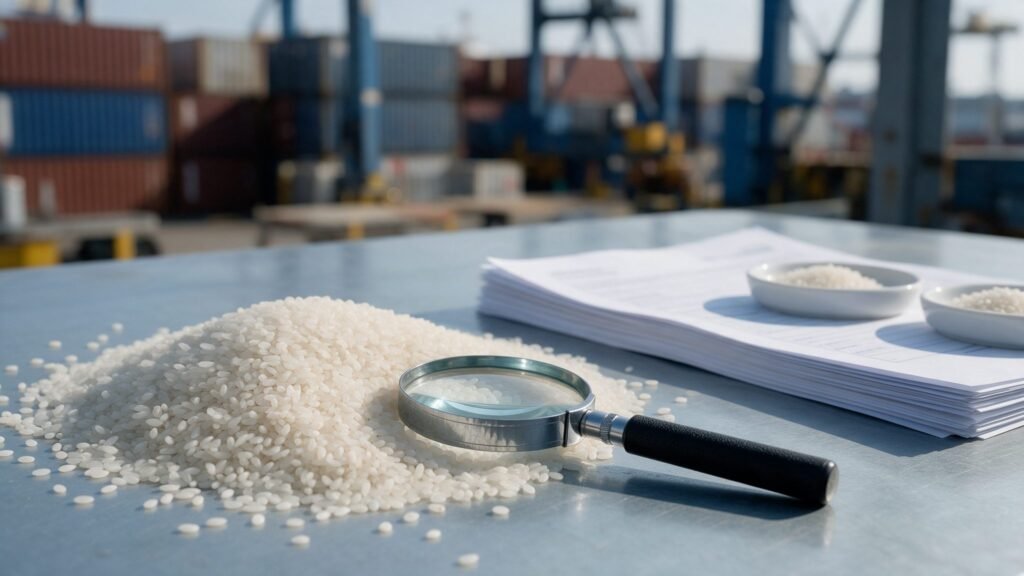
Third-party inspection is standard practice before rice leaves the mill. Companies like SGS, Intertek, or Bureau Veritas check moisture, foreign matter, and grain condition against the agreed rice specification standards before loading.
Packaging should protect the rice from moisture and pests during transit. Common options include:
- 25kg or 50kg PP woven bags
- Bulk container loading for large orders
- Moisture-barrier liners for long ocean routes
Storage conditions at the warehouse also matter. Rice needs a dry, ventilated space to keep moisture levels stable. Suppliers certified under ISO 22000:2018 and HACCP typically follow stricter storage rules, which lowers the risk of contamination or spoilage before the rice reaches the buyer’s market.
What should buyers consider when sourcing broken rice?
the region sourcing and market considerations:
Buyers in Saudi Arabia and Oman rely on 100% broken rice for animal feed, aquaculture, and food processing, so grade selection and supplier reliability directly affect cost and product performance. Sourcing decisions across global origins, contract structure, and delivery logistics all shape how well a shipment meets its intended use.
Matching Grades to Saudi Arabia and Oman Demand
Saudi Arabia and Oman use 100% broken rice differently depending on the end application. Feed mills often need consistent moisture and starch content for animal feed formulas, while aquaculture operations require cleaner grades with fewer impurities.
Food processors in both countries look for uniform grain size when making rice flour, snacks, or noodles. Buyers should specify moisture percentage, admixture limits, and broken rice ratio in their purchase orders.
Certified suppliers, such as those sourcing from Pakistan, typically provide lab reports confirming these specs before shipment. This helps buyers in Saudi Arabia and Oman avoid mismatched grades that could disrupt production lines or feed formulations.
Comparing Supplier Origins and Export Markets
Global 100% broken rice supply comes from several key regions, each with distinct strengths.
- Pakistan: Known for certified, reliable exports that meet international food safety standards, including ISO 9001:2015, ISO 22000:2018, HACCP, Halal, and USFDA requirements.
- USA: Offers mechanized processing and traceability, often used in food processing and animal feed markets.
- Europe: Smaller broken rice volumes, mostly directed toward industrial and feed uses.
- Australia: Known for quality control standards, though export volumes are more limited compared to South Asian producers.
Each origin serves different price points and certification needs. buyers often diversify sourcing to balance cost, consistency, and supply security across these markets.
Contract Terms, Logistics, and Application-Based Buying
Contracts for 100% broken rice should clearly state grade, packaging type, and delivery timeline. Buyers focused on human consumption products need tighter quality clauses than those buying for animal feed.
Logistics also matter. Shipping routes from Pakistan to Gulf ports are typically shorter than from the USA or Australia, which can reduce transit time and moisture-related quality risks.
Application-based buying means aligning contract terms with end use. Aquaculture buyers may prioritize low broken percentage variance, while feed processors focus on bulk pricing and consistent supply volume. Working with certified, traceable suppliers helps reduce disputes and ensures shipments match agreed specifications.
Source 100% broken rice for your operation
Get buyer-specific specifications, certifications, and supply options matched to your market.
What do buyers ask most about 100 percent broken rice?
Frequently asked questions:
Buyers and processors often have specific questions about how 100% broken rice performs across different industries and applications. The answers below address common concerns about food processing, animal feed, fermentation, starch production, and home cooking.
What are the main applications of 100% broken rice in the food industry?
100% broken rice serves multiple functions across food manufacturing. It is a key raw material for rice flour, snacks, and starch-based products.
Its nutritional content matches whole grain rice, even though the grains are smaller. This makes it a cost-effective choice for large-scale food production.
Processors also use it in porridge, khichdi, and other dishes that benefit from its quick cooking time, as noted by industry sources on 100% broken rice popularity. Pakistani-sourced broken rice meets HACCP and ISO 22000:2018 standards, giving food manufacturers confidence in consistent quality.
Is broken rice suitable for making rice flour and rice-based snacks?
Yes. Broken rice is widely used to produce rice flour, snack products, and starch-based items.
The grains break during milling, but this does not lower their nutritional value. Manufacturers rely on it because it costs less than whole grain rice while delivering the same starch content needed for flour and snack production.
Rice flour made from broken grains works well in items like crackers, noodles, and baked goods. The smaller grain size actually helps during grinding, since less energy is needed to break the rice down further.
How is broken rice used in animal feed and poultry feed formulations?
Broken rice fragments are commonly added to animal feed and poultry feed. The rice provides carbohydrates and energy that support animal growth and health.
Feed producers value broken rice because it is more affordable than whole grain rice. Its smaller particle size also makes it easier to mix into feed formulations alongside other ingredients like corn, soybean meal, and vitamins.
Poultry farmers often choose broken rice as a partial substitute for corn in feed mixes. This helps control feed costs without sacrificing nutritional value for the birds.
Can broken rice be used for brewing, fermentation, and alcohol production?
Broken rice plays a role in brewing and fermentation processes. The starch content in broken rice converts into sugars during fermentation, which then supports alcohol production.
Breweries and distilleries use broken rice as an adjunct grain in beer production. It helps lighten the body and flavor of certain beer styles while keeping ingredient costs lower than using only barley malt.
In rice wine and sake production, broken rice grains are fermented directly. The smaller grain size allows for faster water absorption, which speeds up the fermentation timeline compared to whole grain rice.
What are the benefits of using broken rice in starch and glucose manufacturing?
Broken rice is a preferred raw material for starch and glucose production. The starch extracted from broken rice grains has the same chemical properties as starch from whole grain rice.
Manufacturers benefit from lower material costs since broken rice sells at a discount compared to whole grains. This reduces production expenses for starch-based products like glucose syrup, modified starches, and industrial adhesives.
The extraction process for starch works efficiently with broken rice because the smaller pieces break down faster during processing. This can shorten production time in industrial settings.
Is 100% broken rice appropriate for household cooking and traditional dishes?
Broken rice works well in many household cooking applications, particularly dishes where a softer texture is acceptable. It is less suitable for recipes requiring separate, distinct grains, but it excels in dishes like congee and rice porridge.
The cooking process differs slightly from whole grain rice. Broken rice needs less water, roughly a 1:1 ratio, and cooks faster because the smaller grains absorb liquid more quickly.
In Vietnamese cuisine, broken rice forms the base of com tam, a traditional dish served with grilled pork, fried eggs, and pickled vegetables. Home cooks appreciate broken rice for its affordability and its ability to absorb sauces and seasonings effectively during preparation.