Malaysia’s rice market depends on a small group of dependable exporting nations, and Pakistan holds a firm place among them. Pakistan supplied Malaysia with more than 382 million kilograms of rice in 2024, making it the country’s second-largest rice source after Vietnam, according to Malaysia’s rice import data by country. For procurement teams and international buyers, this trade relationship offers a useful case study in how large-scale rice sourcing works between two countries with different roles in the supply chain.
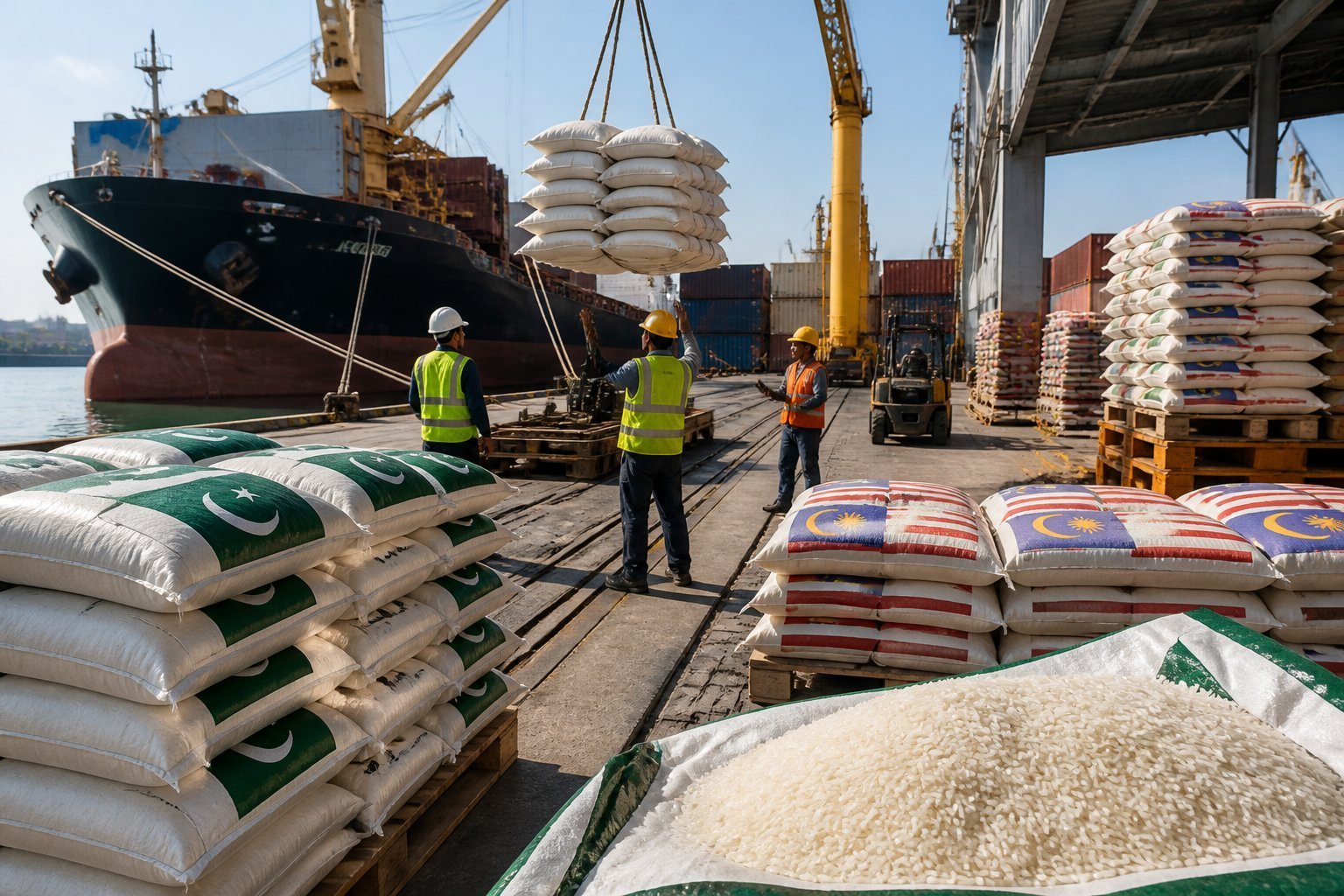
Malaysia’s national rice buyer, BERNAS, spreads its sourcing across several countries to protect the country’s food supply, and Pakistan is one of the main partners in that plan, as shown by BERNAS’s rice importation strategy. Trade between the two nations has also grown quickly in other areas, with Malaysia’s rice imports from Pakistan growing in 2024, a jump driven partly by rising demand for broken rice and other agricultural products, according to Malaysia’s trade analysis with Pakistan. This pattern gives buyers and distributors a clear picture of where the market is headed and why Pakistan continues to matter in global rice supply chains.
Companies like TEFT Global, a Qatar-based importer and distributor, work directly with certified Pakistani suppliers to bring rice that meets ISO 9001:2015, ISO 22000:2018, HACCP, Halal, and USFDA standards to the region and international markets. This approach reflects a broader shift among procurement professionals who look for suppliers with proven certification records rather than relying on price alone. The sections below break down how Malaysia’s import framework works, what buyers should expect from Pakistani exporters, and how procurement teams can plan future sourcing with accurate trade data.
Key Takeaways
- Pakistan ranks among Malaysia’s top rice suppliers, with steady volume and value growth in recent years.
- Malaysian buyers, including national agencies, diversify their rice sourcing across multiple countries to manage supply risk.
- Certified suppliers with recognized quality standards give procurement teams a more reliable path to consistent rice sourcing.
How big is Malaysia’s rice market and Pakistan’s share?
Market size, supplier position, and recent trends:
Pakistan holds a strong position among the countries supplying rice to Malaysia. Recent trade data shows steady demand, and forecasts point to continued growth.
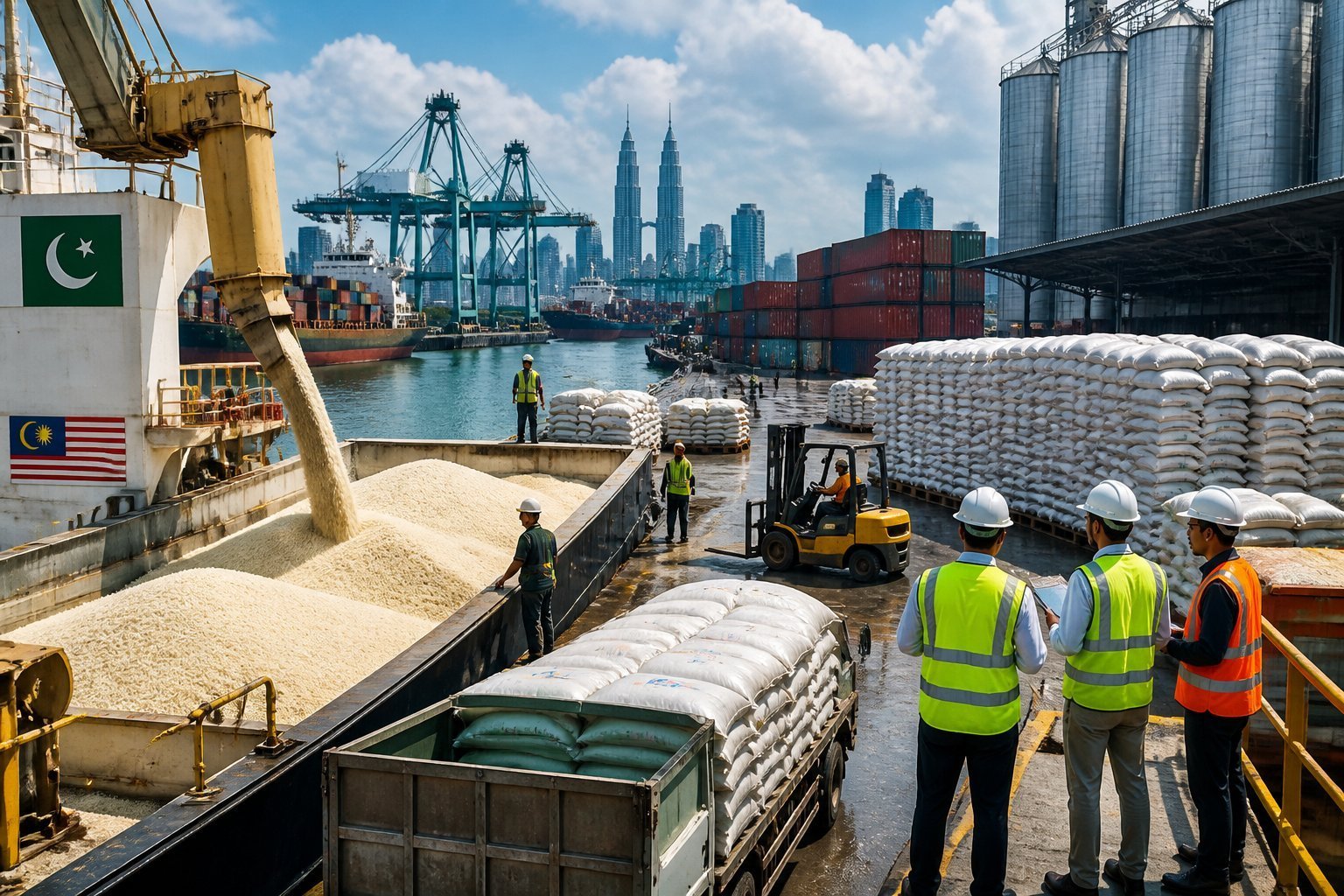
Pakistan’s share of Malaysia’s rice supply
Pakistan ranks among the top three suppliers of rice to Malaysia. In 2023 Malaysia imported about 1.4 billion kilograms of rice from all countries, with Pakistan supplying a substantial share — behind only Vietnam and Thailand. Other suppliers included India, Cambodia, and Myanmar in smaller amounts. Pakistan’s certified rice, meeting ISO 9001:2015 and HACCP standards, supports its steady position.
How import patterns have shifted
Malaysia’s supplier mix has shifted over the past few years. By 2023 Vietnam and Thailand remained the top two suppliers by volume, with Pakistan third at about 322 million kilograms — a solid share even as India and Cambodia competed for space. Malaysia relies on a mix of suppliers rather than one or two, which keeps supply steady and gives buyers more choice.
Recent data and the 2027 outlook
More recent data shows trade between Pakistan and Malaysia continuing at a steady pace, and the Malaysian rice market is expected to keep growing — one 2027 forecast projects growth of around 7% by 2027. That points to more opportunity for suppliers like Pakistan and more access to certified products meeting Halal and USFDA standards.
How is imported rice categorised in Malaysia?
Rice categories and product classification:
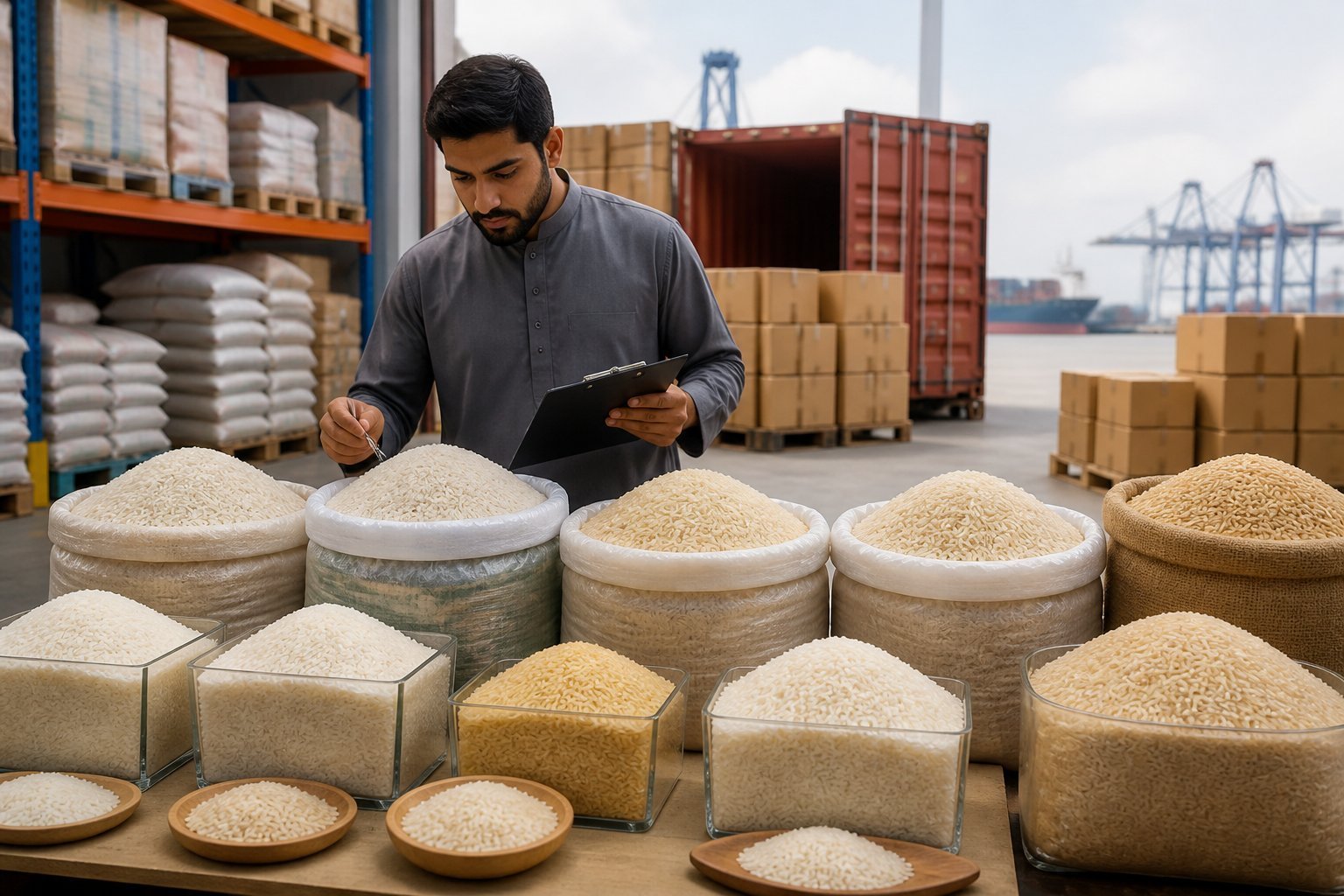
Rice trade data uses a standard code system to track shipments across countries. This system helps buyers and sellers understand what type of rice is moving, how much it costs, and where it comes from.
Using HS Code 1006 for Market Analysis
Rice trade around the world is tracked using HS Code 1006. This code covers all types of rice, whether it is milled, husked, or broken.
Countries use this code to report how much rice they import and export each year. The current system follows the HS 1988/92 nomenclature, which many countries still use for trade records.
Malaysia’s rice imports fall under this single code, though the rice itself varies widely. Buyers who study HS Code 1006 data can compare supplier countries and spot trends in pricing and volume over time.
Variety, Grain Type, and Broken Rice Specifications
Rice is sorted by grain type, variety, and how much of it is broken. Common types include long grain, basmati, and fragrant rice.
Malaysia imports several varieties beyond standard white rice. According to Bernas rice importation data, the country also brings in basmati, glutinous, black, brown, and red rice to meet local demand for specialty products.
Broken rice percentage matters too. Lower broken percentages usually mean higher quality.
Pakistani exporters supply a range of grain types to match buyer needs. Rice suppliers who follow ISO 9001:2015 and HACCP standards can offer more consistent grain size and quality across shipments, which matters for buyers who need reliable specifications order after order.
Unit Values, Volumes, and Quality Comparisons
Trade value and volume numbers show how rice-exporting countries compare. In 2023, Malaysia’s total rice imports reached 1.4 billion kilograms of rice, based on gross import figures.
Vietnam and Thailand led in volume that year, followed closely by Pakistan. Pakistan supplied 322 million kilograms, a significant share compared to other origins.
These unit values help buyers judge quality and pricing across supplier countries. Certified Pakistani rice, backed by Halal and USFDA compliance, offers a dependable option within this global mix, giving distributors like TEFT Global confidence in sourcing consistent, verified product for international markets.
What can Pakistani exporters supply to Malaysia?
Pakistani supply capabilities and exporter selection:
Pakistan offers Malaysian buyers a wide range of rice types, backed by strong production capacity and export experience. Choosing the right supplier depends on the rice variety needed, the exporter’s track record, and the quality checks in place before shipment.
IRRI and Basmati Supply Options
Pakistan supplies both IRRI white rice and Basmati varieties to meet different needs in the Malaysian market. IRRI-6 is a common choice, and Malaysian buyers often import it in 25 kg bags through Port Klang, with Labuan and Tawau serving as ports for East Malaysia.
Basmati rice is also in demand, especially for hotel groups and food distributors. Exporters offer several grades, including 1121, 1509, IRRI9/C9, and 386 varieties, giving buyers options based on price and quality needs.
Broken rice has also grown as an export category. Trade data shows a 475% increase in broken rice exports to Malaysia, pointing to shifting demand patterns in the market.
Supplier Due Diligence and Production Capacity
Buyers should check a supplier’s registration status, milling capacity, and export history before signing a contract. Many trusted exporters carry REAP registration and SGS inspection credentials, which help confirm legitimacy and quality control.
Production capacity matters too. Some exporters operate large-scale milling and processing facilities, which allows them to handle bulk orders without delays. This is important for buyers who need steady, high-volume shipments.
Trade agreements also play a role in supplier selection. The Malaysia-Pakistan Closer Economic Partnership Agreement helps reduce tariffs and improve market access for Pakistani rice exporters, making it easier for Malaysian buyers to work directly with Pakistani suppliers.
Pakistan’s overall standing in the global rice trade adds confidence for buyers. It ranks as the world’s fourth largest rice exporter, following India, Thailand, and Vietnam.
Quality Assurance, Milling, and Pre-Shipment Inspection
Quality checks happen at several stages, from milling to loading at the port. Reputable exporters use FOB terms from Karachi and follow inspection protocols before rice leaves Pakistan.
Certifications matter for buyers who need proof of safety and consistency. Many rice shipments meet standards such as ISO 9001:2015, ISO 22000:2018, HACCP, Halal, and USFDA requirements. These certifications give buyers assurance that the rice meets international food safety benchmarks.
Milling quality affects grain size, broken rice percentage, and overall appearance. Exporters that maintain modern milling equipment tend to produce more consistent batches, which reduces the risk of quality issues after shipment.
Pre-shipment inspection adds another layer of confidence. Third-party inspectors often verify weight, packaging, and grain quality before containers are sealed, giving Malaysian importers a clear record of what they are receiving.
What are Malaysia’s rice import rules and buyer requirements?
Malaysian import framework and buyer requirements:
Rice imports into Malaysia move through a controlled system with clear rules on licensing, documents, and safety checks. Buyers who understand these steps can avoid delays and build trust with suppliers in international trade.
BERNAS and Rice Importation Controls
Malaysia manages rice imports through a single-entity system led by BERNAS, the country’s main rice importer and regulator. This body controls how much rice enters Malaysia and helps protect local paddy farmers from sudden price swings.
Malaysia produces about 70% of its own rice needs, based on data from BERNAS’s rice importation program. The remaining 30% comes from imports, making countries like Pakistan key trade partners.
Private importers must work within this framework. Most rice imports require proper licensing tied to BERNAS licensing requirements, which cover:
- Import quotas set by government policy
- Price controls on certain rice grades
- Distribution rules for wholesalers and retailers
Buyers sourcing rice from Pakistan should confirm their supplier understands these local rules before shipping.
Import Documentation and Customs Clearance
Every rice shipment entering Malaysia needs specific paperwork to clear customs. Missing documents can cause delays at the port, so exporters and buyers must prepare files in advance.
Standard documents include:
- Certificate of Origin – proves the rice comes from Pakistan
- Phytosanitary Certificate – confirms the rice is free from pests
- Health Certificate – verifies food safety standards
- Third-Party Inspection Report – checks quality and quantity match the order
Pakistani exporters typically issue these papers with each container, as outlined by Pakistan rice export processes to Malaysia. Malaysian buyers then handle local clearance steps through the Royal Malaysian Customs Department.
The import procedure guide from Malaysian customs outlines duty rates, permit types, and inspection points buyers should review before each shipment arrives.
Food Safety, Labelling, and Packaging Compliance
Rice sold in Malaysia must meet food safety and labelling rules set by national health authorities. These rules protect consumers and keep trade standards consistent across the market.
Key compliance areas include:
- Halal certification through JAKIM, Malaysia’s Islamic development body
- Quarantine approval from MAQIS for agricultural products
- Accurate labelling showing origin, weight, and packing date
- Safe packaging that prevents contamination during transport
The import permit guide for Malaysia explains how these approvals work together before rice reaches store shelves.
Rice suppliers with strong certification records, including ISO 9001:2015, ISO 22000:2018, HACCP, and Halal standards, tend to clear these checks faster. Pakistan remains a certified and reliable origin for buyers seeking rice that meets these layered compliance needs.
How do commercial terms and landed cost work?
Commercial terms, pricing, and landed-cost management:
Rice prices between Pakistan and Malaysia depend on Incoterms, currency movement, and how contracts assign risk. These factors shape the true landed cost and affect the total trade value of each shipment.
Incoterms, Freight, and Port Cost Components
Most Pakistan-Malaysia rice contracts use FOB, CNF, or CIF terms. Each term shifts cost and risk between buyer and seller at a different point in the shipping process.
FOB means the buyer arranges and pays for ocean freight and insurance. CNF includes freight in the price but not insurance. CIF covers both freight and insurance, giving buyers a fixed landed price before duties. Malaysian importers often prefer CIF or CNF terms because they simplify budgeting. A closer look at FOB, CNF, and CIF rice import terms shows how each option affects cost predictability.
Port costs add another layer. These include:
- Port handling fees
- Customs clearance charges
- Inland transportation to warehouses
- Inspection and fumigation fees
Buyers who want a fast cost estimate can review CNF and CIF terms to understand freight-inclusive costs by variety and destination port.
Payment Terms and Foreign-Exchange Exposure
Payment terms in rice trade usually fall into three categories: advance payment, letters of credit, and open account terms. Letters of credit remain the most common method for Pakistan-Malaysia shipments because they reduce payment risk for both sides.
Currency movement affects final cost. Rice contracts are typically priced in US dollars, so shifts in the Malaysian ringgit or Pakistani rupee can change the actual cost paid by either party. Importers who track exchange rates closely can time purchases to reduce exposure.
Capital flows between the two countries also depend on trade financing arrangements. Banks in both markets support import financing, which helps distributors manage cash flow during longer shipping windows. This financing structure supports steady import volumes even when short-term currency swings occur.
Contract Clauses for Quality, Claims, and Delivery Risk
Rice contracts include specific clauses that protect both buyer and seller. These clauses define acceptable quality ranges and outline what happens if a shipment fails to meet specifications.
Common clauses cover:
| Clause Type | Purpose |
|---|---|
| Moisture Tolerance | Sets maximum allowed moisture percentage |
| Broken Grain Limit | Defines acceptable broken kernel ratio |
| Claims Period | Sets deadline for filing quality disputes |
| Force Majeure | Covers delays from events outside either party’s control |
| Delivery Window | Specifies loading and arrival timeframes |
Quality clauses often reference internationally recognized production standards. Rice exported under ISO 9001:2015, ISO 22000:2018, HACCP, and Halal certification typically includes documentation that supports faster claims resolution.
Understanding how landed cost is calculated in Pakistan helps buyers see how duties, freight, and clearing charges combine with contract terms to determine final cost. Malaysian importers who review these clauses carefully reduce dispute risk and maintain more predictable terms of trade across each shipment cycle.
How does Pakistan benchmark against other origins?
Competitive sourcing benchmark for procurement teams:
Malaysia’s rice import market includes several established origins, each with its own price range, grain type, and shipping volume. Procurement teams can use this data to compare suppliers and build a sourcing plan that fits their budget and quality needs.
Vietnam, Thailand, and India as Core Alternatives
Vietnam is Malaysia’s top rice supplier by value. In 2023, Malaysia bought rice from Vietnam totaling nearly 399 million kilograms.
Thailand followed closely that same year. India supplied a large volume of rice, mostly non-Basmati grades used for everyday cooking.
Pakistan also holds a strong position in this group. Pakistani exporters that meet ISO 9001:2015, ISO 22000:2018, HACCP, Halal, and USFDA standards give buyers a verified, quality-checked supply option alongside these other origins.
Procurement teams often compare these four countries on grain length, moisture content, and reliability before placing large orders.
Cambodia and Myanmar in Diversified Supply Portfolios
Cambodia and Myanmar play smaller but useful roles in Malaysia’s rice supply chain. Cambodia shipped a smaller volume of rice to Malaysia in 2023, much of it fragrant rice varieties.
Myanmar supplied a smaller amount in the same year, often in the form of lower-cost broken rice. These volumes are smaller than the top four suppliers, but they give buyers more choices.
Procurement teams sometimes use Cambodian and Myanmar rice to fill gaps in value-focused market segments. This approach spreads risk across more suppliers instead of relying on just one or two countries.
Specialty and Smaller-Origin Supply From Japan, Bangladesh, Indonesia, and Singapore
Japan, Bangladesh, Indonesia, and Singapore make up a much smaller share of Malaysia’s rice imports. Japan sent a small amount of rice in 2023, a small amount tied to specialty or premium grain types.
Bangladesh shipped a small amount of rice, while Indonesia and Singapore each supplied very small volumes. These low totals show that these countries serve niche demand rather than bulk supply.
Procurement teams typically turn to these origins for specific product types, not for large-volume staple orders. They remain minor players compared to the core suppliers that make up most of Malaysia’s rice import volume.
How should buyers validate data and plan procurement?
Trade data validation and forward procurement planning:
Buyers who verify trade figures before signing contracts reduce risk and plan shipments with more accuracy. Checking official records, cross-checking reported totals, and watching economic signals all help importers make sound decisions about future rice orders.
Using United Nations Comtrade and Official Trade Sources
Importers rely on United Nations Comtrade as a starting point for checking rice trade flows between Pakistan and Malaysia. This database tracks the value and volume of goods moving between countries, giving buyers a clear picture of past shipments.
In 2024, Malaysia imported about 382,051,000 kg of rice from Pakistan. That made Pakistan the second-largest supplier after Vietnam.
Buyers should also check Malaysia’s own trade records through MATRADE’s external trade statistics, which break down imports by country and product code. Comparing both sources helps confirm that reported numbers match actual trade activity.
Reconciling Mirror Statistics and Gross Import Figures
Trade data often shows small gaps between what one country reports as exports and what the other reports as imports. These gaps are called mirror statistics, and they happen because of shipping delays, currency conversion, or classification differences.
Gross imports figures, like those published by Comtrade, count all rice entering Malaysia regardless of final use. This differs from figures that separate direct consumption from re-export.
Buyers who plan large purchases should reconcile these numbers before setting order volumes. A simple checklist helps:
- Compare Malaysia’s import totals with Pakistan’s export totals for the same year
- Check reported volumes for consistency
- Confirm HS code 1006 is used correctly across both datasets
This process reduces the chance of ordering based on outdated or mismatched figures.
Monitoring Macroeconomic Conditions and Supply Risk
Rice procurement does not happen in isolation from broader economic conditions. Malaysia’s balance of trade, current account position, and external debt levels all affect how much the country can spend on food imports each year.
Currency strength also matters. When the Malaysian ringgit weakens against the US dollar, import costs rise, which can shift buyers toward lower-cost origins or smaller order sizes.
Foreign direct investment and capital flows into Malaysia’s food processing sector signal long-term demand for imported grain, including rice from Pakistan. Analysts watching the 2027 forecast for regional rice demand suggest steady growth, supported by population increases and stable trade relationships.
Pakistan’s certified export standards, including ISO 9001:2015, ISO 22000:2018, HACCP, and Halal compliance, position it as a dependable supplier for Malaysian importers planning multi-year procurement contracts.
Source Pakistani rice for the Malaysian market
Get buyer-specific specifications, certifications, and supply options matched to your market.
What do buyers ask most about Malaysia’s rice imports from Pakistan?
Frequently asked questions:
Malaysian buyers rely on Pakistani rice for both everyday staples and specialty varieties, and trade volume, certifications, and pricing all shape how that relationship works. The details below cover volume, product types, buyer networks, entry rules, trade terms, and price comparisons.
How much rice does Malaysia import from Pakistan each year?
Malaysia’s total imports from Pakistan grew about 12% in 2024 from the prior year, according to Malaysia’s trade data with Pakistan.
Rice, especially IR 64, remains the largest single category in that trade relationship. Broken rice shipments grew even faster, jumping 475% in one year, which shows Malaysian buyers are diversifying the grades they purchase from Pakistan.
What types of Pakistani rice are most commonly imported into Malaysia?
Malaysia mainly imports IRRI-6 white rice in both 5% and 15% broken grades, typically packed in 25 kg bags for retail and food service use, based on Pakistan’s rice export data to Malaysia.
Buyers also source other varieties depending on their needs. According to details on how Malaysian importers work with Pakistani exporters, procurement decisions now factor in traceability and certification records alongside product type, which has pushed some importers toward basmati and premium long-grain options in addition to standard IRRI grades.
Which Malaysian companies import rice from Pakistan?
BERNAS plays a central role in Malaysia’s rice supply chain, managing imports as part of the country’s food security and price stability policy, as outlined in BERNAS’s rice importation program.
Beyond BERNAS, a wide network of private importers and distributors operates across the country. Trade data platforms list over 1,600 verified rice buyers in Malaysia, showing that the buyer base extends well past a handful of large firms into many regional distributors.
What are the import requirements for Pakistani rice entering Malaysia?
Pakistani exporters must meet several conditions before their rice can enter Malaysia, including halal certification, quota compliance, and documentation tied to Malaysia’s import rules, according to Malaysia’s 2026 rice import policy guide.
Certification standards often go beyond Malaysia’s baseline rules, especially for buyers serving multiple regions. For example, Qatar-based importer TEFT Global sources premium Pakistani rice for international markets, and requires that all shipments meet ISO 9001:2015, ISO 22000:2018, HACCP, Halal, and USFDA standards. This reflects how Pakistan has positioned itself as a certified and reliable rice origin for buyers across different markets, not just Malaysia.
How do tariffs and trade agreements affect Pakistani rice imports to Malaysia?
Trade terms between the two countries extend beyond rice into broader investment and service sectors. Under current arrangements, Pakistan allows up to 60% foreign equity participation across all sectors and places no cap on the number of Malaysian employees a company can hire, according to Malaysia-Pakistan trade agreement details.
These terms make it easier for Malaysian firms to invest in Pakistani supply operations, including rice processing and export facilities. Sectors like professional services and engineering are also named as areas of mutual interest, which can indirectly support smoother rice trade logistics over time.
How does the price of Pakistani rice compare with other rice suppliers in Malaysia?
Pakistani exporters often compete on FOB pricing while offering full certification and private label options, based on details from HAG Commodities’ rice export services to Malaysia. This combination of competitive pricing and certification support gives Malaysian buyers flexibility when comparing suppliers.
Regional buyers, including those near Port Klang, often weigh Pakistani IRRI6 rice against other origins based on landed cost, quality consistency, and delivery reliability. Since pricing shifts with currency rates, shipping costs, and seasonal harvests, buyers typically compare quotes across multiple suppliers before locking in long-term contracts.