
Rice importers moving cargo into Kenya face a market shaped by strong demand and a government actively managing supply gaps through duty-free import programs. Kenya imports roughly 700,000 to 900,000 metric tonnes of rice each year, since local production covers less than 30% of what the country consumes. This gap creates a steady opportunity for international suppliers, but it also means importers must follow clear rules on documentation, certification, and customs clearance to move goods smoothly.
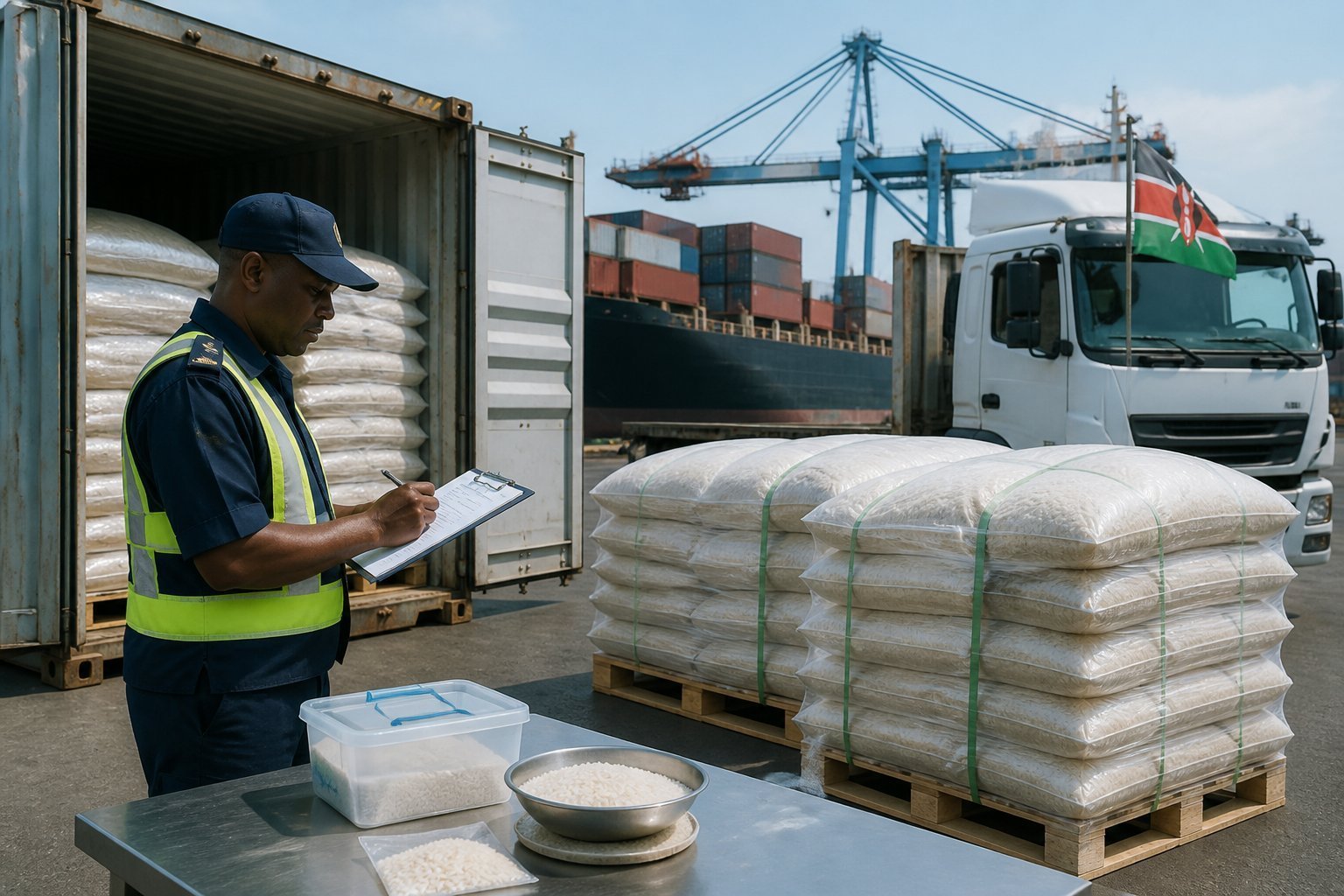
For procurement teams and trade professionals, understanding these requirements is not optional. Kenya has recently approved large-scale duty-free rice imports to stabilize prices, and the process for compliant importation involves specific registrations, inspections, and cost calculations. Suppliers with certified, quality-assured sourcing, such as Pakistani rice backed by ISO and HACCP standards, are well positioned to meet these expectations reliably.
This guide walks through what importers need to know before shipping rice into Kenya, from regulatory scope to final clearance at the port of Mombasa. It covers the practical steps that keep shipments moving and reduce the risk of delays or added costs.
Key Takeaways
- Kenya relies heavily on imported rice to meet consumer demand, creating consistent opportunities for qualified international suppliers.
- Successful importation depends on meeting certification, documentation, and registration requirements before goods reach Kenyan ports.
- Understanding taxes, levies, and clearance procedures at Mombasa helps buyers plan costs and avoid shipment delays.
Who can import rice into Kenya, and what rules apply?

Rice imports into Kenya are governed by clear rules on product classification, food safety, and trade policy. Importers need to know which rice type they are bringing in, what restrictions apply, and what duty rates or quotas are currently active before goods leave the origin country.
Confirm the Applicable Rice Classification and HS Code
Rice is classified under specific Harmonized System (HS) codes, and the correct code determines the duty rate, taxes, and documentation an importer must prepare.
Parboiled rice and white milled rice fall under different subheadings, so importers must confirm the exact classification before shipping. IR-64 parboiled rice, a common variety sourced from South Asia, is typically classified separately from basmati or other long-grain varieties.
Misclassifying rice can lead to delays at the port or incorrect duty charges. Importers should work with their clearing agent to verify the HS code against the Kenya Revenue Authority’s tariff schedule before finalizing shipping documents. This step also affects whether the shipment qualifies for any reduced duty rates tied to specific rice categories.
Identify Restricted-Goods and Food-Safety Controls
Rice is treated as a controlled food product in Kenya, meaning it falls under restricted goods categories that require specific permits and inspections. Importers must obtain a Certificate of Conformity through the Kenya Bureau of Standards’ Pre-Export Verification of Conformity program before the shipment leaves the origin port.
A phytosanitary certificate is also required, confirming the rice meets plant health standards set by Kenyan authorities. This applies to all rice shipments, regardless of origin, including Pakistani rice, which is commonly certified to ISO 9001:2015, ISO 22000:2018, HACCP, and Halal standards before export.
These certifications help confirm the product’s safety and quality for Kenyan consumers. Importers should keep copies of all quality certificates, since customs and standards officials may request them during clearance.
Check Current Duty Waivers, Quotas, and Gazette Notices
Kenya’s duty rates on rice are shaped by its membership in the East African Community, which sets tariffs through the EAC Common External Tariff. The East African Community Customs Management Act provides the legal basis for how these tariffs and exemptions are applied across member states.
From time to time, Kenya’s National Treasury and Economic Planning ministry issues gazette notices that adjust duty rates or introduce temporary waivers on staple foods, including rice, to manage local supply and pricing. These notices are published periodically and can change without long notice.
Importers should check the latest gazette notices before shipping, since duty rates on rice can shift based on government policy decisions. Working with a licensed clearing agent helps confirm which rate applies at the time of import.
What pre-shipment compliance and KEBS PVoC certification are required?

Every rice shipment bound for Kenya must clear a pre-export inspection process before it leaves the country of origin. This process, run through the Kenya Bureau of Standards PVoC program, checks that the rice meets Kenyan quality and safety rules before it is loaded onto a vessel.
Apply for Pre-Shipment Inspection Before Loading
Exporters must register their shipment with a KEBS-approved inspection agency before the rice is packed for loading. This step cannot happen after the cargo has left the warehouse.
The exporter submits shipment details, including quantity, packaging type, and destination port. An inspector then reviews the documents and schedules a physical inspection at the origin facility.
Agencies such as SGS in India and Bureau Veritas and Intertek in other origin countries carry out these checks under KEBS authorization. For Pakistani rice exporters, the process works the same way, with certified inspection bodies confirming that shipments meet Kenyan standards before they are cleared to load. Missing this step means the cargo cannot move forward, no matter how good the rice quality is.
Obtain the Certificate of Conformity
Once the inspection is complete and the rice passes, the agency issues a Certificate of Conformity (CoC). This document proves the shipment met Kenya’s import standards at the time of inspection.
The CoC must travel with the shipment. Kenyan customs officials at Mombasa will not release the cargo without it.
A valid Certificate of Conformity also lists key shipment details, such as the exporter’s name, product description, and inspection date. Importers should check that all information matches the shipping documents exactly. Even small mismatches, like a misspelled company name, can cause delays or rejection at the port.
Meet KEBS Rice Quality and Packaging Standards
Rice shipments must meet the requirements set out in KEBS KS 2295:2022, the Kenyan standard for milled rice. This standard covers moisture content, grain size, foreign matter limits, and other quality markers.
Packaging also matters. Bags must be clean, properly sealed, and labeled with accurate product information, including origin and net weight.
Rice exporters that already follow international food safety systems, such as ISO 22000:2018 and HACCP, are well positioned to meet these standards without major changes to their process. Halal certification is also relevant for import supply chains, since it confirms the rice meets religious dietary requirements that many buyers require. Meeting these standards from the start reduces the risk of failing inspection later.
Manage Failed Inspections and Re-Inspection
If a shipment fails inspection, the exporter receives a report listing the specific problems found. Common issues include incorrect labeling, moisture levels outside the allowed range, or packaging defects.
The exporter can correct these issues and request a re-inspection. This second inspection focuses only on the problems identified in the first report, not the entire shipment.
In some cases, Kenyan customs may also conduct a destination inspection at the port of entry, even after a CoC has been issued. This happens if there’s a discrepancy between the documents and the physical cargo. Working with an experienced, certified rice supplier reduces the chance of failed inspections, since established exporters already build their processes around meeting these standards consistently.
Which core shipping and trade documents do you need?
Rice imports into Kenya depend on a set of standard trade documents that prove what is being shipped, who owns it, and where it came from. Each document plays a different role in customs clearance, and missing paperwork can delay a shipment at the Port of Mombasa or trigger extra fees.
Prepare the Commercial and Pro Forma Invoices
The pro forma invoice comes first. It is sent by the exporter before shipment and lists the price, quantity, and terms of sale. Buyers often use it to open a letter of credit or apply for import permits.
Once the goods ship, the exporter issues a commercial invoice. This is the final, binding version of the pro forma invoice. It must match the packing list and bill of lading exactly, including quantities, weights, and values.
Kenyan customs officers use the commercial invoice to calculate duties and taxes. Any mismatch between it and other documents can cause delays or inspections. Rice exporters working with certified origins, such as Pakistan, typically issue invoices that align with import documentation standards required for customs clearance.
Align the Packing List With Cargo and Container Details
The packing list breaks down exactly what is inside each container or bag. For rice shipments, this includes the number of bags, net and gross weight, and packaging type.
This document supports the stuffing process, which is when goods are loaded into containers. Accurate stuffing records help confirm that the packing list matches the physical cargo before it leaves the port of origin.
Kenyan customs cross-checks the packing list against the bill of lading and commercial invoice. Differences in weight or bag count are a common cause of clearance delays.
Secure the Bill of Lading or Airway Bill
The bill of lading is issued by the shipping line and serves as proof of contract for ocean freight. For rice shipments, which almost always travel by sea, this is the primary transport document.
There are different types of bills of lading. The original bill of lading must be presented to release goods at the destination port. Without it, importers cannot claim their cargo.
Air freight, though rare for bulk rice, uses an airway bill instead. This document works differently since it is not a negotiable title document, but it still confirms shipment details and carrier responsibility.
Obtain Origin, Phytosanitary, and Fumigation Certificates
Three certificates are required for food-grade rice entering Kenya:
- Certificate of origin – confirms the country where the rice was grown and processed. Exporters from Pakistan, for example, often work with trade bodies similar to India’s APEDA to issue these certificates.
- Phytosanitary certificate – issued by the exporting country’s National Plant Protection Organization (NPPO), confirming the rice is free from pests and diseases.
- Fumigation certificate – proves the shipment was treated against insects before loading.
These documents protect Kenya’s agricultural biosecurity. Kenya’s import requirements confirm that plant-based imports are subject to quarantine rules enforced at the border.
Use Contracts and Letters of Credit to Control Document Risk
Sales contracts define the terms between buyer and seller, including price, quantity, quality specifications, and delivery timelines. These contracts often reference certification standards like ISO 9001:2015 or HACCP to confirm product quality.
A letter of credit adds financial security to the transaction. The importer’s bank guarantees payment once the exporter presents the required documents, such as the bill of lading, commercial invoice, and certificates.
This system reduces risk for both parties. Reliable exporters supplying certified rice, including Pakistani-origin shipments meeting ISO, HACCP, Halal, and USFDA standards, typically structure contracts and letters of credit to align closely with the documentation Kenyan customs expects, which helps prevent disputes or delays during clearance.
What registrations, permits, and declarations must importers file?
Rice importers must complete several government registrations before goods reach the port. Each step involves a specific agency, and skipping one can delay clearance or lead to penalties.
Obtain the Import Declaration Form Before Shipment
Every importer must file an Import Declaration Form (IDF) with the Kenya Revenue Authority (KRA) before the rice shipment arrives in the country. The IDF confirms details about the goods, including quantity, value, and country of origin.
The fee for processing the IDF is set at 2% of the customs value of the shipment. This form must be approved before the goods are loaded for export, not after arrival.
Rice sourced from certified origins such as Pakistan typically moves through this process smoothly, since exporters there are familiar with the documentation standards required by Kenyan authorities. Missing or incorrect IDF details are a common cause of delays at Kenyan ports.
Secure the KEPHIS Plant Import Permit
Rice is classified as a plant product, so it falls under the oversight of the Kenya Plant Health Inspectorate Service (KEPHIS). Importers need a valid plant import permit from KEPHIS before the shipment leaves the country of origin.
This permit confirms that the rice meets Kenya’s phytosanitary requirements, meaning it is free from pests and plant diseases that could harm local agriculture. A phytosanitary certificate from the exporting country’s plant health authority must accompany the shipment.
Rice exporters with strong food safety systems, such as those certified under ISO 22000:2018 and HACCP standards, generally meet these requirements without added delays. KEPHIS may also inspect the rice on arrival before granting final release.
Submit a Complete Customs Declaration Through an Agent
Kenyan law requires that all customs declarations be filed by a licensed customs clearing agent, not directly by the importer. This agent handles the technical filing process and communicates directly with KRA on the importer’s behalf.
The customs declaration includes the commercial invoice, packing list, bill of lading, IDF, and certificate of conformity where applicable. Any mismatch between these documents can trigger a hold at customs.
Choosing an experienced clearing agent based in Nairobi or at the port of entry helps reduce processing time. Agents familiar with rice imports from established sources like Pakistan can anticipate documentation needs specific to grain shipments, including moisture content records and certificates confirming compliance with Halal standards where required by the buyer.
Validate Documents in Trade and Customs Systems
Once the paperwork is ready, it must be validated electronically. KRA processes import declarations through the Integrated Customs Management System (iCMS), which replaced the older Simba 2005 system.
This customs management system checks that the IDF, invoice, and other documents align with the declared shipment details. Importers can also track document status through the Kenya TradeNet single window system, which links multiple government agencies, including KEPHIS and KRA, into one platform.
Using both systems correctly reduces the chance of errors that could delay clearance. A clearing agent typically manages this validation step directly, confirming that all documents are accepted before the rice shipment is released from the port.
What taxes and levies shape landed-cost planning?
Importing rice into Kenya involves several taxes and fees that add to the total cost of the shipment. Buyers need to account for customs duty, VAT, IDF, RDL, and port charges before they can calculate a true landed cost.
Calculate Customs Duty Under the EAC Common External Tariff
Kenya applies customs duty based on the EAC Common External Tariff, a shared tariff system used across the East African Community. Rice typically falls under a duty rate that the Kenya Revenue Authority sets and reviews from time to time. Duty is calculated on the CIF value, which includes the cost of the goods, insurance, and freight.
Importers should confirm the exact HS code for their rice product, since rates can differ by grade or type. It is also worth checking the current rice-specific tariff rate, since this can change based on government policy. Any duty exemption or reduction should be verified directly with KRA before shipment, since rates listed in older records may no longer apply.
Apply VAT, IDF, and Railway Development Levy
Once customs duty is calculated, importers must factor in additional charges. VAT is charged at 16% on the CIF value plus import duty. The Import Declaration Fee, known as IDF, is charged at a set percentage of the CIF value, with a minimum fee that applies regardless of shipment size.
The Railway Development Levy, or RDL, is another cost added to most imports. Both the IDF and RDL rates are set under the Miscellaneous Fees and Levies Act. Goods that originate from within the East African Community may qualify for RDL exemption, so importers should check origin documentation carefully before assuming this fee applies.
Budget for Freight, Inspection, Clearing, and Port Charges
Taxes and levies are only part of the total cost. Freight charges cover the cost of shipping rice by sea to the Port of Mombasa, and these vary based on shipping line, season, and container size. Inspection fees apply when goods undergo quality or safety checks before clearance.
Clearing agents charge a fee for handling documentation and coordinating with customs officials. Port charges, including storage and handling fees, can also add a meaningful amount to the total cost, especially if a shipment sits at the port longer than expected. A full cost breakdown for a 20-foot container shows how these charges combine with taxes to form the final landed cost. Buyers who plan ahead for these fees avoid unexpected costs at clearance.
Verify Whether a Temporary Duty Concession Applies
Kenya has, in the past, approved temporary duty-free import periods for rice to address supply shortages. These concessions are set through gazette notices issued by the government and tied to specific volume limits and expiration dates. The National Treasury and Economic Planning works with other government bodies to determine when such measures apply and how long they remain valid.
Importers should not assume a duty concession is active without checking the current gazette notice. Policies like these can expire or change with little notice. Working with a supplier familiar with Kenyan import rules, such as TEFT Global, which sources certified Pakistani rice for international markets, helps importers stay informed about current requirements and avoid relying on outdated exemption information.
How do arrival, clearance, and release work at Mombasa?
Rice import shipments arriving at Mombasa Port move through several checkpoints before release. These include document verification, agency inspections, and customs approval, each of which affects how quickly cargo leaves the port.
Coordinate Vessel Arrival and Original Document Availability
Importers need to track vessel arrival dates closely and confirm that original shipping documents reach Mombasa on time. The original bill of lading is one of the most important documents in this process. Without it, the shipping line will not release the cargo, even if customs clearance is complete.
Rice sourced from certified origins, such as Pakistan, often comes with standardized export documentation that supports faster processing. This includes commercial invoices, packing lists, and certificates of origin. Delays in document courier services are a common cause of hold-ups at this stage. Importers should confirm document status with their supplier or bank before the vessel arrives, since this step often determines how smoothly the Mombasa Port clearance process begins.
Complete Port, KEBS, KEPHIS, and Customs Clearance
Once documents are ready, the importer’s licensed customs clearing agent submits entries through the Kenya Revenue Authority system. KEBS checks that the rice meets Kenyan quality standards, while KEPHIS reviews phytosanitary requirements tied to plant-based imports.
Rice from certified suppliers that follow ISO 9001:2015, ISO 22000:2018, HACCP, and Halal standards typically moves through these checks with fewer issues, since the required certifications are already in place. KRA also assesses duties and taxes as part of this stage. This part of the process, outlined in the Kenya customs clearance process, requires accurate paperwork and prompt payment of applicable charges to avoid delays.
Respond to Destination or Physical Inspection Holds
Some shipments are flagged for destination inspection or physical inspection. This means customs or another regulatory body wants to examine the cargo directly before granting release.
These checks can add extra days to the clearance timeline. Common reasons include inconsistent documentation, flagged HS codes, or random compliance sampling.
Importers should respond quickly to any inspection notice. Providing complete certification records, including quality and safety documents from the exporter, helps resolve these holds faster. Rice suppliers that maintain internationally recognized certifications, such as USFDA compliance, often provide documentation that simplifies this step. Agents familiar with the Mombasa customs process can help identify and correct issues before they escalate into longer delays.
Prevent Demurrage and Delayed Cargo Release
Demurrage charges apply when containers remain at the port beyond their free storage period. These costs increase daily and can significantly raise the total cost of importing rice.
To avoid this, importers should track free days closely and coordinate clearance steps in advance. This includes preparing funds for port charges early and ensuring the clearing agent has all required approvals ready before the free period ends.
Working with an experienced clearing agent who understands Mombasa procedures reduces the risk of unexpected delays. Suppliers with consistent, certification-backed export practices, such as those sourcing from Pakistan, also help importers plan clearance timelines more accurately, supporting a smoother release process at the port.
What operational controls should buyers and suppliers set up?
buyers and suppliers rely on clear timelines, defined roles, and consistent paperwork to keep shipments moving through customs without delay. These controls reduce risk for rice importers and help protect long-term contracts across international trade routes.
Set a Document Timeline From Contract to Vessel Arrival
Every rice shipment needs a clear document schedule. This schedule should start when the contract is signed and end when the vessel arrives at port.
Key documents include the commercial invoice, packing list, bill of lading, certificate of origin, phytosanitary certificate, and fumigation certificate. Each one has its own preparation time and approval process.
Buyers and suppliers should map out deadlines for each document before shipping begins. For example, the phytosanitary certificate often needs inspection several days before loading. Missing a deadline can delay the vessel or cause the shipment to fail customs checks. A timeline also helps both parties spot problems early, before they turn into costly delays.
Use a Responsibility Matrix for Exporter, Importer, and Agent
A responsibility matrix outlines who handles each task in the shipping process. This includes the exporter, the importer, and the customs clearing agent.
| Task | Responsible Party |
|---|---|
| Prepare certificate of origin | Exporter |
| Arrange fumigation certificate | Exporter |
| Submit customs declarations | Customs clearing agent |
| Confirm certificate of conformity (CoC) | Importer |
| Coordinate port handling | Importer or agent |
This matrix removes confusion about who is responsible for each step. It also helps prevent duplicate work or missed tasks. When roles are clear, shipments move faster through Mombasa or other entry ports. Many exporters supplying import markets, including those working with Pakistani rice suppliers, use this structure to keep contracts on schedule.
Audit Consistency Across Certificates, Invoices, and Shipping Data
All shipping documents must match. This includes the certificate of conformity, commercial invoice, packing list, and bill of lading.
Small errors, like a mismatched weight or quantity, can trigger inspection holds. Buyers should check that product descriptions, quantities, and values are the same across every document. Suppliers should also confirm that certification numbers match the shipment they support.
Regular audits catch these errors before the shipment reaches port. This is especially important for rice importers working with strict quality standards, such as ISO 9001:2015 and HACCP. Consistent documentation supports trust between buyers and suppliers and reduces the risk of customs rejection.
Build Contingencies for Inspection and Port Delays
Inspections and port congestion can delay shipments, even when documents are correct. Buyers and suppliers should plan for these delays in advance.
This includes setting buffer time in delivery schedules and preparing backup transport or storage options. Some importers also keep a list of alternate customs clearing agents in case their primary agent is unavailable.
Clear contingency plans reduce financial loss when delays happen. They also help maintain steady supply for import markets that depend on consistent rice imports. Suppliers sourcing from certified origins, including Pakistan, often build these plans into their contracts to protect both quality and delivery timelines.
Frequently Asked Questions
Importers moving rice into Kenya need to understand permit rules, agency oversight, tax obligations, and quality standards before goods reach the port. The answers below cover the core requirements that affect clearance timelines and total landed costs.
What permits are required to import rice into Kenya?
Rice importers need an Import Declaration Form (IDF) processed through Kenya’s electronic customs system before the shipment arrives. They also need a Pre-Export Verification of Conformity (PVoC) certificate, which confirms the rice meets Kenyan quality standards before it leaves the country of origin.
A licensed clearing agent typically handles these permits on the importer’s behalf. Kenya requires clearing agents to process import documentation through the Simba 2005 customs system, which manages the electronic clearance process.
Which government agencies regulate rice imports in Kenya?
The Kenya Bureau of Standards (KEBS) oversees the PVoC program, which checks that rice shipments meet quality benchmarks before export. The Kenya Revenue Authority (KRA) manages customs clearance, duty collection, and enforcement of import rules at ports of entry.
The Agriculture and Food Authority (AFA) also plays a role in agricultural product oversight, including rice. AFA works to ensure product safety and confirm that imported goods align with national agricultural standards.
What import duties and taxes apply to rice shipments entering Kenya?
Rice imports into Kenya normally carry duty charges, value-added tax, and other port-related fees. However, the government has periodically suspended these duties to manage local supply shortages.
In 2025, the Kenyan government approved a duty-free import allowance for 500,000 tonnes of Grade 1 white milled rice, with the exemption running through December 31, 2025. This type of measure is typically issued through a formal gazette notice and applies only for a set period, after which standard duty rates resume.
Are there quality, phytosanitary, or safety standards for imported rice?
Yes. Kenya requires rice shipments to pass KEBS inspection under the PVoC program before they leave the exporting country. This process checks for contamination, proper labeling, and compliance with Kenyan food safety rules.
Rice suppliers that hold internationally recognized certifications, such as ISO 9001:2015, ISO 22000:2018, HACCP, Halal, and USFDA approval, are generally well positioned to meet these standards. Pakistan has built a strong reputation as a certified, reliable origin for rice exports that consistently pass these quality checks.
What documents are needed to clear imported rice through Kenyan customs?
Rice importers need a completed IDF, a valid PVoC certificate, a commercial invoice, a packing list, and a bill of lading. Customs officials also require the certificate of origin and any phytosanitary certificates issued by the exporting country’s agricultural authority.
A licensed clearing agent submits these documents through Kenya’s electronic customs platform. Missing or incomplete paperwork is one of the most common causes of delays at Kenyan ports.
Is an import declaration form required before shipping rice to Kenya?
Yes, the IDF is mandatory and must be processed before the rice shipment departs from its country of origin. This form is submitted through Kenya’s official trade information platform, which outlines the procedures and requirements for imports and exports.
Failing to secure the IDF in advance can result in shipment delays or additional costs once the rice arrives at a Kenyan port. Importers typically coordinate with their clearing agent early in the shipping process to avoid this issue.
Source rice for Kenyan and East African markets
Get buyer-specific specifications, certifications, and supply options matched to your market.