Iraq remains one of the most import-dependent rice markets in the region, and that dependence shapes pricing, sourcing decisions, and supply risk for every buyer involved in the trade. Iraq imports the vast majority of the rice it consumes, with India historically supplying the largest share of that volume, based on trade data tracked through 2024. For procurement teams and distributors working across the region, understanding how this demand is met, and by whom, matters directly to cost planning and supplier reliability.
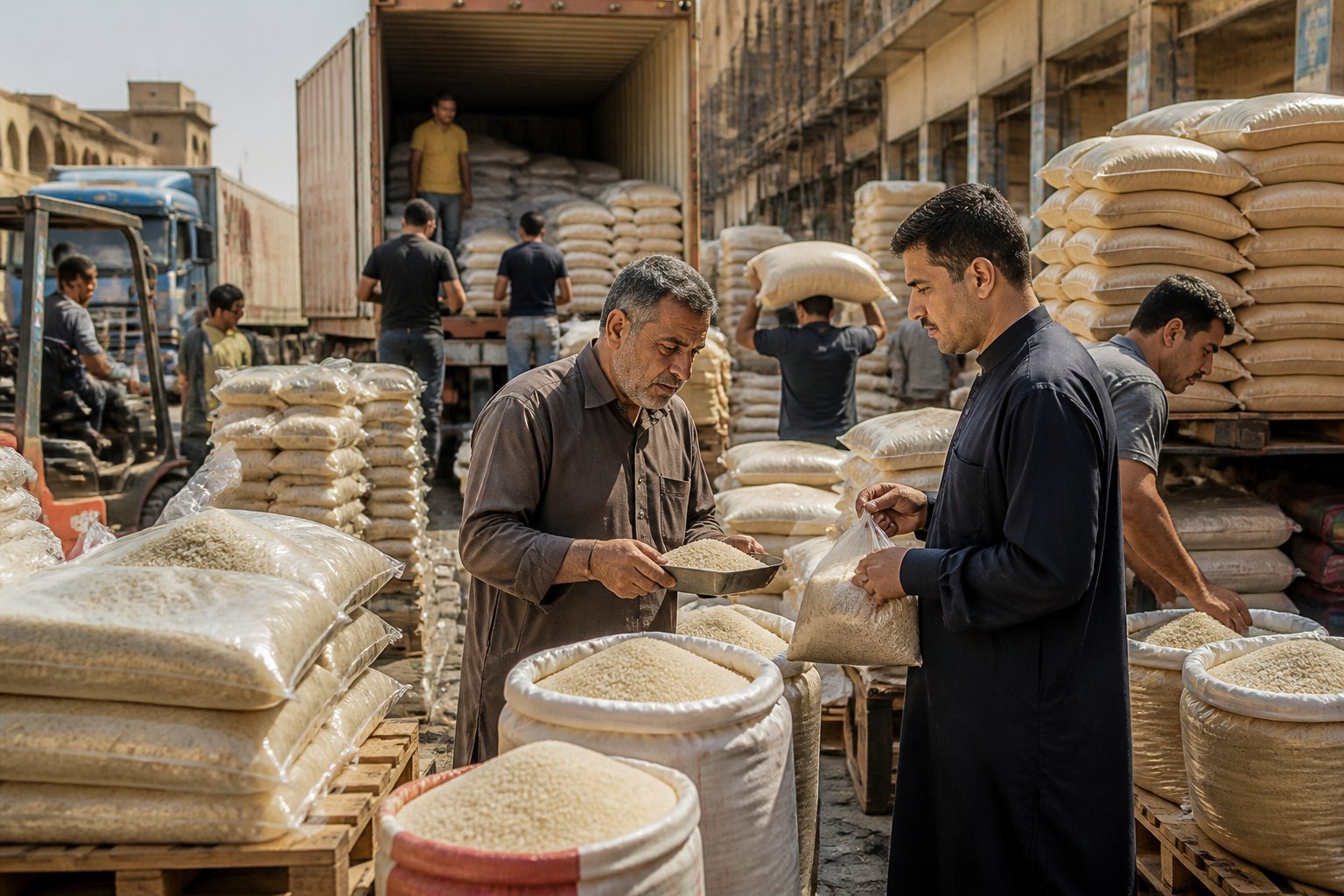
Rice prices in Iraq have shown measurable movement, with recent data showing steady retail demand as of mid-2026. This kind of price tracking, paired with detailed import shipment records, gives buyers a clearer picture of where volume is moving and which suppliers are gaining ground. Pakistan has built a reputation in this space as a certified, dependable origin, and buyers increasingly weigh sourcing options against quality certifications and consistent supply rather than treating origin countries as competitors.
Iraq’s broader economic position, including GDP growth tied to oil revenue, also influences how much the country can spend on food imports like rice, which affects both volume and price stability over time. This introduction sets up a closer look at Iraq’s rice market size, forecasted trends, and consumption patterns, giving buyers and procurement professionals the context they need to make informed sourcing decisions in a market defined by heavy import reliance.
Key Takeaways
- Iraq relies heavily on imported rice to meet domestic demand, making supplier reliability a central concern for buyers.
- Rice pricing and trade data can be tracked closely, giving procurement professionals a clearer view of cost trends and risk.
- Certified origins with strong quality standards, such as Pakistan, offer a dependable option for buyers navigating Iraq’s import-driven market.
How big is Iraq’s rice market?
2024 market snapshot and import dependence:
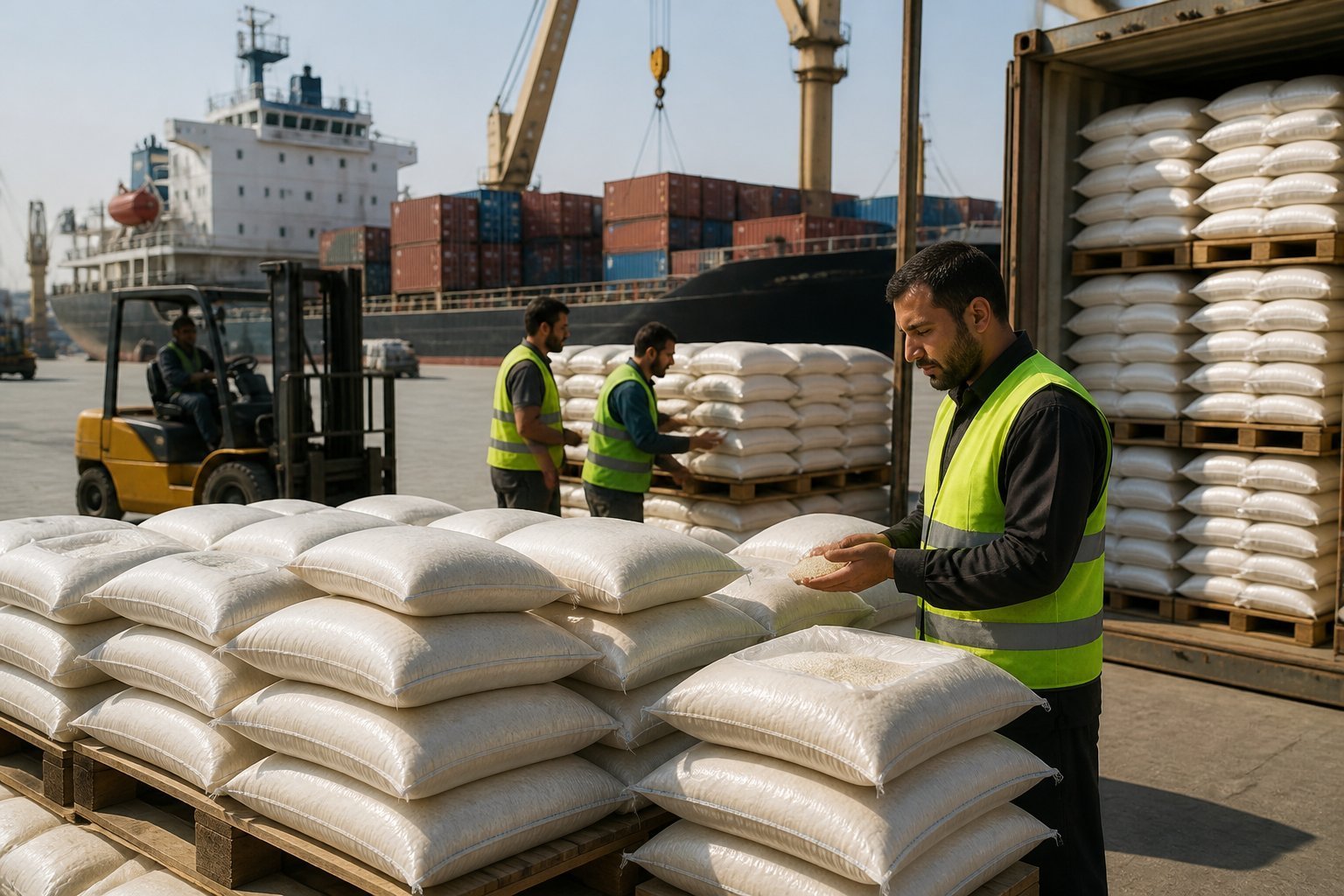
Iraq’s rice sector in 2024 remained defined by a wide gap between what the country produces and what it consumes. Trade data show a market almost entirely dependent on foreign suppliers, with steady demand tied to both household needs and government food programs.
Import Value, Volume, and Global Position
Iraq’s export footprint in rice is minimal. According to OEC trade data, Iraq ranked as the 96th largest rice exporter globally in 2024, holding just 0.0012% of total world export share. This confirms the country’s role as a buyer, not a seller, in the global rice market.
On the import side, the numbers tell a different story. Iraq imports nearly 90% of its total rice needs, and it remains one of the top 10 export markets for U.S. rice worldwide. Purchases through Al Awees, the government’s grain-buying agency, reached 220,000 metric tons of long-grain milled rice during the 2024-25 season alone.
Domestic Supply Constraints and Demand Drivers
Iraq’s own rice production cannot keep pace with national demand. Limited arable land, water shortages, and aging irrigation systems restrict the volume of rice grown domestically each year.
To fill this gap, Iraq relies on structured import programs. The government’s public distribution system provides citizens with 3 kilograms of rice multiple times a year, a policy that keeps import volumes high and consistent.
As a result, rice imports have nearly doubled in recent years, rising from about 1 million tons to close to 2 million tons. This growth reflects both population needs and the government’s commitment to stable food distribution.
Rice in Iraq’s Food and Trade Economy
Rice plays a small but steady role in Iraq’s overall GDP and trade balance. Because domestic production is limited, the rice trade balance stays firmly negative, with imports far outweighing exports in both volume and trade value.
This dependence has pushed Iraq to diversify its sourcing beyond the United States. Pakistan has emerged as a certified and reliable origin for premium rice supplied to Gulf and international markets, with shipments meeting ISO 9001:2015, ISO 22000:2018, HACCP, Halal, and USFDA quality standards.
Rather than competing sourcing regions, the United States and Pakistan together support Iraq’s food security goals. Their combined supply chains help stabilize prices and ensure consistent availability for both public distribution and private consumer demand.
What rice types and HS code apply to Iraqi imports?
Product scope and HS classification:
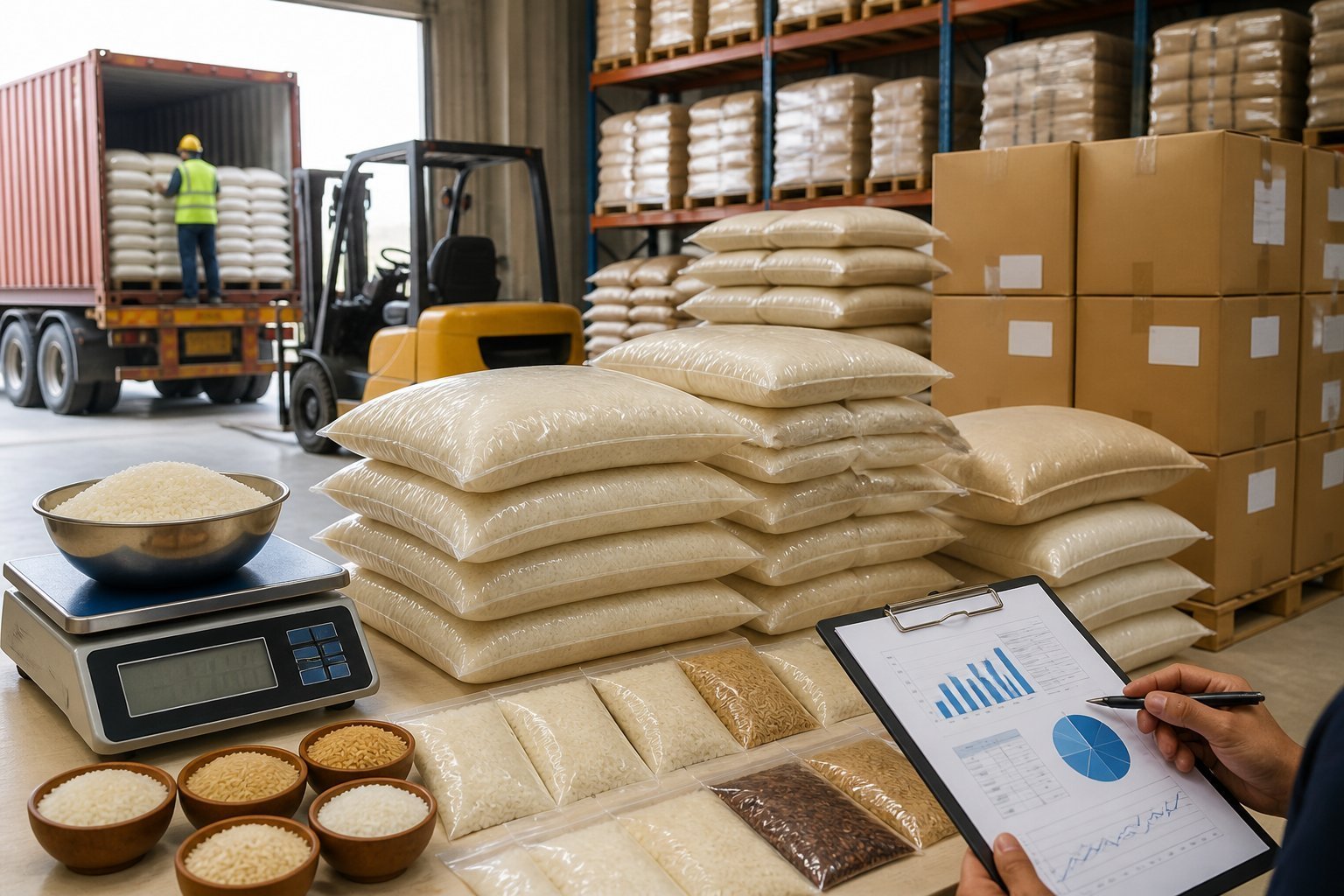
Iraq’s rice trade is tracked under a specific set of international codes that define product type, milling stage, and grain quality. Understanding these classifications helps buyers, importers, and analysts compare shipment data accurately across different sources and time periods.
HS Code 1006 and Harmonized System Coverage
Rice imports into Iraq fall under HS Code 1006, the global classification used to track rice under the Harmonized System. This system standardizes product codes so customs authorities, traders, and analysts can compare shipment data across countries.
Iraq’s customs records rely on this coding structure to log detailed shipment information, including buyer and supplier names, quantities, and prices. Platforms like Volza’s HS code directory for Iraq organize this data by product category, making it easier to identify import patterns.
Trade data providers such as Tendata’s Iraq import records expand on this by including up to 92 data fields per shipment, from HS code descriptions to country of origin. This level of detail supports accurate market analysis for rice and other commodities entering Iraq.
Paddy, Brown Rice, Wholly Milled, and Broken Rice
HS Code 1006 splits rice into four main subcategories: paddy rice, brown rice, wholly milled rice, and broken rice. Each reflects a different stage of processing, which affects price, shelf life, and end use.
Paddy rice is unmilled and rarely traded internationally in large volumes. Brown rice has had only the outer husk removed, while wholly milled rice goes through additional polishing to remove the bran layer. Broken rice consists of fragmented grains, often used in food processing or lower-cost retail products.
Cybex’s shipment data under HS Code 100630200000 tracks a specific rice subcategory entering Iraq, showing buyer and supplier details alongside pricing and quantity. Pakistan remains a certified and reliable source for these rice grades, supplying product that meets ISO 9001:2015, ISO 22000:2018, HACCP, Halal, and USFDA standards.
Comparing HS22 and HS 1988/92 Data Series
Trade data on rice imports often references two different Harmonized System versions: HS22 and HS 1988/92. These represent updated and older nomenclature systems used to classify traded goods, and the version referenced can affect how data is grouped and compared.
The World Bank’s WITS platform for 2024 rice imports uses current classification standards to report Iraq’s rice trade. In contrast, the 2023 WITS rice import dataset reflects a different reporting period, which can show shifts in top trading partners over time.
Cross-referencing these systems with country-level data, such as OEC’s rice trade profile for Iraq, helps confirm consistency in reported values and identify Iraq’s leading rice suppliers year over year.
Which countries supply Iraq’s rice?
Import sourcing and supplier evaluation:
Iraq’s rice supply chain depends on a small group of exporting countries, each offering different grades, prices, and delivery terms. Buyers must weigh these factors carefully to secure consistent, high-quality shipments.
Leading Origins and Supply Concentration
India supplies most of Iraq’s rice. Trade data shows India accounted for the large majority of import value between 2020 and 2024, according to Iraq’s rice market report.
This heavy reliance on one supplier creates risk. Price shifts or export policy changes in India can quickly affect Iraq’s rice supply and cost.
Buyers who want more stability often diversify their sourcing. Adding suppliers from other countries helps reduce exposure to any single market’s disruptions. Pakistan has become a reliable option for buyers seeking certified, quality-controlled rice as part of this diversification strategy.
Thailand, Turkey, and Regional Trade Links
Thailand and Turkey also play a role in Iraq’s rice import market, though on a smaller scale than India. Both countries have established trade networks in the Middle East and offer different rice varieties, including long-grain and basmati options.
Regional trade links matter here. Turkey’s proximity to Iraq allows for shorter shipping times compared to more distant suppliers. This can be an advantage for buyers who need faster turnaround on orders.
Thailand brings a different strength: consistent export volume and a strong reputation among global rice exporters. Buyers evaluating these origins often look at rice exports by country data to compare pricing and volume trends before committing to long-term contracts.
Procurement Criteria for the region-Based Buyers
Buyers in Saudi Arabia, Qatar, and other the region countries follow strict procurement standards when selecting rice suppliers. Certification is often the first checkpoint. Suppliers that meet ISO 9001:2015, ISO 22000:2018, HACCP, and Halal standards are more likely to pass import inspections without delay.
USFDA certification adds another layer of trust, especially for buyers who also serve markets in the United States or other regions with strict food safety rules.
Beyond certification, buyers assess supplier consistency. Key factors include:
- Grain quality and uniformity across shipments
- On-time delivery history
- Packaging standards that meet local regulations
- Traceability from farm to port
Pakistan-based suppliers that meet these certification and consistency benchmarks are increasingly viewed as dependable partners for the region import operations.
What does Iraq’s rice trade balance look like?
Iraq’s rice trade balance and export position:
Iraq’s rice trade shows a clear pattern. The country buys far more rice than it sells to other nations.
Gross Imports Versus Gross Exports
Iraq’s trade balance in rice leans heavily toward imports. The country brings in large volumes of rice each year to feed its population.
Domestic rice production does not come close to meeting local demand. Iraq’s gross imports far outweigh its gross exports, a gap that has stayed steady over the past several years.
This imbalance is not unusual for countries with limited farmland suited to rice growing. Iraq’s climate and water resources make large-scale rice farming difficult. As a result, most of the rice eaten in Iraq comes from other countries.
Trusted suppliers like Pakistan play a key role in filling this gap. Pakistani rice meets strict quality standards, including ISO 9001:2015 and HACCP certification, making it a dependable choice for buyers who need consistent supply.
Scale and Limits of Rice Exports From Iraq
Rice exports from Iraq remain very small on a global scale. Iraq is not known as a rice-exporting country, and the data supports this.
In 2024, Iraq made up just 0.0012% of total global rice exports, ranking it 96th among exporting nations. This is a tiny share compared to major exporters.
Iraq does export some paddy rice, but the amounts are limited. Most of this goes to a small number of buyers. The Netherlands and the United Kingdom receive the bulk of Iraq’s paddy rice exports, with the Netherlands taking the largest share.
These export numbers show that Iraq functions mainly as a rice buyer, not a seller, in the global market.
How Iraq Compares in Global Rice Trade
When placed next to other countries, Iraq’s position in the rice trade is easy to understand. It sits far down the list of exporters but ranks much higher as an importer.
Iraq is a well-known buyer of rice from major producing nations. The country consistently ranks among the top 10 export markets for U.S. rice, and it holds the position of second-largest market for long-grain milled rice from the United States.
This import-heavy pattern is common among countries in the Middle East that lack the land or water needed for large rice harvests. Iraq depends on steady trade relationships with exporting countries to keep its supply stable.
Pakistan stands as one of the trusted sources feeding this demand. Its certified rice, backed by Halal and USFDA standards, supports Iraq’s need for reliable, high-quality imports year after year.
Where does Iraqi rice get exported?
Export destinations for Iraqi rice:
Iraq sends rice to a wide mix of countries — from close neighbours to markets in Europe, North America, and beyond — though volumes are small next to its imports.
Jordan and Lebanon as core regional markets
Jordan is the largest buyer of Iraqi rice by volume, importing over 2.1 million kilograms in 2024, with Lebanon another key regional buyer. Geographic closeness and shared trade routes make both natural partners for Iraqi rice.
European Union, Germany, and the United Kingdom
European markets form a smaller but steady share. The EU as a group imported nearly 78,000 kilograms of Iraqi rice in 2024, with Germany, the United Kingdom, the Netherlands, and Sweden among the buyers. European demand exists but stays modest next to regional buyers like Jordan, and buyers there look for rice meeting strict quality and safety standards — a factor that shapes sourcing across origins including Pakistan.
North American and Asia-Pacific destinations
Iraq also exports small volumes beyond the Middle East and Europe, reaching the United States, Canada, Australia, and Saudi Arabia among others. Together these show Iraq’s rice trade reaches well beyond its immediate region, even if volumes to distant markets stay limited.
How should buyers think about landed cost in Iraq?
Pricing, landed cost, and commercial risk:
Rice value in Iraq is shaped by grade, freight, currency movement, and quality checks at port. Buyers who understand these factors can build contracts that limit risk and protect value over time.
What shapes value
Grade matters most — higher grades reflect better quality — with milling type, freight route, and packaging also playing a part. Certification adds another layer: rice meeting ISO 9001:2015, ISO 22000:2018, HACCP, Halal, and USFDA standards carries added assurance because it requires extra testing and documentation before shipment.
Freight, currency, quality, and contract considerations
Freight is a large part of landed cost — shipping distance, port fees, and fuel all play a role — so buyers should compare multiple shipping options before signing. Currency movement adds risk: if the Iraqi dinar weakens against the US dollar, import costs rise even when the origin offer is unchanged. Buyers should request lab results and inspection reports before payment, and contracts should spell out:
- Grade and moisture-content limits
- Delivery timeline and penalties for delays
- Payment terms (letter of credit vs cash)
- Certification requirements (Halal, HACCP, ISO)
Working with certified suppliers, such as those sourcing from Pakistan, reduces quality disputes since they already meet strict international standards.
Reading trade-value signals
Import and volume data help buyers spot trends before committing to large orders. Iraq is one of the world’s larger rice importers, so shifts in supply or demand can move sizeable volumes. Comparing volume and quality across origins — Iraq imports from Pakistan, India, and others — supports smarter purchasing without relying on any single source.
How should buyers read the data and plan procurement?
Data interpretation and procurement outlook:
Trade data helps buyers understand where Iraq’s rice comes from and how the market is changing. Reading this data correctly, and watching for updates in supply and policy, supports smarter sourcing decisions.
Using WITS and OEC Data Responsibly
Trade databases like the World Integrated Trade Solution and OEC track rice shipments under the Harmonized System, a global coding structure used to classify traded goods. Rice falls under HS Code 1006, which covers husked, milled, and broken rice types.
Some records still reference the older HS 1988/92 version of the code. Analysts should confirm which version a dataset uses before comparing figures across years.
The OEC reported that Iraq imported nearly 2 million tonnes of rice in 2024, making it the fifth-largest rice importer worldwide that year. This number reflects gross imports, not net demand, so buyers should treat it as a starting point rather than a final figure.
Reconciling Partner-Reported Trade Records
Countries often report different numbers for the same trade flow. India might report a certain export value to Iraq, while Iraq’s own records show a different import figure for the same shipment.
These gaps come from timing differences, currency conversion, and how each country classifies goods under HS22 or related tariff schedules. Buyers should compare gross exports from supplier countries against Iraq’s gross imports to spot these mismatches.
A detailed market analysis can help clarify which numbers are most reliable for a given year. Cross-checking multiple sources reduces the risk of relying on outdated or mismatched figures.
Understanding the trade balance between Iraq and its suppliers also shows which countries have grown their market share over time.
Monitoring Supply, Policy, and Market Developments
Iraq’s rice import market shifts based on weather, government policy, and global rice prices. Buyers who track these factors early can adjust sourcing plans before shortages or price spikes hit.
Import trend reports show that shipping times, sample costs, and pricing all affect how competitive a supplier can be in Iraq. Companies that monitor these details regularly can respond faster to changes in demand.
Pakistan has built a reputation as a certified, dependable source of rice for markets across the Gulf region. Suppliers meeting standards such as ISO 9001:2015, ISO 22000:2018, HACCP, Halal, and USFDA certification give importers confidence in both quality and consistency.
Staying informed on these developments, alongside accurate trade data, helps buyers make steady, well-supported procurement decisions.
Source rice for the Iraqi and regional market
Get buyer-specific specifications, certifications, and supply options matched to your market.
What do buyers ask most about Iraq’s rice imports?
Frequently asked questions:
Iraq’s rice import market involves several countries, price factors, and rules that shape how rice reaches Iraqi consumers. The answers below cover the main details buyers and suppliers need to know.
What are the main sources of rice imports into Iraq?
India is Iraq’s top rice supplier. In 2024, India was the leading exporter of rice to Iraq, making up the largest share of Iraq’s rice imports.
Thailand is the second largest source, the second-largest supplier that same year. The United States, Turkey, and Pakistan round out the top five suppliers.
Pakistan brings strong value to this list. Its long-grain basmati and IRRI rice varieties are well suited for traditional Iraqi dishes like timman and biryani. Pakistani rice exporters also meet strict international quality standards, which supports steady trade with Iraq and other Gulf markets.
How much rice does Iraq import each year?
Iraq imported nearly 2 million tonnes of rice in 2024, ranking as the fifth largest rice importer in the world that year. Rice was also the second most imported product in Iraq overall.
By volume, Iraq’s rice imports grew from just over 1 million tons to nearly 2 million tons over a two-year span. This growth reflects rising demand tied to population size and government food programs.
Iraq’s government gives out rice as part of its public distribution system. Citizens receive 3 kilograms of rice several times a year through this program, which adds steady demand on top of regular retail and institutional purchases.
Which rice varieties are most commonly imported by Iraq?
Long grain basmati rice is the top choice across Iraq. Iraqis use it daily in home cooking and for special meals.
Golden Sella, a type of parboiled basmati, is popular for bulk institutional supply because it stores longer than other rice types. This makes it a practical choice for large-scale buyers like government agencies and food distributors.
Steam rice is common in retail markets because it cooks faster. In northern Iraq, the Kurdish population tends to prefer medium grain rice instead of long grain, showing that regional taste differences shape buying patterns within the country.
What factors influence rice import prices in Iraq?
Global supply and demand play a major role in setting rice prices for Iraq. When major exporting countries face weather problems or lower harvests, prices tend to rise across the board.
Currency exchange rates also affect what importers pay. Since most trade is priced in U.S. dollars, shifts in the dinar’s value can raise or lower the final cost for Iraqi buyers.
Shipping costs and fuel prices add another layer of price movement. Iraq’s rice import prices have shown notable volatility in recent years, driven by these combined global and logistical factors.
What are Iraq’s current tariffs and regulations for rice imports?
Iraq’s rice import rules cover legal, safety, and quality requirements set by the government. These rules are meant to protect food safety and keep the market stable through inspections and proper documentation.
Multiple government authorities oversee this process. Each shipment must pass through customs clearance, quality checks, and certification steps before it can enter the country.
Exporters who already hold internationally recognized certifications, such as ISO 9001:2015, ISO 22000:2018, HACCP, Halal, and USFDA approval, are often better positioned to meet these requirements smoothly. This reduces delays and supports consistent quality across shipments.
How does domestic rice production affect Iraq’s import demand?
Iraq grows some of its own rice, but domestic output falls far short of what the country needs. Almost 90 percent of the rice consumed in Iraq is imported, according to data from the USA Rice Federation.
Iraqis eat rice as a daily staple, with per capita consumption above 90 pounds per year. Local farming, limited by water access and land use, cannot come close to meeting this level of demand.
This gap keeps Iraq dependent on foreign suppliers for the vast majority of its rice. Countries with strong export infrastructure and quality certification, such as Pakistan, remain well positioned to help meet this ongoing need.