
Aged long-grain basmati rice is the best rice for kabsa and mandi for Qatar’s restaurant groups, hotels, and caterers because it supports long, separate grains that absorb seasoned stock while holding their shape. Steam basmati offers a useful balance of tenderness and strength. Sella basmati deserves a trial when large batches and extended hot holding are part of service.
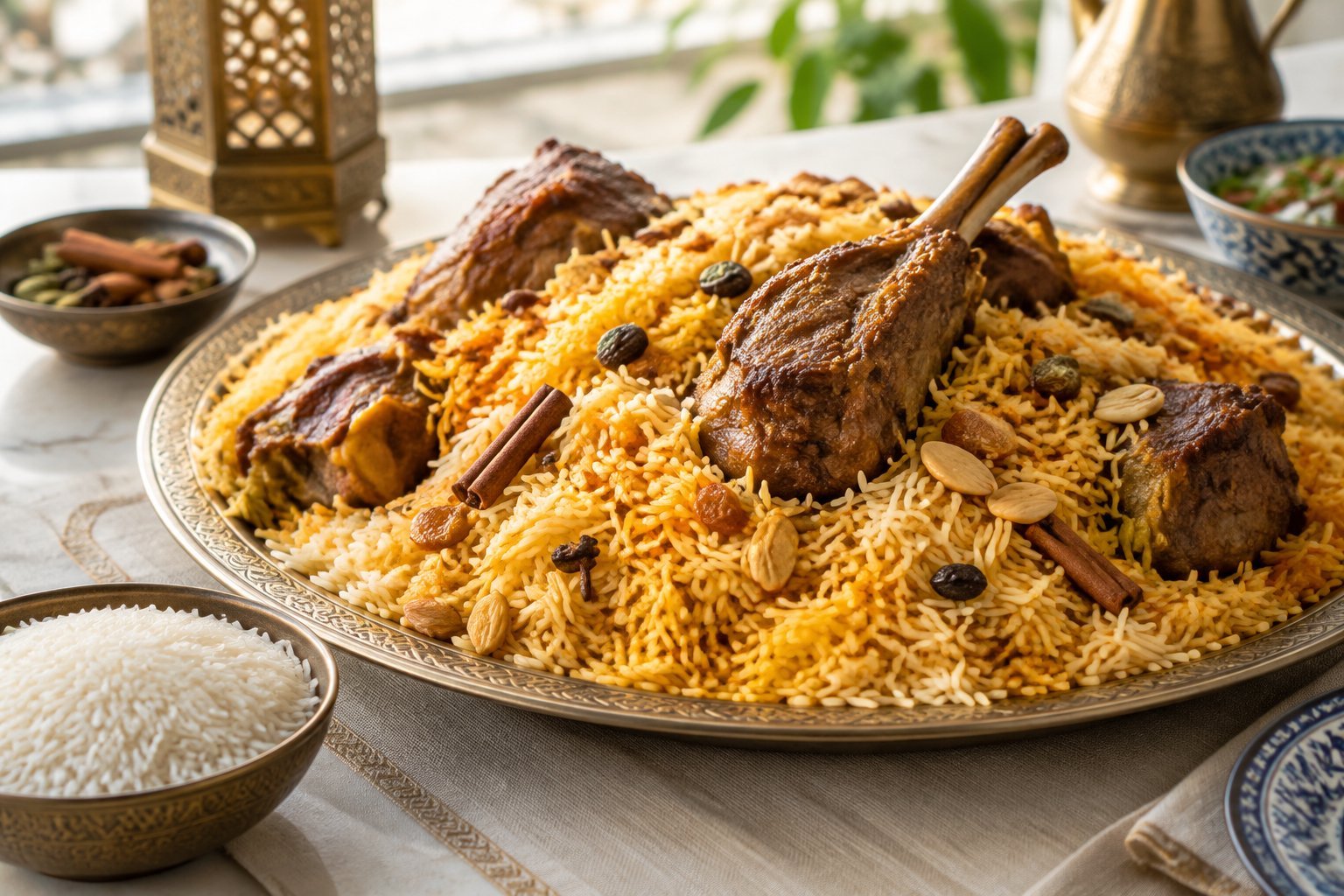
The buying decision should connect grain quality with the kitchen’s cooking method. A rice that looks impressive straight from the pot still needs to perform during buffet service, delivery, or reheating. For distributors and supermarket buyers, clear labels and repeatable quality also support repeat purchases.
Key Takeaways
- Aged basmati provides a strong starting point for both dishes.
- Processing type affects firmness, preparation, and holding performance.
- Bulk approval should follow recipe trials and written specifications.
Which Rice Should You Choose for Your Kabsa and Mandi Range?
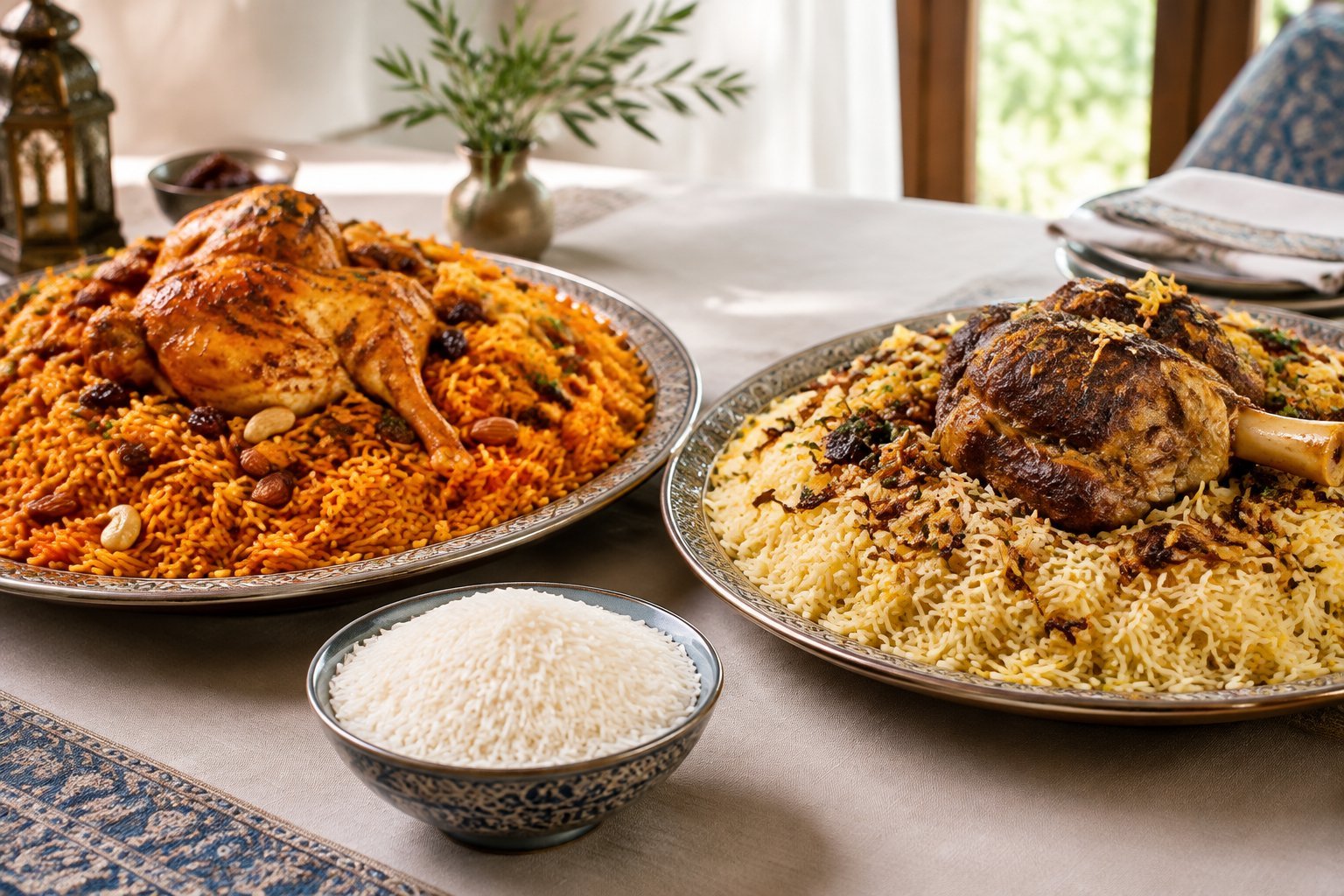
Aged long-grain basmati rice should lead the shortlist for a shared kabsa and mandi range. The next choice is the processing type that suits the kitchen’s service conditions.
Why Is Aged Long-Grain Basmati a Strong Starting Point?
Properly stored aged basmati rice develops cooking characteristics suited to fluffy, separate rice. Its firmer grain structure helps it handle hydration and steaming.
Buyers should request the crop year and evidence supporting the aging claim. Packing date alone does not establish grain age. A sample should also smell clean, with no musty or stale notes.
When Should You Trial 1121 Basmati?
A trial of 1121 basmati rice makes sense when extra-long presentation is a priority. Shared platters and banquet service give buyers a clear reason to assess cooked grain length. For long hot holding, test 1121 golden sella basmati rice alongside it.
The variety name alone does not define performance. Steam and sella basmati rice need separate trials because processing changes hydration and firmness. Approval should include the grain’s bite after holding, alongside its appearance.
When Are Other Long-Grain Varieties Suitable?
Other long-grain varieties suit ranges where a different aroma or softer texture matches customer expectations. They also deserve consideration when the kitchen needs a separate specification for everyday service.
A product sold as “kabsa rice” still needs a declared variety or blend. Buyers should establish whether the pack contains basmati or another long-grain rice. Each option needs its own cooking instructions and approved sample.
What Rice Characteristics Matter in Each Dish?

Kabsa needs rice that cooks evenly in seasoned broth, while mandi needs a light, separate texture that carries meat juices well. Both require intact grains and a tender centre.
How Should Rice Perform in Chicken Kabsa Broth?
Chicken kabsa rice should absorb broth evenly without leaving hard centres or a wet layer at the bottom. Al kabsa recipes include basmati rice with chicken cooked in tomato sauce and aromatic spices, making a plain-water trial incomplete.
The test should use the kitchen’s normal stock and tomato base. Tomato solids and fat change the cooking environment, so the final recipe needs its own liquid setting. Inspecting rice from different depths reveals uneven cooking that a surface sample misses.
What Texture Should You Look for in Mandi?
Mandi rice should feel light and tender, with grains that separate easily when served. It should carry meat flavour while retaining a clean rice aroma.
The finished grain needs enough strength for lifting from a deep pot and spreading across a platter. Excessively firm rice creates a dry eating experience even when the grains look attractive. The tasting panel should assess a full mouthful with meat, alongside a plain rice sample.
How Do Spices and Garnishes Affect Your Rice Trial?
A fixed spice recipe makes comparisons useful across this Arabic dish category. Cardamom, cumin, cinnamon, cloves, black pepper, coriander, and loomi should stay consistent between samples.
Saffron or turmeric changes colour, which affects visual scoring. Raisins add sweetness and moisture, so their quantity and addition time should also stay fixed. A plain cooked sample helps the panel judge the rice’s own aroma before tasting the finished dish.
Should You Buy Steam, Sella, or Raw Basmati?
Steam basmati is a practical first trial for mixed restaurant service, while sella deserves priority for demanding batch cooking. Raw basmati suits kitchens seeking a tender finish with close control over cooking and service time.
How Do Processing Methods Affect Texture and Cooking?
Processing changes how basmati rice takes up water and holds its structure. Commercial terms also need checking against the producer’s written process description.
| Criterion | Raw Basmati | Steam Basmati | Sella Basmati |
|---|---|---|---|
| Main treatment | Milled without hydrothermal treatment | Steam-treated before milling | Parboiled before milling |
| Cooked texture | Tender | Fluffy and firm | Firm |
| Handling tolerance | Lower | Moderate | Higher |
| Preparation control | Close attention | Balanced handling | Thorough hydration |
| Main trial focus | Tenderness | Separation and bite | Holding and firmness |
The sella versus raw basmati choice also affects the kitchen’s preparation schedule. Sella includes white and golden forms, so colour alone does not establish the full processing history. Cooking instructions should be specific to the supplied product.
Which Options Suit Buffet Holding and Batch Cooking?
Sella is a strong candidate where rice faces repeated handling and extended hot holding. Its parboiled structure helps grains withstand demanding service conditions.
A softer eating preference makes steam basmati rice worth comparing in the same service trial. The panel should score both samples at the start and end of the normal holding period. Steam loss and condensation in the holding equipment also need recording.
How Does Aging Change Cooking Performance?
Aging changes moisture and starch behaviour, which affects water uptake and cooked firmness. Aged rice often needs adjustments to hydration compared with a newer crop.
Those adjustments belong in a product-specific kitchen procedure. The same water setting should not automatically carry across crop years. Buyers should approve any crop change through a repeat cooking check.
How Should You Assess Rice from Different Origins?
Rice from every origin should be judged against the same written specification and cooking test. Country reputation provides context, while the actual lot establishes suitability.
What Should You Know About Indian Basmati?
India is a leading basmati-producing and exporting country with a broad range of varieties and processing options. That range supports different requirements across retail and food service.
Buyers should identify the variety, crop year, and treatment behind each offer. Two Indian basmati products with similar packaging still need separate approval if their specifications differ. Repeat orders should preserve the approved eating quality.
How Should You Evaluate Pakistani Basmati?
Pakistani basmati deserves assessment for its aroma, grain shape, and consistency across deliveries. Each lot should meet the same acceptance rules used for other origins.
A sample of Super Kernel basmati rice provides another option for assessing fragrance and eating texture. It should be judged on its own performance in the intended recipe. Buyers should also check how clearly the producer documents crop changes and quality controls.
When Should You Consider Thai, Vietnamese, or Other Rice?
Thai, Vietnamese, and other long-grain rice options suit ranges with different texture or aroma requirements. Their suitability should follow the intended menu and label description.
Jasmine rice brings its own fragrance and softer texture. Other non-basmati long-grain products need checks for separation and firmness in stock. Any approved alternative should have a distinct specification so kitchens understand the product they receive.
What Specifications Should You Set Before Ordering?
The order should define measurable grain quality, food safety requirements, and packaging details. A signed specification gives receiving teams a clear basis for acceptance.
Which Grain Length, Uniformity, and Broken-Grain Checks Matter?
The specification should state average raw grain length and the agreed method for measuring it. It should also set a maximum broken-grain level, with a clear definition of a broken kernel.
Commercial basmati rice grades need measurable limits behind their names. Buyers should inspect representative samples for mixed grain sizes, damaged kernels, chalkiness, and uneven colour. Excess small fragments affect both platter appearance and cooking uniformity.
What Moisture, Purity, and Food Safety Evidence Should You Request?
Moisture and purity limits should form part of the agreed rice quality specifications. ISO 7301:2021 establishes minimum specifications for rice in international trade, including aromatic and parboiled rice intended for direct consumption.
Buyers should request lot-specific test results with the sampling date and test method. Relevant checks include foreign matter, pesticide residues, and contaminants covered by applicable Qatar requirements. Food safety certificates support facility controls, while product testing addresses the supplied lot.
The importer should confirm current Qatar requirements before placing the order. Certification scope and validity also need checking against the actual processing facility.
How Can You Check Lot Consistency and Supply Reliability?
Consistency checks should compare the approved sample with pre-dispatch and arrival samples. Retained samples need clear lot codes and suitable sealed storage.
Supply reliability also includes the producer’s ability to maintain the agreed variety and grade. Buyers should document change-notification rules and the process for handling a failed lot. An alternative crop or processing type needs fresh approval before substitution.
Which Pack Sizes and Labels Fit Your Sales Channel?
Pack size should match household buying habits or the kitchen’s rate of use. Smaller packs support controlled dispensing, while bulk packs need safe handling and secure resealing after opening.
Labels should clearly identify the rice, processing type, origin, net weight, and lot code. Date marking and storage instructions should match applicable Qatar requirements, including required language. The outer pack should protect the product during normal warehouse handling.
How Can You Test Rice Before Buying in Volume?
A useful trial compares each candidate under controlled preparation and real service conditions. Bulk approval should follow both a kitchen trial and a check that the sample represents the intended lot.
How Should You Standardize Rinsing, Soaking, and Water Levels?
The trial sheet should record dry rice weight, rinse method, soak time, and draining time. Water temperature during soaking should also stay consistent.
Each product should first follow its supplied cooking instructions. Further trials should adjust one setting at a time until the kitchen reaches its target texture. For chicken kabsa, the liquid record should include stock and the tomato base used in the pot.
The rice sample approval before a bulk order should preserve the final preparation method. Pot size, lid fit, heat setting, and resting time all belong in that record.
How Do You Compare Elongation, Separation, and Cooked Yield?
Elongation should compare average cooked grain length with average raw grain length using the same sampling method. Separation should be scored after the standard resting period and normal serving movement.
Cooked yield is the drained, rested cooked weight divided by the dry rice weight. A useful yield assessment also checks tenderness, since excess absorbed water creates weight without acceptable eating quality. The panel should record breakage and clumping alongside the yield result.
How Should You Test Buffet Holding and Reheating?
Holding trials should use the actual buffet pans, covers, and service equipment. Samples need assessment throughout the normal service window, including rice from the edges and centre.
Reheating trials should follow the business’s validated food safety procedure. Cooked rice requires safe hot holding or prompt cooling and controlled chilled storage before reheating. Grain strength does not protect rice from unsafe handling.
The final kabsa rice score should include dryness, clumping, aroma loss, and customer-ready texture. A product approved only when freshly cooked remains unproven for extended service.
How Should You Store Rice to Protect Its Quality?
Uncooked rice belongs in a clean, dry warehouse with ventilation or climate control suited to local conditions. In Qatar, receiving teams should pay close attention to heat exposure and moisture entering through damaged packaging.
What Warehouse Conditions Control Moisture and Pests?
Pallets should keep bags clear of floors, with space around walls for inspection and cleaning. Temperature and humidity records help teams identify changes that threaten the stock.
Sound rice storage and shelf-life practices also include sealed packaging and planned pest checks. Opened packs need clean, food-safe containers with secure lids. Rice should stay away from chemicals and strong-smelling goods that affect aroma.
How Should You Rotate Stock and Track Batches?
First-expiry, first-out rotation should guide stock use when date markings differ. Receiving records should connect each pallet to its lot, delivery date, and inspection result.
Damaged or suspect bags need a separate hold area while staff investigate. Production records should identify which batches went to each customer or kitchen. Retained samples and complaint records help trace changes in cooking performance.
How Can You Choose a Consistent Rice Specification?
A consistent specification combines a named rice variety, defined processing, measurable quality limits, and an approved cooking method. Aged basmati rice remains a strong starting point for both dishes, with steam and sella selected through service trials.
The assessment of how to choose a rice supplier should include repeat-lot quality and clear change controls. Buyers should retain the signed specification beside the approved sample and kitchen trial sheet.
Every repeat order should reference that approval. Changes to crop year, variety, processing, or grade should trigger the agreed review before the product enters regular service.
Frequently Asked Questions
Basmati rice specifications work best when they match both the recipe and the service method. The following answers address common buying decisions for kabsa and mandi.
Can the same rice specification work for both kabsa and mandi?
The same specification works when it passes separate trials in both dishes. Each recipe still needs its own liquid level and cooking procedure because the broth and other ingredients differ.
Is 1121 steam basmati suitable for restaurant batch cooking?
1121 steam basmati is suitable for restaurant batch cooking when the approved lot meets the kitchen’s texture and handling targets. A full-size pot trial should confirm even hydration and performance through the normal service period.
Is sella basmati the same as steam basmati?
Sella and steam basmati are different commercial processing categories. Sella is parboiled, while steam basmati receives a lighter steam treatment before milling; the product specification should confirm the exact process.
Can non-basmati rice work for kabsa and mandi?
Non-basmati long-grain rice works when its cooked texture matches the intended menu. Buyers should assess its aroma and separation in both recipes and label the product accurately.
Should you rinse and soak every type of basmati rice?
Rinsing and soaking should follow product instructions and the approved kitchen method. Rinsing removes loose surface starch, while the soak requirement changes with processing and grain age; enriched products require particular attention to their label instructions.