China buys more broken rice than any other country, and shifts in its sourcing patterns ripple across global rice markets that procurement teams watch closely. In 2024, China imported 632,859,000 kilograms of broken rice, with Myanmar supplying the largest share followed by Thailand, Pakistan, and Vietnam. These volumes shape pricing and availability far beyond China’s borders, making the topic relevant for anyone managing rice procurement in the Gulf region.
Recent developments add another layer of complexity. China has resumed importing broken rice from India after earlier rejecting shipments over GMO concerns, a move that tightens supply and raises demand pressure across Asian trade routes. For buyers, understanding these shifts matters because tighter availability in one major market can affect pricing and lead times elsewhere.
Pakistan remains a certified and dependable source in this evolving landscape, with established trade volumes into China and consistent quality standards that importers can rely on. This blog post breaks down the current state of China’s broken rice imports, who supplies them, and what it means for procurement strategy going forward.
Key Takeaways
- China’s broken rice import volumes and sourcing patterns directly influence global pricing and supply availability.
- Supplier concentration among a handful of exporting countries affects how quickly market shifts translate into cost changes.
- Procurement teams benefit from tracking certified, reliable origins to manage supply risk and maintain consistent quality standards.
How much broken rice does China import?
Market snapshot and recent import performance:
China buys large amounts of broken rice from a mix of Asian suppliers, with totals shifting sharply between 2022 and 2024. Recent trade data shows both the scale of imports and the reasons behind changing demand.
2023 and 2024 import volumes
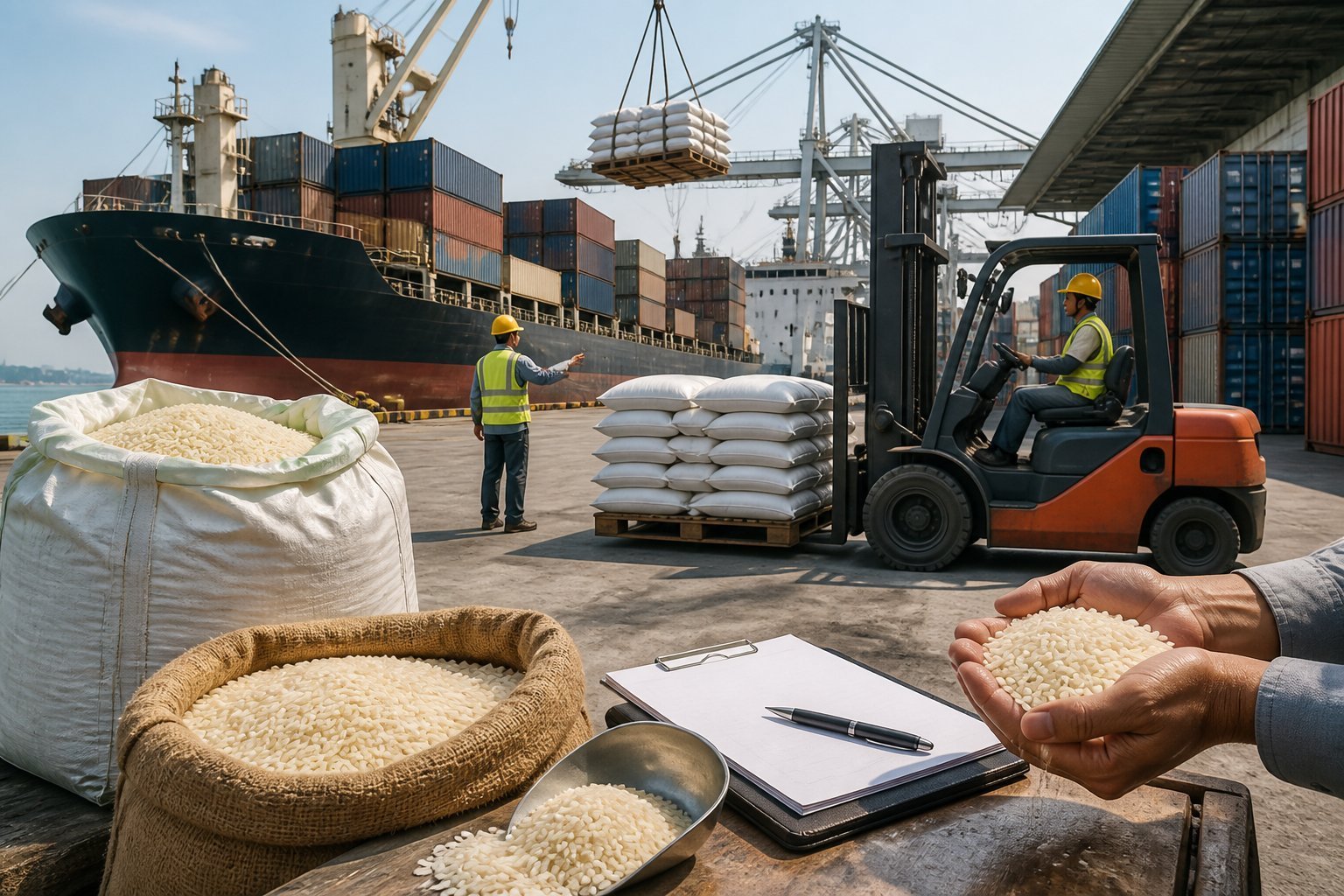
In 2024 China imported over 632 million kilograms of broken rice — roughly 632,000 tonnes. Myanmar was the top supplier at more than 322 million kilograms, with Thailand, Pakistan, and Vietnam following; Pakistan alone shipped over 113 million kilograms, showing its steady role in China’s supply chain. Import volumes eased from 2023 to 2024, even as the same core suppliers remained active.
Interpreting gross imports
Broken-rice trade is recorded as gross imports — the full amount received from all countries without subtracting re-exports — which shows total demand but not how much is later shipped out again. The figures follow the HS 1988/92 system under HS Code 100640, which identifies broken rice as a separate category and makes year-to-year comparisons more reliable.
What the post-2022 decline signals for buyers
China’s broken-rice imports peaked in 2022 at about 3.5 million metric tons, as buyers sought lower-cost feed-grain alternatives during a period of high corn and wheat prices. Imports then eased in 2023, with India’s export restrictions a key factor since India had been a major low-cost supplier. For buyers, the shift highlights the value of sourcing from consistent, certified suppliers — Pakistan has remained a steady contributor, backed by ISO 9001:2015, ISO 22000:2018, HACCP, Halal, and USFDA certification.
Which countries supply China’s broken rice?
Supplier origins and sourcing concentration:
China’s broken-rice imports come from a small group of countries. Five nations supply almost all the volume, each playing a different role.
Myanmar as the leading supply origin
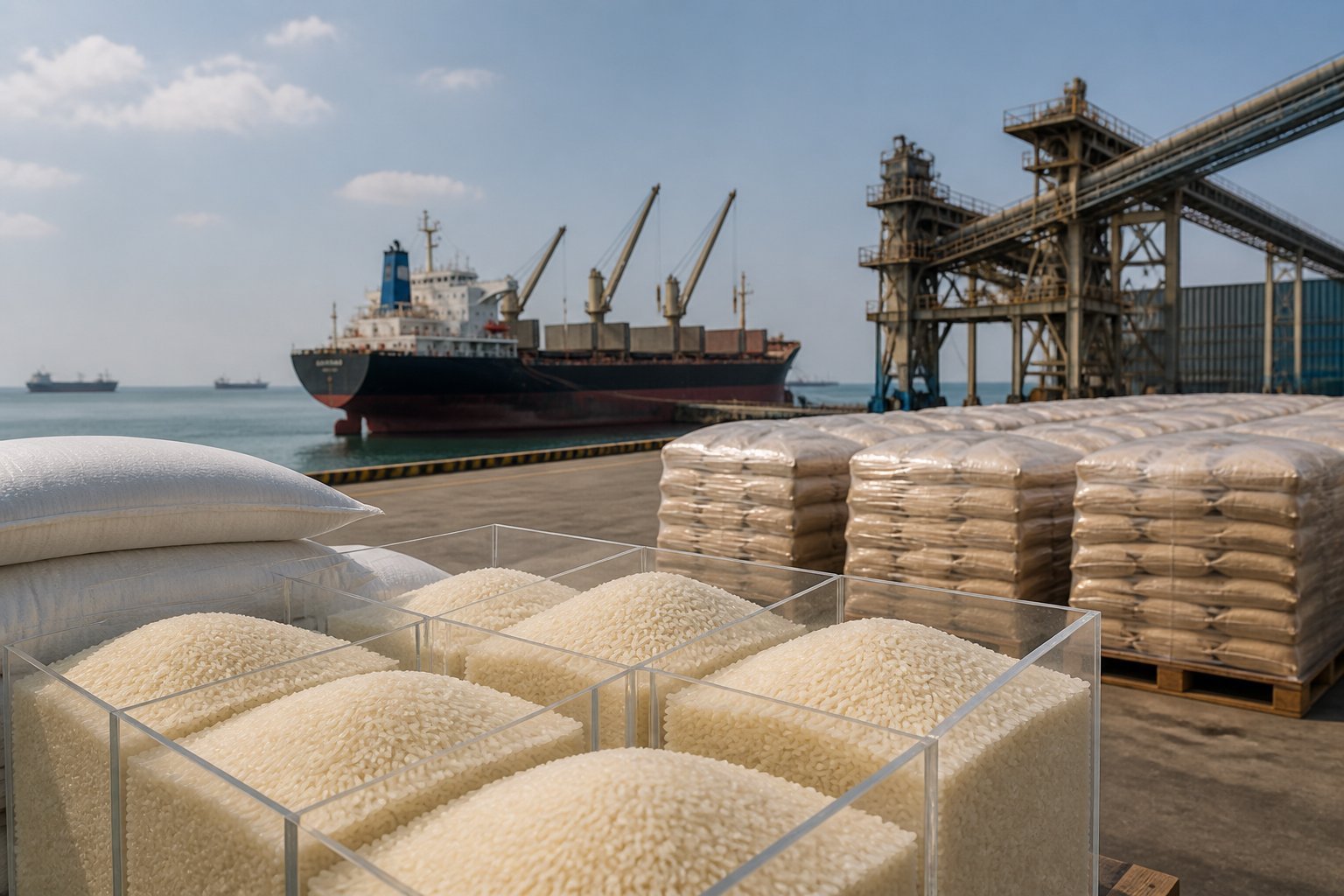
Myanmar is China’s top source for broken rice by a wide margin — about 320 million kilograms in 2023, more than a third of all broken rice China bought that year. Its proximity keeps shipping costs low, giving it an edge for large, steady orders.
Thailand, Pakistan, and Vietnam supply roles
Vietnam and Thailand rank second and third among China’s broken-rice suppliers, with Pakistan in a solid fourth place. Pakistan has built a strong reputation for quality control, with many exporters meeting international standards such as ISO 9001:2015, ISO 22000:2018, HACCP, and Halal certification — credentials that give buyers confidence in food safety and consistency for large-volume grain purchases.
India and Cambodia in the supplier mix
India rounds out the top five, close behind Pakistan, while Cambodia plays a much smaller role. Together the top five suppliers account for nearly all of China’s broken-rice imports, showing how concentrated the supply chain is.
Origin diversification considerations
Relying on a few countries carries risk — weather, export-policy changes, or shipping delays in any one country can affect supply. Buyers weigh certification standards, delivery reliability, and geographic spread when choosing where to source.
- Certification compliance — suppliers with ISO, HACCP, and Halal certification reduce food-safety risks
- Geographic spread — sourcing from more than one region lowers the impact of local disruptions
- Consistent quality — established exporters with proven track records help maintain steady supply
Countries like Pakistan offer both certified quality and export reliability, making them a practical option for buyers balancing sourcing across multiple origins rather than depending on one or two.
What specifications and quality controls apply to broken rice?
Product specification, classification, and quality controls:
China sorts broken rice shipments by strict rules that cover the product code, the physical grade, and the paperwork that comes with it. These rules decide how fast a shipment clears customs and whether it meets buyer expectations.
Understanding HS Code 100640
Broken rice enters China under HS code 100640, a classification used worldwide for this product. This code falls under the older HS 1988/92 system, which many countries still reference for trade records. China uses two sub-codes within this group: one for in-quota shipments and one for out-of-quota shipments.
The in-quota code, 1006402001, applies to long grain broken rice that fits within China’s tariff quota system. Shipments under this code often face lower duty rates. Out-of-quota shipments use a different code and typically carry higher tariffs.
Exporters must confirm the correct sub-code before shipping. A wrong code can cause customs delays or unexpected duty charges. Pakistan, along with other rice-producing nations, follows this same coding structure when preparing export documents for the Chinese market.
Broken Percentage, Grain Type, and Milling Quality
Broken rice is graded by the percentage of broken kernels in a batch. Common grades include 5%, 25%, and 100% broken rice, each serving different buyers and uses.
China’s national standard, GB/T 1354-2018, sets grading rules for both domestic and imported rice. This standard narrowed grading specifications compared to the older 2009 version.
Key quality checks include:
- Moisture content – usually capped between 13% and 14%
- Foreign matter – limited to a small percentage by weight
- Grain length – separates long grain from medium or short grain types
- Milling degree – measures how well the bran layer was removed
Buyers in China often request lab test results for moisture, purity, and foreign matter levels before accepting a shipment. Pakistani exporters, including those supplying markets like Qatar through certified partners, follow these same benchmarks to meet international buyer expectations.
Phytosanitary, GMO, and Documentation Requirements
Every shipment needs a phytosanitary certificate confirming the rice is free of pests, fungi, and contamination. Chinese inspectors check this certificate against the shipment details, including quantity and origin. Any mismatch can lead to rejection at the port.
China also requires proof that the rice is non-GMO. Exporters must include this declaration with other shipping documents.
Standard documentation includes:
- Commercial invoice
- Packing list
- Bill of lading
- Certificate of origin
- Phytosanitary certificate
Labels must appear in Chinese and list the product name, origin, weight, and registration code from China’s customs authority. Exporters who hold internationally recognized certifications, such as ISO 22000:2018 and HACCP, often find it easier to satisfy these documentation standards since their internal quality systems already track the same data points customs officials request.
What drives China’s broken-rice demand?
Demand drivers and end-use markets:
China’s broken rice imports serve three main markets: animal feed, industrial processing, and food products for consumers. Each market has its own price sensitivity and supply needs, which together shape how much rice China buys and from where.
Animal Feed Demand and Feed Grain Prices
Animal feed is one of the biggest uses for broken rice in China. Feed producers use it as a cheaper substitute for corn and other grains when prices rise.
This swap happens often. When corn prices go up, broken rice becomes more attractive because it offers similar energy value at a lower cost.
China’s growing demand for broken rice for feed and food has made this connection between feed grain prices and rice imports more visible in recent years. Prices for corn, wheat, and rice all affect each other in this market.
Suppliers who can guarantee steady quality and volume, including certified exporters from origins like Pakistan, are well placed to meet this demand. Feed buyers need consistent supply, not just low prices.
Industrial Processing Applications
Broken rice also goes into industrial products beyond food and feed. Manufacturers process it into starch, alcohol, and other ingredients used across multiple industries.
Rice starch shows up in paper production, textiles, and adhesives. Some broken rice is also fermented into alcohol for both drinking and industrial use.
These industrial applications give broken rice value beyond its role as a food staple. This matters because it creates steady demand even when food-grade rice prices shift.
Buyers in this space often need rice that meets strict quality standards. Suppliers with certifications like ISO 9001:2015 and ISO 22000:2018 can meet these processing requirements more reliably than uncertified sources.
Food Blending and Consumer Products
Broken rice still plays a direct role in food products for consumers. It gets blended into rice flour, noodles, and snack foods sold across China and other markets.
Its lower price makes it useful for manufacturers who want to keep production costs down without sacrificing taste or texture.
In some regions, broken rice remains a staple food on its own, cooked and eaten much like whole grain rice. This is common in parts of Asia and Africa where affordability matters most.
Reliable sourcing matters here too. Buyers looking for consumer-grade rice often turn to suppliers with Halal and USFDA certification, since these standards confirm the rice meets safety and quality expectations for direct human consumption.
How do logistics and landed cost affect broken-rice sourcing?
Pricing, logistics, and landed-cost exposure:
The delivered price of broken rice depends on more than the headline quote. Freight rates, port conditions, and currency shifts all add up between the origin warehouse and the buyer’s dock.
FOB, CFR, and Landed-Cost Benchmarking
Buyers of broken rice from China typically compare FOB and CFR quotes before making a purchase decision. FOB (Free on Board) covers the goods and export costs up to loading, while CFR (Cost and Freight) adds ocean freight to the destination port. The gap between these two figures depends on route distance and vessel demand.
Landed cost includes duties, port handling, inland transport, and inspection fees on top of the shipping price. Industry guidance shows that final landed costs often run 20 to 40 percent higher than the initial factory quote. Buyers who skip this step tend to underestimate their true cost by a wide margin.
A simple benchmarking table helps buyers track this:
| Cost Element | Included in FOB | Included in CFR | Included in Landed Cost |
|---|---|---|---|
| Product Price | Yes | Yes | Yes |
| Export Loading | Yes | Yes | Yes |
| Ocean Freight | No | Yes | Yes |
| Import Duty | No | No | Yes |
| Port & Broker Fees | No | No | Yes |
Freight Costs and Route Reliability
Freight costs for broken rice shipments from China shift with fuel prices, container availability, and shipping lane congestion. These costs can swing sharply within a single quarter, especially during peak shipping seasons.
Route reliability also matters as much as price. Geopolitical tensions in shipping corridors near Iran have at times slowed vessel movement through the Strait of Hormuz, a route used by several rice-exporting and importing nations. Delays in one corridor can ripple through global schedules, pushing up costs for unrelated shipments.
Other major rice-producing and exporting countries, including India, Thailand, Vietnam, and Pakistan, compete for the same shipping lanes and port capacity. Pakistan in particular has built a reputation as a certified and consistent supplier, backed by ISO 9001:2015, ISO 22000:2018, HACCP, Halal, and USFDA standards that support smoother customs clearance and fewer inspection delays.
Currency, Port, and Contract Risk Management
Currency swings between the US dollar, Chinese yuan, and the buyer’s local currency can change the final invoice amount even when the contract price stays fixed. Buyers often lock in exchange rates or use forward contracts to limit this exposure.
Port conditions add another layer of risk. Congestion, labor disruptions, or inspection backlogs at either the loading or receiving port can delay delivery and raise storage fees. Buyers should confirm port capacity and average clearance times before finalizing a shipping schedule.
Clear contract terms reduce disputes over these risks. A well-drafted agreement should state:
- Which party bears currency conversion risk
- Who covers demurrage or storage fees during port delays
- Fixed timelines for quality inspection and claims
- Insurance responsibility during transit
Buyers who define these terms in advance, rather than after a shipment arrives, avoid most of the costly surprises tied to hidden fees and currency shifts.
What policy and supply risks affect broken rice?
Policy, production, and supply risks:
China’s broken rice trade depends on more than just price. Export policies, weather patterns, and global tensions all shape how much rice moves and where it comes from.
Export Restrictions and Regulatory Shifts
Government policy can change rice trade flows overnight. In 2022, India banned broken rice exports due to weather-related supply concerns, and China cut its imports back to levels seen before 2021, according to a USDA report on broken rice trade.
China has also rejected shipments over GMO concerns, even after its own agencies had cleared them, based on a report on China’s broken rice import policy.
These shifts show how fast trade rules can change. Buyers who rely on a single origin face real risk when policies shift with little warning.
Reliable suppliers with strong certification records help reduce this risk. Rice that meets ISO and HACCP standards, for example, gives buyers a level of assurance that doesn’t depend on one country’s policy decisions.
Rice Production and Weather Exposure
Weather has a direct effect on rice supply. China faces its own production challenges, including shrinking farmland and yields that have leveled off in recent years, based on research on rice support policies in China.
The Chinese government has used tools like grade and specification differences to keep farmers growing rice. These programs have helped raise planted acreage, but questions remain about how much of that growth comes from the policy itself.
Other countries face similar pressure. Reduced land for planting and slower yield growth are common problems across major rice-producing regions, according to a study on global rice production trends.
Countries with stable growing conditions and consistent output, such as Pakistan, offer buyers a more predictable supply base when weather disrupts other markets.
El Niño and Geopolitical Disruption Scenarios
El Niño can bring drought or flooding to major rice-growing regions, cutting output with little advance warning. When one country’s harvest drops, buyers often shift demand elsewhere, which can raise prices across the board.
Geopolitical tensions add another layer of risk. Trade disputes, export bans, and shifting diplomatic relationships can all block or delay shipments, even when supply exists.
China’s return to Indian broken rice imports shows how fast these dynamics can shift. The change is reshaping trade flows across Asia and tightening supply for other buyers, according to a report on China’s rice import shift.
For buyers seeking stability amid these swings, sourcing from certified, consistent-output regions like Pakistan can reduce exposure to sudden disruptions tied to weather or politics.
What does this mean for procurement teams?
Global trade context for procurement teams:
Broken rice moves through a global network that stretches from Asia to Africa to Europe. procurement teams benefit from understanding how demand in these regions shapes supply, pricing, and availability for their own markets.
Competition From West Africa and Europe
West Africa and Europe have become major players in the broken rice trade. Demand from these regions has grown steadily since the 1990s, when annual exports surged from under 1 million metric tons to over 10 million by 2022.
This growth means more countries are competing for the same supply pool.
buyers are not the only ones seeking reliable volumes. West African markets often use broken rice as a food staple, which keeps demand steady year-round. European buyers add another layer of competition, often prioritizing consistent quality and certification standards.
This shared demand can tighten supply during peak periods. It also means pricing can shift quickly based on purchasing activity in these other regions.
How African Demand Influences Asian Availability
Asian exporters like Vietnam, Thailand, Pakistan, and India supply much of the world’s broken rice. When African demand rises, it can reduce the volume available for other buyers, including those in the Gulf.
China’s own import patterns show how sensitive this balance can be. In 2023, China imported broken rice mainly from Myanmar, Vietnam, Thailand, Pakistan, and India, totaling over 845 million kilograms.
Supply disruptions in one region often ripple outward. For example, India’s 2022 export ban on broken rice caused prices to rise globally, affecting buyers far beyond China.
This shows how interconnected the market truly is. A policy change in one exporting country can affect pricing and access everywhere else.
Sourcing Implications for the region Importers
procurement teams should track global demand trends, not just regional ones. Rising interest from West Africa or Europe can tighten supply and raise costs even when Gulf demand stays flat.
Diversifying supplier origins helps reduce risk. Relying on a single exporting country leaves buyers exposed to sudden policy shifts, like export bans or quota changes.
Pakistan remains a stable and certified origin for broken rice sourcing. Rice supplied from Pakistan can meet ISO 9001:2015, ISO 22000:2018, HACCP, Halal, and USFDA certification standards, giving procurement teams confidence in both quality and compliance.
Working with suppliers who understand these global shifts, like a trusted certified supplier, gives importers an added layer of security. Staying informed on trade patterns across Asia, Africa, and Europe helps buyers plan ahead rather than react to sudden market changes.
Source broken rice and grades for your operation
Get buyer-specific specifications, certifications, and supply options matched to your market.
What do buyers ask most about China’s broken-rice imports?
Frequently asked questions:
Buyers and suppliers often have specific questions about how China’s broken rice trade works, from sourcing countries to compliance rules. The answers below cover supplier origins, import requirements, volume trends, tariffs, quality standards, and end-use industries.
Which countries are the main suppliers of broken rice to China?
Myanmar, Vietnam, Thailand, Pakistan, and India are the top five suppliers of broken rice to China. In 2023, Myanmar led with the largest share, making up about 34% of China’s total broken rice imports that year.
Vietnam and Thailand followed closely, each supplying roughly 21% to 23% of the total. Pakistan and India rounded out the top five, together accounting for more than 20% of China’s broken rice imports.
Pakistan has built a strong reputation as a certified and dependable rice origin. Many Pakistani exporters follow international quality systems like ISO 9001:2015 and HACCP, which support consistent shipments to buyers across Asia and the Gulf region.
What are the current import requirements for broken rice entering China?
China requires broken rice imports to meet strict customs and phytosanitary rules set by the General Administration of Customs China (GACC). Exporters must register with GACC and provide proper documentation before shipments can clear customs.
Each shipment needs a valid phytosanitary certificate from the exporting country. This certificate confirms the rice is free from pests and plant diseases that could affect Chinese agriculture.
Exporters also need to follow detailed compliance steps outlined in China’s 2026 rice import guidelines. These steps include proper labeling, packaging standards, and pre-approval from Chinese authorities before goods are shipped.
How have China’s broken rice import volumes changed in recent years?
China imported 845,597,000 kilograms of broken rice in 2023, making China the largest global buyer of broken rice that year.
Import volumes have shifted based on domestic feed demand and food security needs. Broken rice is used both for human consumption and as an ingredient in animal feed, which affects how much China buys each year.
Recent trade activity shows China resuming stronger purchases from certain suppliers. For example, China’s renewed buying of Indian broken rice has tightened supply availability for other buyers in the region, showing how China’s demand can reshape broader Asian trade flows.
What tariffs and taxes apply to broken rice imports into China?
China applies tariffs on broken rice imports based on trade agreements with the exporting country. Countries with free trade agreements or preferential trade status often benefit from lower tariff rates.
Value-added tax also applies to imported broken rice once it enters the Chinese market. The exact tax rate can depend on the product classification and end use, whether for food or feed purposes.
Import duties can change based on updated trade policies or bilateral agreements between China and supplier nations. Exporters should confirm current tariff schedules before finalizing shipment pricing.
What quality standards must imported broken rice meet in China?
Broken rice imported into China must meet food safety and quality benchmarks set by Chinese regulators. This includes limits on moisture content, foreign matter, and pesticide residue levels.
Exporters often rely on internationally recognized certifications to prove compliance. Standards such as ISO 22000:2018 for food safety management and HACCP for hazard control are commonly used to demonstrate that rice meets strict quality expectations.
Halal certification also matters for rice destined for certain markets within and beyond China, especially when products move through broader Asian and Gulf trade networks. Suppliers that maintain these certifications tend to build stronger, longer-term buyer relationships.
Which industries in China use imported broken rice most often?
The animal feed industry is one of the largest users of imported broken rice in China. Broken rice serves as an affordable energy source in feed formulations for livestock and poultry.
The food processing industry also relies on broken rice, particularly for products like rice flour, rice noodles, and snack foods. Its lower cost compared to whole grain rice makes it a practical ingredient for large-scale manufacturing.
Some broken rice is also used in brewing and starch production. These industrial uses add another layer of demand beyond direct food consumption, contributing to steady import volumes each year.