Rice shipments moving from Pakistan to the United States face a detailed set of federal rules before they can clear customs. For importers and procurement teams expanding into U.S. markets, understanding these requirements is not optional. It is the difference between a shipment that clears the port and one that gets held or refused. Every rice shipment entering the U.S. must meet FDA food safety standards, proper labeling rules, and prior notice requirements before it can move into commerce, and buyers who understand this process early avoid costly delays.
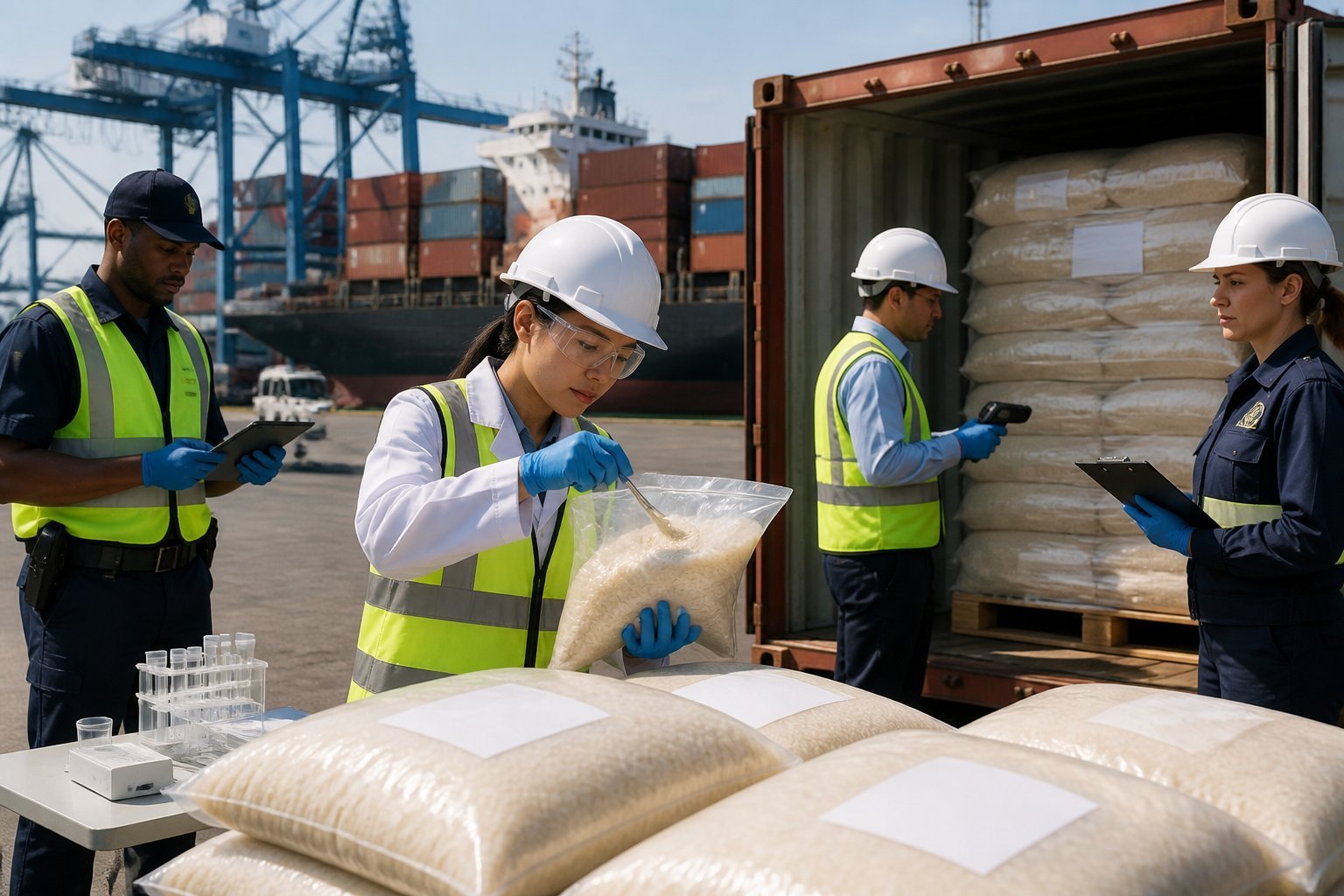
The process starts long before the shipment reaches a U.S. port. Foreign facilities that grow, process, or store rice for export must register with the FDA, and importers need a verification program that confirms suppliers meet U.S. food safety expectations. Pakistan has built a strong reputation as a certified, dependable rice origin, with many suppliers holding ISO 9001:2015, ISO 22000:2018, HACCP, Halal, and USFDA certifications that align directly with these federal standards. This groundwork, combined with accurate food product labeling, builds a foundation for smoother customs clearance.
Beyond FDA rules, rice imports may also fall under USDA and plant health regulations, depending on the type of shipment and its origin. Buyers who prepare documentation, file prior notice correctly, and work with suppliers who already meet international food safety benchmarks reduce the risk of detention at entry. This guide breaks down each step so importers and procurement professionals can move rice shipments through U.S. customs with confidence and predictability.
Key Takeaways
- U.S. rice imports must meet FDA and USDA rules covering facility registration, food safety, and labeling before they can clear customs.
- Suppliers with strong certifications, such as those common among Pakistani rice exporters, are better positioned to meet U.S. compliance standards.
- Proper preparation, including prior notice filing and accurate documentation, lowers the risk of shipment delays or refusals at the port.
How do you determine the regulatory scope for a rice shipment?
Determine the regulatory scope for each rice shipment:
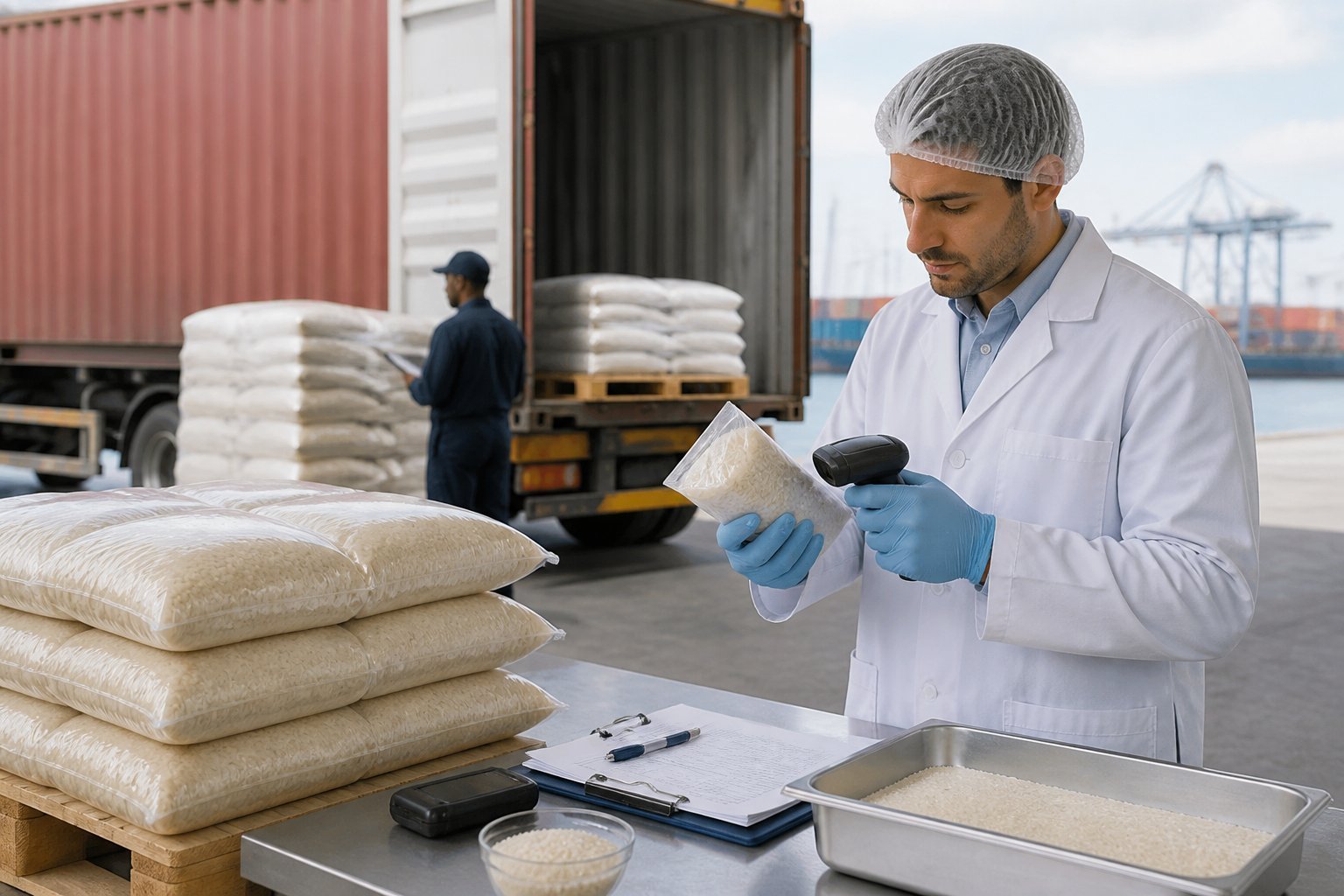
Every rice shipment entering the United States falls under a specific set of rules based on its type, its handling, and the parties involved. Food importers need to identify these factors early to meet FDA and USDA requirements without delays at the port of entry.
Classify Rice by Form, Processing Method, and Intended Use
Rice comes in many forms, and each one may trigger different rules. Common types include:
- Raw or unprocessed rice (like paddy or brown rice)
- Milled or polished white rice
- Parboiled rice
- Enriched rice with added vitamins or minerals
- Organic rice certified under USDA standards
The processing method matters too. Milled rice faces different labeling standards than rice sold in its raw form. Intended use also plays a role. Rice sold for direct human consumption follows different rules than rice used for seed or animal feed. Getting this classification right from the start helps importers apply the correct food safety standards and avoid shipment holds.
Identify the Responsible U.S. Importer, Foreign Supplier, and Customs Parties
Every shipment needs clear identification of who is responsible at each step. This includes the U.S.-based importer of record, the foreign supplier, and any customs brokers handling the paperwork.
The U.S. importer must have a valid FDA food facility registration on file. They’re also responsible for verifying that foreign suppliers meet FDA import requirements under the Foreign Supplier Verification Programs rule.
Reliable sourcing partners make this process smoother. Suppliers from Pakistan, for example, often carry ISO 9001:2015, ISO 22000:2018, HACCP, and USFDA certifications, which support compliance from the start. Clear documentation of each party’s role reduces confusion when shipments reach U.S. customs.
Confirm Whether FDA, USDA, APHIS, or Other Agencies Apply
Multiple federal agencies may have a say in a single rice shipment. The FDA oversees food safety, labeling, and facility registration under the FD&C Act and FSMA rules.
USDA and its Animal and Plant Health Inspection Service (APHIS) branch focus on plant health. This includes restrictions on rice straw and rice hulls to prevent pest and disease introduction. Depending on the product form, phytosanitary certificates may be required before the shipment leaves its country of origin.
Agricultural commodities like rice often face overlapping agricultural products review from both FDA and USDA. Confirming which agencies apply—and which don’t—prevents unnecessary delays and keeps agricultural commodities moving through the correct clearance channels.
How do you register a foreign facility and confirm supplier readiness?
Establish foreign facility registration and supplier readiness:

Every foreign rice supplier must register with the FDA before their product can enter the United States. This registration must stay current, match shipping records, and connect to a valid U.S. Agent.
Verify FDA Food Facility Registration Before Export
Rice mills and processing plants outside the U.S. must complete FDA food facility registration before they ship any product to American buyers. This step applies to any facility that grows, packs, holds, or processes rice for U.S. consumers.
Importers should confirm this registration is active well before booking a shipment. A facility without a valid registration cannot legally export rice to the U.S., no matter how strong its quality certifications are.
Pakistan-based rice exporters, including those supplying TEFT Global, typically pair FDA registration with international quality marks such as ISO 9001:2015, ISO 22000:2018, HACCP, and Halal certification. These standards work alongside FDA compliance rather than replacing it. Buyers should ask suppliers for proof of both.
Maintain Foreign Facility Details and U.S. Agent Information
Once registered, a facility receives a unique Facility Unique Registration Number (FURL). This number identifies the plant in FDA’s system and links it to import records at the port of entry.
Facilities that produce low-acid canned foods, though rare for standard rice products, may also need a Food Canning Establishment (FCE) number and a Submission Identifier (SID) for their process filings. Most raw or milled rice shipments fall outside this category, but blended or specialty rice products should be checked case by case.
Every foreign facility must also list a U.S. Agent. This person or company:
- Lives or maintains a business address in the United States
- Acts as the FDA’s point of contact for that facility
- Receives official communications on the facility’s behalf
Registration details must stay accurate. Any change in ownership, address, or U.S. Agent requires an update within 60 days.
Address Registration Renewal and Entry Data Matching
FDA food facility registration does not last forever. Facilities must renew their registration during the October 1 to December 31 window in every even-numbered year. Missing this deadline cancels the registration, which stops the facility from legally shipping to the U.S. until it re-registers.
Renewal isn’t the only step that matters. The FURL number listed on shipping documents must exactly match the number on file with the FDA.
Any mismatch between entry paperwork and registration records can trigger delays or holds at the port. Import brokers and customs filers rely on this match to clear shipments smoothly, so suppliers should double-check these details before each export.
How do you build an FSVP program for rice suppliers?
Build an FSVP program for rice suppliers:
Every importer of rice must build a foreign supplier verification program under FSMA that matches the specific risks tied to rice production, processing, and shipping. A strong FSVP for rice covers three main steps: identifying hazards, checking supplier performance, and keeping clear records of every verification activity.
Conduct a Rice-Specific Hazard Analysis
Rice carries its own set of risks that differ from other food products. Importers need to look closely at these hazards before choosing a supplier.
Common risks in rice include:
- Mycotoxins, such as aflatoxins, which can grow in stored grain
- Heavy metals, including arsenic, which rice absorbs from soil and water
- Pest contamination during storage or transport
- Foreign material, like stones or plastic, mixed in during processing
A proper hazard analysis reviews the full path of the rice, from the field to the export terminal. This includes checking growing conditions, drying methods, and storage practices. Suppliers who follow FSVP requirements already document these steps, which makes the process easier for importers to review and confirm.
Evaluate Supplier Performance, Controls, and Food Safety Records
Once hazards are identified, the next step is checking whether the supplier can control them. This means reviewing the supplier’s food safety systems and their track record over time.
Importers should ask for:
- Certifications, including HACCP, ISO 22000:2018, and Halal
- Records of past inspections and audit results
- Details on how the supplier tests for contaminants like arsenic or mycotoxins
- Proof of proper storage and pest control methods
Pakistan-based rice suppliers, for example, often hold ISO 9001:2015 and USFDA certification, which gives importers a documented baseline to measure supplier performance against. Under 21 CFR Part 1, Subpart L, importers must confirm that suppliers meet U.S. food safety standards, not just their local country’s rules. This step protects both the importer and the end buyer from unexpected safety issues.
Document Verification Activities and Corrective Actions
Every verification step must be written down and kept on file. The FDA expects clear proof that hazards were identified, suppliers were checked, and any problems were fixed.
Records should include:
- Dates and results of supplier audits
- Test results for contaminants
- Any corrective actions taken after a failed inspection
- Updated hazard analysis reports when new risks are found
This documentation shows that the FSVP is active, not just a paper policy. Under the food safety modernization act, missing or incomplete records are one of the most common reasons importers face FDA action. Keeping detailed, organized files makes it easier to respond quickly if the FDA requests proof of compliance.
How do you meet U.S. food labeling and product standards?
Meet U.S. food labeling and product standards:
Rice sold in the United States must carry labels that match FDA rules for content, format, and language. Importers who source from certified suppliers, such as Pakistani exporters holding ISO 9001:2015, ISO 22000:2018, HACCP, and Halal certifications, start with a strong base for meeting these standards.
Prepare Compliant English-Language Retail Labels
Every retail rice package needs a label written in English. The label must show the product name, net weight, and the name and address of the manufacturer, packer, or distributor.
Font size and placement matter too. The FDA sets minimum type sizes based on package size, and the product name must appear on the front label, called the principal display panel.
Labels also need to be permanent and legible through normal handling and shipping. Importers should check label proofs before printing large batches. This step is one of the FDA import labeling requirements that catches many first-time importers off guard.
Review Ingredient, Allergen, Nutrition, and Country-of-Origin Declarations
Rice labels must list ingredients in order by weight, even for single-ingredient products like plain white or brown rice. If the rice is enriched or blended with other grains, each added ingredient needs its own listing.
Allergen statements are required if the product contains or may contain common allergens. Nutrition Facts panels must follow FDA formatting rules, including serving size, calories, and nutrient values specific to rice, known as RACC standards.
Country-of-origin labeling is also mandatory. Rice grown and processed in Pakistan, for example, must clearly state this origin on the package. This detail supports transparency and helps buyers trust the food safety standards behind the product.
Validate Packaging and Claims Before Production
Before printing thousands of labels, importers should verify every claim and packaging detail against FDA rules. Terms like “organic,” “non-GMO,” or “premium” require supporting documentation and cannot be used loosely.
Packaging materials must also meet food-contact safety standards. This applies to bags, liners, and any material touching the rice directly.
A pre-production review catches errors early. This saves money and avoids shipment delays at U.S. ports. Suppliers with strong quality systems, like those holding USFDA certification, often have templates and documentation ready that make this validation step faster and more accurate for imported food products entering U.S. commerce.
How do you file Prior Notice and prepare the customs entry?
File Prior Notice and prepare the customs entry:
Rice shipments cannot move through U.S. Customs until an importer has met FDA’s notification rules and lined up the paperwork CBP needs to release the cargo. Getting these two steps right—prior notice and the customs entry—keeps rice moving instead of sitting at a port.
Submit FDA Prior Notice Within the Required Timeframe
Federal law requires prior notice for all food shipments entering the United States, including rice for human or animal consumption. This rule comes from 21 CFR Part 1, Subpart I, and applies no matter the country of origin.
Filing windows depend on how the rice travels. Ocean shipments need notice at least 8 hours before arrival, air and truck shipments need 4 hours, and rail shipments need 2 hours.
Importers can file prior notice through two channels: the CBP Automated Commercial Environment (ABI/ACE) or FDA’s own Prior Notice System Interface (PNSI). Missing the deadline can lead to the shipment being held or refused at the border.
Provide Accurate Product, Manufacturer, and Importer Data
Prior notice submissions must include specific details about the rice and the parties involved. This includes the product description, the manufacturer’s name and address, the shipper, the country of origin, and the anticipated port of arrival.
For food importers sourcing from established supply chains, this step tends to move faster. Pakistan, for example, is a long-established source of rice for the U.S. market, and shipments backed by ISO 9001:2015, ISO 22000:2018, HACCP, and Halal certifications typically have documentation already in order for FDA review.
Errors in product identity or quantity are among the most common reasons prior notice submissions get rejected, so accuracy at this stage matters.
Coordinate Arrival, Customs Clearance, and U.S. Ports of Entry
Once prior notice is confirmed, the shipment still has to clear CBP and pass FDA review at the port of arrival. FDA uses its PREDICT system to screen incoming food shipments and flag those that need further review or physical inspection.
The port of arrival is the location where the rice first crosses into the United States, which may differ from where the formal customs entry is filed.
Coordinating these steps—prior notice, the customs entry, and the physical arrival date—helps reduce the chance of delays once the vessel or truck reaches the U.S. port of entry.
How do USDA and APHIS controls apply to rice?
Address USDA and APHIS controls for rice and plant materials:
USDA and APHIS oversee plant health rules that apply to rice and other agricultural commodities entering the United States. These rules cover pest organisms, soil, seeds, wood products, and related plant materials, and they work alongside FDA food safety requirements.
Check Commodity and Country-of-Origin Requirements in ACIR
APHIS runs a searchable database called Agricultural Commodity Import Requirements, or ACIR. Importers use this tool to confirm what rules apply to a specific commodity from a specific country.
Rice import rules can differ based on where the rice comes from. Pakistan, for example, holds a track record as a certified and reliable origin, backed by ISO 9001:2015, ISO 22000:2018, HACCP, Halal, and USFDA certification standards.
Before shipping, importers should check ACIR for the current country-specific entry conditions. This step confirms whether extra permits, treatments, or documents apply to that shipment.
Manage Phytosanitary, Pest, and Contamination Risks
Rice shipments must meet phytosanitary standards set to keep pest organisms out of the country. These standards protect US crops and farmland from foreign pests that could spread through untreated shipments.
APHIS also regulates rice straw and rice hulls separately from milled rice. Under 7 CFR Part 319 Subpart K, these byproducts face import restrictions from all foreign locations unless specific conditions are met.
Contamination risks can come from soil, pests, or plant debris mixed in with a shipment. Importers should work with suppliers who follow strict processing and packaging steps. This lowers the chance of a shipment being held or rejected at the port.
Separate Rice Requirements From Plant, Seed, Soil, and Wood Controls
Rice import rules differ from those covering other plant materials. Seeds, soil, wood products, fruits and vegetables, cut flowers, and greenery each fall under their own APHIS requirements.
| Product Type | Main Concern |
|---|---|
| Milled Rice | Food safety, pest contamination |
| Rice Straw/Hulls | Plant pest introduction |
| Seeds | Genetic and pest controls |
| Soil | Pest and disease carriers |
| Wood Products | Insect infestation |
| Cut Flowers/Greenery | Pest inspection |
Some plant products require a Controlled Import Permit before entry. Rice itself does not typically need this permit, but related plant materials in the same shipment might. Importers should review each product type separately to avoid delays.
How do you reduce detention and refusal risk at entry?
Reduce detention and refusal risk at entry:
Rice shipments face review at U.S. ports of entry through automated risk screening and physical checks. Importers who prepare documentation early and understand FDA’s detention process can avoid delays and costly refusals.
Screen Suppliers and Products Against FDA Import Alerts
FDA keeps a public list of import alerts that flag products and suppliers with a history of violations. Before shipping rice to the U.S., importers should check this list for the specific product type and country of origin.
Rice from suppliers already on an import alert faces automatic detention, even if that single shipment meets all safety standards. This is called detention without physical examination, or DWPE.
Working with suppliers who hold verified certifications reduces this risk. Rice sourced from Pakistan through certified programs like ISO 22000:2018, HACCP, and USFDA compliance standards gives importers a documented safety record that supports faster customs clearance.
Checking supplier status against current alerts before each shipment is a simple step that prevents unnecessary holds.
Prevent Detention Without Physical Examination
FDA’s PREDICT system screens import data before shipments arrive, comparing entry details against known risk factors. This system flags rice shipments for detention without physical examination based on prior violations, product type, or country history rather than a fresh inspection of each container.
Once a shipment lands on DWPE status, the importer must prove the product is safe before FDA will release it. This usually means submitting private lab results or other evidence that shows the rice meets FDA food safety standards.
Importers can reduce DWPE exposure by:
- Confirming the supplier is not listed on an active import alert
- Keeping recent lab testing on file for each product line
- Using FDA-registered facilities with a clean compliance history
- Filing complete and accurate entry documentation with each shipment
Consistent, verifiable sourcing practices lower the chance that a shipment gets automatically flagged.
Respond to FDA Holds, Sampling, and Documentation Requests
If FDA detains a rice shipment, the importer receives a Notice of Detention and has ten business days to respond. FDA may collect physical samples of the rice for lab analysis or request paperwork such as certificates of analysis, supplier records, or proof of compliance with food safety rules.
A late or incomplete response often leads to a formal refusal. Once refused, the shipment must be exported or destroyed within 90 days, and FDA has no authority to extend that deadline.
Importers who keep thorough records ready in advance can respond faster. This includes lab reports, HACCP documentation, and Halal or ISO certification papers tied to each shipment.
Sourcing rice from suppliers with strong, verifiable food safety certification records makes it easier to satisfy FDA requests without delay, keeping shipments moving through customs.
Which product-specific programs might apply?
Use product-specific programs when they apply:
Most rice imports follow standard FDA food rules, but some products need extra steps. Rice that is canned in liquid, mixed with seafood, or shipped by a high-volume importer may fall under separate programs with their own registration and inspection rules.
Assess Low-Acid Canned and Acidified Rice Products
Rice packed in sealed containers with liquid, such as canned rice pudding or acidified rice mixes, often falls under low-acid canned food (LACF) rules. These products need special handling because sealed, low-acid environments can support bacterial growth if not processed correctly.
Processing facilities must register as a Food Canning Establishment (FCE) with the FDA. Each specific product and process also needs a Submission Identifier (SID) on file. This applies whether the facility is in Pakistan, the United States, or elsewhere.
Importers should confirm with suppliers that both the FCE and SID numbers are active before shipping. Rice suppliers who already meet ISO 22000:2018 and HACCP certification standards are often better prepared to handle these extra registration steps without delays.
Understand When Seafood HACCP Is Relevant to Mixed Products
Plain rice does not fall under seafood rules. But rice sold in combination products, such as seafood-and-rice meal kits or seafood paella mixes, can trigger seafood HACCP requirements.
The FDA runs an Imported Seafood Safety Program that applies HACCP (Hazard Analysis Critical Control Point) rules to any product containing seafood. If rice is one ingredient in a mixed seafood product, the entire product may need to meet these standards, not just the seafood portion.
Importers combining rice with seafood should check whether their supplier already holds HACCP certification. Since HACCP standards are already common in professional rice sourcing, working with certified suppliers can simplify this step. Buyers should confirm in writing which party is responsible for HACCP compliance before the product ships.
Evaluate Voluntary Qualified Importer Program Eligibility
The Voluntary Qualified Importer Program (VQIP) offers faster review at ports of entry for importers who meet strict safety and supply chain standards. It is optional, not required, but it can benefit high-volume rice importers who want more predictable clearance times.
To qualify, importers must show a strong compliance history and work with suppliers who follow verified food safety systems. Rice sourced from suppliers with ISO 9001:2015 and USFDA certification already in place tends to fit VQIP criteria more easily.
Importers should review their annual import volume and compliance record each year to decide if VQIP participation makes sense. Applications are submitted directly to the FDA before the start of the fiscal year in which the benefits would apply.
Source FDA-ready rice with full documentation
Get buyer-specific specifications, certifications, and supply options matched to your market.
What do importers ask most about FDA rice compliance?
Frequently asked questions:
Rice importers face specific rules on registration, notice timelines, documentation, contaminant limits, and verification programs. The answers below address the most common questions about getting rice through U.S. ports without delays.
What FDA registration requirements apply to foreign facilities that process or pack rice for U.S. import?
Any foreign facility that processes, packs, or holds rice for U.S. import must register with the FDA. This applies to mills, packing houses, and storage facilities located outside the United States.
Registration must be renewed every two years during the period set by the FDA. Facilities also need a U.S. agent who can communicate with the FDA on their behalf.
Pakistani rice exporters that meet ISO 22000:2018 and HACCP standards often find the registration process easier to manage, since these certifications already require the kind of documentation and traceability the FDA expects.
Does imported rice require prior notice before it arrives in the United States?
Yes. Every rice shipment needs prior notice submitted to the FDA before it reaches a U.S. port.
The filing deadline depends on the mode of transport. Ocean shipments typically need notice filed further in advance than air or truck shipments, since the FDA wants enough lead time to flag any concerns before the cargo lands.
Missing this step can cause a shipment to sit at the port. That means added storage costs and lost time for the importer.
What food safety documentation should accompany a rice shipment entering the U.S.?
A rice shipment needs several documents to clear customs and satisfy the FDA. These generally include:
- A commercial invoice listing the exporter, importer, and product details
- A packing list with weight and container information
- A certificate of origin
- A phytosanitary certificate confirming the rice meets plant health standards
- Lab test results showing pesticide residue and contaminant levels are within limits
Rice grown and processed under Halal and ISO 9001:2015 certification programs tends to arrive with more complete documentation, since these systems already track the product from farm to shipment.
Are there FDA limits for pesticide residues, heavy metals, or other contaminants in imported rice?
Yes. The FDA sets tolerance levels for pesticide residues on rice, and any shipment that exceeds those limits can be stopped at the port.
Rice can also absorb inorganic arsenic from soil and water during growth. The FDA monitors arsenic levels in rice and rice products, since long-term exposure to high amounts is linked to health risks.
Testing before export helps catch problems early. Rice sourced from farms with strict pesticide residue controls is less likely to trigger a hold once it reaches U.S. soil.
When is a Foreign Supplier Verification Program required for rice imports?
A Foreign Supplier Verification Program, or FSVP, applies to most U.S. importers of rice. The importer must verify that their foreign supplier is producing rice using processes that meet U.S. food safety standards.
This means checking the supplier’s food safety practices, reviewing their hazard controls, and keeping records that prove the verification took place. The FDA can ask to see these records at any time.
Suppliers that already operate under HACCP-certified systems make this verification step more straightforward, since they typically have hazard analysis documents ready to share.
Can the FDA detain or refuse a rice shipment at the port of entry?
Yes. The FDA can detain a rice shipment if it appears to violate food safety rules, labeling requirements, or contaminant limits.
Once detained, the importer gets a chance to respond with evidence that the shipment meets requirements. If the FDA is not satisfied, the shipment can be refused entry and sent back or destroyed.
Working with certified, reliable origins and maintaining full documentation from the start reduces the chance of a shipment getting flagged in the first place.