
Private label rice programs have become a strategic growth opportunity for GCC importers, distributors, and retail chains looking to control margins and build brand equity in a competitive market. Private label rice allows businesses across the UAE, Saudi Arabia, Qatar, Kuwait, Bahrain, and Oman to source premium Basmati and Non-Basmati varieties under their own branding with full control over packaging, positioning, and pricing. The GCC rice market continues to grow, driven by population expansion and rising demand for quality staples that meet regional taste preferences and food safety standards.

Selecting the right private label rice supplier requires more than competitive pricing. Importers need partners who can deliver consistent grain quality, flexible packaging formats from 1kg retail packs to 50kg bulk bags, and complete export documentation including phytosanitary certificates, certificates of analysis, and halal certification. Pakistani rice origins offer certified quality backed by ISO 9001:2015, ISO 22000:2018, HACCP, Halal, and USFDA standards that align with GCC regulatory requirements.
From procurement and milling to custom branding and GCC-specific packaging, private label programs streamline the entire supply chain under one partnership. This reduces coordination complexity, ensures batch-to-batch consistency, and accelerates time to market for brands entering or expanding within Gulf retail channels.
Key Takeaways
- Private label rice gives GCC businesses control over branding, margins, and market positioning with premium grain varieties
- Certified suppliers from Pakistan and India provide complete export documentation and compliance with UAE ESMA, Saudi SASO, and GSO standards
- End-to-end private label services cover sourcing, milling, packaging design, and regulatory support for faster market entry
What Are the Key Advantages of Private Label Rice in the GCC?
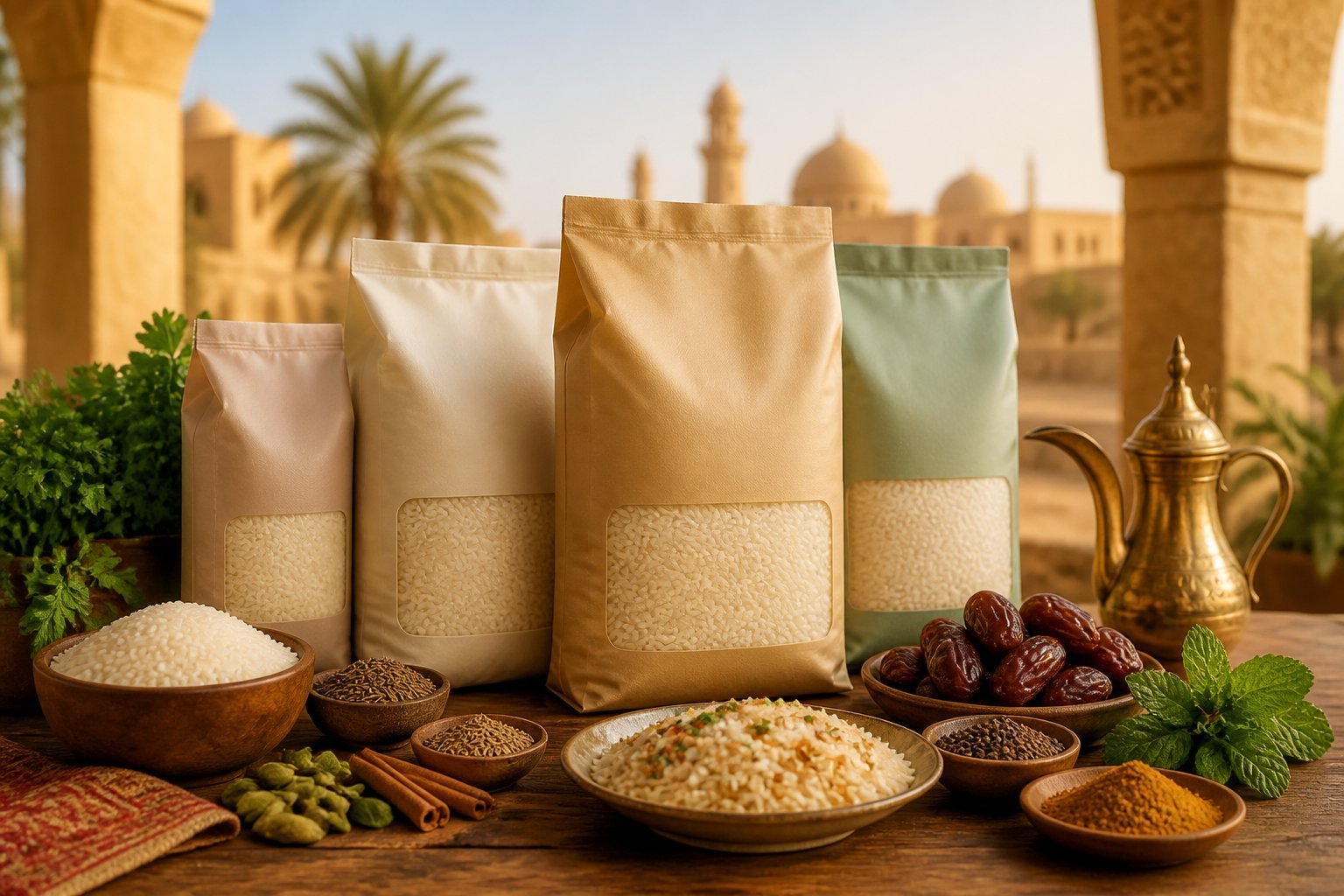
Private label rice programs deliver measurable benefits through brand ownership, cost structure optimization, and market responsiveness. These advantages position GCC retailers and distributors to compete effectively against established branded rice while maintaining higher margins and customer loyalty.
Brand Differentiation and Market Positioning
Private label programs allow GCC retailers to develop exclusive rice brands that compete directly with established names. This private label approach strengthens brand identity through custom packaging, quality specifications, and pricing strategies tailored to local consumer segments.
Supermarkets in the UAE, Saudi Arabia, and Qatar use white label arrangements to position premium rice varieties under their own retail banners. This creates shelf differentiation that attracts customers seeking trusted alternatives to traditional branded rice options.
A trusted partner with direct sourcing capabilities from Pakistan enables retailers to specify exact grain quality, processing methods, and packaging formats. Pakistani rice suppliers meeting ISO 9001:2015, ISO 22000:2018, HACCP, Halal, and USFDA certification standards provide the quality foundation needed for successful private label programs.
Key positioning benefits:
- Full control over product specifications and quality standards
- Exclusive shelf presence unavailable to competitors
- Direct connection between retail brand and product performance
- Higher perceived value through premium packaging design
Cost Efficiency and Supply Chain Control
Private label rice reduces per-unit costs by eliminating intermediary markup and marketing expenses associated with branded rice. GCC importers working with an export team can negotiate pricing directly with mills, securing better margins across the supply chain.
The cost advantage becomes significant in high-volume categories. Rice staples represent one of the strongest categories for private labels across UAE and GCC markets because consistent quality at competitive prices drives repeat purchases.
Direct sourcing from certified Pakistani mills streamlines logistics and quality control. A single export team manages milling, grading, packaging, and compliance documentation, reducing the complexity that typically increases costs in multi-supplier arrangements.
Supply chain advantages include:
- Lower landed cost per metric ton
- Reduced dependency on third-party branded suppliers
- Faster order fulfillment from dedicated production capacity
- Better inventory planning through direct mill relationships
Market Adaptation and Flexibility
Private label arrangements provide the flexibility to adjust product specifications based on regional preferences and seasonal demand shifts. GCC markets show distinct preferences—UAE consumers favor 1121 premium rice in smaller retail packs, while Saudi buyers often prefer mid-volume formats.
A trusted partner with market knowledge helps retailers adapt packaging sizes, rice varieties, and quality grades without changing suppliers. This responsiveness keeps private label offerings aligned with evolving consumer expectations across different GCC countries.
Premium rice specifications can be modified to match specific customer segments. Retailers targeting high-end consumers can specify extra-long grain varieties with minimal breakage, while value-oriented brands can optimize for consistent quality at accessible price points.
Quick response to market trends becomes possible when working directly with mills. New packaging designs, portion sizes, or rice varieties can be introduced within standard production cycles rather than waiting for branded manufacturers to adjust their product lines.
Which Rice Varieties Work Best for Private Label in the GCC?
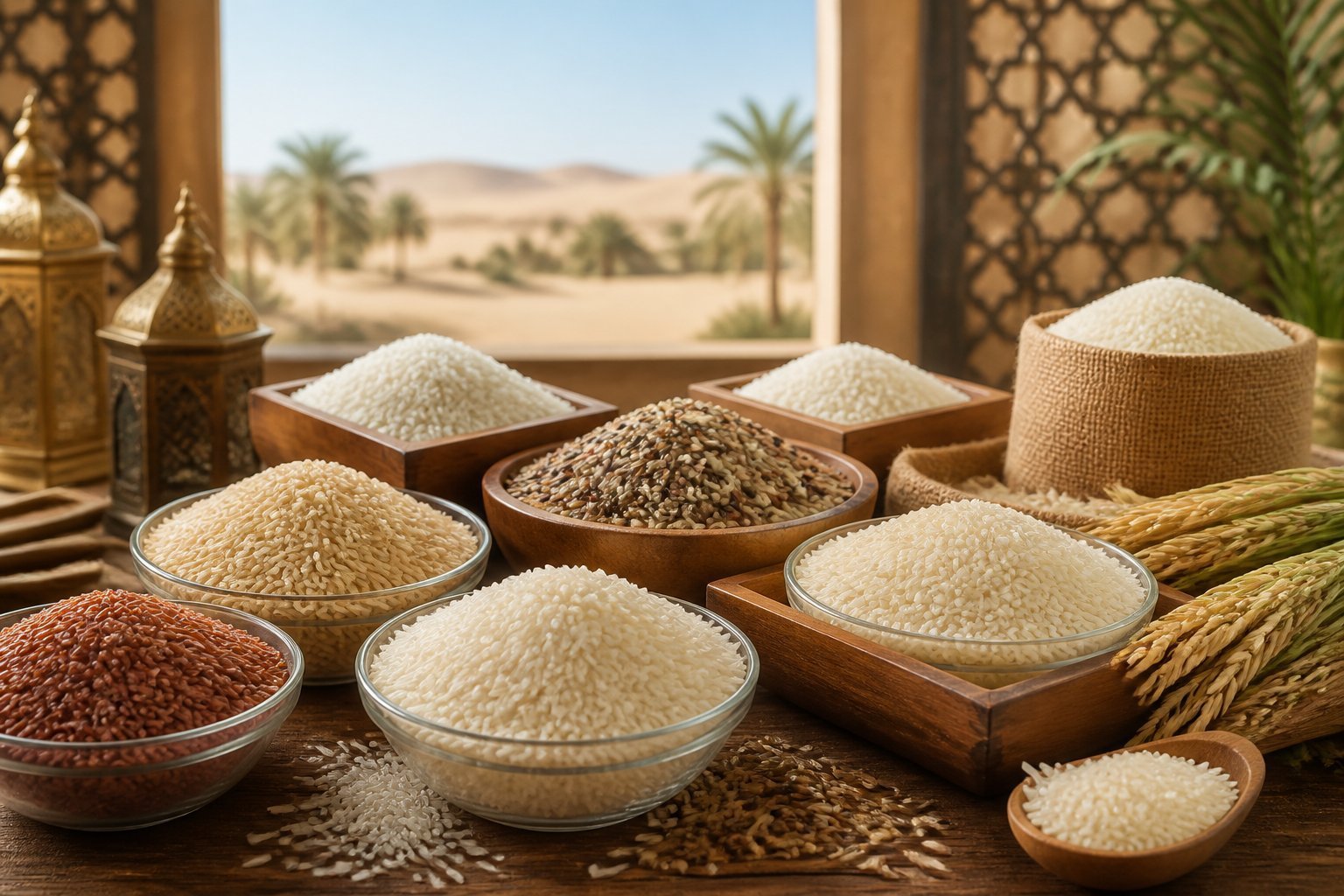
GCC markets demand specific rice varieties that align with regional taste preferences and quality expectations. Basmati dominates the premium segment, while non-basmati and aged selections serve diverse consumer needs across retail channels.
Basmati Rice Options
1121 basmati leads the premium basmati segment across UAE, Saudi Arabia, and Qatar markets. This extra-long grain variety elongates to 22-23mm when cooked and delivers the signature aroma that Gulf consumers expect.
Indian and Pakistani 1121 basmati both meet GCC quality standards. Both origins hold APEDA certification and comply with ISO 9001:2015 and ISO 22000:2018 requirements. Private label brands can source premium basmati rice varieties from either country based on pricing and supply chain preferences.
1509 basmati serves the everyday premium category. It costs less than 1121 while maintaining authentic basmati characteristics. This variety works well for retailers targeting mid-tier shoppers who want quality without premium pricing.
Traditional basmati varieties appeal to specific diaspora communities. These shorter-grain options carry nostalgic value for South Asian expatriates who grew up with regional varieties.
Non-Basmati and Specialty Grains
Non-basmati long grain rice fills budget-conscious segments in GCC supermarkets. Sella (parboiled) rice ranks high among Filipino, Sri Lankan, and African communities across the Gulf.
Jasmine rice from Thailand serves Southeast Asian populations in Dubai, Abu Dhabi, and Doha. This fragrant variety requires different sourcing channels but completes a full rice portfolio for wholesale foodstuff trading operations.
Short and medium grain varieties meet needs of Far Eastern communities. Japanese-style rice and Egyptian rice both maintain steady demand in specialized retail outlets.
Premium and Aged Selections
Aged basmati commands the highest margins in GCC private label programs. Rice aged 12-24 months develops enhanced aroma, better grain separation, and superior cooking properties.
Pakistani aged basmati from Punjab and Sindh regions meets the same quality benchmarks as Indian varieties. Both origins provide HACCP certification and Halal documentation required for GCC markets.
Premium selections target high-income consumers and gift markets. Luxury packaging formats like jute bags and windowed PP bags position aged basmati as a premium product in Carrefour, Lulu, and Spinneys locations.
What Packaging Options Are Available for Private Label Rice?
GCC rice importers select from multiple packaging formats and branding approaches based on distribution channels, target customers, and margin strategies. Packaging decisions influence shelf life stability, retail positioning, and operational costs across wholesale and supermarket networks.
Retail Pack Sizes and Bulk Solutions
Private label rice packaging from Pakistan ranges from 1kg consumer packs to 50kg wholesale bags, with customization options for GCC market requirements. Retail supermarkets across UAE, Saudi Arabia, Qatar, and Kuwait typically stock 1kg, 2kg, and 5kg formats for household consumption. These smaller pack sizes align with consumer purchasing patterns and refrigerated storage capacity in Gulf households.
Bulk packaging serves food service operators and wholesale distributors. Standard formats include 25kg and 40kg polypropylene bags for restaurant chains, catering companies, and hospitality buyers. Hotels and institutional kitchens prefer these larger formats to reduce per-unit costs and simplify inventory management.
Common GCC Packaging Formats:
- 1kg – 5kg: retail supermarkets
- 10kg – 20kg: small restaurants and family stores
- 25kg – 50kg: food service and wholesale distribution
- Jumbo bags: industrial buyers and re-export operations
Pakistan rice mills equipped with ISO-certified facilities produce custom packaging solutions that meet GCC labeling requirements, including bilingual Arabic-English text, nutritional information, and barcode integration for retail scanning systems.
Private Label and White Label Packaging
Private label rice programs enable GCC importers to control brand identity, pricing strategies, and customer loyalty while sourcing from certified Pakistani mills. Unlike white label rice sold under the exporter’s brand, private label packaging features the importer’s registered trademark, design specifications, and market positioning.
Minimum order quantities for private label typically start at 5 full container loads. This volume requirement ensures cost efficiency for custom printing, barcode registration, and quality control protocols. Importers working with custom basmati and non-basmati rice packaging services receive export-grade printing on food-safe materials that comply with GCC municipality regulations.
White label rice reduces upfront investment and speeds market entry. Exporters handle all packaging design, compliance documentation, and branding consistency. This model works for distributors testing new markets or expanding product ranges without brand development costs.
Private label delivers higher profit margins through brand ownership. GCC supermarket chains use exclusive rice brands to differentiate shelves and build repeat purchase patterns that wholesale generic products cannot achieve.
Sustainability and Innovation in Packaging
GCC rice packaging increasingly incorporates recyclable materials and reduced plastic content to meet environmental standards and consumer preferences. Multi-layer polypropylene bags with moisture barriers maintain product quality while reducing material weight compared to traditional jute or woven sacks.
Modified atmosphere packaging extends shelf life in Gulf storage conditions where temperatures reach 40°C. Nitrogen flushing removes oxygen before sealing, preventing oxidation and preserving grain freshness for 18 months or longer. This technology particularly benefits basmati varieties shipped to Qatar, Bahrain, and Oman markets with extended distribution cycles.
Resealable zip-lock closures on retail packs improve convenience and preservation after opening. These features appeal to smaller households and quality-conscious consumers who prioritize freshness over multiple uses.
Transparent packaging windows allow customers to inspect grain quality before purchase. This design element builds trust in premium basmati grades like 1121 and 1509, where visual appearance influences buying decisions at GCC retail points.
What Export Documentation Does GCC Rice Import Require?
Private label rice exporters must prepare comprehensive documentation and meet strict regulatory standards to access GCC markets. Pakistani rice suppliers maintain trusted quality through certified export documentation that ensures smooth customs clearance and compliance with destination country requirements.
Essential Certifications and Approvals
Quality certifications form the foundation of rice exports to Gulf countries. ISO 9001:2015 certification demonstrates quality management system compliance. ISO 22000:2018 and HACCP certifications verify food safety protocols throughout the supply chain.
Halal certification is mandatory for GCC food products and must come from recognized Islamic authorities. USFDA certification provides additional credibility for exporters serving multiple international markets. The certificate of analysis documents grain quality parameters including moisture content, broken grain percentage, and foreign matter levels.
Private label buyers should verify that their Pakistani suppliers maintain current certifications before placing orders. These approvals protect both the exporter and importer from regulatory issues at destination ports.
Phytosanitary and Health Documentation
The phytosanitary certificate confirms that rice shipments are free from pests and diseases. National plant protection organizations issue these certificates after inspecting the rice at origin. GCC customs authorities require this document before allowing entry.
Health certificates verify that products meet food safety standards and are fit for human consumption. Laboratory test reports accompany these certificates to prove compliance with maximum residue limits for pesticides. Fumigation certificates may be required depending on the destination country and packaging type.
Export teams coordinate with government agencies to obtain these documents within required timeframes. Missing or incorrect phytosanitary documentation results in shipment delays or rejection at customs.
Destination-Specific Requirements
Each GCC country maintains specific import protocols beyond standard certifications. Saudi Arabia requires pre-shipment inspection through approved agencies. The UAE mandates Arabic labeling with specific nutritional information displayed prominently on packaging.
Qatar enforces strict batch traceability requirements with unique identification codes. Kuwait and Bahrain require country of origin declarations with certified production facility details. Oman requests additional quality declarations for certain rice varieties.
Private label rice exporters must provide full export documentation including commercial invoices, packing lists, bills of lading, and certificates of origin. Working with experienced export teams familiar with GCC requirements prevents costly compliance errors and ensures timely delivery to distribution channels.
How Do Supply Chain and Quality Assurance Work for Private Label Rice?
Private label rice programs in the GCC require certified sourcing, rigorous quality control, and coordinated export management to meet regional food safety standards and maintain brand reputation across diverse retail channels.
Sourcing from Certified Mills and Farms
Premium rice for private label programs starts with mills and farms that hold internationally recognized certifications. Pakistani rice suppliers provide basmati and non-basmati varieties certified under ISO 9001:2015, ISO 22000:2018, HACCP, Halal, and USFDA standards.
These certifications verify that production facilities maintain consistent quality management systems and food safety protocols. GCC retailers now enforce dual sourcing requirements for premium labels, which means suppliers must demonstrate compliance across multiple verification frameworks.
Certified mills in Pakistan process rice through controlled milling, grading, and packaging operations. Each batch undergoes phytosanitary inspection before export to meet GCC import regulations. Farms supplying these mills follow documented agricultural practices that support traceability from field to finished product.
Quality Control and Transparency
Quality assurance in private label rice operations depends on testing protocols at multiple supply chain stages. Suppliers conduct grain analysis for moisture content, broken grain percentage, foreign matter, and varietal purity before packaging.
Third-party laboratories verify compliance with GCC food safety regulations through testing for pesticide residues, heavy metals, and microbiological contaminants. Documentation includes certificates of analysis, mill test reports, and fumigation certificates when required.
Private label food manufacturing in the UAE emphasizes transparent quality systems that buyers can audit. Suppliers maintain batch traceability records linking each shipment to specific production dates and source mills. This transparency allows importers to respond quickly if quality issues arise and demonstrates compliance during regulatory inspections.
Role of Export Teams in Assurance
Export teams coordinate documentation, logistics, and compliance verification for rice shipments entering GCC markets. These teams prepare commercial invoices, packing lists, certificates of origin, and health certificates required by customs authorities.
They manage relationships with freight forwarders, inspection agencies, and port authorities to prevent delays. Rice packaging and labeling for Qatar requires specific certifications that export teams verify before shipment.
Professional export teams also handle sample approvals, coordinate lab testing, and provide technical specifications to buyers. They track regulatory changes across GCC countries and update compliance procedures accordingly. This specialized knowledge reduces the risk of shipment rejection and helps maintain consistent delivery schedules for private label programs.
How Do You Choose a Trusted Private Label Rice Partner?
Quality certifications, transparent supply chains, and responsive support systems separate reliable rice suppliers from those that create operational headaches. Buyers need partners who maintain standards across sourcing, processing, and documentation while adapting to changing market demands.
Criteria for Evaluating Suppliers
Certification standards form the foundation of supplier evaluation. Processors should hold ISO 9001:2015 for quality management, ISO 22000:2018 for food safety, HACCP for hazard control, and Halal certification for GCC compliance. These credentials ensure rice meets regulatory requirements across UAE, Saudi Arabia, Qatar, Kuwait, Bahrain, and Oman.
Facility inspections reveal operational capabilities. Buyers should verify sortex machines for removing impurities, automated grading systems for consistent grain sizing, and climate-controlled storage preventing moisture damage. Premium Indian rice exporters and Pakistani rice processors both maintain FSSAI and equivalent national certifications that validate these systems.
Documentation completeness matters for customs clearance:
- Phytosanitary certificates
- Certificate of analysis with moisture and purity levels
- Origin certificates from certified farms
- Halal certification from recognized authorities
- ESMA, SASO, or GSO compliance reports
Traceability from farm to port demonstrates supply chain control. Suppliers sourcing from AGMARK certified farms in India or certified Pakistani regions provide greater transparency than those using multiple middlemen.
Managing Long-Term B2B Partnerships
Minimum order quantities affect inventory planning. Private label rice suppliers typically require 1 to 5 metric tons for initial orders, with flexibility increasing as relationships mature. Volume commitments should align with sales velocity to prevent stock obsolescence.
Payment terms reflect partnership maturity. New relationships typically start with a confirmed Letter of Credit, then move to negotiated credit terms once reliability is established. Pricing is set per order against current market conditions rather than a fixed rate card.
Communication protocols prevent order errors. Weekly shipment updates, pre-shipment sample approvals, and dedicated account contacts reduce miscommunication. Suppliers managing private label programs across the GCC typically assign relationship managers who understand regional specifications.
Contract terms must address quality disputes, delivery delays, and specification changes. Clear remedies for substandard shipments protect buyers from selling non-compliant rice.
After-Sales Support and Market Expansion
Product diversification options extend brand portfolios. A trusted partner offers multiple varieties including premium Basmati rice, Sona Masoori, parboiled options, and jasmine rice without requiring separate vendor relationships. This simplifies logistics while maintaining consistent quality across product lines.
Technical support assists with consumer complaints and cooking queries. Suppliers should provide grain specifications, recommended cooking ratios, and shelf life data that help brands address customer questions. Some white label rice programs include recipe development and preparation guides.
Market intelligence sharing benefits both parties. Suppliers tracking consumption patterns, competitor packaging trends, and regulatory changes help brands make informed decisions about pack sizes, variety selection, and pricing strategies.
Packaging updates accommodate brand evolution. Reliable partners adjust label designs, add nutritional panels, or modify bag sizes without minimum order penalties once the relationship matures.
What Is the Outlook for Private Label Rice in the GCC?
The GCC rice sector shows strong momentum for private label expansion, driven by rising consumer acceptance of retailer brands and growing import volumes that support white label partnerships. Certified suppliers from established origins like Pakistan are positioning themselves to meet retailer demand for premium private label offerings.
Emerging Consumer and Retail Trends
GCC supermarket chains are launching private label rice products as consumers become more comfortable with store brands in staple categories. Rice ranks among the strongest categories for private label growth alongside other daily essentials.
Key consumer shifts include:
- Increased trust in retailer brands for quality staples
- Price sensitivity without sacrificing product standards
- Preference for certified, traceable grain sources
Retailers across Saudi Arabia and the UAE are securing larger volume commitments for branded rice lines. This shift creates demand for suppliers who can provide consistent quality with full traceability documentation.
The emphasis on food safety drives retailer requirements for comprehensive certification. Suppliers must demonstrate ISO 22000:2018, HACCP, and Halal compliance to qualify for private label partnerships with major GCC chains.
Growth Opportunities for Importers
White label and private label partnerships present significant opportunities for rice importers serving the GCC market. The region imported 3.2 million tons of rice in 2024, with semi-milled rice comprising 99% of imports.
Importers with established supply chains from certified origins like Pakistan can leverage existing quality systems to meet retailer specifications. ISO 9001:2015 certification demonstrates process control capabilities essential for private label programs.
Competitive advantages for importers:
- Direct sourcing relationships with certified mills
- USFDA certification for export quality standards
- Ability to customize packaging and grain specifications
- Consistent supply volumes to match retailer commitments
Rice export partners who maintain multiple certifications reduce retailer risk and simplify compliance verification. This becomes particularly important as Gulf food safety authorities enforce stricter pesticide residue limits.
Future Developments in Private Label Rice
Premium rice segments show the strongest growth trajectory for private label expansion. The GCC basmati rice market is forecast to grow at 6.40% annually through 2035, with premium retail channels absorbing larger volumes.
Health-conscious positioning drives opportunities for brown basmati and low-fat rice varieties under private labels. Retailers can differentiate their brands through grain quality specifications and origin certification rather than competing solely on price.
The shift toward branded, certified grains creates space for importers to develop exclusive retail partnerships. Long-term supply agreements benefit both parties through volume commitments and stable pricing structures.
Expected market developments:
- Expansion of premium private label rice lines
- Stricter certification and traceability requirements
- Growth in health-focused rice varieties
- Increased retailer investment in proprietary blends
Suppliers who invest in certification infrastructure and quality documentation systems will be best positioned to capture private label opportunities. The combination of certified origins, comprehensive food safety compliance, and reliable logistics separates qualified partners from commodity suppliers in this evolving market.
Frequently Asked Questions
Order quantities for branded rice programs in Gulf markets typically start at 5 to 25 metric tons depending on the sourcing model, while lead times range from 10 to 30 days based on packaging complexity and certification requirements. Pricing structures vary by rice grade, processing type, and destination port across GCC countries.
What are the minimum order quantities and lead times for supplying white and basmati rice under a retailer’s brand in the Gulf region?
Minimum order quantities for private label rice packaging solutions in GCC markets typically range from 5 to 10 metric tons for exporter-managed programs and 25 metric tons or more for full OEM contract manufacturing. Smaller distributors entering new markets often start with lower volumes to test demand before scaling operations.
Lead times depend on the complexity of branding and packaging customization. Standard exporter-managed labels with pre-approved templates require 10 to 15 days from order confirmation to shipment. Fully customized packaging with unique designs, barcodes, and nutritional panels extends lead times to 20 to 30 days.
Pakistani mills equipped for private label and OEM rice packaging typically process orders in 5 to 20 FCL increments. Processing schedules account for milling, grading, aging verification, and final packaging before container loading.
Which quality specifications and grading standards are typically required for packaged rice sold in GCC markets?
GCC markets prioritize long-grain basmati varieties including 1121, 1509, and Super Kernel for retail distribution. These varieties are selected based on grain length, aroma retention, and cooking expansion characteristics valued by Gulf consumers.
1121 basmati rice specifications include minimum grain length of 8.3 mm after cooking and specific moisture content limits between 12% and 14%. Steam processing produces softer texture preferred in hospitality channels, while Golden Sella parboiling extends shelf life to 18 months under regional storage conditions.
Quality control includes broken grain percentages, foreign matter limits, and moisture testing at milling facilities. Pakistani exporters follow grading protocols aligned with international standards to ensure consistency across shipments. Importers specify acceptance criteria in purchase agreements to maintain brand quality standards.
What packaging formats, bag materials, and label requirements are commonly used for rice products distributed across Gulf countries?
Retail packaging for GCC supermarkets uses formats from 1 kg to 5 kg in polypropylene or laminated polyethylene bags. Bulk catering supply relies on 25 kg to 50 kg woven polypropylene sacks with inner liners to protect against moisture and pests during storage.
Label requirements include product name, net weight, country of origin, production date, expiry date, and nutritional information in both English and Arabic. Barcodes must follow GS1 standards for retail scanning systems. Some markets require additional allergen statements even though rice is naturally gluten-free.
Custom packaging design services allow importers to create distinct shelf presence through brand colors, logos, and promotional messaging. Packaging materials must withstand temperature variations during Gulf summer months when warehouse conditions exceed 40°C.
Which food safety certifications and audit documents do retailers and importers usually request from rice packers and mills?
GCC retailers require Halal certification from recognized Islamic certification bodies for all rice products entering their supply chains. This certification verifies processing facilities follow Islamic dietary guidelines throughout milling and packaging operations.
ISO 22000:2018 food safety management certification demonstrates systematic control of food safety hazards. HACCP certification provides evidence of critical control point monitoring during processing stages. ISO 9001:2015 quality management certification shows operational consistency and continuous improvement practices.
Pakistani rice mills offering private label services maintain multiple certifications to serve international markets. USFDA registration allows shipments to markets with stringent food safety standards. Third-party audit reports from SGS, Bureau Veritas, or Intertek provide independent verification of facility conditions and processing protocols.
How are pricing and payment terms typically structured for bulk supply and branded retail packs delivered to GCC ports?
Pricing depends on the rice variety, grade, and processing method, along with pack format and destination port — so branded retail packs and bulk food-service volumes are quoted differently. Rather than a fixed list price, private label programs are quoted per order against the buyer’s exact specification, which keeps figures accurate as freight rates and harvest conditions shift.
Payment terms usually reflect the maturity of the trading relationship. New partners typically start with a confirmed Letter of Credit, which protects both sides, and can move to negotiated credit terms once an order history is established. Buyers can take FOB terms to control their own freight and insurance, or CNF delivery to GCC ports such as Doha, Jebel Ali, or Dubai for a simpler single-quote arrangement.
For an accurate figure on a specific variety, pack size, and destination, importers request a quote directly so pricing reflects live market and shipping conditions.
What import documentation, country-of-origin requirements, and shelf-life expectations are needed for rice shipments into GCC markets?
Import documentation includes phytosanitary certificates confirming products meet plant health standards. Certificate of origin verifies Pakistani production and allows preferential duty rates under trade agreements. Commercial invoices detail product specifications, quantities, and values for customs clearance.
Health certificates from Pakistani export inspection agencies confirm products meet GCC food safety standards. Fumigation certificates prove container treatments prevent pest contamination during ocean transit. Packing lists specify container loading details including bag counts and net weights.
Shelf-life expectations vary by processing type. Steam basmati maintains quality for 12 months under controlled storage conditions. Golden Sella parboiled rice extends to 18 months due to starch stabilization during processing. Importers specify manufacturing dates within 30 to 60 days of shipment to maximize retail shelf time after customs clearance and distribution.
Build Your Own Rice Brand with TEFT Global
From certified Pakistani mills to GCC-compliant, bilingual packaging, we run sourcing, milling, documentation, and delivery under your label — 1kg retail packs to 50kg bulk. Tell us your variety, format, and market, and we’ll come back with specs and a quote.