Rice packaging GCC regulations demand more than durable bags and printed labels. Every shipment entering UAE, Saudi Arabia, Qatar, Kuwait, Bahrain, or Oman must comply with standardized GCC food safety regulations, Arabic-English labeling requirements, and material specifications that protect grain quality from port to retail shelf. Importers and procurement teams face rejection, delays, and financial loss when packaging fails to meet these standards.

The GCC rice market depends on consistent supply from certified origins including Pakistan, which maintains ISO 22000, HACCP, and Halal compliance across its export infrastructure. Rice exporters must align packaging formats with regional retail and wholesale distribution patterns, where 5 kg retail packs dominate supermarket shelves while 25 kg and 50 kg bulk formats serve food service and institutional buyers. Material selection, batch traceability, and moisture protection all influence product acceptance and shelf performance.
B2B buyers need clarity on how packaging types align with GCC market expectations, which certifications apply at customs, and how packaging decisions affect logistics costs and product integrity. This guide covers essential standards, material options, size formats, hygiene protocols, and emerging sustainability requirements that shape rice trade across the Gulf region.
Key Takeaways
- GCC rice packaging must meet Arabic-English labeling standards and include mandatory information such as origin, batch number, and expiry dates
- Packaging sizes range from 1 kg retail formats to 50 kg bulk bags, with material selection affecting moisture protection and shelf life
- Certifications including ISO 22000, HACCP, and phytosanitary certificates are required for customs clearance and regulatory compliance
Essential Standards and Certifications for GCC Rice Packaging
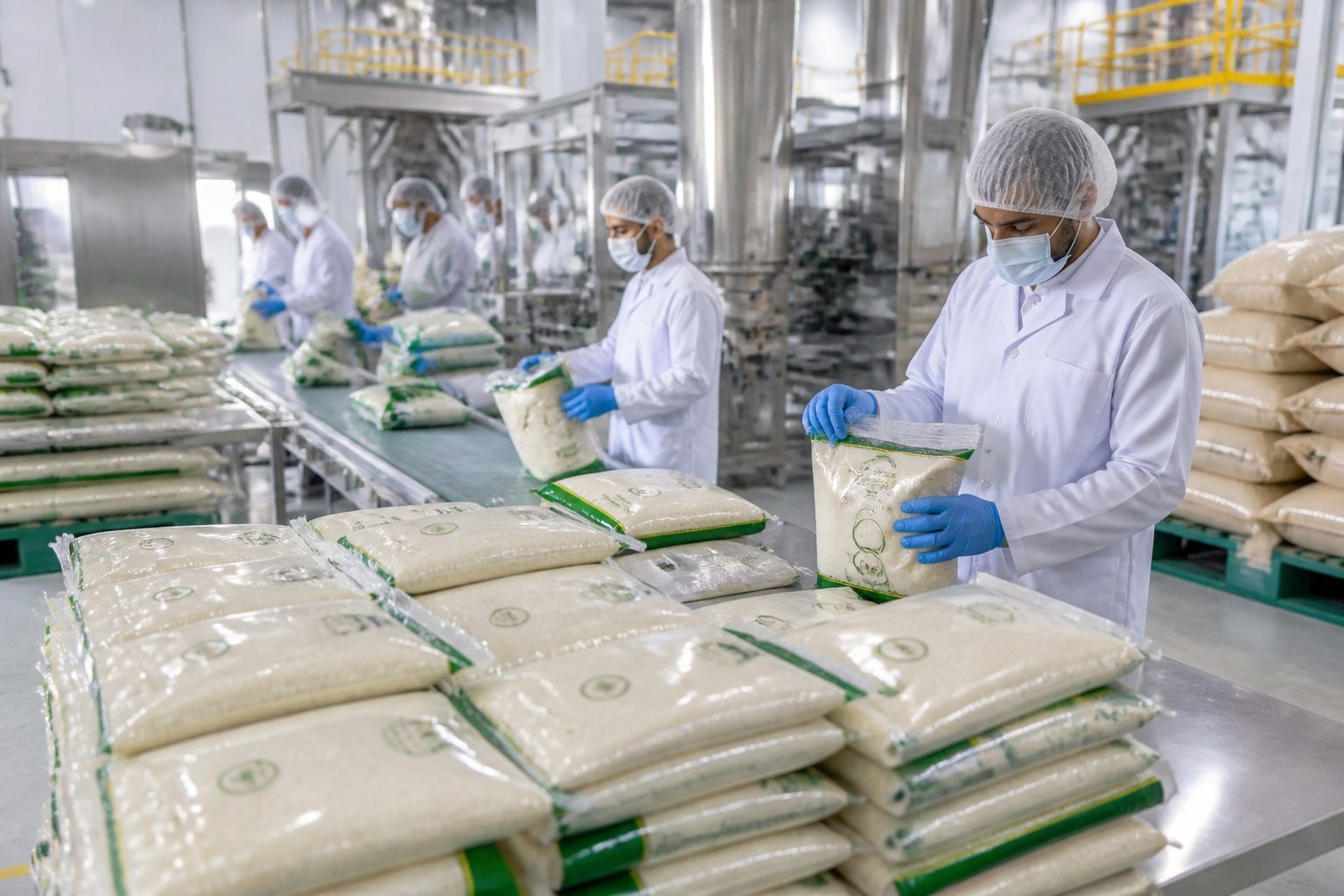
Rice packaging entering GCC markets must meet strict regional standards administered through the Gulf Standardization Organization, along with mandatory food safety protocols and religious certifications. These requirements apply to all rice exporters regardless of origin and ensure product safety, quality, and cultural compliance across member states.
Gulf Standardization Organization (GSO) Requirements
The GCC Standardization Organization administers unified technical regulations across all member states including the UAE, Bahrain, Saudi Arabia, Oman, Qatar, Kuwait, and Yemen. GSO 1003:2022 specifically governs rice standards for husked rice, milled rice, enriched rice, and parboiled rice intended for direct human consumption in packaged form.
Rice export packaging must comply with GSO material specifications that cover barrier properties, food contact safety, and structural integrity. The organization requires manufacturers to submit technical documentation demonstrating compliance with approved materials and construction methods.
Key GSO Documentation Requirements:
- Material safety data sheets
- Migration test results for food contact surfaces
- Structural performance data
- Manufacturing process validation
Pakistan-origin rice suppliers typically provide GSO-compliant packaging specifications as part of their export documentation. The standards ensure hygienic packaging that maintains product quality during storage and distribution throughout GCC countries.
Mandatory Food Safety and Labeling Compliance
Rice packaging and labeling for Qatar requires certifications including ISO standards, HACCP compliance, and conformity with GCC food safety regulations. ISO 9001:2015 certifies quality management systems while ISO 22000:2018 addresses food safety management throughout the supply chain.
HACCP certification validates that critical control points are monitored during processing and packaging operations. A certificate of analysis accompanies each shipment to document quality parameters, moisture content, broken grain percentages, and contaminant testing results.
Mandatory Labeling Elements:
- Product name and rice variety
- Net weight in metric units
- Manufacturing and expiration dates
- Storage instructions
- Nutritional information panel
- Batch or lot identification codes
GCC food packaging standards detail material specifications and design considerations that ensure food safety and quality throughout distribution. All text must appear in Arabic with English translation permitted as secondary language.
Phytosanitary and Halal Certification
Rice customs systems in Qatar require phytosanitary certification, inspection checkpoints, and packaging verification for import clearance. Phytosanitary certificates confirm the product is free from pests, diseases, and prohibited organisms according to international plant protection standards.
Halal certification is mandatory for rice products entering GCC markets. The certification covers both the product and packaging materials, ensuring no cross-contamination with non-halal substances during manufacturing or storage.
Rice exporters from Pakistan routinely obtain phytosanitary certificates from their national plant protection organizations before shipment. These documents undergo verification at GCC ports of entry alongside other import documentation. USFDA certification, while not mandatory, provides additional credibility for suppliers serving multiple international markets beyond the Gulf region.
Packaging Materials and Formats for the GCC Market
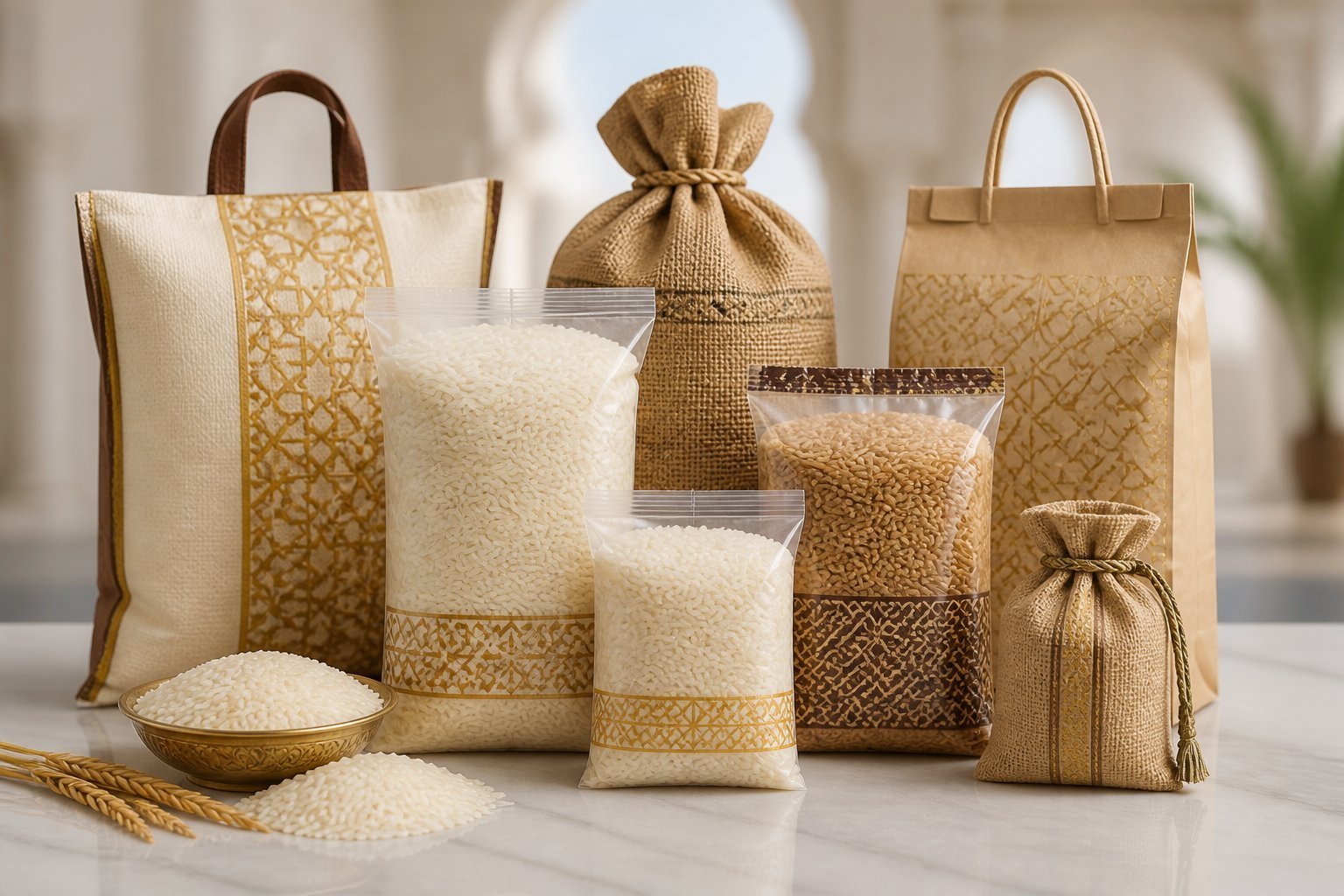
Rice importers serving the GCC region rely on durable, compliant packaging that protects grain quality during long-distance transport while meeting food safety and labeling requirements. Pakistani rice suppliers commonly use PP woven bags, BOPP laminated options, and eco-friendly alternatives designed for both retail and bulk distribution.
PP Woven and BOPP Laminated Bags
PP woven bags remain the most common packaging format for rice exports to GCC markets. These bags offer excellent strength and moisture resistance during shipping.
Standard weights include 5kg, 10kg, 25kg, and 50kg formats. The 25kg and 50kg sizes dominate bulk distribution to hotels and restaurants.
BOPP (Biaxially Oriented Polypropylene) laminated bags provide superior print quality for retail branding. The lamination protects against moisture and allows high-resolution Arabic-English labeling required across GCC food packaging standards.
Pakistani exporters use BOPP bags for premium basmati grades. The enhanced shelf appeal helps products stand out in Qatar supermarkets.
These bags must include batch codes, production dates, and net weight declarations. Qatar requires both English and Arabic text on all retail packaging.
Non-Woven Fabric Options
Non-woven fabric bags offer a middle ground between traditional woven materials and eco-friendly alternatives. These bags provide breathability that helps prevent moisture buildup during storage.
The fabric allows air circulation while blocking dust and contaminants. This makes non-woven bags suitable for long shelf life requirements in GCC warehouses.
Qatar importers select non-woven options for mid-tier rice products. The material costs more than standard PP but less than fully biodegradable alternatives.
Key advantages include:
- Reusable by end consumers
- Lighter weight reduces shipping costs
- Printable surface for branding
- Resistant to tears and punctures
Non-woven bags meet food contact safety standards when sourced from ISO-certified manufacturers. Pakistani suppliers provide these options for clients targeting environmentally conscious retailers.
Jute and Eco-Friendly Bags
Jute bags appeal to premium and organic rice segments in the GCC market. These natural fiber bags align with sustainability regulations affecting GCC packaging.
Jute provides natural moisture regulation and biodegradability. The material decomposes without leaving plastic residues.
UAE and Qatar retailers increasingly request jute packaging for specialty rice varieties. The rustic appearance suggests authenticity and traditional farming methods.
Limitations include:
- Higher cost per unit
- Limited moisture barrier without inner lining
- Shorter shelf life compared to plastic options
Pakistani exporters combine jute exteriors with food-grade plastic liners. This hybrid approach maintains grain freshness while delivering an eco-friendly presentation.
Jumbo and Bulk Packaging Solutions
Jumbo bags handle large-volume shipments to GCC distributors and industrial buyers. These bags typically hold 500kg to 1,000kg of rice.
The format reduces handling costs and speeds up port clearance. Hotels, catering companies, and food processors in Qatar prefer jumbo bags for operational efficiency.
PP woven jumbo bags include reinforced stitching and UV protection. The bags withstand stacking in outdoor storage yards common at GCC ports.
Pakistani suppliers provide jumbo bags with discharge spouts for easy transfer into retail packaging lines. Each bag requires clear labeling with origin, variety, and weight specifications.
Bulk containers must meet the same food safety standards as retail packaging. Suppliers include batch traceability documentation for customs clearance across all GCC member states.
Selecting Packaging by Rice Type: Basmati and Non-Basmati
Basmati rice requires airtight, moisture-resistant packaging to preserve its fragrance and long grain structure, while non-basmati rice prioritizes bulk protection and cost efficiency in larger institutional formats.
Preserving Premium Basmati Rice Quality
Basmati rice packaging must protect the grain’s natural aroma and prevent moisture absorption that causes kernel breakage. Premium basmati varieties from Pakistan and India need multi-layer laminated bags with inner food-grade liners that block humidity during transport and storage. These bags typically range from 1 kg to 10 kg for retail markets across the GCC.
The packaging material directly affects shelf life. Non-woven bags with PE liners work well for retail packaging formats in premium supermarket channels, while PP woven bags with lamination suit wholesale distribution. The grain’s elongation ratio and moisture content must stay stable, which requires sealed closures rather than stitched openings.
Key protection requirements:
- Airtight sealing to lock in natural fragrance
- Moisture barrier preventing humidity above 12-14%
- Light protection to maintain grain color
- Puncture resistance during handling
Quality certifications like ISO 22000:2018 and HACCP require traceability labels on each bag. The packaging must display origin, net weight, packing date, and batch codes for compliance with GCC food safety regulations.
Non-Basmati Rice Packaging Considerations
Non-basmati rice packaging focuses on structural strength for larger pack sizes used in institutional and bulk trade channels. Varieties like Sona Masoori and IR64 typically move in 25 kg to 50 kg bags designed for foodservice operations, hotels, and wholesale distributors throughout Gulf markets.
PP woven bags dominate non-basmati rice packaging options because they offer tear resistance and stacking stability at lower costs than premium retail formats. These bags need reinforced stitching at stress points and adequate ventilation to prevent condensation buildup during container shipment.
Bulk buyers prioritize practical features over visual appeal. The packaging must withstand repeated handling from mill to port to distribution center without spillage or contamination. Standard specifications include 80-120 GSM woven polypropylene with UV stabilizers for outdoor storage protection.
Institutional packaging often uses simpler printing with clear variety identification and weight markings rather than elaborate brand graphics used in consumer basmati lines.
Retail and Wholesale Packaging Sizes in GCC Distribution
GCC markets rely on specific packaging formats that align with consumer buying patterns and commercial operations. Retail sizes range from 1 kg to 10 kg, while wholesale and foodservice channels use larger formats from 25 kg to 50 kg.
Common Retail Pack Sizes
Retail rice packaging in GCC countries follows standardized weight formats designed for household consumption. The 5 kg pack dominates as the most purchased size across supermarkets in the UAE, Saudi Arabia, Qatar, and Kuwait.
Smaller 1 kg and 2 kg packs serve single-person households and expatriate workers. These formats use BOPP laminated materials with clear grain windows and bilingual Arabic-English labeling.
The 10 kg format appeals to larger families and frequent rice consumers. This size balances storage convenience with extended usage periods. Rice packaging types for GCC markets prioritize full-color printing and premium presentation for retail visibility.
Pakistani rice exporters supply these retail formats with complete certification documentation including ISO 22000:2018 and Halal compliance. PP woven bags with inner liners protect grain quality during Gulf region storage conditions.
Bulk and Foodservice Requirements
Hotels, restaurants, and catering operations require larger packaging formats. The 25 kg bag represents the standard foodservice size across GCC distribution networks.
Wholesale channels use 40 kg and 50 kg formats packed in durable woven polypropylene bags. These jumbo bags optimize container loading and warehouse stacking efficiency. Rice export packaging at this scale includes moisture barriers essential for Gulf climate protection.
Institutional buyers including government supply programs and labor accommodation facilities purchase 50 kg units. This format reduces per-kilogram costs while maintaining handling practicality. Each bulk package must display batch numbers, origin details, and storage instructions in Arabic.
Private Label and White Label Packaging
Private label and white label rice packaging allows GCC retailers and distributors to build branded product lines. Brands can order custom packaging with proprietary designs while maintaining full regulatory compliance.
Minimum order quantities vary by supplier but typically start at container-load volumes. Private label options include custom bag printing, size selection, and grain variety specification. White label solutions provide pre-certified packaging ready for brand application.
Pakistani rice suppliers offer flexible MOQ structures across retail sizes from 1 kg to 10 kg and wholesale formats up to 50 kg. These programs include complete export documentation, HACCP certification, and consistent supply reliability for GCC market launches.
Hygiene, Shelf Life, and Product Protection
Hygienic packaging materials and sealing methods directly influence rice quality retention, regulatory approval, and consumer safety throughout the GCC distribution chain. Proper moisture barriers, tamper-evident features, and certified production environments protect rice from degradation and contamination.
Moisture and Aroma Retention Strategies
Rice packaging must maintain low moisture vapor transmission rates to preserve grain quality. Woven polypropylene bags with inner polyethylene liners create effective barriers against humidity.
BOPP laminated structures offer superior moisture protection for premium varieties like Pakistani Basmati 1121. These materials prevent moisture ingress that causes mold growth and grain clumping.
Aroma retention requires sealed packaging environments. Basmati rice loses its characteristic fragrance when exposed to air and moisture. Multi-layer packaging films with aluminum barriers lock in natural oils and aromatics.
Key protective features include:
- Inner moisture barriers of 50-80 microns
- Heat-sealed closures preventing air exchange
- Storage recommendations maintaining 12-14% moisture content
- Valve systems releasing gases while blocking external moisture
Packaging materials with low MVTR and OTR properties confirm quality protection throughout the supply chain. Pakistani rice exporters use certified packaging materials that maintain grain freshness during sea freight to Qatar ports.
Tamper-Proofing and Contamination Prevention
Tamper-evident seals protect consumers and verify product integrity. Security features include heat-sealed closures, printed security tapes, and tear-away strips that show visible damage if opened.
Hygienic packaging prevents physical and biological contamination during handling. Food-grade materials certified under ISO 22000:2018 standards ensure no chemical migration into rice grains.
Contamination prevention measures:
- Single-use inner liners preventing cross-contamination
- Pest-resistant outer layers blocking insect entry
- Sealed valve systems for modified atmosphere packaging
- UV-resistant materials preventing degradation during storage
HACCP compliance and hygiene principles require documented control measures at critical points. Each batch receives quality verification before packaging operations begin.
Hygienic Packaging for Regulatory Approval
GCC regulatory bodies require hygienic packaging certifications before market entry. Suppliers must demonstrate compliance with food safety management systems.
A certificate of analysis accompanies each shipment, verifying microbial limits, moisture content, and packaging material safety. This documentation links directly to batch numbers printed on rice packaging labels.
ISO 22000, HACCP, and phytosanitary certifications validate that rice packaging meets GCC food safety regulations. Pakistani rice mills operating under these certifications maintain hygiene standards from milling through final packaging.
Required documentation includes:
- Food-grade packaging material certificates
- Microbiological test results
- Production facility hygiene audit reports
- Halal certification for packaging materials
Packaging facilities must follow good manufacturing practices with regular sanitation schedules. Workers wear protective equipment and follow contamination control protocols during bag filling and sealing operations.
Sustainability Trends and Evolving Regulatory Pressures
The GCC rice packaging sector faces mounting pressure to adopt environmentally responsible materials as governments introduce stricter waste management policies and consumers demand greener alternatives. Companies are rethinking traditional plastic packaging in favor of biodegradable options and reusable formats that align with regional environmental goals.
Transition to Biodegradable and Reusable Materials
Rice distributors across the GCC are shifting away from conventional plastic bags toward materials that break down naturally or support multiple uses. Non-woven fabric bags have gained traction as a durable alternative for bulk rice packaging, offering strength comparable to plastic while allowing for repeated use by consumers. These bags typically withstand multiple washes and maintain structural integrity through extended handling.
Jute bags represent another popular choice for rice export packaging, particularly for premium varieties sourced from Pakistan and other certified origins. Jute provides natural biodegradability, breathability that helps maintain grain quality during storage, and a texture that conveys authenticity to quality-conscious buyers. The material aligns with ISO 22000:2018 and HACCP standards when properly manufactured and stored in controlled environments.
Packaging companies serving importers like TEFT Global must balance sustainability with protection requirements. Rice packaging needs moisture barriers, pest resistance, and structural stability during shipping from origins like Pakistan to GCC markets.
Impact of Regional Plastic Bans
Several GCC nations have implemented or proposed restrictions on single-use plastics, forcing rice distributors to adapt quickly. Sustainability regulations worldwide focus heavily on plastic packaging, with 83 percent of legal measures targeting plastics specifically. The Middle East shows particular regulatory focus on food packaging rather than beverages alone.
These bans affect rice packaging decisions at multiple levels. Primary packaging for consumer-sized portions faces the strictest scrutiny, while bulk wholesale formats receive more flexibility. Distributors must track changing requirements across Kuwait, UAE, Saudi Arabia, Qatar, Bahrain, and Oman, as enforcement timelines and material definitions vary by country.
Growth in sustainable packaging stems from both regulatory pressure and consumer demand, creating dual incentives for rice suppliers to modernize their packaging strategies ahead of mandated deadlines.
Brand Positioning with Sustainable Packaging
Rice importers recognize that packaging choices communicate brand values to retailers and consumers. Premium Pakistani rice varieties certified to ISO 9001:2015, Halal, and USFDA standards gain additional market appeal when packaged in materials that reflect environmental responsibility.
Sustainable packaging supports differentiation in crowded retail environments. Jute and non-woven fabric bags signal quality and tradition, particularly for Basmati and long-grain varieties. The tactile experience of natural fibers creates positive associations with authenticity and careful sourcing.
Distributors serving GCC markets must ensure sustainable materials meet the same safety and traceability standards as conventional packaging. HACCP compliance remains mandatory regardless of material choice, and moisture control features must preserve grain quality throughout the supply chain from Pakistani mills to GCC warehouses.
Conclusion and Strategic Recommendations
Rice exporters serving GCC markets must prioritize compliance and quality assurance to maintain competitive advantage. Pakistan stands as a certified and reliable origin for premium rice varieties that meet regional demand. All shipments should include a certificate of analysis to verify quality parameters and regulatory compliance.
Key recommendations for rice packaging in the GCC include:
- Use materials that protect against humidity and temperature fluctuations common in the region
- Ensure all labels meet Arabic language requirements and GCC standards
- Select packaging sizes that align with both retail and bulk distribution channels
- Implement sustainable packaging alternatives where feasible
Suppliers must maintain ISO 9001:2015, ISO 22000:2018, HACCP, Halal, and USFDA certifications to access GCC markets. These certifications demonstrate commitment to food safety and quality management systems.
Rice packaging should balance shelf-life extension with environmental considerations. Understanding GCC labelling standards for Qatar helps ensure compliance across the region.
Critical success factors include:
- Establishing direct relationships with certified rice exporters
- Maintaining proper documentation including certificates of analysis for each shipment
- Investing in packaging infrastructure that meets local market preferences
- Monitoring regulatory changes across GCC member states
Companies that align their rice packaging strategies with regional requirements position themselves for long-term growth in this essential food commodity market.
Frequently Asked Questions
Rice packaging in Gulf markets requires specific formats, materials, and labeling to meet regulatory standards while protecting product quality in challenging climates. Understanding these requirements helps ensure smooth market entry and distribution across the region.
Which packaging formats are most suitable for rice sold in Gulf retail and wholesale channels?
Retail channels in Gulf markets typically use 1 kg, 2 kg, 5 kg, and 10 kg formats. The 5 kg size remains the most popular choice for family consumption across the region.
Wholesale and food service buyers prefer larger formats including 10 kg, 20 kg, 25 kg, and 50 kg bags. These sizes support restaurants, hotels, and catering operations that require higher volumes.
Standardized packaging sizes enable efficient container loading and warehouse storage. A 25 kg format optimizes pallet stacking and transport efficiency.
Pakistani rice exporters commonly supply both retail-ready small packs and bulk institutional formats. This flexibility allows distributors to serve multiple market segments from a single source.
What labeling information is typically required for rice products distributed across Gulf markets?
Every rice package must display the product name, net weight in kilograms, and country of origin. Production date, expiry date, and batch number are mandatory for traceability.
Arabic text is required on all labels and must be equally prominent as any English text. The label must include both importer and exporter details with complete addresses.
Storage instructions help maintain product quality throughout the supply chain. Clear handling guidance protects rice from moisture and contamination during distribution.
GCC labeling standards ensure transparency and consumer safety across member states. Rice meeting ISO 22000:2018 and HACCP standards typically includes certification marks on packaging.
How can rice packaging be optimized to maintain freshness in hot and humid regional climates?
Multi-layer packaging materials provide essential moisture barriers in Gulf climates. BOPP laminated bags offer superior protection against humidity compared to standard woven polypropylene.
Inner plastic liners prevent moisture ingress during storage and transport. These liners protect rice quality even when outer packaging experiences temperature fluctuations.
Vacuum-sealed formats extend shelf life by removing oxygen that can degrade quality. This method is particularly effective for premium basmati varieties from Pakistan.
Proper sealing techniques prevent pest entry and odor absorption. Food-grade materials certified under ISO 9001:2015 ensure packaging safety and compliance.
What bag materials and barrier properties best protect rice from moisture, pests, and odor transfer during storage and transport?
Woven polypropylene bags with BOPP lamination deliver strong moisture resistance. The laminated layer acts as a barrier against water vapor while maintaining bag strength.
Multi-wall paper sacks with polyethylene inner liners combine traditional presentation with modern protection. These formats are popular for premium rice positioning in retail environments.
Non-woven polypropylene offers breathability while blocking pest access. This material works well for bulk institutional packaging where air circulation helps prevent condensation.
Halal-certified adhesives and inks ensure full compliance with GCC food safety requirements. Rice packaging materials must meet international standards for food contact surfaces.
What are the common pack sizes and palletization standards used by rice importers and distributors in the Gulf?
Standard pallets measuring 120 cm x 100 cm accommodate most rice bag configurations. A 25 kg format typically stacks 40 bags per pallet for a total of 1,000 kg.
Containers hold approximately 26 to 27 metric tons of bagged rice depending on packaging density. Efficient loading maximizes shipment value while maintaining product safety.
Retail packs of 5 kg require different palletization than bulk 50 kg bags. Distributors often request mixed container loads to serve both retail and wholesale channels.
Pakistani suppliers experienced in Gulf markets understand regional palletization preferences. This knowledge reduces handling costs and speeds warehouse distribution upon arrival.
How do packaging compliance and documentation requirements vary between the UAE, Saudi Arabia, and other Gulf countries?
All GCC member states require Arabic labeling, but enforcement intensity varies by country. Saudi Arabia maintains particularly strict inspection protocols at ports of entry.
The UAE accepts adhesive Arabic sticker labels as an alternative to direct printing for initial market testing. This flexibility helps new exporters enter the market with lower upfront costs.
Qatar emphasizes complete traceability documentation including certificates of origin and phytosanitary certificates. Each shipment requires commercial invoices that match label declarations exactly.
Kuwait and Bahrain follow similar GCC frameworks but may request additional country-specific health certificates. Working with experienced importers familiar with each market streamlines the approval process.
Rice certified under USFDA standards often receives expedited clearance in Gulf ports. ISO 22000:2018 certification demonstrates commitment to international food safety protocols recognized across the region.
Packaging Built for GCC Compliance
TEFT Global delivers rice in fully compliant, Arabic-English labeled packaging — from 5kg retail formats to 50kg bulk bags — with moisture-barrier protection and complete batch traceability on every shipment.