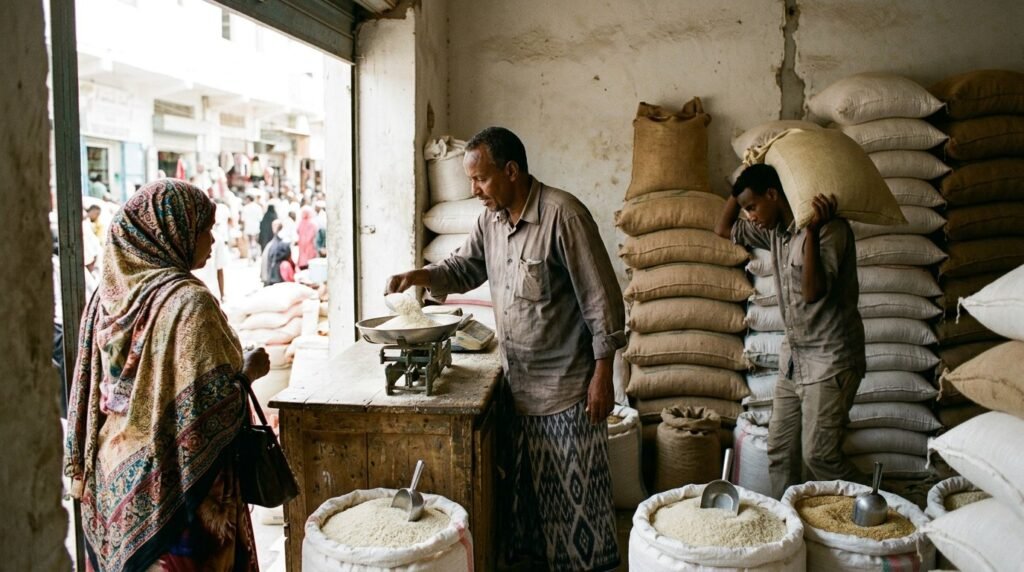
A shipment of rice can sit in a Doha warehouse for months before it reaches a hotel kitchen or a supermarket shelf. Whether that stock still tastes fresh, mills evenly, and passes inspection depends almost entirely on how it was stored from the moment it left the mill. Rice storage and shelf life are directly tied to grain type, moisture content, and packaging, and getting any of these wrong can turn a profitable container into a write-off.
For buyers in Qatar managing bulk imports, HORECA supply, or private label programs, rice shelf life is not a household question. It is a procurement and food safety issue that touches lot control, warehouse conditions, and contract terms. A rancid batch of brown rice or a weevil-infested pallet does not just cost money. It damages relationships with hotels, retailers, and food service clients who expect consistent quality on every order.
This article covers what trade buyers need to know about storing rice at scale, spotting quality problems before they reach customers, and setting up the receiving and inspection procedures that protect a supply chain from source to shelf.
Key Takeaways
- Milled white rice holds its quality far longer than brown, red, black, or wild rice because the bran and oils have been removed.
- Moisture control, pest management, and sealed packaging are the biggest levers buyers have over shelf life and food safety.
- Cooked rice carries a separate and more urgent risk profile tied to Bacillus cereus, making cooling and refrigeration timing critical for HORECA operations.
Shelf Life Varies by Rice Type and Processing
Rice shelf life depends on how much of the grain’s natural oil-bearing layer remains after milling. White rice, which has had its bran and germ removed, can stay stable for years, while brown, red, black, and wild rice spoil far faster because their intact bran layers contain oils that oxidize over time.

Why White Rice Outlasts Whole-Grain Varieties
Milling strips away the bran layer that holds most of the natural oils in a rice grain. Without that oil content, uncooked white rice has little material left to oxidize or turn rancid, which is why properly sealed white rice can last for years in dry storage, according to Healthline’s guide to rice shelf life.
Some sources put sealed white rice shelf life even higher, citing a range of 25 to 30 years when stored properly. For import buyers, this means white rice grades carry the lowest inventory risk and are the safest option for long holding periods or strategic stock reserves.
Expected Storage Life for Jasmine, Basmati, and Other Milled Rice
Jasmine, basmati, and other milled white rice varieties share the same long shelf life profile as standard white rice. Buyers can expect 4 to 5 years of pantry-level storage life for these grains under dry, sealed conditions, with an effectively indefinite life in frozen storage.
Aged basmati varieties add a further layer of stability because controlled aging reduces moisture and firms up the grain structure before the rice ever reaches a warehouse. Buyers sourcing aged basmati rice benefit from grain that has already gone through part of its moisture equilibration before packaging.
Why Brown, Red, Black, and Wild Rice Need Tighter Controls
Whole-grain rice varieties spoil much faster because their bran layer, rich in oils, b vitamins, fiber, and antioxidants, is also the part most prone to oxidation. Brown rice shelf life runs 3 to 6 months in pantry conditions before flavor and quality begin to decline, and under tropical humidity that window can shrink to as little as two weeks according to the IRRI Rice Knowledge Bank.
Red, black, and wild rice follow a similar pattern to brown rice because they retain their bran layers. Buyers stocking organic rice or whole-grain SKUs need cold storage or rapid turnover to avoid rancid smell complaints from retail and food service customers. A supplier offering super brown rice as part of a wholesale program should be able to confirm packaging date and recommended turnover window at the point of sale.
Best-Before Dates vs. Functional Product Life
A best-before date on a rice bag reflects a manufacturer’s quality guarantee, not a hard safety cutoff. Dry rice does not spoil the way perishable food does; it degrades gradually in flavor, texture, and nutrition, particularly if not stored properly.
For trade buyers, this distinction matters for inventory write-off decisions. A pallet of white rice slightly past its printed date is not automatically unsaleable, but a shorter-dated brown rice lot approaching its window needs closer sensory and moisture checks before it moves to a customer.
What Causes Dry Rice to Lose Quality or Become Unsaleable?
Dry rice becomes unsaleable through three main pathways: moisture-driven mold and clumping, oxidation that produces rancid odors, and pest infestation. Each leaves distinct, checkable signs that a receiving team can catch before stock reaches a customer.
Moisture Exposure, Clumping, and Mold Growth
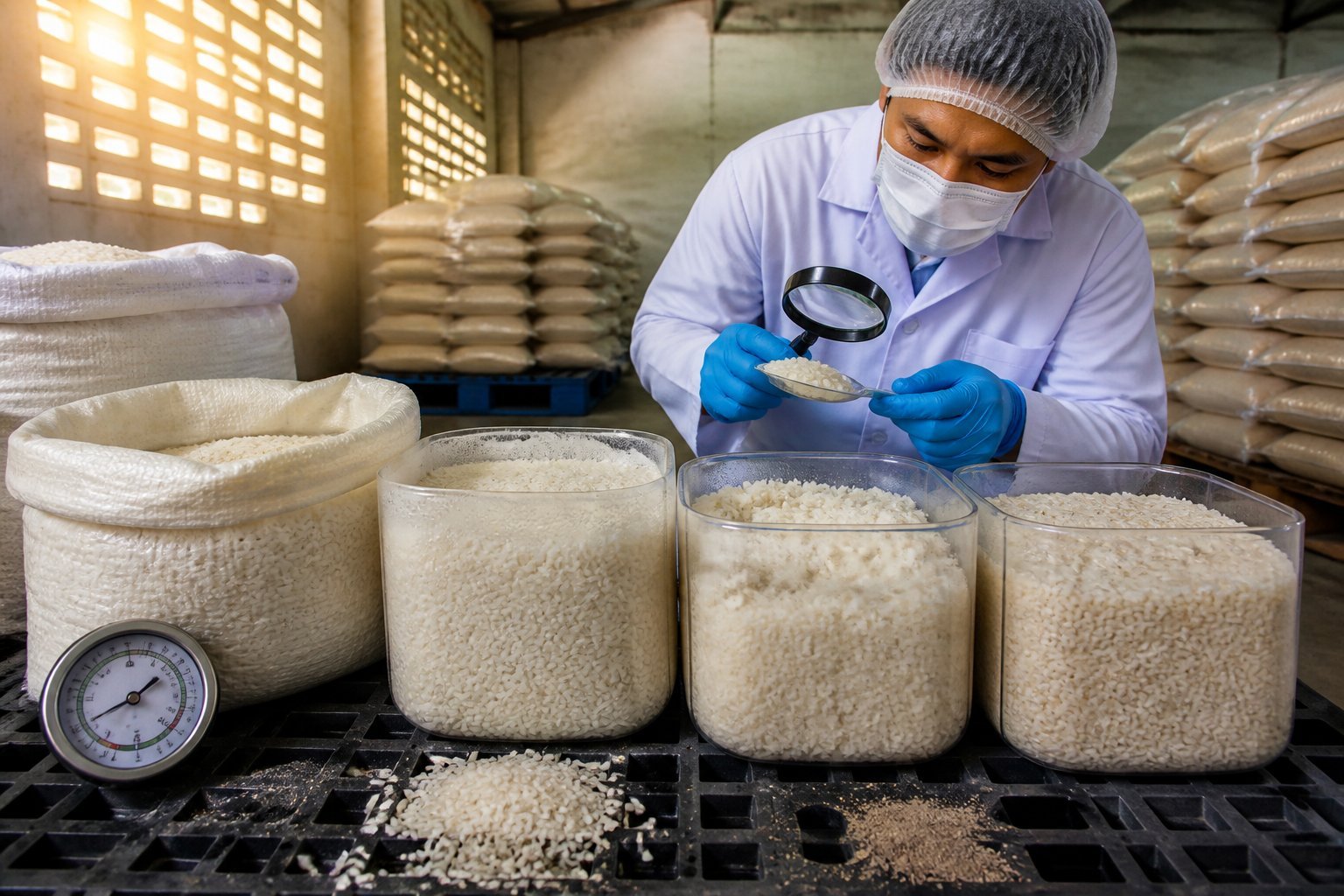
Moisture is the single biggest driver of rice spoilage in storage. Rice held at 12% to 13% moisture content resists mold growth, insect activity, and discoloration, while grain that absorbs ambient humidity above that range becomes vulnerable within weeks.
In humid climates, rice is hygroscopic and will equilibrate with surrounding air moisture unless kept in sealed or hermetic conditions, a challenge the IRRI Rice Knowledge Bank flags as a particular risk in tropical storage environments. Qatar’s climate makes this a year-round concern for warehouse operators, not a seasonal one.
Oxidation and the Rancid Smell in Whole-Grain Rice
A rancid smell signals that oils in the bran layer have oxidized past the point of sale. This is almost exclusive to brown, red, black, and wild rice, since white rice has had the oil-bearing bran milled away.
Once a rancid odor is present, the rice is not going to test better with time. Buyers should treat any lot with an off smell as a quality failure and pull it from saleable inventory immediately.
Rice Weevils and Other Pantry Pests
Rice weevils and grain moths are the most common pantry pests affecting stored rice, and they can damage both paddy and milled grain through feeding and contamination, according to an overview of rice storage and packaging practices. Infestations often start in warehouse cracks, old packaging residue, or improperly sealed bags.
Hermetic storage systems control insect pests without pesticides and can approximately double the effective storage life of seed-grade rice, per IRRI’s hermetic storage research. For commercial buyers, sealed bulk containers offer the same pest-exclusion benefit at scale.
How to Identify Spoiled or Compromised Lots
A quick visual and smell check catches most problems before rice reaches a customer:
- Clumped or discolored grains, which usually indicate moisture exposure
- A musty or rancid odor, especially in brown or other whole-grain rice
- Visible insects, larvae, or webbing near the packaging
- Small holes in bags or unusual dust at the bottom of a container
Any lot showing these signs should be segregated and tested rather than blended into good stock.
How Should Bulk Rice Be Stored in Warehouses?
Bulk rice storage protects quality when warehouses control temperature, humidity, and airflow while keeping stock elevated and rotated by age. These four factors work together; missing any one of them shortens the effective shelf life of an otherwise well-milled product.
Selecting Cool, Dry, and Stable Storage Conditions
Rice quality declines faster at higher temperatures because storage heat accelerates the chemical changes affecting grain hardness, water uptake, and gelatinization, as shown in research on rice storage under controlled conditions. Warehouses should target cool, stable temperatures with humidity control rather than relying on ambient outdoor conditions, particularly in Gulf climates.
Ventilation systems that manage temperature, humidity, and air quality play a direct role in extending the shelf life of stored rice, according to guidelines on rice warehouse design. Buyers evaluating a supplier’s facilities should ask about climate control specifics, not just square footage.
Keeping Palletized Stock Away From Floors, Walls, and Odors
Pallets should sit clear of floors and walls to allow airflow and prevent moisture wicking from concrete or masonry. Rice also absorbs surrounding odors easily, so storage areas need separation from chemicals, fuel, or strong-smelling goods.
Using Sealed Containers for Opened and Repacked Inventory
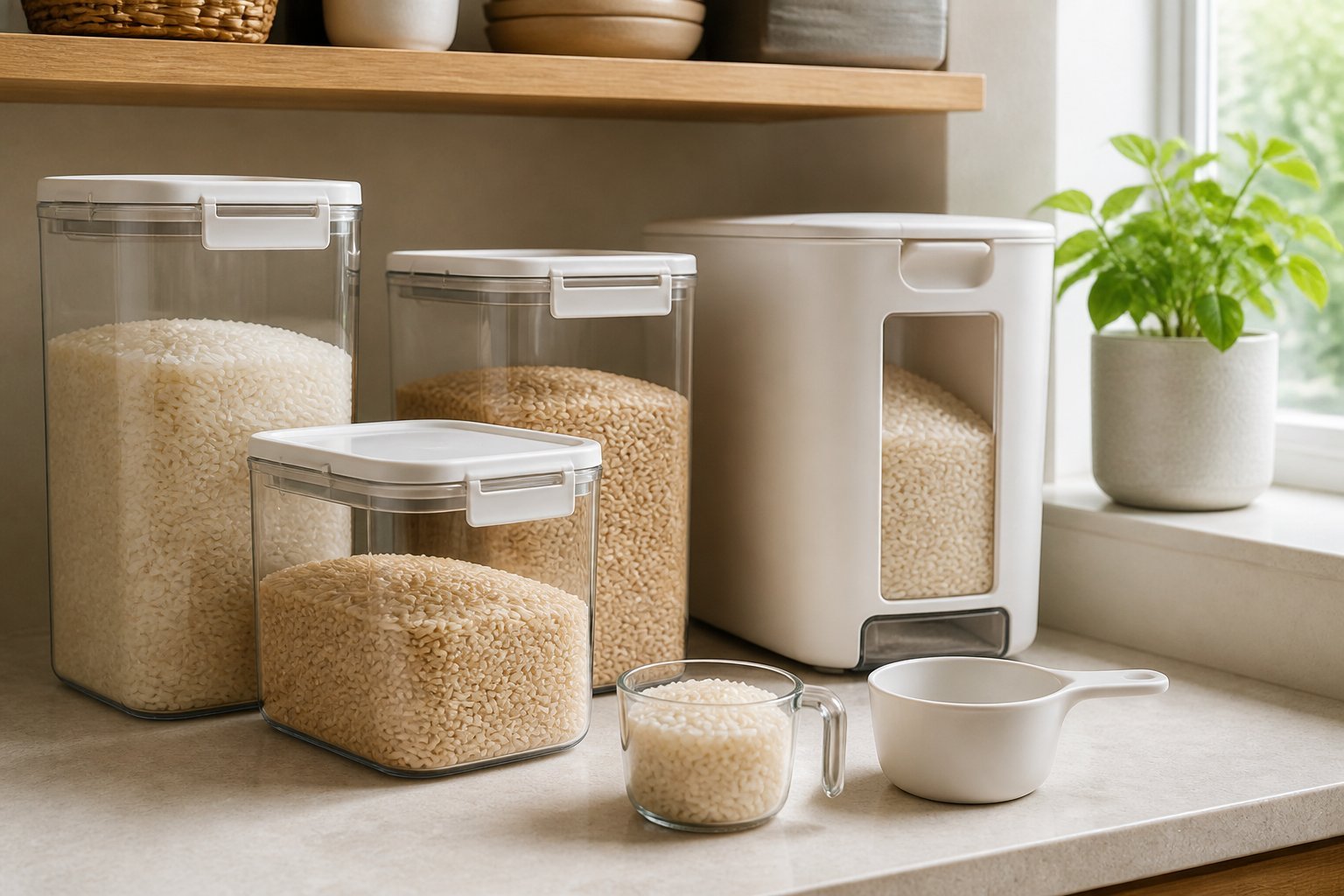
Once a bulk bag is opened for repacking or sampling, the rice inside needs to move into sealed containers immediately. Airtight containers prevent the rice from reabsorbing ambient moisture and block pest access far better than a re-folded or clipped bag.
Managing Rice in Bulk With First-Expired, First-Out Rotation
Warehouses should move older stock out before newer stock, a First In First Out approach that prevents spoilage and economic loss tied to shelf-life limits and uncertain storage conditions. This is especially important for brown and other whole-grain rice, where even a few extra months in storage can push a lot past its usable window. Buyers managing multiple SKUs through a rice supply solutions partner should confirm that rotation logs are part of the standard warehouse process.
Packaging Controls for Extended Holding Periods
Packaging choice determines how well rice resists oxygen, moisture, and pests during extended storage. Oxygen-limiting packaging slows the chemical degradation that shortens shelf life, while the right container format depends on volume and how often the stock will be accessed.
When Mylar Bags and Oxygen Absorbers Are Appropriate
Mylar bags paired with oxygen absorbers create a low-oxygen environment suited to long-term bulk storage of white rice. Oxygen degrades rice over time, and using an oxygen-free container or sealed barrier bag is considered essential for extending shelf life, according to guidance from Martha Stewart’s rice storage advice.
The Role of an Oxygen-Free Container in Long-Term Quality
Removing oxygen from the storage environment slows both fat oxidation in whole-grain rice and general quality decline in white rice. This makes oxygen-free packaging one of the highest-value interventions available to a buyer holding stock for extended periods, particularly for brown or organic rice lines.
Choosing Between Rigid Containers and Flexible Barrier Packaging
Both formats have a place depending on operational needs.
| Factor | Rigid Containers | Flexible Barrier Packaging (Mylar/Vacuum) |
|---|---|---|
| Best for | Frequent access, repacking | Long-term bulk holding |
| Space efficiency | Lower | Higher |
| Pest resistance | High if sealed | High when heat-sealed |
| Reusability | High | Single-use typically |
| Moisture control | Good | Very good with oxygen absorbers |
Flexible packaging systems, including vacuum and modified atmosphere packaging, are among the most effective methods used to keep processed food products fresh over extended periods, according to research on innovative food packaging systems. Buyers managing high-volume wholesale rice supply programs often use flexible barrier bags for bulk holding and shift to rigid containers only at the repack or distribution stage.
Why Glass Mason Jars Are Limited to Small-Scale Sampling or Decanting
Glass jars work well for sample retention or quality control comparisons but do not scale for commercial volume. They are heavy, breakable in transit, and impractical for the pallet quantities that trade buyers manage, making them a tool for lab sampling rather than warehouse inventory.
Receiving, Inspection, and Lot-Control Procedures
Every incoming rice shipment needs a documented check before it enters saleable inventory. This protects buyers from accepting stock that has already lost quality in transit or storage before it ever reached their warehouse.
What Buyers Should Check Before Accepting a Delivery
Inspection at receiving should confirm moisture content, visual grain condition, and packaging integrity. The ideal moisture range for milled rice sits between 12% and 14%, balancing shelf life, grain strength, and food safety.
Buyers should also check for consistent grain color, absence of odor, and intact packaging seals. A rice sample approval process before bulk order gives buyers a documented quality baseline to compare against future shipments from the same supplier.
Recording Lot Codes, Pack Dates, and Storage History
Every pallet should carry a traceable lot code, pack date, and any available storage history from the mill or supplier. This documentation lets a buyer trace a quality complaint back to its source lot instead of guessing across an entire shipment. Reviewing rice quality specifications with a supplier before the first order sets clear expectations for what receiving documentation should include.
Segregating Infested, Damp, or Odor-Affected Stock
Any pallet showing signs of pests, dampness, or off odors should move to a quarantine area immediately, separate from clean inventory. Cross-contamination from a single infested bag can spread weevils across an entire storage zone within weeks.
Setting Escalation Criteria for Suspect Inventory
Warehouse teams need clear rules for when a suspect lot gets rejected, reworked, or sent for lab testing. Defined escalation criteria, tied to moisture readings, pest counts, or odor severity, remove guesswork from the decision and keep compromised stock from reaching customers.
Cooked Rice Controls for HORECA and Prepared-Food Operations
Cooked rice carries a fundamentally different risk profile from dry rice because it supports bacterial growth within hours, not months. HORECA operators need strict cooling and holding procedures to prevent foodborne illness, regardless of whether the rice started as white or brown.
Why Bacillus cereus Makes Cooling Time Critical
Bacillus cereus spores survive the boiling temperatures used to cook rice and then germinate when the rice cools slowly at room temperature. Once active, the bacteria multiply rapidly and release toxins linked to food poisoning, a process described in detail in research on Bacillus cereus control in rice safety. This risk applies to both cooked white rice and cooked brown rice equally.
How to Cool Cooked Rice Quickly in Shallow Containers
Spreading cooked rice into shallow containers speeds heat loss and moves the batch through the temperature danger zone faster. Deep pots of rice cool slowly from the outside in, leaving the center in the bacterial growth range for hours longer than a shallow tray would.
When to Refrigerate Cooked Rice and How Long to Hold It
Cooked rice should move into refrigeration as soon as it has cooled, held in an airtight container to limit moisture loss and contamination. Kitchens should treat holding time as a hard limit rather than a guideline, since starch retrogradation and bacterial risk both increase the longer cooked rice sits, a pattern documented in research on cold-storage preservation of cooked rice quality.
Managing Reheating, Freezing, and Discard Decisions
Reheated rice should reach a safe internal temperature quickly and only be reheated once. Freezing extends usable life for batch-prepped rice, but any lot showing sliminess, off odor, or extended time outside refrigeration should be discarded rather than reworked. Operations sourcing through a food service rice supply or hospitality rice supply program should build these discard rules into staff training, not just kitchen policy documents.
A Controlled Storage Program Protects Product Quality and Buyer Confidence
Rice storage and shelf life come down to a short list of controllable factors: grain type, moisture, temperature, packaging, and rotation discipline. White rice tolerates loose handling far better than brown, red, black, or wild rice, but no rice type is immune to poor warehouse conditions or pest exposure.
Buyers who build receiving checks, lot tracking, and clear escalation rules into their process catch quality problems before they reach a customer. Sealed containers, moisture-controlled storage, and First-Expired-First-Out rotation form the backbone of a program that protects food safety and keeps product quality consistent shipment after shipment. That consistency is what keeps hotels, retailers, and food service clients reordering from the same supplier.
Frequently Asked Questions
How long can importers store unopened white rice?
Unopened, properly sealed white rice can stay in good condition for 4 to 5 years in standard warehouse conditions, and even longer in oxygen-free or hermetic packaging. Moisture control and pest exclusion matter more than the calendar date for determining actual usable life.
Does brown rice require refrigerated or frozen storage?
Brown rice does not require refrigeration but benefits significantly from cool, dry storage to slow oxidation of its bran oils. At room temperature, brown rice typically holds quality for 3 to 6 months, while cold storage extends that window considerably.
Can rice be sold after its best-before date?
Rice past its best-before date is not automatically unsafe, since the date reflects a quality guarantee rather than a safety cutoff for dry rice. Buyers should confirm moisture content, odor, and visual condition before releasing dated stock for sale.
What should a warehouse do if rice weevils are found in one lot?
The affected lot should be quarantined immediately and separated from all other inventory to prevent the infestation from spreading. Warehouse staff should inspect neighboring pallets and packaging for signs of spread before clearing the surrounding stock for sale.
How quickly must cooked rice be refrigerated in a commercial kitchen?
Cooked rice should be cooled in shallow containers and moved to refrigeration as quickly as possible after cooking to limit the window for Bacillus cereus spores to germinate. Kitchens should treat this as a strict operational rule tied to food safety compliance, not a flexible guideline.
Do oxygen absorbers extend the shelf life of all rice varieties?
Oxygen absorbers extend shelf life for both white and brown rice by slowing oxidation, though the effect is more pronounced for whole-grain varieties with higher oil content. White rice already has a long shelf life, so absorbers add a longer safety margin rather than solving an existing quality problem.