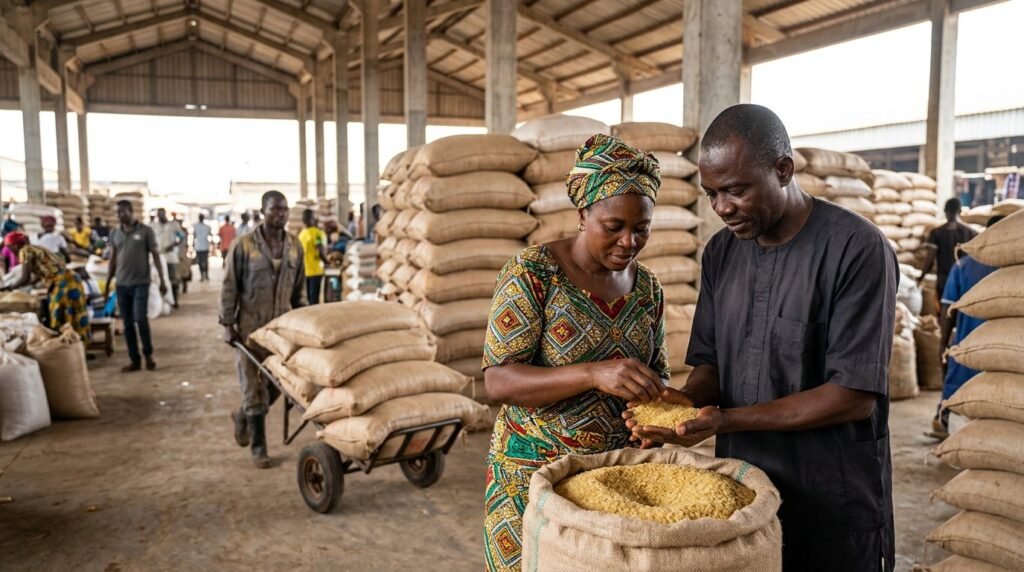
Kazakhstan rice imports serve buyers seeking a wider choice of rice types, with Russia leading recorded imports in 2024 and India supplying the second-largest volume. For purchasing teams in 2026, the main checks are the product specification, cooking performance and current import requirements.
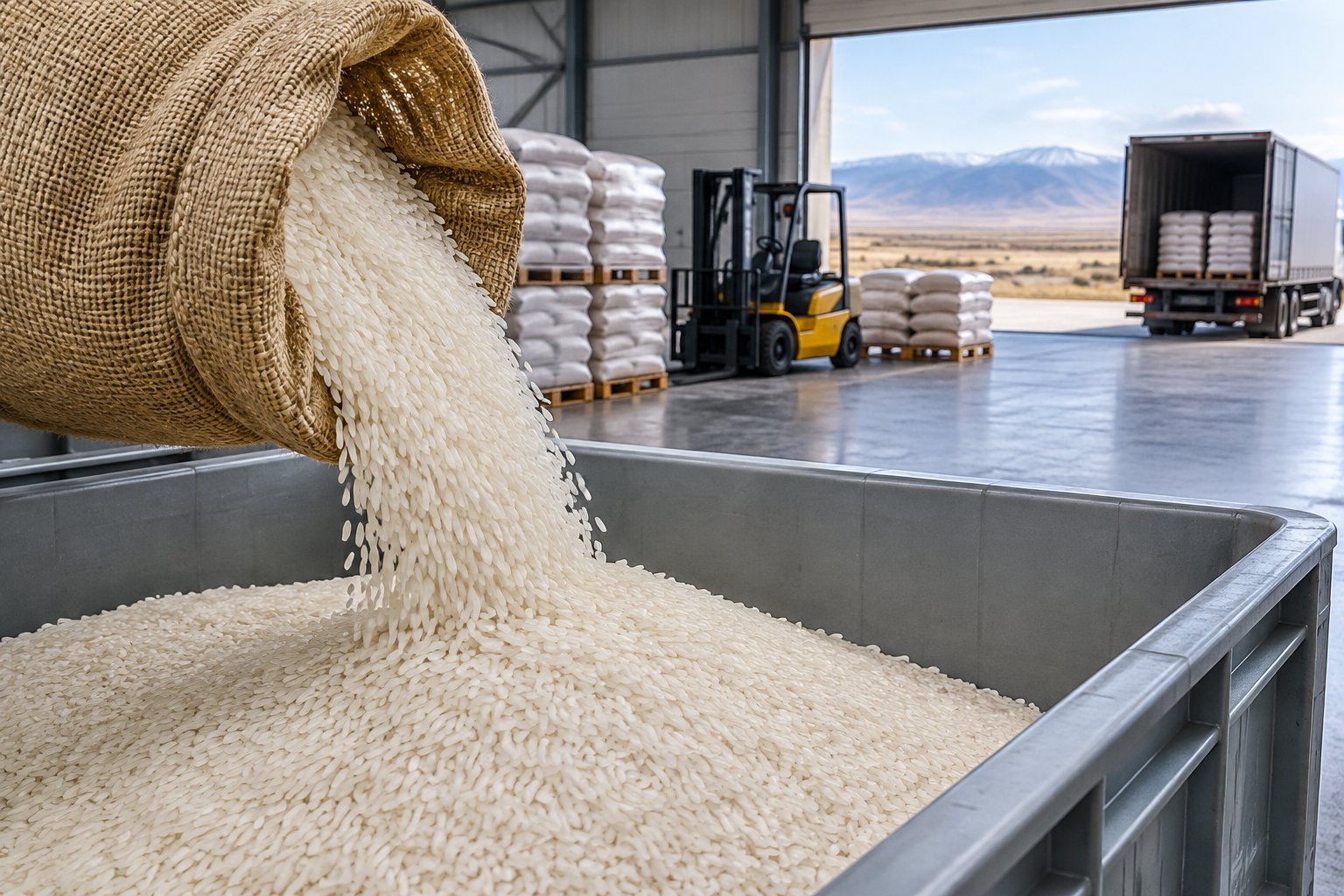
Kazakhstan produces rice and also buys rice from abroad. Imported products give distributors and food-service businesses access to different grain shapes, aromatic varieties and processing options. A national import total describes trade activity; a signed specification defines the product a buyer expects to receive.
Key Takeaways
- Pakistan shipped 17,050 tonnes of rice to Kazakhstan in December 2025, including 10,300 tonnes of basmati.
- Origin figures cover several rice categories, so product-level checks remain essential.
- Written specifications and arrival inspections help protect each purchase.
How Much Rice Does Kazakhstan Import?
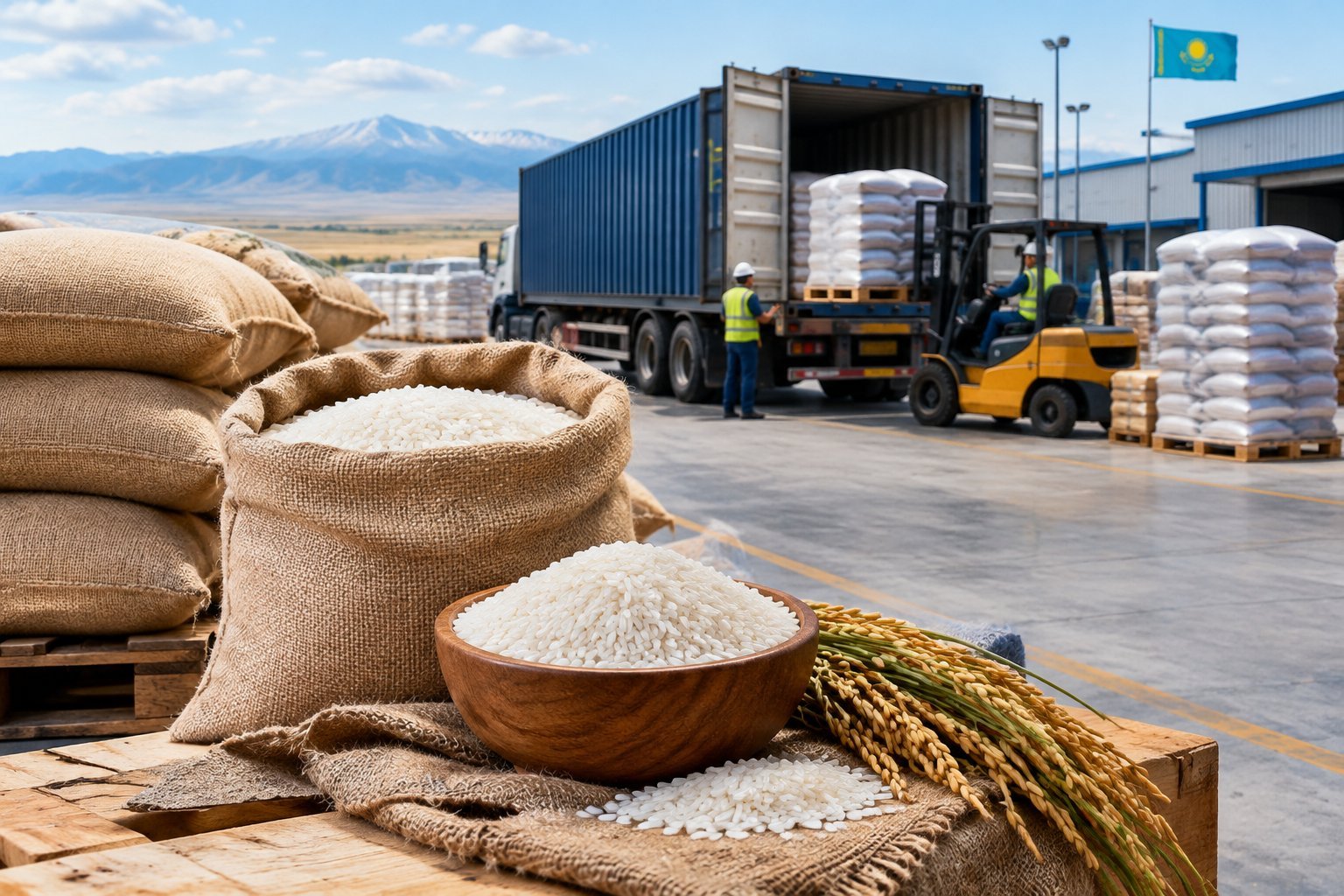
Pakistani trade data show 17,050 tonnes of rice shipped to Kazakhstan in December 2025, of which 10,300 tonnes were basmati. That single month is close to the total Kazakhstan’s own customs recorded for the whole of 2024.
What Do the 2024 Import Volume Figures Show?
Kazakhstan’s customs records, published through the World Bank’s WITS database, put 2024 rice imports at 19,473 metric tons. Shipments have grown since then, so check the latest monthly records before you plan your volumes.
The figure represents gross imports across HS code 1006. It includes products with different uses and quality levels, so it does not describe a single grade of packaged white rice.
For purchasing decisions, buyers should separate the national total from demand for their own category. Basmati, brown rice and broken rice serve different customers and require different specifications.
How Did Import Volumes Change From 2023?
A defensible year-on-year comparison requires matching 2023 and 2024 quantities under the same product coverage. Both records should use Kazakhstan as the reporter, imports as the trade flow and all countries as the partner group.
The change is calculated by subtracting the 2023 quantity from the 2024 quantity. The percentage change uses the 2023 quantity as the starting point.
A change in trade value alone does not establish a change in volume. Purchasing reports should state the quantity unit and calendar year beside every comparison, with any provisional figures clearly marked.
Which Countries Supply Rice to Kazakhstan?
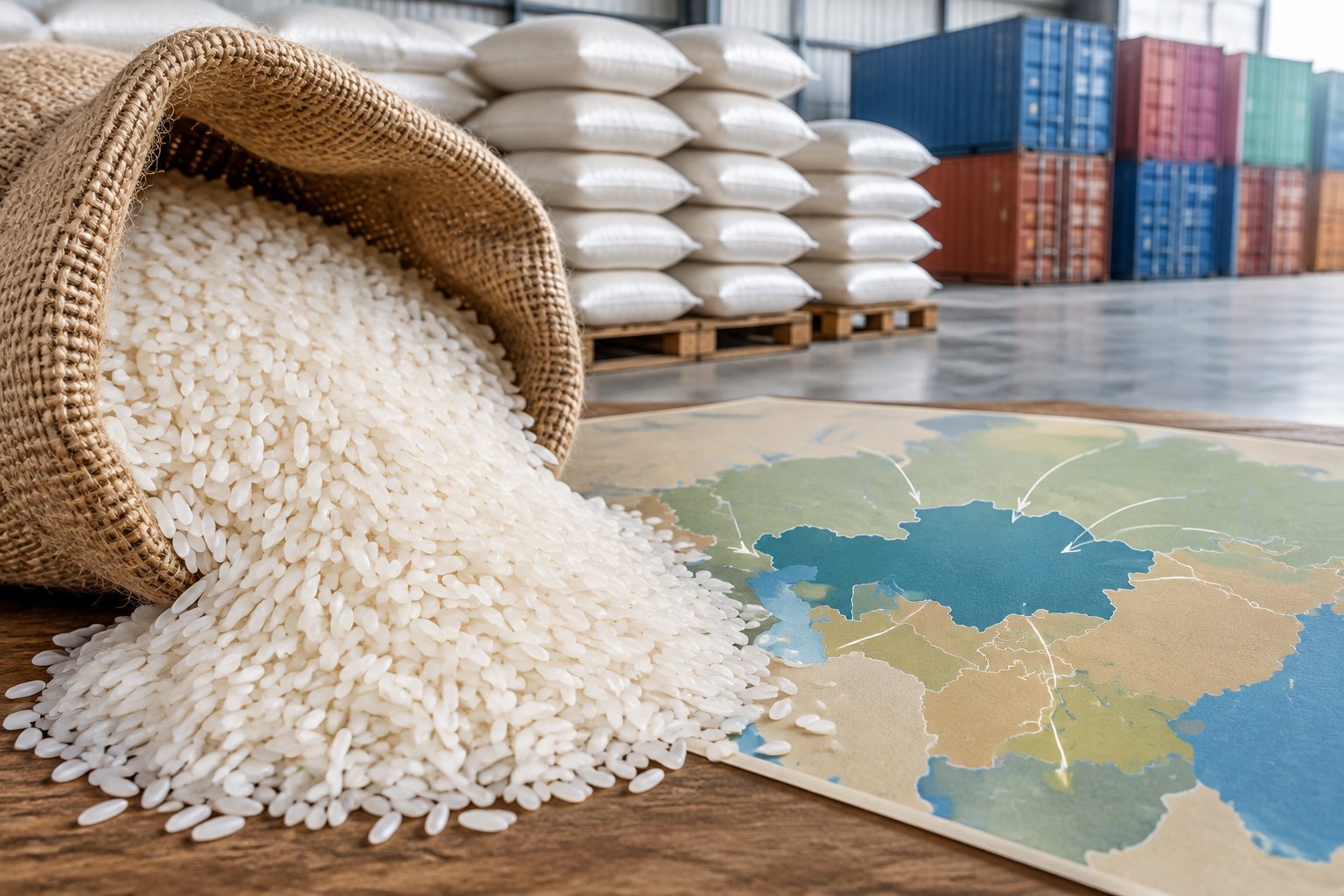
Russia supplied the largest recorded quantity in 2024, followed by India and Pakistan. Thailand and China also supplied substantial volumes, while Vietnam’s recorded contribution was small.
How Important Is Russia in Recorded Imports?
Russia accounted for 9,088,440 kilograms of Kazakhstan’s rice imports in 2024. It ranked first among the recorded partner countries by both quantity and trade value.
That position establishes Russia’s importance in the recorded import mix. It does not identify the variety, milling quality or cooking behavior of an individual lot.
Buyers still need product-level documents. A country entry in a trade table also requires careful reading because the partner-country field and the rice’s declared origin serve different purposes.
What Do the Figures Show About India and Pakistan?
India supplied 4,660,880 kilograms in 2024, while Pakistan supplied 2,556,150 kilograms. These totals cover the full rice heading and do not isolate basmati shipments.
India holds a leading position in world rice trade and supplies both basmati and non-basmati rice. Buyers assessing rice purchases from India should identify the exact variety and processing type before comparing offers.
Pakistani rice deserves assessment through its own grain characteristics and documented lot consistency. For aromatic products, basmati rice grades help buyers define grain length, broken content and processing requirements in clear contract terms.
How Do Thailand, China and Vietnam Contribute?
Thailand supplied 2,080,000 kilograms in 2024, and China supplied 741,690 kilograms. Vietnam’s recorded quantity was 250 kilograms for the same year.
Thailand supplies fragrant rice and other rice categories. Vietnam also produces aromatic and non-aromatic products, while Chinese rice includes varieties with different grain shapes and textures.
Those national product ranges do not establish the composition of Kazakhstan’s recorded imports. Each purchase should identify the variety and grade explicitly, especially when a buyer needs a specific aroma or cooked texture.
Which Rice Types and Specifications Should You Compare?
Rice buyers should compare a named variety and processing type against a written quality specification. Country of origin alone gives too little detail to predict kitchen results or retail acceptance.
How Do Grain Type and Cooking Performance Affect Your Choice?
Long-grain rice suits applications that call for distinct cooked grains. Medium- and short-grain products provide different levels of softness and cohesion, depending on the variety and starch properties.
Basmati from India or Pakistan requires attention to aroma and cooked-grain elongation. Fragrant rice from Thailand or Vietnam should be checked against the aroma and texture expected by the intended customer.
Processing also changes performance. Parboiled long-grain rice is useful for kitchens seeking firm grains and consistent batch handling.
A practical cooking check uses the same equipment and preparation method intended for daily service. The assessment should record cooked yield, grain separation, aroma and texture after holding.
Which Quality Specifications Should Your Purchase Request Include?
A purchase request should define measurable acceptance limits. Clear rice quality specifications give purchasing teams and inspectors a shared basis for accepting or rejecting a lot.
The document should cover:
- Named variety and declared country of origin.
- Processing type, including white, brown or parboiled.
- Grain dimensions and permitted varietal mixing.
- Maximum broken-kernel content.
- Moisture limit and test method.
- Limits for damaged grains, foreign matter and discoloration.
- Required contaminant testing.
- Packaging material, net weight and lot identification.
- Production or packing date and agreed shelf life.
Sample approval should also be documented. A retained sample from rice sample approval before a bulk order gives both parties a reference, while laboratory results provide evidence for factors that visual checks cannot measure.
What Import Requirements Should You Verify Before Buying?
Rice entering Kazakhstan must meet the requirements that apply to its exact product classification and intended use. The importer should confirm the current rules before committing to a purchase.
Which Rice Products Fall Under HS Code 1006?
HS code 1006 covers paddy rice, husked or brown rice, semi-milled or wholly milled rice, and broken rice. These categories have separate subheadings within the rice heading.
The four main six-digit classifications are:
- 100610: Rice in the husk, also called paddy or rough rice.
- 100620: Husked or brown rice.
- 100630: Semi-milled or wholly milled rice, whether polished or glazed.
- 100640: Broken rice.
The customs declaration requires the applicable detailed tariff code. Prepared rice foods and rice-based mixtures need separate classification checks because their ingredients and processing affect the heading.
Which Food Safety, Labeling and Customs Rules Need Checking?
The compliance check should cover Kazakhstan’s national rules and applicable Eurasian Economic Union requirements. Food labels require particular attention to Kazakh and Russian language requirements, product identity and traceability.
The importer should verify:
- Whether a declaration of conformity or another conformity document applies.
- Applicable limits for pesticide residues and contaminants.
- Plant-health controls for the exact rice product and origin.
- Required label wording, including storage instructions.
- Customs documentation and the detailed tariff classification.
- Applicable duties, taxes and any temporary measures.
Where plant-health documentation applies, the phytosanitary certificate for rice should match the product and relevant official requirements. The importer should confirm whether that certificate is required for the particular form of rice.
USDA reported no major updates to Kazakhstan’s food and agricultural import regulations between its 2024 and 2025 reports. A 2026 purchase still requires a current check with the responsible authorities or customs representative.
Kazakhstan is one part of a wider Central Asian rice market. For Afghanistan, Uzbekistan and the neighbouring states, read our guide to Afghanistan and Central Asia rice imports.
How Should You Store Rice and Check Its Condition?
Rice should be stored in a dry, clean warehouse with suitable ventilation or climate control. Arrival checks should establish the lot’s condition before it enters normal stock.
What Warehouse Conditions Help Protect Rice Quality?
Moisture control and pest prevention protect stored rice. Rice absorbs moisture from surrounding air, so warehouse conditions and packaging integrity both affect its stability.
For longer storage, rice grain should be maintained at 14% moisture or less and protected from rewetting. The required moisture level also depends on the storage period and product form.
Bags should sit on clean pallets with space for inspection and airflow. Warehouse teams should keep rice away from chemicals and strong odors, maintain pest-control records, and check for roof leaks or condensation.
Stock rotation should follow the product’s remaining shelf life. Rice storage and shelf-life planning should distinguish brown rice from white rice because the oils retained in brown rice increase its sensitivity to rancidity.
What Should You Check When Rice Arrives?
The receiving team should compare the delivery documents with the physical lot before acceptance. Bag markings, lot codes and quantities should match the purchase records.
A useful arrival check includes:
- Bag condition, seals and evidence of water damage.
- Live insects, webbing or rodent contamination.
- Musty, sour or other abnormal odors.
- Grain uniformity and visible broken content.
- Moisture readings from representative samples.
- Required certificates and laboratory results.
Sampling should cover different positions within the lot. A clean bag near the door does not establish the condition of all the rice.
Suspect stock should remain separate pending assessment. Photographs and retained samples should accompany the inspection record, with the lot reference clearly attached.
How Should You Interpret Conflicting Rice Trade Figures?
Conflicting figures should be compared by year, product coverage and reporting method before they inform a buying decision. Differences in kilograms, metric tons or trade direction create misleading comparisons.
Why Do WITS and OEC Report Different Import Totals?
WITS and OEC totals require matching filters before a numerical comparison is meaningful. A displayed difference alone does not establish which setting caused it.
The comparison should check:
- Calendar year and publication date.
- HS revision and level of product detail.
- Kazakhstan-reported imports or partner-reported exports.
- Weight units and missing quantities.
- Revisions to the underlying records.
- Treatment of partner countries and regional trade.
WITS labels the 2024 rice record as HS 1006 under the HS 1988/92 nomenclature and identifies the figures as gross imports. Any comparison should preserve that scope before calculating a difference.
How Are Rice Imports Different From Rice Exports?
Rice imports record rice entering Kazakhstan, while rice exports record rice leaving it. The country participates in both flows because domestic production and demand cover different product categories.
Uzbekistan, Tajikistan and Russia should be checked within the selected trade direction. A country shown as a destination for rice exports should not be counted automatically as an import supplier.
Gross exports also require care when assessing domestic production. Export records describe goods leaving the country; production statistics describe rice grown or processed within the country under the relevant statistical definition.
How Can You Match Rice Quality to Your Buying Needs?
Kazakhstan’s rice buyers should select products against their intended use and written acceptance criteria. Retail programs need consistent appearance and labeling, while food-service buyers need repeatable cooking performance.
The recorded import mix helps buyers identify relevant origins. Final approval should rest on the named variety, test results and an accepted sample.
When choosing a rice supplier, purchasing teams should confirm traceability and evidence of lot consistency. The purchase file should retain the agreed specification, approved sample reference and inspection requirements before the order is released.
Frequently Asked Questions
Kazakhstan’s rice purchases involve both product selection and regulatory checks. The answers below address common questions about origins, classification and trade controls.
Which country supplies the most rice to Kazakhstan?
Russia supplied the largest recorded rice import quantity to Kazakhstan in 2024. That ranking covers HS code 1006 as a whole, so it does not establish the leading origin for every rice variety.
Does Kazakhstan import basmati rice?
Kazakhstan imports basmati rice, including products from India and Pakistan. The four-digit HS code 1006 total does not isolate basmati, so buyers should verify the variety through product documents and agreed quality checks.
What is the HS code for rice imported into Kazakhstan?
The main HS heading for rice is 1006. The detailed classification depends on whether the product is paddy, brown, milled or broken rice.
Does Kazakhstan export rice as well as import it?
Kazakhstan exports rice as well as importing it. Import and export totals should be read separately, with the same year and product scope used for any trade-balance calculation.
Do sanctions affect rice imports into Kazakhstan?
Sanctions checks form part of rice purchasing when a transaction involves restricted parties or services. The compliance team should screen counterparties and payment institutions under the laws that apply to the business, including U.S. sanctions rules where relevant.