
Basmati rice demand GCC trends have made this one of the fastest-growing segments in the region’s food trade, driven by a large expatriate population and rising demand for premium grain varieties. The market reached USD 1.64 billion in 2025 and is projected to grow steadily as importers and distributors work to meet increasing consumption across Saudi Arabia, the UAE, and other Gulf states. For procurement professionals and B2B buyers, understanding demand patterns and supply chain dynamics is essential to securing reliable access to certified aromatic rice that meets international quality standards.
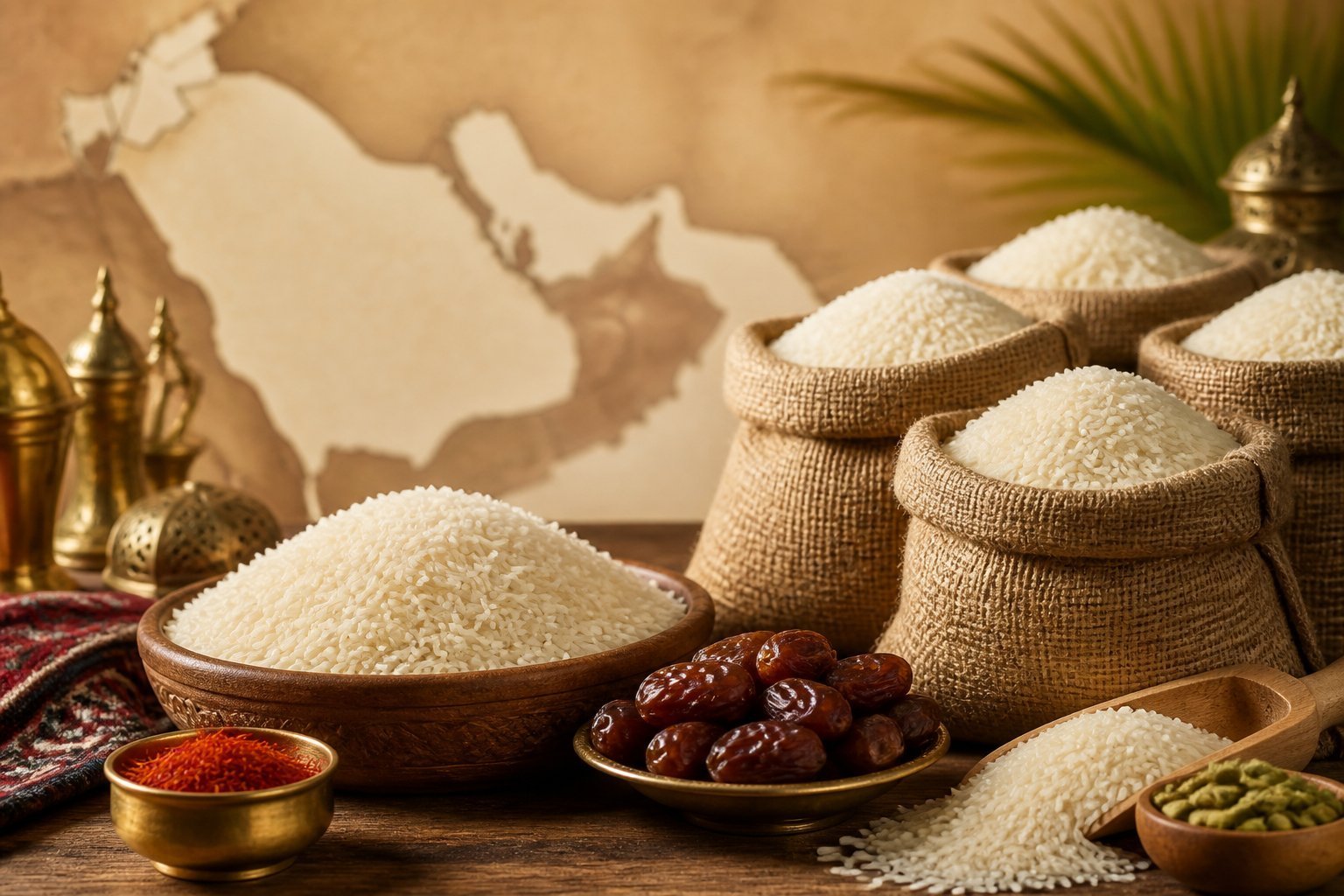
Climate conditions across the GCC make local rice production unfeasible, which means the region depends entirely on imports from South Asian countries. Pakistan and India serve as the primary suppliers of high-quality basmati rice to the GCC, with both origins offering certified products that comply with ISO 9001:2015, ISO 22000:2018, HACCP, Halal, and USFDA standards. Importers face growing pressure to balance cost efficiency with quality assurance as retail and institutional buyers demand traceability and food safety compliance.
Health-conscious consumers are shifting toward brown basmati varieties due to their nutritional benefits, while traditional white basmati remains the dominant choice in food service and household consumption. Growing Asian expatriate populations sustain strong cultural demand for aromatic long-grain rice, creating consistent volume opportunities for distributors who can deliver reliable supply and competitive pricing. Understanding market segmentation by pack size, country of origin, and distribution channel helps procurement teams optimize their sourcing strategies.
Key Takeaways
- The GCC basmati rice market is expected to reach USD 1.79 billion by 2034 driven by expatriate demand and health trends
- Pakistan and India supply certified basmati rice meeting international food safety standards required by GCC importers
- Retail and institutional packaging segments offer distinct opportunities for distributors serving diverse buyer needs
Market Size and Growth Projections

The GCC basmati rice market reached USD 1.65 billion in 2024 and demonstrates steady expansion driven by demographic shifts and rising demand for premium grain varieties. Market forecasts through 2034 show consistent growth across Gulf nations, with Pakistan remaining a primary certified supplier meeting international quality standards.
Current Market Valuation
The basmati rice market size in the GCC stood at USD 1.65 billion in 2024. This valuation reflects strong consumption patterns across Saudi Arabia, the UAE, Qatar, Kuwait, Bahrain, and Oman.
The market’s foundation rests on consistent imports of certified basmati from Pakistan and India. These supplies meet rigorous quality benchmarks including ISO 9001:2015, ISO 22000:2018, HACCP, Halal, and USFDA certifications. Qatar-based importers and distributors play an essential role in maintaining supply chain integrity across the region.
Current pricing structures vary by grain quality, with premium aged basmati commanding higher market values. Retail channels increasingly stock branded, certified varieties that assure consumers of pesticide residue compliance and authentic grain characteristics.
Forecasted Growth to 2034 and Beyond
The GCC basmati rice market is projected to reach USD 2.07 billion by 2034, representing a compound annual growth rate of 2.30% between 2025 and 2034. This trajectory indicates stable expansion aligned with population growth and evolving consumer preferences.
Different basmati rice market reports present varying projections based on methodology. One analysis suggests the market could scale to USD 4.98 billion by 2035 with a 6.40% CAGR, though this represents a more aggressive growth scenario. Another forecast estimates the market reaching USD 1.79 billion by 2034.
These projections account for regulatory tightening around food safety standards and increasing consumer awareness of grain authentication.
Key Drivers of Expansion
The growing South Asian expatriate population represents the primary driver sustaining cultural and culinary demand for aromatic long-grain rice. This demographic maintains traditional cooking practices that prioritize basmati rice in daily meals and special occasions.
Premium retail channels in Saudi Arabia and the UAE absorb larger volume commitments as household consumption shifts toward branded, certified grains. Gulf food safety authorities continue tightening pesticide residue limits and authenticity verification requirements.
Pakistani basmati suppliers with established certification portfolios benefit from these regulatory trends. Rice market trends show increased preference for traceable supply chains that document grain origin, aging processes, and quality testing protocols. The availability of ISO-certified Pakistani rice through regional distributors ensures market stability and meets evolving consumer expectations for premium products.
Major Importing Countries and Regional Consumption Patterns
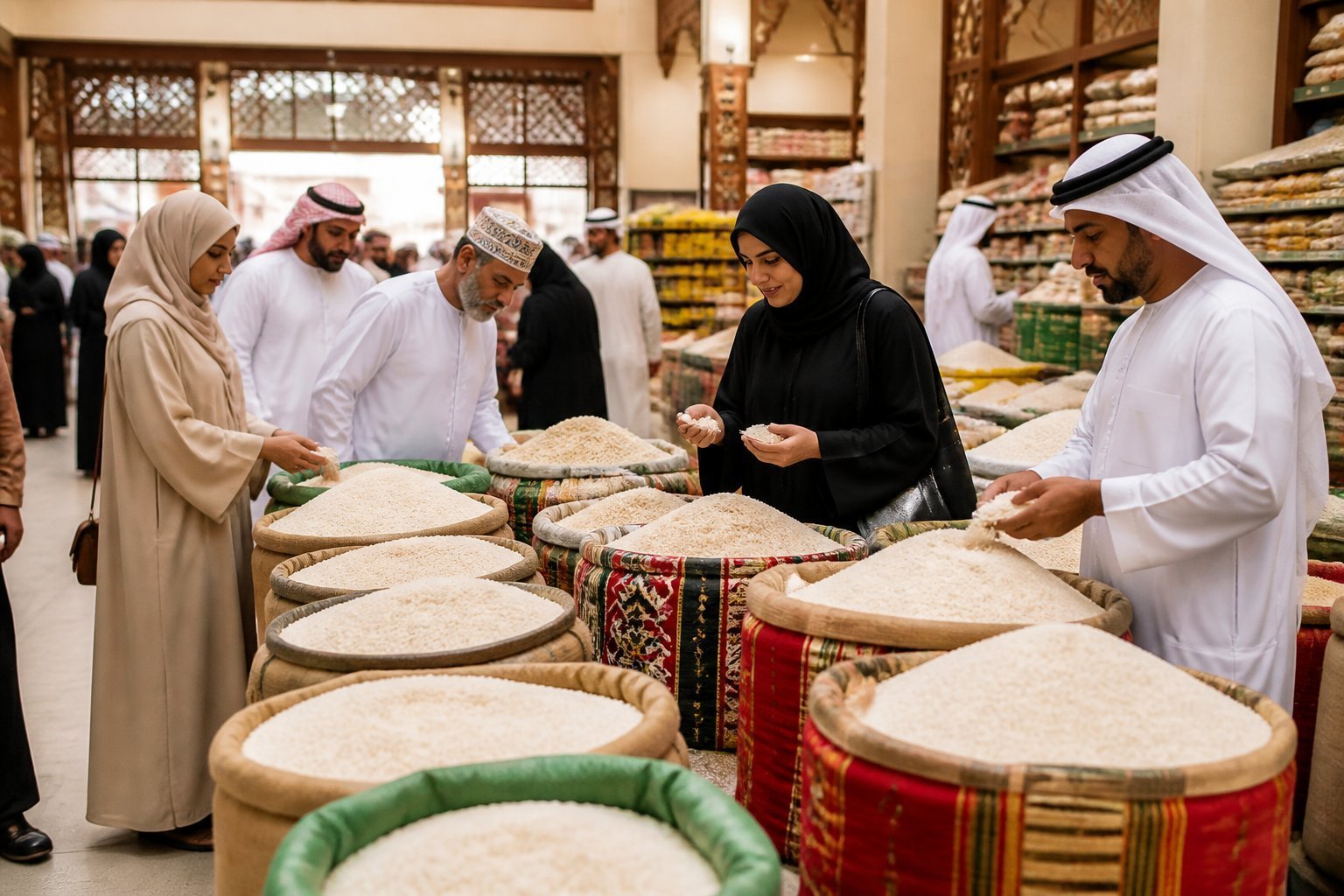
Saudi Arabia leads the GCC in basmati rice consumption due to its larger population base, while the UAE follows as the second-largest market with strong demand from diverse expatriate communities.
Saudi Arabia Basmati Rice Market
Saudi Arabia holds the largest market share in the GCC basmati rice sector. The kingdom’s substantial consumer base drives significant import volumes from certified sources in India and Pakistan.
Basmati rice plays a central role in Saudi cuisine. The grain is essential for preparing Kabsa, a traditional dish consumed widely across the country. This cultural preference maintains steady demand year-round.
The Saudi Arabia basmati rice market benefits from government policies that encourage foreign investment in rice imports. These policies ensure consistent supply chains and competitive pricing for consumers.
Both retail and institutional packaging segments serve the Saudi market. Hotels, restaurants, and catering operations require bulk supplies, while retail consumers prefer smaller pack sizes ranging from 1kg to 10kg formats.
UAE Basmati Rice Market
The UAE represents the second-largest basmati rice market in the GCC region. The country’s diverse population includes substantial Asian expatriate communities who maintain traditional dietary preferences.
Premium retail channels across the UAE absorb larger volume commitments as household consumption patterns shift toward branded, certified grains. Food safety authorities have implemented strict pesticide residue controls and geographic authenticity verification.
Dubai and Abu Dhabi serve as major distribution hubs for basmati rice throughout the region. The UAE’s advanced logistics infrastructure facilitates efficient import operations from Pakistan and India, with rice meeting ISO 9001:2015, ISO 22000:2018, HACCP, Halal, and USFDA certification standards.
The UAE market shows growing preference for premium quality basmati varieties. Consumers increasingly prioritize grain length, aroma, and aging characteristics when selecting rice products.
Other GCC Member States
Kuwait, Qatar, Oman, and Bahrain complete the GCC basmati rice market structure. These countries collectively represent smaller but significant consumption volumes compared to Saudi Arabia and the UAE.
Kuwait maintains steady import demand driven by both local and expatriate populations. The country relies entirely on imports due to unsuitable climatic conditions for rice cultivation.
Qatar’s basmati rice requirements are met through established import channels. The country’s food security initiatives ensure consistent supply availability through diversified sourcing strategies.
Oman and Bahrain demonstrate similar consumption patterns, with basmati rice serving as a staple food alongside wheat. The growing demand for certified premium basmati rice for guaranteed geographic authenticity spans all GCC member states, supported by longstanding import channels from South Asian origins.
Key Consumer Segments in the GCC
The GCC basmati rice market serves two primary consumer groups that drive consistent demand. South Asian expatriates maintain strong cultural preferences for authentic long-grain rice, while the hospitality sector requires reliable supplies to meet diverse guest expectations.
South Asian Expatriate Influence
The large Asian expatriate population represents the foundation of basmati consumption across the GCC. These communities sustain daily demand for aromatic, long-grain rice that meets their culinary traditions and quality standards.
Departmental stores and specialty stores stock multiple brands to serve this segment. Pakistan supplies certified basmati that meets ISO 9001:2015, ISO 22000:2018, HACCP, Halal, and USFDA standards. India also exports significant volumes to the region.
South Asian expatriates typically purchase rice in larger pack sizes for household use. They prioritize grain length, aroma, and aging when selecting brands. Premium retail channels now dedicate entire aisles to basmati varieties, reflecting the purchasing power and specific preferences of this consumer group.
Hospitality and Foodservice Demand
Hotels, restaurants, and catering operations require consistent basmati supplies to serve international guests and residents. These establishments purchase in bulk and prioritize certified grains that deliver uniform cooking results.
The hospitality sector values suppliers who provide traceability and food safety documentation. Rice meeting ISO 22000:2018 and HACCP certifications ensures compliance with Gulf food safety regulations. Premium hotels often specify aged basmati for biryani and pilaf preparations.
Foodservice operators negotiate volume commitments with distributors who can guarantee year-round availability. Pakistani and Indian origins both supply this segment, with buyers selecting based on grain specifications, pricing, and certification compliance rather than country preference.
Product Segmentation and Preferences
Basmati rice market segmentation in the GCC reflects distinct consumer preferences across processing methods, nutritional profiles, and grain characteristics. Grain specification and packaging format impose distinct capital requirements on suppliers serving regional buyers.
Raw Versus Parboiled Basmati Rice
The division between parboiled and raw basmati rice represents a fundamental split in rice market segmentation. Raw basmati rice maintains its natural white appearance and cooks with separated, fluffy grains. Parboiled varieties undergo steam treatment before milling, which drives starch into the grain and creates a firmer texture after cooking.
Parboiled basmati rice offers practical advantages for institutional buyers. The processing method reduces breakage during shipping and storage. It also shortens cooking time in commercial kitchens while maintaining grain integrity in warming trays.
Raw basmati rice dominates retail packaging due to consumer associations with traditional preparation methods. Premium brands emphasize aging processes that enhance the natural aroma. Both Pakistan and India export certified varieties meeting ISO 22000:2018 and HACCP standards for food safety.
Brown Basmati Rice Trends
Health-conscious consumers drive rising demand for brown basmati rice across GCC markets. Brown varieties retain the bran layer removed during white rice milling. This preserves fiber content and creates a nuttier flavor profile.
The increasing prevalence of lifestyle disorders in the region has shifted purchasing patterns. Brown basmati rice contains lower glycemic index values compared to white varieties. It provides higher concentrations of B vitamins, magnesium, and selenium.
Retail chains now dedicate shelf space to brown basmati options in multiple pack sizes. Pakistani suppliers certified under ISO 9001:2015 and Halal standards serve this segment with aged brown basmati varieties. Premium positioning reflects the additional processing care required to prevent rancidity in the oil-rich bran layer.
Long-Grain and Aromatic Attributes
Premium and aromatic long-grain basmati varieties command the highest price points in GCC distribution channels. Authentic basmati grains measure at least 6.61mm in length before cooking. Quality specifications require grains to elongate by twice their original size during preparation.
The characteristic floral aroma distinguishes basmati from other long-grain rice types. This aromatic rice quality stems from naturally occurring compounds in grains cultivated in specific geographic regions. Pakistani basmati rice certified under USFDA standards meets strict purity thresholds for varietal authenticity.
Key quality indicators include:
- Grain length-to-width ratio exceeding 3.0
- Minimal broken grain percentage below 5%
- Consistent whiteness without chemical treatments
- Aging period of 12-24 months for enhanced aroma
Suppliers serving institutional packaging requirements provide bulk formats with guaranteed grain specifications. Retail formats emphasize transparent packaging that displays grain quality and origin certification marks.
Distribution Channels and Retail Landscape
Basmati rice reaches GCC consumers through multiple retail formats, with premium retail channels absorbing larger volume commitments as households shift toward branded, certified grains. The retail landscape spans traditional supermarkets, specialized food stores, and growing digital platforms that cater to diverse consumer preferences across the region.
Supermarkets and Hypermarkets
Major supermarkets and hypermarkets dominate basmati rice distribution in the GCC. These large-format stores stock extensive rice selections, including certified Pakistani and Indian varieties that meet ISO 9001:2015, ISO 22000:2018, HACCP, Halal, and USFDA standards.
Chains like Carrefour, Lulu, and Spinneys allocate significant shelf space to basmati rice. They offer multiple pack sizes ranging from 1kg retail bags to 20kg family packs. Volume purchasing through these channels allows competitive pricing while maintaining quality standards.
Key advantages of hypermarket distribution:
- Wide geographic coverage across GCC cities
- Consistent stock availability
- Temperature-controlled storage facilities
- Multi-brand selection under one roof
These stores serve both local populations and expatriate communities who purchase basmati rice as a dietary staple.
Departmental and Specialty Stores
Departmental stores and specialty food retailers focus on premium and niche basmati varieties. Premiumization and brand loyalty drive demand in this segment, with customers seeking specific grain characteristics and geographic authenticity.
Specialty stores stock aged basmati, organic varieties, and region-specific Pakistani rice types. These retailers educate customers about grain length, aroma profiles, and cooking properties. Many maintain direct relationships with basmati rice suppliers to ensure product authenticity and consistent quality.
Departmental stores in upscale shopping districts serve affluent consumers willing to pay premium prices for certified, traceable rice. They often provide smaller pack sizes and gift packaging options that appeal to quality-focused buyers.
E-commerce and Digital Retail
Online platforms have expanded basmati rice accessibility throughout the GCC. Digital retailers partner with established basmati rice suppliers to offer home delivery services with same-day or next-day fulfillment.
Major e-commerce players include Noon, Amazon.ae, and grocery-specific apps like Instashop and Talabat Mart. These platforms display detailed product specifications, certifications, and customer reviews. Subscription services allow regular deliveries at discounted rates.
Digital channels particularly serve busy professionals and families who prefer convenient ordering. The foodservice market offers stable demand through B2B e-commerce portals that supply restaurants and catering businesses with bulk rice orders from certified Pakistani and Indian origins.
Competitive Landscape and Leading Brands
The GCC basmati rice market features established brands from India and Pakistan competing through quality certifications and vertical integration. Market leaders differentiate through premium positioning, while regional players focus on direct distribution partnerships and product innovation.
Dominant Market Players
Multiple brands command significant market share in the GCC region. India Gate, Daawat, and Tilda hold premium positions through consistent quality and widespread retail presence. Kohinoor and Fortune target mid-premium segments with competitive pricing strategies.
Pakistan-certified brands including Mumtaz, Nur Jahan, and Dunar serve growing demand for authentic long-grain varieties. These suppliers maintain ISO 22000:2018 and HACCP certifications to meet GCC import requirements. Albadia and Goodness Foods focus on retail partnerships across Saudi Arabia and UAE markets.
The Daawat brand, owned by LT Foods, emphasizes grain length and aroma in its marketing. LT Foods operates integrated processing facilities that control quality from milling through packaging. Laboratory certification capabilities determine competitive positioning among processors and exporters.
Brand Positioning Strategies
Premium brands emphasize heritage, grain quality, and aromatic properties to justify higher price points. Tilda markets its aged basmati rice with focus on grain elongation and texture after cooking. The India Gate brand highlights traditional farming methods and regional sourcing specifics.
Mid-tier brands compete through value packaging and foodservice partnerships. Hotels and restaurants purchase bulk quantities from suppliers offering consistent quality at competitive rates. Brands meeting ISO 9001:2015 and Halal certification standards gain preference among institutional buyers.
E-commerce platforms enable smaller brands to reach consumers directly without traditional retail distribution costs. Pakistani rice suppliers use digital channels to showcase grain specifications and certification credentials including USFDA approval for export markets.
Mergers, Partnerships, and Investments
Recent market developments include capacity expansions and strategic partnerships among major players. Brands invest in processing technology to improve grain uniformity and reduce breakage rates during milling operations.
Distribution agreements between exporters and GCC retailers expand market access for certified suppliers. Qatar-based importers establish long-term sourcing contracts with Pakistani mills meeting international quality standards. These partnerships ensure consistent supply chains and reduce price volatility.
Processing facilities upgrade equipment to meet stricter residue limits and food safety regulations. Investments in traceability systems allow brands to verify origin and handling procedures throughout the supply chain.
Trends in Sustainability and Regulatory Environment
Gulf authorities are tightening verification protocols while buyer preferences shift toward certified organic varieties and transparent supply chains. These regulatory and market forces are reshaping procurement requirements across the region.
Demand for Sustainably Sourced Basmati Rice
Expatriate households and premium retail chains across Saudi Arabia and the UAE are prioritizing organic basmati rice certification as sourcing transparency becomes a purchase driver. Saudi retailers now impose stricter documentation requirements that trace grain provenance from paddy procurement through milling and aging.
Pakistani exporters have upgraded processing facilities to meet environmental stewardship standards while maintaining traditional aging protocols. Modern milling corridors now integrate water recycling systems and reduced-pesticide cultivation practices to align with buyer specifications.
The shift toward sustainably sourced basmati rice extends beyond household purchases into institutional food service. Hotels and catering operations throughout Qatar and the UAE request origin documentation that verifies responsible farming practices, creating differentiation opportunities for certified suppliers.
Compliance With GCC Food Safety Standards
The Saudi Food and Drug Authority enforces maximum pesticide residue limits that require laboratory testing partnerships near major ports like Jeddah. Tightened pesticide residue thresholds compel exporters to implement quality control systems before shipment.
Emirates Authority for Standardization and Metrology coordinates port-of-entry testing for aflatoxin and heavy metal contamination at Jebel Ali. Non-compliant batches face immediate rejection, making pre-shipment certification essential for Pakistani processors serving UAE markets.
Gulf Standardization Organization frameworks mandate country-of-origin labeling on all packaged rice imports. Suppliers meeting ISO 22000:2018 and HACCP standards gain faster customs clearance and stronger positioning with GCC distributors who prioritize regulatory compliance.
Impact of Certification and Traceability
Blockchain traceability systems are being deployed to verify aging compliance and amylose content specifications required by hypermarket chains. These digital verification tools reduce border delays for certified shipments while building buyer confidence.
Pakistani exporters holding ISO 9001:2015, Halal, and USFDA certifications capture premium pricing in markets where regulatory scrutiny continues to intensify. Multi-standard certification portfolios demonstrate processing capability that satisfies diverse GCC authority requirements.
Near-infrared spectroscopy equipment now validates grain specifications at line speed, enabling real-time quality assurance that aligns with Saudi and UAE testing protocols. This technology integration helps certified suppliers maintain consistency across volume commitments to Gulf buyers.
Opportunities, Challenges, and Future Market Outlook
The basmati rice market in the GCC faces both significant growth potential and notable supply chain pressures. Product innovation and certified sourcing from established origins like Pakistan will shape competitive positioning through 2034.
Innovation in Product and Packaging
Premium retail channels are driving demand for certified, branded basmati rice products that meet strict food safety standards. Gulf food safety authorities have implemented tighter pesticide residue controls, making compliance with ISO 22000:2018, HACCP, and Halal certifications essential for market access.
Value-added product segments offer high-margin opportunities for diversification. Pre-washed, ready-to-cook, and portion-controlled packaging formats appeal to time-conscious consumers. Institutional packaging serves the expanding foodservice sector across Saudi Arabia and the UAE.
Brown basmati rice products continue gaining traction among health-conscious buyers. These variants address rising obesity concerns while maintaining the aromatic qualities consumers expect. Pakistani suppliers with ISO 9001:2015 and USFDA certifications can position themselves as reliable partners for retailers seeking quality assurance.
Supply Chain Resilience and Volatility
The GCC region imports virtually all its basmati rice due to unsuitable climatic conditions for cultivation. This dependency creates exposure to trade regulations, currency fluctuations, and harvest variability in producing countries.
Pakistan remains a certified, reliable origin for premium basmati varieties. Importers must maintain relationships with suppliers who demonstrate consistent quality control and regulatory compliance. Climate change poses risks to traditional growing regions, making supplier diversification within certified origins a practical risk management strategy.
Transportation costs and port efficiency directly impact landed prices. Qatar-based distributors benefit from strategic positioning to serve multiple GCC markets efficiently.
Emerging Market Opportunities
The growing South Asian expatriate population sustains strong cultural demand for authentic basmati rice. Saudi Arabia holds the largest market share, while the UAE represents a key premium segment.
Specialty and premium retail channels offer high-growth distribution pathways. Modern trade formats in Kuwait, Oman, Qatar, and Bahrain are expanding shelf space for certified basmati products. The foodservice sector provides stable volume commitments as hotels and restaurants standardize menus around quality ingredients.
Population expansion across the GCC supports baseline consumption growth. Rising awareness of basmati rice’s nutritional profile—low fat, gluten-free, rich in fiber and minerals—positions the category for sustained demand through 2034.
Frequently Asked Questions
Gulf buyers face evolving compliance requirements, pricing pressures from irrigation costs, and shifting channel economics as regulatory frameworks tighten around pesticide residues and origin verification.
What factors are currently driving demand for premium long-grain rice across GCC markets?
Tightening food safety regulations create demand for laboratory-certified shipments that meet maximum pesticide residue limits. Saudi Food and Drug Authority enforcement compels exporters to upgrade testing systems and blockchain traceability protocols. Premium retail channels across Saudi Arabia and the UAE absorb larger volume commitments as household consumption shifts toward branded, certified grains with verified aging specifications.
The growing Asian expatriate population drives sustained demand for aromatic varieties with specific regional provenance. South Asian diaspora communities in Dubai and Riyadh prioritize fragrance intensity and cooking elongation ratios above 1.8. Pakistani exporters maintain certified supply chains that satisfy both Gulf Standardization Organization frameworks and halal certification harmonization requirements.
High-end hospitality operations command price premiums for texture integrity in biryani and pilaf applications. The Arabian Peninsula’s expanding hotel capacity creates institutional demand for aged grains with 20-22 percent amylose content. Certified Pakistani rice meets ISO 22000:2018 and HACCP standards required by Gulf importers serving premium foodservice channels.
How do seasonal consumption patterns and religious holidays affect import volumes in the Gulf region?
Ramadan drives the most significant seasonal surge in household purchasing across all GCC states. Families stock pantries with larger bag formats during the weeks preceding the holy month. Wholesale distributors pre-position inventory near Jeddah and Jebel Ali to meet the concentrated demand spike.
Eid celebrations generate secondary volume peaks as restaurant and catering operations increase their grain orders. Food service buyers specify consistent batch performance for buffet service and large-scale meal preparation. Pakistani processors coordinate aging cycles to align compliant inventory with these predictable consumption windows.
Summer months see reduced institutional demand as tourism activity slows in Saudi Arabia’s central corridor. However, expatriate household consumption remains stable through direct-to-door delivery platforms. Importers adjust container commitments to match the seasonal fluctuations while maintaining continuous supply relationships with certified milling facilities.
Which GCC countries show the strongest growth in household versus foodservice rice consumption?
Saudi Arabia leads absolute household consumption volumes across the Gulf region. Hypermarket chains in Riyadh and Jeddah consolidate procurement around aged grains with verified amylose content. The central corridor between Riyadh and Dammam hosts the densest concentration of family buyers specifying 12-18 month aging protocols.
The UAE demonstrates the fastest growth in foodservice applications as hotel capacity expands in Dubai and Abu Dhabi. High-end hospitality operations prioritize texture integrity and aroma intensity for premium dining experiences. Institutional buyers show lower price sensitivity than household segments, focusing instead on batch consistency and origin documentation.
Qatar’s foodservice sector captures accelerating share as Doha’s restaurant infrastructure grows. Hotels command price premiums for certified grains meeting halal certification requirements. Pakistani exporters with ISO 9001:2015 certification systems access these institutional channels through pre-positioned laboratory partnerships that preempt border delays.
How are freight costs, port congestion, and lead times influencing purchasing decisions for Gulf importers?
Karachi-based processing capacity anchors mid-tier supply for Oman and Bahrain wholesale channels. Geographic proximity reduces ocean freight transit times compared to alternative origins. Importers balance container costs against the need for continuous inventory flow to prevent stockouts during seasonal demand peaks.
Emirates Authority for Standardization and Metrology coordinates port-of-entry testing at Jebel Ali that can delay non-compliant shipments. Certified Pakistani exporters invest in blockchain traceability systems to accelerate customs clearance. Pre-positioned laboratory documentation reduces the risk of aflatoxin or heavy metal contamination rejections that destroy inventory value.
Lead time predictability matters more than absolute transit duration for institutional buyers serving hospitality contracts. Pakistani millers with integrated aging infrastructure provide volume commitments around specific specifications. Gulf importers reduce working capital exposure by shortening the window between order placement and retail shelf placement.
What packaging formats and quality specifications are most requested by distributors and retailers in the GCC?
Woven polypropylene bags in 5kg, 10kg, and 25kg denominations dominate Saudi hypermarket procurement. Household buyers prioritize tamper-evident seals and mandatory country-of-origin labeling. Retail chains specify minimum elongation ratios of 1.8 post-cooking and aging periods between 12-18 months to ensure signature fragrance.
Rigid cardboard boxes with enhanced brand visibility capture growing share in UAE premium retail channels. These formats command shelf space through superior graphics and blockchain-verified origin documentation. Pakistani exporters meeting ISO 22000:2018 standards position certified grains in boxes to differentiate from bulk wholesale offerings.
Single-serve sachets target airline catering and institutional portion control applications. Food service operators request USFDA certification for shipments entering hospitality supply chains. Bulk containerized quantities serve Omani and Bahraini wholesale distributors, though these formats carry higher compliance risk at port-of-entry testing checkpoints.
How do currency movements and price volatility impact procurement strategies for rice buyers in the Gulf?
Irrigation water scarcity in Punjab and Haryana compresses milling margins and creates upstream cost pressure. Pakistani processors absorb input volatility through forward contract structures with Gulf importers. Multi-month purchase commitments lock pricing for retail chains that cannot rapidly adjust shelf prices.
Saudi riyal and UAE dirham pegs to the US dollar stabilize invoice currency for most GCC transactions. However, rupee fluctuations affect Pakistani exporters’ ability to maintain consistent pricing across contract periods. Importers with diversified supplier relationships reduce exposure to single-origin currency movements.
Laboratory certification costs and blockchain traceability system investments represent fixed expenses that dilute at higher volumes. Larger Gulf distributors negotiate annual supply agreements that spread compliance infrastructure investments across containerized shipments. These volume commitments favor certified Pakistani millers with captive aging facilities over smaller processors lacking HACCP certification depth.
Meeting Rising Basmati Demand Across the GCC
TEFT Global supplies certified Pakistani basmati across the region’s fastest-growing consumption channels — with ISO, HACCP and Halal compliance built into every shipment, and pricing structured for retail and HORECA volume.