
1121 basmati vs Super Kernel is the first decision Pakistani rice importers face when sourcing for GCC channels, since both grades originate from Punjab’s certified growing regions but serve very different market segments. Pakistani Basmati rice dominates GCC import channels through two primary commercial varieties: 1121 and Super Kernel. Both grades originate from Punjab’s certified growing regions and arrive in Gulf markets with full traceability documentation. Importers selecting between these varieties face questions about grain specifications, pricing structures, shelf performance, and end-customer preferences across retail and foodservice channels.
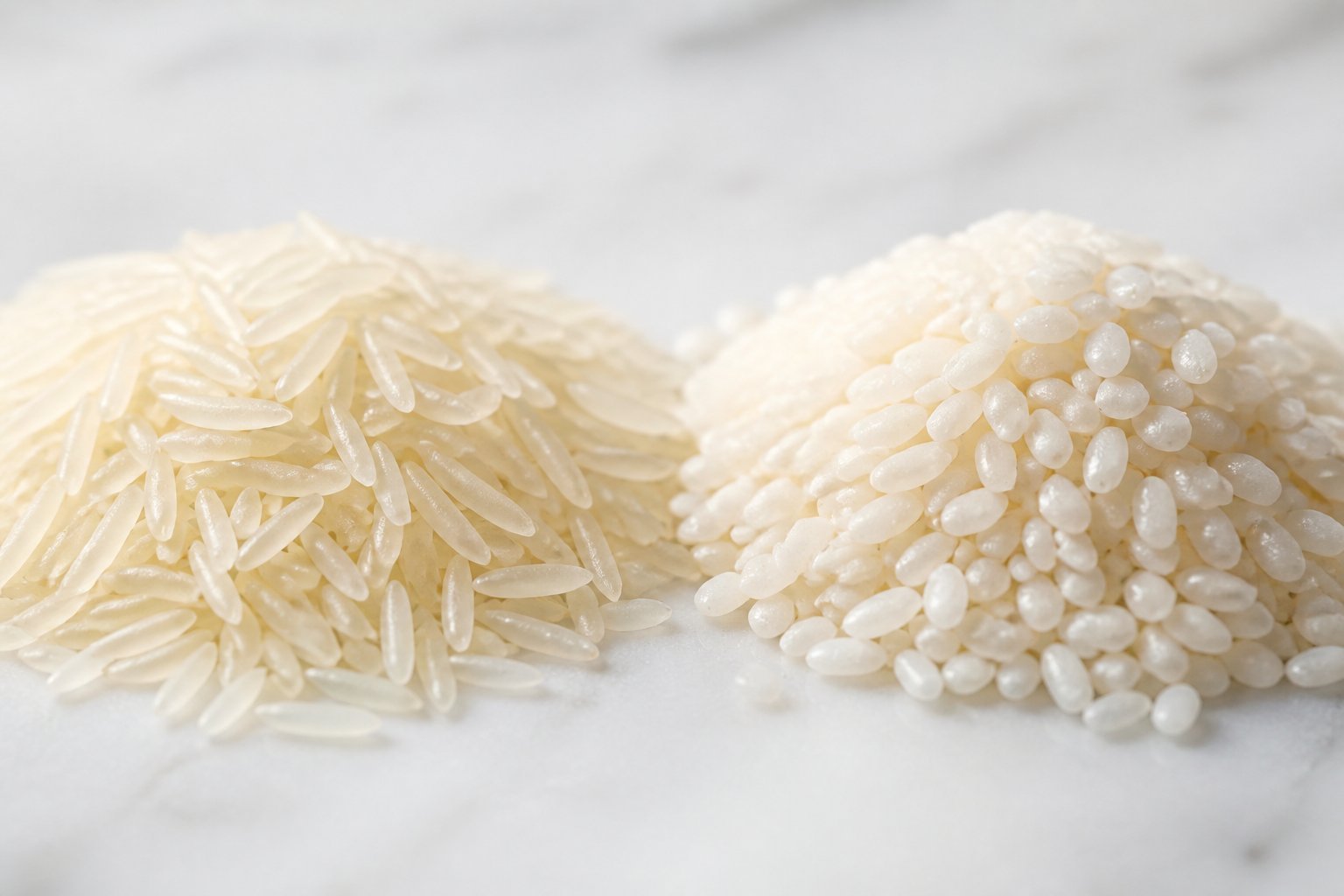
1121 Basmati delivers longer raw grain length at 8.30–8.50 mm and higher cooked elongation reaching 18–22 mm, while Super Kernel offers stronger traditional aroma, a more value-oriented position, and established recognition among South Asian consumer segments. The choice between these grades depends on target distribution channels, packaging strategies, and whether buyers prioritize visual presentation or heritage flavor profiles. GCC importers stock both varieties to cover premium retail positioning and traditional grocery demand simultaneously.
Understanding the measurable differences between 1121 and Super Kernel Basmati specifications helps procurement teams match rice grades to specific market segments. Pakistan exports both varieties with ISO 22000:2018 and HACCP certification compliance, meeting GCC import requirements for food safety documentation. This comparison examines processing grades, quality parameters, storage performance, and trade dynamics affecting landed costs across Gulf distribution networks.
Key Takeaways
- 1121 Basmati provides longer grain length and higher cooked elongation suitable for premium retail positioning
- Super Kernel delivers stronger traditional aroma and lower import costs for ethnic grocery distribution
- Both varieties meet international food safety certifications and support dual-grade importing strategies across GCC markets
Defining Key Attributes of 1121 Basmati and Super Kernel
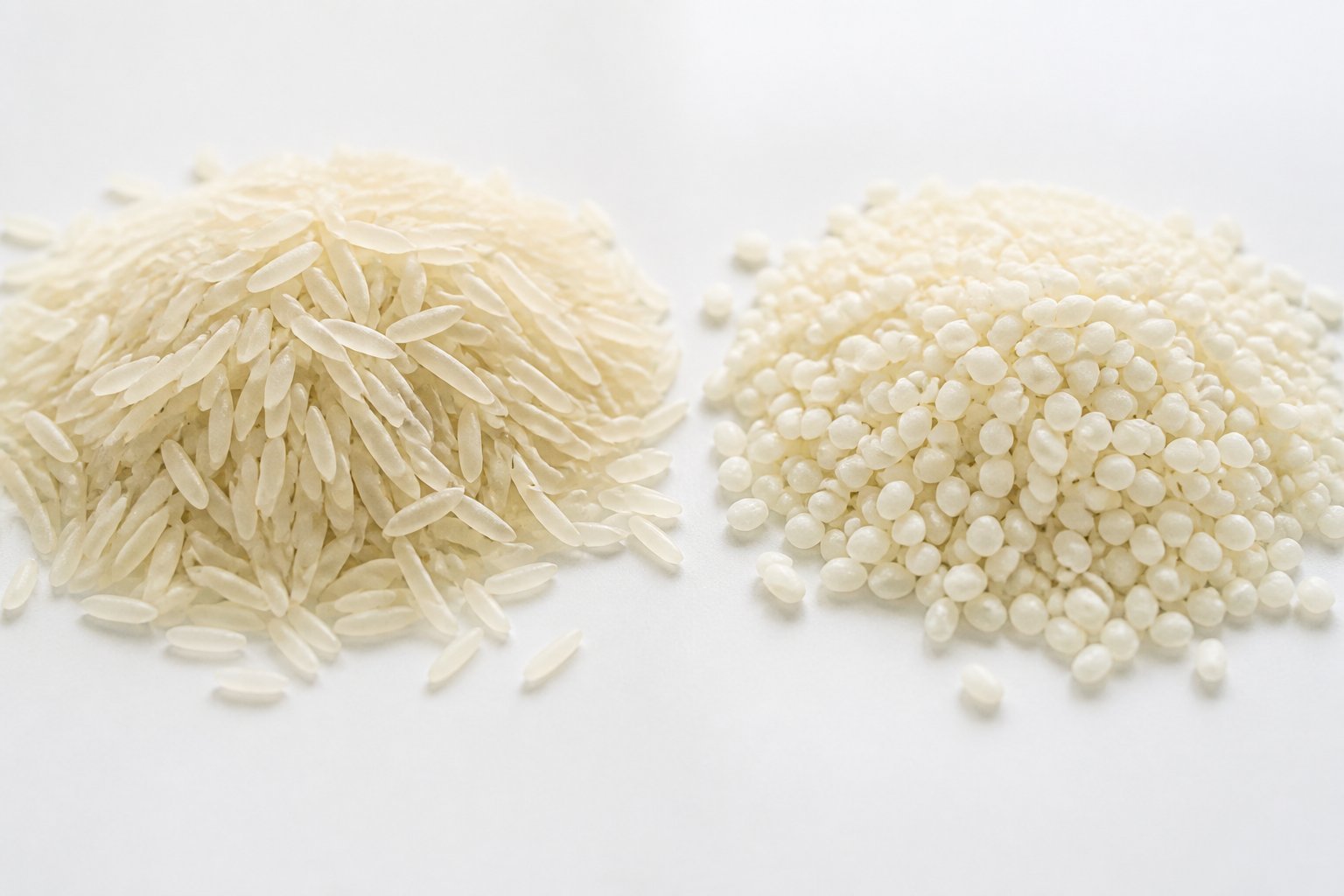
The 1121 variety delivers exceptional grain elongation reaching up to 22mm when cooked, while Super Kernel maintains stronger traditional aroma profiles preferred in specific export markets. Both varieties meet international certification standards including ISO 22000:2018, HACCP, and Halal requirements for global distribution.
Varietal Origins and Genetic Background
The 1121 Basmati rice was developed at the Indian Agricultural Research Institute in New Delhi and released for commercial cultivation in 2003. This variety emerged from a 1991 cross between Pusa 614-1-2 and Pusa 614-2-4-3, both breeding lines carrying genetics from traditional Basmati cultivars.
The development process incorporated Basmati 370 and Type 3 as donor parents for quality traits. These traditional varieties contributed the genetic foundation for the exceptional kernel elongation characteristics that define 1121 today.
Super Kernel Basmati originated in Pakistan through selective breeding programs focused on preserving aromatic intensity. Pakistan produces this variety alongside 1121 and D98 as part of its three main basmati export varieties. Both countries maintain certified growing regions that meet geographical indication standards for authentic Basmati production.
Classification Within the Basmati Range
Pakistan exports six main rice varieties with basmati grain lengths ranging from 6.8 to 8.3mm in raw form. The 1121 variety sits at the top of this range with 8.3mm raw kernel length, while Super Kernel typically measures between 7.20 to 7.50mm.
Raw grain measurements classify these varieties differently within quality grades. Mills sort both varieties into multiple processing grades based on grain integrity, broken percentage, and visual appearance.
Key Classification Differences:
- 1121: Extra-long grain category, premium export positioning
- Super Kernel: Long grain category, traditional aroma emphasis
- Both: Certified Basmati under geographical indication protocols
Buyers specify these varieties by name when sourcing for distinct market segments across the Gulf Cooperation Council, European Union, and African regions.
Grain Length and Elongation Comparison
The 1121 Basmati achieves a cooked kernel length of up to 22mm with a kernel elongation ratio of 2.5 to 2.7. This represents the highest elongation ratio documented in rice germplasm globally. Raw milled kernels average 9.00mm in length with a length-to-breadth ratio of 4.74.
Super Kernel produces cooked grains reaching 18 to 20mm with elongation ratios between 2.0 to 2.3. The raw kernel length ranges from 7.20 to 7.50mm, positioning it as a long grain rather than extra-long classification.
Both varieties exhibit minimal breadthwise swelling during cooking. The 1121 maintains cooked kernel breadth at only 2.45mm, while Super Kernel holds similar dimensional stability. This linear elongation without width expansion creates the characteristic fluffy, separate grain texture valued in premium biryanis and pilaf preparations.
Volume expansion differs between the two, with 1121 achieving more than four times its raw volume compared to Super Kernel’s three to 3.5 times expansion.
Aroma Characteristics and Amylose Content
Super Kernel delivers stronger traditional Basmati aroma compounds that align with consumer preferences in established Middle Eastern markets. This intensity in aroma profile positions it as a premium choice where fragrance takes priority over extreme grain length.
The 1121 variety contains pleasant aroma characteristics rated as excellent in sensory evaluations, though the aromatic intensity measures slightly lower than Super Kernel. Both varieties carry the genetic markers for 2-acetyl-1-pyrroline, the compound responsible for Basmati’s distinctive fragrance.
Amylose Content Comparison:
| Variety | Amylose Content | Texture Result |
|---|---|---|
| 1121 | 22.0% | Firm, separate grains |
| Super Kernel | 20-21% | Slightly softer texture |
The alkali spreading value for 1121 registers at 7, indicating intermediate gelatinization temperature. This technical specification affects cooking time and water absorption rates during preparation. Super Kernel shows similar gelatinization properties, making both varieties suitable for automated commercial cooking processes that require consistent results across large batch productions.
Processing Types and Grades
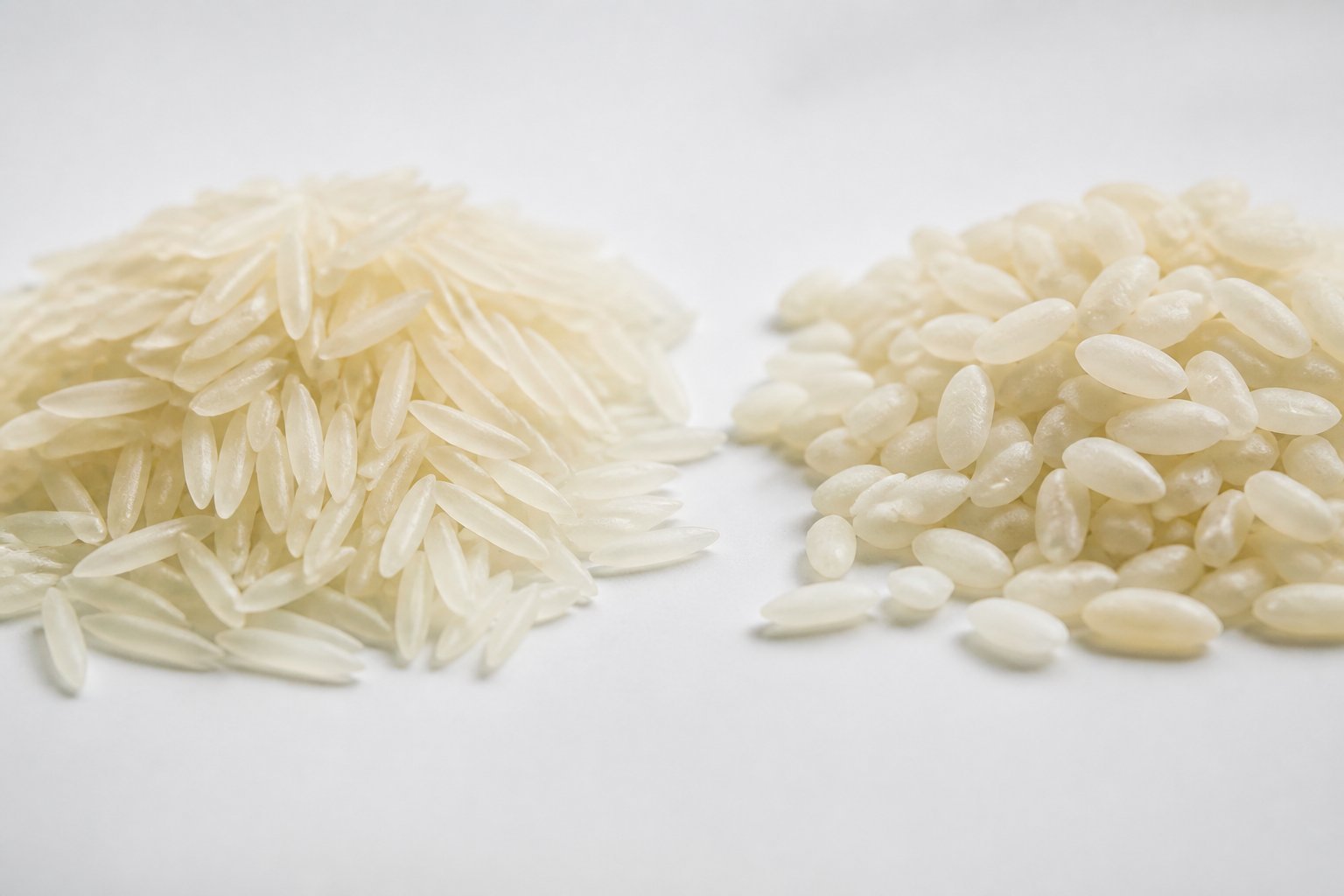
1121 basmati ships in three processing types while Super Kernel is sold exclusively as white rice. Premium basmati grades follow strict length and purity standards, and FOB Karachi pricing reflects processing complexity and quality tier.
White, Sella (Parboiled), and Steam Processing
1121 basmati offers three processing options: white, sella (parboiled), and steam. 1121 white is milled rice with no parboiling treatment. It cooks fluffy with maximum elongation and the strongest aroma.
1121 sella undergoes parboiling before milling. The grain is soaked, steamed under pressure, and dried. This process gelatinizes the starch and locks in nutrients. Sella grains are golden-yellow and hold their shape better during bulk cooking. They are preferred in GCC markets, especially Saudi Arabia and Iraq, for large-scale catering.
1121 steam is parboiled at lower pressure than sella. The grain stays whiter and closer to raw rice in appearance. UAE buyers favor steam processing for premium basmati that needs separation and firmness without the golden color.
Super Kernel is sold only as white rice. It does not undergo parboiling. The grain length sits at 7.2 mm raw and expands to 18-19 mm when cooked.
Grades and Specifications Explained
Premium basmati grades are defined by grain length, broken percentage, and moisture content. 1121 basmati white must meet a minimum raw grain length of 8.3 mm. Broken grains should not exceed 5% in top-grade shipments.
Super Kernel basmati holds a 7.2 mm raw grain standard. Both varieties are tested on pre-shipment inspection certificates. Moisture content is capped at 14% for international shipping to prevent spoilage.
Pakistan supplies rice that meets ISO 9001:2015, ISO 22000:2018, HACCP, Halal, and USFDA certification standards. Importers verify each shipment through SGS or Bureau Veritas inspection before loading.
| Parameter | 1121 Basmati | Super Kernel Basmati |
|---|---|---|
| Raw grain length | 8.30 mm | 7.20 mm |
| Cooked length | 22 mm+ | 18-19 mm |
| Broken (max %) | 5% | 1% |
| Moisture (max %) | 14% | 13% |
FOB Karachi and Packaging Norms
1121 and Super Kernel sit in similar premium bands, with 1121 carrying a modest premium for its extra length. Sella and steam processing add a further step-up over white rice.
Standard export packaging uses 25 kg and 50 kg woven polypropylene bags. Retail packs of 5 kg and 10 kg include an inner polyethylene liner for moisture protection. GCC buyers order 20-foot containers with mixed pallet configurations to blend varieties and bag sizes.
Pricing is confirmed by the export desk and valid for 48 hours. Payment terms are letter of credit at sight or telegraphic transfer with 30% advance and 70% against documents.
Cooking Performance and End-Use Suitability
1121 Basmati delivers greater cooked kernel elongation and visual grain separation, while Super Kernel maintains stronger aroma intensity and consistent texture during traditional preparations. Both varieties meet ISO 22000:2018 and HACCP standards when sourced from certified Pakistani mills.
Elongation and Volume Expansion in Kitchen Applications
1121 Basmati typically elongates to 18–22 mm after cooking, compared to Super Kernel’s 14–16 mm range. This difference in grain elongation affects plate presentation and perceived value in premium applications.
Volume expansion follows similar patterns. 1121 produces approximately 2.8 to 3.2 times its raw volume when properly cooked. Super Kernel expands to roughly 2.5 to 2.8 times its original volume.
Key performance factors:
- Water absorption: 1121 requires slightly more water due to longer average grain length
- Cooking time: Both varieties cook in 12–15 minutes under standard boiling methods
- Grain separation: 1121 maintains better separation in pilaf-style preparations
- Chalky grains: Premium grades of both varieties contain less than 3% chalky grains
Golden Sella processing improves cooking consistency for both varieties. The parboiling process reduces breakage and helps grains hold shape during reheating cycles.
Aroma and Texture in Biryani and Food Service
Super Kernel releases stronger aromatic compounds during cooking, making it preferred for traditional biryani preparations across Gulf markets. The fragrance profile matches heritage recipes that GCC consumers recognize from Pakistani and Indian cuisine.
1121 provides a milder aroma but delivers superior texture consistency in layered rice dishes. Restaurant kitchens value this trait because grains remain separate even when held on steam tables.
Texture comparison:
| Variety | Grain Firmness | Stickiness Level | Aroma Intensity |
|---|---|---|---|
| 1121 | Medium-firm | Very low | Medium-high |
| Super Kernel | Medium | Low | Strong |
Food service buyers should consider guest expectations. Fine dining establishments typically prefer 1121 for visual appeal, while traditional restaurants serving South Asian communities often select Super Kernel for its authentic fragrance and familiar cooking behavior.
Bulk Cooking and Institutional Use
Super Kernel performs reliably in institutional and bulk cooking environments where extreme grain length provides limited practical advantage. The variety maintains consistent texture in large-volume rice cookers and maintains structural integrity during extended holding periods.
1121 suits buffet operations requiring visual differentiation. The extra-long grain appearance helps justify premium pricing in hotel catering and upscale event services across Qatar and broader GCC markets.
Both varieties handle mechanical serving equipment well when properly cooked. Broken grain percentages should stay below 5% in export-grade shipments to ensure reliable bulk performance. Pakistani exporters meeting ISO 9001:2015 standards provide consistent milling quality that reduces operational waste in commercial kitchens.
Wedding caterers and large-scale food service operations often choose based on cost efficiency. The pricing difference between varieties can impact margins significantly on orders exceeding 500 kg monthly volumes.
Quality Parameters and Specification Considerations
Both 1121 and Super Kernel basmati require careful evaluation of grain integrity, compliance documentation, and aging status. These parameters directly affect pricing, market acceptance, and long-term storage performance.
Maximum Broken Percentage and Grading Impact
Broken grain percentage serves as the primary quality indicator when comparing 1121 and Super Kernel varieties. Premium grade 1121 typically maintains 2% broken maximum, while standard commercial grades allow up to 5% broken. Super Kernel follows similar grading thresholds.
The difference between broken percentages affects the value of a shipment. Buyers should verify broken counts through independent testing rather than relying solely on supplier declarations.
Standard Quality Specifications:
- Average grain length: 8.2mm minimum for 1121, 7.2-7.5mm for Super Kernel
- Moisture content: 12.5% maximum for both varieties
- Chalky grains: 3% maximum acceptable
- Foreign matter: 0.1% maximum
- Damaged or discolored grains: 1% maximum
Pakistan-origin basmati from certified mills meets ISO 22000:2018 food safety standards. Visual inspection alone cannot accurately assess these parameters.
Pre-Shipment Inspection and Compliance
Pre-shipment inspection through SGS, Intertek, or Bureau Veritas provides independent verification of contracted specifications. These inspections prevent disputes at destination ports.
Pesticide residue compliance represents a critical requirement for European markets. EU maximum residue limits for tricyclazole dropped to 0.01 mg/kg in 2017. Pakistani suppliers meeting HACCP and USFDA certification standards maintain proper pesticide management protocols.
Aroma verification should be explicitly included in inspection protocols. Authentic basmati contains 2-acetyl-1-pyrroline compound producing the characteristic fragrance. Fumigation certificates specifying methyl bromide or phosphine treatment prevent quarantine delays at GCC and international ports.
Aged Basmati and Its Industrial Value
Aged basmati refers to rice stored 12-24 months post-harvest under controlled conditions. The aging process reduces moisture content and strengthens grain structure, resulting in longer cooking elongation and firmer texture.
Gulf markets particularly favor aged 1121 for institutional cooking applications. Hotels and catering operations prefer the non-sticky consistency aged rice provides. Both 1121 and Super Kernel command premium pricing when properly aged.
Pakistani harvest occurs October through December. Rice purchased August-September consists of previous crop year inventory. Properly aged stock stored at 15-20°C with humidity control maintains quality specifications throughout the year. Halal-certified facilities ensure appropriate handling from milling through export packaging.
Market Preferences and Trade Dynamics
Both 1121 and Super Kernel drive significant basmati export volumes from Pakistan, but each variety serves distinct price segments and regional preferences. Middle Eastern buyers prioritize grain length and cooking performance, while African markets balance quality with cost efficiency.
Regional Demand Across GCC, Europe, and Africa
GCC markets show strong preference for 1121 Sella basmati with its golden color and firm grain structure. Saudi Arabia and UAE buyers specifically request 1121 for premium restaurant and retail applications where extended grain length matters. Hotels and biryani houses in Dubai and Riyadh judge rice quality by cooked grain length of 19-22mm.
Super Kernel finds its strongest demand in African markets. Kenya, Tanzania, Ivory Coast, and Somalia import substantial volumes of this economy basmati grade for institutional cooking and bulk distribution.
European importers split between both varieties. Germany, Netherlands, and UK markets require strict pesticide residue compliance with EU MRL limits. These buyers often prefer 1121 White for retail packaging while Super Kernel supplies foodservice channels where the price difference justifies the shorter grain length.
Price Tiers and Procurement Criteria
Premium basmati 1121 typically carries a premium over Super Kernel, reflecting its extra grain length. This gap widens during harvest season and narrows when supply tightens.
Pakistani basmati suppliers differentiate quality through specific parameters:
1121 Premium Grade:
- Average grain length: 8.2mm minimum
- Broken grain: 2% maximum
- Moisture: 12.5% maximum
- Foreign matter: 0.1% maximum
Super Kernel Standard Grade:
- Average grain length: 7.2-7.5mm
- Broken grain: 5% maximum
- Moisture: 12.5% maximum
- Chalky grains: 3% maximum
Broken grain percentage represents the most common quality variance in basmati export contracts. Buyers who specify 2% broken but accept 5% can reduce costs while sacrificing presentation quality.
FOB Pricing Trends and Export Logistics
FOB Karachi rates fluctuate based on harvest cycles and international demand. Pakistani basmati harvest runs October through December, with new crop arriving at mills by mid-November. Aged rice over 12 months commands premium pricing in Gulf markets due to firmer cooking characteristics.
Pre-shipment inspection through SGS, Intertek, or Bureau Veritas protects against specification disputes at destination ports.
Container fumigation requires explicit documentation. Methyl bromide or phosphine treatment for 72-120 hours must appear on bills of lading for customs clearance. Packaging specifications—whether 5kg, 25kg, or 50kg in PP, jute, or non-woven bags—affect per-ton pricing and handling costs at discharge ports across the GCC, Europe, and Africa.
Evolution of Basmati Rice Improvement Programs
Scientific breeding programs have transformed basmati rice from traditional landraces into high-performing commercial varieties with consistent quality traits. Modern cultivars balance grain length, aroma intensity, and cooking characteristics through systematic selection and genetic enhancement.
Breeding Strategies and Modern Cultivars
Basmati improvement relies on controlled hybridization between elite parent lines and traditional aromatic varieties. Breeders select for specific traits including extra-long grain length, high kernel elongation ratios after cooking, and strong aroma compounds.
The process typically spans 8-12 years from initial cross to commercial release. Scientists evaluate thousands of breeding lines through multi-location trials across different growing regions. They test each candidate variety for yield stability, disease resistance, and grain quality parameters.
Pakistani breeding programs focus on varieties adapted to local soil conditions and water availability. Indian institutions emphasize cooking quality and export specifications. Both countries maintain germplasm banks that preserve traditional basmati genetics while developing improved commercial lines.
National basmati trials assess new cultivars under varied environmental conditions before official release. These trials measure grain dimensions, cooking expansion, aroma retention, and milling recovery rates.
Notable Releases: Pusa Basmati 1, 1718, and 614
Pusa Basmati 1 emerged as an early improved variety that standardized grain length and aroma profiles for commercial production. It established baseline quality parameters that guided subsequent breeding efforts.
Pusa Basmati 1121 represents a major advancement with milled grains reaching 9.00 mm and a cooked kernel elongation ratio of 2.5. Released in 2003, it incorporated quality traits from Basmati 370 and Type 3 through systematic crossbreeding.
Pusa 1718 and Pusa 614 addressed specific market demands for medium-duration varieties with improved yields. These cultivars reduced crop cycle length while maintaining essential basmati characteristics. Pusa 614 shows better disease resistance in high-humidity regions.
Role of Marker-Assisted Selection
Marker-assisted selection uses DNA markers to identify desirable genes early in the breeding process. This technology reduces the time needed to develop new basmati cultivars from 12 years to approximately 6-7 years.
Scientists identify genetic markers linked to aroma compounds, grain elongation, and stress tolerance. They screen seedlings at early growth stages rather than waiting for grain production. This approach increases breeding efficiency and precision.
The technique proved particularly effective for incorporating disease resistance genes while preserving basmati quality traits. Breeders can now stack multiple beneficial genes in a single variety without compromising grain characteristics or cooking performance.
Frequently Asked Questions
Super Kernel and 1121 basmati differ in grain sorting precision, cooking expansion rates, and market positioning. Both varieties originate from Pakistan’s Punjab region and meet international food safety certifications including ISO 22000:2018 and HACCP standards.
What are the main differences in grain length, aroma, and texture between these two premium basmati varieties?
Super Kernel basmati grains measure 8.3mm to 8.5mm in raw form and undergo stricter length-based sorting than standard 1121. The 1121 variety typically ranges from 8.0mm to 8.4mm raw depending on the grade.
Both varieties share the characteristic basmati aroma from the compound 2-acetyl-1-pyrroline. Super Kernel maintains slightly stronger aroma retention due to tighter polishing standards during processing.
Texture differences appear after cooking. Super Kernel produces firmer individual grains with less surface stickiness. Standard 1121 basmati offers a softer mouthfeel with moderate grain separation.
Which variety tends to cook fluffier and stay separate, and what cooking method best achieves that result?
Super Kernel delivers higher grain uniformity and better separation after cooking due to controlled moisture levels during processing. The grains expand to 22mm or longer when properly prepared.
The absorption method works best for both varieties. Rinsing rice three to four times removes excess starch that causes clumping. A 1:1.5 rice-to-water ratio produces fluffy results.
Soaking for 30 minutes before cooking improves length expansion. Adding a small amount of oil or ghee to the cooking water helps grains stay separate.
How do typical flavor profiles compare, and which one pairs better with biryani versus pilaf or plain steamed rice?
Super Kernel offers a cleaner, more neutral flavor that absorbs spices and seasonings effectively. This makes it suitable for layered dishes where the rice should carry bold flavors.
Standard 1121 basmati has a slightly nuttier taste profile. The variety works well in biryanis where the rice competes with heavy spices and proteins.
For pilaf dishes, Super Kernel provides better visual presentation due to consistent grain length. Plain steamed preparations benefit from 1121’s natural flavor complexity. Both varieties suit special-occasion cooking when properly aged.
How do aging and moisture levels affect cooking time and final yield for each variety?
Aged basmati rice contains lower moisture content, typically around 12% to 13% after proper storage. Fresh crop rice holds 13% to 14% moisture and requires slightly less cooking water.
Aging for six to twelve months strengthens the grain structure. This reduces breakage during cooking and increases length expansion. Super Kernel maintains stability for 12 to 18 months under controlled warehouse conditions.
Cooking time decreases with aged rice. Fresh 1121 basmati needs 18 to 20 minutes, while aged grains cook fully in 15 to 17 minutes. Final yield increases by 15% to 20% with properly aged Super Kernel compared to fresh crop.
Which option is generally considered better for everyday meals versus special-occasion dishes, and why?
Standard 1121 basmati serves everyday meals efficiently due to lower cost per kilogram and wider availability. The variety handles frequent cooking without requiring precise water ratios.
Super Kernel suits special occasions when presentation matters. Wedding feasts, holiday gatherings, and restaurant service benefit from its uniform appearance and consistent cooking performance.
The price difference ranges from 10% to 25% higher for Super Kernel. Households cooking basmati multiple times weekly often choose 1121 for budget management. Commercial kitchens serving premium customers prefer Super Kernel for its reliable results.
What quality markers on packaging help distinguish a higher-grade product within each variety?
Broken grain percentage indicates processing quality. Premium Super Kernel maintains a 1% broken maximum, while standard 1121 allows 3.0% to 5.0%. Packaging should clearly state this specification.
Certification marks validate food safety compliance. Look for ISO 22000:2018, HACCP, and Halal certifications on bags. Pakistani exporters meeting USFDA standards display that approval prominently.
Grain length classification appears on quality packaging. Terms like “extra long grain” or “premium grade” should accompany actual measurements. Transparent packaging windows allow visual inspection of grain uniformity and color consistency before purchase.
1121 or Super Kernel — We Supply the Right Grade
Whether your buyers want the extra-long elongation of 1121 or the traditional aroma of Super Kernel, TEFT Global sources both under full ISO, HACCP and Halal certification — with pre-shipment inspection on every container.