Rice buyers in Doha and across Qatar face a genuinely practical question every sourcing cycle: build the program around Vietnamese volume grades, Pakistani basmati, or a mix of both. The two origins serve different shelves, different kitchens, and different price points, and mixing them up in a contract can cost a distributor real shelf space. Vietnam rice vs Pakistan rice is less a matter of which country makes “better” rice and more a matter of matching grain type to end use.
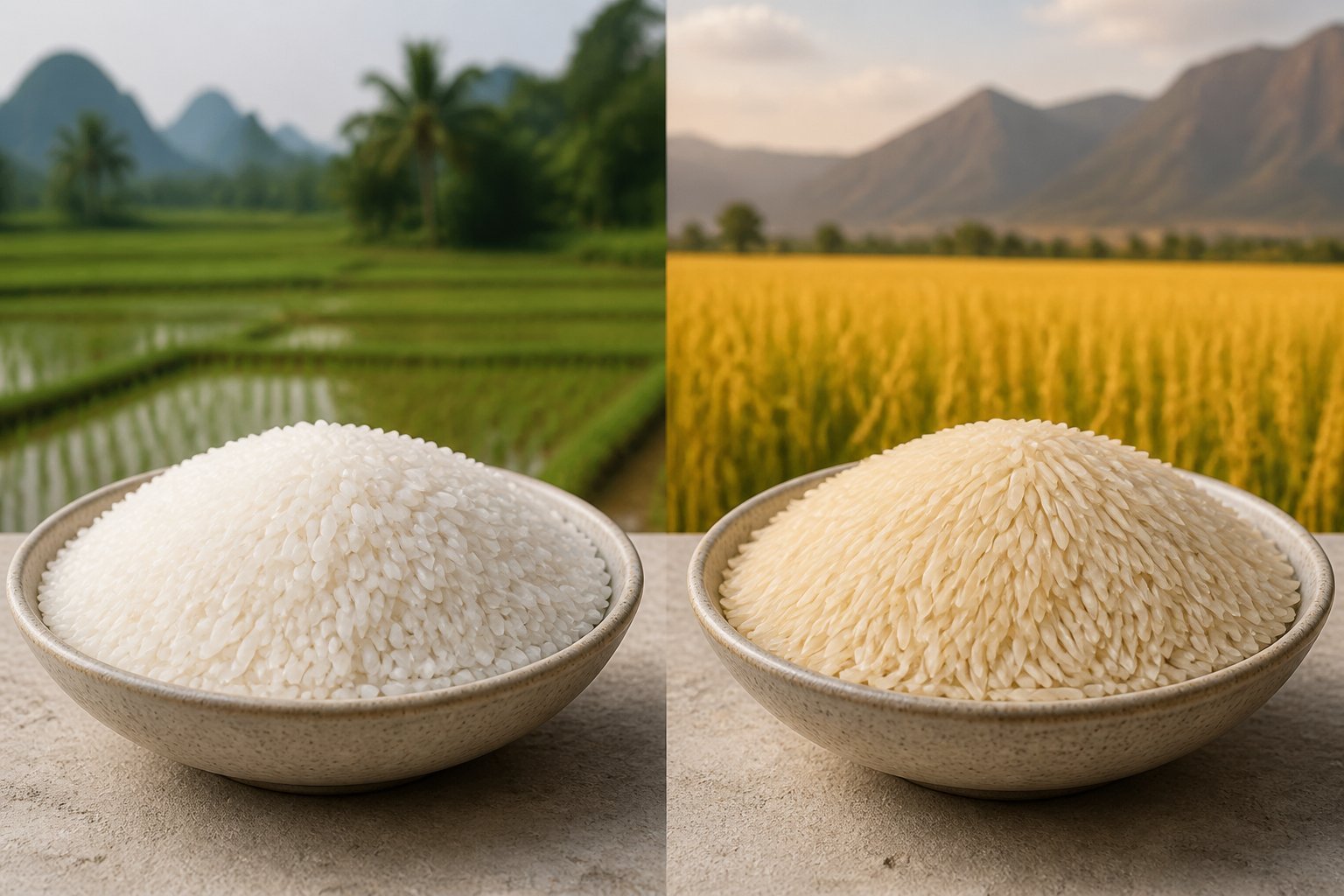
Pakistan supplies long-grain aromatic basmati built for premium retail, hospitality, and the region’s traditional rice dishes. Vietnam supplies fragrant and white rice grades built for volume retail, foodservice, and price-sensitive channels. Both countries rank among the world’s top rice exporters, and picking the wrong one for a given product line creates cooking complaints, not just cost overruns. Qatari importers who serve GCC kitchens, ethnic retail, and institutional catering all draw from these two supply bases, often at the same time.
Key Takeaways
- Pakistan’s basmati grades fit premium retail, HORECA, and traditional rice dishes; Vietnam’s jasmine and white rice grades fit volume retail and cost-driven foodservice.
- Grain type, milling quality, and aging matter more than country of origin alone when comparing offers.
- A two-origin sourcing strategy protects Qatari buyers against weather shocks, export policy shifts, and single-country logistics delays.
Which Origin Fits Your Buying Requirement?
Pakistan fits buyers who need long-grain basmati with strong aroma and elongation for premium and traditional rice dishes, while Vietnam fits buyers who need consistent volume white or fragrant rice at competitive pricing for retail and foodservice programs. The right fit depends on the product line, not a blanket preference for one country.
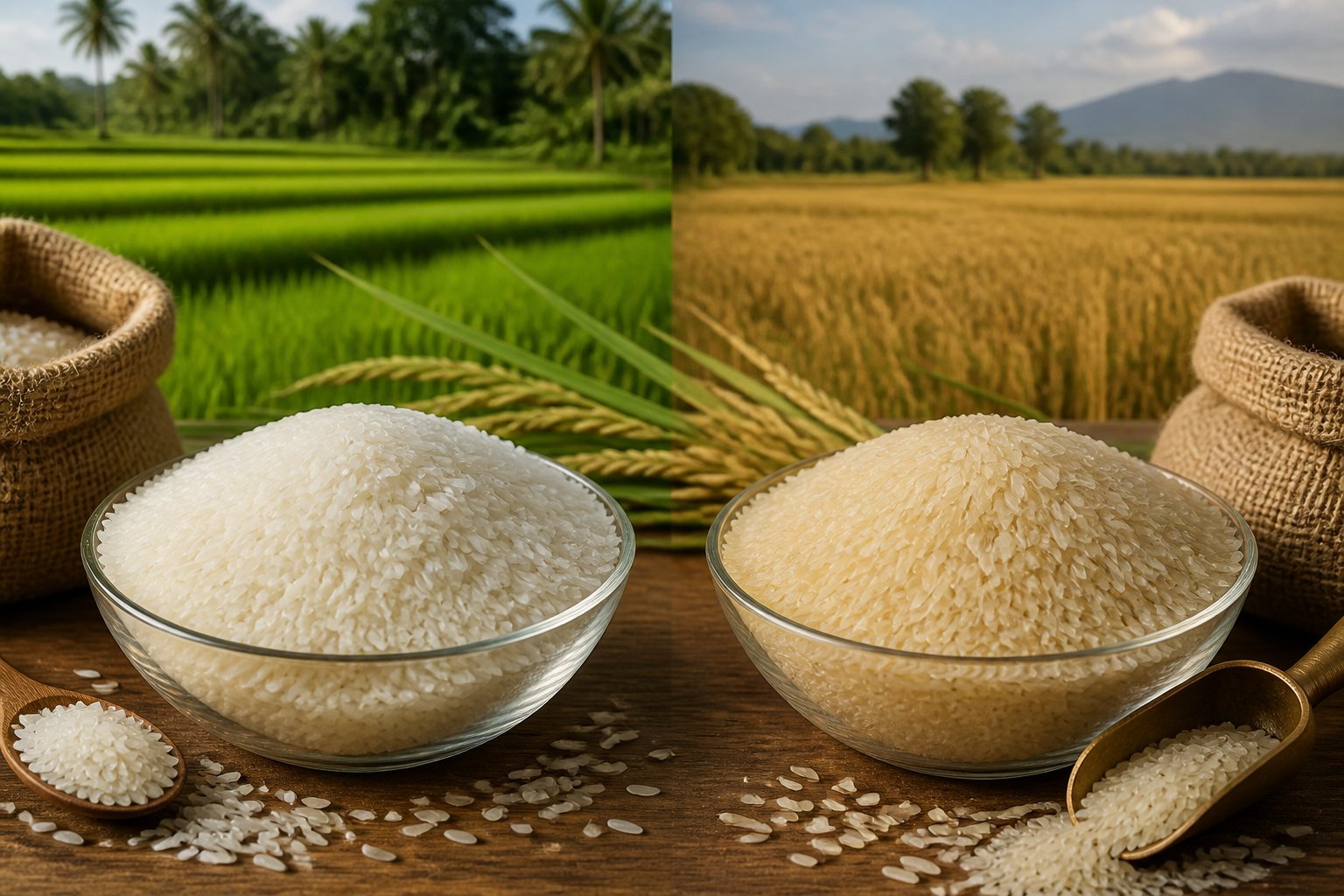
When Vietnam Is the Better Commercial Fit
Vietnam works well for importers running high-volume retail brands, budget foodservice lines, or private label white rice programs. Its jasmine and 5% broken grades give a soft, slightly sticky cook that suits Southeast Asian-style dishes and everyday household consumption. Buyers focused on cost efficiency across large tonnage often lean Vietnamese, since the country has built a reputation for aggressive, competitive pricing on medium-grain and broken rice categories.
When Pakistan Is the Better Commercial Fit
Pakistan fits buyers who need long-grain basmati for hotels, catering companies, and retail shelves serving South Asian and Middle Eastern households. Its 1121 and Super Kernel varieties deliver grain elongation and aroma that jasmine or non-basmati rice cannot replicate. For Qatari HORECA operators building biryani, kabsa, or pilaf-style menus, Pakistani basmati fits the premium segment because it offers defined origin, long-grain cooking, and multiple grades suited to catering and packaged retail.
Why Similar-Looking Specifications Are Not Always Substitutes
A spec sheet listing “long grain, 5% broken, fragrant” can describe very different rice. Grain genetics, aging, and milling style shape how rice cooks far more than broken percentage alone. Buyers who swap origins based on broken percentage and moisture content risk ending up with grains that look similar on paper but cook and sell differently on the shelf.
Rice Types and Varieties Buyers Should Compare
Pakistan’s export lineup centers on basmati varieties, while Vietnam’s centers on jasmine, fragrant, and white rice grades, with both countries also supplying non-basmati and broken rice for volume channels. India and Thailand compete directly in the basmati and jasmine categories respectively, so Qatari buyers comparing offers need to know which variety they are actually pricing against.
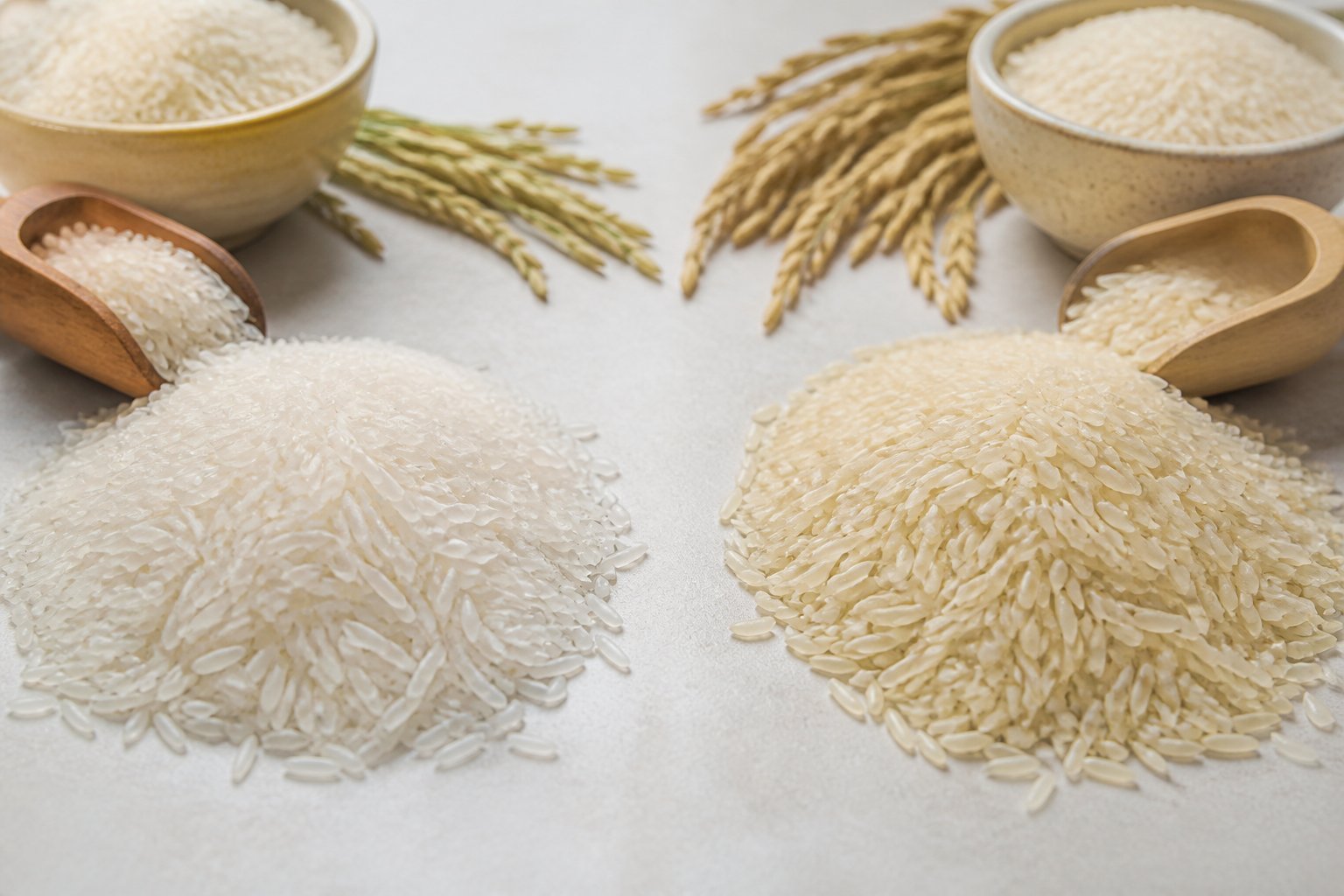
Pakistan’s Basmati Portfolio: 1121 Basmati and Other Aromatic Grades
1121 basmati is Pakistan’s flagship export grade, prized for its extra-long grain and strong aroma. Super Kernel and Kainat varieties sit alongside it in the premium tier, while PK-386 covers the value segment. Cooked grain length on 1121 reaches 18 to 20 millimeters, among the longest commercially traded rice grains available.
Vietnam’s Jasmine Rice, Fragrant Grades, and White Rice
Vietnam’s export catalog includes jasmine rice, fragrant varieties like ST25, and large volumes of white rice sold as 5% or 25% broken. ST25 earned recognition as World’s Best Rice in 2019 and again in 2023, giving Vietnam a premium credential alongside its volume trade. Jasmine rice cooks softer and slightly sticky, distinct from the separate, fluffy texture of basmati.
Non-Basmati Rice, Parboiled Rice, and Broken Rice
Both countries export non-basmati and parboiled grades for institutional and budget retail buyers. Pakistan’s IRRI-6 and Sella (parboiled) varieties serve bulk cooking applications where grain durability matters. Vietnam’s broken rice grades serve similar volume-driven channels, particularly in African and Asian markets.
How Grain Length, Aroma, and Cooking Results Affect Product Positioning
Grain length and aroma intensity determine which shelf a product belongs on. Long, aromatic basmati suits premium retail and traditional rice dishes; shorter, softer jasmine and white rice suits everyday household and foodservice use. Positioning a product against the wrong cooking profile creates repeat complaints from distributors and end consumers alike.
Quality, Consistency, and Processing Expectations
Milling quality and grain integrity separate premium basmati and jasmine shipments from commodity-grade rice, and both Pakistan and Vietnam show meaningful variation between suppliers. Qatari buyers who set clear contract specifications upfront avoid most of the disputes that surface after container arrival.
Milling Quality and Grain Integrity
Milling degree, broken percentage, chalky kernel limits, and foreign matter thresholds define export-grade rice from either origin. Pakistani exporters grade rice against broken percentages, moisture standards, and chalky kernel limits before it reaches export documentation. Vietnamese mills apply comparable milling and sorting standards, though consistency across shipments depends heavily on the individual mill’s quality control process, which is one reason choosing the right rice supplier matters as much as choosing the right origin.
Aging, Aroma, and Elongation in Premium Segments
Aged basmati develops stronger aroma and greater elongation on cooking, which is why premium buyers specify aging period in months, not just variety name. Pakistani basmati carries a notably strong aroma profile, tied to higher concentrations of the aroma compound 2-acetyl-1-pyrroline compared to some regional competitors. Jasmine rice develops its own floral aroma through variety genetics rather than extended aging, so the two categories are graded on different timelines.
How to Align Contract Specifications With End-Use Needs
Contracts should specify variety, aging period, broken percentage, and moisture content, matched to the product’s final use, whether that is fine dining, retail packaging, or institutional catering. A clear rice quality specification protects buyers from receiving technically compliant rice that still fails to perform in the kitchen it was bought for.
Supply Capacity and Export Reliability
Vietnam and Pakistan both export several million metric tons of rice annually, but export volume does not guarantee uninterrupted supply. Qatari buyers need to look past headline production numbers toward the regional and policy factors that actually determine whether a shipment arrives on schedule.
How the Mekong Delta Supports Vietnam’s Export Supply
The Mekong Delta produces the bulk of Vietnam’s exportable rice, benefiting from multiple growing cycles per year and established milling infrastructure near port access. Vietnam exported over 7 million metric tons of rice in 2024, a decade-high milestone that reflects steady production alongside improving quality standards.
Pakistan’s Crop Base and Basmati Export Capability
Punjab and Sindh provinces anchor Pakistan’s rice production, with Punjab supplying most basmati and Sindh contributing significant non-basmati volume. Pakistan is the world’s 10th largest rice producer and exported 4,168,798 metric tons in just the first eight months of fiscal year 2024-25, with basmati shipments growing over 50% in December 2025 alone as reported by agricultural industry coverage.
Why Domestic Production Does Not Equal Export Availability
A country’s total rice production figure says little about how much it can reliably export. Domestic consumption, government stockpiling rules, and periodic export restrictions all reduce the volume actually available to international buyers. India’s abrupt export bans, including the 2023 non-basmati export ban, illustrate how quickly announced production can become unavailable tonnage.
Policy, Climate, Logistics, and Documentation Risks
Weather shocks hit both origins hard. The 2022 Pakistan floods eliminated roughly 15% of Sindh’s rice crop, while salinity intrusion is reducing arable rice land in Vietnam’s Mekong Delta over time. Buyers should also factor in documentation timelines and Incoterms structures that affect who bears risk during transit delays.
Destination Markets and Channel Opportunities
Pakistan’s basmati exports concentrate in the Middle East and Central Asia, while Vietnam’s volume grades concentrate in Asian retail and African institutional markets. Qatari buyers sit inside one of Pakistan’s core demand regions, which shapes both supply reliability and pricing dynamics for basmati contracts.
Middle East and Central Asia Demand for Pakistani Rice
Saudi Arabia, Iran, Iraq, Afghanistan, and the Central Asian republics of Azerbaijan, Turkmenistan, Tajikistan, Kyrgyzstan, Kazakhstan, and Uzbekistan form Pakistan’s traditional basmati demand corridor. What GCC buyers look for in a rice supplier typically centers on consistent grain length, aroma strength, and documentation reliability, all areas where Pakistani basmati has built a long trading history in the region.
Asian Retail and Foodservice Demand for Vietnamese Rice
The Philippines remains Vietnam’s largest single buyer, accounting for approximately 42.5% of total rice exports in Q1 2026. Malaysia also imports Vietnamese white rice alongside Pakistani basmati, since Malaysia and Vietnam both import Pakistani rice for specialty varieties not produced domestically, particularly for hotel, restaurant, and diaspora retail demand.
African Volume Markets and Institutional Demand
Kenya, Tanzania, Mozambique, Somalia, Ivory Coast, Guinea, Guinea-Bissau, Madagascar, and Mali absorb significant volumes of parboiled and broken rice from both origins, often through institutional and government tenders. Traders serving these markets frequently draw simultaneously from Thailand, Vietnam, Myanmar, India and Pakistan to meet tender specifications and delivery windows.
Premium Retail, Ethnic Distribution, and HORECA Positioning
Premium retail and HORECA channels in Qatar favor Pakistani basmati for its aroma and cooking performance in traditional dishes. Ethnic distribution networks serving South Asian communities also lean toward basmati, while budget retail and foodservice lines often blend in Vietnamese white rice for cost control.
How to Compare Offers Without Focusing Only on Rice Prices
Rice prices shift week to week based on currency movement, freight costs, and harvest timing, so anchoring a sourcing decision purely on quoted price invites disappointment. Qatari importers get better outcomes comparing varietal fit, milling specification, and delivery reliability before price enters the conversation.
Set the Varietal and Grade Before Reviewing Commercial Terms
Confirm the exact variety, whether that is 1121 basmati, jasmine, or a non-basmati grade, before requesting quotes. Two offers priced identically can represent completely different cooking outcomes if one is aged basmati and the other is a shorter, unaged grain.
Verify Crop, Milling, Packaging, and Inspection Requirements
Request crop year, milling date, and packaging specification from every rice exporter under consideration. Third-party inspection reports reduce the risk of receiving rice that fails to match the agreed rice quality specification on arrival.
Assess Lead Times, Port Access, and Documentation Readiness
Lead times vary by harvest season and port congestion in both countries. Buyers should confirm container availability and documentation timelines well ahead of Pakistan’s harvest season, since basmati pricing and availability shift noticeably around that window.
Build an Approved-Origin Strategy for Continuity
Working with more than one approved origin protects against a single country’s weather event, export policy change, or logistics bottleneck disrupting an entire product line. Many established importers maintain reliable rice supplier relationships across two or more countries specifically to manage this exposure.
Where Each Origin Sits in the Wider Rice Market
India and Thailand outrank both Vietnam and Pakistan in total export volume, but Pakistan and Vietnam compete closely for third and fourth position depending on the month. Global rice trade moves roughly 55 to 58 million metric tons a year, with five countries handling most of that flow.
How Vietnam and Pakistan Compare With India and Thailand
India ships over 20 million metric tons annually, more than the next four exporters combined in most years, while Thailand remains the benchmark for premium jasmine-style rice through its Hom Mali grade. Pakistan overtook Vietnam in December 2025, becoming the world’s third-largest rice exporter that month, trailing only India and Thailand, driven by a surge in basmati shipments.
| Origin | Signature Grade | Export Rank (Recent) | Core Strength |
|---|---|---|---|
| Pakistan | 1121 Basmati | 3rd–4th largest | Long grain, strong aroma |
| Vietnam | Jasmine / White 5% | 3rd–4th largest | Volume pricing, growing quality |
| India | 1121 / Non-Basmati | 1st largest | Scale, price range |
| Thailand | Hom Mali | 2nd largest | Premium jasmine benchmark |
Major Producers That Shape Regional Supply and Demand
China, Indonesia, Bangladesh, and Myanmar produce enormous domestic rice volumes but export relatively little compared to their production size, since most of it feeds local consumption. Myanmar remains an exception, supplying cheap, high-broken rice to African buyers and China through border trade, though political conditions make banking and shipping unpredictable.
Smaller Producing Markets With Strategic Trade Relevance
Brazil, Japan, the United States, South Korea, Australia, France, and Chile produce rice for domestic and niche export markets rather than competing for bulk global tonnage. These markets rarely intersect with Qatari basmati or jasmine sourcing decisions but remain relevant for specialty or organic rice categories.
Matching the Origin to Your Market and Specification
Matching origin to specification starts with the end product, not the country name. A Qatari distributor supplying hotel kitchens and traditional rice dishes should anchor the program on Pakistani basmati varieties, while a retailer running high-volume, price-sensitive private label rice should build around Vietnamese jasmine or white rice grades.
Buyers running both premium and volume product lines often split sourcing deliberately: basmati from Pakistan for the aromatic, long-grain segment, and Vietnamese grades for cost-driven categories. This mirrors how the global rice market itself operates, with different origins serving distinct consumer expectations rather than competing head-to-head on identical products.
The specification sheet should always come before the origin decision. Once variety, grain length, aroma expectation, and end-use are fixed, the choice between Vietnam and Pakistan becomes a matter of matching those fixed requirements to the country that reliably delivers them.
Frequently Asked Questions
Is Vietnamese rice better than Pakistani rice for importers?
Neither origin is universally better; each serves a different segment. Vietnamese rice fits volume retail and foodservice programs built around jasmine or white rice, while Pakistani rice fits premium basmati applications in hospitality and traditional cooking.
Which rice types should buyers source from Pakistan?
Pakistan is the stronger sourcing choice for 1121 basmati, Super Kernel basmati, and parboiled Sella varieties. These grades suit hotels, catering operations, and retail lines serving South Asian and Middle Eastern consumer bases.
Which Vietnamese rice grades are suitable for retail and HORECA?
Jasmine rice and ST25 fragrant rice suit retail shelves and Asian-style foodservice menus, while 5% broken white rice suits budget retail and institutional catering. Buyers building private label programs often start with jasmine for its recognizable aroma and texture.
Can Pakistani basmati replace Vietnamese jasmine rice?
Pakistani basmati cannot directly replace jasmine rice in recipes built around jasmine’s soft, sticky texture. The two varieties come from different genetic lines and produce distinct cooking results, so substitution changes the final dish noticeably.
What quality checks should importers require from either origin?
Importers should require crop year, milling date, moisture content, broken percentage, and third-party inspection reports before shipment. For basmati, aging period and grain elongation data add further confidence in premium-grade claims.
How should buyers manage supply risk when sourcing rice from Vietnam or Pakistan?
Buyers reduce risk by qualifying more than one approved supplier across both origins rather than relying on a single country. This approach protects supply continuity against weather events, export policy shifts, and shipping delays that can affect either market independently.