
Rice buyers across West Africa move enormous volumes every year, and parboiled rice sits at the center of that trade. For importers and distributors serving Nigeria, Benin, Niger, and neighboring markets, the grain choice affects everything from shelf life to consumer acceptance at the point of sale. Getting the specification right the first time saves money and protects relationships with retail and institutional buyers downstream.
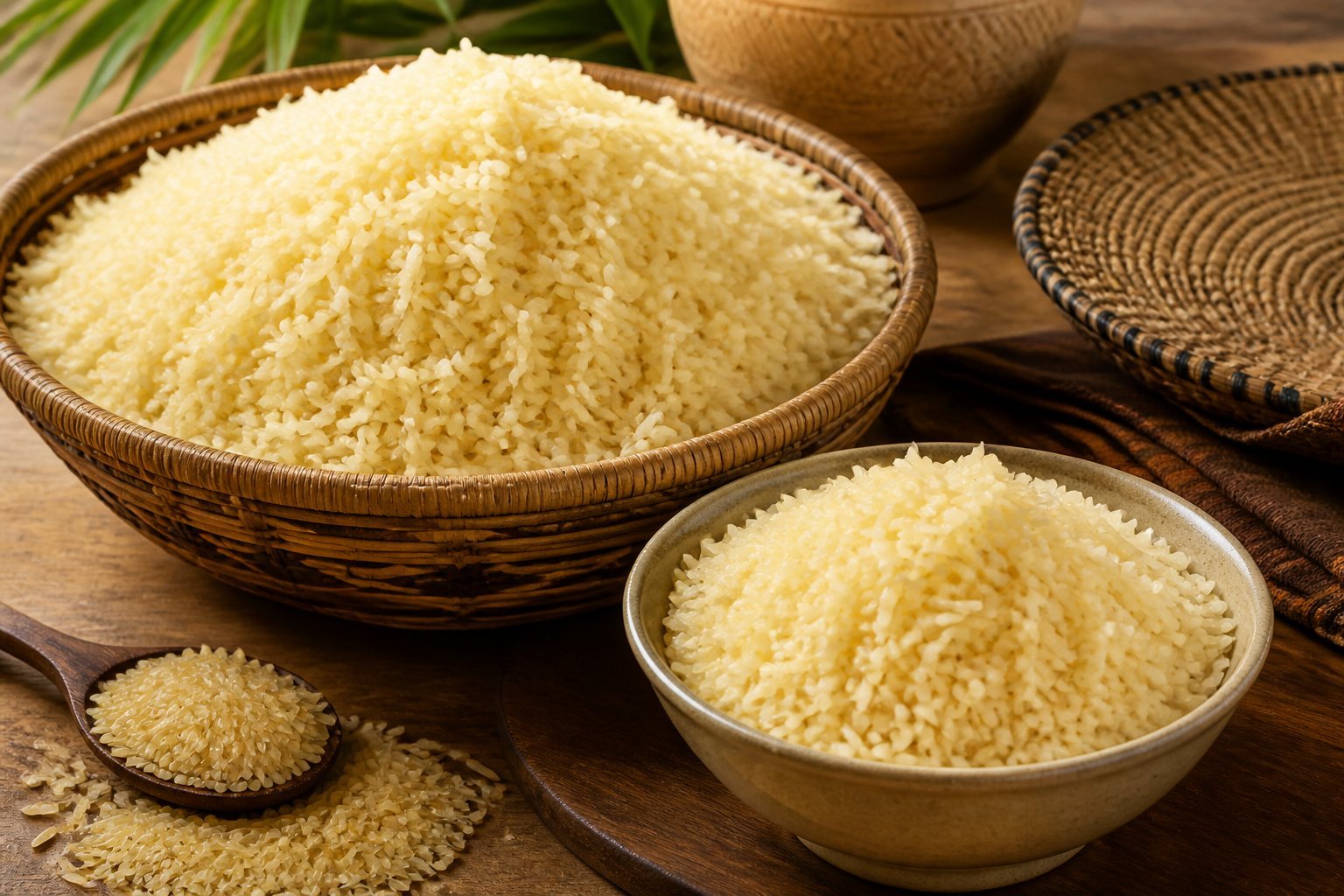
Parboiled rice dominates household and institutional consumption in much of the region because of how it holds up in storage, cooks, and tastes in local dishes. Buyers who understand the parboiling process, grain grading, and fortification options are better positioned to negotiate specifications and avoid costly rejections at port. This guide covers what commercial buyers need to check before placing an order, how the parboiling process shapes final grain quality, and where institutional demand for fortified rice is growing fastest.
Key Takeaways
- Parboiled rice remains the preferred staple across West Africa because of its firm texture, longer shelf life, and resistance to breakage during milling and transport.
- Grain specifications, moisture content, and broken-grain percentages should be verified with documentation before any bulk shipment leaves origin.
- Fortified parboiled unpolished rice is opening new institutional procurement channels tied to school feeding and nutrition programs in Nigeria.
What Commercial Buyers Should Know Before Sourcing
Buyers sourcing rice for West African markets need to distinguish between white rice, parboiled rice, brown rice, and unpolished variants before setting a specification. Each type behaves differently in storage, milling, and cooking, and consumer preferences vary by country and even by region within a country.

How Parboiled, White, Brown, and Unpolished Rice Differ
Parboiled rice is paddy that has been soaked, steamed, and dried before milling, which hardens the grain and changes its color to a light amber before polishing. White rice is milled without this pre-treatment, leaving a softer grain that breaks more easily. Brown rice keeps the bran layer intact after husking, while unpolished rice (including parboiled unpolished rice, or PUR) retains more of the bran and germ layer than standard milled parboiled rice. Buyers can review a detailed breakdown of how parboiled rice compares with white rice for food importers when setting sourcing criteria.
Which Grain Attributes Influence Buyer Acceptance
Grain length, uniformity, translucency, and broken-grain percentage all affect how a shipment is received in market. Milled rice with consistent color and minimal chalkiness commands stronger acceptance from wholesalers and retail buyers. Moisture content also matters directly, since rice above safe thresholds risks mold and weight loss during transit and storage.
How Regional Consumer Preferences Shape Procurement
Consumer preference for parboiled rice is deeply rooted across Nigeria, Ghana, Senegal, and Côte d’Ivoire, where generations of households have cooked with it daily, as described in this comparison of parboiled, raw, and steamed rice for bulk buyers. Procurement teams sourcing for these markets typically prioritize parboiled long grain varieties over white rice, since the firmer texture and lower breakage rate match how the grain is stored, cooked, and sold in these countries. Buyers evaluating grain options can review specifications for parboiled long grain rice suited to bulk distribution.
How Parboiling Changes Grain Quality and Processing Results
Parboiling transforms paddy rice into a harder, more stable grain before milling begins, and this single step accounts for most of the quality differences buyers notice between parboiled and non-parboiled shipments. The process affects breakage rates, color consistency, and how well the rice holds up through long supply chains.

From Paddy Rice to Milled Rice
Paddy rice arrives at the mill with husk intact and starch that has not been gelatinized. Parboiling gelatinizes the starch inside the endosperm before husking and polishing, which is why parboiled milled rice looks and cooks differently from rice milled straight from raw paddy. This step, as described by AfricaRice’s overview of the parboiling process, protects the grain from breaking during the milling stage that follows.
Soaking, Steaming, and Drying in the Parboiling Process
Parboiling follows three steps: soaking the paddy in water, steaming it under pressure or at atmospheric conditions, then drying it back down to a safe moisture level, according to Wikipedia’s entry on parboiled rice. Each step needs tight control. Under-soaked paddy produces uneven steaming, while over-drying leads to cracked grains that break apart during milling.
Why Breakage, Damaged Grains, and Color Consistency Matter
Buyers judge parboiled rice quality largely on breakage percentage and the presence of damaged or discolored grains. Improperly parboiled rice shows heat-damaged kernels, uneven color, and higher broken fractions, all of which reduce resale value. A well-run parboiling process, using a grain quality enhancer approach like the GEM system, delivers milled rice with lighter, more uniform color and lower broken fractions, based on results reported by AfricaRice’s GEM parboiler research.
Selecting Specifications for West African Distribution Channels
Buyers distributing rice across West Africa need specifications matched to how each market cooks, stores, and sells the grain. Getting broken-grain percentage, moisture content, and packaging format right up front avoids disputes after the rice clears port.
Matching Grain Length, Broken Fractions, and Appearance to the Market
Grain length and broken-fraction percentage need to match what wholesalers in Niger, Benin, Nigeria, and other West African destinations expect from experience. Long-grain parboiled rice with 5 percent broken content is common in retail-facing shipments, while higher broken percentages move through different distribution channels at different price points. Buyers can compare 5 percent broken versus 25 percent broken rice specifications before finalizing an order. India, including rice-growing regions like Odisha, remains a major origin for parboiled rice shipped into West African ports, and consumer preferences in destination markets often dictate which grain profile sells fastest.
Cooking Performance, Storage Life, and Insect Resistance
Parboiled rice holds up better in long-term storage than raw milled rice because the parboiling process hardens the grain and reduces susceptibility to insect damage. This matters for importers managing multi-month inventory cycles or supplying institutional buyers with large storage requirements. Cooking performance, including how the grain holds its shape and texture after cooking, also factors into which specification a distributor selects for retail versus catering channels. Buyers supplying hotels, restaurants, and catering operations can review considerations specific to hospitality rice supply and food service rice supply.
Quality-Control Documents Buyers Should Request
Buyers should request documentation covering moisture content, broken-grain percentage, foreign matter, and milling degree before confirming a shipment. International rice trade also references standards such as ISO 7301, which lays out minimum specifications for husked, milled, and parboiled rice types in international trade. Reviewing certifications relevant to rice buyers and requesting sample approval before a bulk order helps confirm a shipment matches the agreed specification before payment terms activate.
Nutrition and Fortification Considerations for Institutional Demand
Parboiling retains more nutrients than conventional white rice milling because the steaming step pushes water-soluble vitamins and minerals from the bran into the starchy endosperm before polishing removes the bran layer. This matters directly for institutional buyers sourcing rice for feeding programs where nutritional quality is part of the procurement criteria.
What Parboiling Retains Compared With Conventional White Rice
Parboiled rice retains more thiamine, niacin, and certain minerals than white rice because the parboiling process drives nutrients from the bran into the grain’s core before milling strips the bran away. This gives parboiled rice a nutritional edge over standard white rice even before fortification is added. Parboiled unpolished rice retains even more, since less of the bran and germ layer is removed during polishing.
How Fortified Rice Can Address Micronutrient Gaps
Fortified rice adds micronutrients like iron, vitamin A, zinc, and iodine back into the grain, targeting the micronutrient deficiencies common across West African diets. In Burkina Faso, parboiled rice fortified with vitamin A, iron, and zinc covered up to 70 percent of zinc needs and 30 percent of iron needs among adult women, according to research on rice and nutrition in Africa. Simulation models in the same research suggest large-scale fortification programs could reduce nutritional deficiencies by more than 10 percentage points, though monitoring is needed to avoid excessive intakes.
Why Rice Must Be Paired With Diverse Foods
Rice alone, even fortified, cannot meet every nutrient need across an institutional feeding program. Pairing rice with vegetables, protein sources, and other staple foods delivers a fuller set of vitamins and minerals, including calcium and potassium, that grain fortification does not fully replace. Buyers supplying school feeding or institutional programs should treat fortified rice as one component of a balanced menu rather than a standalone nutrition solution.
Building Reliable Local Processing and Supply Capacity
Rice millers and processors across West Africa are steadily upgrading parboiling capacity, and buyers benefit directly when local mills produce more consistent, higher-quality grain. Stronger local processing also reduces reliance on imports over time and creates more stable regional supply chains.
What Rice Millers Need to Produce Consistent Parboiled Rice
Rice millers need reliable steaming equipment, consistent paddy quality, and controlled drying conditions to produce parboiled rice with low breakage and even color. Traditional parboiling methods in much of the region are labor-intensive and produce inconsistent results, with impurities, broken grains, and burnt kernels showing up more often than in mechanized processes, according to AfricaRice’s assessment of traditional parboiling.
How Improved Parboiling Technology Supports Quality
The GEM system, a grain quality enhancer built from energy-efficient and durable material, cuts steaming time from 60-90 minutes down to 20-25 minutes per 50-100 kg batch of paddy. It also cuts firewood costs sharply, and processors using rice husk gasifier stoves eliminate wood costs entirely, based on figures published by AfricaRice. The technology scales from 20 kg to 3,000 kg batch sizes, giving small, medium, and large processors a path to more consistent output.
Opportunities for Women Processors and Regional Value Chains
Women parboilers using improved technology earn significantly more per ton of rice parboiled than those using traditional methods, and the GEM system delivers an internal rate of return of 70 percent versus 14 percent for traditional parboiling, according to AfricaRice’s impact data. Over 3,500 women rice processors across Benin, Côte d’Ivoire, Niger, Nigeria, and Togo have been trained on this system, turning parboiling into a more profitable and safer enterprise.
Institutional Procurement Opportunities in Nigeria
Nigeria’s school feeding programs and public nutrition initiatives are creating structured demand for fortified parboiled unpolished rice, giving buyers a growing institutional channel beyond traditional retail distribution. This demand is tied directly to government and NGO-backed nutrition efforts targeting child health outcomes.
School Feeding as a Demand Channel for PUR
The West African Fortified Parboiled Unpolished Rice (WAFPUR) project, supported by the Rockefeller Foundation, promotes production and consumption of fortified parboiled unpolished rice to address micronutrient deficiencies while building economic opportunities for local rice processors, according to TechnoServe’s project overview. School feeding programs represent one of the clearest institutional demand channels for PUR, since procurement volumes are predictable and tied to public health goals rather than retail price competition alone.
Lessons From Kano and Ogun State
Kano State’s Ministry of Agriculture and Natural Resources has issued repeated tenders for processed parboiled rice supply, reflecting sustained government demand tied to food security programs for vulnerable populations, as shown in Kano State’s procurement notice. Ogun State has served as a pilot location for fortified PUR recipe development work under the Impact Nutrition Africa Initiative (INAI), testing how well fortified rice performs in school feeding settings before wider rollout. Buyers watching Nigeria’s institutional procurement space should track both state-level tenders and pilot program outcomes, since successful pilots tend to expand into larger recurring contracts.
Improving Acceptance Through Product and Recipe Development
The Impact Nutrition Africa Initiative created eight original recipes using parboiled unpolished rice paired with locally available ingredients, refining flavor and texture through culinary testing sessions, according to INAI’s recipe development project. This work addressed food preferences among children in target states, since nutritional status improvements depend on children actually eating the fortified product consistently. Buyers supplying institutional feeding programs benefit from watching which recipe formats gain the strongest acceptance, since this shapes future volume commitments.
Matching Product Strategy to West African Buyer Requirements
Buyers succeed in West African markets by matching product specification to the exact channel they serve rather than treating parboiled rice as a single uniform commodity. Retail distribution calls for consistent grain appearance and proven consumer preferences, while institutional and school feeding channels increasingly call for fortified rice or parboiled unpolished rice (PUR) tied to nutrition program requirements.
Rice processors capable of delivering both standard parboiled specifications and fortified variants are better positioned to serve multiple channels from a single supply relationship. Buyers should confirm which specification a supplier can deliver at contracted volumes before committing to a program tied to school feeding or public procurement, since fortified rice production requires different processing controls than standard milled parboiled rice. Aligning product strategy with food security priorities in the destination market strengthens long-term contract stability for both importer and processor. Buyers can review broader rice buyers guide resources and country-specific considerations for the Nigeria rice market when finalizing procurement strategy.
Conclusion
Parboiled rice remains the anchor product for West African rice trade, and buyers who understand grain specification, the parboiling process, and emerging fortification programs are better equipped to negotiate reliable, long-term supply contracts. Matching product type to distribution channel, whether retail, HORECA, or institutional feeding programs, protects margins and reduces the risk of rejected shipments. As fortified parboiled unpolished rice gains traction through school feeding initiatives in Nigeria, buyers who build relationships with processors capable of delivering both standard and fortified specifications will hold a stronger position in a market that continues to grow.
Frequently Asked Questions
What is the difference between parboiled rice and parboiled unpolished rice?
Parboiled rice goes through soaking, steaming, and drying before standard milling and polishing removes most of the bran layer. Parboiled unpolished rice (PUR) goes through the same parboiling steps but keeps more of the bran and germ layer intact, giving it higher nutrient retention than standard parboiled rice.
Why do many West African buyers prefer parboiled rice?
Parboiled rice holds a firmer texture, lower breakage rate, and longer storage life than white rice, which matches how households across Nigeria, Ghana, Senegal, and Côte d’Ivoire have cooked with it for generations. It also resists insect damage better during storage, which matters for distributors managing multi-month inventory.
What quality specifications should importers check before buying parboiled rice?
Importers should verify moisture content, broken-grain percentage, foreign matter, grain length, and color consistency before confirming a shipment. Requesting documentation against standards such as ISO 7301 and approving a physical sample before bulk order confirmation reduces the risk of disputes after arrival.
Can parboiled rice support school feeding and institutional procurement programs?
Parboiled rice, particularly fortified parboiled unpolished rice, supports school feeding and institutional procurement programs targeting child nutrition and food security goals. Programs like the WAFPUR project and pilot work in Ogun State have tested fortified PUR specifically for this purpose in Nigeria.
How does rice parboiling affect broken grains and storage performance?
Parboiling hardens the grain by gelatinizing starch before milling, which reduces breakage during the milling process compared to raw paddy. This same hardening effect also extends storage life and improves resistance to insect damage during warehousing and transit.
Is fortified parboiled rice suitable for addressing micronutrient deficiencies?
Fortified parboiled rice can meaningfully reduce micronutrient deficiencies when added iron, vitamin A, and zinc are absorbed into the grain during processing. Research from Burkina Faso found fortified parboiled rice covered up to 70 percent of zinc needs and 30 percent of iron needs among adult women, though it works best paired with a varied diet rather than as a standalone nutrition solution.