Pakistani Parboiled Long Grain Rice Supplier: Six Varieties, Sold in Bulk
Parboiled Rice Sold as Sella Rice, in 5%, 10%, 15% and 25% Broken, 6.0mm to 7.4mm
Order a Single Pallet of Parboiled Rice in Qatar, or Containers to Your Port or Door
TEFT Global supplies Pakistani parboiled long grain rice to buyers in Qatar and the Gulf (GCC), Nigeria, Kenya, Ivory Coast, Mozambique and the United Kingdom. Six varieties of parboiled long grain rice, steamed in the husk before milling, in 5%, 10%, 15% and 25% broken. We buy the rice, we own it and we ship it, so the number you are quoted is the number you pay. In Qatar it is already landed and cleared at Al Wakra and you can take a single pallet. Everywhere else it ships by the container to your port with the freight paid, or to your door in the markets where we hold local clearance.

IRRI-6, PK-386, IRRI-9, KS-282, C-9 and Super Fine, Parboiled in Pakistan
We buy this rice, we own it and we ship it. It is grown in Sindh and Punjab. The groups we buy from parboil it and mill it. It ships out of Port Qasim to our own stock at Birkat Al Awamer in Al Wakra, and from there to buyers in Qatar, Nigeria, Kenya, Mozambique, the United Kingdom and West Africa. Nothing is quoted that we cannot ship, and the figures in the table below are the figures on the certificate.
Parboiled Rice Is Sella Rice, Steamed in the Husk Before It Is Milled
Six Pakistani Long Grain Rice Varieties, All Made the Same Way
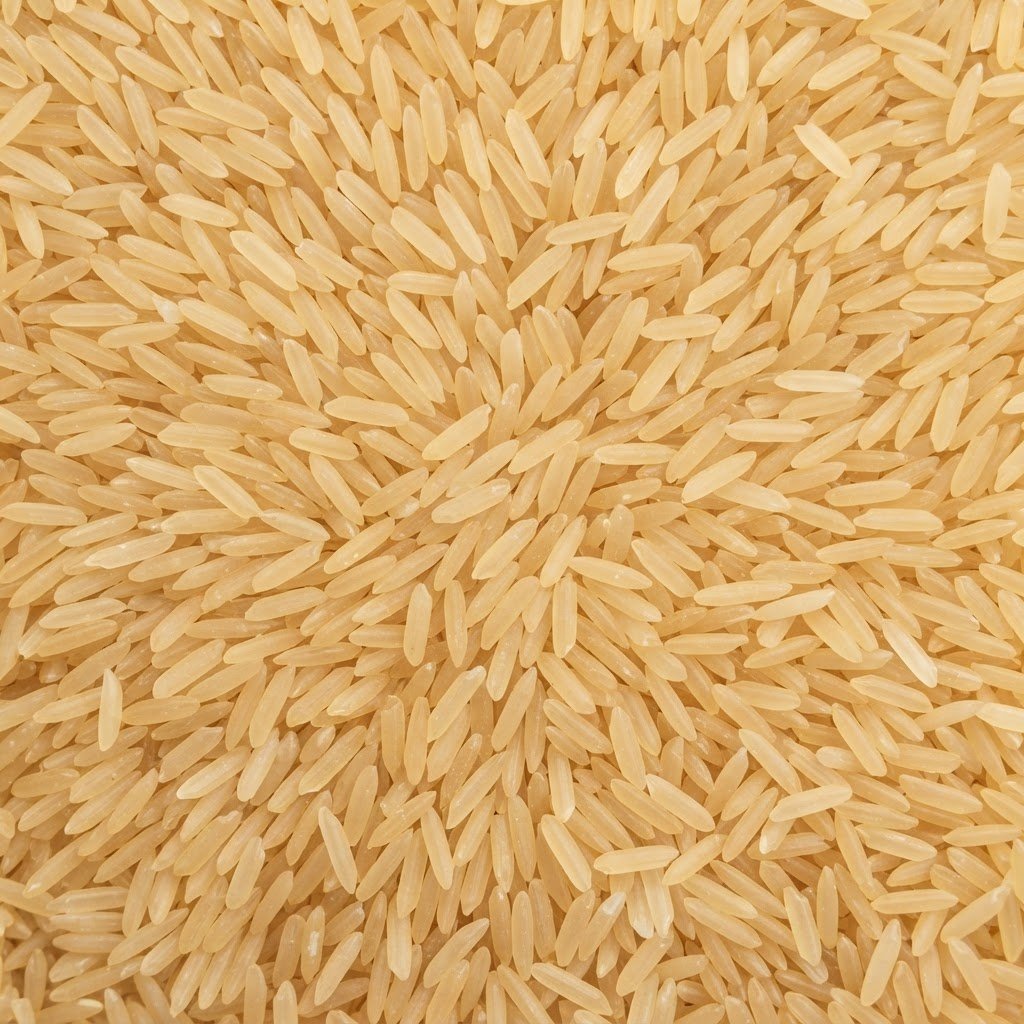
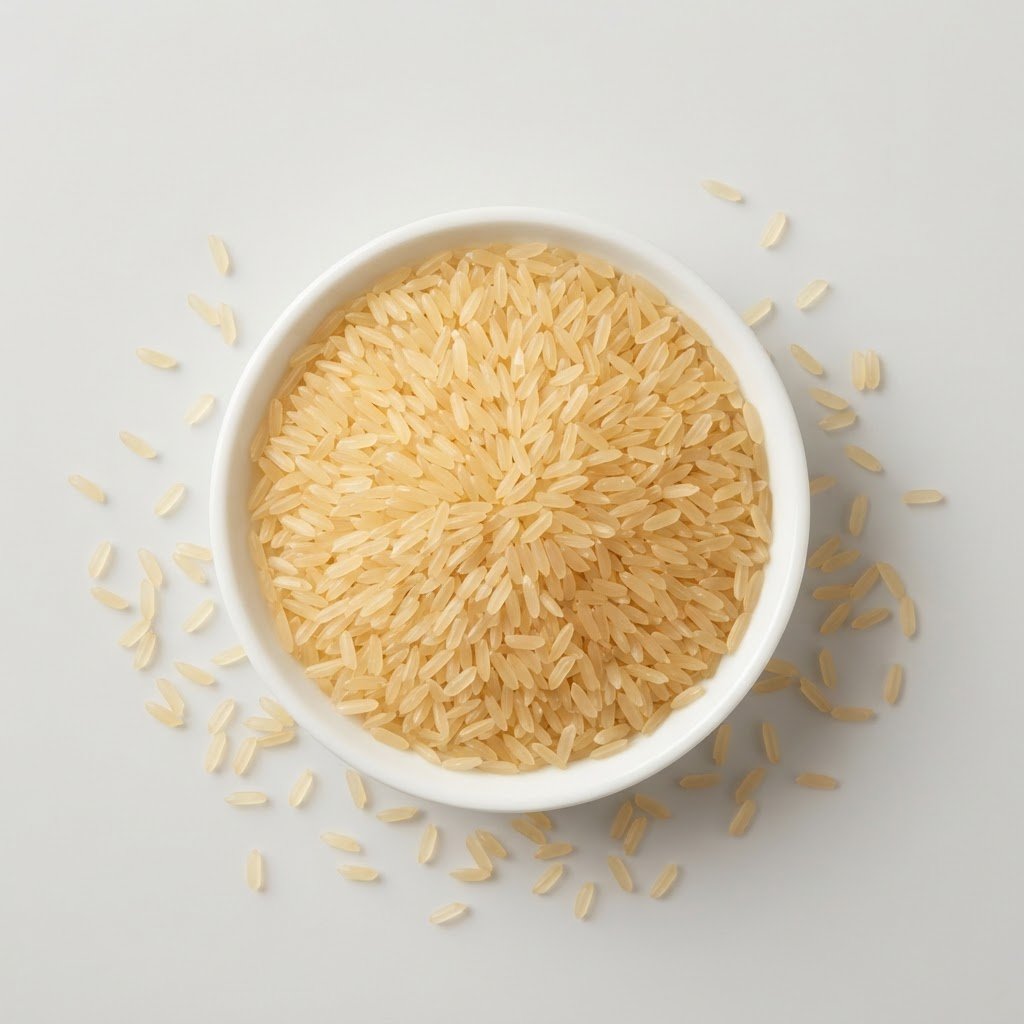
Parboiled rice is soaked, steamed and dried while it is still inside the husk, and only then milled. The steam moves part of the vitamins and minerals out of the bran and into the grain. It also sets the starch, and that is what makes the grain hard. The grain comes out of the mill harder than white rice, pale gold rather than chalk white, and it stays separate in the pot instead of collapsing into it.
Sella is the same thing under a different name. Across Pakistan, the Gulf and South Asia the word for parboiled rice is sella, and the trade uses the two interchangeably: a mill will quote you IRRI-6 Sella and IRRI-6 Parboiled and mean one product. In the United Kingdom the same rice reaches the supermarket shelf as easy cook rice, and the ingredient line on the back of the bag reads parboiled long grain rice. Three words, one grain.
The difference a buyer actually feels is against white rice. White long grain is milled straight from paddy, with no steam stage. It cooks faster, takes up more water, and breaks more easily in a 40kg sack that has crossed an ocean. Parboiled long grain rice takes longer to cook. In return, the grains hold their shape through a long service. They do not go sticky when a pot is kept warm. And fewer grains break on the way to you.
Every variety on this page is also sold white, and for a lot of buyers white is the right answer. If you are buying for a market that wants the softer, faster, whiter grain, go to IRRI-6, PK-386, IRRI-9, KS-282, C-9 or Super Fine and buy the white. This page is for the parboiled version of the same six.
One more point decides many orders, and no supplier puts it on a page. A harder grain with a lower free-starch surface keeps better. In a hot warehouse, parboiled long grain rice keeps better than the white version of the same variety. It goes stale more slowly and attracts fewer insects. That is why buyers choose it for markets where rice may sit for a season before it is sold.
Four Grades of Parboiled Long Grain Rice, 5% Broken to 25% Broken
The Rice Variety and the Broken Grade Are Two Separate Choices
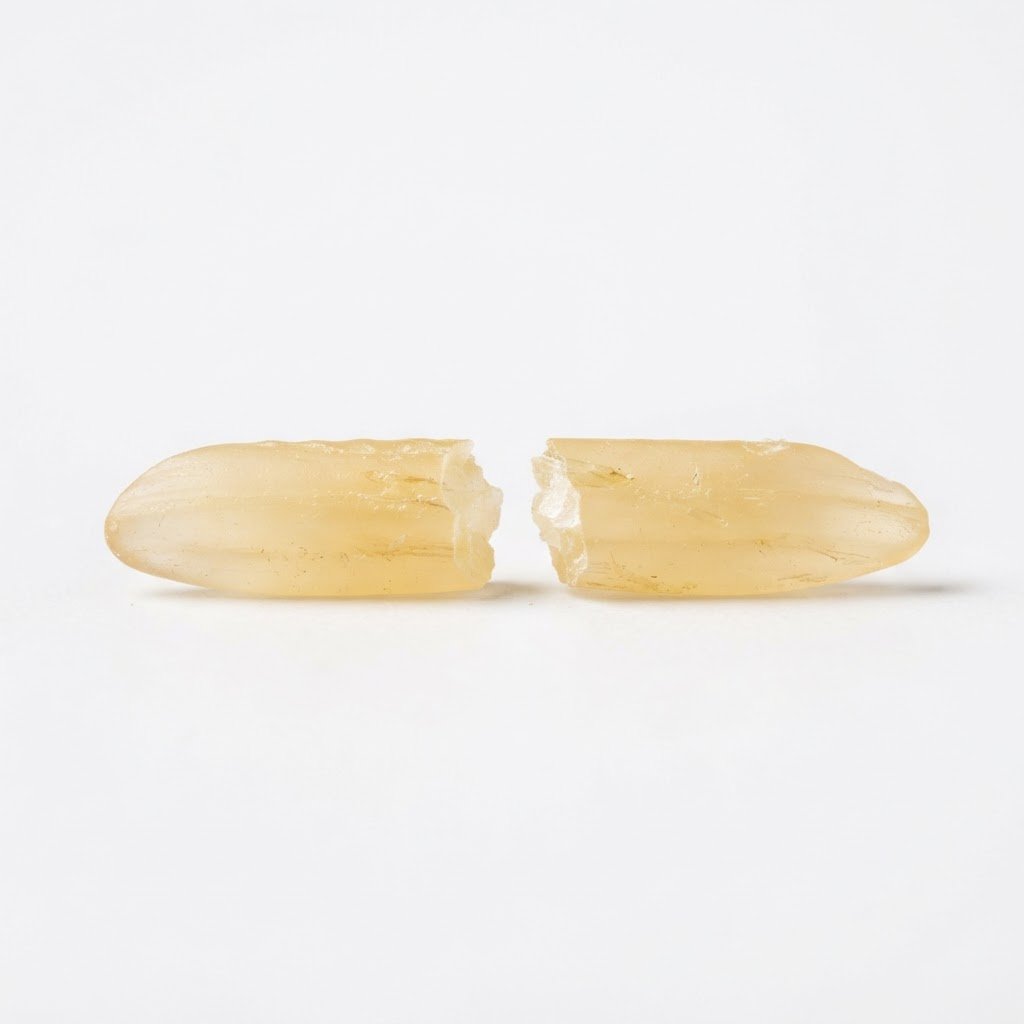
The broken percentage is the share of a bag of parboiled long grain rice made up of grains shorter than three quarters of a whole kernel, and it is quoted as a maximum, not an average. All six varieties on this page are supplied in all four grades.

5% Broken Rice
The grade for rice a customer looks at. The grains stay long and even on the plate, and that is what he is paying for when he picks a bag off a shelf. Buy it for printed retail bags, for hotel service, and for a pack in your own name.
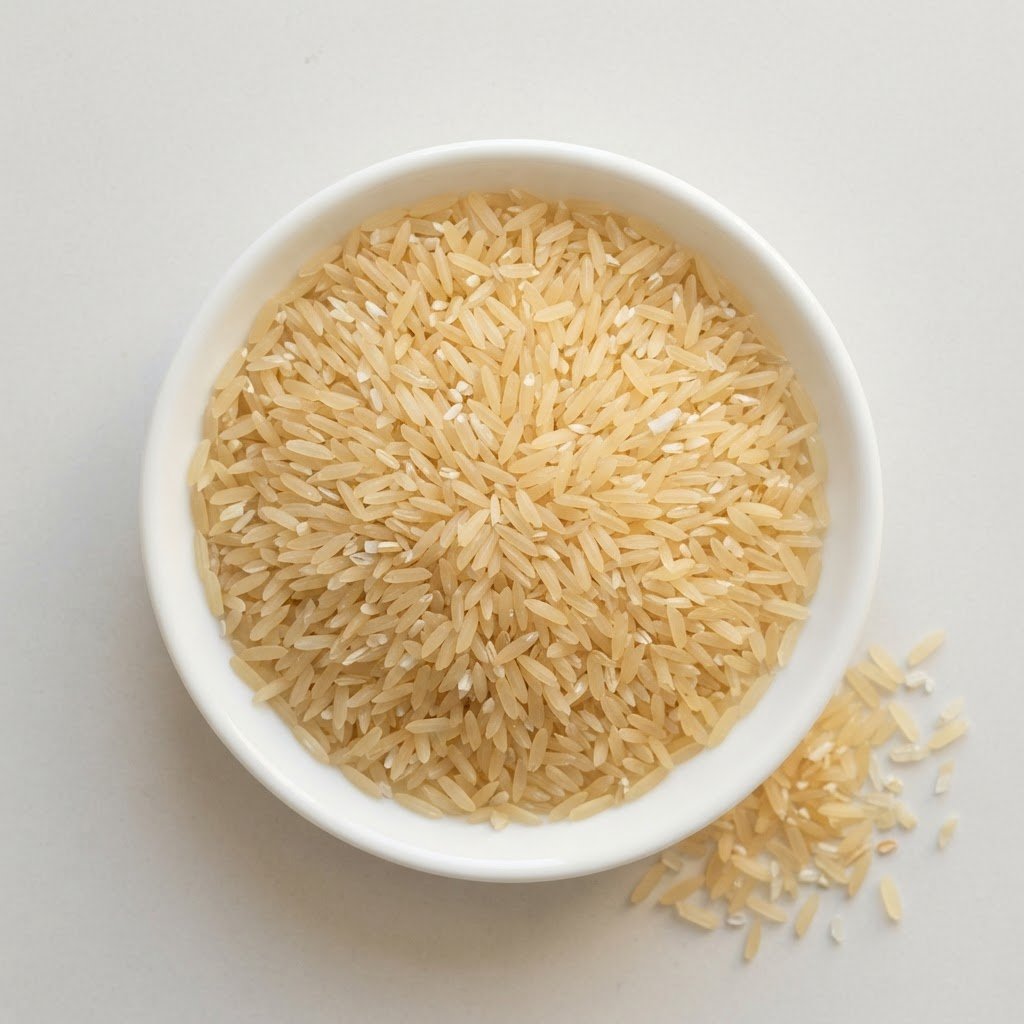
10% Broken Rice
The everyday catering grade. Served from a tray, nobody can tell it apart from 5% rice, and it costs less per tonne. It cooks the same way and takes the same time. Buy it if you run a buffet or a hotel restaurant and want that saving.
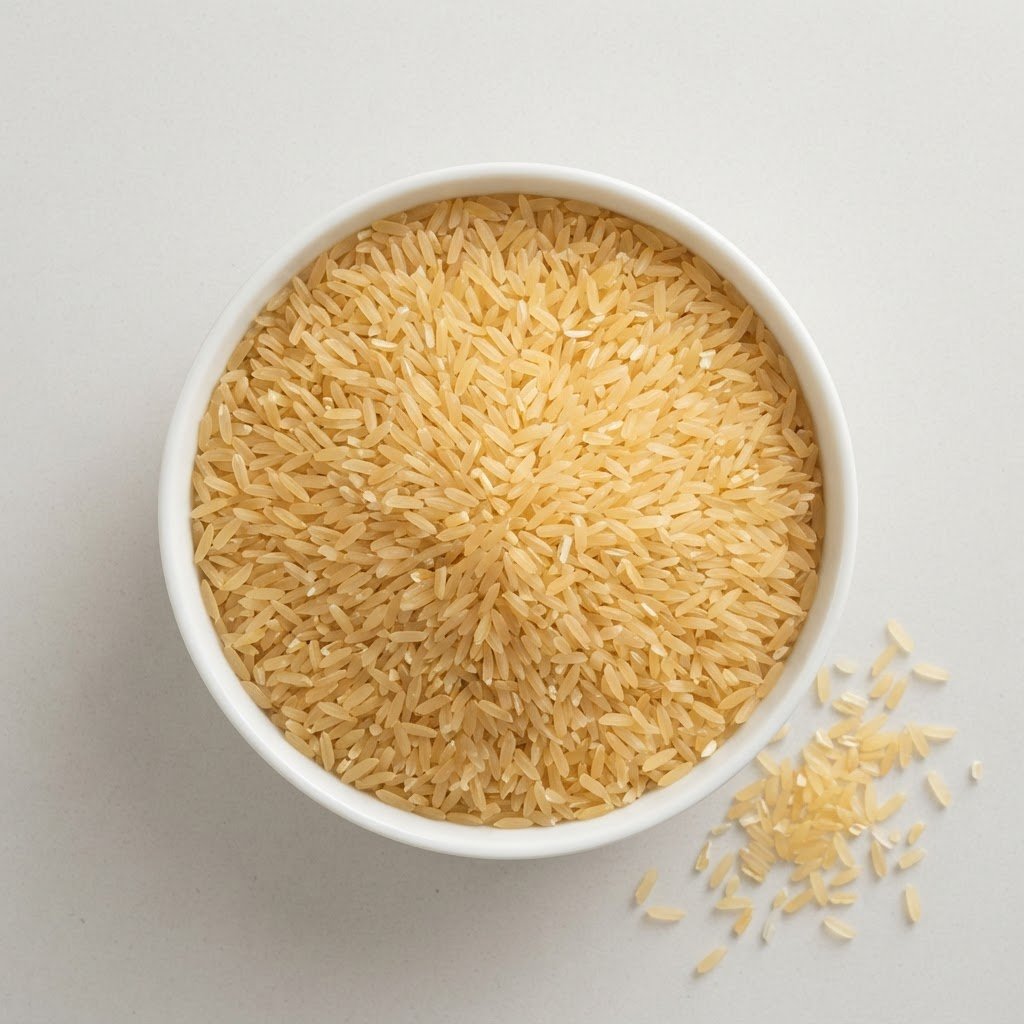
15% Broken Rice
The grade that feeds large numbers. Staff accommodation, site messes, schools and hospitals run on it because it cooks well in bulk, holds for hours in a warm tray, and costs less than the retail grades. It comes in 25kg and 50kg sacks.
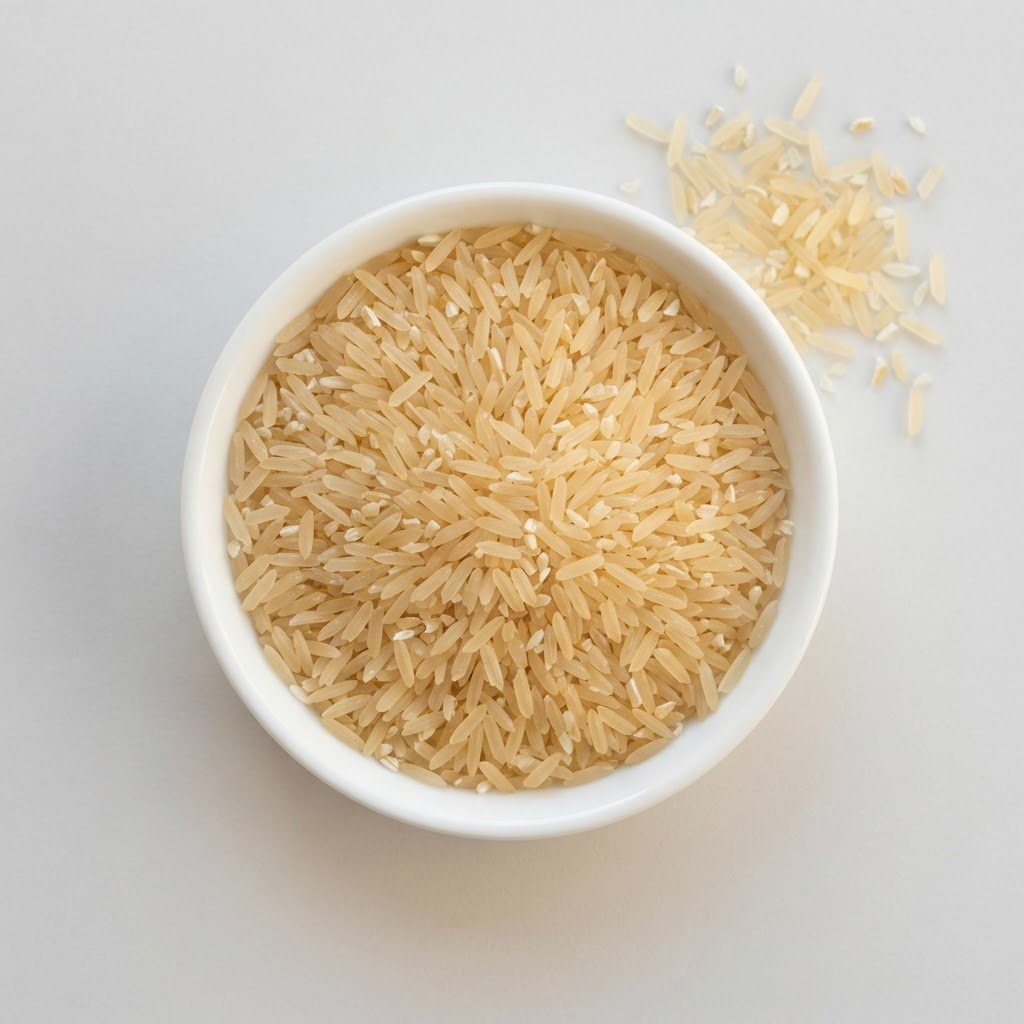
25% Broken Rice
The lowest cost per tonne of the four grades. It goes into stew, jollof and pilau, where the sauce is what people taste and the look of the grain does not matter. This is the grade that moves by the container through Lagos, Cotonou and Tema.
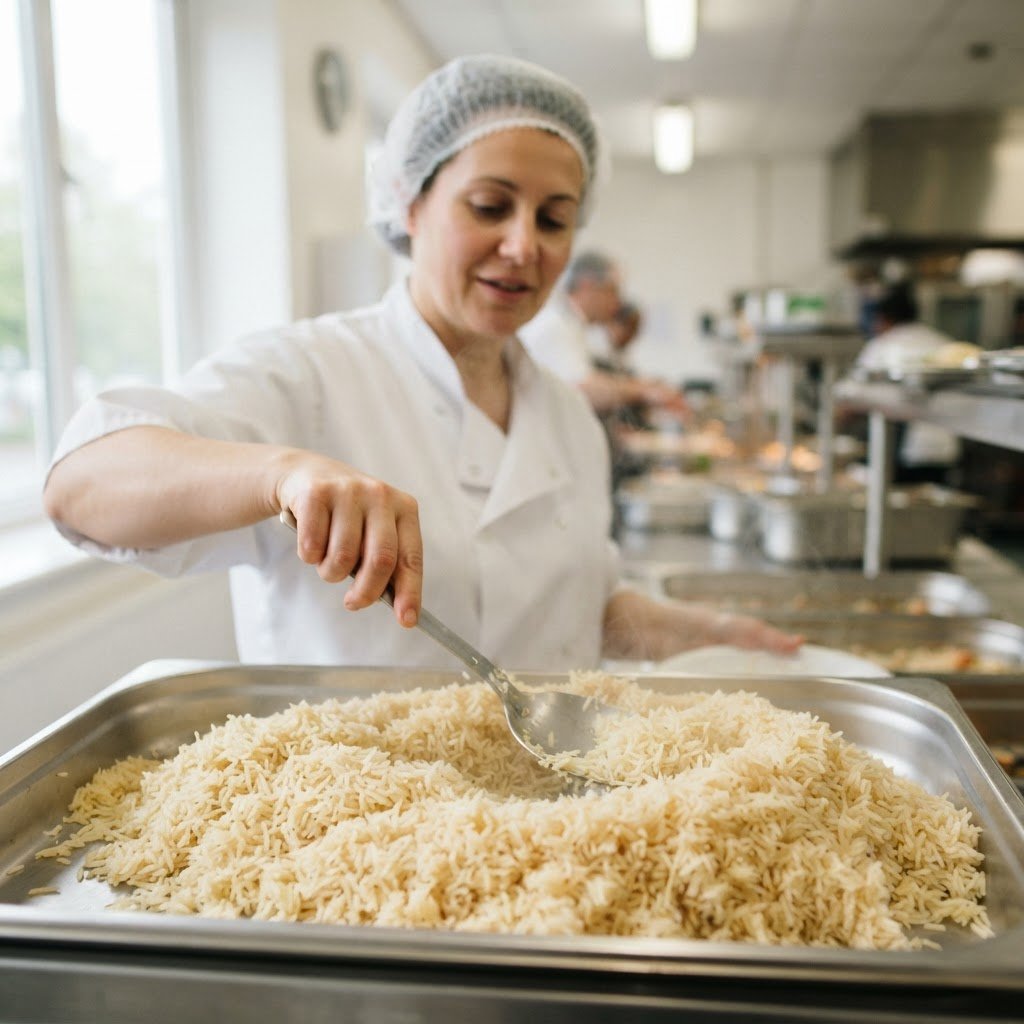
Six Pakistani Long Grain Rice Varieties, 6.0mm to 7.4mm, No Aroma
Longest Grain First, and What Each Rice Is Used For
Every shipment of parboiled long grain rice comes with a certificate of analysis against the figures below, and the grain length is the figure buyers check first.
| Variety | Average Grain Length | Most Ordered Grade | Aroma | Also Known As | Price Band | Bought For |
|---|---|---|---|---|---|---|
| PK-386 Parboiled Rice | 7.4mm | 5% and 10% | None | PK386 Sella | Premium | Retail packs and hotel plates |
| Super Fine Parboiled Rice | 7.0mm | 5% | None | Super Fine Sella | Mid | Qatar and GCC retail shelves |
| KS-282 Parboiled Rice | 6.8mm | 5% and 10% | None | Kala Shah Kaku Sella | Premium | Own-brand packing and UK easy cook |
| IRRI-9 Parboiled Rice | 6.8mm | 15% and 25% | None | IRRI-9 Sella | Value | Canteens and large kitchens |
| C-9 Parboiled Rice | 6.5mm | 10% and 15% | None | C-9 Sella | Mid | East African wholesale and canteens |
| IRRI-6 Parboiled Rice | 6.0mm | 15% and 25% | None | IRRI-6 Sella, Irri6 Parboiled | Value | West African container trade |
Price bands are relative to each other within this range of long grain rice. They are not comparable to the bands on our basmati pages, where the whole range sits higher.
Most of what a spec sheet lists does not change between these six kinds of rice, so it is stated once. Moisture is held at 14% maximum. Foreign matter is 0.1% maximum and paddy grain 0.2% maximum. Chalky grain runs to 4% maximum and damaged, shrivelled and discoloured grain to 1.5% maximum. Everything is double silky polished and colour sortexed before it is bagged, and every variety is supplied in 5%, 10%, 15% and 25% broken whatever the table above says is most ordered.
The two figures that do move are grain length, which is in the table, and the broken percentage, which is the grade you choose. Crop year is stated on every batch rather than promised in advance, because no mill can promise current crop in every month of the year. Ask for the certificate of analysis before you order and we will send the one from the batch you would actually receive.
Parboiled Rice Holds Its Shape Through a Four-Hour Service Without Going Sticky
Four Reasons Kitchens Choose Parboiled Rice and Keep Buying It

The Rice Survives Being Held Warm
The starch is already set, so it does not keep leaking out of the grain in a warming tray. At the end of a long service, parboiled long grain rice in that tray looks much the same as it did at the start. White rice in the same tray turns to paste.
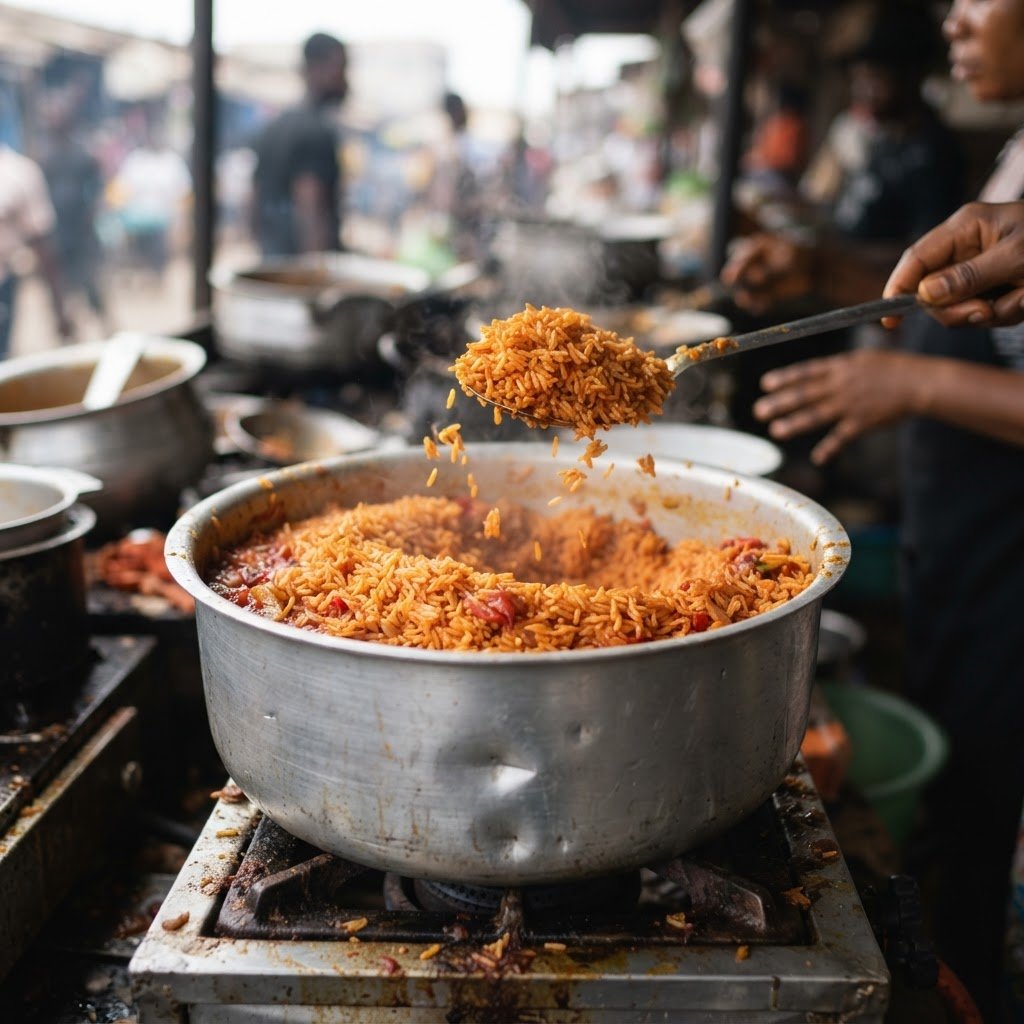
The Rice Takes a Wet Sauce Without Collapsing
A harder kernel absorbs a tomato stew rather than dissolving into it, which is exactly why parboiled long grain rice is the foundation of Nigerian jollof and of pilau across East Africa. The grain takes up the sauce, and the grains still stay separate.
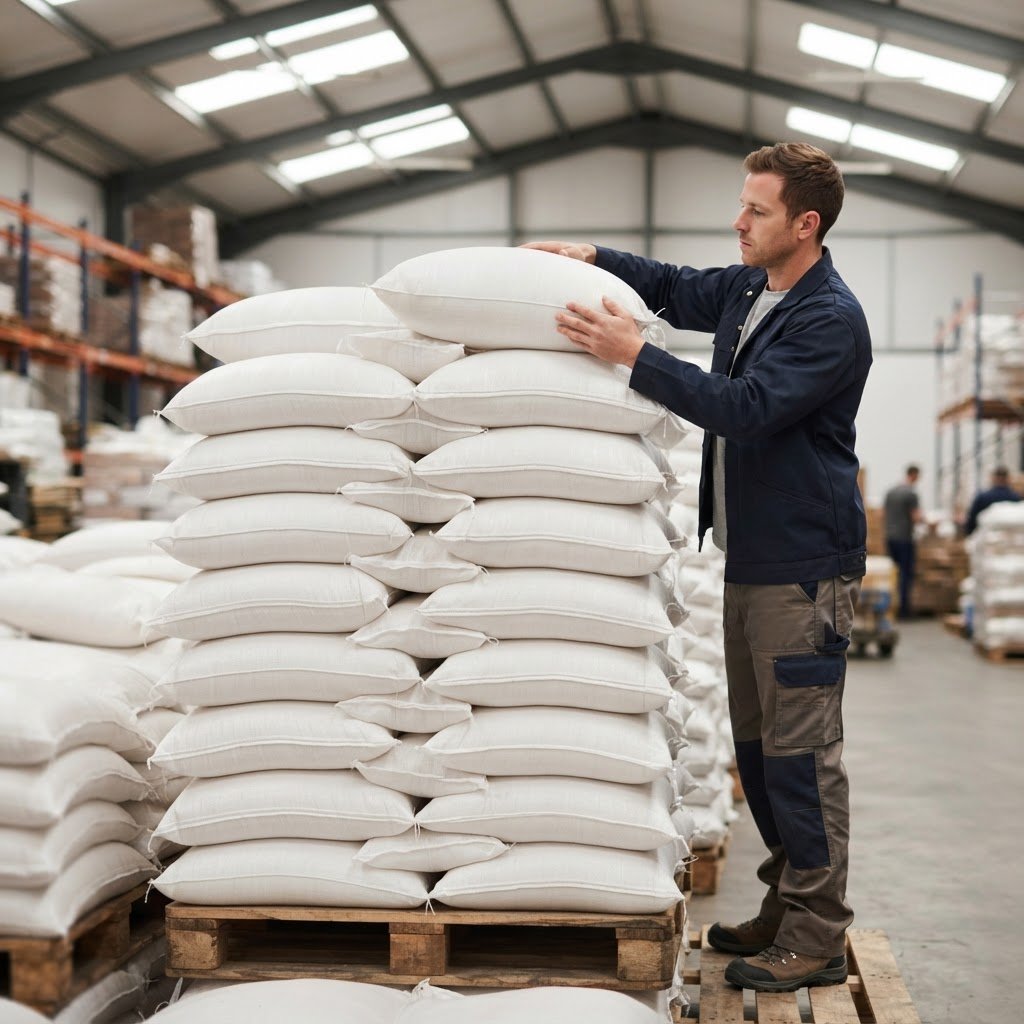
The Rice Arrives With Fewer Broken Grains
Steaming in the husk hardens the parboiled kernel before it is ever milled, so the grain survives the milling, and then survives a 50kg sack stacked nine high and handled four times. The grade you paid for is closer to the grade that reaches your store.
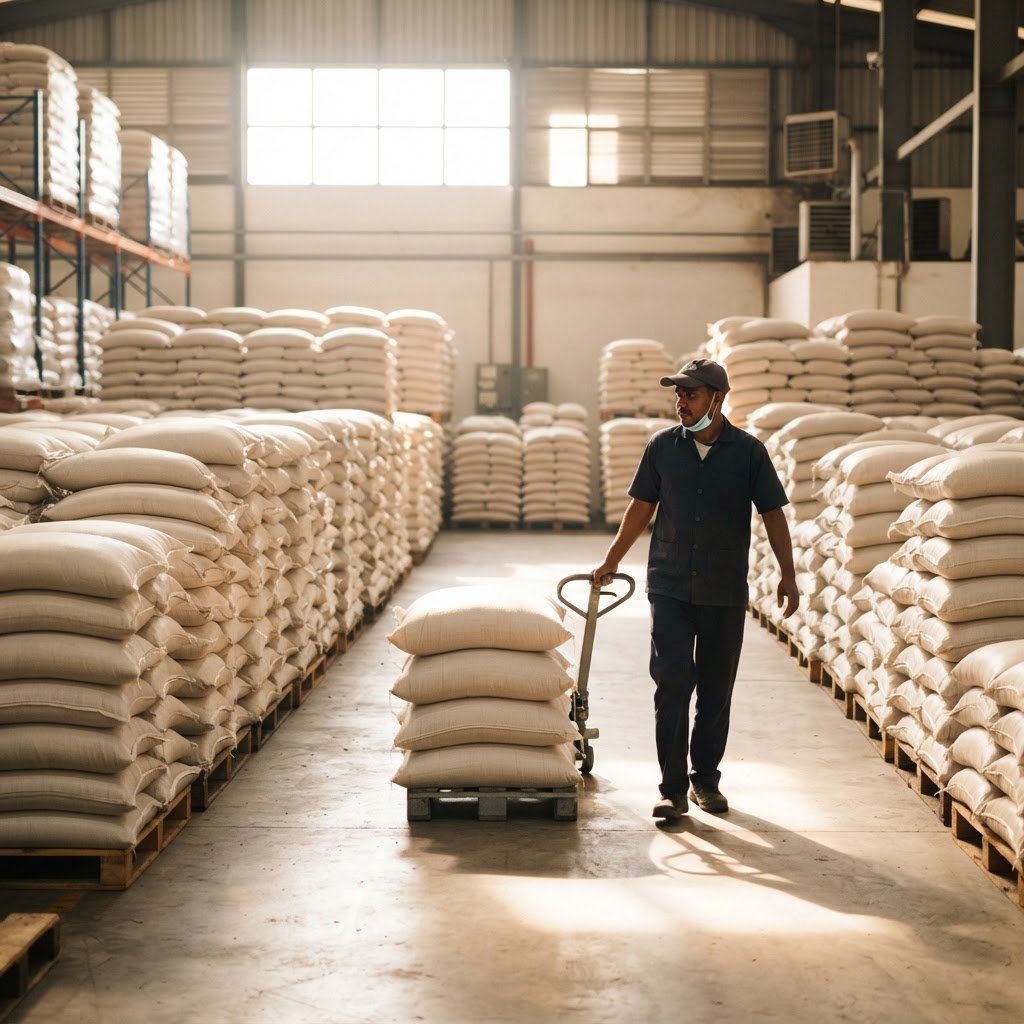
The Rice Keeps Longer in a Hot Warehouse
There is less loose starch on the surface, so there is less for insects and less to go stale. Parboiled long grain rice keeps better in a warehouse in Doha or Mombasa than white rice does. If you hold stock for a season, that is the main reason to buy it.
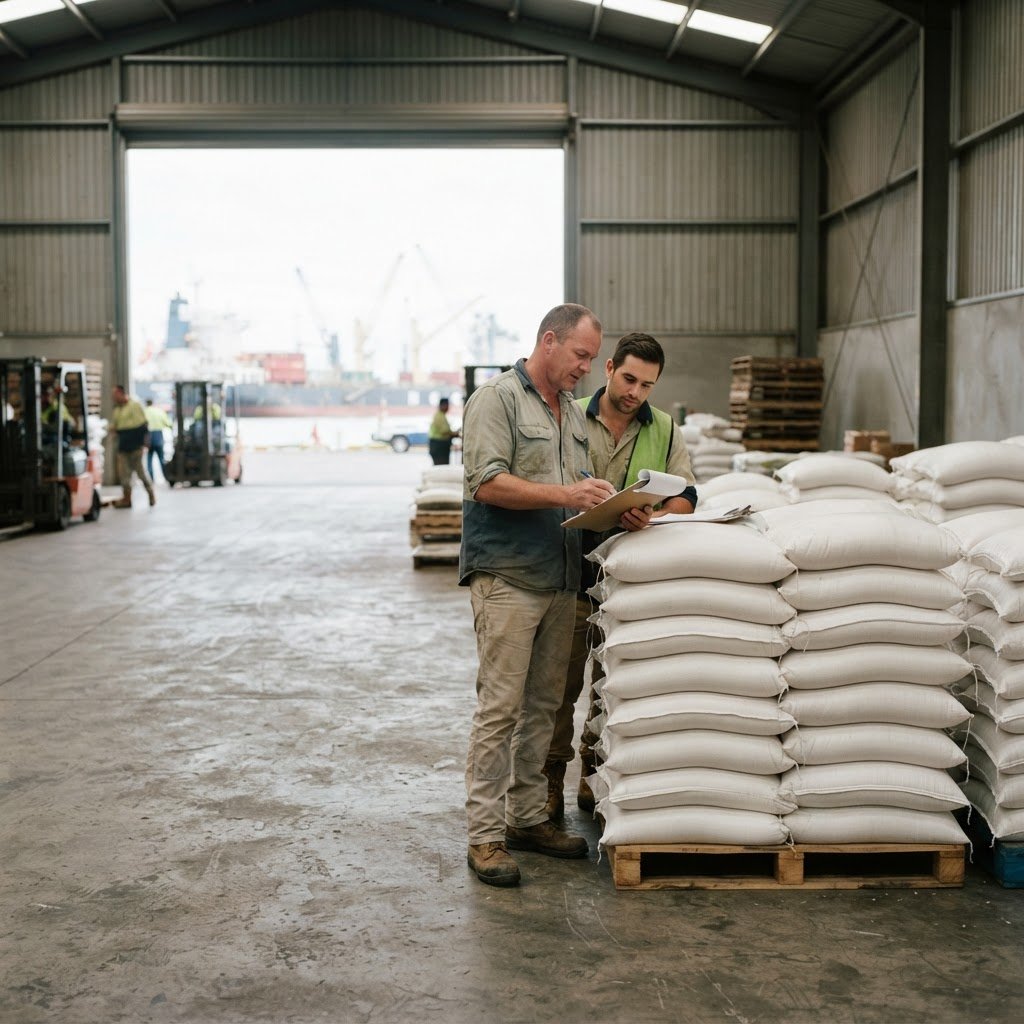
From a Pallet of Rice in Doha to Forty Containers Through Lagos
Six Kinds of Rice Buyer, Six Different Bags and Ways to Buy
Parboiled long grain rice moves in tonnes, not in cases. These six take most of it, and each buys for a different reason. Some need the same grade every month, some need the lowest landed cost, and some need a bag with their own name printed on it.

Parboiled Long Grain Rice Import and Distribution
Importers and distributors moving full containers of parboiled long grain rice to a named port, then breaking them across their own customers. They need documents before the vessel sails and the price fixed at order. Most run a monthly volume.
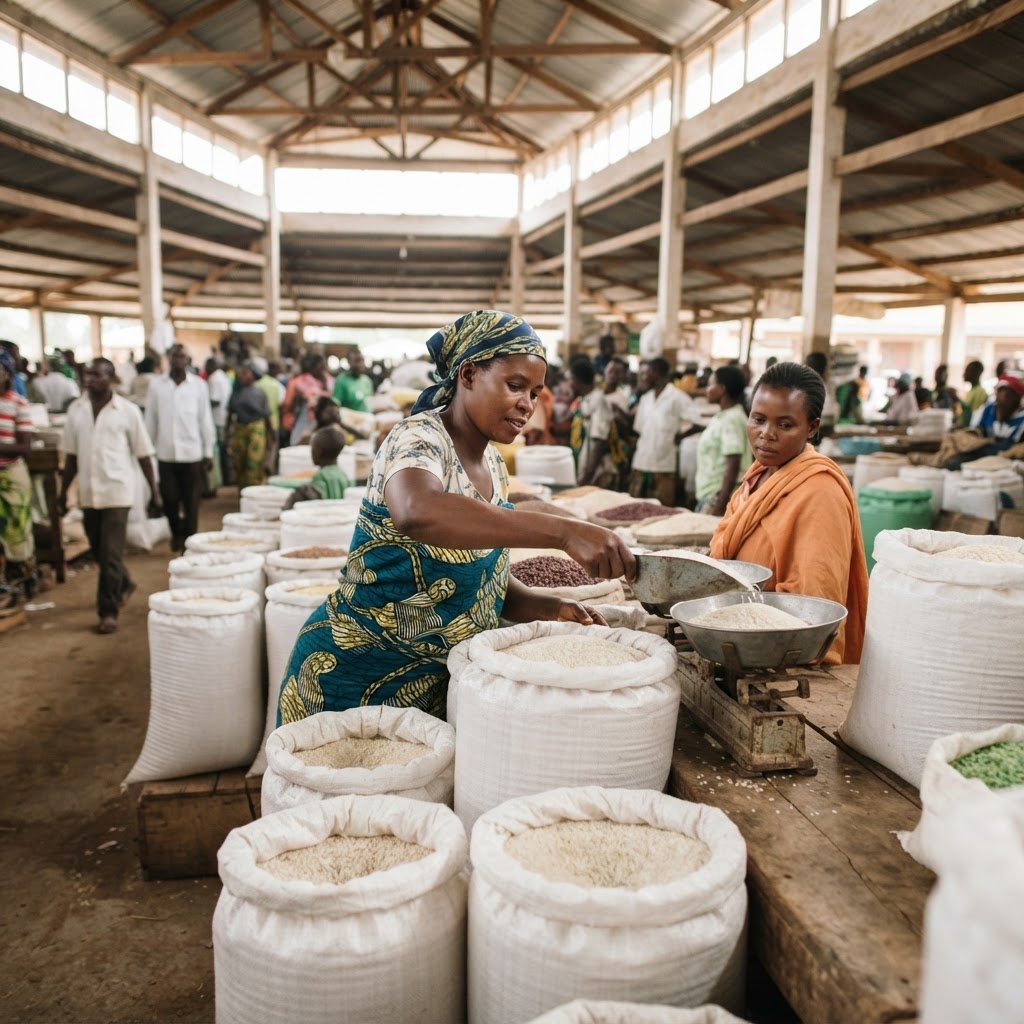
Parboiled Rice Wholesale and Cash and Carry
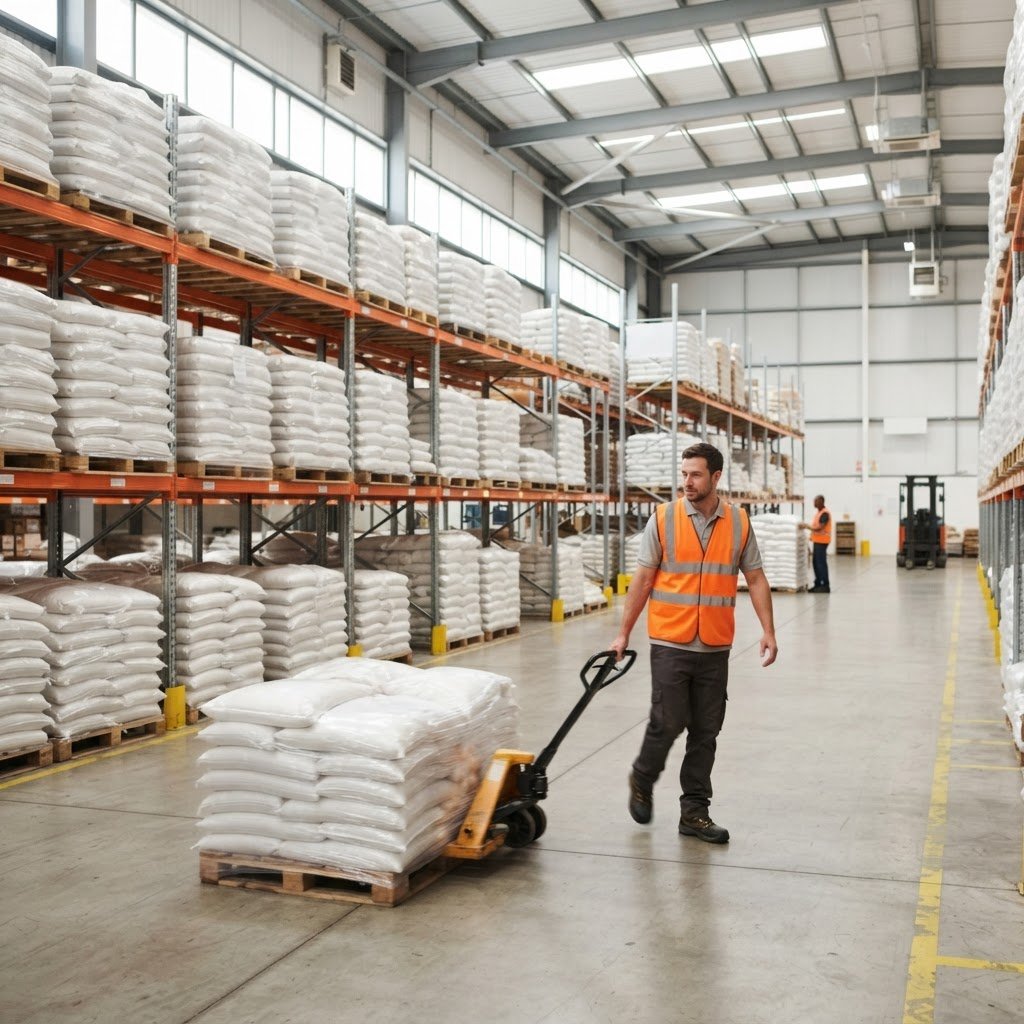
Trade counters and cash and carry depots selling several grades at once, so they buy mixed pallets of parboiled long grain rice rather than one variety. It moves off a forklift onto the floor in 25kg and 50kg sacks, out of our own Qatar stock.
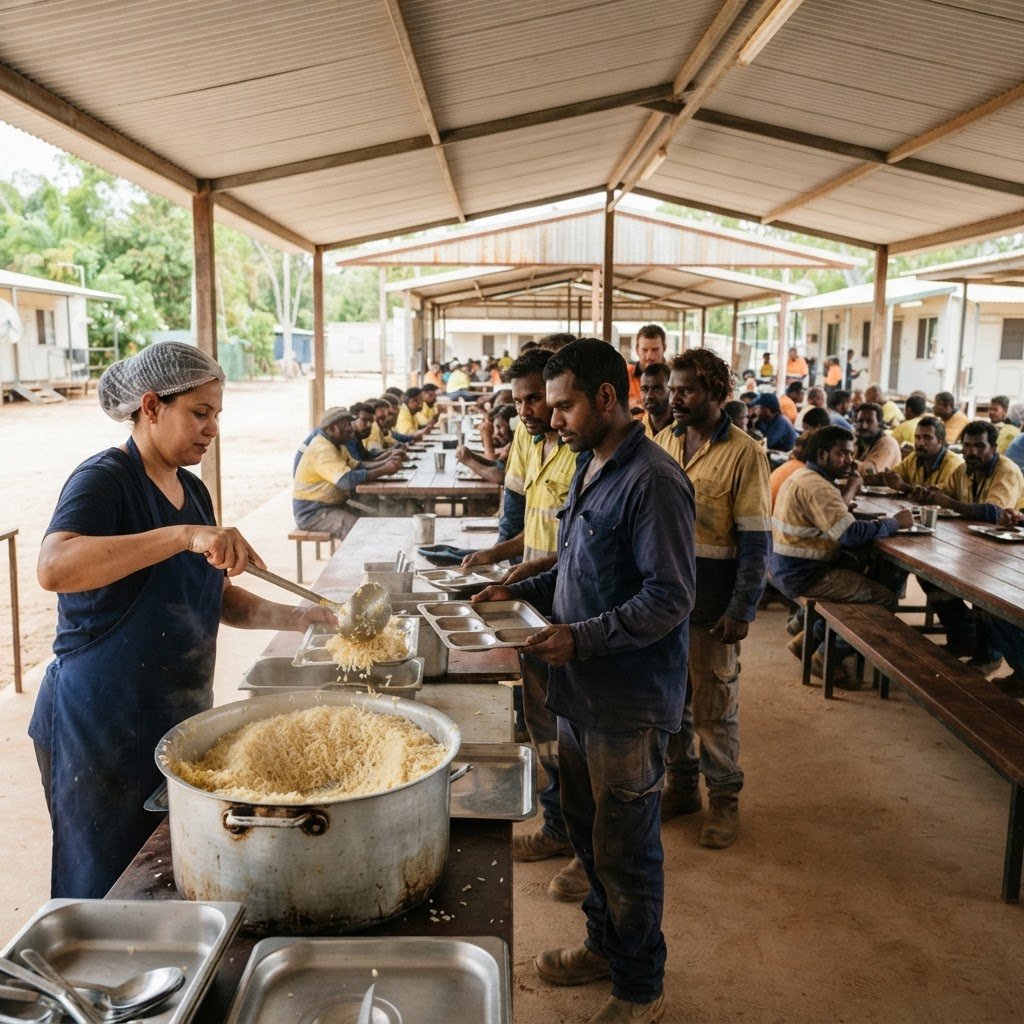
Contract and Institutional Rice Catering
Staff accommodation, site messes, schools and hospitals, cooking fixed menus to a fixed budget. They need the same parboiled long grain rice in month nine that they approved in month one, the same bag each month, and a price that holds all year.
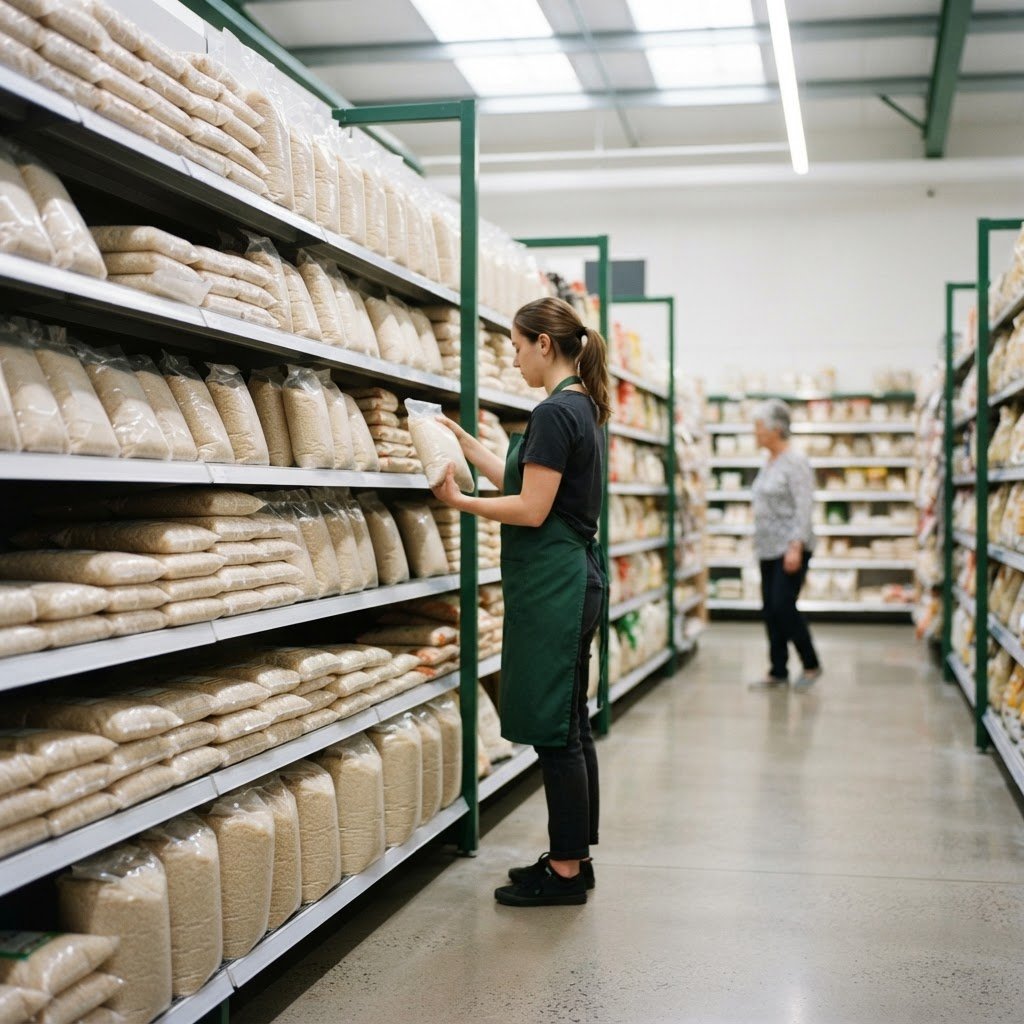
Retail Shelves and Own-Brand Rice Packing
Supermarkets, grocery chains and repackers selling parboiled long grain rice under their own name in printed 1kg, 2kg, 5kg and 10kg bags. Artwork is signed off before the rice is packed, so printing never holds up an order or a container.
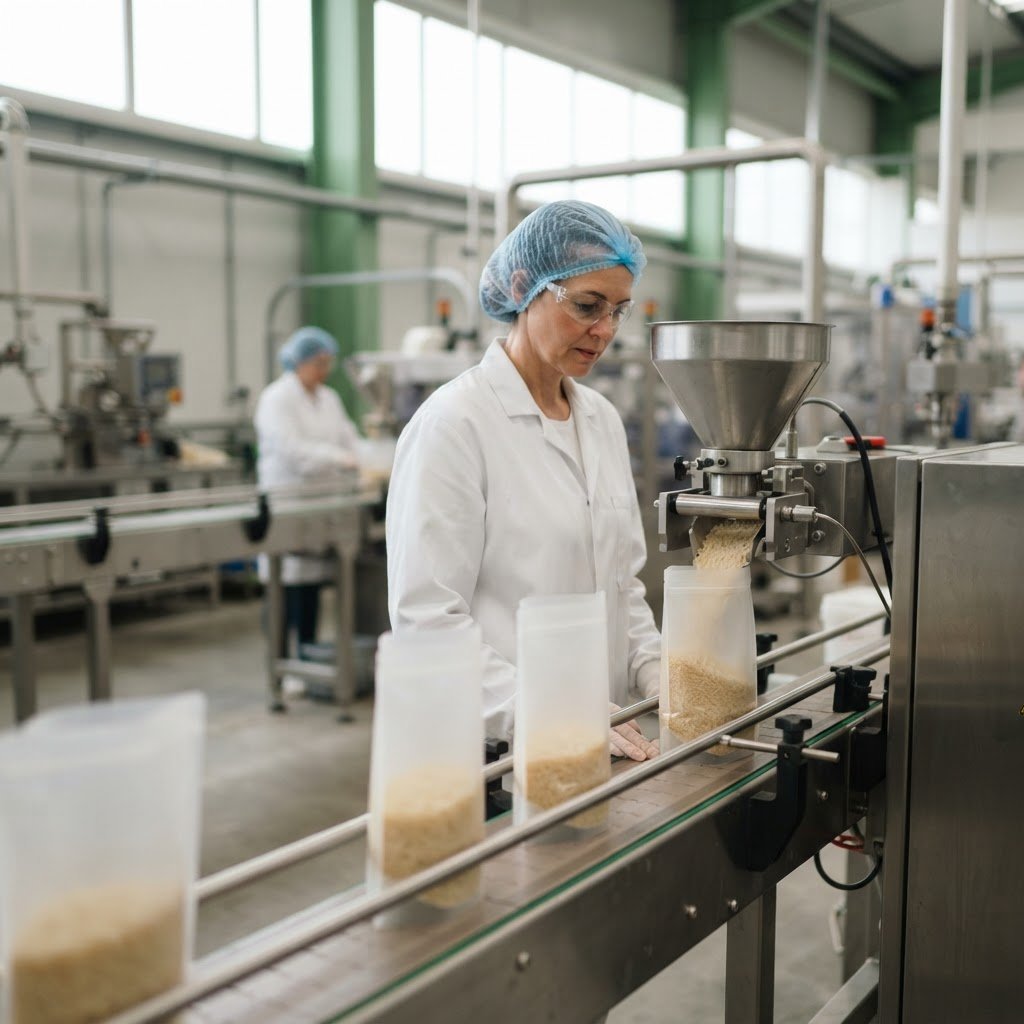
Rice Manufacturing and Ready Meals
Ready meal lines, retort pouches and frozen rice plants, buying parboiled long grain rice by the tonne on a yearly contract and calling it off in batches. They need the same bag from the same mill, and warning before the crop changes over.
Hotel, Restaurant and Delivery Rice Kitchens
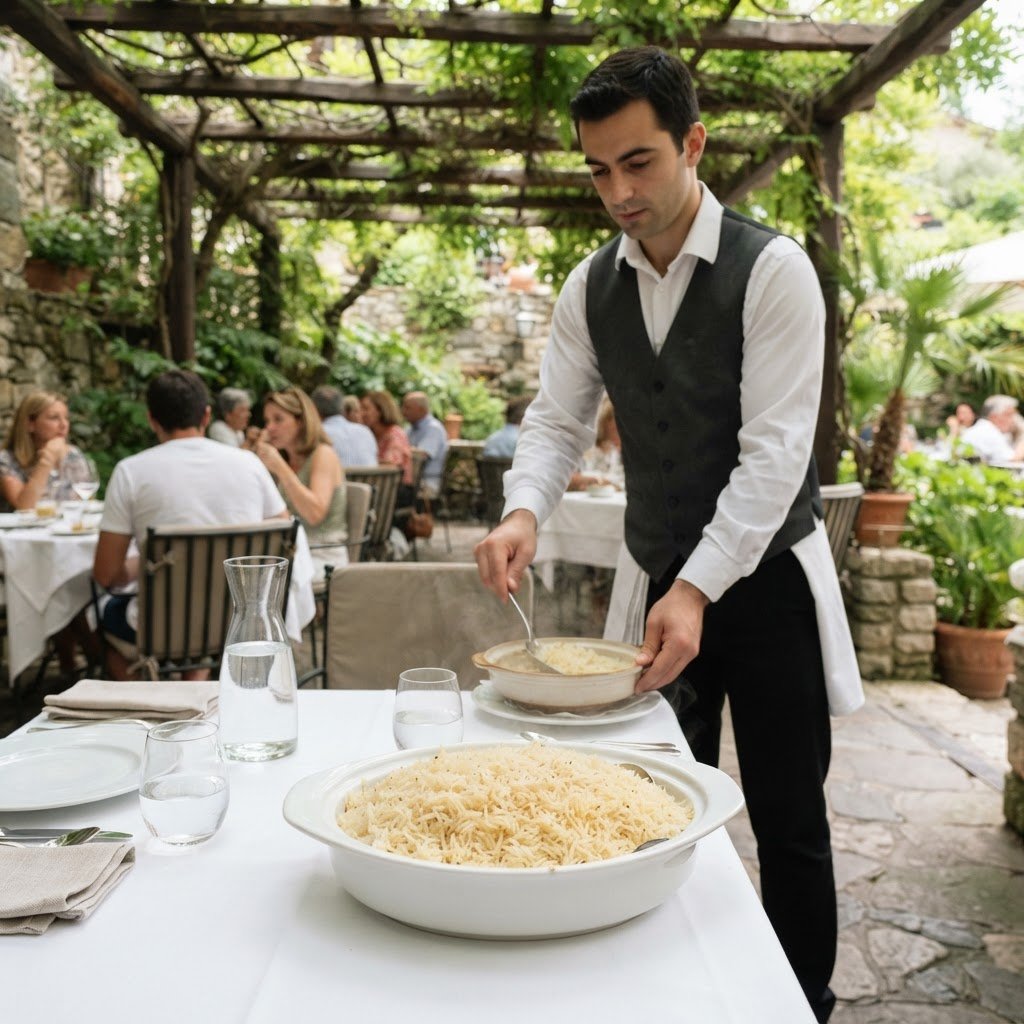
Hotel banqueting, restaurant groups and delivery kitchens, buying smaller volumes of parboiled long grain rice at higher grades and needing it when the chef asks, not when a vessel docks. In Qatar we deliver weekly from our Al Wakra stock.

Rice Shipped to Doha, Lagos, Abidjan, Mombasa, Beira and the UK
Six Rice Markets, and What Each One Buys
The grade of parboiled rice, the bag and the paperwork change from one destination to the next, and it is usually the paperwork that decides how long a first shipment takes.

Qatar and the Gulf (GCC)
In Qatar the rice is already here. We hold parboiled long grain stock at Birkat Al Awamer in Al Wakra, imported and cleared, so a Doha caterer or wholesaler orders a pallet and it moves that week. Mostly 15% in 25kg and 50kg sacks for staff messes and site catering, 5% in printed retail bags for the shelf. Into Saudi Arabia, the UAE, Oman, Kuwait, Bahrain, Yemen and Jordan we ship by the container.

Parboiled Rice in Nigeria
The largest rice import market in the world, and the one with the most paperwork in front of it. Rice comes in through Apapa and Tin Can Island by sea, not overland, and your Form M has to be open before we ship. We supply 25% and 15% in 50kg sacks, with NAFDAC and SON documentation prepared with the shipment rather than chased after it. Tell us your Form M number and we will quote against it.

Parboiled Rice in West Africa
Abidjan and Tema take the most, and Conakry, Lome, Cotonou and Douala all run on the same grade: 25% broken in 50kg sacks, full containers, priced to the tonne landed. Guinea now imports more parboiled rice than Ghana does. Transit from Karachi to West Africa runs four to six weeks depending on the port, so we quote a sailing rather than a lead time, and the documents go out before the vessel does.

Parboiled Rice in Kenya and East Africa
Mombasa is ten to fourteen days from Karachi. That is quicker than any other African port we ship to, and quicker than rice routed round the subcontinent. From there it goes inland to Uganda, South Sudan and eastern DRC. Kenya takes 5% in printed bags for the supermarkets and 15% in 50kg for the canteens. Dar es Salaam serves Zambia, Malawi, Rwanda and Burundi, and Somalia takes PK-386.

Parboiled Rice in Mozambique and Southern Africa
Rice is Mozambique’s second largest import after fuel, and since February 2026 it moves through operators registered with the ICM. You hold the registration and we supply against it, which is how it already works for the larger importers. Pre-shipment inspection is by Intertek, which is the body we use anyway. Beira feeds Zimbabwe, Zambia and Malawi inland; Maputo and Nacala take the coastal trade.

Parboiled Rice in the United Kingdom
In Britain this parboiled rice is sold as easy cook long grain, and the ingredient line on the back of every pack reads parboiled long grain rice. We supply the wholesalers and own-brand packers behind that shelf in 5% for retail bags and 15% for 15kg foodservice sacks, into Felixstowe, Southampton and London Gateway. EU border interceptions of Pakistani rice have fallen year on year since 2024.
We also ship parboiled long grain rice to Tanzania, Benin, Togo, Cameroon, South Africa, Angola and Guinea. Where a market needs an import licence, we supply the licensed importer. We do not ask you to find one. If your country is not named here, ask. If you are buying the finer cut, that is our 100% broken rice.
What Do You Gain and What Do You Lose With More Broken Rice?
Cooked Rice Yield, Cost Per Plate, and How the Rice Looks

Moving from 5% broken to 25% broken does not change the variety, the origin, the moisture or the way the rice is milled. It changes one thing. It changes how many grains in the bag are broken. Everything else follows from that, and it is worth more to some buyers than to others.
The first is cooked yield, and it moves the opposite way to most people’s instinct. Broken pieces have more cut surface, so they take up water faster and swell sooner, and a pot of 25% broken reaches serving volume slightly ahead of the same weight of 5%. That is a real gain for a caterer costing by the portion. What it costs you is control: the fragments finish before the whole grains do, so the window between properly cooked and starting to break down is narrower and a distracted kitchen will overshoot it.
The second is what the plate looks like, and it is the only reason the premium on 5% exists. A bag with almost no fragments in it photographs well, fills a printed retail pack evenly, and reads as expensive on a shelf next to a bag that does not. Sell rice by the kilo to a household and that matters enormously. Serve it under a stew in a canteen, and nobody has ever noticed.
So the rule is simple. Buy the lowest broken percentage your customer will notice. A supermarket shelf and a hotel plate are worth 5%. A staff mess, a school kitchen and a site canteen are 15%, and the difference goes to your food cost rather than to the mill. West African wholesale runs on 25% because the rice is going into stew and the only thing that matters is landed cost per tonne. Tell us where it is going and we will tell you which one we would send.
Parboiled Rice in 1kg Bags to 50kg Sacks, or in Your Own Bag
Three Rice Bag Sizes, and We Print Your Bag First
The bag is chosen at order and filled at the mill, so parboiled long grain rice ships already packed for the shelf, the counter or the container it is going to.

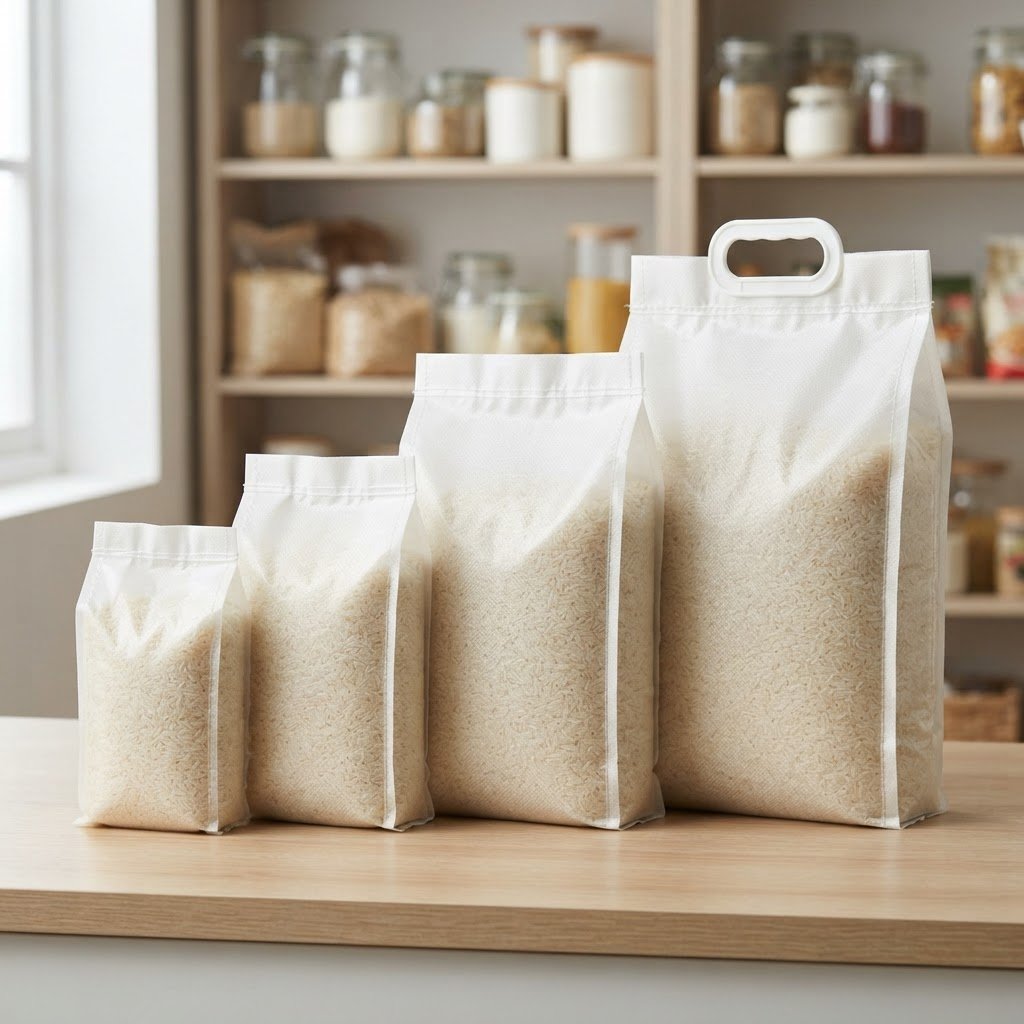
Retail Rice Bags: 1kg, 2kg, 5kg and 10kg
Printed laminated bags of parboiled long grain rice, with a handle on the larger sizes, barcoded and labelled for the market they are sold in. This is where 5% broken rice earns its cost, because a shelf bag is where a customer counts grains.
Catering Rice Sacks: 20kg and 25kg
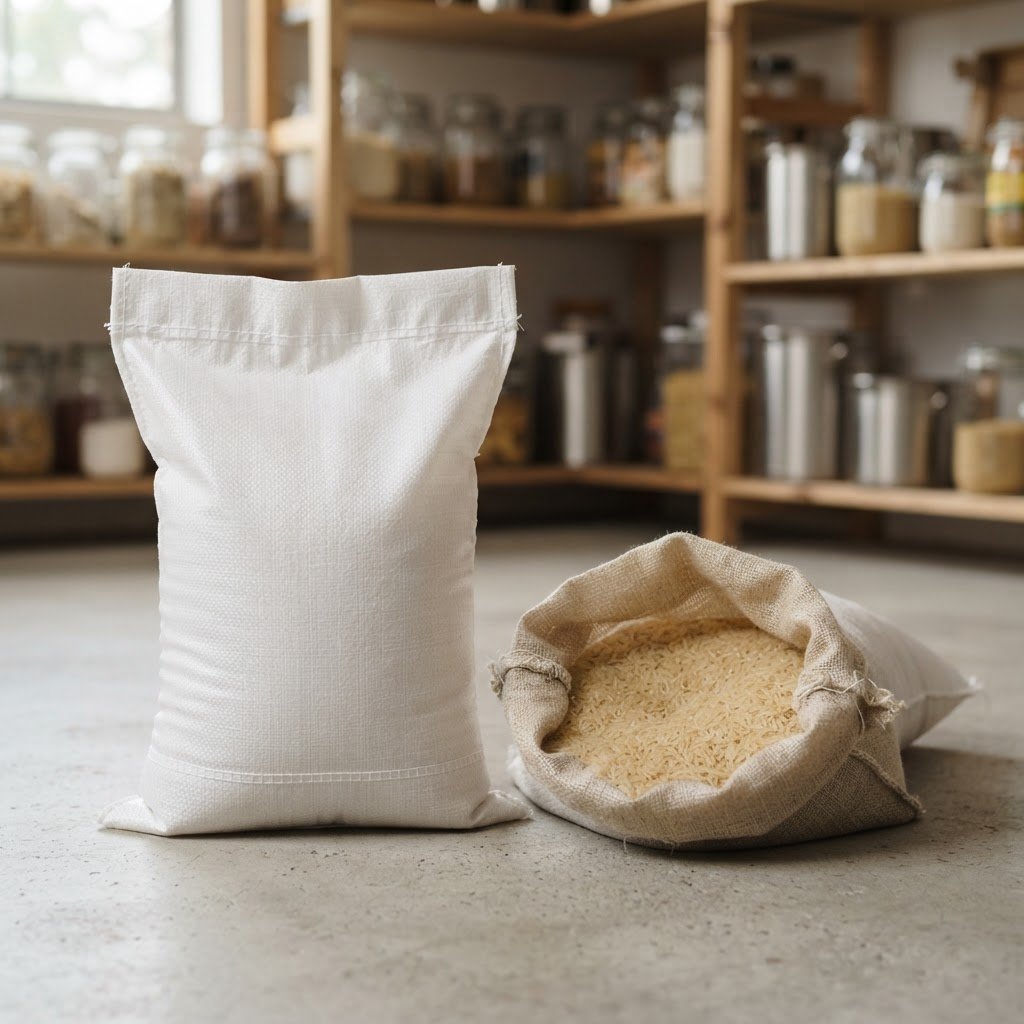
Woven polypropylene sacks of parboiled long grain rice with a stitched top, light enough for one man to lift onto a bench without a trolley. This is the bag staff messes, school kitchens and hotel stores buy, almost always in 15% broken.
Bulk Parboiled Rice Sacks: 40kg and 50kg
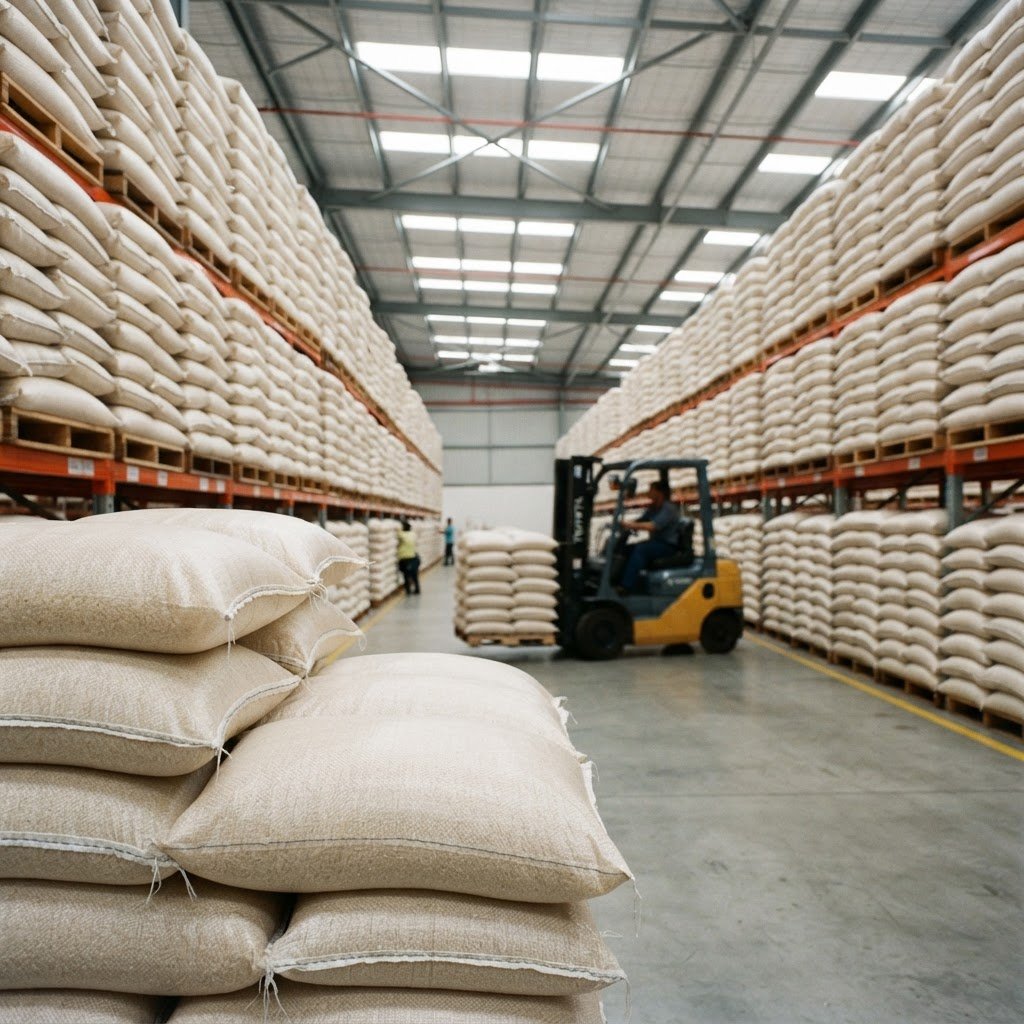
The container bag. Woven polypropylene, stitched, stacked and counted as we load it, and the bag a 20ft container of parboiled long grain rice is filled with. Every West African and East African wholesale order arrives in this bag.

Your Own Brand on the Rice Bag
Your artwork, your name and your market’s labelling rules, printed and then filled with parboiled long grain rice at the mill. Artwork is signed off before a single grain is packed, so printing never holds up a loaded container.
Every Rice Container Ships With Its Own Certificate of Analysis
The Rice Is Checked at the Mill and Again Before It Sails
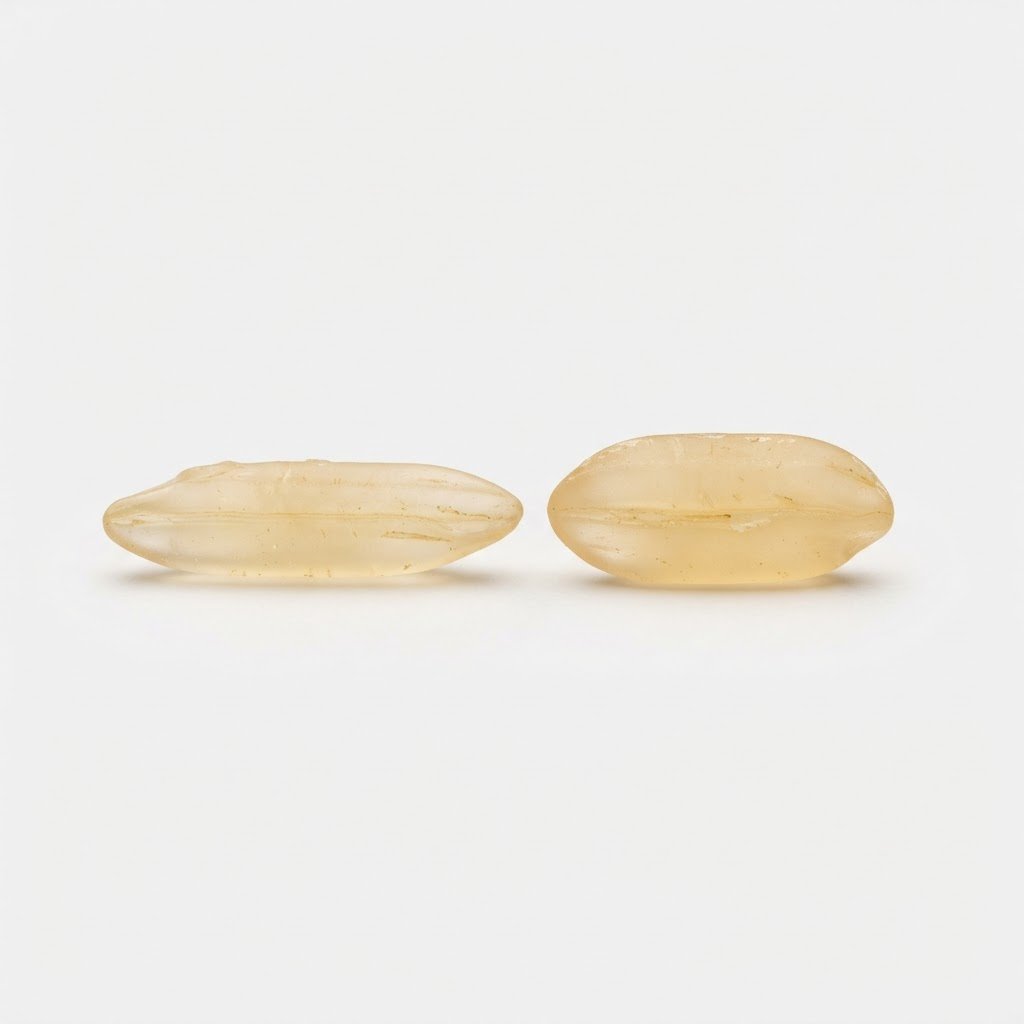
A spec sheet on a website is only a promise. What actually arrives is a batch of parboiled long grain rice, and the only thing that ties the two together is a document with that batch number on it and a laboratory behind it.
Four figures matter most on parboiled long grain rice, and they are the four we hold the mills to.

98% The Right Variety
If you order PK-386 parboiled rice at 7.4mm you should not find IRRI-6 at 6.0mm in the bag. Purity is checked on a drawn sample before the container is stuffed.

14% Maximum Moisture
Wet rice is heavy rice and it moulds in a hot store. Moisture is read at the mill and again before loading, because a container crossing the Indian Ocean does not dry out.
5% to 25% Broken Rice
The rice grade you ordered is the grade on the certificate, stated as a maximum, not an average. A bag sold as 15% that runs at 22% is the most common complaint in this trade.
Double Silky Polished Rice
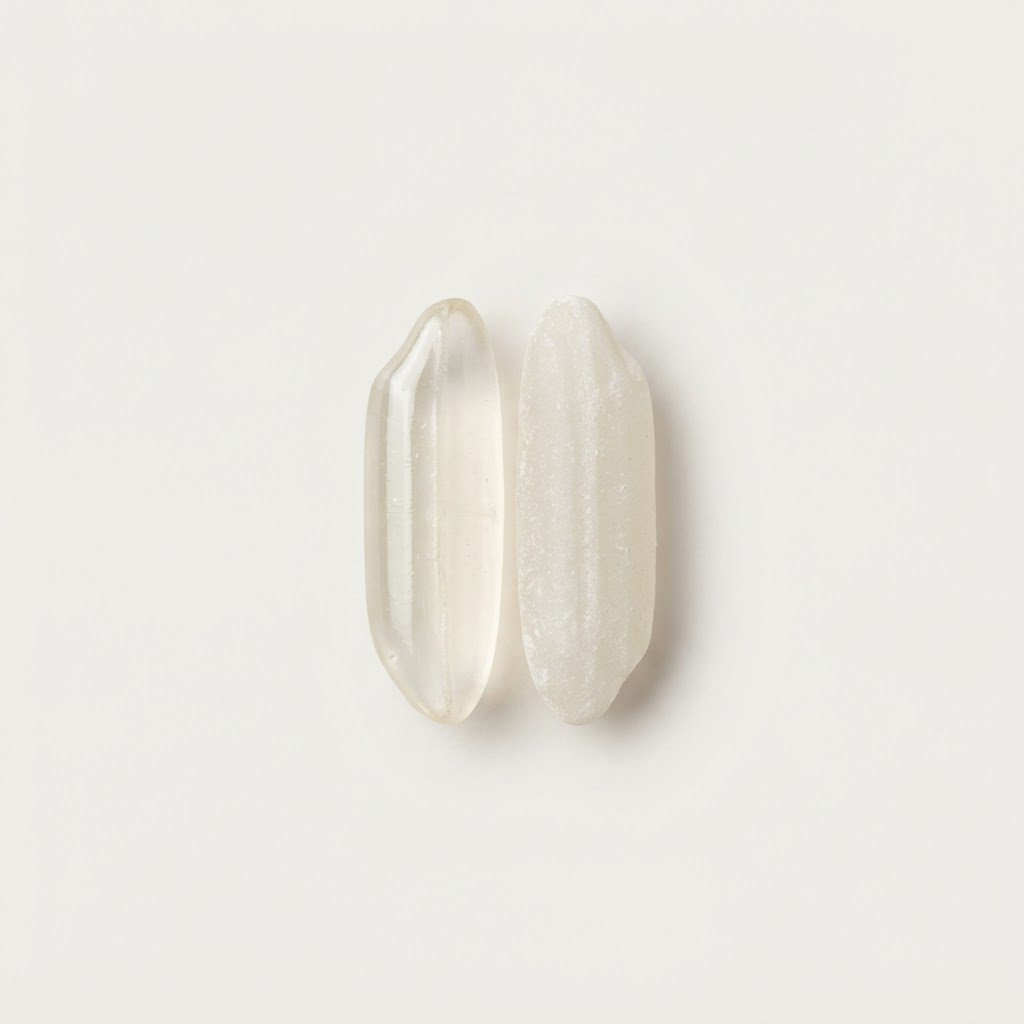
Two passes through the polisher rather than one, which is what gives parboiled long grain rice its even glassy finish instead of a dull floury bloom on the surface.
Colour Sorting Is What Separates a Good Bag of Rice From a Cheap One
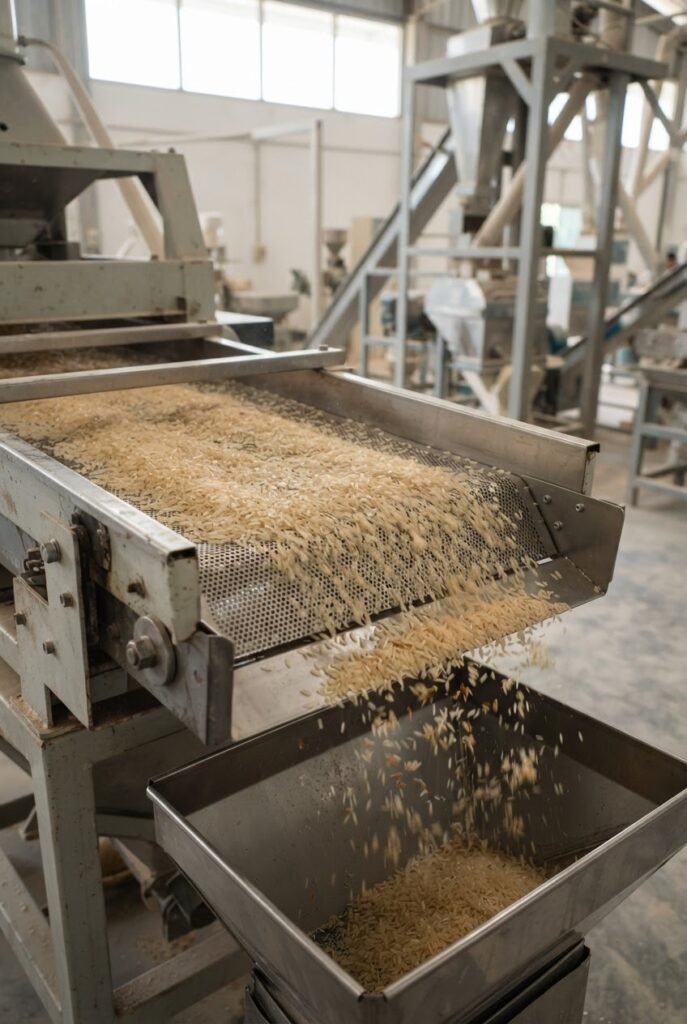
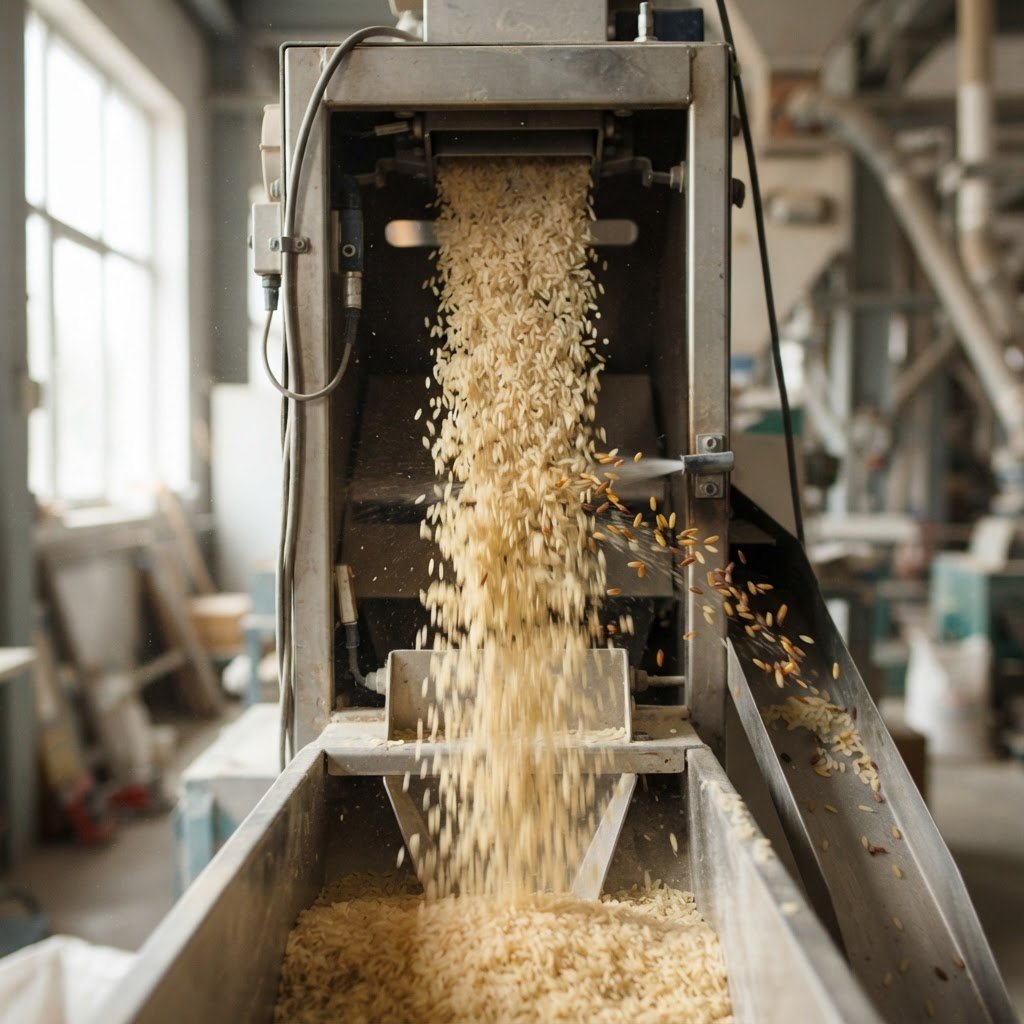
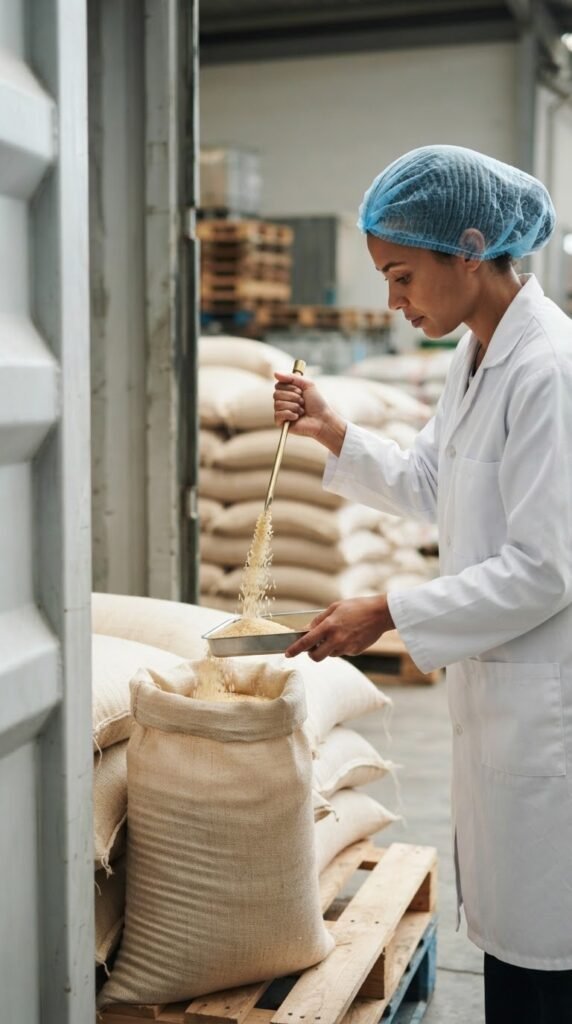
Parboiling is what makes colour sorting matter more on parboiled long grain rice than on white rice. Steaming in the husk turns the whole crop a shade of gold. It also turns any faulty grain a deeper shade. A grain that was chalky, immature, red-striped or heat-damaged in the paddy comes out dark amber or brown instead of pale gold. It does not blend in. One percent of those grains in a 50kg sack is five hundred grams of visible fault, and on a supermarket shelf it is the first thing a customer sees. An optical colour sorter runs the milled rice past a camera array in a falling curtain and blows the off-colour grains out with an air jet. Everything we ship is sortexed, and that count is what goes on the certificate as damaged, shrivelled and discoloured grain.
Alongside it we hold a sealed reference sample from every batch, so if a bag is queried three months later we can test that sample instead of relying on what someone remembers. Moisture is read twice, at the mill and again before loading. The crop year is stated on the batch rather than promised in advance. Stock in Qatar is rotated first in, first out, so what you collect from Al Wakra is not what has sat at the back since last season.
What Your Own Market Will Ask For
Nothing about compliance can be fixed after a vessel sails, which is why it is settled before one is booked. Nigeria wants NAFDAC and SON documentation travelling with the consignment and a Form M opened before shipment. Kenya inspects to a national standard at Mombasa and will hold a container that arrives without the right paperwork attached. Mozambique requires pre-shipment inspection by an appointed body before the goods leave Pakistan at all. Britain wants a health certificate and residue results that survive a border check. We arrange the inspection, the certificates and the stamps for the destination you name. The cost is inside the quotation. It does not arrive as a surprise once the rice is on the water.
Third-Party Inspection, Written to You
You can appoint your own inspector and most first-time buyers do. SGS, Cotecna, Intertek and Bureau Veritas all draw samples at the mill or at the container door and issue a report addressed to you, not to us. That is the point of it: an inspector we appoint is telling you what we already told you, and an inspector you appoint is telling you what he found. Buyers usually do it once, on the first shipment, and then stop.
The Documents That Travel With It
Every shipment comes with a commercial invoice, a packing list, a bill of lading, a certificate of origin, a phytosanitary certificate, a certificate of analysis against the figures on this page, a fumigation certificate, a weight and quality certificate and a halal certificate. Where the destination requires it, a certificate of conformity is issued by the appointed body and legalised before the goods arrive. If one document is wrong the container sits, and every day it sits costs you money rather than us, so we send you the full set as drafts to check before anything is issued rather than after.
Our partner mills operate under internationally recognised food safety and quality management systems, and are active members of the Rice Exporters Association of Pakistan (REAP), complying with Pakistan Standards and Quality Control Authority (PSQCA) requirements. The certificate for the mill behind your parboiled long grain rice is available on request.

Collect Parboiled Rice in Qatar, or Have It Shipped to Your Country or Door
One Named Rice Contact in Doha, Seven Days a Week
In Qatar, parboiled long grain rice is already imported and cleared before you order it. Everywhere else it ships to your port with the freight paid, or to your door in the markets where we hold clearance.

Rice From Our Stock in Qatar
We hold parboiled long grain rice at Birkat Al Awamer in Al Wakra, landed and cleared. You can take a pallet rather than a container, which matters because most grades on this page are sold by the mill in full container loads only. Order a 25kg catering sack or a 50kg bulk sack and we deliver it in Doha, usually within a day or two, with the certificate of analysis for that batch.
Parboiled Rice Shipped to Your Port or Your Door
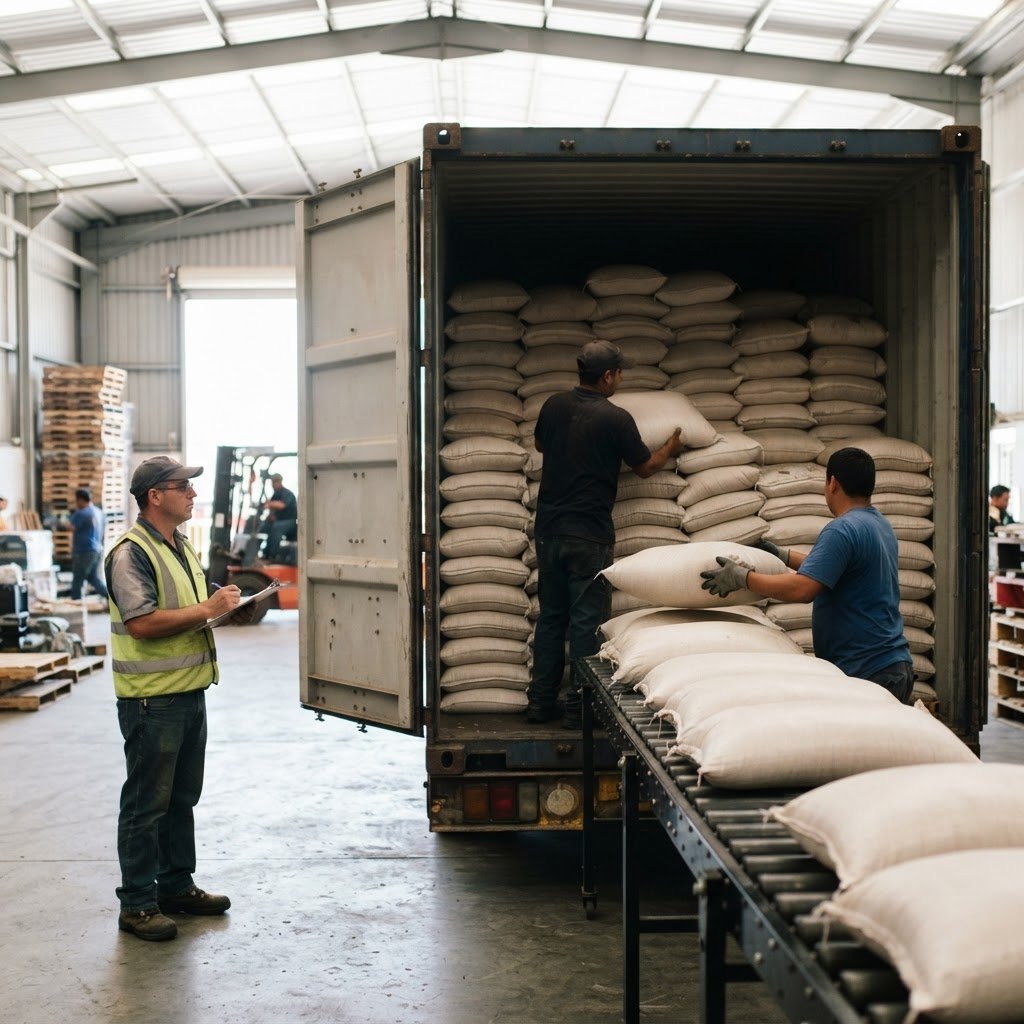
Full containers out of Port Qasim to Mombasa, Lagos, Abidjan, Tema, Beira or a UK port, with the freight paid to the destination you name and the documents issued before the vessel sails. Where we hold local clearance the rice comes to your door instead, and where your market runs a licensed import regime we supply against your licence rather than asking you to find one.
Every other supplier ranking for parboiled rice in Qatar quotes you a price at a foreign port and offers to help you import it. If you are in Qatar you are not importing anything from us. The rice is already here.
Parboiled Rice Questions Buyers Ask Before the First Container
Nine Answers About Parboiled Rice. Ask Us the Tenth
These are the questions buyers ask us most often about parboiled rice. If yours is not here, ask us.
SEND US AN ENQUIRY
Whether you need a single pallet of 25kg sacks in Doha or a regular monthly supply of parboiled long grain rice by the container, tell us what you are buying it for and we will quote it.
Tell us the variety, the broken grade, the pack size and where it is going. If you are not sure which variety or which grade, say what the rice is for and we will recommend one and send you samples of two.
We supply parboiled long grain rice in Qatar from our own stock at Al Wakra, and by container into Nigeria, Ivory Coast, Ghana, Kenya, Tanzania, Somalia, Mozambique, the wider Gulf and the United Kingdom.
All enquiries are handled personally. No automated responses, no call centres.
Explore related rice varieties and supply solutions available through TEFT Global.
Premium Basmati Rice
Long Grain Rice
Rice Supply Solutions
Get a Price on Parboiled Long Grain Rice
One Named Person, One Business Day
Send us the parboiled long grain rice variety, the broken grade, the bag size, the quantity and where it is going, and we will come back within one business day with availability, a written price and a sample if you want one. If you are in Qatar, tell us how much and when and we will deliver it from our Al Wakra stock. If you are buying for another market, tell us where you are and we will quote it landed at your port, or at your door where we hold our own clearance.