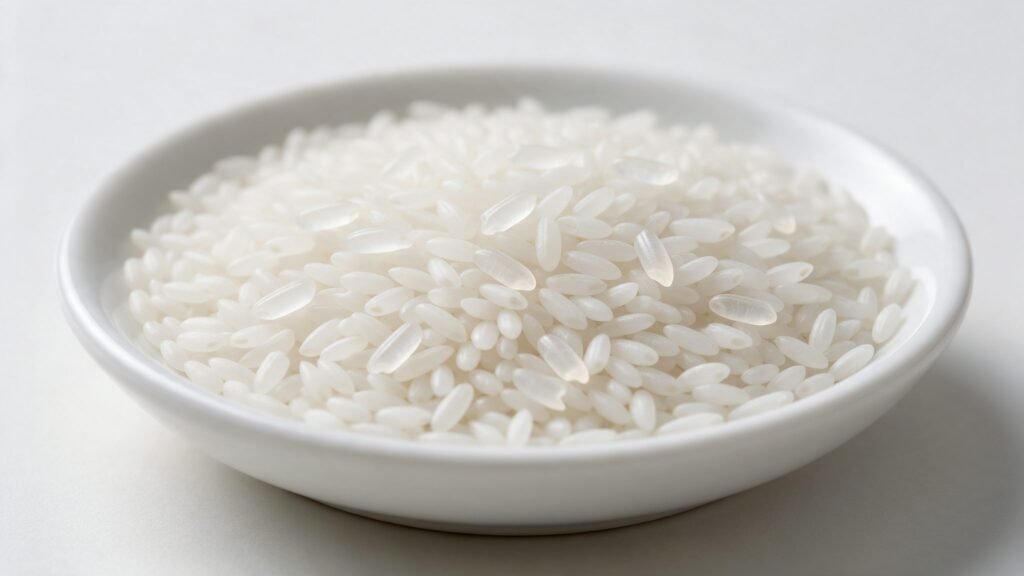
Basmati rice history stretches back over 2,000 years to the Himalayan foothills of the Indian subcontinent, and for procurement professionals sourcing for GCC markets, understanding this journey reveals why it commands premium pricing and consistent demand across Gulf supply chains. For procurement professionals and importers serving GCC markets, understanding this grain’s journey from ancient fields to modern supply chains reveals why it commands premium pricing and consistent demand. The word “basmati” derives from Sanskrit roots meaning “fragrance” and “ingrained,” perfectly describing the long-grain rice that defined quality standards across generations.
Today’s basmati trade reflects centuries of agricultural refinement, with Pakistan and India producing varieties that meet strict international certifications including ISO 22000:2018, HACCP, and Halal standards. The aromatic rice category now represents a multi-billion dollar global market, with Pakistan’s basmati rice export volumes rising 3% year-on-year to 797,000 tonnes in FY2024-25. For B2B buyers sourcing for Gulf markets, basmati’s established consumer preference and cultural significance make it a cornerstone commodity.
The evolution from traditional varieties cultivated in Punjab regions to certified export-grade products demonstrates how this long-grain rice adapted to modern quality assurance while preserving its distinctive characteristics. Understanding basmati’s history provides importers and distributors with context for sourcing decisions, variety selection, and market positioning strategies that align with consumer expectations across international markets.
Key Takeaways
- Basmati rice originated over 2,000 years ago in the Himalayan foothills and remains the world’s most prized aromatic rice variety
- Pakistan and India dominate global basmati production with certified varieties meeting international food safety and quality standards
- The basmati trade generates billions in annual exports with consistent demand from GCC markets driven by cultural preference and superior grain characteristics
Etymology and Early References
The name basmati carries deep linguistic roots that reflect the grain’s most prized characteristic, while historical texts from the Indian subcontinent document its presence for centuries. These early references establish basmati as both a culinary treasure and a cultural symbol across South Asia.
Origin of the Word Basmati
The word basmati derives from Sanskrit, combining two root words: vas meaning fragrance and mayup meaning present or ingrained. When these terms merged, mayup transformed into mati, creating vasmati, which evolved into the pronunciation used today.
This etymology directly describes the grain’s defining feature—its distinctive aroma. When translated from Hindi, basmati means “queen of fragrance”, a fitting title for rice that releases its characteristic scent during cooking.
The name reflects what sets this variety apart from ordinary rice. Its fragrance comes from a natural compound called 2-acetyl-1-pyrroline, which basmati contains at levels approximately 12 times higher than non-basmati varieties.
Earliest Literary Mentions and Folklore
The earliest documented mention of basmati rice appeared in the epic Heer Ranjha, composed by Punjabi poet Waris Shah in 1766. This folk romance became one of the first texts to specifically reference the aromatic grain by name.
Evidence suggests cultivation extended much further back in time. References to aromatic rice varieties appear in ancient Sanskrit literature, with scholars believing basmati has been grown for over 2,000 years across the Indian subcontinent.
In cultural narratives, basmati symbolizes prosperity and purity. The grain held significance beyond simple sustenance in folk traditions. Its presence in wedding feasts and religious ceremonies throughout regions of modern-day India and Pakistan demonstrated its elevated status among rice varieties cultivated across Punjab, Haryana, and Sindh.
Traditional Origins in the Himalayan Foothills
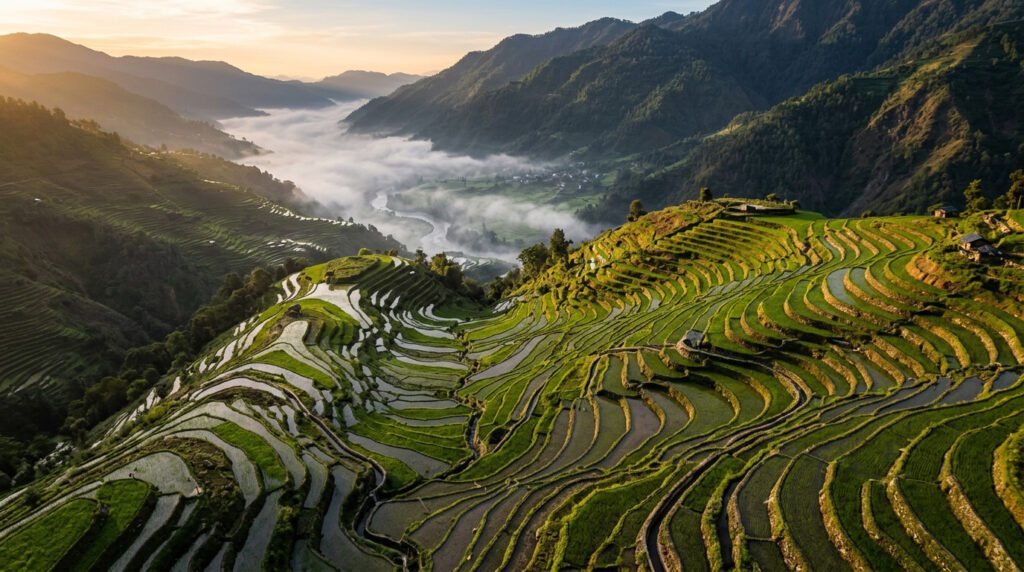
The unique characteristics of true basmati trace back to specific geographical regions where soil composition, climate patterns, and centuries-old cultivation methods converge. These factors created conditions that cannot be easily replicated elsewhere.
Geographical Regions of Cultivation
The cultivation of basmati rice originated in the Himalayan foothills over 2,000 years ago. The Indo-Gangetic plains stretching across northern regions of India and Pakistan became the primary growing zones for this aromatic grain.
In Pakistan, the Punjab province produces traditional basmati varieties in districts including Sialkot, Gujranwala, Sheikhupura, and Lahore. These areas benefit from the Chenab and Ravi river systems that originate in the mountains.
Indian cultivation centers in Punjab, Haryana, Uttarakhand, and western Uttar Pradesh. The region received Geographical Indication status to protect authentic varieties grown in these specific zones.
Both countries share similar ecological conditions in their basmati-growing regions. The proximity to the Himalayas provides consistent water sources and temperature variations that influence grain development.
Influence of Soil and Climate
Soil Composition
- Alluvial deposits from Himalayan rivers create nutrient-rich growing medium
- High mineral content supports the unique chemical compounds in basmati
- Well-drained loamy soil prevents waterlogging during monsoon periods
The cool temperatures and nutrient-rich soil help create the subtle nutty flavor that distinguishes authentic basmati. Snowmelt from the mountains maintains river flow throughout growing seasons.
Temperature fluctuations between day and night during the grain-filling stage contribute to aroma development. The climate allows for specific growing periods that cannot be shortened without compromising quality.
Traditional Farming Practices
Farmers in both India and Pakistan maintained traditional basmati cultivation methods passed through generations. These practices prioritize quality over yield, a principle that certified exporters continue to honor.
Key Traditional Methods:
- Transplanting seedlings rather than direct seeding to ensure proper spacing
- Extended growing periods of 140-160 days compared to 120 days for standard rice
- Natural water management using gravity-fed irrigation from river systems
- Selective harvesting when grains reach optimal maturity
Traditional farming avoided rushing the process. Farmers allowed plants to mature fully before harvest, then aged the rice for months to develop its characteristic aroma and texture. Pakistani rice meeting ISO 22000:2018 and HACCP standards continues these quality-focused approaches while incorporating modern food safety protocols.
Evolution of Varieties and Cultivation Methods
Basmati rice has undergone significant transformation through selective breeding and agricultural innovation. Scientists have developed high-yield cultivars that maintain the grain’s signature aroma while modern cultivation techniques have expanded production across certified growing regions in both India and Pakistan.
Development of New Basmati Types
The Indian Agricultural Research Institute (IARI) in Delhi pioneered the development of hybrid basmati varieties using conventional plant breeding methods. Scientists created semi-dwarf plants that retained the essential characteristics of traditional basmati, including grain elongation, fragrance, and alkali content.
The breakthrough came with Pusa Basmati-1, which achieved crop yields up to twice as high as traditional varieties. This success led to an expansion of basmati cultivation beyond its original growing areas. Research institutions continued developing new lines that balanced productivity with quality.
Pakistan’s certified basmati varieties include Super Kernel Basmati Rice, PK 385, and D-98. Both countries have established geographical indication standards to protect authentic basmati varieties. India’s Agricultural & Processed Food Products Export Development Authority requires basmati to have a minimum average pre-cooked milled rice length of 6.61 mm and breadth up to 2 mm.
Key Basmati Cultivars: Pusa 1121 and Pusa 1509
Pusa 1121 represents one of the most commercially successful modern basmati varieties. This cultivar delivers exceptional grain length after cooking and maintains the characteristic aroma that defines quality basmati. The variety has gained widespread adoption across certified growing regions.
Pusa 1509 offers distinct advantages for commercial production. It features a shorter growing cycle compared to other varieties while preserving premium quality standards. Both India and Pakistan grow these varieties, with cross-border seed trading occurring among farmers in border regions.
Other notable Indian varieties include:
- Pusa 1401
- Pusa 1637
- Pusa 1692
- Pusa 1718
- Pusa 1847
Pakistani growers have adopted several Indian-developed varieties, demonstrating the collaborative nature of basmati cultivation across the Indian subcontinent.
Traditional vs. Modern Basmati
Traditional basmati varieties like Basmati 370, Basmati 385, and Dehradun Basmati originated in specific regions with unique agro-climatic conditions. Dehradun Basmati varieties from Uttarakhand, India, are distinguished by their popcorn-like aroma when grown in Himalayan foothill conditions.
Modern varieties prioritize higher yields and disease resistance. They typically feature shorter plant heights that reduce lodging and make harvesting more efficient. These cultivars maintain the 2-acetyl-1-pyrroline compound at approximately 0.09 ppm, which gives basmati its distinctive fragrance.
Traditional cultivation methods relied on specific soil types and water management practices passed down through generations. Modern approaches incorporate precision agriculture techniques while respecting the geographical boundaries that define authentic basmati production. Pakistan’s certified growing areas in Punjab province and India’s designated states maintain strict standards for both traditional and modern varieties.
Specialty types like red basmati rice are cultivated in smaller quantities in regions such as Sri Lanka’s tropical wet zones, offering unique nutritional profiles while maintaining aromatic properties.
Cultural and Culinary Significance
Basmati rice holds deep cultural meaning across South Asia and beyond, serving as the foundation for celebrated dishes and appearing at the center of major life events. Its aromatic qualities and cooking characteristics have made it essential to regional cuisines from the Indian subcontinent to the Gulf states.
Role of Basmati in Regional Cuisines
Basmati rice functions as a staple grain across Pakistan, India, and neighboring regions where climate and soil conditions produce the highest quality aromatic rice. The grain’s ability to elongate during cooking while remaining separate makes it ideal for traditional preparations. In Pakistani cuisine, it forms the base of dishes like pulao and accompanies rich curries and grilled meats.
Gulf countries have incorporated basmati into their culinary traditions through dishes such as kabsa, mandi, and machboos. The rice absorbs spices and cooking liquids while maintaining its texture. Pakistan exports certified basmati to GCC markets, where it meets strict food safety standards including ISO 22000:2018, HACCP, and Halal certifications.
South Asian communities worldwide rely on basmati to maintain cultural connections through food. The grain’s distinctive fragrance distinguishes it from other long-grain varieties.
Basmati Rice in Biryani and Other Classic Dishes
Biryani represents the most famous application of basmati rice. This layered rice dish combines partially cooked basmati with marinated meat, vegetables, or seafood, then finishes cooking together with aromatics and saffron. The queen of fragrance absorbs flavors while each grain remains distinct.
Different regional biryani styles exist:
- Hyderabadi biryani uses aged basmati cooked with goat or chicken
- Sindhi biryani features potatoes and dried plums
- Lucknowi biryani employs a gentler cooking method
Pulao dishes showcase basmati’s versatility with simpler preparations. Peas pulao, vegetable pulao, and meat pulao cook rice with spices and stock in one pot. Persian-influenced dishes like tahdig create a crispy rice crust at the bottom of the pot.
Symbolism in Celebrations and Festivals
Basmati rice carries symbolic weight at weddings, religious festivals, and family gatherings throughout South Asia. Wedding feasts traditionally feature elaborate biryani preparations that demonstrate hospitality and abundance. The grain’s premium status makes it appropriate for special occasions rather than everyday meals.
During Eid celebrations, families prepare large quantities of biryani and sweet rice dishes like zarda using basmati. The aromatic rice symbolizes prosperity and purity in cultural narratives. Festival meals often include saffron-infused basmati served alongside special meat preparations.
Pakistani basmati supplied to international markets allows diaspora communities to maintain these traditions with authentic ingredients that meet international quality certifications including ISO 9001:2015 and USFDA standards.
Basmati Rice Trade and Export Dynamics
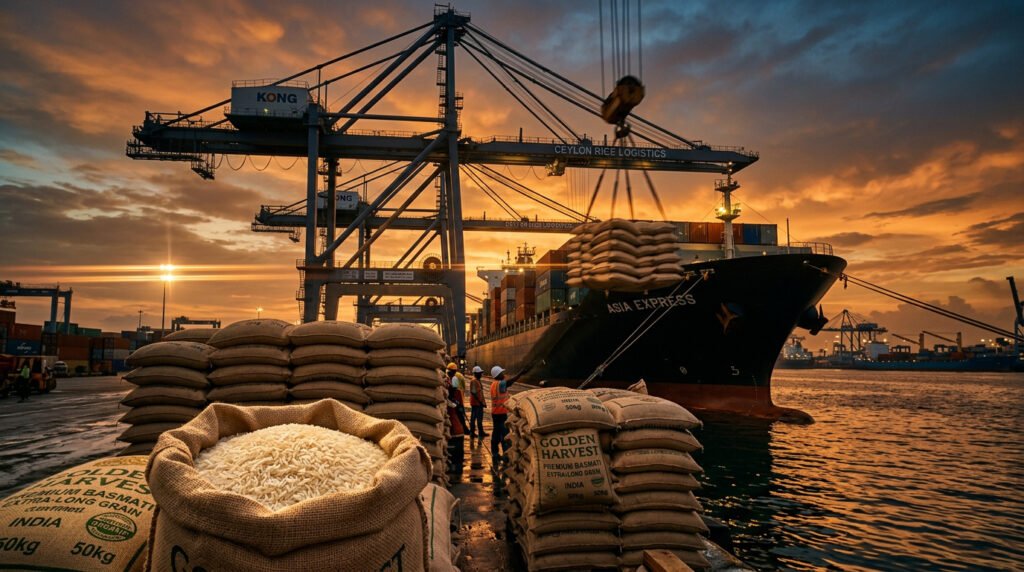
India and Pakistan dominate the global basmati market, with India accounting for 65% of international basmati trade as of 2019. The trade has grown into a multi-billion dollar industry, with strict export standards and certifications ensuring quality across international markets.
India and Pakistan as Global Suppliers
India leads global basmati production and trade. The country exported over 6 million metric tons of basmati rice during 2024-25. The main growing regions include Punjab, Haryana, Uttar Pradesh, Jammu and Kashmir, Uttarakhand, Himachal Pradesh, and Delhi.
Pakistan serves as the second major supplier of basmati rice to international markets. Both nations benefit from the unique agro-climatic conditions of the Himalayan foothills, which produce the distinct aromatic qualities that define authentic basmati. Pakistani basmati meets rigorous international certification standards including ISO 9001:2015, ISO 22000:2018, HACCP, Halal, and USFDA requirements.
These certifications ensure that basmati rice exporters maintain consistent quality and food safety protocols. The geographical indication and traditional cultivation methods in both countries create a premium product recognized worldwide.
Major Export Markets and Trends
The primary markets for basmati rice have remained concentrated in specific regions. During 2024-25, the top five destinations were Saudi Arabia, Iraq, Iran, United Arab Emirates, and Yemen Republic.
Key Market Characteristics:
- Middle East: Accounts for the largest share of basmati imports
- GCC Countries: Major hubs for distribution to wider regional networks
- North America: Growing demand for premium aromatic rice varieties
- Europe: Increasing consumption driven by diverse populations
Basmati rice exports contribute substantially to regional economies. The trade has expanded beyond traditional markets as global consumers recognize the quality and distinctive characteristics of authentic basmati varieties.
Role of APEDA and Export Standards
The Agricultural and Processed Food Products Export Development Authority (APEDA) regulates Indian basmati exports. The organization has issued 43,262 registration cum allocation certificates to member exporters, ensuring compliance with international trade agreements and quality standards.
APEDA establishes specifications for grain length, aroma, texture, and aging requirements. These standards protect the geographical indication status of basmati rice and prevent inferior varieties from entering export channels under the basmati label.
Export protocols require verification of cultivation areas, processing methods, and storage conditions. Basmati rice exporters must demonstrate adherence to food safety regulations and maintain traceability throughout the supply chain. This regulatory framework maintains consumer confidence in basmati authenticity across global markets.
Branding, Quality Assurance, and Geographic Indication
As basmati rice gained worldwide recognition, protecting its authenticity became critical for producers and consumers alike. Legal protections, brand development, and quality standards now shape how genuine basmati reaches global markets.
Basmati Rice Brands and Global Reputation
Established brands play a key role in maintaining basmati’s reputation across international markets. Companies build trust through consistent quality control and adherence to food safety standards including ISO 9001:2015, ISO 22000:2018, HACCP, Halal, and USFDA certifications.
Major distributors source basmati from certified producers in India and Pakistan, the two primary growing regions. Qatar-based importers like TEFT Global demonstrate this approach by sourcing premium Pakistani rice for GCC and international markets while maintaining strict quality protocols.
Key quality indicators consumers look for include:
- Extra-long grain length (6.61mm or longer after cooking)
- Distinct nutty aroma
- Minimal grain breakage
- Aging process documentation
- Clear origin labeling
Reputable brands provide transparency about sourcing regions and processing methods. This information helps buyers make informed decisions when purchasing rice for retail or food service applications.
Geographical Indication and Product Authentication
In 1997, the Indian government obtained a Geographical Indication (GI) tag for Basmati rice, establishing legal protection for the name. This landmark intellectual property case changed how agricultural products with specific regional qualities receive global recognition.
Pakistan also secured GI status for its basmati varieties, recognizing the grain’s shared geographic heritage in the Himalayan foothills. Both countries established frameworks to protect basmati’s name and enforce quality standards.
GI tags serve multiple purposes. They prevent misuse of the basmati name on inferior products. They protect farmers and producers in designated growing regions. They assure consumers they receive authentic grain with traditional characteristics.
The protected regions include specific areas in Punjab, Haryana, Uttarakhand, Himachal Pradesh, and Delhi in India, plus designated districts in Pakistan’s Punjab province.
Presence of Hybrid and Imitation Varieties
The global demand for basmati led to development of similar rice varieties marketed under different names. RiceTec, an American company, developed Texmati and other aromatic long-grain varieties that mimic some basmati characteristics but originate from different regions.
These alternatives do not qualify as true basmati under GI protection rules. While they may offer aromatic qualities and long grains, they lack the specific combination of soil, climate, and traditional cultivation methods found in authentic basmati growing regions.
When buying rice, consumers should verify:
- Origin certification from India or Pakistan
- GI tag compliance where applicable
- Brand reputation and quality certifications
- Grain specifications matching basmati standards
Hybrid varieties serve different market segments and price points. However, distinguishing between authentic basmati and imitations protects both consumer expectations and the livelihoods of traditional producers in certified growing regions.
Present-Day Market Relevance for B2B Importers
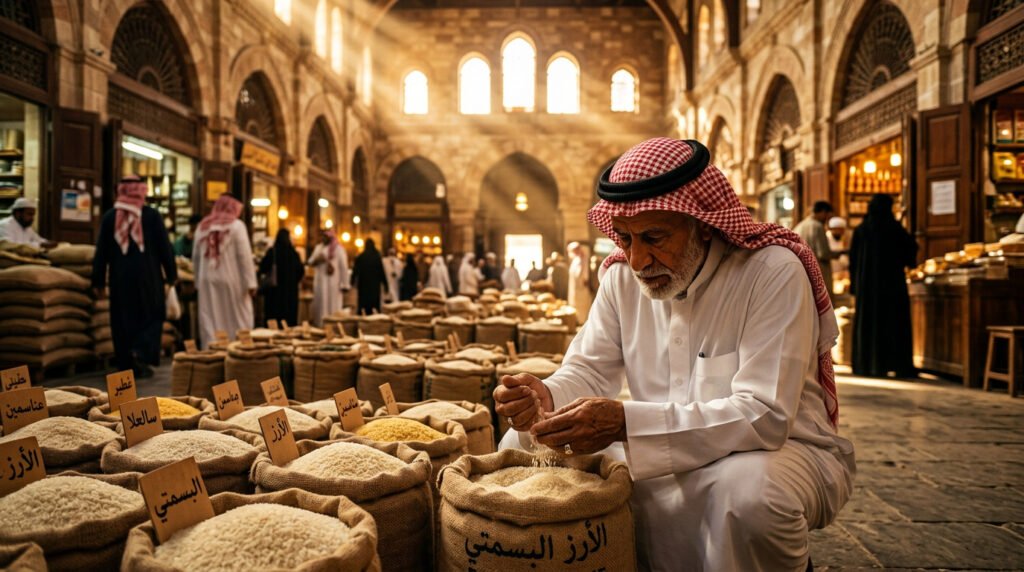
B2B importers operating in today’s basmati rice sector must navigate evolving procurement standards, diversified sourcing channels, and emerging supply chain innovations. Quality certifications and supplier reliability have become non-negotiable factors as international buyers prioritize traceability and compliance across their portfolios.
Procurement Considerations and Packaging Formats
Basmati rice exporters now offer a range of packaging configurations tailored to institutional, retail, and food service requirements. Bulk shipments in 25 kg and 50 kg polypropylene bags remain standard for wholesale distribution, while portion-controlled formats and vacuum-sealed pouches address specialized market segments.
Importers should verify that all basmati exports comply with ISO 9001:2015, ISO 22000:2018, HACCP, Halal, and USFDA certifications. These quality benchmarks ensure consistency across production batches and align with regulatory mandates in target markets. Pakistan has established robust certification infrastructure, making it a reliable origin for buyers seeking documented compliance.
Key packaging options include:
- Bulk institutional: 25 kg and 50 kg woven bags
- Retail consumer: 1 kg to 10 kg pillow packs
- Premium segments: Vacuum-sealed and nitrogen-flushed pouches
- Food service: 5 kg and 20 kg tamper-evident containers
Buyers must also assess moisture content, grain length uniformity, and broken grain percentage during quality evaluations.
Sourcing Channels and Supplier Selection
Direct engagement with certified mills and established trading houses offers buyers enhanced transparency and competitive pricing structures. Importers increasingly leverage digital platforms and trade exhibitions to identify vetted suppliers and negotiate long-term contracts.
When buying rice from Pakistan, importers benefit from established export infrastructure and government-backed quality assurance programs. Selecting suppliers with integrated milling operations reduces intermediary costs and improves delivery predictability. Buyers should request third-party laboratory reports, export licenses, and phytosanitary certificates before finalizing purchase agreements.
Supplier evaluation criteria:
| Factor | Consideration |
|---|---|
| Certifications | ISO, HACCP, Halal, USFDA compliance |
| Milling capacity | Consistent supply volumes |
| Logistics | Container loading efficiency |
| Payment terms | LC, TT, deferred payment options |
Future Trends in Basmati Rice Supply
The basmati rice market is projected to grow at a CAGR of 7.03%, driven by rising consumer demand for organic cultivars and premium varieties. Automation in milling operations and blockchain-based traceability systems are gaining traction among leading exporters.
Climate-resilient seed varieties developed through agricultural research partnerships will address water scarcity and yield stability concerns. Importers who establish relationships with suppliers investing in sustainable farming practices and advanced post-harvest technologies will secure competitive advantages.
E-commerce expansion and direct-to-consumer distribution models are reshaping traditional wholesale networks. B2B buyers should monitor these developments to optimize inventory strategies and respond to shifting end-user preferences across geographic markets.
Frequently Asked Questions
Basmati rice raises questions about its geographic origins, unique characteristics, and the systems that protect its authenticity in global markets. The variety’s history spans ancient cultivation practices, colonial trade influences, and modern certification frameworks that define what qualifies as genuine basmati.
Where did basmati rice originate, and which regions first cultivated it?
Basmati rice originates from the Indian subcontinent, specifically from regions including Punjab, Haryana, and Sindh. The variety has been cultivated in these areas for centuries, with the fertile plains providing ideal conditions for its growth.
The foothills of the Himalayas created the perfect environment for basmati’s development. Traditional farming methods in these regions contributed to the rice’s distinctive qualities.
Pakistan’s original basmati cultivation area lies in the Kalar bowl between the Ravi and Chenab rivers. Most cultivation in Pakistan occurs in Punjab province, which produced 2.47 million metric tons in 2010.
What archaeological or textual evidence supports basmati’s early history in South Asia?
The earliest documented mention of basmati rice appears in the epic Heer Ranjha, composed by Punjabi poet Waris Shah in 1766. Ancient Sanskrit literature contains references to aromatic rice varieties that scholars believe describe early forms of basmati.
The word “basmati” comes from Sanskrit roots. It combines “vas” meaning fragrance and “mayup” meaning present or ingrained, which together form “vasmati” or basmati.
References to fragrant rice in ancient texts suggest cultivation dates back over 2,000 years. However, specific archaeological evidence remains limited compared to textual sources.
How did basmati rice spread from local cultivation to international trade and global demand?
Basmati remained a regional crop for centuries before entering international markets. Colonial-era trade networks began introducing the rice to foreign consumers who valued its unique properties.
India accounts for 65% of international basmati trade as of 2019, while Pakistan accounts for 35%. From April 2018 to March 2019, India exported 4.4 million metric tons of basmati rice.
The global basmati market is projected to keep growing through 2028. Pakistan exported approximately 797,000 tonnes of basmati rice in FY2024-25
Major importing regions include Saudi Arabia, Iran, UAE, European Union, Turkey, and the United Kingdom. These markets collectively drive international demand for certified basmati varieties from both India and Pakistan.
What distinguishes basmati rice from other long-grain varieties in terms of aroma, genetics, and cooking qualities?
Basmati contains the aromatic compound 2-acetyl-1-pyrroline at about 0.09 ppm naturally. This level is approximately 12 times higher than non-basmati varieties, creating its signature fragrance.
According to Indian standards, basmati must have a minimum average precooked milled rice length of 6.61 mm and breadth up to 2 mm. The grains are notably long and slender compared to other rice types.
The rice elongates during cooking while maintaining a fluffy texture. Its pandan-like aroma resembles Pandanus amaryllifolius leaf, a characteristic that sets it apart from jasmine and other aromatic varieties.
Basmati has a medium glycemic index between 56 and 69. This makes it more suitable for diabetics compared to jasmine rice, which has a glycemic index of 89.
How did colonial-era agriculture and trade policies influence basmati production and distribution?
Colonial trade networks established export channels that introduced basmati to international markets. British administration in India and present-day Pakistan documented agricultural practices and facilitated rice trade to other colonies and European markets.
The word “Pishori” used for a Kenyan rice variety derives from “Peshawari,” reflecting historical basmati exports from Peshawar to East Africa. This linguistic connection demonstrates colonial-era trade patterns.
Trade policies during this period emphasized cash crops and export-oriented agriculture. These policies shaped cultivation patterns that continue to influence basmati production regions today.
What role do geographical indications and naming standards play in protecting basmati rice today?
The Agricultural & Processed Food Products Export Development Authority (APEDA) registered basmati rice as a product with Geographical Indication (GI) on February 15, 2016. This certification restricts the basmati designation to rice grown in specific districts of India and Pakistan.
DNA fingerprinting-based certification through the Basmati Export Development Foundation verifies authentic basmati. PCR-based assays can detect adulteration from 1% upwards with an error rate of ±1.5%.
A 2005 investigation by Britain’s Food Standards Agency found that half of basmati rice sold contained other rice strains. This discovery prompted importers to establish codes of practice for verification.
Exporters now use DNA testing to provide purity certificates for basmati consignments. These standards ensure consumers receive genuine basmati meeting established quality parameters for grain dimensions, aroma compounds, and genetic markers.
Ready to Source Premium Basmati Rice for Your GCC Operation?
TEFT Global supplies certified basmati rice to distributors, hotels, and retailers across the Gulf — with full documentation, flexible incoterms, and direct mill sourcing from Pakistan’s finest growing regions.