
Aged, long-grain 1121 basmati is the best basmati rice for biryani for caterers and restaurant groups seeking long, separate grains that hold their shape through layered cooking. Approval should follow a cooking trial using the kitchen’s own recipe, equipment and service conditions.
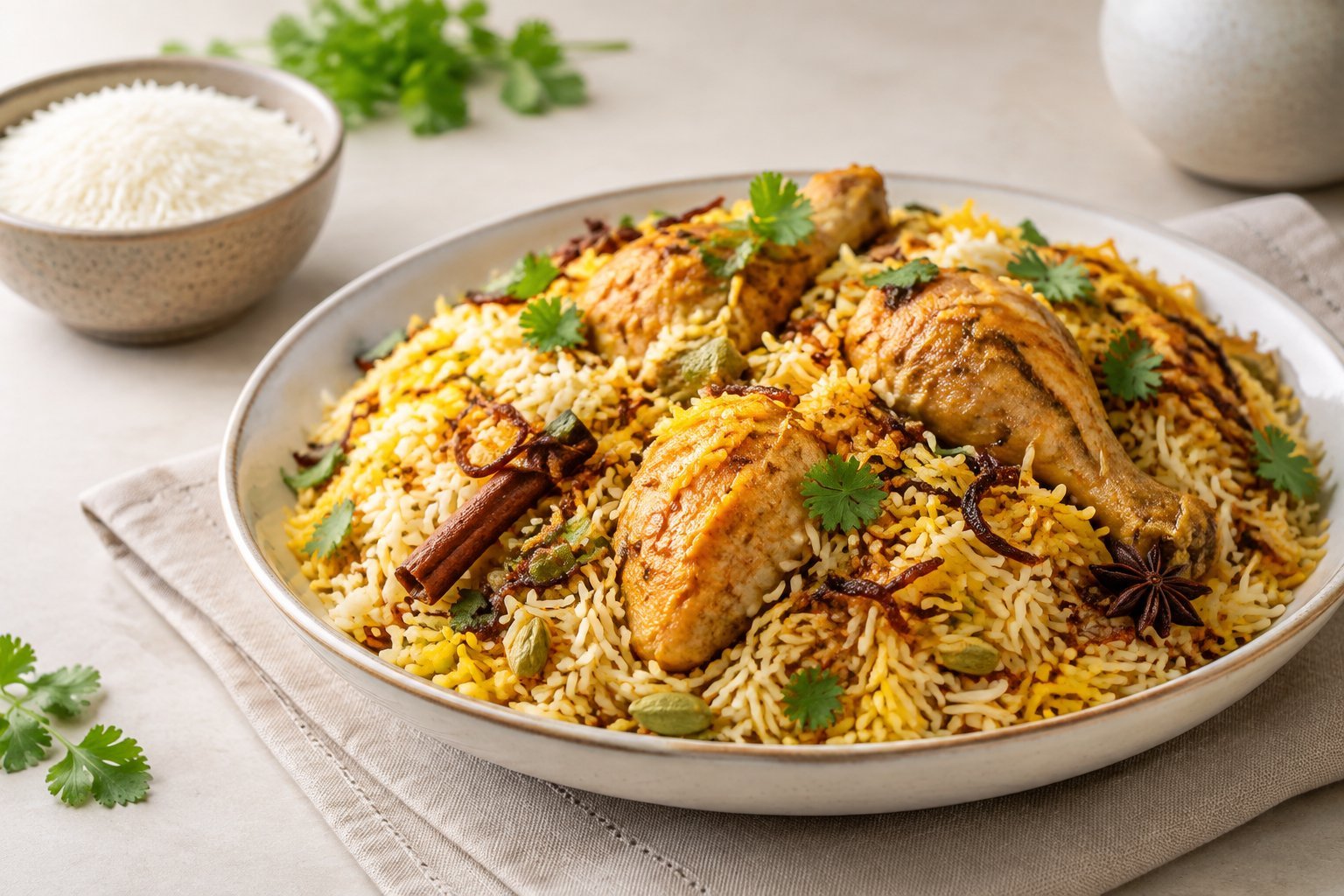
For buyers in Qatar, the processing form deserves close attention. Sella basmati offers firm grains for large batches and extended service, while raw basmati suits kitchens that place greater weight on a delicate texture and fragrance.
A rice specification also needs to work beyond the first serving. A batch that looks attractive after cooking still needs to retain acceptable texture during buffet service, delivery or portioning.
Key Takeaways
- Aged basmati with uniform, intact grains provides a strong starting point.
- Processing form should match the recipe and service method.
- Bulk approval should follow representative sample testing and documented checks.
Which Rice Specifications Matter Most for Biryani?

Ageing history, grain uniformity, broken-grain content and cooking performance form the core biryani specification. Long-grain basmati rice also needs a clean aroma and enough strength to survive draining, layering and serving.
Why Choose Aged Basmati Rice?
Ageing changes how rice absorbs water and behaves during cooking. Properly stored aged basmati rice produces a firmer texture and helps grains remain separate through the final steaming stage.
Buyers should request a documented ageing period and ask how it is tracked. A claim for aged basmati rice should connect to harvest or storage records, since the packing date alone gives limited information about grain age.
How Do Grain Length and Broken Grains Affect Results?
Grain length supports presentation, while uniformity helps the batch cook evenly. A mixture of full grains and small fragments creates uneven texture because the fragments soften faster.
Buyers should assess dry grain length alongside cooked elongation and breakage. Defined basmati rice grades help make comparisons clearer, especially when different products carry similar terms such as “premium” or “extra-long.”
What Should a Buyer’s Quality Specification Include?
A useful specification identifies the variety, processing form, origin and ageing claim. It also sets agreed limits for moisture, broken grains, foreign matter and damaged kernels.
Written rice quality specifications should include the sampling method and cooking acceptance criteria. For aromatic rice, the sensory check should cover both its natural fragrance and unwanted smells, including mustiness or chemical taint.
Which Basmati Varieties and Processing Forms Should You Compare?
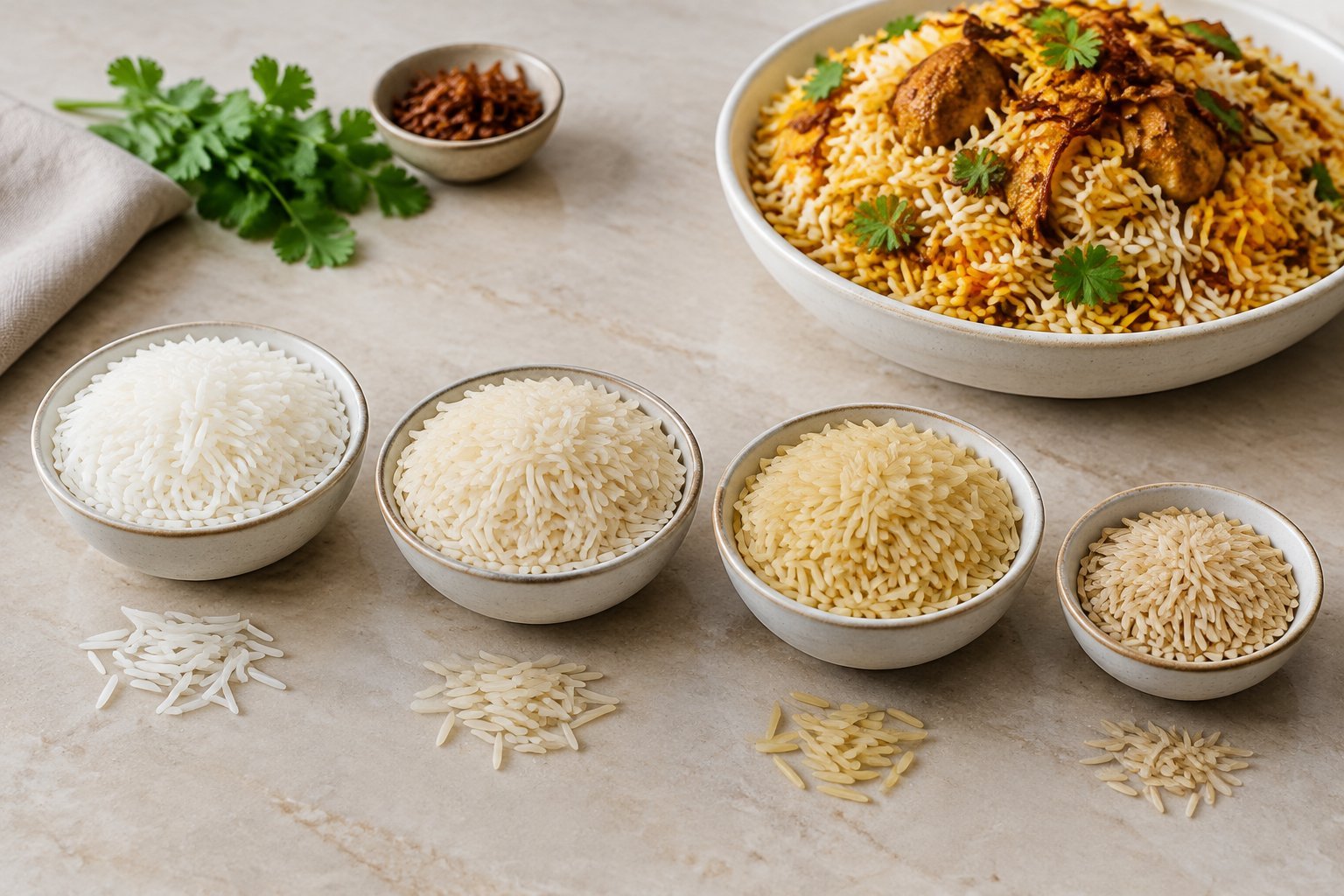
Buyers should compare the rice variety and its processing form as separate choices. The variety influences grain shape and eating quality, while processing changes firmness and cooking behaviour.
How Does 1121 Differ from Other Pusa and Traditional Varieties?
Pusa Basmati 1121 is a named basmati variety valued for its extra-long, slender grain and strong cooked elongation. “Pusa basmati” covers several varieties, so a product description needs the full variety name.
For presentation-led catering, 1121 basmati rice is a useful starting candidate. Other Pusa varieties and traditional basmati deserve separate trials for aroma, tenderness and performance in the intended recipe.
Pakistani Super Kernel basmati rice also warrants assessment on its own grain quality and fragrance. Country names alone provide too little detail for a purchase decision.
When Should You Choose Raw, Steam or Sella Basmati?
Raw basmati suits kitchens seeking a delicate finish with careful cooking control. Steam basmati offers a firmer option, while sella basmati receives parboiling treatment before milling and supports demanding batch handling.
| Criterion | Raw Basmati | Steam Basmati | Sella Basmati |
|---|---|---|---|
| Processing | Milled without parboiling | Steam-treated before milling | Parboiled before milling |
| Texture tendency | Delicate, tender | Separate, moderately firm | Firm, resilient |
| Cooking control | Close attention | Product-specific adjustment | Longer hydration or cooking |
| Useful application | Fragrance-led service | Regular restaurant production | Catering and hot holding |
The sella versus raw basmati decision should follow the desired eating texture. Creamy sella and golden sella also need separate approval because colour and processing intensity affect the finished dish.
Which Rice Suits Your Biryani Style and Kitchen?
The strongest rice choice matches the dish’s moisture level and the kitchen’s service demands. Chicken biryani, vegetable biryani and regional recipes place different demands on the grain.
What Works for Chicken and Vegetable Biryani?
Chicken biryani needs rice that finishes cooking as moisture moves from the meat and masala into the upper layers. Aged long-grain basmati provides a useful balance of separation and tenderness when the parboiling stage is controlled.
Vegetable biryani requires attention to water released by the vegetables. Buyers should test biryani rice with the actual vegetable mix, since a plain-rice trial leaves this part of the recipe untested.
What Suits Kolkata, Hyderabadi and Lucknowi Biryani?
Kolkata biryani benefits from slender basmati that complements its mild seasoning and potato. Lucknowi biryani places particular value on fragrance and a tender finish alongside its seasoned broth.
Hyderabadi biryani requires close control of moisture during dum cooking. Extra-long aged basmati is a strong candidate, while the choice between raw and sella should reflect the cooking method and expected holding period.
A kitchen preparing several styles should keep separate approval records for each recipe. Approval for one preparation does not establish performance across the full menu.
When Are Regional Non-Basmati Varieties More Appropriate?
Regional rice varieties belong in biryani styles built around their texture and flavour. Seeraga Samba is associated with several Tamil Nadu preparations, while Jeerakasala is used in Malabar biryani.
A restaurant serving those traditions should assess the relevant regional grain. Changing to long-grain basmati alters the dish’s appearance and eating texture, so the menu description should match the rice served.
How Should You Test Rice Samples Before Approving a Batch?
A representative sample should pass both a controlled comparison and a full-recipe kitchen trial. The first checks the rice under fixed conditions; the second checks its suitability for production.
How Can You Standardize Rinsing, Soaking and Parboiling?
The test record should fix the dry rice weight, water conditions, rinsing method and soaking duration. It should also record the pot, heat setting, salt addition and draining method.
A structured rice sample approval process gives each candidate the same starting conditions. Gentle handling prevents the test itself from adding avoidable breakage.
Parboiling should end at a defined grain condition linked to the recipe. A timer supports that check, but grain firmness and the remaining opaque centre provide useful confirmation.
What Should You Measure During Dum Cooking and Hot Holding?
The trial should track cooked yield, grain elongation and breakage after layering. It should also assess clumping, tenderness and moisture distribution across the pot.
Samples taken from the top, centre and base reveal uneven cooking. The team should repeat sensory checks at the kitchen’s normal service points, including after portioning or delivery packing.
Hot holding must follow the operation’s food-safety plan. Texture checks belong alongside temperature monitoring, since rice quality and safe handling require separate controls.
How Do You Check Consistency Between Batches?
Each incoming lot should be compared with a sealed reference sample and the approved cooking record. Labels and batch codes should remain attached to the results.
Representative sampling reduces the risk of judging a large lot from an unrepresentative handful. The USDA’s rice inspection procedures establish formal methods for sampling, inspecting and certifying rice.
A change in cooking behaviour should trigger a review of the lot and kitchen conditions. Water temperature, soaking practice or a changed pot load also affects the result.
How Should You Assess Rice Origins Without Relying on Labels Alone?
Origin assessment should combine traceable records with physical checks and cooking trials. India and Pakistan both produce basmati rice, while other origins offer distinct aromatic and long-grain products.
What Should You Verify in Indian and Pakistani Basmati?
India is a leading basmati-producing country with a broad range of recognised varieties. Buyers assessing Indian rice should confirm the exact variety and processing form alongside its origin records.
Pakistani basmati should receive the same product-level assessment. Grain integrity, fragrance and repeat delivery performance provide useful evidence for supermarket and foodservice approval.
A batch-linked rice certificate of analysis supports checks on measurable characteristics. Where authenticity risk warrants laboratory work, DNA fingerprinting identifies varietal profiles and detects non-basmati mixing. It is the method set out in the UK Code of Practice for Basmati Rice.
How Do Thai, Vietnamese and Other Non-Basmati Options Differ?
Thai jasmine rice has a distinct fragrance and a softer, more cohesive cooked texture than the separate finish sought in many basmati biryanis. Vietnamese rice includes several aromatic and long-grain types, each requiring a precise product description.
The distinction between basmati and other long-grain rice affects menu claims and cooking instructions. A long grain alone does not establish basmati identity.
Non-basmati options suit dishes developed around their own absorption and texture. Substitution in an established biryani recipe requires a fresh trial and an accurate product description.
How Should You Store Basmati to Protect Its Quality?
Basmati should remain in a dry, clean warehouse with suitable ventilation or climate control. Protection from moisture, heat exposure and pests helps preserve grain condition and aroma.
Which Warehouse Conditions Protect Aroma and Grain Integrity?
In Qatar, storage planning should account for hot conditions and humidity entering through loading areas. Bags need protection from direct sunlight, water leaks and condensation.
Pallets should keep stock off the floor, with space for inspection and cleaning. Aromatic rice also needs separation from strong-smelling goods and cleaning chemicals.
Sound rice storage and shelf-life controls include environmental monitoring and pest management. Rough handling should be limited because repeated impacts damage packaging and increase grain breakage.
How Should You Monitor Stock Age and Packaging Condition?
Stock records should distinguish harvest information, packing date, receipt date and best-before date. Those details serve different purposes when assessing aged basmati rice.
Warehouse teams should inspect seals and bag surfaces during receipt and routine checks. Damp patches, insect activity or musty smells require isolation and assessment before the stock reaches production.
First-expiry-first-out rotation supports orderly use. Different lots should remain identifiable through storage and kitchen issue so a complaint links back to the correct batch.
How Can You Choose Basmati That Performs Consistently?
Consistent basmati rice for biryani comes from a clear specification supported by repeat batch checks. Aged 1121 remains a strong starting choice for long-grain presentation, while processing form should match the required texture and holding conditions.
The purchasing decision should bring together the approved sample, cooking record and packaging checks. A practical rice supplier assessment also reviews traceability and the handling of quality complaints.
For repeat orders, buyers should keep the full product description unchanged and require notice of any variation. Each new lot of long-grain basmati rice should remain linked to its inspection results and kitchen feedback.
Frequently Asked Questions
Approval should remain tied to the named rice product and the kitchen’s cooking method. These answers clarify common decisions during selection and repeat purchasing.
Is 1121 basmati always the right choice for catering biryani?
1121 basmati is a strong catering choice when long-grain presentation and elongation are priorities. Its processing form and batch quality still require approval against the kitchen’s recipe and service conditions.
How much ageing should buyers look for in basmati rice?
Buyers should seek a documented ageing period supported by a successful cooking trial. Aged basmati rice has no single ideal age for every kitchen, and storage conditions influence the quality delivered.
Is sella basmati better for large-batch dum cooking?
Sella basmati is well suited to large-batch dum cooking when grain strength and holding stability are priorities. Its firmer texture requires product-specific soaking and cooking instructions.
Can jasmine rice replace basmati in a restaurant biryani?
Jasmine rice works in a separately developed recipe, with changes to hydration and cooking control. Its softer, more cohesive texture changes the finished dish, and a menu naming basmati should use basmati.
Why can two batches of the same basmati cook differently?
Differences in moisture, ageing history, processing or varietal composition change cooking behaviour. A batch comparison should also check the kitchen’s water conditions, soaking practice and parboiling endpoint.